






HOW TO EAT HIGH PROTEIN
There’s more to it than that, especially if you’re eating a lot of protein but still not seeing results.
Protein is not one decision. It is a dozen small ones, from the first cup of coffee to the last bite before bed, and they all have to add up.
In this complete guide to high protein recipes, I’ll show you how much protein to aim for, how to spread it across the day, and how to build any meal around it. It works for any goal and any schedule, even when you have no time to cook.
The guide is broken into sections, so you can jump straight to what you need: nutritious breakfasts, a snack between meals, a post-workout shake, or satisfying sweets.
I’ll also answer the most common questions about eating high protein, like how much you really need in a day and whether you can hit your number without living on chicken and rice.
Best of all, you’ll get the exact recipes for every meal and craving. There are leaner ones for fat loss, bigger ones for muscle, and plant-based picks throughout.
Here are the topics I’ll cover in this high protein playbook:
WHY PROTEIN COMES FIRST
Protein is the one macronutrient your body cannot store for later.
Think about it. Your body stores carbohydrates as glycogen and taps into them when it needs quick energy, like during a hard set or a long run.
And then there’s fat. Your body stores that in a way you’re only too aware of. Love handles are literally fat being kept in reserve.
But when it comes to protein, the only “storage” your body has is the muscle itself. And if it’s breaking that muscle down for fuel, that’s a huge problem.
This is exactly why protein has to come first. You need a steady supply of it coming in every day, or your body starts taking it from the one place you don’t want it to.
And that’s only the start of what protein does for you.
IT BUILDS AND PROTECTS MUSCLE
Training breaks muscle down. Protein is the raw material your body uses to repair that damage and come back stronger, which is the entire point of lifting.
The amino acids from a high-protein meal go straight into helping with recovery and repair.
Just as important, dietary protein also guards the muscle you already have.
In a calorie deficit, when you eat less than you burn, the body will break down muscle along with fat for fuel.
Plenty of protein tells it to hold the muscle and pull from fat instead. That is why nutrition experts tell you to increase your protein when your focus is on burning fat.
IT KEEPS YOU FULL AND HELPS YOU STAY LEAN
High-protein meals are the most satiating or filling of the three macros.
It digests slowly and triggers the signals that tell your brain you have had enough. This includes a gut hormone called peptide YY that rises after a protein-rich meal and quiets your appetite.
You end up eating less across the day without fighting hunger the whole time, which keeps your overall energy intake in check.
It even costs you a little to digest, in a good way. Your body burns more calories breaking protein down than it does carbs or fat, an effect called diet-induced thermogenesis.
It is a small edge, not a magic trick, but it points in the right direction when fat loss is the goal.
IT STEADIES YOUR BLOOD SUGAR
Protein also changes how a meal hits your bloodstream.
Eaten alongside carbs, it slows how fast they break down, so the sugar from that meal enters your blood at a more gradual pace instead of all at once. That softens the spike in blood sugar and the insulin secretion that follows it.
Why does that matter?
A sharp spike is what sets up the crash that comes after. Your energy climbs fast, drops just as fast, and an hour later you’re tired and hunting for a snack you didn’t plan on.
Slow the rise, and you avoid most of that. Your energy holds steadier, and your appetite stays easier to manage through the next few hours.
This is also why a plate of nothing but carbs leaves you hungry so quickly, while the same carbs next to a solid protein source keep you satisfied much longer.
EVERY GOAL RUNS ON PROTEIN
This is not a bodybuilder thing. Protein does its work whether you are chasing size, leaning out, or just trying to stay healthy and strong for the long haul.
Losing fat? It holds your muscle and controls your hunger.
Adding size? It is what new tissue is made from.
Holding steady? It keeps what you have gained and supports recovery between sessions.
And as you get older, when the body loses muscle more easily and rebuilds it more slowly, a protein-forward diet is one of the simplest ways to slow that down.
Man or woman, new to the gym or years in, the case does not change.
WHAT HAPPENS WHEN PROTEIN COMES UP LIGHT
When protein runs low, the day tends to unravel the same way. Hunger arrives early. Cravings steer you toward fast carbs and sugar.
And if you are training hard, recovery lags, because the body is short on what it needs to repair.
Stretch that over a few weeks and it is often the hidden reason someone who trains hard and eats well still stalls. The work is there. The protein is not.
None of this means eating protein and nothing else. It means planning protein first, then letting carbs and fat complete the meal.
Get that order right and the rest of your nutrition goals tend to line up behind it.
So how much protein does all of this take?
HOW MUCH PROTEIN DO YOU NEED EACH DAY?
For most people who train, the daily target is 0.7 to 1.0 grams of protein per pound of bodyweight.
This isn’t a number someone made up. It lines up with what clinical trials on active people consistently point to for building and holding muscle.
Here’s a general breakdown of examples that most of you guys will probably fall into:
- A 150-pound person needs about 105 to 150 grams of protein a day.
- A 180-pound person needs about 126 to 180 grams a day.
- A 200-pound person needs about 140 to 200 grams a day.
Notice those are ranges, not single numbers. That’s on purpose.
Two people at the same bodyweight can need different amounts depending on how hard they train, how much muscle they already carry, and what they’re working toward.
Instead of chasing one perfect figure, you aim for the span and adjust from there.
WHERE YOU LAND IN THE RANGE
The bottom and the top are not the same goal. Match yours to what you’re after.
Fat Loss: Go for the higher end of the range. Eating fewer calories puts your muscle at risk, and more protein is what protects it while the fat comes off. It also makes hunger easier to manage on less food. Most people lose fat best around 0.9 to 1.0 grams per pound.
Building Muscle: Sit in the middle to upper part. Around 0.8 to 1.0 grams per pound gives your body plenty of material for new tissue. Going higher than that doesn’t add more muscle. It just adds calories you could have spent on carbs and fats that fuel your training.
Maintenance: The lower end is totally appropriate. If you’re holding steady and feeling good, 0.7 to 0.8 grams per pound covers recovery and keeps the muscle you have.
Your physical activity level pushes you around inside that span too. Someone training six hard days a week sits higher than someone lifting twice a week, even at the same bodyweight and goal.
PROTEIN STILL ANSWERS TO CALORIES
As important as protein is, it doesn’t cancel out calories.
Whether you lose fat or gain weight still comes down to your total energy balance, meaning the calories you take in against the calories you burn. Protein doesn’t change that math.
What protein decides is the kind of weight you gain or lose.
Eat enough of it in a calorie deficit, and most of what you lose is fat. Fall behind on protein, and more of that loss comes from muscle instead. Eat enough in a calorie surplus, and the weight you add comes on as muscle rather than fat.
Protein doesn’t decide whether the scale moves. It decides whether you lose fat or muscle.
CAN YOU EAT TOO MUCH PROTEIN?
This is the worry that shows up the moment someone sees a number like 180 grams on the page.
For healthy people, the high end of this range is well tolerated.
The old idea that a high-protein diet wrecks your kidneys came from studies on people who already had kidney disease, and it was never shown to cause problems in healthy ones.
With that said, if you have an existing kidney condition or another medical issue, talk to your doctor before pushing protein up, since your situation is different from the general case.
For everyone else, eating toward the top of the range is a reasonable thing to do, not a risk to manage.
IS THE TARGET DIFFERENT FOR WOMEN?
The formula is the same. The number is just smaller because it’s tied to bodyweight.
A 140-pound woman uses the same 0.7 to 1.0 grams per pound that a 200-pound man does. She works out to around 98 to 140 grams a day, he comes in higher, and both are running off the identical math.
The protein goals shift it the same way too.
A woman who wants to lose fat benefits from the higher end for the same reason a man does. Protein protects muscle and steadies appetite no matter who’s eating it.
One worry that stops a lot of women from eating enough protein is the fear that it will make them bulky.
It won’t.
Protein is the raw material for muscle, but building noticeable size takes years of hard training plus a calorie surplus most women aren’t eating in.
What more protein does for a woman is the opposite of bulky. It helps hold lean muscle, which is what creates a toned, defined look, while keeping hunger easier to manage.
If anything, some women tend to fall behind on protein more often than men, since meals like a salad or a smaller meal tend to run low on it.
Treating protein as the anchor of the plate, the same way this guide lays out for everyone, usually means eating more of it than before, not less.
Pregnancy and breastfeeding are the one exception since protein needs rise during both. That’s a case to work through with a doctor rather than a general meal prep guide like this one.
WHAT ABOUT OLDER ADULTS?
Age is the one case where the higher end of the range earns its place.
As you get older, your body holds onto muscle less easily and rebuilds it more slowly. Doctors call this gradual loss sarcopenia, and left unchecked, it chips away at your strength and independence over the years.
Eating more protein is one of the easiest ways to slow it down.
So, if you’re past your forties or fifties and still training, treat the upper part of the range as your starting point rather than your limit.
WHY WE USE BODYWEIGHT, NOT BMI
You may have seen body mass index, or BMI, used to size up someone’s health. We don’t use it here, and there’s a good reason.
BMI only looks at height and weight. It can’t tell muscle from fat.
A lean, muscular person can read as “overweight” on a BMI chart, sometimes even “obese.”
Picture a competing bodybuilder at 5’9” and 240 pounds with single-digit body fat.
Now, the last thing you might consider calling him would be overweight. But, if you’re going by the BMI chart, he’s well into the obese range, despite carrying almost no fat at all.
That’s how misleading the number gets for anyone who trains.
Bodyweight tied to a protein target is simpler and more practical. You weigh yourself, multiply, and you have your number.
Now you have your number for the day. The next question is how to spread it across your meals, so you reach it without thinking too hard.
MAP OUT YOUR PROTEIN FOR THE DAY
Knowing your daily number is one thing. Reaching it is another.
Most people who fall behind on protein don’t fail because the target is too high. They fail because they leave most of it for typical weeknight dinners, then run out of room and appetite before they get there.
At first glance, a target like 160 grams can feel like an enormous number to reach. But when you look at it broken up across the day, it turns into four or five milestones, and it feels much more achievable.
Here are some tips for how to plan your daily protein without stressing about it.
DON’T SAVE IT ALL FOR DINNER
Picture a 180-pound guy aiming for 150 grams of protein.
He eats a light breakfast, grabs whatever’s around for lunch, and tells himself he’ll make up the difference at dinner.
By the time dinner comes, he’s looking at a plate that needs to carry up to 100 grams of protein on its own.
Very few people, outside of Mr. Olympia winners, can comfortably eat a couple rotisserie chickens in one sitting.
He misses his number again and decides he’s just no good at eating enough protein.
The total was never the problem. Loading the whole thing into one meal was. Spread those same 150 grams across the day and you won’t be overwhelmed at dinner.
WHAT EACH MEAL SHOULD DELIVER
Here’s a simple way to divide the day. The per-meal targets below aren’t random, so it’s worth a quick word on where they come from.
The first reason is physical.
Your body can only put so much protein toward muscle repair at one sitting, somewhere around 20 to 40 grams for most people, and more the bigger you are.
Eat more than that in one meal and the extra still counts toward your day. It just does less in the moment.
The second reason is practical.
The ranges run higher where your appetite and time already are, like dinner, and stay lighter where meals need to move fast, like breakfast.
These are targets to aim near, not rules to obsess over, and each one below comes with an example that gets you there.
Breakfast: 25 to 40 grams
- The meal most people skimp on, and the one that sets the tone before the day gets busy.
- Three egg bites plus a cup of Greek yogurt comes to about 38 grams.
Lunch: 30 to 45 grams
- A real portion of protein here keeps the afternoon steady instead of sending you toward the vending machine.
- A palm-sized Greek chicken breast and a side runs about 35 grams.
Dinner: 30 to 50 grams
- Usually, the easiest one to get right, since dinner already tends to be built around a protein.
- A garlic butter-roasted salmon fillet or a lean steak clears 30 grams on its own.
Those three carry most of your day. If they add up to your number on their own, you’re done, and there’s nothing wrong with that.
The next two are optional. They’re how you close the gap when three meals leave you short of a bigger target.
Snacks: 20 to 35 grams (optional)
- One or two between meals close the gaps and keep hunger manageable. Someone aiming for 120 grams a day might hit it in three meals and skip these. Someone chasing 200 grams almost always needs them.
- A can of tuna runs about 25 grams, and a scoop of protein powder adds about 30.
Dessert: 20 to 35 grams (optional)
- Done right, the last bite of the day adds protein instead of working against your count.
- Greek yogurt with a half scoop of protein stirred in comes to about 25 grams.
HOW TO BUILD A HIGH-PROTEIN PLATE
You know your daily number and how to split it across your meals. Now for the part that makes each meal work: what goes on the plate.
Start with the whole food fundamentals.
Whole foods are more filling per calorie, harder to overeat, and come with the fiber and micronutrients that powders and bars leave out.
Protein powder has its place, and we’ll get to it, but it supports a plate built on real food rather than replacing it.
Better still, you don’t need to weigh or track anything to build it right. You just need to know what the plate should look like.
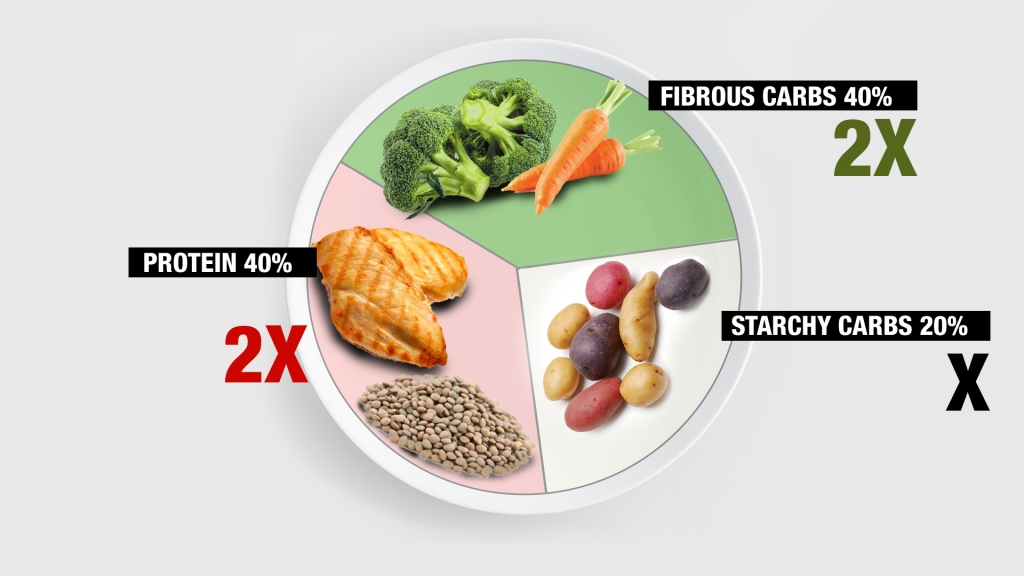
THE HIGH-PROTEIN PLATE
Build every full meal around three parts, by eye, not by scale:
- About 40% lean protein. The anchor. Everything else supports it.
- About 40% fibrous carbs and vegetables. Volume and fiber that fill you up without piling on calories.
- About 20% starch. The fuel, sized to how hard you’re training that day.
That’s it. No app, no food scale, no math at the table. If protein takes up a good chunk of the plate and vegetables take up another, you’re already most of the way there.
Here’s what it looks like in practice. Say it’s dinner and you’re aiming for 40 grams of protein.
Start with a 6-ounce cooked chicken breast, which comes to about 50 grams. Fill nearly half the plate with roasted broccoli and peppers. Add a scoop of rice, around a half cup, off to the side. That’s a dinner past 40 grams of protein, and the only thing you measured was the chicken.
Change the protein and the same plate works all week.
Swap the chicken for grilled salmon bowls, lean steak, or a couple of cups of lentils, keep the vegetables and the starch where they are, and you’ve got a different meal on the same frame.
PROTEIN COMES FIRST
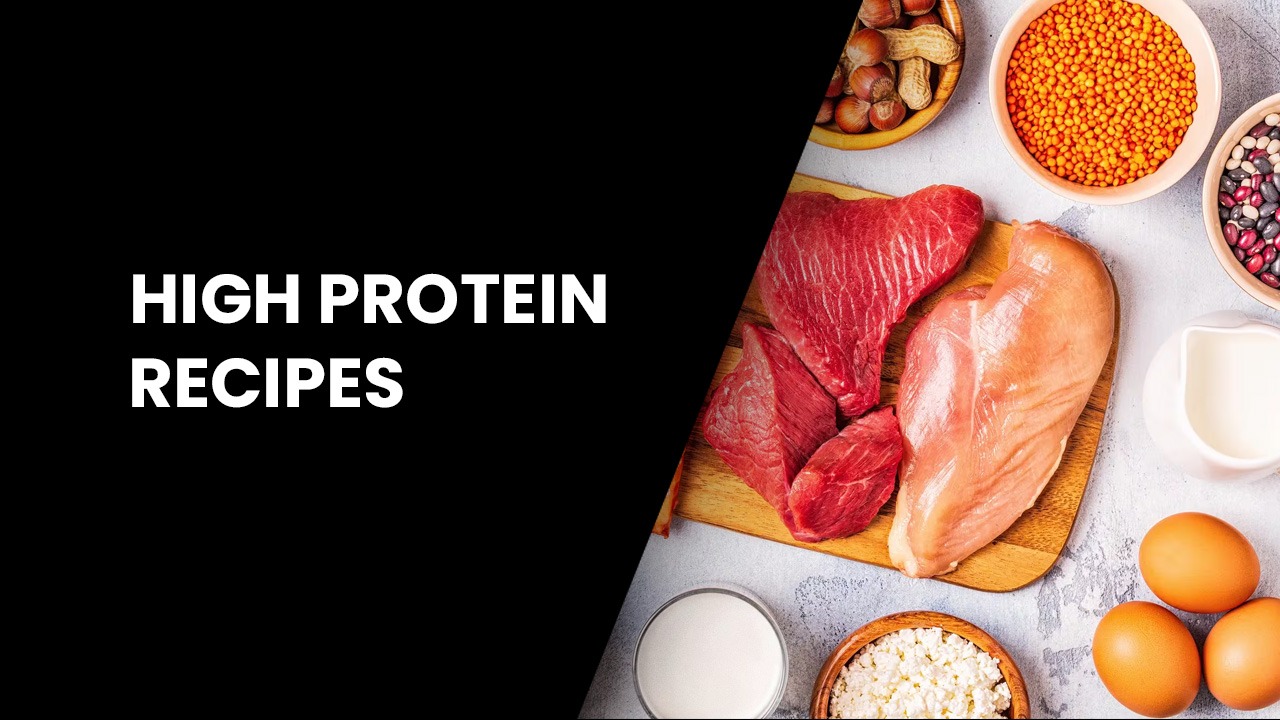
Decide your lean protein before anything else touches the plate. It’s the one part of high protein meals that isn’t optional, so it gets chosen first and the rest of the meal formulas build around it.
Lean protein sources give you the most protein for the fewest calories, which is what keeps the whole thing working:
- Chicken breast, turkey, and lean ground meats (e.g., 90%+ lean ground beef)
- Fish and seafood, from salmon to shrimp to canned tuna
- Protein-rich eggs and egg whites
- Lean beef and pork
- Greek yogurt, cottage cheese, and other protein-dense cheeses
- Beans, lentils, tofu, and tempeh for plant-based meals
Pick one and give it the biggest role on the plate. A good check when you’re unsure: look down, and protein should be the first thing you notice.
LOAD UP ON FIBROUS CARBS
The next food groups are vegetables and other fibrous carbs. They add more to the meal than most people give them credit for.
They add real volume for very few calories, so the meal satisfies you without inflating the total.
They slow digestion, which steadies your energy afterward.
And the fiber feeds your gut microbiome, the community of bacteria that helps with digestion and overall health.
- Leafy greens, broccoli, cauliflower, peppers, zucchini, and mushrooms
- Whole grains like oats, brown rice, barley, and farro salad
- Legumes like black beans, chickpeas, and cannellini beans
- Protein-packed quinoa, which brings a little extra protein along with the fiber
Fill close to half the plate here and everything else gets easier to manage.
YOU DON’T HAVE TO CUT STARCH
Starch is the part people fear, and that fear is misplaced.
Rice, potatoes, and pasta aren’t the enemy. They’re fuel, and how much you need depends on the day.
Training hard? A fuller portion helps you perform and recover. Rest day at a desk? Keep it smaller.
A few that pair well with a protein-forward meal:
- White or brown rice
- Potatoes and sweet potatoes
- Chickpea pasta and other higher-protein pastas
- Oats and other whole grains
The mistake isn’t eating starch. It’s letting it take over while the protein shrinks. Keep it to roughly a fifth of the meal and it fuels you without crowding anything out.
DON’T FORGET ABOUT FATS
Fat rounds out a meal, but it works best in the background.
You rarely need to add much. Most protein sources bring their own, whether that’s the fat in salmon, eggs, or a marbled cut of beef.
A little more from cooking oil, avocado, nuts, or seeds is plenty.
Some of it does real good, too. The omega-3 and omega-6 fatty acids in fish, walnuts, and flax support recovery and heart health.
The reason to keep fat modest isn’t that it’s bad. It’s that fat carries more than twice the calories of protein or carbs gram for gram, so it adds up fast and quietly.
Let it season the meal rather than be the focus of it, and everything stays in proportion.
Get these four parts in proportion and you have the frame behind every recipe in this guide. From here, it’s a matter of picking the meal you’re after.
WHERE PROTEIN POWDER FITS IN
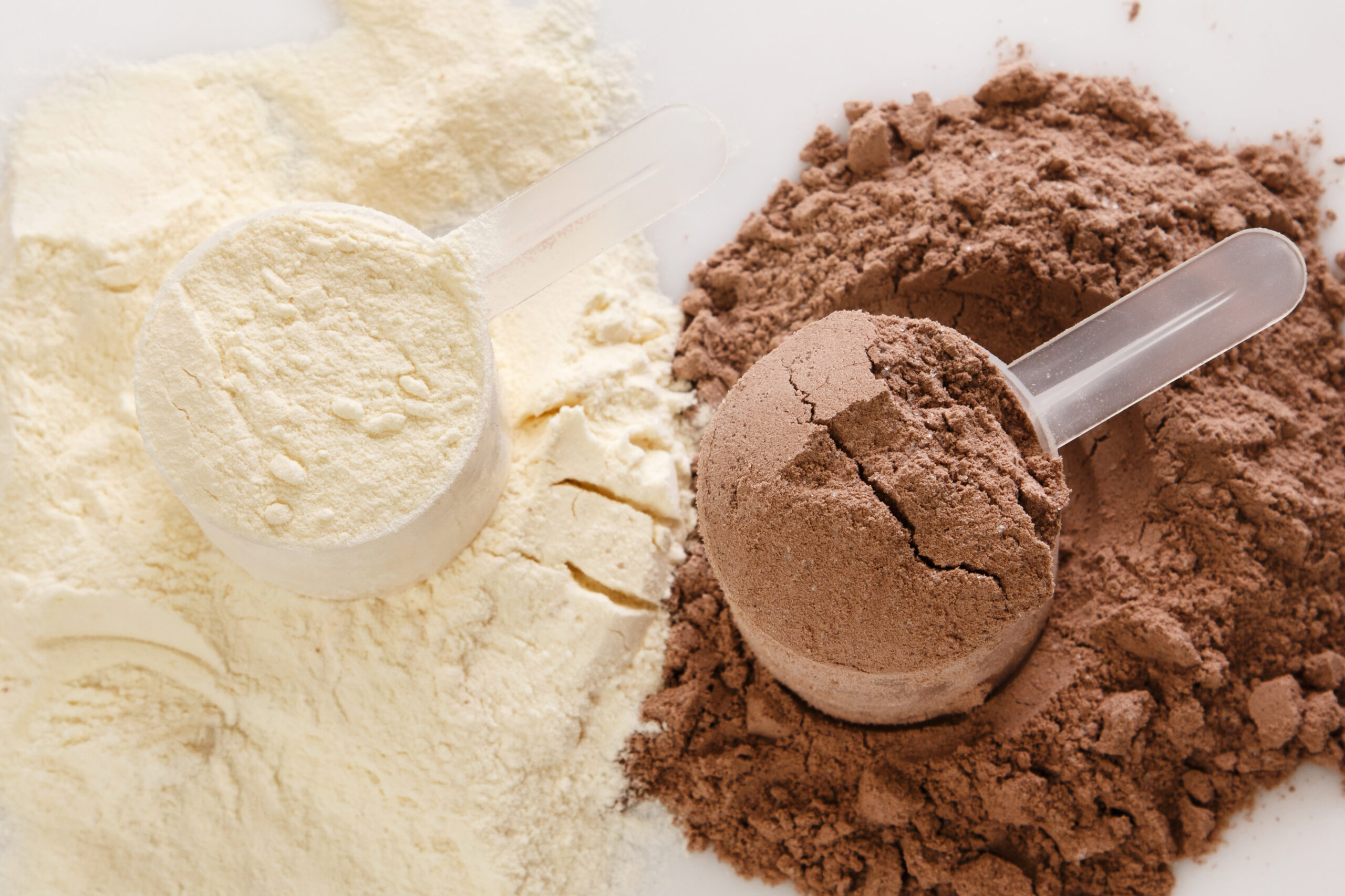
Whole food should make up most of your protein. Protein powder is there for the moments it can’t.
A scoop is nothing more than a concentrated, convenient source of protein: 25 to 30 grams in about 30 seconds, with no cooking and no cleanup.
It isn’t a meal. It’s just a fast way to top up a day that’s coming in under your number.
That handles the spots where people usually eat nothing or grab junk instead. A rushed morning. A long stretch between meals. The drive home after training when dinner is still an hour off.
A shake handles those, and that’s reason enough to keep one around.
THE MAIN TYPES
Walk down the supplement aisle and the tubs blur together. Here’s what sets them apart:
Whey Concentrate: The one you’ll see most, and the easiest on the wallet. A complete protein that digests at a moderate pace, with a bit more lactose that can bother sensitive stomachs.
Whey Isolate: Filtered further to strip out most of the fat and lactose. Leaner and easy to digest, and the better pick if concentrate sits heavy in your stomach.
Whey Blend: Concentrate and isolate together, balancing cost, texture, and how easily it goes down.
Whey Hydrolysate: Partly broken down ahead of time, so it absorbs faster than any other whey. It costs more, and few people need to pay for it.
Casein: A slow-digesting dairy protein that releases over several hours, which is why people reach for it before bed.
Egg: Made from egg white: complete, with no dairy, and a moderate digestion speed. A solid option if dairy is the problem but animal protein isn’t.
Beef: Sold as a dairy-free animal option, though this one needs a close read, since much of the beef protein on shelves is collagen, not the muscle-grade kind.
Collagen: Popular for joints, skin, and easy mixing, but incomplete, so it shouldn’t count toward your protein target for the day.
Plant-Based: Usually pea and rice together to cover the full amino acid range. The best pick with no dairy or animal products, though texture varies a lot from one brand to the next.
Not every protein is used by the body equally well.
Animal proteins like whey, casein, and egg are complete and absorb very efficiently, so they sit at the top of every quality scale.
A pure pea or rice protein ranks lower on its own, since each is short on one or more essential amino acids, but pairing the two (the reason good plant powders combine them) closes most of that gap.
Collagen sits at the bottom for muscle purposes because it’s missing an essential amino acid outright.
For most people, a quality whey powder covers nearly everything, and a plant-based one is the go-to among vegan options.
WHAT TO LOOK FOR
Not every powder is worth the tub it’s sold in. A few things separate the good from the filler:
Enough Protein Per Serving: Look for 25 grams or more, with most of the calories in the protein itself rather than sugar or fat.
Complete Amino Acid Profile: All nine essential amino acids need to be there. Animal proteins manage this on their own; a plant powder has to mix sources, since pea or rice alone falls short of the full range.
Low Added Sugar: Some tubs hide 15 grams of sugar or more behind the protein claim. Look out for it, and for a long stack of artificial sweeteners propping up a thin formula.
No Nitrogen Spiking: Some brands pad the count with cheap free-form amino acids like glycine or taurine, so the number on the front looks bigger than the usable protein inside. The tell is those extras listed on their own near the top of the ingredients.
No Proprietary Blends: A good panel tells you how much of each ingredient you’re getting. A lumped-together total often hides how little of the good stuff made it in.
Easy on the Stomach: If a scoop leaves you bloated or gassy every time, that’s the powder, not you, and a sign to try a different one. A protein only helps if it agrees with you well enough to drink every day.
THE POWDER WE USE IN THESE RECIPES
Every recipe here uses ATHLEAN-RX PRO-30G, with ATHLEAN-RX PRO-30G Vegan for the plant-based and vegetarian recipes.
It checks all the boxes above.
One serving delivers 30 grams of protein from whey isolate, concentrate, and egg white, at about 150 calories, with low sugar and an ingredient list with nothing to hide.
The vegan version reaches the same 30 grams from pea and rice.
For the coffee recipes, there’s also X-PRESSO, which adds caffeine on top of the 30 grams of protein.
That’s the powder behind the numbers you’ll see in each recipe.
If you want the deeper breakdown on choosing and using protein powder, our full guide to protein shake recipes covers it start to finish.
Now, to the recipes.
HIGH-PROTEIN BREAKFAST RECIPES
The typical breakfast leans heavy on carbs and light on protein. These three even that out.
One is a no-cook jar you make the night before, one is a ten-minute stack, and one is fully plant-based, so there’s a high protein recipe here whatever your morning looks like.
For the full spread of options, see our complete guide to high protein breakfast ideas, plus our dedicated guides to protein overnight oats, protein pancakes, and protein waffles.
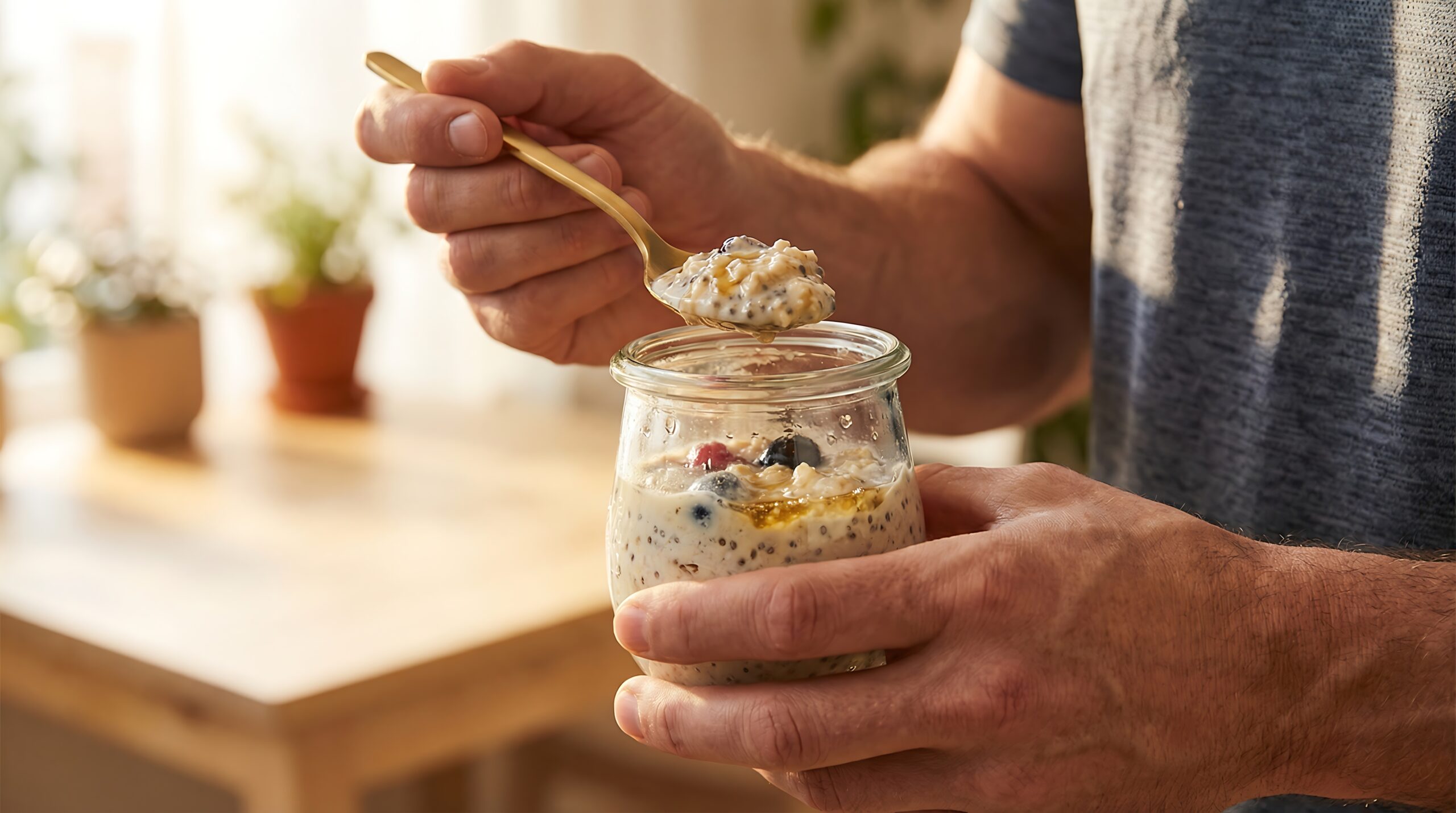
PEANUT BUTTER BANANA PROTEIN OVERNIGHT OATS
This one is the biggest caloric breakfast of the three. You put it together in five minutes the night before, and it’s waiting in the fridge when the alarm goes off.
NUTRITIONAL INFORMATION
- Prep Time: about 5 minutes
- Chill Time: at least 6 hours (or overnight)
- Yield: 1 serving
- Serving Size: 1 jar
- Calories Per Serving: about 575
- Protein Per Serving: about 45 grams
- Carbs Per Serving: about 56 grams
- Fat Per Serving: about 23 grams
INGREDIENTS
- 1 serving of ATHLEAN-RX PRO-30G, French Vanilla Bean
- 1/3 cup old-fashioned oats
- 2 tablespoons natural peanut butter
- 1 medium banana, half mashed and half sliced
- 3/4 cup unsweetened almond milk
- 1/2 teaspoon cinnamon (optional)
HOW TO MAKE IT
- In a jar or container, whisk the protein powder into the almond milk until smooth, with no dry clumps.
- Stir in the oats, peanut butter, cinnamon, and the mashed half of the banana until everything comes together.
- Seal and refrigerate at least 6 hours or overnight.
- In the morning, give it a stir and top with the sliced half of the banana. Loosen with a splash more almond milk if you like.
FLAVOR SWAP: Swap the peanut butter for almond butter and use Chocolate Fudge Brownie to turn it into a chocolate-almond jar.
COTTAGE CHEESE PROTEIN PANCAKES
These blend up from cottage cheese and egg whites, so the protein stays high while the calories stay the lowest of the three. They cook like normal pancakes and keep you full for hours.
NUTRITIONAL INFORMATION
- Prep Time: about 5 minutes
- Cook Time: about 10 minutes
- Yield: 1 serving
- Serving Size: 1 stack (about 4 small pancakes)
- Calories Per Serving: about 330
- Protein Per Serving: about 39 grams
- Carbs Per Serving: about 32 grams
- Fat Per Serving: about 6 grams
INGREDIENTS
- 1/2 cup low-fat cottage cheese
- 1/2 serving of ATHLEAN-RX PRO-30G, Frosted Cinnamon Bun
- 2 large egg whites
- 1/4 cup (24 g) oat flour
- 1/2 teaspoon baking powder
- 1/2 teaspoon vanilla extract
- 1/2 teaspoon cinnamon
- 1/2 cup mixed berries, to top
HOW TO MAKE IT
- Blend the cottage cheese, egg whites, protein powder, oat flour, baking powder, vanilla, and cinnamon until smooth.
- Let the batter rest 2 to 3 minutes so the oat flour hydrates and it thickens slightly.
- Heat a nonstick pan or griddle over medium heat and grease it lightly. Pour in small pancakes about 3 inches across.
- Cook 2 to 3 minutes, until bubbles form on top and the edges look set, then flip and cook 1 to 2 minutes more, until golden and cooked through.
- Stack and top with the berries.
FLAVOR SWAP: Trade the berries for a spoonful of sugar-free syrup and an extra pinch of cinnamon to lean into the cinnamon-bun side.
VANILLA ALMOND VEGAN PROTEIN WAFFLES
A crisp vegan waffle with no dairy and no eggs, using ground flax as the binder. Almond butter and vanilla do the flavor work, and the pea-and-rice powder covers the protein.
NUTRITIONAL INFORMATION
- Prep Time: about 5 minutes
- Cook Time: about 5 minutes
- Yield: 1 serving
- Serving Size: 2 waffles
- Calories Per Serving: about 435
- Protein Per Serving: about 40 grams
- Carbs Per Serving: about 32 grams
- Fat Per Serving: about 19 grams
INGREDIENTS
- 1 serving of ATHLEAN-RX PRO-30G Vegan, Vanilla Bean
- 1/3 cup (32 g) oat flour
- 3/4 cup unsweetened almond milk
- 1 tablespoon almond butter
- 1 tablespoon ground flaxseed
- 1 teaspoon baking powder
- 1/2 teaspoon vanilla extract
HOW TO MAKE IT
- Stir the ground flaxseed into the almond milk and let it sit 5 minutes, until it thickens into a binder.
- Whisk in the protein powder, oat flour, almond butter, baking powder, and vanilla until you have a smooth, pourable batter. Add a splash more almond milk if it stiffens up.
- Heat and lightly grease a waffle iron.
- Pour in the batter, close, and cook 4 to 5 minutes, until the waffle sets and lifts away cleanly. Vegan batters brown less, so go by texture, not color.
- Serve warm. Fresh berries and a drizzle of maple syrup work well on top, though they add to the numbers above.
FLAVOR SWAP: Use Rich Double Chocolate (Vegan) and a tablespoon of cocoa powder for a chocolate version.
HIGH-PROTEIN LUNCH RECIPES
On most lunch plates, the protein is the smallest thing there. These three flip that.
A hearty chicken bowl for gaining, a lean tuna salad for watching your calories, and a plant-based lentil and quinoa bowl, each one clearing 30 grams of protein from whole food and each made to pack and reheat for the week.
For more creative ways to put one together, like lentil-packed soups and chicken rice bowls, see our full guide to high protein lunch ideas.
CHICKEN BURRITO POWER BOWL
Everything a burrito gives you, in a bowl you can prep for the week: seasoned chicken over rice and black beans, with avocado and pico de gallo on top. It’s the biggest lunch of the three and the easiest to batch.
NUTRITIONAL INFORMATION
- Prep Time: about 10 minutes
- Cook Time: about 15 minutes
- Yield: 1 serving
- Serving Size: 1 bowl
- Calories Per Serving: about 555
- Protein Per Serving: about 47 grams
- Carbs Per Serving: about 63 grams
- Fat Per Serving: about 12 grams
INGREDIENTS
- 4 oz chicken breast
- 3/4 cup cooked white rice
- 1/3 cup canned black beans, drained, and rinsed
- 1/4 avocado, sliced
- 1/4 cup corn
- 1/4 cup pico de gallo or salsa
- 1/2 teaspoon cumin
- 1/2 teaspoon chili powder
- Lime, cilantro, salt, and pepper
HOW TO MAKE IT
- Season the chicken with the cumin, chili powder, salt, and pepper. Cook in a hot, lightly oiled pan over medium-high heat, about 5 to 6 minutes a side, until it reaches 165°F inside. Rest a few minutes, then slice or cube.
- Warm the rice and black beans.
- Layer the rice and beans in a bowl, add the chicken, then top with the avocado, corn, and pico de gallo.
- Finish with a squeeze of lime, chopped cilantro, and more chili powder if you want the heat.
FLAVOR SWAP: Trade the chicken for lean ground turkey or sliced steak or swap the rice for cauliflower rice to keep it lower carb.
TUNA & GREEK YOGURT POWER SALAD
Greek yogurt stands in for mayo, so this stays high in protein and low in fat, at only about 310 calories. It comes together cold in one bowl, no stove required.
NUTRITIONAL INFORMATION
- Prep Time: about 10 minutes
- Chill Time: 15 minutes (optional)
- Yield: 1 serving
- Serving Size: 1 plate
- Calories Per Serving: about 310
- Protein Per Serving: about 42 grams
- Carbs Per Serving: about 18 grams
- Fat Per Serving: about 9 grams
INGREDIENTS
- 1 can tuna in water, drained
- 1/3 cup nonfat Greek yogurt
- 1 tablespoon Dijon mustard
- Juice of 1/2 lemon
- 2 tablespoons celery, diced
- 2 tablespoons red onion, diced
- 2 cups mixed greens
- 1/2 cup cherry tomatoes and cucumber
- 1/4 avocado, sliced
- Salt, pepper, and dried dill
HOW TO MAKE IT
- In a bowl, stir the tuna together with the Greek yogurt, Dijon, lemon juice, celery, and red onion until combined. Season with salt, pepper, and dill.
- Chill 15 minutes if you have time since it tastes better cold.
- Lay the greens on a plate and scatter the tomatoes and cucumber over them, then spoon the tuna mixture on top.
- Add the avocado and a final squeeze of lemon.
FLAVOR SWAP: Use canned salmon instead of tuna, or fold in a spoonful of capers for a sharper, briny bite.
LENTIL & QUINOA BOWL
Lentils and quinoa together cover the full amino acid range, with edamame adding a little more protein and a tahini-lemon dressing tying it together. No animal products, and still 30 grams of protein.
NUTRITIONAL INFORMATION
- Prep Time: about 10 minutes
- Cook Time: about 15 minutes
- Yield: 1 serving
- Serving Size: 1 bowl
- Calories Per Serving: about 475
- Protein Per Serving: about 30 grams
- Carbs Per Serving: about 71 grams
- Fat Per Serving: about 10 grams
INGREDIENTS
- 1/2 cup cooked quinoa
- 1 cup canned lentils, drained and rinsed
- 1/3 cup shelled edamame
- 1/2 cup roasted peppers, zucchini, and red onion
- 1/2 tablespoon tahini
- Juice of 1/2 lemon
- 1 clove garlic, minced
- Cumin, fresh herbs, salt, and pepper
HOW TO MAKE IT
- Cook the quinoa if it isn’t already done: rinse it, simmer in water about 15 minutes until the grains uncurl, then fluff with a fork.
- Warm the lentils, edamame, and roasted vegetables.
- Whisk the tahini with the lemon juice, minced garlic, cumin, and a splash of water into a pourable dressing.
- Combine the quinoa, lentils, edamame, and vegetables in a bowl, toss with the dressing, and finish with fresh herbs, salt, and pepper.
FLAVOR SWAP: Add a handful of roasted chickpeas for crunch or swap the tahini for a lemon-olive-oil vinaigrette to lighten it.
HIGH-PROTEIN DINNER RECIPES
Dinner shouldn’t be where you scramble to make up the protein you missed all day. It should cap off a day you’ve already eaten well.
Get breakfast and lunch right and dinner has an easy job, so these three keep it simple and let you match the plate to your protein goals: a sirloin steak with potatoes for gaining, a light lemon baked cod for fat loss, and vegetable and tofu stir-fry bowls for a plant-based night.
For more ways to put dinner together, see our full guide to high protein dinner ideas.
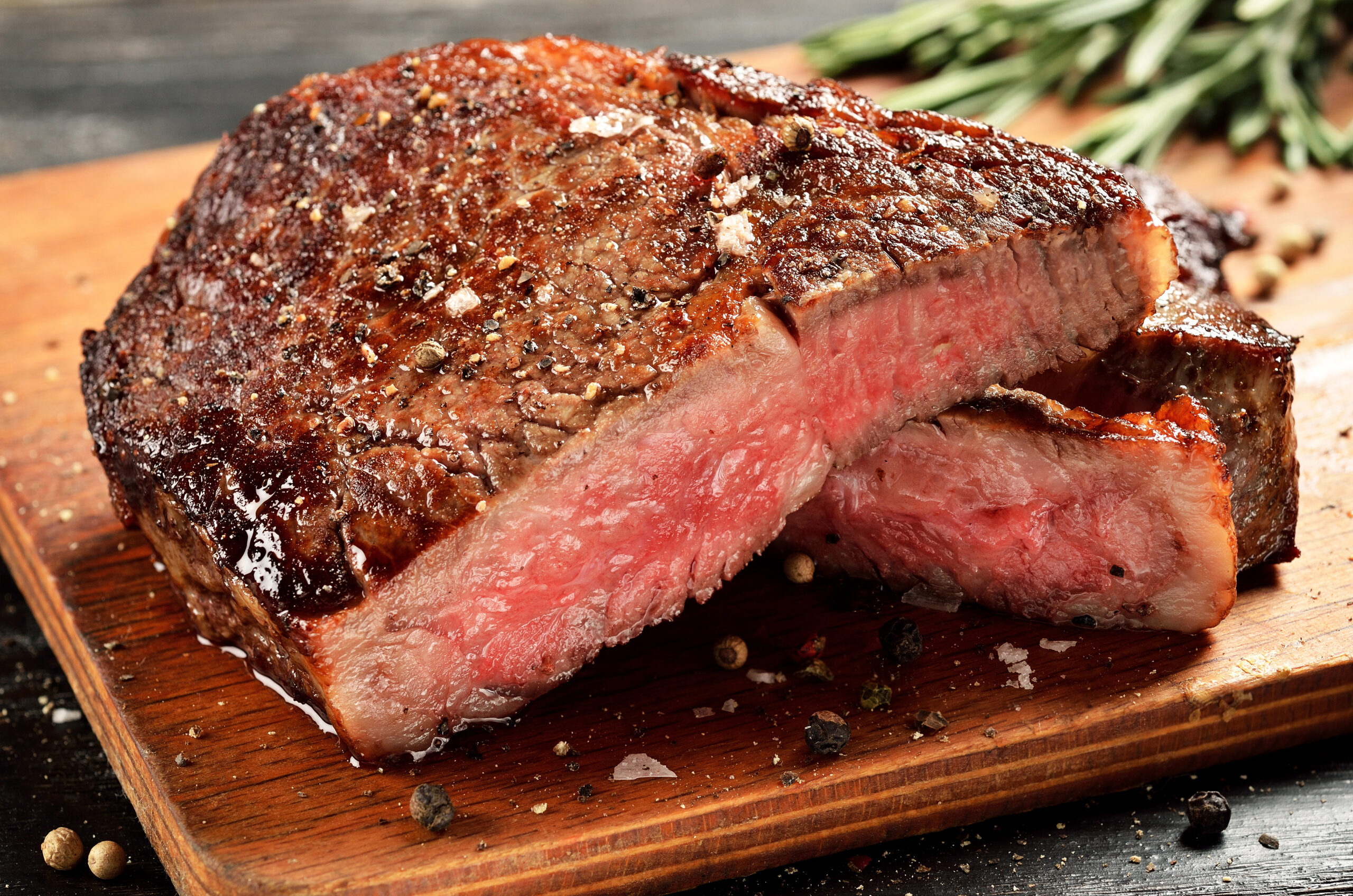
SIRLOIN STEAK WITH POTATOES & GREENS
The biggest plate of the three, and the most classic: a seared sirloin with roasted potatoes and a pile of greens. Straightforward, satisfying, and just under 50 grams of protein.
NUTRITIONAL INFORMATION
- Prep Time: about 10 minutes
- Cook Time: about 30 minutes
- Yield: 1 serving
- Serving Size: 1 plate
- Calories Per Serving: about 570
- Protein Per Serving: about 49 grams
- Carbs Per Serving: about 44 grams
- Fat Per Serving: about 22 grams
INGREDIENTS
- 5 oz top sirloin steak
- 7 oz baby potatoes, halved
- 2 cups greens (spinach or a side salad)
- 1 teaspoon olive oil
- 1 teaspoon butter
- 1 clove garlic
- Salt, pepper, and fresh herbs
HOW TO MAKE IT
- Heat the oven to 425°F. Toss the halved potatoes with a little of the olive oil, salt, and pepper, spread them on a sheet pan, and roast 25 to 30 minutes, until crisp outside and tender inside.
- Pat the steak dry and season both sides with salt and pepper. Heat a skillet over medium-high, add the butter and garlic, and sear 3 to 4 minutes a side for medium, or until it reaches the doneness you like. Let it rest 5 minutes, then slice against the grain.
- Wilt the greens in the same pan with the remaining olive oil.
- Plate the steak with the potatoes and greens and spoon any pan juices over the top.
FLAVOR SWAP: Use a lean flat-iron or flank steak instead or swap the potatoes for roasted sweet potato.
LEMON BAKED WHITE FISH WITH GREENS
Cod bakes in minutes with lemon and garlic, staying almost fat-free while covering 40 grams of protein. At about 365 calories, it’s the leanest dinner here.
NUTRITIONAL INFORMATION
- Prep Time: about 10 minutes
- Bake Time: about 20 minutes
- Yield: 1 serving
- Serving Size: 1 plate
- Calories Per Serving: about 365
- Protein Per Serving: about 40 grams
- Carbs Per Serving: about 39 grams
- Fat Per Serving: about 7 grams
INGREDIENTS
- 5 oz cod fillet
- 2 cups broccoli and asparagus
- 4 oz baby potatoes, halved
- 1/2 cup cherry tomatoes
- 1 teaspoon olive oil
- 1/2 lemon
- 1 clove garlic, minced
- Salt, pepper, and fresh herbs
HOW TO MAKE IT
- Heat the oven to 400°F. Toss the potatoes, broccoli, asparagus, and tomatoes with the olive oil, salt, and pepper, spread on a sheet pan, and roast 10 minutes to give the potatoes a head start.
- Pat the cod dry, set it on the pan among the vegetables, and top with the minced garlic, a couple of lemon slices, salt, and pepper.
- Bake another 12 to 15 minutes, until the fish flakes easily with a fork and the potatoes are tender.
- Finish with a squeeze of fresh lemon and chopped herbs.
FLAVOR SWAP: Trade the lemon and garlic for a spoonful of pesto over the fish or add chili flakes for a little heat.
TOFU & VEGETABLE STIR-FRY
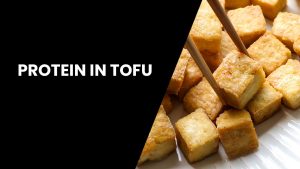
Crisp tofu stir-fries and edamame supply the protein, with vegetables and rice rounding it out and a quick soy-sesame sauce pulling everything together. No animal products but plenty of protein at 35 grams.
NUTRITIONAL INFORMATION
- Prep Time: about 15 minutes
- Cook Time: about 15 minutes
- Yield: 1 serving
- Serving Size: 1 bowl
- Calories Per Serving: about 485
- Protein Per Serving: about 35 grams
- Carbs Per Serving: about 49 grams
- Fat Per Serving: about 19 grams
INGREDIENTS
- 6 oz extra-firm tofu, pressed and cubed
- 2 cups stir-fry vegetables (broccoli, bell pepper, snap peas, carrot)
- 1/2 cup cooked white rice
- 1/4 cup shelled edamame
- 1 tablespoon soy sauce or tamari
- 1 teaspoon sesame oil
- 1 clove garlic and 1 teaspoon fresh ginger, minced
- 1 teaspoon sesame seeds
- Chili flakes (optional)
HOW TO MAKE IT
- Press the tofu about 10 minutes to squeeze out moisture, then cut it into cubes.
- Heat the sesame oil in a skillet or wok over medium-high. Add the tofu and cook 5 to 6 minutes, turning until golden on several sides, then push it to the edge of the pan.
- Add the garlic, ginger, vegetables, and edamame, and stir-fry 4 to 5 minutes, until the vegetables are crisp-tender.
- Pour in the soy sauce, toss everything together, and serve over the rice. Finish with sesame seeds and chili flakes.
FLAVOR SWAP: Swap the tofu for tempeh or stir a teaspoon of chili-garlic sauce into the soy for a spicier finish.
HIGH-PROTEIN SNACK RECIPES
Protein balls and muffins are the easiest way to keep something high protein within reach, since you make a batch once and they last the week.
Peanut butter balls for gaining, blueberry muffins for an everyday bite, and vegan chocolate balls, each one worth keeping in the fridge for the moment a craving hits and the only thing nearby is junk.
For more, see our full guide to high protein snacks, plus our recipes for protein balls and protein muffins.
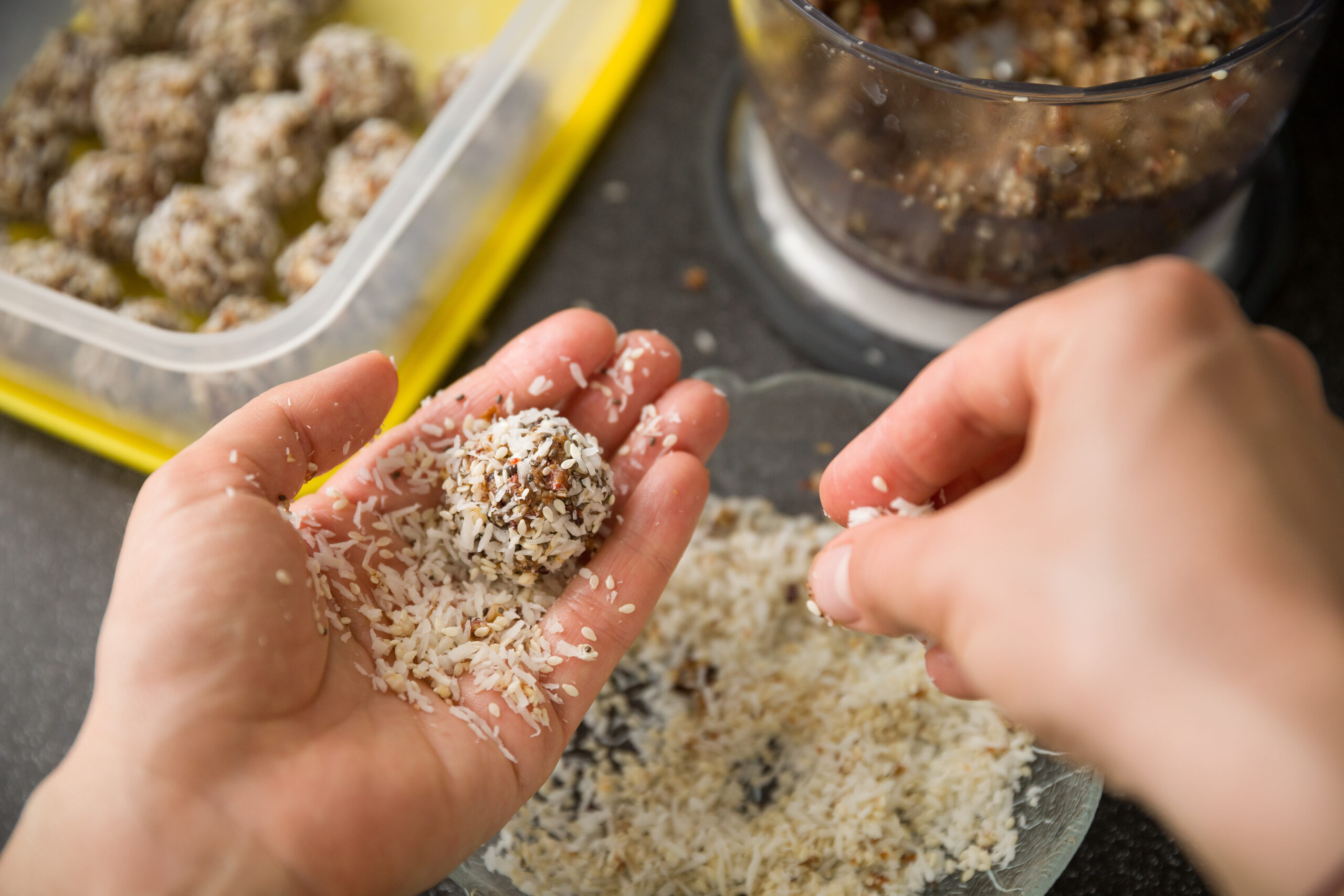
PEANUT BUTTER PROTEIN BALLS
Peanut butter, oats, and vanilla protein rolled into a no-bake bite, richer and higher in calories than the others here. Two hold you over between meals, and a batch keeps in the fridge all week.
NUTRITIONAL INFORMATION
- Prep Time: about 10 minutes
- Chill Time: at least 30 minutes
- Yield: 10 balls
- Serving Size: 2 balls
- Calories Per Serving: about 290
- Protein Per Serving: about 19 grams
- Carbs Per Serving: about 30 grams
- Fat Per Serving: about 12 grams
INGREDIENTS
- 2 servings of ATHLEAN-RX PRO-30G, French Vanilla Bean
- 1/3 cup natural peanut butter
- 1 cup old-fashioned oats
- 3 tablespoons honey
- 2 tablespoons mini chocolate chips
- 2 to 3 tablespoons almond milk, as needed
HOW TO MAKE IT
- In a bowl, stir the protein powder and oats together, then work in the peanut butter and honey until the mix starts to come together.
- Add the chocolate chips and just enough almond milk, a tablespoon at a time, to make a dough you can roll.
- Roll into 10 balls.
- Chill at least 30 minutes to firm them up, then keep in the fridge.
FLAVOR SWAP: Use Chocolate Fudge Brownie and trade the chocolate chips for chopped peanuts to push it toward peanut butter cup recipe.
BLUEBERRY PROTEIN MUFFINS
A lighter grab for any afternoon: fresh blueberries folded into a vanilla protein batter and baked. About 160 calories and 12 grams of protein a muffin, so two makes an easy snack.
NUTRITIONAL INFORMATION
- Prep Time: about 10 minutes
- Bake Time: about 20 minutes
- Yield: 10 muffins
- Serving Size: 1 muffin
- Calories Per Serving: about 160
- Protein Per Serving: about 12 grams
- Carbs Per Serving: about 17 grams
- Fat Per Serving: about 5 grams
INGREDIENTS
- 2 servings of ATHLEAN-RX PRO-30G, French Vanilla Bean
- 1 1/4 cups (120 g) oat flour
- 1 cup nonfat Greek yogurt
- 3 large eggs
- 1/4 cup maple syrup
- 1 cup blueberries
- 2 tablespoons butter or coconut oil, melted
- 1 teaspoon baking powder
- 1 teaspoon vanilla extract
- 1/3 cup almond milk
HOW TO MAKE IT
- Heat the oven to 350°F and line a muffin tin with 10 liners.
- Whisk the oat flour, protein powder, and baking powder in a bowl.
- In a second bowl, whisk the Greek yogurt, eggs, maple syrup, melted butter, vanilla, and almond milk until smooth.
- Fold the wet into the dry until just combined, then gently fold in the blueberries without overmixing.
- Split the batter between the 10 liners and bake 18 to 20 minutes, until a toothpick comes out clean. Cool before eating.
FLAVOR SWAP: Fold in dark chocolate chips instead of blueberries or use Frosted Cinnamon Bun for a cinnamon roll take.
VEGAN CHOCOLATE PROTEIN BALLS
The chocolate version made vegan with almond butter and dairy-free chips. No animal products, and still 19 grams of protein in two.
NUTRITIONAL INFORMATION
- Prep Time: about 10 minutes
- Chill Time: at least 30 minutes
- Yield: 10 balls
- Serving Size: 2 balls
- Calories Per Serving: about 290
- Protein Per Serving: about 19 grams
- Carbs Per Serving: about 28 grams
- Fat Per Serving: about 13 grams
INGREDIENTS
- 2 servings of ATHLEAN-RX PRO-30G Vegan, Rich Double Chocolate
- 1/3 cup almond butter
- 1 cup old-fashioned oats
- 3 tablespoons maple syrup
- 2 tablespoons cocoa powder
- 2 tablespoons dairy-free chocolate chips
- 2 to 3 tablespoons almond milk, as needed
HOW TO MAKE IT
- Stir the protein powder, oats, and cocoa powder together in a bowl.
- Work in the almond butter and maple syrup, then add almond milk a tablespoon at a time until it forms a dough you can roll.
- Fold in the dairy-free chocolate chips.
- Roll into 10 balls and chill at least 30 minutes before keeping them in the fridge.
FLAVOR SWAP: Add a tablespoon of espresso powder for a mocha version or roll the finished balls in shredded coconut.
HIGH-PROTEIN DESSERT RECIPES
A protein dessert has to taste like dessert first, or you won’t make it twice. These three clear that bar and still add up to 29 grams of protein.
Fudgy brownies as the classic, a no-cook chocolate pudding as the lean option, and vegan double chocolate cookies, so the end of the day can stay on plan and still feel like a reward.
For more, see our full guide to the best protein desserts. We also have recipes for protein brownies and protein cookies.
FUDGY PROTEIN BROWNIES
Dense, fudgy, and chocolate through and through, with Greek yogurt keeping them moist and the protein powder doing the rest. About 11 grams of protein a square.
NUTRITIONAL INFORMATION
- Prep Time: about 10 minutes
- Bake Time: about 25 minutes
- Yield: 9 squares
- Serving Size: 1 square
- Calories Per Serving: about 145
- Protein Per Serving: about 11 grams
- Carbs Per Serving: about 16 grams
- Fat Per Serving: about 5 grams
INGREDIENTS
- 2 servings of ATHLEAN-RX PRO-30G, Chocolate Fudge Brownie
- 1/2 cup (48 g) oat flour
- 1/4 cup cocoa powder
- 1/2 cup nonfat Greek yogurt
- 1/3 cup maple syrup
- 2 large eggs
- 1/4 cup dark chocolate chips
- 1 tablespoon butter, melted
- 1 teaspoon baking powder
- 1 teaspoon vanilla extract
- Splash of almond milk
- Pinch of salt
HOW TO MAKE IT
- Heat the oven to 350°F and line an 8×8 pan with parchment.
- Whisk the oat flour, cocoa powder, protein powder, baking powder, and salt in a bowl.
- In a second bowl, mix the Greek yogurt, eggs, maple syrup, melted butter, and vanilla until smooth.
- Stir the wet into the dry until just combined, loosening with a splash of almond milk if the batter is stiff, then fold in the chocolate chips.
- Spread into the pan and bake 20 to 25 minutes, until the edges set but the center stays slightly soft. Cool fully, then cut into 9 squares.
FLAVOR SWAP: Stir in chopped walnuts for crunch or trade the chocolate chips for a peanut butter swirl.
CHOCOLATE COTTAGE CHEESE PROTEIN PUDDING
Blend cottage cheese until it’s completely smooth and you’d never guess it wasn’t pudding. This one skips the oven and puts 29 grams of protein into 240 calories.
NUTRITIONAL INFORMATION
- Prep Time: about 5 minutes
- Chill Time: 30 minutes (optional)
- Yield: 1 serving
- Serving Size: 1 bowl
- Calories Per Serving: about 240
- Protein Per Serving: about 29 grams
- Carbs Per Serving: about 24 grams
- Fat Per Serving: about 5 grams
INGREDIENTS
- 1/2 cup low-fat cottage cheese
- 1/2 serving of ATHLEAN-RX PRO-30G, Chocolate Salted Caramel
- 1 tablespoon cocoa powder
- 1 tablespoon maple syrup
- 1/4 cup unsweetened almond milk
HOW TO MAKE IT
- Add everything to a blender or a tall cup for an immersion blender.
- Blend 30 to 60 seconds, scraping down once, until it’s completely smooth with no cottage-cheese texture left.
- Chill 30 minutes to thicken or eat it right away.
- Top with berries, cacao nibs, or a few chocolate chips if you like, though those add to the numbers above.
FLAVOR SWAP: Use Chocolate Fudge Brownie and a handful of berries, or blend in a spoonful of peanut butter for a chocolate-peanut butter cup flavor.
VEGAN DOUBLE CHOCOLATE PROTEIN COOKIES
Soft, double-chocolate, and fully vegan, made with almond butter and a flax egg in place of dairy and eggs. Nine grams of protein a cookie.
NUTRITIONAL INFORMATION
- Prep Time: about 10 minutes
- Bake Time: about 12 minutes
- Yield: 10 cookies
- Serving Size: 1 cookie
- Calories Per Serving: about 160
- Protein Per Serving: about 9 grams
- Carbs Per Serving: about 19 grams
- Fat Per Serving: about 6 grams
INGREDIENTS
- 2 servings of ATHLEAN-RX PRO-30G Vegan, Rich Double Chocolate
- 1 cup (96 g) oat flour
- 1/4 cup cocoa powder
- 1/3 cup maple syrup
- 1/4 cup almond butter
- 1 flax egg (1 tablespoon ground flaxseed plus 3 tablespoons water)
- 1/4 cup dairy-free chocolate chips
- 1/2 teaspoon baking soda
- 1 teaspoon vanilla extract
- Splash of almond milk
HOW TO MAKE IT
- Make the flax egg: stir the ground flaxseed into the water and let it sit 5 minutes until it gels. Heat the oven to 350°F and line a baking sheet.
- Whisk the oat flour, cocoa powder, protein powder, and baking soda together.
- Stir in the almond butter, maple syrup, flax egg, and vanilla until a thick dough forms, adding a splash of almond milk if it’s dry. Fold in the chocolate chips.
- Scoop 10 cookies onto the sheet and flatten each one slightly since they won’t spread much.
- Bake 10 to 12 minutes. They’ll be soft out of the oven and firm up as they cool.
FLAVOR SWAP: Press a few extra chocolate chips on top before baking or add a teaspoon of espresso powder for a mocha edge.

HIGH-PROTEIN SHAKES & SMOOTHIES
All three shakes start from one 30-gram scoop of protein, then go their separate ways: the leanest is 245 calories, the biggest is 760. What you blend in is the entire difference.
A berry shake to recover after training, a chocolate greens shake to stay lean, and a banana-oat builder to pack on size.
For the full framework and more recipes, see our guide to protein shake recipes.
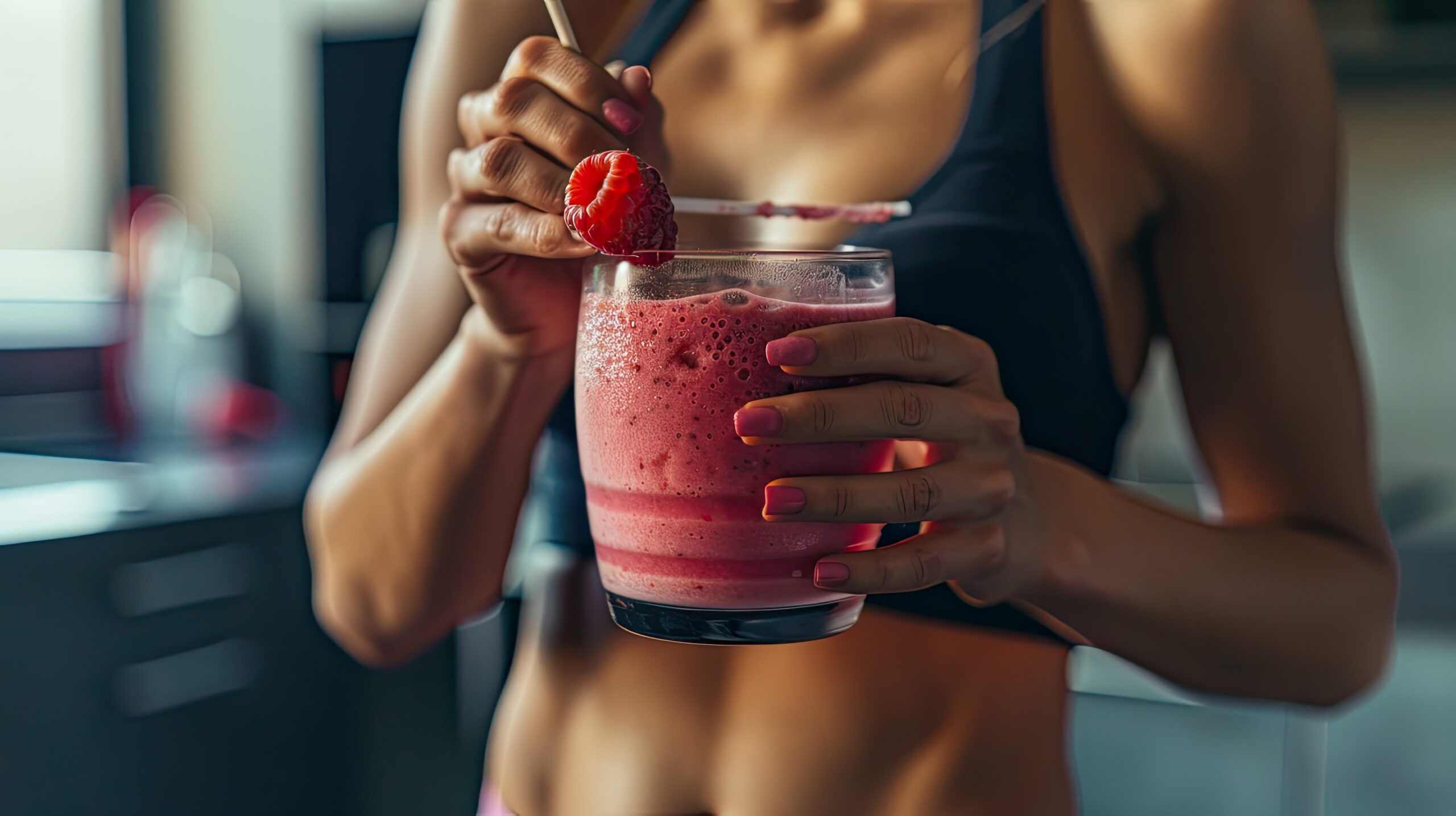
BERRY POWER RECOVERY SHAKE
Fast carbs from berries and banana alongside 33 grams of protein, which is what your muscles want in the window after training. Light enough to drink right after the gym.
NUTRITIONAL INFORMATION
- Prep Time: about 5 minutes
- Yield: 1 serving
- Serving Size: 1 shake
- Calories Per Serving: about 305
- Protein Per Serving: about 33 grams
- Carbs Per Serving: about 36 grams
- Fat Per Serving: about 6 grams
INGREDIENTS
- 1 serving of ATHLEAN-RX PRO-30G, French Vanilla Bean
- 1 cup frozen mixed berries
- 1/2 banana
- 1 cup unsweetened almond milk
- Ice, as needed
HOW TO MAKE IT
- Add the protein powder, berries, banana, and almond milk to a blender.
- Blend 30 to 45 seconds until smooth, adding ice or a splash more almond milk to reach the thickness you want.
- Drink within the half hour after training.
FLAVOR SWAP: Swap the mixed berries for cherries or pineapple, or blend in frozen mango for a tropical version.
CHOCOLATE GREENS SHAKE
A full serving of greens you won’t taste under the chocolate powder, with 33 grams of protein at just 245 calories. The leanest of the three, and an easy way to work vegetables into something sweet.
NUTRITIONAL INFORMATION
- Prep Time: about 5 minutes
- Yield: 1 serving
- Serving Size: 1 shake
- Calories Per Serving: about 245
- Protein Per Serving: about 33 grams
- Carbs Per Serving: about 20 grams
- Fat Per Serving: about 5 grams
INGREDIENTS
- 1 serving of ATHLEAN-RX PRO-30G, Chocolate Fudge Brownie
- 1 cup spinach
- 1/2 frozen banana
- 1 cup unsweetened almond milk
- Ice, as needed
HOW TO MAKE IT
- Add everything to a blender.
- Blend 45 to 60 seconds, until the spinach is fully broken down and the shake is smooth.
- Thin it with more almond milk or ice if you want it looser.
FLAVOR SWAP: Use Rich Double Chocolate (Vegan) with soy milk to make it fully plant-based or add a tablespoon of cocoa or PB2 for deeper chocolate.
BANANA BERRY MASS BUILDER
Oats, peanut butter, banana, and milk push this to 55 grams of protein and 760 calories, closer to a meal than a drink. Blend it when you’re chasing a big daily number and struggling to eat enough.
NUTRITIONAL INFORMATION
- Prep Time: about 5 minutes
- Yield: 1 serving
- Serving Size: 1 shake
- Calories Per Serving: about 760
- Protein Per Serving: about 55 grams
- Carbs Per Serving: about 84 grams
- Fat Per Serving: about 26 grams
INGREDIENTS
- 1 serving of ATHLEAN-RX PRO-30G, French Vanilla Bean
- 1 banana
- 1/2 cup frozen mixed berries
- 1/2 cup old-fashioned oats
- 2 tablespoons peanut butter
- 1 cup 2% milk
- Ice, as needed
HOW TO MAKE IT
- Add the oats to the blender first and pulse a few seconds to break them down.
- Add the protein powder, banana, berries, peanut butter, and milk.
- Blend 45 to 60 seconds until smooth and thick, loosening with a little water or extra milk if needed.
FLAVOR SWAP: Trade the 2% milk for whole milk and add a tablespoon of honey to push the calories higher.
PROTEIN COFFEE RECIPES
Coffee is the one drink most people make every day without fail. That makes it the easiest place to add 30 grams of protein, since you’re not making anything extra.
A pre-workout iced coffee, a French vanilla with MCT oil for healthy fats, and a mocha that stands in for a sweet afternoon snack.
For more, see our full guide to protein coffee recipes.
CLASSIC ICED PROTEIN COFFEE
Cold brew and a scoop of vanilla blended over ice, for caffeine and 31 grams of protein before you train. Light enough that it won’t sit heavy through a training session.
NUTRITIONAL INFORMATION
- Prep Time: about 5 minutes
- Yield: 1 serving
- Serving Size: 1 drink (about 12 oz)
- Calories Per Serving: about 175
- Protein Per Serving: about 31 grams
- Carbs Per Serving: about 4 grams
- Fat Per Serving: about 4 grams
- Caffeine Per Serving: about 95 to 150 mg, depending on the coffee
INGREDIENTS
- 1 serving of ATHLEAN-RX PRO-30G, French Vanilla Bean
- 8 oz cold brew or strong brewed coffee, chilled
- 1/2 cup unsweetened almond milk
- Ice
HOW TO MAKE IT
- Add the protein powder, coffee, and almond milk to a blender or shaker bottle.
- Blend or shake until smooth, with no powder left.
- Pour over a glass of ice.
FLAVOR SWAP: Use Cookies and Cream for a sweeter cup or stir in a dash of cinnamon and a zero-calorie sweetener.
FRENCH VANILLA PROTEIN COFFEE
A teaspoon of MCT oil adds steady energy and helps keep hunger quiet through a fasted morning, with 31 grams of protein and only 220 calories.
NUTRITIONAL INFORMATION
- Prep Time: about 5 minutes
- Yield: 1 serving
- Serving Size: 1 drink (about 12 oz)
- Calories Per Serving: about 220
- Protein Per Serving: about 31 grams
- Carbs Per Serving: about 5 grams
- Fat Per Serving: about 8 grams
- Caffeine Per Serving: about 95 to 100 mg
INGREDIENTS
- 1 serving of ATHLEAN-RX PRO-30G, French Vanilla Bean
- 8 oz brewed coffee, hot or chilled
- 1/2 cup unsweetened almond milk
- 1 teaspoon MCT oil
- 1/2 teaspoon vanilla extract
- Ice, if serving cold
HOW TO MAKE IT
- Add the protein powder, coffee, almond milk, MCT oil, and vanilla to a blender.
- Blend 20 to 30 seconds, until smooth and slightly frothy. Blending emulsifies the MCT oil, so it won’t separate.
- Drink hot or pour over ice.
FLAVOR SWAP: Swap the MCT oil for a teaspoon of coconut oil or use Frosted Cinnamon Bun for a cinnamon-latte angle.
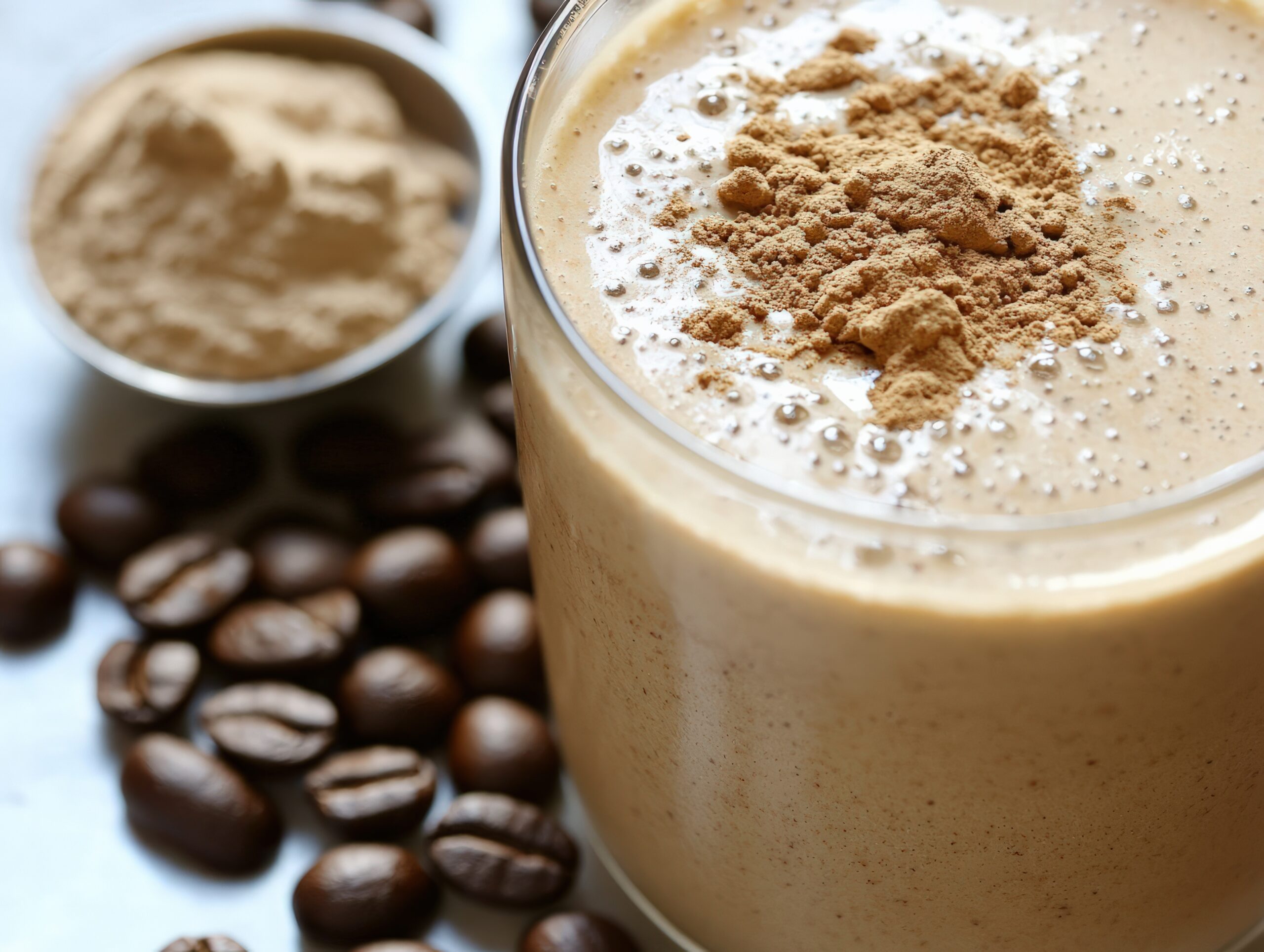
MOCHA PROTEIN COFFEE
This recipe uses X-PRESSO, which packs the coffee, caffeine, and 30 grams of protein into one scoop. It drinks like a chocolate treat, so it can replace an afternoon snack instead of adding one.
NUTRITIONAL INFORMATION
- Prep Time: about 5 minutes
- Yield: 1 serving
- Serving Size: 1 drink (about 12 oz)
- Calories Per Serving: about 170
- Protein Per Serving: about 31 grams
- Carbs Per Serving: about 6 grams
- Fat Per Serving: about 4 grams
- Caffeine Per Serving: about 150 mg
INGREDIENTS
- 1 serving of ATHLEAN-RX X-PRESSO, Mochaspresso
- 1 teaspoon cocoa powder
- 1/2 cup unsweetened almond milk
- 1/2 cup cold water
- Ice
HOW TO MAKE IT
- Add the X-PRESSO, cocoa powder, almond milk, and water to a blender or shaker bottle.
- Blend or shake until smooth.
- Pour over ice.
FLAVOR SWAP: Use Caramel Macchiato X-PRESSO for a salted-caramel version, or blend everything with the ice for a frozen mocha.
HIGH-PROTEIN EATING COMMON MISTAKES
Every recipe above can be cooked exactly right and still leave you under your protein target for the day.
The reason usually has nothing to do with the cooking.
It comes down to how people count their protein, what they add to it, and a few habits that quietly work against them.
If you make one or two of these mistakes on a random day, it’s not a big deal. The issues happen when the same mistakes compound over weeks.
Here are the most common mistakes, and how to avoid each one.
CONFUSING HEALTHY FOODS FOR PROTEIN FOODS
Some foods might seem like they are high in protein, but the label says otherwise.
For example, peanut butter has 8 grams of protein per two tablespoons, but it also has 190 calories in that same serving, so it’s mostly fat.
A cup of almonds is 30 grams of fat and 6 grams of protein.
“Protein” granola or bread might provide you with 5 grams of protein for a serving, but you’re also getting a bunch of carbs.
These foods aren’t inherently bad.
But when your goal is maximizing your protein intake, stick with the food options where protein is super dense: chicken, fish, eggs, Greek yogurt, cottage cheese, powder, lentils, and beans.
BE MINDFUL OF YOUR TOTAL CALORIES
A chicken breast is lean on its own. But the cheese on top, the oil it cooked in, the ranch next to it, and the tortilla around it are not.
Those extras are usually what push a high-protein meal past the calories you wanted.
Take a grilled chicken salad at a commercial restaurant. It sounds like a lean choice. But add shredded cheese, candied nuts, and a few tablespoons of Greek yogurt dressing, and that healthy salad could be clearing over 500 calories.
When you plan a meal, count the oil, cheese, and dressing too. Not just the protein.
A PROTEIN TREAT IS STILL A TREAT
A protein cookie is still a cookie. But because it has protein, eating it feels earned.
That feeling is called the health halo, and it’s how one cookie becomes four. One cookie fits your daily calories. Four of those same cookies rack up 640 calories, and that doesn’t fit your caloric budget.
This is why every recipe here lists a per-serving number. The serving is the point.
A protein treat lets you fit one dessert into your day. It doesn’t mean you can eat the whole batch.
PROTEIN ISN’T ONLY FOR TRAINING DAYS
Your muscles rebuild for a day or more after a workout. And they keep rebuilding on the days between sessions.
A lot of guys load up on protein around their workouts, then ease off on rest days and weekends. But your body is still recovering on those days.
Your protein target doesn’t change based on whether you trained. Hit it every day, not just on the days you lift.
DON’T FORGET ABOUT THE VEGGIES
When every meal is chicken, eggs, and a shake, your protein number looks perfect. But your fiber and vegetables are gone.
And you’ll probably feel it: constipation, low energy, and meals so boring you can’t stick with them for more than a couple of weeks.
Protein is the priority. It isn’t the entire plate. That’s why the savory meals above pair protein with vegetables (frozen vegetables are okay too) and a whole-food carb.
MEAL PREP MANUAL
Hitting your protein target every day means eating… a lot. And cooking that much food three times a day isn’t realistic for anyone with a full-time job.
So, you cook it ahead and store it for the next few days to come. A few hours on one day, and the food is ready for half the week.
That’s meal prepped, and it’s the difference between eating high protein for a week and eating this way for good.
If you’ve never done it, here’s where to start.
DON’T PREP THE WHOLE WEEK AT ONCE
The first thing beginners get wrong is cooking seven days of food on Sunday.
By Wednesday, they’re sick of it. By Friday, some of it has spoiled.
Cooked chicken, fish, and rice only keep about three to four days in the fridge. Prep three or four days at a time, not a full week.
Cook Sunday, eat through Wednesday, then do a quick second round midweek. You waste less, and you don’t get tired of the food.
THE PROTEIN IS THE ONLY HARD PART
Rice and vegetables take a few minutes. Protein is the part that takes time, so make a big batch at once.
A solid session is two pounds of chicken, a dozen boiled eggs, and a pot of lentils or a pound of ground turkey.
Once that’s in the fridge, any meal is about five minutes to put together.
PREP THE PARTS, NOT FINISHED MEALS
Don’t pack five identical meals on Sunday. You’ll be tired of them by Tuesday.
Instead, store the parts on their own. Put protein in one container, a carb in another, vegetables in a third.
Then build a different plate each day from what you already cooked.
Chicken over rice one day. Chicken in a wrap with salsa the next. You only cooked once, but it doesn’t feel like leftovers.
CHANGE THE SAUCE, NOT THE MEAL
Leave the protein and carb plain and change the sauce instead.
Cook your chicken and rice with nothing but salt. Then add buffalo cream sauce one day, teriyaki the next, and salsa after that.
The food underneath doesn’t change, so you still only cook once. The flavor on top does, so you don’t get sick of it.
A few sauces in the fridge beat a brand-new recipe every week.
COOK IT SO IT DOESN’T DRY OUT (AND FREEZE THE EXTRA)
Reheated chicken breast goes dry and rubbery. Two fixes.
Pull it off the heat right when it’s done, since it keeps cooking when you reheat it later. Or use chicken thighs, which stay juicy where breast dries out.
When you reheat, add a splash of water or bone broth and cover the plate so the steam keeps it moist.
And use your freezer. Chili, cooked chicken cutlets, protein balls, muffins, and brownies all freeze well, so one big session can cover two weeks instead of four days.
KEEP A BACKUP FOR THE DAY PREP FALLS APART
Some weeks you won’t prep and that’s fine. What matters is that one missed day doesn’t turn into a week of takeout.
Keep a few no-cook options on hand: canned tuna, Greek yogurt, a protein shake, or a scoop of X-PRESSO in water.
None of them need planning.
A missed prep day only sets you back if you have nothing else to reach for. Eat well most days, and you’ll keep this going far longer than someone aiming for perfect.
High-protein eating isn’t about willpower or complicated recipes. It’s a handful of simple meals you repeat until they’re second nature.
The recipes are here, the numbers are done for you, and nothing on this page takes real skill to pull off.
Pick one, make it this week, and let the results talk you into the next.
Check out our complete line of ATHLEAN-RX Supplements and find the best training program for you based on your fitness level and goals.

- Know your daily protein intake goal. Multiply your bodyweight by 0.7 to 1.0 grams of protein. Use the higher end if you’re losing fat, the lower end if you’re maintaining.
- Split that number between breakfast, lunch, and weeknight dinners instead of leaving it all for the evening.
- Start every plate with the protein. Choose your protein first, then add vegetables, a starch, and a little fat around it.
- Whole food first, powder second. Get most of your protein from food you cook and keep a scoop for the meals you can’t.
- Count from the right foods. Peanut butter, nuts, and “protein” snacks are mostly fat and carbs. Get your protein from chicken, fish, eggs, dairy, powder, and legumes.
- Watch the extras. Oil, cheese, and dressing pile on calories fast. Keep an eye on what goes around your protein, not just the protein.
- Match the recipe to the craving. Breakfast, lunch, dinner, a snack, a dessert, a shake, or a coffee, there’s a high-protein version above for whatever you’re after.
- Prep ahead. Cook your protein in advance so it’s ready when you’re short on time.
- Keep a backup. Stock tuna, Greek yogurt, or a shake for the days you don’t prep, so missing one doesn’t cost you the whole week.
- Repeat it, week after week. Getting your number most days, month after month, does far more than a flawless week you quit.
HIGH PROTEIN RECIPES FAQ
I would recommend starting with the ones that don't need a stove or any complicated cooking gear.
A protein shake takes a minute in a blender, the overnight oats get stirred together the night before, the chocolate cottage cheese pudding is a quick blend, and the peanut butter protein balls just get rolled and chilled.
There's no heat and no timing, so there's nothing to burn or overcook. Once those feel like a routine to you, move to the basic cooking utensils like a pan.
The cottage cheese pancakes are the easiest cooked recipe to start with, and the chicken burrito bowl is mostly assembly once the chicken is done.
Keep the protein high and pull the calories out of everything around it.
Weight loss comes down to eating fewer total calories. The fastest way to lower a recipe's calories without touching the protein is to trim the fat, since fat has more than twice the calories per gram that protein and carbs do.
Opt for the lean versions: nonfat Greek yogurt and cottage cheese over full-fat, egg whites over whole eggs, chicken breast, white fish, and tuna for your mains, and unsweetened almond milk over whole milk.
Go easy on the oils, nut butters, cheese, and dressings since that's where the calories climb fastest.
The fat-loss recipes above already do this, like the tuna and Greek yogurt salad, the lemon baked white fish, and the chocolate greens shake.
Keeping protein high helps in two more ways: it keeps you full while you're eating less, and it protects your muscle, so the weight you lose comes off as fat instead of muscle.
Jeff Cavaliere M.S.P.T, CSCS
Jeff Cavaliere is a Physical Therapist, Strength Coach and creator of the ATHLEAN-X Training Programs and ATHLEAN-Rx Supplements. He has a Masters in Physical Therapy (MSPT) and has worked as Head Physical Therapist for the New York Mets, as well as training many elite professional athletes in Major League Baseball, NFL, MMA and professional wrestling. His programs produce “next level” achievements in muscle size, strength and performance for professional athletes and anyone looking to build a muscular athletic physique.