







WHY CHOOSE PROTEIN cookies?
You already know what most people grab. Two or three cookies from the break room, a packaged snack from the vending machine, or whatever is closest.
And what do you get from that? A minimum of two hundred empty calories, no protein, and an hour later you are hungry again.
A homemade protein cookie is a better choice.
Protein cookies are popular in grocery stores and trending on social media, and a lot of them look great on camera, but not so much when it comes time to eat them.
Some are dry and chalky. Others taste amazing until you read the label and see that it’s essentially a regular cookie with a scoop of powder thrown in. That means most of the calories are coming from butter, sugar, and chocolate chips.
When you make them yourself, you control the protein, the calories, and the taste.
In this guide, I’ll break down what makes a good protein cookie, how much protein you should aim for in a serving, and the best protein cookie recipes for muscle growth, fat loss, dessert nights, and plant-based eaters.
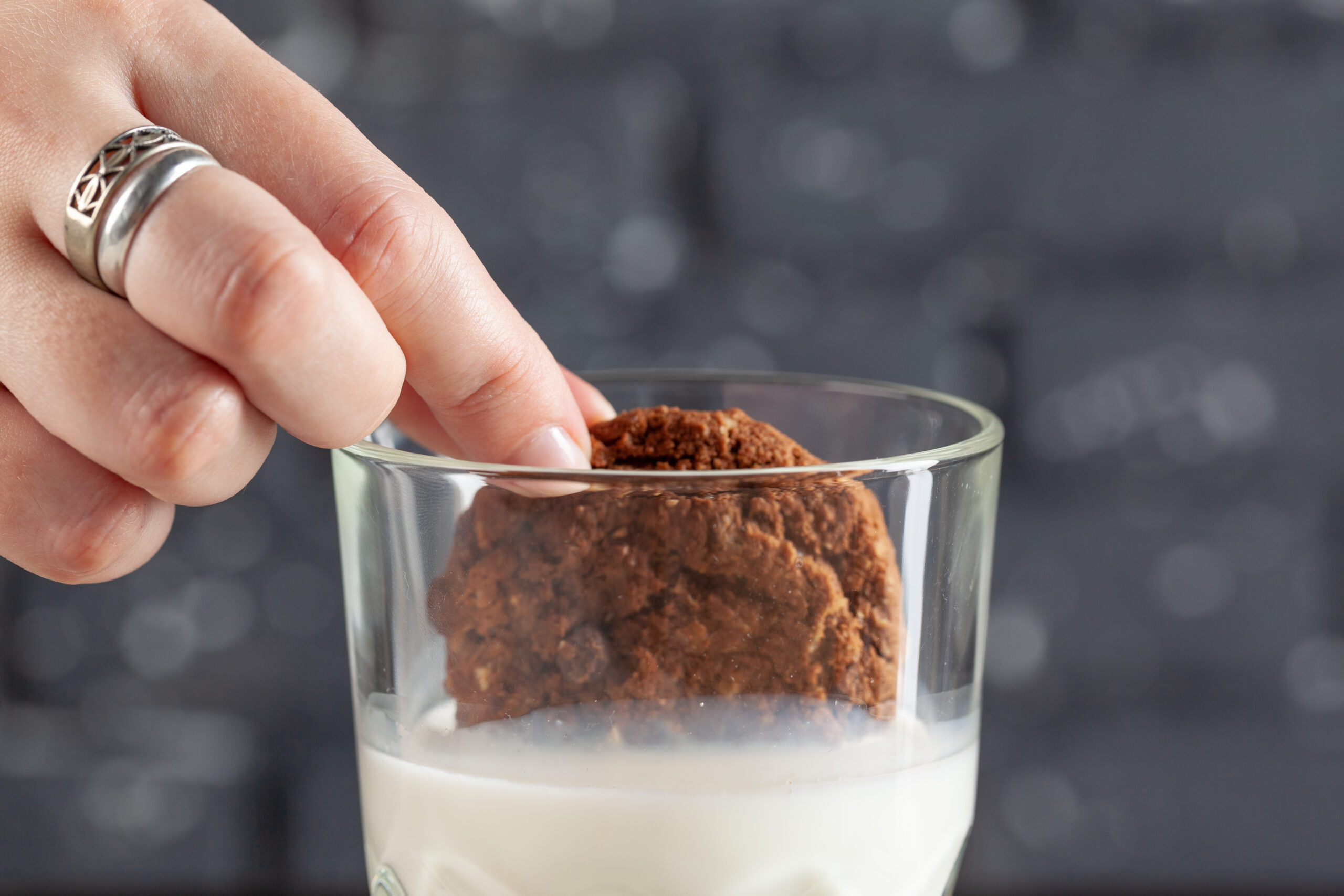
WHAT MAKES A GOOD PROTEIN COOKIE RECIPE?
A good protein cookie recipe has to clear three bars at once.
The protein number per serving has to be high enough to support your daily intake. The cookie has to bake into something you want to eat. And the calories have to fit the goal behind the snack.
Most protein cookie recipes online hit one of those requirements. The better ones nail all three.
Here is what to look for when you’re searching for protein cookie recipes:
ENOUGH PROTEIN PER COOKIE
A single protein cookie should have between 5 and 10 grams of protein, depending on its size. A serving of one or two cookies should land between 10 and 20 grams.
One cookie is good when you want a small snack to hold you over or to top off a meal that is already close to your daily protein target.
Two cookies are better when there is a longer gap before your next meal, when you finished training and need to put 20 grams of protein toward recovery, or when your daily protein number is running short heading into the evening.
A cookie that has a couple grams of protein is closer to a regular cookie with a little powder thrown in. The name says protein cookie, but the serving does not back it up.
A SOFT CENTER AND A CHEWY EDGE
A protein cookie should have a texture like a cookie. The edge should have a little chewiness to it. The middle should stay soft for two or three days after you bake it. When you break one in half, the inside should look slightly underbaked, not dry or sandy.
Most protein cookies come out wrong for one reason. The recipe leans on protein powder for the protein and asks the rest of the ingredients to clean up after it.
Protein powder pulls water out of the dough during baking, and a cookie short on water comes out hard.
A few ingredient choices keep the texture where you want it.
Almond flour and oat flour ensure the cookie has body without drying it out the way regular flour does in a low-fat recipe.
Almond butter, peanut butter, or a tablespoon of coconut oil keeps fat in the dough so the center bakes soft.
An egg or a tablespoon of ground flaxseeds mixed with water binds the dough, so the cookie does not crumble when you pick it up.
Pull the cookies out of the oven when the edges are set but the centers still look a little soft. They keep cooking on the pan for another minute or two after they come out.
A RECIPE THAT FITS YOUR GOAL
Before you pick a recipe, figure out what you want the cookie to do.
If the cookie is replacing the candy bar you would have grabbed at 3 p.m., calories take priority over carbs.
Stay closer to 100 to 130 calories per cookie. Almond flour, monk fruit, and sugar free chocolate chips keep the dough light without dropping the protein. The cookie still tastes like a treat, but it does not erase a fat loss day in a single snack.
If the cookie is fueling a hard training session or going on top of a dinner that came in light, calories should be higher on purpose.
A cookie at 150 to 200 calories with oat flour, peanut butter, and a few semi-sweet chocolate chips brings carbs, fat, and protein together. That is the cookie that helps a 200-pound lifter close the gap on a 3,000-calorie day.
If the cookie is the dessert you eat at the end of the night, flavor leads.
Double chocolate cookies, gingersnap cookies, or chocolate chip zucchini cookies made with chocolate fudge brownie or frosted cinnamon bun protein powder still work as dessert. Just keep an eye on the serving size so a dessert does not turn into a 600-calorie second dinner.
If the cookie has to be vegan, the dough needs help that whey protein-based recipes do not.
Plant protein pulls water out of dough faster, and the cookies dry out at the edges if the recipe is not adjusted. More almond butter, a flax egg, or an extra spoonful of non-dairy milk keeps the texture soft.
The recipes below are split into those four buckets. Pick the cookie before you pick the ingredient list, and the recipe section gets a lot easier to use.
HOW MUCH PROTEIN DO YOU NEED EACH DAY?
Daily protein needs run between 0.7 and 1.0 grams per pound of bodyweight, depending on your goal.
If you are trying to lose fat, you sit at the top of that range. If you are trying to gain muscle, you land in the middle to upper range. If you want to maintain what you have, you sit at the lower end. You can use our Protein Calculator to determine your needs.
The three subsections below show what that looks like in practice and how a protein cookie can support each goal.
DAILY PROTEIN TARGET FOR FAT LOSS
For fat loss, aim for 0.9 to 1.0 grams of protein per pound of bodyweight per day. Some examples:
- A 165-pound person needs about 150 to 165 grams.
- A 195-pound person needs about 175 to 195 grams.
- A 225-pound person needs about 200 to 225 grams.
The reason the number runs higher in a fat loss phase is that you are eating fewer calories than your body burns, and that deficit puts your muscle tissue at risk of being broken down for fuel along with the fat.
More protein gives your body a reason to hold onto the muscle while you lose the weight you came to lose.
A protein cookie supports a fat loss phase when the recipe is created with almond flour or coconut flour, a natural sweetener like monk fruit or maple sugar, and sugar free chocolate chips.
A cookie with 100 to 130 calories with 8 to 10 grams of protein provides a healthy dessert that works within a calorie deficit.
The fat loss recipes below use those ingredients on purpose, so you do not eat your way out of progress.
DAILY PROTEIN TARGET FOR MUSCLE GAIN
For muscle gain, aim for 0.8 to 1.0 grams of protein per pound of bodyweight per day. For example:
- A 165-pound person targets about 130 to 165 grams.
- A 195-pound person targets about 155 to 195 grams.
- A 225-pound person targets about 180 to 225 grams.
You do not need to eat more protein than that to build muscle. Beyond about 1.0 gram per pound, the extra protein does not guarantee you extra muscle. It just adds calories you could have used for carbs or fats that fuel your training better.
What changes in a muscle gain phase is the calorie load around the cookie.
A bigger cookie that’s made with oat flour, natural peanut butter, dark chocolate chips, and a scoop of vanilla protein powder can run 150 to 200 calories with 10 grams of protein.
It’s the kind of cookie that helps you hit your daily caloric intake without forcing in another full meal. Not to mention that a glass of milk on the side adds another 8 grams of protein and another 100 calories of fuel.
DAILY PROTEIN TARGET FOR MAINTENANCE
Finally, if you’re aiming for maintenance and general wellness goals, I’d recommend around 0.7 to 0.8 grams of protein per pound of bodyweight per day. That looks like:
- A 165-pound person targets about 115 to 130 grams.
- A 195-pound person targets about 135 to 155 grams.
- A 225-pound person targets about 155 to 180 grams.
The number is lower because you are not in a deficit and you are not pushing for new size. You just need enough protein to maintain the muscle you already have and recover from your training.
A lighter snack-sized version with 6 to 8 grams of protein covers a quiet afternoon. A bigger cookie made with cottage cheese or Greek yogurt mixed into the dough is great for when training was harder than usual. A simple peanut butter or chocolate chip recipe works on a regular day.
The whey or plant-based protein you keep in the kitchen does the work either way.
PROTEIN COOKIES VS. STORE-BOUGHT PROTEIN COOKIES
The cookie at the grocery store and the cookie you bake at home tell two different stories.
The front of the package looks similar. Both can advertise 15 to 20 grams of protein per cookie.
What’s on the back tells a different story.
THE LABEL PROBLEM
Read the back of a typical store-bought protein cookie from top to bottom.
Seed oils show up high on the list.
Soybean oil, palm kernel oil, canola oil, and sunflower oil are cheap, shelf-stable, and easy to bake with at scale. They also push the calorie count up without adding anything to the protein number on the front of the wrapper.
Keep going down the ingredient list and the additives show up.
Sugar alcohols like maltitol and sorbitol that upset digestion. Glycerin to keep the cookie soft for six months.
Soy protein isolate or a blend of cheaper protein sources are combined to hit the gram count without using more expensive whey protein.
Further down, refined sugar appears under one of its other names.
Cane sugar. Brown rice syrup. Tapioca syrup. The sweetness in the cookie comes from those, not from the protein.
That is the trade-off you take in exchange for convenience.
WHAT CHANGES WHEN YOU BAKE AT HOME
A homemade protein cookie cuts that list down to ingredients you recognize.
Start with the protein.
Aim for a scoop of a high-quality whey protein or a plant-based powder instead of relying on cheaper blends used to inflate the label claim.
For the fat, a few tablespoons of natural peanut butter or coconut oil step in for several seed oils.
To sweeten, maple sugar, monk fruit, or a small handful of dark chocolate chips as mix ins take over for refined sugar and sugar alcohols.
You end up with a refined sugar free option at home that most store-bought brands cannot match.
Storage gets simpler too.
Baked protein cookies kept in mason jars on the counter or in the fridge stay good for about a week without preservatives.
Dough rolled into a log and frozen keeps for a month.
The cookie tastes better, sits easier in your stomach, and slots cleaner into your daily nutrition than the packaged version.
THE CONVENIENCE TRADE-OFF
A store-bought protein cookie wins on convenience. You can drop one in a bag, keep one in your desk, and grab it without thinking. If you are stuck somewhere with no other protein option, a packaged cookie beats skipping protein entirely.
A homemade protein cookie wins on everything else. The ingredients are cleaner, the cost per serving comes out lower, and the recipe matches your goal instead of whatever a brand decided was close enough.
The recipes below take that approach.
COMMON MISTAKES WHEN MAKING PROTEIN COOKIES
When a protein cookie recipe comes out wrong, the problem traces back to one of five mistakes.
Thankfully, each one has a clean fix.
Here’s what to avoid when you’re making a batch of protein cookies:
TOO MUCH PROTEIN POWDER
Adding a second scoop of powder hoping for a protein boost is the most common way a batch comes out dry.
Powder pulls moisture out of the dough during baking.
One scoop, around 25 grams, makes sense inside a recipe that already accounts for it. A second adds another 25 grams of dehydrated material that demands liquid the recipe does not have.
And what happens? The cookie comes out crumbly at the edges and has that weird chalky texture to it.
The fix is to leave the powder count at one scoop and get the rest of the protein from somewhere else like cottage cheese or Greek yogurt.
NO STRUCTURE IN THE DOUGH
A protein cookie needs the same structural support as a regular cookie.
Skip the egg and the cookies break apart on the baking sheet. Use only almond flour and the dough crumbles. Use only oat flour and the cookie comes out heavy and dense.
A cleaner approach uses a blend.
Use about 1 cup of oat flour and 1/2 cup of almond flour to create a texture closer to a classic chocolate chip cookie. The oat flour helps the cookie hold together, while the almond flour keeps it softer and less dry.
One whole egg or one tablespoon of ground flaxseeds mixed with three tablespoons of water binds the cookie together, so it spreads without breaking.
A teaspoon of baking soda or baking powder lifts the cookies, so they do not bake flat. A small pinch of coarse salt and a half teaspoon of vanilla extract round out the flavor.
For a gluten free or keto friendly version, almond flour and a tablespoon of coconut flour do the same job without the oats.
OVERBAKING THE COOKIES
Overbaking is the single biggest reason a protein cookie comes out hard.
Most recipes call for 9 to 11 minutes at 350°F. Ninety seconds past that point, the cookies cross from soft to chalky.
Pull them when the edges are set but the centers still look slightly underdone. They keep cooking for another two minutes after they come out of the oven.
Move them to a wire rack once the centers firm up. The rack keeps the bottoms from steaming and going soggy. If you used parchment paper on the baking sheet, slide the whole sheet onto the rack to save a step.
For a faster bake with a smaller batch, you can use an air fryer at 325°F for about 6 to 8 minutes. Watch the edges closely because air fryers run hotter than ovens at the same temperature.
MIX-INS THAT CHANGE THE MACROS
Mix-ins are put into the dough before baking, not added on top after, so what gets in there stays in there.
A 1/4 cup of chocolate chips spread across a 12-cookie batch adds about 16 calories and 2 grams of sugar per cookie. Push that to 1/2 cup and the numbers double.
A 1/2 cup of peanut butter used in the same batch adds about 65 calories per cookie on top of whatever was already in the recipe.
None of those numbers are bad on their own. Use two or three of those add-ins in the same batch, and a cookie listed at 130 calories can land closer to 220 calories.
Measure mix ins instead of pouring them in. A kitchen scale or measuring cup keeps the cookie’s macros where the recipe says they are.
NO PORTION CONTROL
A protein cookie recipe says it makes 12 cookies. The batch comes out as 8 cookies because the dough got scooped bigger.
Eight full-sized cookies from a batch written for 12 means each cookie has 50 percent more calories, 50 percent more carbs, and 50 percent more fat than the original numbers said.
I highly recommend using a 1.5 tablespoon cookie scoop. I’ve found that it delivers a consistent 12-cookie batch every time.
A kitchen scale set to 30 grams per dough ball does the same thing.
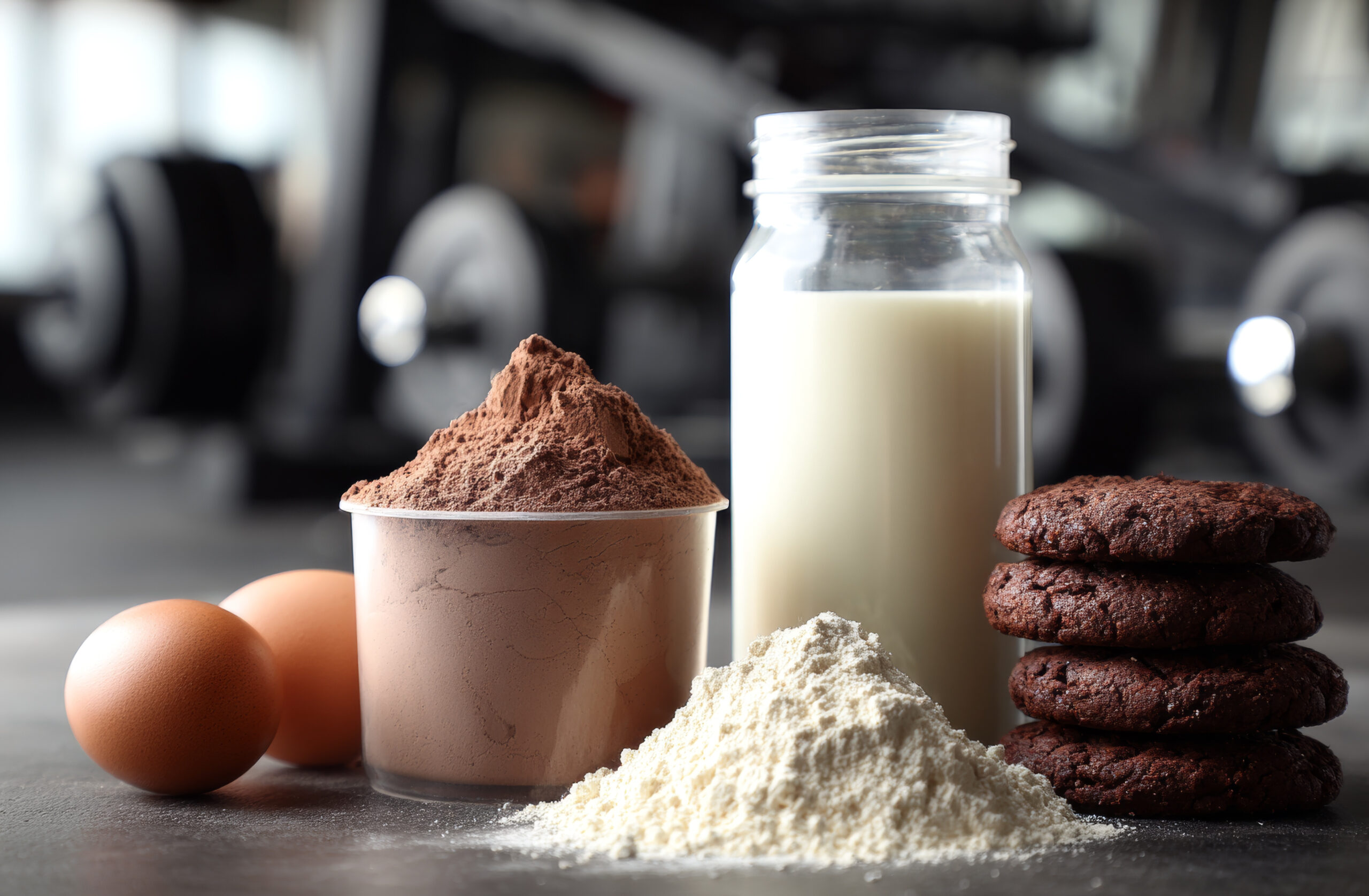
HOW TO BUILD A BETTER PROTEIN COOKIE
Four ingredient categories control how a protein cookie turns out: the protein source, the flour base, the fat and binder, and the small ingredients that handle sweetness, salt, and lift.
Each one shapes the dough in a different way.
The protein source sets the gram count per cookie. The flour determines whether the cookie comes out chewy, cake-like, or dense.
The fat keeps the center soft, and the binder holds the cookie together, so it does not crumble. The sweetener and the lift decide how the cookie tastes and whether it spreads flat or stays domed.
Change one of those ingredients, and at least one other often has to change with it.
I’ll cover plenty of protein cookie recipes below, but just in case you want to get creative and make your own recipes, be sure to follow these guidelines:
THE PROTEIN POWDER
A 30-gram-per-scoop powder carries the highest leverage in a cookie recipe.
ATHLEAN-RX PRO-30G covers a 12-cookie batch with one scoop and lands the protein where it needs to be without forcing a second scoop that would dry out the dough.
My favorite thing about this protein powder is that the flavor you use is what the cookie will actually taste like. You don’t have to worry about your favorite flavor getting “cooked out” of the batch like a lot of plain whey options that flatten into a generic protein flavor once they hit the oven.
As far as what type of protein powder to use: whey is the smoothest choice for cookie dough. It blends into the wet ingredients quickly and bakes into a softer center.
That doesn’t mean you can’t use plant-based protein. You just need another tablespoon of fat or another splash of non-dairy milk to keep the texture in line since plant-based recipes tend to absorb more liquid and bake denser.
If you really want a bigger protein boost without winding up with cardboard cookies, you can throw in a second protein source.
For example, a 1/2 cup of cottage cheese folded into the dough adds about 12 grams of protein and softens the texture. A 1/2 cup of Greek yogurt does the same with a tangier finish.
Also, these ingredient swaps are a perfect starting point for cottage cheese cookie dough and other healthy cookie dough versions you eat raw instead of baking.
For any protein cookie dough you plan to eat raw, the flour has to be heat-treated first.
Raw flour can carry bacteria and skipping that step is the most common food safety mistake people make with edible protein cookie dough recipes.
Heat-treating the flour at 350°F for 5 to 7 minutes spread on a baking sheet handles food poisoning risk before the dough is mixed.
THE FLOUR
The flour helps the cookie hold its shape as it bakes and plays a major role in the final texture once it cools. Three flours cover most protein cookie recipes.
Oat flour creates a chewier texture and a familiar look. It anchors classic chocolate chip recipes, oatmeal-style cookies, and any cookie that should taste like a regular cookie with more protein. About 1 cup of oat flour works for a 12-cookie batch.
For a softer, more cake-like texture, switch to almond flour. It also drops the carb count, which is why it shows up in the fat loss recipes below. Use 1 to 1 1/4 cups in place of oat flour and add an extra tablespoon of liquid since almond flour makes the recipe drier than oat flour.
Coconut flour is the most absorbent of the three. About 2 to 3 tablespoons can thicken a dough that came out too wet, but coconut flour as the only flour needs more eggs and more liquid than oat or almond flour for the recipe to work. It works well for keto and gluten free recipes that are lower carb.
A two-flour blend often results in a better texture than one flour alone. About 3/4 cup oat flour with 1/4 cup almond flour, or 1 cup almond flour with 2 tablespoons coconut flour, works better for structure and texture than a single flour.
THE FAT AND BINDER
Fat keeps the cookie soft. The binder holds it together. Most recipes split these two jobs across two ingredients.
Natural peanut butter and almond butter handle fat and flavor in the same step. About 1/4 cup of either adds richness, helps the cookie spread on the baking sheet, and prevents the center from drying out.
Almond butter has a milder flavor. Peanut butter has more punch. Either one suits the chocolate, vanilla, and cinnamon recipes below.
Coconut oil is the more neutral fat. Two tablespoons of melted coconut oil softens the dough without a nutty flavor profile getting in the way.
For binding, one whole egg holds a 12-cookie batch together and adds about 6 grams of protein on top of what one scoop of powder already provides.
For a vegan version, one tablespoon of ground flaxseeds whisked with three tablespoons of water sits for five minutes and becomes a flax egg. A flax egg binds the dough about as well as a regular egg, though the cookies come out slightly denser.
SWEETENERS AND LIFT
The sweetener determines the calorie tradeoff. The lift determines whether the cookie spreads flat or stays domed. The small ingredients finish the flavor.
Maple sugar brings a soft caramel note and can be used in muscle gain recipes where carbs are welcome.
Monk fruit and stevia keep the carb count lower and work well for fat-loss recipes. Most natural sweetener options swap in at a 1:1 ratio with cane sugar, though monk fruit blends run sweeter than sugar by volume, so check the package before adjusting.
For the gingersnap recipe that you’ll see later in this article, combining a tablespoon of blackstrap molasses with the ginger brings the depth and slight bitterness to help the flavor of recipe come out right.
Baking soda makes a cookie spread. Baking powder makes a cookie rise. Most recipes use 1/2 teaspoon of one or the other, depending on whether the cookie should bake flatter and chewier (baking soda) or thicker and more cake-like (baking powder).
A pinch of coarse salt and a 1/2 teaspoon of vanilla extract help finish the flavor. Both amounts are small but skipping either one leaves the cookie tasting a little bland.
GROCERY LIST FOR WHEY-BASED PROTEIN COOKIES
Use this as your quick store checklist for whey-based protein cookies.
Whey can make a cookie dry fast, so the goal is to pair it with ingredients that keep the texture soft, the flavor balanced, and the protein high without turning the recipe into a brick.
PROTEIN SOURCES
- ATHLEAN-RX PRO-30G
- cottage cheese
- Greek yogurt
- eggs
FLOUR BASES
- oat flour
- almond flour
- coconut flour
FATS AND BINDERS
- natural peanut butter
- almond butter
- coconut oil
SWEETENERS AND LIFT
- maple sugar
- monk fruit or stevia
- vanilla extract
- baking soda
- baking powder
- coarse salt
- dark chocolate chips
- blackstrap molasses
GROCERY LIST FOR PLANT-BASED PROTEIN COOKIES
Use this as your quick store checklist for plant-based protein cookies.
Plant protein powders absorb more moisture than whey, so you need ingredients that help the dough stay soft, hold together, and taste like a cookie instead of protein powder with chocolate chips.
PROTEIN SOURCES
- ATHLEAN-RX PRO-30G (Vegan)
- non-dairy milk
FLOUR BASES
- oat flour
- almond flour
- coconut flour
FATS AND BINDERS
- natural peanut butter
- almond butter
- coconut oil
- ground flaxseeds (for the flax egg)
SWEETENERS AND LIFT
- maple sugar
- monk fruit or stevia
- vanilla extract
- baking soda
- baking powder
- coarse salt
- dairy-free dark chocolate chips
THE BEST PROTEIN COOKIE RECIPES
The recipes below are split into four categories: muscle growth, fat loss, dessert and snack, and plant based.
Each recipe names the goal it supports, the format it bakes in, and which PRO-30G flavor pairs with it.
Choose the recipe that lines up with your goal for the week, then build the cookie around that.
Each recipe includes the ingredients, the directions, the serving size, and the nutritional information.
A note on rotating flavors: every recipe below names one PRO-30G flavor, but most of the recipes work with two or three other flavors. The flavor swaps are listed at the end of each recipe, so you’ll get a different cookie every time you bake.

MUSCLE GROWTH PROTEIN COOKIES
Muscle growth protein cookies are the larger, more filling recipes of the batch.
They are the way to go when training is harder than usual, when dinner came in light and you need to close the gap before bed, or when a snack between meals needs to do more than hold you over.
Two cookies with a glass of milk make a great post-workout snack with enough carbs to refill what you used in the gym and enough protein to start the recovery process.
PEANUT BUTTER CHOCOLATE CHIP PROTEIN COOKIES
Peanut butter brings the fat and flavor, oat flour helps to make the cookie chewy, and Frosted Cinnamon Bun PRO-30G adds a soft cinnamon roll note that pairs with the peanut butter better than a plain vanilla powder.
NUTRITIONAL INFORMATION
- Prep Time: 10 minutes
- Bake Time: 11 minutes
- Yield: 12 cookies
- Serving Size: 1 cookie
- Calories Per Serving: about 155
- Protein Per Serving: about 7 grams
INGREDIENTS
- 1 cup oat flour
- 1 scoop ATHLEAN-RX PRO-30G Frosted Cinnamon Bun
- 1/2 teaspoon baking soda
- 1/4 teaspoon coarse salt
- 1/2 cup natural peanut butter
- 1 large egg
- 1/4 cup maple sugar
- 1 teaspoon vanilla extract
- 1/3 cup semi-sweet chocolate chips
DIRECTIONS
- Preheat the oven to 350°F and line a baking sheet with parchment paper.
- In a medium bowl, whisk the oat flour, Frosted Cinnamon Bun PRO-30G, baking soda, and coarse salt.
- In a separate bowl, whisk the peanut butter, egg, maple sugar, and vanilla extract until smooth.
- Pour the wet ingredients into the dry ingredients and stir until a thick dough forms.
- Fold in the semi-sweet chocolate chips.
- Scoop the dough into 12 even portions using a 1.5 tablespoon cookie scoop and place them on the baking sheet about 2 inches apart.
- Press each ball down lightly with the back of a spoon.
- Bake for 10 to 11 minutes, until the edges are set and the centers still look slightly soft.
- Transfer the cookies to a wire rack and let them cool for 10 minutes before serving.
FLAVOR SWAPS
- Belgian Maple Waffle PRO-30G works in place of Frosted Cinnamon Bun for a more breakfast-style flavor.
- Cookies and Cream PRO-30G is better if you want something that’s more like a dessert.
OATMEAL CHOCOLATE CHIP BULK COOKIES
This recipe leans heavier on oats than the peanut butter version. Rolled oats make the cookie chewier and add a heartier bite. Belgian Maple Waffle PRO-30G adds a maple sweetness that pairs with the oats the way a stack of pancakes pairs with syrup.
NUTRITIONAL INFORMATION
- Prep Time: 10 minutes
- Bake Time: 12 minutes
- Yield: 12 cookies
- Serving Size: 1 cookie
- Calories Per Serving: about 160
- Protein Per Serving: about 6 grams
INGREDIENTS
- 1 cup rolled oats
- 1/2 cup oat flour
- 1 scoop ATHLEAN-RX PRO-30G Belgian Maple Waffle
- 1/2 teaspoon baking soda
- 1/2 teaspoon ground cinnamon
- 1/4 teaspoon coarse salt
- 1/3 cup almond butter
- 1 large egg
- 3 tablespoons maple sugar
- 2 tablespoons coconut oil, melted
- 1 teaspoon vanilla extract
- 1/3 cup semi-sweet chocolate chips
DIRECTIONS
- Preheat the oven to 350°F and line a baking sheet with parchment paper.
- In a large bowl, whisk the rolled oats, oat flour, Belgian Maple Waffle PRO-30G, baking soda, ground cinnamon, and coarse salt.
- In a separate bowl, whisk the almond butter, egg, maple sugar, melted coconut oil, and vanilla extract until smooth.
- Pour the wet ingredients into the dry ingredients and stir until a thick dough forms.
- Fold in the semi-sweet chocolate chips.
- Scoop the dough into 12 even portions using a 1.5 tablespoon cookie scoop and place them on the baking sheet about 2 inches apart.
- Press each ball down lightly with the back of a spoon. The dough does not spread as much as the peanut butter cookies, so shape them before they bake.
- Bake for 11 to 12 minutes, until the edges are set and the centers still look slightly soft.
- Transfer the cookies to a wire rack and let them cool for 10 minutes before serving.
FLAVOR SWAPS
- Go with Frosted Cinnamon Bun PRO-30G if you want a more cinnamon-forward cookie.
- French Vanilla Bean PRO-30G works for a cleaner oatmeal flavor without the maple note.
BANANA NUT PROTEIN COOKIES
Banana brings the carbs and the soft texture that makes a muscle growth cookie feel like dessert instead of a denser protein bar pressed into shape. Walnuts add a chewy fat profile that holds up against the bigger size, and French Vanilla Bean PRO-30G keeps the flavor clean so the banana and walnut lead.
NUTRITIONAL INFORMATION
- Prep Time: 10 minutes
- Bake Time: 12 minutes
- Yield: 12 cookies
- Serving Size: 1 cookie
- Calories Per Serving: about 190
- Protein Per Serving: about 7 grams
INGREDIENTS
- 1 cup oat flour
- 1 scoop ATHLEAN-RX PRO-30G French Vanilla Bean
- 1/2 teaspoon baking soda
- 1/2 teaspoon ground cinnamon
- 1/4 teaspoon coarse salt
- 1 large ripe banana, mashed
- 2 large eggs
- 1/2 cup plain Greek yogurt
- 1/4 cup cottage cheese
- 1/4 cup maple sugar
- 3 tablespoons coconut oil, melted
- 1 teaspoon vanilla extract
- 1/2 cup chopped walnuts
- 1/2 cup semi-sweet chocolate chips
DIRECTIONS
- Preheat the oven to 350°F and line a baking sheet with parchment paper.
- In a medium bowl, whisk the oat flour, French Vanilla Bean PRO-30G, baking soda, ground cinnamon, and coarse salt.
- In a separate bowl, mash the banana with a fork until smooth. Whisk in the eggs, Greek yogurt, cottage cheese, maple sugar, melted coconut oil, and vanilla extract until combined.
- Pour the wet ingredients into the dry ingredients and stir until a thick dough forms.
- Fold in the chopped walnuts and semi-sweet chocolate chips.
- Scoop the dough into 12 even portions using a 1.5 tablespoon cookie scoop and place them on the baking sheet about 2 inches apart.
- Press each ball down lightly with the back of a spoon. The dough is wetter than the other muscle growth recipes because of the banana, so the cookies spread on their own.
- Bake for 11 to 12 minutes, until the edges are set and the centers still look slightly soft.
- Transfer the cookies to a wire rack and let them cool for 15 minutes before serving. The banana and Greek yogurt make these cookies softer when warm, so the cooling step keeps them from breaking.
FLAVOR SWAPS
- Want a maple-banana flavor combination? Opt for Belgian Maple Waffle PRO-30G.
- Frosted Cinnamon Bun PRO-30G also pairs with the banana for a cinnamon-banana bread cookie.

FAT LOSS PROTEIN COOKIES
Fat loss protein cookies are perfect when calories are tight, when a snack needs to support a deficit instead of working against it, or when an evening sweet craving threatens to undo a clean day of eating.
Most of the cookies in this category run 100 to 150 calories each.
The cottage cheese cookie dough runs slightly higher because the cottage cheese and oat flour together carry more density per spoonful.
One cookie or one portion of dough is perfect as a post-workout treat that keeps protein up and calories in check at the same time.
COTTAGE CHEESE EDIBLE PROTEIN COOKIE DOUGH
This recipe skips the oven. Cottage cheese cookie dough has been a fat loss favorite for the last few years because the cottage cheese blends into something that tastes like classic edible protein cookie dough while keeping the calories in a sensible range. French Vanilla Bean PRO-30G adds the vanilla note that turns the cottage cheese into a healthy cookie dough you eat by the spoonful.
A note on food safety: raw flour can carry bacteria that cause food poisoning, so the oat flour gets toasted in the oven first. Five to seven minutes at 350°F handles the food poisoning risk before the dough is mixed.
NUTRITIONAL INFORMATION
- Prep Time: 10 minutes (plus 5 to 7 minutes to heat-treat the flour)
- Chill Time: 30 minutes
- Yield: 6 servings
- Serving Size: 3 tablespoons
- Calories Per Serving: about 165
- Protein Per Serving: about 12 grams
INGREDIENTS
- 1/2 cup oat flour, heat-treated
- 1 scoop ATHLEAN-RX PRO-30G French Vanilla Bean
- 1/4 teaspoon coarse salt
- 1 cup full-fat cottage cheese
- 2 tablespoons natural peanut butter
- 1 tablespoon maple sugar
- 1 teaspoon vanilla extract
- 1/4 cup mini dark chocolate chips
DIRECTIONS
- Heat-treat the oat flour first. Preheat the oven to 350°F. Spread the oat flour on a baking sheet lined with parchment paper. Bake for 5 to 7 minutes, stirring once halfway through. Let it cool completely before mixing.
- Add the cottage cheese to a food processor and blend for 30 to 60 seconds until smooth and creamy. The cottage cheese should not have any visible curds left.
- Add the peanut butter, maple sugar, and vanilla extract to the food processor. Blend for another 15 seconds until combined.
- Transfer the cottage cheese mixture to a medium bowl.
- Stir in the cooled heat-treated oat flour, French Vanilla Bean PRO-30G, and coarse salt until a thick dough forms.
- Fold in the mini dark chocolate chips.
- Divide the dough into 6 equal portions and store them in mason jars or sealed containers in the refrigerator.
- Chill for at least 30 minutes before serving so the dough firms up.
STORAGE NOTES
The dough keeps in the refrigerator for up to 5 days. Mason jars are the cleaner storage option because the wide mouth lets you scoop straight from the jar without making a mess.
FLAVOR SWAPS
- Frosted Cinnamon Bun PRO-30G pairs well with a snickerdoodle-style dough.
ALMOND FLOUR LOW-CARB KETO PROTEIN COOKIES
This recipe replaces oat flour with almond flour and swaps maple sugar for monk fruit. The result is a keto friendly, gluten free cookie that runs about 4 grams of net carbs per cookie instead of the 18 to 22 grams in the muscle growth recipes.
NUTRITIONAL INFORMATION
- Prep Time: 10 minutes
- Bake Time: 11 minutes
- Yield: 12 cookies
- Serving Size: 1 cookie
- Calories Per Serving: about 150
- Protein Per Serving: about 7 grams
INGREDIENTS
- 1 1/4 cups almond flour
- 1 scoop ATHLEAN-RX PRO-30G Cookies and Cream
- 1/2 teaspoon baking soda
- 1/4 teaspoon coarse salt
- 1/4 cup almond butter
- 1 large egg
- 3 tablespoons monk fruit sweetener
- 2 tablespoons coconut oil, melted
- 1 teaspoon vanilla extract
- 1/3 cup sugar free chocolate chips
DIRECTIONS
- Preheat the oven to 350°F and line a baking sheet with parchment paper.
- In a medium bowl, whisk the almond flour, Cookies and Cream PRO-30G, baking soda, and coarse salt.
- In a separate bowl, whisk the almond butter, egg, monk fruit sweetener, melted coconut oil, and vanilla extract until smooth.
- Pour the wet ingredients into the dry ingredients and stir until a thick dough forms. The dough is softer than oat flour dough because almond flour holds less structure on its own.
- Fold in the sugar free chocolate chips.
- Scoop the dough into 12 even portions using a 1.5 tablespoon cookie scoop and place them on the baking sheet about 2 inches apart.
- Press each ball down lightly with the back of a spoon. Almond flour cookies do not spread as much as oat flour cookies, so shape them before baking.
- Bake for 10 to 11 minutes, until the edges are golden and the centers still look slightly soft.
- Transfer the cookies to a wire rack and let them cool for 10 minutes before serving. Almond flour cookies are fragile when warm and firm up as they cool.
FLAVOR SWAPS
- French Vanilla Bean PRO-30G is the better choice for a classic vanilla cookie.
- Chocolate Fudge Brownie PRO-30G also works with the sugar free chocolate chips for a double chocolate keto cookie.
LEMON VANILLA PROTEIN COOKIES
Most protein cookies lean on chocolate or peanut butter to carry the flavor. This one leans on lemon and vanilla. Greek yogurt replaces nut butter as the fat source. This drops calories and adds protein at the same time. French Vanilla Bean PRO-30G pairs with lemon zest for a soft, bright cookie that finishes clean.
NUTRITIONAL INFORMATION
- Prep Time: 10 minutes
- Bake Time: 11 minutes
- Yield: 12 cookies
- Serving Size: 1 cookie
- Calories Per Serving: about 105
- Protein Per Serving: about 7 grams
INGREDIENTS
- 1 1/4 cups almond flour
- 1 scoop ATHLEAN-RX PRO-30G French Vanilla Bean
- 1/2 teaspoon baking powder
- 1/4 teaspoon coarse salt
- 1/2 cup plain nonfat Greek yogurt
- 2 large eggs
- 3 tablespoons monk fruit sweetener
- 1 tablespoon coconut oil, melted
- 2 tablespoons fresh lemon juice
- 1 tablespoon lemon zest (from about 1 large lemon)
- 1 teaspoon vanilla extract
DIRECTIONS
- Preheat the oven to 350°F and line a baking sheet with parchment paper.
- In a medium bowl, whisk the almond flour, French Vanilla Bean PRO-30G, baking powder, and coarse salt.
- In a separate bowl, whisk the Greek yogurt, eggs, monk fruit sweetener, melted coconut oil, lemon juice, lemon zest, and vanilla extract until smooth.
- Pour the wet ingredients into the dry ingredients and stir until a thick dough forms. The dough is softer than a typical cookie dough because of the Greek yogurt.
- Scoop the dough into 12 even portions using a 1.5 tablespoon cookie scoop and place them on the baking sheet about 2 inches apart.
- Press each ball down lightly with the back of a spoon. The cookies hold their shape rather than spreading on their own, so flatten them to the thickness you want before baking.
- Bake for 10 to 11 minutes, until the edges are set and the centers still look slightly soft.
- Transfer the cookies to a wire rack and let them cool for 10 minutes before serving. The lemon flavor sharpens as the cookies cool.
FLAVOR SWAPS
- Vanilla Bean (Vegan) PRO-30G also pairs with the lemon profile if you want to swap the dairy for non-dairy yogurt and replace the eggs with two flax eggs.
DESSERT / SNACK PROTEIN COOKIES
Dessert and snack protein cookies are the recipes that put flavor first.
They fit when the night is closing out and a cookie is what you want, when a holiday batch needs to taste like a holiday cookie and not like a protein bar in disguise, or when a richer flavor profile needs to lead the recipe.
DOUBLE CHOCOLATE FUDGE PROTEIN COOKIES
This is the richest cookie on the list. Cocoa powder and Chocolate Fudge Brownie PRO-30G work together to create a cookie that tastes like a brownie pressed into cookie shape.
NUTRITIONAL INFORMATION
- Prep Time: 10 minutes
- Bake Time: 11 minutes
- Yield: 12 cookies
- Serving Size: 1 cookie
- Calories Per Serving: about 195
- Protein Per Serving: about 6 grams
INGREDIENTS
- 1 cup oat flour
- 1/4 cup unsweetened cocoa powder
- 1 scoop ATHLEAN-RX PRO-30G Chocolate Fudge Brownie
- 1/2 teaspoon baking soda
- 1/4 teaspoon coarse salt
- 1/3 cup almond butter
- 1 large egg
- 1/4 cup maple sugar
- 2 tablespoons coconut oil, melted
- 1 teaspoon vanilla extract
- 1/2 cup dark chocolate chips
DIRECTIONS
- Preheat the oven to 350°F and line a baking sheet with parchment paper.
- In a medium bowl, whisk the oat flour, cocoa powder, Chocolate Fudge Brownie PRO-30G, baking soda, and coarse salt.
- In a separate bowl, whisk the almond butter, egg, maple sugar, melted coconut oil, and vanilla extract until smooth.
- Pour the wet ingredients into the dry ingredients and stir until a thick dough forms. The dough is darker and stiffer than a typical cookie dough because of the cocoa powder.
- Fold in the dark chocolate chips.
- Scoop the dough into 12 even portions using a 1.5 tablespoon cookie scoop and place them on the baking sheet about 2 inches apart.
- Press each ball down lightly with the back of a spoon.
- Bake for 10 to 11 minutes, until the edges are set and the centers still look slightly soft.
- Transfer the cookies to a wire rack and let them cool for 10 minutes before serving.
FLAVOR SWAPS
- Chocolate Coconut PRO-30G turns the recipe into a chocolate-coconut cookie that bakes well with shredded coconut folded into the dough.
- Chocolate Salted Caramel PRO-30G deepens the cookie with a salty caramel finish that pairs with the cocoa powder.
MINT CHOCOLATE CHIP PROTEIN COOKIES
Mint chocolate chip is one of the underused flavors in protein baking. Mint Chocolate Chip PRO-30G handles the mint flavor on its own, keeping the ingredient list short. Greek yogurt softens the dough, so the cookie comes out tender instead of crumbly.
NUTRITIONAL INFORMATION
- Prep Time: 10 minutes
- Bake Time: 11 minutes
- Yield: 12 cookies
- Serving Size: 1 cookie
- Calories Per Serving: about 175
- Protein Per Serving: about 6 grams
INGREDIENTS
- 1 cup oat flour
- 1/4 cup almond flour
- 1 scoop ATHLEAN-RX PRO-30G Mint Chocolate Chip
- 1/2 teaspoon baking soda
- 1/4 teaspoon coarse salt
- 1/4 cup plain Greek yogurt
- 1/4 cup almond butter
- 1 large egg
- 3 tablespoons maple sugar
- 2 tablespoons coconut oil, melted
- 1 teaspoon vanilla extract
- 1/2 cup semi-sweet chocolate chips
DIRECTIONS
- Preheat the oven to 350°F and line a baking sheet with parchment paper.
- In a medium bowl, whisk the oat flour, almond flour, Mint Chocolate Chip PRO-30G, baking soda, and coarse salt.
- In a separate bowl, whisk the Greek yogurt, almond butter, egg, maple sugar, melted coconut oil, and vanilla extract until smooth.
- Pour the wet ingredients into the dry ingredients and stir until a thick dough forms.
- Fold in the semi-sweet chocolate chips.
- Scoop the dough into 12 even portions using a 1.5 tablespoon cookie scoop and place them on the baking sheet about 2 inches apart.
- Press each ball down lightly with the back of a spoon.
- Bake for 10 to 11 minutes, until the edges are set and the centers still look slightly soft.
- Transfer the cookies to a wire rack and let them cool for 10 minutes before serving.
FLAVOR SWAPS
- The mint flavor profile is specific to Mint Chocolate Chip PRO-30G, so other PRO-30G flavors do not work with this recipe. Stick with the original flavor for this one.
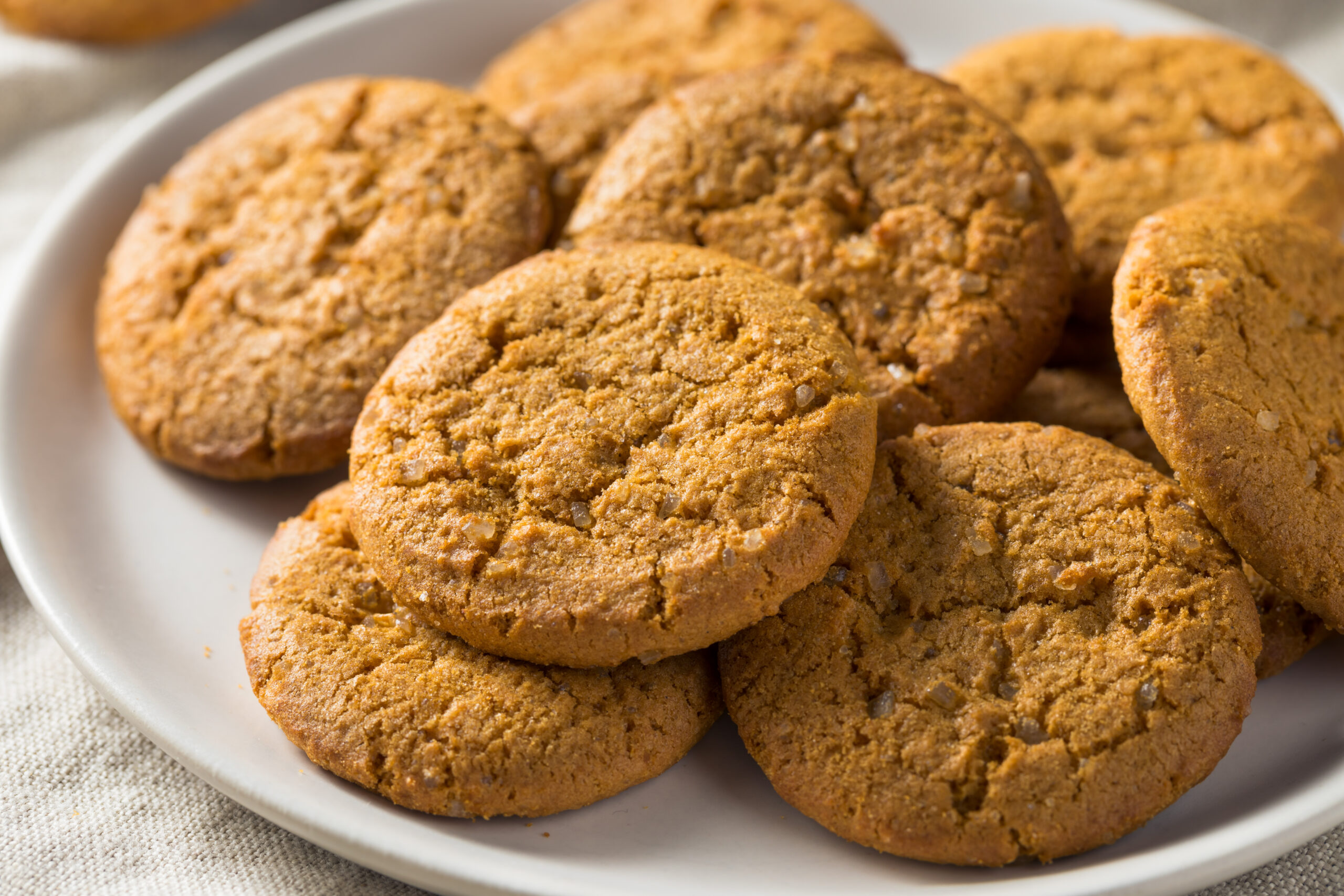
GINGERSNAP PROTEIN COOKIES
Most protein cookies play it safe with chocolate or vanilla. This one goes in a different direction. Ground ginger and blackstrap molasses bring the spice and rich flavor you expect from a traditional gingersnap. Frosted Cinnamon Bun PRO-30G adds the cinnamon and brown sugar notes that round out ginger and molasses.
NUTRITIONAL INFORMATION
- Prep Time: 10 minutes
- Bake Time: 12 minutes
- Yield: 12 cookies
- Serving Size: 1 cookie
- Calories Per Serving: about 160
- Protein Per Serving: about 5 grams
INGREDIENTS
- 1 1/4 cups oat flour
- 1 scoop ATHLEAN-RX PRO-30G Frosted Cinnamon Bun
- 1 1/2 teaspoons ground ginger
- 1 teaspoon ground cinnamon
- 1/4 teaspoon ground cloves
- 1/2 teaspoon baking soda
- 1/4 teaspoon coarse salt
- 1/4 cup almond butter
- 1 large egg
- 3 tablespoons maple sugar
- 1 tablespoon blackstrap molasses
- 2 tablespoons coconut oil, melted
- 1 teaspoon vanilla extract
DIRECTIONS
- Preheat the oven to 350°F and line a baking sheet with parchment paper.
- In a medium bowl, whisk the oat flour, Frosted Cinnamon Bun PRO-30G, ground ginger, ground cinnamon, ground cloves, baking soda, and coarse salt.
- In a separate bowl, whisk the almond butter, egg, maple sugar, blackstrap molasses, melted coconut oil, and vanilla extract until smooth. The molasses thickens the wet mixture, so it takes 30 seconds of whisking to bring the ingredients together.
- Pour the wet ingredients into the dry ingredients and stir until a thick dough forms.
- Scoop the dough into 12 even portions using a 1.5 tablespoon cookie scoop and place them on the baking sheet about 2 inches apart.
- Press each ball down lightly with the back of a spoon. Gingersnaps should be flatter and crispier than soft cookies, so flatten the dough balls more than you would for the other recipes.
- Bake for 11 to 12 minutes, until the edges are set and the cookies look dry on top. The longer bake time ensures the gingersnap has that crispiness you want.
- Transfer the cookies to a wire rack and let them cool for 15 minutes before serving. The cookies firm up as they cool and develop the snap that defines the cookie.
FLAVOR SWAPS
- Belgian Maple Waffle PRO-30G replaces the cinnamon roll note with a maple finish that complements the ginger.
PLANT-BASED PROTEIN COOKIES
Plant-based protein cookies need more support than whey-based versions.
Plant protein powder absorbs more liquid than whey, the dough tightens faster on the baking sheet, and the cookies dry out at the edges if the recipe does not account for it.
The right kind of plant-based recipe brings in more fat, more moisture, or a sturdier binder so the texture stays soft after baking.
The cookies in this category run 150 to 220 calories each.
Each one is a nutrient dense option that still tastes like a cookie, with no dairy and no eggs anywhere in the ingredient list.
SIMPLE VEGAN CHOCOLATE CHIP PROTEIN COOKIES
Vanilla Bean (Vegan) PRO-30G handles the protein, almond butter brings the fat, and a flax egg holds everything together, so the dough binds without an egg. The cookie tastes close enough to a traditional chocolate chip cookie that you would not guess it was vegan.
NUTRITIONAL INFORMATION
- Prep Time: 10 minutes (plus 5 minutes for the flax egg)
- Bake Time: 11 minutes
- Yield: 12 cookies
- Serving Size: 1 cookie
- Calories Per Serving: about 165
- Protein Per Serving: about 6 grams
INGREDIENTS
- 1 tablespoon ground flaxseeds
- 3 tablespoons water
- 1 cup oat flour
- 1/2 cup almond flour
- 1 scoop ATHLEAN-RX PRO-30G Vanilla Bean (Vegan)
- 1/2 teaspoon baking soda
- 1/4 teaspoon coarse salt
- 1/4 cup almond butter
- 3 tablespoons maple sugar
- 2 tablespoons coconut oil, melted
- 1/4 cup unsweetened non-dairy milk
- 1 teaspoon vanilla extract
- 1/3 cup dairy-free chocolate chips
DIRECTIONS
- In a small bowl, whisk the ground flaxseeds with the water and let the mixture sit for 5 minutes until it thickens into a flax egg.
- Preheat the oven to 350°F and line a baking sheet with parchment paper.
- In a medium bowl, whisk the oat flour, almond flour, Vanilla Bean (Vegan) PRO-30G, baking soda, and coarse salt.
- In a separate bowl, whisk the almond butter, maple sugar, melted coconut oil, non-dairy milk, vanilla extract, and the prepared flax egg until smooth.
- Pour the wet ingredients into the dry ingredients and stir until a thick dough forms.
- Fold in the dairy-free chocolate chips.
- Scoop the dough into 12 even portions using a 1.5 tablespoon cookie scoop and place them on the baking sheet about 2 inches apart.
- Press each ball down lightly with the back of a spoon. Plant-based cookies hold their shape rather than spreading on their own, so flatten them before they bake.
- Bake for 10 to 11 minutes, until the edges are set and the centers still look slightly soft.
- Transfer the cookies to a wire rack and let them cool for 10 minutes before serving. Plant-based cookies are more fragile when warm than whey-based cookies, so the cooling step matters more here.
FLAVOR SWAPS
- Rich Double Chocolate (Vegan) PRO-30G converts the recipe into a chocolate-on-chocolate cookie when paired with the dairy-free chocolate chips.
CHOCOLATE CHIP ZUCCHINI PLANT-BASED PROTEIN COOKIES
Zucchini in a cookie sounds odd until you taste it. Shredded zucchini disappears into the dough and adds moisture without adding flavor, which solves one of the biggest problems plant-based recipes run into. Rich Double Chocolate (Vegan) PRO-30G keeps the chocolate flavor present so the zucchini stays hidden.
NUTRITIONAL INFORMATION
- Prep Time: 15 minutes (plus 5 minutes for the flax egg)
- Bake Time: 13 minutes
- Yield: 12 cookies
- Serving Size: 1 cookie
- Calories Per Serving: about 170
- Protein Per Serving: about 6 grams
INGREDIENTS
- 1 tablespoon ground flaxseeds
- 3 tablespoons water
- 1 cup shredded zucchini, squeezed dry in a clean towel
- 1 cup oat flour
- 1/2 cup almond flour
- 1 scoop ATHLEAN-RX PRO-30G Rich Double Chocolate (Vegan)
- 1/2 teaspoon baking soda
- 1/2 teaspoon ground cinnamon
- 1/4 teaspoon coarse salt
- 1/4 cup almond butter
- 1/4 cup maple sugar
- 2 tablespoons coconut oil, melted
- 1 teaspoon vanilla extract
- 1/3 cup dairy-free dark chocolate chips
DIRECTIONS
- In a small bowl, whisk the ground flaxseeds with the water and let the mixture sit for 5 minutes until it thickens into a flax egg.
- Preheat the oven to 350°F and line a baking sheet with parchment paper.
- Shred the zucchini and squeeze it dry in a clean kitchen towel until most of the water comes out.
- In a large bowl, whisk the oat flour, almond flour, Rich Double Chocolate (Vegan) PRO-30G, baking soda, ground cinnamon, and coarse salt.
- In a separate bowl, whisk the almond butter, maple sugar, melted coconut oil, vanilla extract, and the prepared flax egg until smooth.
- Stir the squeezed-dry zucchini into the wet ingredients.
- Pour the wet ingredients into the dry ingredients and stir until a thick dough forms.
- Fold in the dairy-free dark chocolate chips.
- Scoop the dough into 12 even portions using a 1.5 tablespoon cookie scoop and place them on the baking sheet about 2 inches apart.
- Press each ball down lightly with the back of a spoon.
- Bake for 12 to 13 minutes, until the edges are set and the centers still look slightly soft.
- Transfer the cookies to a wire rack and let them cool for 10 minutes before serving.
FLAVOR SWAPS
- Vanilla Bean (Vegan) PRO-30G shifts the cookie toward a vanilla profile and lets the dark chocolate chips lead the flavor instead.
ALMOND BUTTER OAT PLANT-BASED PROTEIN COOKIES
Almond butter does most of the work in this recipe. Half a cup adds enough healthy fat to help the dough hold together with just the flax egg, so you do not need a second binder. Vanilla Bean (Vegan) PRO-30G adds a soft vanilla note that balances the almond flavor.
NUTRITIONAL INFORMATION
- Prep Time: 10 minutes (plus 5 minutes for the flax egg)
- Bake Time: 11 minutes
- Yield: 12 cookies
- Serving Size: 1 cookie
- Calories Per Serving: about 165
- Protein Per Serving: about 7 grams
INGREDIENTS
- 2 tablespoons ground flaxseeds
- 6 tablespoons water
- 1 cup oat flour
- 1/2 cup rolled oats
- 1 scoop ATHLEAN-RX PRO-30G Vanilla Bean (Vegan)
- 1/2 teaspoon baking soda
- 1/2 teaspoon ground cinnamon
- 1/4 teaspoon coarse salt
- 1/2 cup almond butter
- 3 tablespoons maple sugar
- 1/3 cup unsweetened non-dairy milk
- 1 teaspoon vanilla extract
- 1/3 cup dairy-free chocolate chips
DIRECTIONS
- In a small bowl, whisk the ground flaxseeds with the water and let the mixture sit for 5 minutes until it thickens into a double flax egg.
- Preheat the oven to 350°F and line a baking sheet with parchment paper.
- In a large bowl, whisk the oat flour, rolled oats, Vanilla Bean (Vegan) PRO-30G, baking soda, ground cinnamon, and coarse salt.
- In a separate bowl, whisk the almond butter, maple sugar, non-dairy milk, vanilla extract, and the prepared flax egg until smooth.
- Pour the wet ingredients into the dry ingredients and stir until a thick dough forms. The dough is heavier than the other plant-based recipes because of the larger amount of almond butter.
- Fold in the dairy-free chocolate chips.
- Scoop the dough into 12 even portions using a 1.5 tablespoon cookie scoop and place them on the baking sheet about 2 inches apart.
- Press each ball down lightly with the back of a spoon.
- Bake for 10 to 11 minutes, until the edges are set and the centers still look slightly soft.
- Transfer the cookies to a wire rack and let them cool for 10 minutes before serving.
FLAVOR SWAPS
- Rich Double Chocolate (Vegan) PRO-30G adds a chocolate layer that pairs with the almond butter for a profile closer to chocolate-covered almonds.
The best part about baking your own protein cookies is that you can indulge your sweet tooth without undoing the work you put in at the gym.
Not so much with the packaged stuff in the cookie aisle. The math behind the label is too rough, the ingredients are too cheap, and the protein is too low.
But when you make them yourself, you control the protein, the calories, and the ingredients in every bite.
Check out our complete line of ATHLEAN-RX Supplements and find the best training program for you based on your fitness level and goals.

- A good protein cookie should have 5 to 10 grams of protein per cookie and 10 to 20 grams per one or two-cookie serving. Below that, the recipe is closer to a regular cookie with a scoop of powder thrown in.
- Daily protein needs run between 0.7 and 1.0 grams per pound of bodyweight per day. Higher end for fat loss, middle to upper range for muscle gain, lower end for maintenance.
- A homemade protein cookie means you control the protein source, the fats, and the sweeteners. Most store-bought versions lean on seed oils, sugar alcohols, and cheaper protein blends to hit a label number on the front of the wrapper.
- The five most common mistakes are too much protein powder, no structure in the dough, overbaking, mix-ins that change the macros, and no portion control. Each one has a clean fix.
- The four ingredient categories that decide how a cookie turns out are the protein source, the flour base, the fat and binder, and the sweeteners and lift. Change one and at least one other has to change with it.
- Muscle growth recipes run 150 to 200 calories each and use oat flour, peanut butter, and bigger mix-ins. Fat loss recipes run 100 to 150 calories each and use almond flour, monk fruit, and tighter portions. Dessert recipes lead with flavor. Plant-based recipes need extra fat or moisture to keep the dough from drying out.
- Rotating PRO-30G flavors is the simplest way to keep the same base recipe from going stale. Frosted Cinnamon Bun, Cookies and Cream, Chocolate Fudge Brownie, Mint Chocolate Chip, French Vanilla Bean, Belgian Maple Waffle, Chocolate Coconut, Chocolate Salted Caramel, Vanilla Bean (Vegan), and Rich Double Chocolate (Vegan) all bake into different cookies from a similar starting point.
- The best protein cookie is the one you will keep baking. Pick a recipe that fits your goal, your kitchen, and your taste, and the protein numbers stop being something you have to fight for at the end of the day.
PROTEIN COOKIES FAQS
It depends on what you bake and what you compare them to.
Most store-bought protein cookies are not in the same league as a regular cookie or candy bar nutritionally, but the seed oils, sugar alcohols, and cheap protein blends still leave room for improvement.
They are a step up from the snack you would have grabbed otherwise, but they are not a perfect snack. Now, assuming you follow a healthy recipe, homemade protein cookies can be the snack you should grab.
When you bake the cookie yourself, the protein source is something you trust, the fats come from peanut butter or coconut oil instead of soybean oil, and the sweetness comes from maple sugar or monk fruit instead of refined sugar.
Your typical protein cookie recipe contains around 6 to 8 grams of protein per cookie, and that can support a deficit, a surplus, or a maintenance phase without working against you.
But most people mess up by treating a protein cookie like a free-for-all for snacks.
Two or three of them eaten on autopilot can erase the math you set up when you portioned the batch in the first place.
Bake the cookie. Portion it. Eat the serving the recipe was written for. That is what turns a protein cookie into a healthy snack.
There is no single best protein cookie. There is a best protein cookie for the job in front of you that week.
A good protein cookie clears three bars regardless of the category:
- It has between 5 to 10 grams of protein per cookie
- It bakes into something with a soft center and a chewy edge instead of a dry brick
- The calories per cookie line up with whatever phase you are in
Once those three bars are met, the right cookie comes down to your goal.
For a muscle growth phase, the right cookie runs heavier on carbs and fat. Oat flour, peanut butter, and a few semi-sweet chocolate chips result in a bigger cookie that supports harder training and helps you close out a higher-calorie day without forcing in another full meal.
For a fat loss phase, go for the cookie recipe that keeps protein up and calories down. Almond flour, monk fruit, and sugar free chocolate chips drop the calorie count without pulling protein with them. A leaner cookie in this category lets you have something sweet at night without erasing a clean day of eating.
For a dessert-style cookie, flavor comes first. Cocoa powder, mint, ginger, and richer mix-ins make it taste like a treat, while the protein helps balance out the sugar.
For a plant-based kitchen, the right cookie gives the dough extra support. Plant protein powder absorbs more liquid than whey, so more almond butter, a flax egg, and a splash of non-dairy milk keep the texture soft instead of dry.
Jeff Cavaliere M.S.P.T, CSCS
Jeff Cavaliere is a Physical Therapist, Strength Coach and creator of the ATHLEAN-X Training Programs and ATHLEAN-Rx Supplements. He has a Masters in Physical Therapy (MSPT) and has worked as Head Physical Therapist for the New York Mets, as well as training many elite professional athletes in Major League Baseball, NFL, MMA and professional wrestling. His programs produce “next level” achievements in muscle size, strength and performance for professional athletes and anyone looking to build a muscular athletic physique.