







high protein breakfast ideas
When you’re battling a rushed schedule and low appetite, it’s easy to default to fast food options with low-to-no nutritional value. And what happens?
This can lead to blood sugar spikes and a mid-morning crash that derails energy and focus, essentially setting up the rest of your day to look the same.
Guys, when protein intake falls behind early, hitting protein goals later in the day becomes harder.
Today, I’m going to show you how to fix this problem with structure and simplicity.
You’ll learn how to build high-protein breakfast ideas that are fast, repeatable, and realistic. You’ll also see how plant-based proteins can fit in without relying on incomplete proteins or excess sugar content.
Below, you won’t find complicated recipes. I’m not going to ask you to do your own guesswork.
You’ll get protein-packed breakfasts that support blood sugar regulation, muscular health, and consistent energy so your day starts working for you instead of against you.
BREAKFAST IS A TIME PROBLEM
Dinner usually breaks down because energy is low, but breakfast is different.
You aren’t fighting fatigue. You’re up against the clock because time is limited before you have to run out the door.
As soon as the day starts, everything is moving forward. That means getting ready, planning ahead, checking the clock, and thinking about what still needs to get done before you leave.
Breakfast isn’t happening in a relaxed window. It’s happening while momentum is already building. That pressure changes how decisions are made.
When time feels tight, anything that requires slowing down becomes optional.
Because of this, breakfast often ends up rushed, pushed aside, or reduced to whatever is fastest when it should be focused on what best supports protein intake, blood sugar control, or consistent energy.
SET YOURSELF UP FOR SUCCESS
The most effective breakfast mindset shift is understanding that morning meals should require almost no effort. Breakfast works best when it’s already planned, prepared, and portioned ahead of time.
When protein is ready to go, breakfast becomes something you execute, not something you negotiate.
You’re no longer deciding what to eat or whether you have time. You’re simply grabbing what’s available and moving on with your day.
There’s no need to get fancy or creative with your morning meals. Repeating a small number of high-protein breakfasts keeps decisions fast and predictable when speed matters most.
With that said, you don’t have to eat the same thing forever.
It means relying on a short list of meals that you know work, which fit your schedule, and that support your protein goals without slowing you down. And you can change that short list from week to week or month to month. Whatever works for you.
A well-designed breakfast moves with your morning instead of interrupting it. When that happens, nutrition stops feeling like a task and starts feeling like part of how the day gets started.
WHAT A HIGH-PROTEIN BREAKFAST LOOKS LIKE
Breakfast works best when the structure is clear and the execution stays fast.
Trying to dial in exact macros or perfect numbers early in the day only adds friction to a meal that should support momentum, not slow it down.
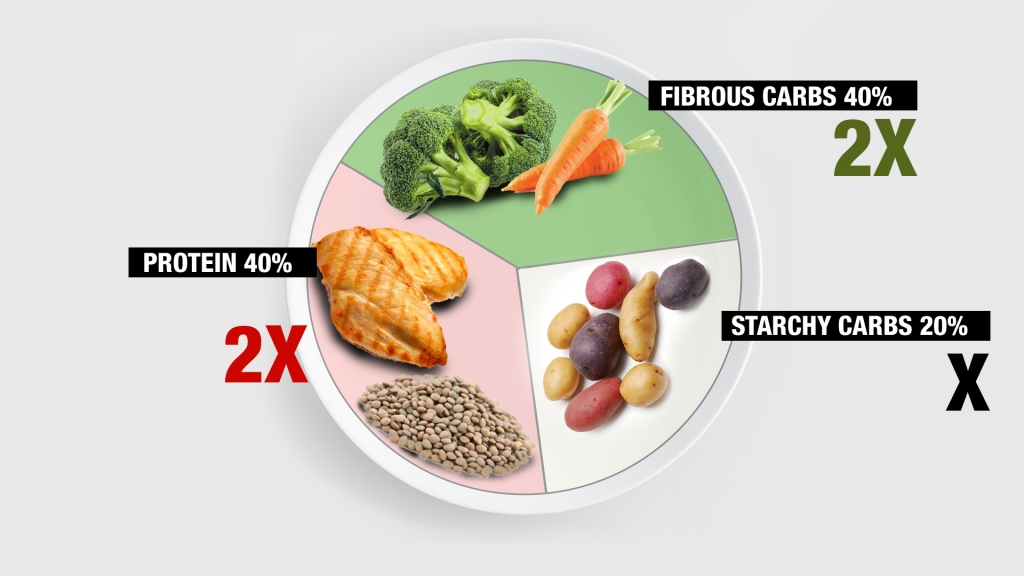
A visual approach is far more effective.
When each part of the breakfast plate has a defined role, high-protein breakfast ideas become easier to prepare, easier to repeat, and easier to rely on when mornings are busy.
Rather than measuring or tracking, build breakfast around three simple components:
- A solid protein foundation
- Supportive carbohydrates to fuel the morning
- Minimal fat to keep digestion and energy steady
Protein leads the meal, carbohydrates adjust based on activity and appetite, and fat stays present without taking over.
This structure keeps breakfast satisfying and stable without pushing it toward extremes.
When breakfast is built this way, it stays balanced by design. Hunger remains controlled, energy feels even, and the meal does its job without requiring attention or adjustment.
Let’s take a closer look at what your plate should look like every morning:
IT ALL STARTS WITH PROTEIN (~40%)
Protein sets the tone for the entire day.
After an overnight fast, muscle tissue is more vulnerable to breakdown, and a protein-forward breakfast supplies the amino acids needed to shift the body back toward repair and recovery.
This early intake helps preserve lean mass, supports muscular health, and contributes key B vitamins involved in energy metabolism.
Getting enough protein at breakfast also improves digestion and satiety, which keeps hunger predictable instead of reactive. Focus improves, energy levels feel smoother, and later meals become easier to manage.
When protein is skipped or minimized early, hunger is simply delayed. That often leads to overeating later in the day as protein intake and energy needs try to catch up. To determine how much protein you should be consuming per day, check out our Protein Calculator.
Protein at breakfast should be easy to access, easy to portion, and ready to go, especially on busy mornings. These animal-based and plant-based sources work well with meal prep and fast assembly:
ANIMAL-BASED PROTEIN
- Whole eggs
- Liquid egg whites
- Lean breakfast sausage
- Turkey sausage
- Greek yogurt (low-fat or nonfat)
- Naturally flavored yogurts (e.g., honey)
- Cottage cheese
- Milk (low-fat or skim)
- Kefir
- Smoked salmon
- Shrimp (fresh or frozen)
- Protein powder (whey, casein, or blended formulas)
- Collagen powder and collagen peptides
- Ready-to-drink shakes
- Protein pudding or high-protein dairy snacks
PLANT-BASED PROTEIN
- Firm or extra-firm tofu
- Tempeh
- Black beans (canned or dry)
- Lentils (canned or dry)
- High-protein soy yogurt
- Plant-based protein powder
- Hemp protein powder
- High-protein plant-based dairy alternatives
CARBOHYDRATES SUPPORT ENERGY (~40%)
Carbohydrates help determine how the morning feels after breakfast is finished.
The right carbs provide usable energy that supports training, mental output, and steady focus. Paired with protein, they slow digestion just enough to keep blood sugar regulated instead of swinging up and down.
This matters most when training early, staying physically active throughout the day, or dealing with low morning energy. In these cases, carbohydrates help fuel output without making breakfast heavy or excessive.
The one thing I want to emphasize is that carbohydrates are not meant to replace protein at breakfast. Their role is supportive.
When carbs take over the meal, especially in refined or high-sugar forms, energy often spikes early and drops sharply later, creating the familiar mid-morning crash.
Choosing higher-fiber options and keeping portions reasonable allows carbohydrates to contribute energy without destabilizing appetite.
When carbohydrates are combined with protein-rich breakfasts, energy stays smoother, focus improves, and hunger remains easier to manage through the rest of the morning.
Carbohydrates at breakfast should be simple, familiar, and easy to prepare ahead of time. These options pair well with high-protein foods and fit into consistent morning routines:
BREAKFAST-FRIENDLY CARBOHYDRATES
- Old-fashioned oats
- Gluten-free oats
- Protein overnight oats
- High-fiber breakfast cereals
- High-protein pancakes
- Sprouted grain bread
- Whole-grain bread
- White rice
- Rice cakes
- Sweet potatoes
- Low glycemic index (GI) fruits (e.g., berries, apples with skin, pears)
FAT SUPPORTS SATIETY (~20%)
Dietary fat has a role at breakfast, but it works best when it stays in a supporting position.
Fat improves texture and flavor and helps meals feel satisfying, yet it also slows digestion. In the morning, that effect can either work in your favor or pull energy in the wrong direction depending on how much is used.
Breakfast doesn’t require heavy fats to be effective.
Most high-protein foods already contain some naturally occurring fat, which means additional fat is rarely necessary in large amounts.
When fat stays moderate, digestion remains smooth, energy output stays consistent, and the meal supports performance rather than weighing it down.
The goal is balance. Fat should enhance a meal built around a complete protein without taking control of it. When fat dominates through large servings of nut butter, heavy cooking oils, or oversized additions, breakfast tends to digest too slowly.
That often leads to sluggishness and a delayed drop in energy that shows up as a blood sugar crash later in the morning.
Used intentionally, fat improves breakfast quality without disrupting structure. A small amount of olive oil with one-pan eggs, poached eggs paired with vegetables, or the natural fat found in eggs or dairy-based yogurt bowls is enough to support satiety.
Here are some of my favorite dietary fat options to complement your high-protein breakfast:
BREAKFAST-FRIENDLY FATS
- Extra-virgin olive oil
- Avocado
- Nut butter (small servings)
- Nuts (almonds, walnuts)
- Seeds (chia, flax, pumpkin)
- Natural fat from whole eggs
- Natural fat from dairy (yogurt, cottage cheese)
MINIMALIST MORNING MINDSET
Breakfast works best when it asks for very little and delivers exactly what’s needed.
In the morning, speed matters. Anything that takes too long, requires multiple steps, or demands attention becomes a liability. The most reliable breakfasts are assembled, not cooked, and finished in minutes without slowing the rest of the day down.
This is why preparation happens before the morning ever starts. There’s no negotiation, no delay, and no reliance on motivation to get it done.
Variety is not the priority early in the day. Familiar, repeatable meals reduce friction and keep nutrition consistent. The goal is to ensure that protein and energy are handled quickly and reliably.
When breakfast stays simple, it survives busy mornings, low motivation, and shifting schedules. That’s what makes it effective long term.
HOW MUCH PROTEIN SHOULD BREAKFAST INCLUDE?
To figure out how much protein you should have with your breakfast, we need to start with total daily protein intake. This sets the framework for each meal.
For active individuals, a reliable range falls around 0.7 to 1.0 grams of protein per pound of bodyweight per day. Where someone lands within that range depends on training intensity, overall activity, and long-term goals, but it provides a clear baseline for consistency.
Now, breakfast doesn’t need to carry the entire day’s intake, but it does establish direction early.
Protein in the morning supplies amino acids after the overnight fast, supports muscle preservation, and helps stabilize appetite before the day accelerates.
For most people, 25 to 40 grams of protein at breakfast covers that role well. This amount is large enough to create satiety and metabolic stability without making breakfast heavy or difficult to repeat. From there, the rest of the day’s protein can be distributed more evenly across meals.
Here’s how that looks in practice:
A 140-pound individual training a few days per week may aim for roughly 100 to 120 grams of protein per day, with 25 to 30 grams at breakfast.
A 175-pound individual training consistently may target 125 to 150 grams per day, with 30 to 35 grams at breakfast.
A 210-pound individual training at higher volume may benefit from 170 to 210 grams per day, with 35 to 45 grams at breakfast.
Larger bodyweights, higher training frequency, or more demanding schedules often benefit from slightly higher protein early in the day, especially if later meals are unpredictable.
HIGH-PROTEIN BREAKFAST IDEAS: EGGS & EGG-BASED
If you ask me, I’d say eggs are the king of breakfast. Why?
Eggs are fast, flexible, and naturally protein dense. They’re easy to prep ahead, reheat cleanly, and portion without effort.
Whether whole eggs or egg whites are used, egg-based breakfasts make it simple to hit protein targets early without relying on protein shakes or packaged foods.
From a performance standpoint, eggs deliver high-quality protein with a complete amino acid profile that supports muscle maintenance after the overnight fast.
From a practical standpoint, they adapt to almost any morning schedule. Once cooked, breakfast becomes assembly instead of preparation.
Below are reliable egg-based breakfast ideas that hold up under busy mornings and can be prepped in advance without sacrificing quality or consistency.
EGG & VEGETABLE SCRAMBLE CUPS
- Whole eggs and/or liquid egg whites
- Mixed vegetables (peppers, onions, spinach)
- Salt, pepper
Directions:
- Whisk eggs and egg whites together.
- Mix in vegetables and seasoning.
- Pour into a muffin tin and bake until set.
- Store in the fridge and reheat as needed.
EGG WHITE & SPINACH BREAKFAST WRAPS
- Liquid egg whites
- Fresh spinach
- Wraps or tortillas of choice
Directions:
- Cook egg whites in a pan until just set.
- Add spinach and allow it to wilt.
- Wrap and portion for quick mornings.
SHRIMP AND SPINACH OMELET
- Whole eggs
- Shrimp (peeled and deveined)
- Fresh spinach
- Salt and pepper
Directions:
- Lightly cook shrimp in a pan until just opaque and set aside.
- Whisk eggs and pour into the pan, cooking gently.
- Add spinach and cooked shrimp, then fold into an omelet.
- Season lightly and serve warm.
BAKED EGG MUFFINS WITH TURKEY & VEGETABLES
- Whole eggs
- Lean turkey
- Mixed vegetables
Directions:
- Combine cooked turkey with eggs and vegetables.
- Bake in a muffin tin until firm.
- Portion and refrigerate for the week.
BREAKFAST EGG BOWLS WITH POTATOES & GREENS
- Whole eggs or egg whites
- Cooked potatoes
- Leafy greens
Directions:
- Reheat potatoes and greens.
- Top with eggs cooked to preference.
- Season lightly and serve warm.
TURKISH MENEMEN–STYLE EGGS
- Whole eggs and/or egg whites
- Fresh tomatoes or canned crushed tomatoes
- Bell peppers
- Olive oil
- Salt and pepper
- Optional: hot sauces or chili flakes
Directions:
- Lightly sauté peppers in olive oil until softened.
- Add squished tomatoes and simmer briefly until slightly thickened.
- Crack eggs directly into the pan and stir gently until just set.
- Season and finish with hot sauces if desired.
HIGH-PROTEIN BREAKFAST IDEAS: DAIRY-BASED
Dairy-based breakfasts are one of the most efficient ways to hit protein early with minimal effort.
They require little to no cooking, portion easily, and work well when mornings are compressed. When protein intake needs to be reliable without slowing the day down, dairy delivers.
Options like Greek yogurt, cottage cheese, skyr, and milk provide complete protein with a strong amino acid profile, making them effective for muscle support after the overnight fast. They also pair cleanly with fruit, oats, or blended ingredients without turning breakfast into a production.
Below are some of my go-to dairy-based breakfast ideas:
GREEK YOGURT PROTEIN BOWLS
- Low-fat or nonfat Greek yogurt
- Fruit of choice
- Optional toppings (nuts, seeds, or oats)
Directions:
- Add yogurt to a bowl.
- Top with fruit and optional extras.
- Serve immediately or portion ahead for the next morning.
COTTAGE CHEESE WITH FRUIT & SEEDS
- Cottage cheese
- Fresh or frozen fruit
- Seeds (chia, flax, or pumpkin)
Directions:
- Combine all ingredients in a bowl or container.
- Stir lightly and serve cold.
HIGH-PROTEIN YOGURT PARFAITS
- Greek yogurt or skyr
- Berries
- High-fiber cereal or oats
Directions:
- Layer yogurt, fruit, and cereal in a container.
- Store in the fridge for a ready-to-eat breakfast.
SKYR WITH OATS & BERRIES
- Skyr
- Cooked or soaked oats
- Berries
Directions:
- Combine skyr and oats in a bowl.
- Top with berries and mix gently.
MILK-BASED PROTEIN SMOOTHIES
- Milk of choice
- Protein powder
- Fruit and oats
Directions:
- Blend all ingredients until smooth.
- Serve immediately or store in a sealed container.
PROTEIN PUDDING (NO-COOK)
- Greek yogurt or cottage cheese
- Protein powder
- Splash of milk
Directions:
- Mix yogurt and protein powder until smooth.
- Adjust consistency with milk.
- Refrigerate or eat immediately.

HIGH-PROTEIN BREAKFAST IDEAS: MEAT & SEAFOOD
Meat- and seafood-based breakfasts tend to be more filling, slower to digest, and easier to portion in a way that keeps hunger stable through the morning.
They’re also well suited for people who train early, stay active all day, or simply prefer savory food first thing.
The key advantage here is reuse.
These breakfasts often come from proteins that are already cooked or prepped ahead of time, which turns breakfast into assembly rather than cooking. When protein is ready, the meal comes together quickly and predictably.
Below are reliable meat- and seafood-based breakfast ideas that deliver protein without excess effort:
TURKEY SAUSAGE BREAKFAST PLATES
- Turkey sausage
- Eggs or egg whites
- Vegetables or potatoes
Directions:
- Cook sausage ahead of time and store in the fridge.
- Pair with eggs and a vegetable or starch of choice.
- Reheat and serve as a plated breakfast.
CHICKEN BREAKFAST BOWLS
- Cooked chicken breast or thighs
- Eggs or egg whites
- Greens or potatoes
Directions:
- Reheat chicken and vegetables.
- Add eggs prepared to preference.
- Season lightly and serve warm.
SMOKED SALMON TOAST VARIATIONS
- Smoked salmon
- Toast or sprouted grain bread
- Optional additions (eggs, yogurt-based spread, greens)
Directions:
- Toast bread lightly.
- Add salmon and optional toppings.
- Serve as an open-faced breakfast.
LEAN BEEF BREAKFAST HASHES
- Lean ground beef or steak
- Potatoes
- Onions or peppers
Directions:
- Cook beef and vegetables together in advance.
- Portion and store.
- Reheat and serve as a hot breakfast.
LEFTOVER PROTEIN-BASED BREAKFASTS
- Leftover meat or seafood from dinner
- Eggs or vegetables
Directions:
- Reheat leftover protein.
- Pair with eggs or vegetables as needed.
- Serve as a savory breakfast plate.
TUNA & AVOCADO BREAKFAST PLATE
- Canned tuna (in water, drained)
- Avocado
- Greens or vegetables
Directions:
- Flake tuna into a bowl or onto a plate.
- Add sliced avocado and vegetables of choice.
- Season lightly and serve cold or room temperature.
HIGH-PROTEIN BREAKFAST IDEAS: SMOOTHIES
Smoothies work when time is limited and sitting down isn’t happening. The mistake most people make is treating them like flavored drinks instead of structured meals.
A good breakfast smoothie is built around protein first, with just enough supporting ingredients to stabilize energy and prevent hunger from rebounding later.
These options are designed to cover different morning scenarios without repeating the same formula:
WHEY + BERRY PERFORMANCE SHAKE
- Whey protein
- Frozen mixed berries
- Water or milk
Directions:
- Blend until smooth.
- Serve immediately.
GREEK YOGURT “MEAL” SMOOTHIE
- Greek yogurt
- Milk
- Fruit of choice
Directions:
- Blend until thick and smooth.
PROTEIN OVERNIGHT OAT SMOOTHIE
- Protein powder
- Overnight-soaked oats
- Milk or water
Directions:
- Blend soaked oats with protein until smooth.
PLANT-BASED GREEN PROTEIN SHAKE
- Plant-based protein powder
- Spinach or greens
- Fruit
- Water or plant milk
Directions:
- Blend thoroughly until smooth.
COLLAGEN COFFEE PROTEIN DRINK
- Brewed coffee (hot or cold)
- Collagen peptides
- Milk or cream of choice
Directions:
- Stir or blend until fully combined.
CHOCOLATE PROTEIN–BANANA BLENDER DRINK
- Chocolate protein powder
- Banana
- Milk or water
Directions:
- Blend until smooth.

HIGH-PROTEIN BREAKFAST IDEAS: PLANT-BASED
Plant-based breakfasts work when protein is intentional. Without a clear protein anchor, these meals often drift toward being carb-heavy and leave hunger unresolved later in the morning.
When plant-based proteins are selected first and everything else supports them, breakfast becomes just as effective as meals built around animal products.
The goal is structure.
Protein is planned, portions are clear, and carbohydrates support energy without overwhelming the plate. Below are plant-based breakfast ideas that stay protein-forward and hold up in real life:
TOFU & VEGETABLE BREAKFAST SCRAMBLE
- Firm tofu
- Mixed vegetables (peppers, onions, greens)
- Seasoning of choice
Directions:
- Crumble tofu and cook in a pan until heated through.
- Add vegetables and cook until tender.
- Season lightly and serve hot.
LENTIL BREAKFAST BOWLS
- Cooked lentils
- Roasted or sautéed vegetables
- Greens
Directions:
- Reheat lentils and vegetables.
- Combine in a bowl and serve warm.
SAVORY CHICKPEA FLOUR PROTEIN PANCAKES
- Chickpea flour
- Water
- Garlic powder
- Smoked paprika
- Salt and black pepper
Directions:
- Whisk chickpea flour with water and seasonings until a smooth batter forms.
- Heat a nonstick pan and pour batter into pancakes.
- Cook on each side until set and lightly browned.
HIGH-PROTEIN PLANT YOGURT BOWLS
- High-protein plant yogurt
- Seeds or nuts
- Fruit (optional)
Directions:
- Add yogurt to a bowl.
- Top with seeds and fruit if desired.
TEMPEH & VEGETABLE BREAKFAST PLATES
- Tempeh
- Vegetables of choice
Directions:
- Cook tempeh until lightly browned.
- Serve with vegetables as a plated breakfast.
BLACK BEAN & QUINOA SAVORY BREAKFAST
- Black beans
- Quinoa
- Vegetables
Directions:
- Combine cooked beans and quinoa.
- Add vegetables and heat thoroughly.
MY TOP 10 BREAKFAST NUTRITION RULES
Breakfast doesn’t need rigid rules or constant adjustment. It needs structure that holds up when mornings are busy and attention is divided.
These principles exist to make breakfast repeatable, protein-focused, and effective without turning it into a project.
When these rules are followed most mornings, nutrition starts working automatically instead of relying on discipline.
1. START THE DAY WITH PROTEIN
Protein defines the quality of the entire breakfast. After an overnight fast, the body is primed to use amino acids for muscle maintenance and repair.
Bringing protein in early shifts physiology toward recovery rather than breakdown and creates a more stable metabolic environment.
When protein leads the meal, digestion slows appropriately, blood sugar behaves more predictably, and energy becomes easier to sustain.
Once protein is accounted for, every other decision around breakfast becomes simpler.
2. BREAKFAST INFLUENCES APPETITE FOR HOURS
The first meal does more than satisfy morning hunger. It sets expectations for the rest of the day.
A protein-forward breakfast produces steadier appetite signals, making hunger feel controlled instead of urgent.
When breakfast is structured well, cravings tend to soften, snack impulses decrease, and later meals feel easier to portion naturally.
This is all about setting conditions that make good decisions easier downstream.
3. REPEAT WHAT ALREADY WORKS
Consistency is built through repetition, not novelty.
A small set of breakfasts that you know work for you removes hesitation and speeds up execution.
Familiar meals reduce friction, eliminate overthinking, and make it easier to eat well even when mornings are compressed.
Over time, repeatable breakfasts outperform creative ones simply because they happen more often.
4. USE CARBOHYDRATES WITH INTENT
Carbohydrates at breakfast serve a functional role. They provide usable energy for training, work output, and mental focus, especially when paired with protein.
When healthy carbs are included, they support performance without driving appetite or energy swings.
The goal is to let the carbohydrates support the demands of the day ahead rather than filling space on the plate.
5. KEEP FAT IN A SUPPORTING ROLE
Fat enhances flavor and satisfaction, but it also slows digestion. In the morning, that effect works best when fat is present in moderate amounts rather than dominating the meal.
When fat complements protein, digestion remains smooth and energy stays steady.
When fat takes over, breakfast can feel heavy and focus may drift. Eating dietary fats in a limited amount keeps the meal effective without compromising momentum.
6. PREPARE ONCE, BENEFIT REPEATEDLY
Preparation changes breakfast from a decision into a default. Cooking or portioning ahead creates multiple successful mornings from a single effort.
When food is ready, breakfast becomes automatic rather than negotiable.
This shift reduces reliance on motivation and keeps nutrition consistent even when schedules change.
7. TREAT LIQUID BREAKFASTS LIKE FULL MEALS
Smoothies and shakes are only as effective as their structure. When protein leads and carbohydrates support, liquid breakfasts perform just like solid meals.
They provide satiety, stable energy, and predictable appetite control when built intentionally.
Treating liquid options as real meals keeps them aligned with performance and recovery goals.
8. EAT BREAKFAST BY CHOICE, NOT HABIT
Breakfast works best when it matches how your day actually unfolds. The timing matters less than the function it serves.
Breakfast should support your training schedule, workload, and energy demands.
A meal that fits your routine is easier to execute, easier to repeat, and far more effective than one built around fixed rules that don’t account for real life obstacles and timetables.
9. BUILD SYSTEMS FOR BUSY MORNINGS
A reliable breakfast setup removes friction and executes automatically, even when attention is limited.
Systems succeed because they don’t rely on mood, discipline, or perfect conditions.
When breakfast is built into the structure of your morning, consistency follows without resistance.
10. AIM FOR CONSISTENCY, NOT PRECISION
Progress comes from repetition over time.
Breakfast doesn’t need exact numbers or daily refinement to work. When structure is solid and meals are repeated most mornings, results accumulate naturally.
Getting breakfast right often is far more effective than trying to get it perfect occasionally.
BREAKFAST & INTERMITTENT FASTING
Intermittent fasting is a method of structuring meals around time rather than around specific foods. Instead of telling you what to eat, it defines when eating takes place.
The most common versions simply limit food intake to a set window during the day and leave the rest of the time calorie-free.
This approach has become popular largely because it fits modern schedules. Many people wake up with limited appetite, train early, or head straight into work. Delaying the first meal reduces morning decisions, simplifies routines, and removes pressure to force food early when hunger is low.
Several common intermittent fasting patterns show up repeatedly:
- Time-Restricted Eating (16:8): Eating within an 8-hour window and fasting for the remaining 16 hours
- 14:10 or 12:12 Approaches: Shorter fasting windows that ease people in
- One-Meal-a-Day Variants: Fewer meals condensed into a narrow window
- Alternating Eating Windows: Longer gaps between meals on certain days
What makes it appealing to some is its simplicity. Fewer meals mean fewer decisions, fewer opportunities to overeat, and a clear structure to the day. However, fasting doesn’t change how much protein your body needs, and it’s important to remember that providing your body with consistent energy throughout your waking hours is important for metabolism.
WHAT FASTING CHANGES (AND WHAT IT DOESN’T)
Delaying the first meal of the day changes timing, not physiology.
Protein requirements, muscle maintenance, recovery needs, and appetite regulation still exist regardless of when eating begins. The body continues to rely on amino acids to support muscle tissue and daily activity.
Where fasting can become problematic is when timing replaces structure.
Skipping breakfast does not eliminate the need to prioritize protein or distribute it effectively across the day. When protein is pushed too far into a shortened eating window, intake often becomes uneven, rushed, or incomplete. It can mess with your blood sugar and metabolism as well.
When breakfast is delayed, the first meal of the day becomes breakfast from a nutritional perspective. It doesn’t matter if this happens at 7 a.m. or noon. That first feeding sets the tone for everything that follows.
Whether you fast or not, the same structure applies: protein leads the meal, carbohydrates support energy needs, and fat remains secondary. The clock is flexible, but the framework is not.
HANDLING PROTEIN AND TRAINING WITH FASTING
Training places immediate demands on recovery, regardless of eating windows. When workouts occur earlier in the day, supplying protein at the first available opportunity becomes especially important.
Long gaps between training and the first protein intake can affect recovery quality and performance over time.
Fasting works best when protein timing is matched to training demands rather than pushed too far into the day.
In other words, if you are working out while doing intermittent fasting, I’d recommend breaking your fast as soon as your workout is over.
A clear morning setup built around protein creates steady energy, controlled appetite, and reliable performance throughout the day.
Supporting carbohydrates and moderate fats round out the meal while keeping digestion and focus consistent.
With a repeatable approach in place, breakfast becomes a dependable foundation that supports training and daily demands without added effort.
Check out our complete line of ATHLEAN-RX Supplements and find the best training program for you based on your fitness level and goals.

- Breakfast works best when speed and structure lead the process. Meals that are planned and ready to consume tend to outperform anything that depends on decision-making in the morning.
- Protein sets the direction of the day. Starting with 25 to 40 grams helps support muscle maintenance, stable energy, and appetite control.
- Build breakfast visually. Protein leads, carbohydrates support energy needs, and fats remain secondary to keep digestion smooth.
- Carbohydrates earn their place when they fuel training and daily output. Higher-fiber sources paired with protein help maintain steady blood sugar.
- Fat enhances satisfaction without defining the meal. Moderate amounts improve flavor and fullness while preserving morning energy.
- Preparation creates reliability. Cooking or portioning ahead turns breakfast into execution rather than negotiation.
- Liquid breakfasts count when they follow the same structure as solid meals. Protein-forward shakes and smoothies work when they’re built intentionally.
- Try a variety of eggs, dairy, meat, seafood, smoothies, and plant-based breakfasts since they can all succeed within the same framework.
- Intermittent fasting changes timing, not protein and energy needs. The first meal of the day still benefits from strong structure and adequate protein.
- Consistent structure drives results. Repeating effective breakfasts most mornings supports performance, recovery, and long-term progress.
HIGH PROTEIN BREAKFAST IDEAS FAQ
A high-protein breakfast begins with one question: where is the protein coming from? Once that is decided, the rest of the meal simply supports it.
Eggs, Greek yogurt, cottage cheese, lean meats, seafood, protein powders, and structured plant-based proteins all work when they are the main component rather than a side.
After the protein is set, carbohydrates can be added based on activity level and training demands. Oats, fruit, potatoes, or grains contribute energy without taking over the meal when portions stay reasonable.
Fat remains present in smaller amounts from foods like eggs, dairy, or minimal cooking oils.
Built this way, breakfast supports muscle maintenance, appetite control, and steady energy without adding friction to the morning.
Forty grams of protein is a strong target for most active individuals because it meaningfully contributes to daily intake while still fitting comfortably into a single meal.
This amount is easiest to reach by combining protein-rich foods rather than relying on one source alone.
Pairing whole foods with liquid protein works especially well. Here are some ideas you can use:
- 3 whole eggs + 1 cup liquid egg whites
- 1½–2 cups low-fat Greek yogurt
- 1 cup Greek yogurt + 1 scoop protein powder
- 5–6 oz cooked chicken or turkey + 2 eggs
- Protein smoothie made with whey protein and milk
- Cottage cheese bowl (1½ cups) with fruit or oats
These combinations deliver enough protein to support training, recovery, and steady appetite without creating a heavy meal.
Thirty grams of protein is an effective option for smaller bodyweights, lighter training days, or mornings when appetite is lower.
It still provides enough amino acids to support muscle maintenance after the overnight fast and helps keep energy stable.
This amount is commonly reached with a single, well-chosen protein source:
- 2 whole eggs + ½–¾ cup egg whites
- 1¼ cups Greek yogurt or skyr
- 1 cup cottage cheese
- 1 protein shake made with whey or plant-based protein
- Tofu scramble made with a generous serving of firm tofu
- High-protein plant yogurt bowl with seeds or nuts
This level of intake supports muscle maintenance and helps keep hunger under control through the morning.
Fifty grams of protein at breakfast is best suited for larger individuals, high-volume training schedules, or days when later meals may be unpredictable.
Reaching this intake usually requires combining two protein sources rather than increasing one portion excessively:
- 3 whole eggs + 1½ cups liquid egg whites
- 2 cups Greek yogurt + 1 scoop protein powder
- 6 oz lean meat or salmon + 2 eggs
- Large protein smoothie using whey protein, milk, and Greek yogurt
- Cottage cheese bowl (2 cups) with added protein powder
- Egg-based breakfast paired with a ready-to-drink protein shake
Splitting protein across solid and liquid sources helps deliver a high protein dose while keeping digestion and energy smooth.

Jeff Cavaliere M.S.P.T, CSCS
Jeff Cavaliere is a Physical Therapist, Strength Coach and creator of the ATHLEAN-X Training Programs and ATHLEAN-Rx Supplements. He has a Masters in Physical Therapy (MSPT) and has worked as Head Physical Therapist for the New York Mets, as well as training many elite professional athletes in Major League Baseball, NFL, MMA and professional wrestling. His programs produce “next level” achievements in muscle size, strength and performance for professional athletes and anyone looking to build a muscular athletic physique.