





why choose high protein meals?
The way you structure your food matters just as much as the work you do in the gym. And when muscle building is the goal, protein is the part of the meal that really counts.
Most people think they’re eating plenty of protein because they’ll have some at dinner and toss in a scoop of protein powder somewhere during the day.
But if breakfast is mostly carbs, lunch is whatever you can grab between meetings, and dinner is the only time you sit down to a large serving of protein, the math doesn’t work the way you think it does.
Instead of treating your protein game like a box you check once or twice, you need to design every plate, bowl, and shake around it.
Each meal becomes a chance to feed muscle, control hunger, and keep energy requirements steady, instead of a rollercoaster of spikes and crashes that you try to patch up with sugary snacks and caffeine.
This guide is going to show you how to do that.
You’ll see how much protein you need each day, how to translate that into realistic targets per meal, and creative ways to build high protein meals without turning every bite into a math problem.
Here’s what I’ll cover in this guide on high protein meals:
1) WHY ARE HIGH PROTEIN MEALS IMPORTANT?
High protein meals aren’t just a good idea if you train. They’re the thing that connects your workouts to changes in muscle, body fat, and how you feel day to day.
To see why, you have to think in terms of what’s happening inside the muscle, not just what’s on your plate.
MUSCLE REMODELING: MPS VS. MPB
Every day, your muscles are turning over. Old tissue is being broken down, and this is known as muscle protein breakdown or MPB. Meanwhile, new tissue is being built, and this is called muscle protein synthesis or MPS.
Training shifts that balance in your favor by increasing the signal for MPS, but it doesn’t provide the raw materials. That’s what protein is for.
When you eat a meal with enough high-quality protein, amino acids hit the bloodstream and MPS goes up. If the dose is too small, the spike is weak. If the dose clears a certain threshold, the muscle sees enough amino acids to flip into a stronger building state.
That’s the whole point of a high protein meal: you’re not just adding a little protein, you’re clearing that threshold on purpose.
Do that several times throughout the day, and you’ve given your muscles multiple chances to repair and grow. Miss that threshold at most meals, and you’re training hard while the building side of the equation never really gets out of first gear.
PROTEIN TIMING
A lot of people still treat protein like a daily scoreboard: hit a total number and you’re good. Physiology doesn’t work that way.
Compare two patterns with the same daily protein goals:
Pattern A: Almost no protein at breakfast, a light lunch, then a huge dinner and a shake at night.
Pattern B: Protein at breakfast, lunch, dinner, plus one or two smaller hits in snacks or shakes.
Sure, on paper, the grams add up. In your body, they’re not the same. Muscle doesn’t stay maximally stimulated all day off one big serving.
The MPS response rises after a decent protein dose, peaks, then drops back down. To bring it back up, you need another meal that clears that threshold again.
That’s why several high protein meals spread throughout the day matter.
You don’t just want one big spike in the evening. You want several effective spikes, separated by a few hours, so you’re giving the muscle repeated “build” signals instead of one late attempt to make up for a low-protein day.
CUTTING, MUSCLE RETENTION, AND THE COST OF PROTEIN
In a calorie deficit, your body has to pull stored energy from somewhere. Without enough protein, it’s easier for that “somewhere” to include muscle tissue along with fat.
You’ll get smaller, but not necessarily leaner in the way you want.
When each meal brings in enough protein to hit that MPS threshold, you make it easier for your body to hold onto lean mass while body fat drops. Strength and performance stay higher, and you come out of it looking more defined instead of just lighter.
There’s also the metabolic cost.
Protein has a higher thermic effect than carbs or fat, which means your body burns more calories digesting and handling it.
You don’t crash-diet your way lean just because of thermic effect, but when a larger slice of your daily calories comes from protein instead of low-protein, ultra-processed junk, more of what you eat gets spent just processing that protein.
APPETITE, CRAVINGS, AND THE “PROTEIN LEVER”
Hunger isn’t just about willpower. Your body is constantly asking, “Did I get what I need?” Protein is a big part of that answer.
High-protein meals increase fullness signals and slow down how fast food leaves the stomach. That buys you more time between meals before hunger ramps up again. It also changes how much you need to eat before you feel like you’ve had enough.
When protein is too low, people tend to keep eating, usually from whatever is around, until they accidentally hit a level their body is happier with.
Think of protein as a lever: keep it low and your appetite keeps pulling you back to the kitchen. Bring it up at each meal and that pressure eases off sooner.
When breakfast, lunch, and dinner are all high-protein meals, you don’t have to worry about cravings, especially when you’re tired and your motivation is low.
ENERGY, BLOOD SUGAR, AND TRAINING PERFORMANCE
Meals that are mostly refined carbs with little protein are great at giving you a quick rise in blood sugars and a fast fall afterward. You feel good for a short window, then you’re flat, unfocused, and looking for more food or caffeine.
High protein meals smooth that out.
Protein slows digestion and, when you pair it with fiber and controlled amounts of carbs, you avoid the big spikes and crashes. Blood sugar swings are smaller, and so are the swings in energy and mood that go with them.
That shows up in your training. Walk into the gym after a day of low-protein, high-sugar eating and you’re more likely to feel off: weaker, distracted, or just not up for it.
Stack high protein meals throughout the day and you’re more likely to show up with stable energy.
LONG-TERM PHYSIQUE AND HEALTH
Holding onto muscle isn’t just about looking good in a T-shirt. As you get older, more lean mass and strength are tied to better function, better balance, and a lower risk of a lot of things you don’t want.
High protein meals, built mostly from whole food protein sources rather than constant processed snacks, support that.
You’re not only maintaining muscle. You’re also eating in a way that tends to line up with better blood lipids, better blood pressure, and better blood sugar levels control than a low-protein, high-sugar, high-fat pattern.
The same structure that supports your physique now keeps paying off later.
2) HOW MUCH PROTEIN DO YOU NEED PER DAY (AND PER MEAL)?
You need one clear range that fits people who train, a way to decide where you fall in that range, and simple meal planning for spreading that protein across your meals so each one matters.
Once you lock those three pieces in, the rest of your macro-friendly recipes get a lot easier to manage.
HOW MANY GRAMS OF PROTEIN DO YOU ACTUALLY NEED?
You’re probably not eating too much protein. If anything, you might be eating too little or loading most of it into one meal and leaving the rest of the day light.
Instead of another vague ‘eat more protein’ reminder, you need a clear daily target and a simple way to divide that target across the meals you already eat so each one moves the needle.
For your daily protein needs, I recommend eating 0.7 to 1.0 grams of protein per pound of bodyweight per day. You can turn that into numbers in two quick steps:
- Multiply your bodyweight in lbs. by 0.7 to get the lower end.
- Multiply your bodyweight in lbs. by 1.0 to get the upper end.
Example: Let’s say you’re a 180-lb lifter.
- Lower end: 180 × 0.7 = 126 grams
- Upper end: 180 × 1.0 = 180 grams
So, a 180-lb lifter is aiming for about 130 to 180 grams of protein per day. Why is there such a range? Where you land inside that range depends on a few things: experience, workout type, and goals. In general:
You can lean toward 0.7–0.8 g/lb. if:
- You’re newer to training
- You’re not very lean yet
- You’re not in a steep calorie deficit
Example: a 190-lb beginner lifting 3 days per week and slowly cleaning up their high-protein diet can do well around 135–150 g of protein per day (0.7–0.8 g/lb.).
You should push closer to 0.9–1.0 g/lb. if:
- You’re leaner and trying to stay that way
- You’re training hard and consistently
- Your goal is more aggressive fat loss
Example: a 170-lb lifter training 5–6 days per week and trying to lose fat for a photoshoot or summer shape-up is better off around 155–170 g of protein per day (0.9–1.0 g/lb.).
If you carry a lot of extra body fat, using your goal weight or a reasonable leaner target weight for this math makes more sense than using your current weight.
For example, a 280-pound beginner who ultimately wants to be 200 pounds doesn’t need 280 grams of protein. Calculating off the goal weight of 200 pounds is more appropriate.
HOW YOUR GOAL CHANGES YOUR PROTEIN NEEDS
Let’s get a little more in-depth with how much protein you should be eating each day based on your training and goals.
The basic protein range here stays the same, but where you land inside it depends on what you’re trying to do: gain muscle, lean out, both or hold steady.
You don’t need new rules for each goal, you just slide up or down within the same band.
Muscle Gain: Most lifters do well in the 0.8–1.0 g/lb. range. You’re eating in a small surplus, so this protein powerhouse helps direct more of those extra calories toward muscle instead of letting all of them drift into fat gain.
Maintenance / Recomposition: For holding steady or slowly improving body composition, 0.8–0.9 g/lb. works well for most. It gives you enough protein to protect lean mass while you let calories float a bit up or down.
Weight Loss/Fat Loss: When you’re in a deficit, go for the upper end at 0.9–1.0 g/lb. Sometimes you even go above this if you’re very lean and active like someone prepping for a bodybuilding show. For fat loss, higher protein does three things you need: it supports muscle retention, burns more calories during digestion than carbs or fat, and makes it easier to stay full on fewer calories.
FROM DAILY NUMBER TO PER-MEAL TARGETS
Once you know your daily protein target, the real work is turning that into something you can eat.
Your muscles don’t respond to a total you write down at the end of the day. They respond to the protein you give them at each meal.
That’s why you want to break your daily number into a few hits of protein instead of letting it all pile up at dinner.
Start by picking your daily target based on the formula above. Let’s say that you’re aiming for 160 grams per day.
From here, you need to decide how many times you realistically eat each day.
Most lifters are eating three main meals plus one or two snacks or shakes, so let’s use 3 meals + 2 snacks as the example. That gives you five eating occasions. If you spread the 160 grams evenly, you’d get:
- 160 ÷ 5 ≈ 32 grams of protein per meal or snack
In practice, it typically makes sense to bias a little more toward your main meals and a little less toward snacks.
For example, your lunch might be a chicken breast that will provide far more protein than a small protein-focused snack. So, focus on getting the bigger protein numbers when you’re sitting down for a proper meal.
For the same 160-gram target, it could look like this:
- Breakfast: 35 g
- Snack/shake 1: 25 g
- Lunch: 35 g
- Snack/shake 2: 25 g
- Dinner: 40 g
Those numbers still add up to 160 grams, but your bigger sit-down meals are doing more of the heavy lifting while snacks and shakes top you off.
If you don’t want to run the math every time, you can use these simple guidelines:
- Main Meals: about 25–30 g if you’re smaller
- Main Meals: about 30–40 g if you’re larger or training hard
- Snacks, Desserts, and Shakes: usually 20–30 g each
Another way to sanity-check your main meals is to aim for roughly 0.2–0.3 g of protein per pound of bodyweight per meal. For a 180-lb lifter, that’s:
- 180 × 0.2 = 36 g
- 180 × 0.3 = 54 g
Aiming for around 35 to 45 grams of protein at each main meal is a realistic target. You don’t need to be perfect at every sitting, but most of your meals should be heavy enough in protein to count as an amino acid hit, not just a little sprinkle.
EXAMPLE PROTEIN BREAKDOWNS
To make this more concrete, here’s how daily protein targets can look for different bodyweights, training setups, and goals.
Example 1: 150-lb lifter – Maintenance / Recomposition, 3–4x per week
This lifter is training 3–4 days per week, wants to slowly improve body composition, and isn’t in a big calorie deficit. That puts them in the middle of the range at about 0.8–0.9 g/lb., or ~135–140 g per day.
Structure: 3 meals + 1 snack/shake
- Breakfast: 30–35 g
- Lunch: 30–35 g
- Dinner: 35–40 g
- Snack/shake: 20–25 g
Each main meal delivers 30–40 grams of protein, and the snack or shake closes the gap.
Example 2: 180-lb lifter – Fat Loss, 5–6x per week
This lifter is training 5–6 days per week, is focused on fat loss, and wants to hold onto as much muscle as possible. That calls for the upper end of the range, around 0.9 g/lb., so we’ll use ~160 g per day.
Structure: 3 meals + 2 snacks/shakes
- Breakfast: 35–40 g
- Lunch: 35–40 g
- Dinner: 35–40 g
- 2 snacks/shakes: 20–25 g each
Depending on the exact choices, total intake lands in the 150–170 g zone, with protein spread over multiple meals instead of being crammed into one big serving at night.
Example 3: 200-lb lifter – Muscle Gain, 4–5x per week
This lifter is training 4–5 days per week, eating in a small surplus, and wants as much of that surplus as possible going toward muscle. That puts them around 0.9 g/lb., or ~180 g per day.
Option A – 4 meals, no snacks
- Meal 1: 40–45 g
- Meal 2: 40–45 g
- Meal 3: 40–45 g
- Meal 4: 40–45 g
Option B – 3 meals + 1 shake
- 3 main meals: 40–45 g each
- 1 shake: 30–35 g
The exact numbers don’t have to be perfect, but the logic should stay the same: match your protein target to your bodyweight, training, and goal, then make sure most of your meals carry a decent protein load, using snacks or shakes to fill the gaps instead of trying to cram everything into oversized high-protein dinner options.
3) HOW DO YOU BUILD A HIGH PROTEIN MEAL?
So far, you’ve got the why and the how much. Now you need a system you can put to use in the kitchen.
The goal here is one framework you can use for breakfast, lunch, dinner, snacks, desserts, and shakes.
Instead of inventing a new diet every time you eat, you’re repeating the same structure with different ingredients.
It always starts the same way: Pick the protein, then build the meal around it. Everything else (carbs, fats, extras) comes after that.
Here’s a simple framework for building high-protein meals and snacks:
START WITH YOUR PROTEIN
The protein anchor is the main protein source in the meal. It should give you most of the protein you’re aiming for in that sitting. Naturally, this is where you start.
Animal Protein Options:
- Chicken breast or thighs (trimmed), turkey
- Lean beef (e.g., beef mince, beef strips)
- Pork tenderloin
- Eggs and egg whites
- Greek yogurt, cottage cheese
- Fish and seafood (salmon, cod, shrimp, etc.)
Plant Protein Options:
- Tofu, tempeh, edamame
- Lentils, black beans, chickpeas, green peas, white beans
- Seitan
- Higher-protein pastas like chickpea or lentil pasta
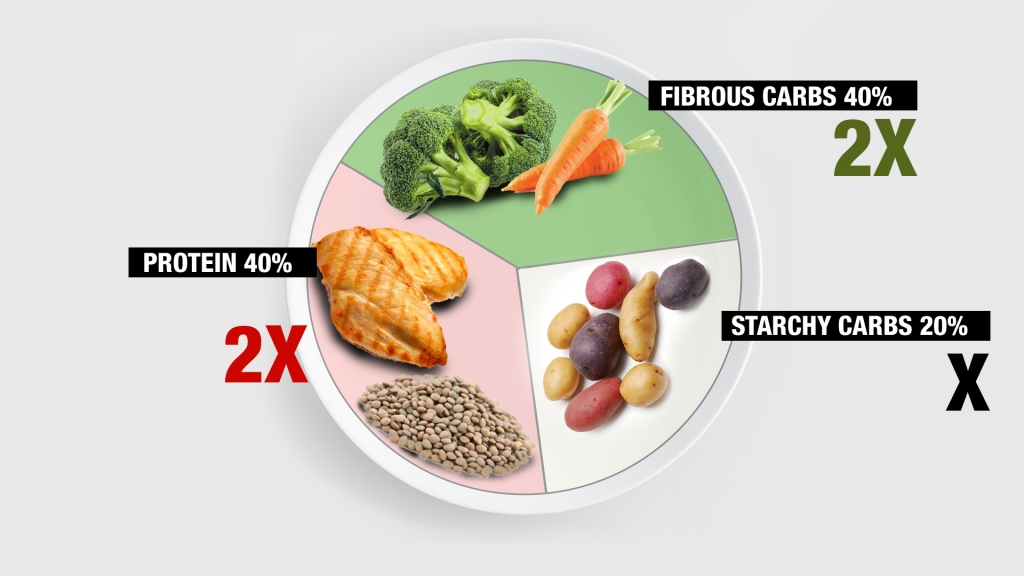
For main meals, the protein anchor should usually be roughly a third of the plate by area, and dense enough to give you 25 to 40 grams of protein on its own.
In general, that’s going to look like this:
- A palm to a palm-and-a-half of cooked meat, poultry, or fish
- 3–4 whole eggs (or a combo of whole eggs + egg whites)
- A big scoop or bowl of Greek yogurt, cottage cheese, or beans
If the protein is spread thin like just a few small strips of chicken on top of a giant bowl of pasta, you don’t have a protein anchor. The easiest fix is to either increase the protein portion or reduce the carb portion, so protein clearly becomes the main feature on the plate.
For high protein snacks, the idea is the same, just scaled down. Most of what’s in your hand, cup, or bowl, should be protein with a small side of carbs or fats for taste and timing.
If you build every meal and snack by locking in the protein first (visually and in grams), everything else you layer on the plate has a much easier job.
ADD FIBROUS CARBS TO SUPPORT PROTEIN
Once the protein is set, build around it with fibrous carbs. What counts as a “fibrous” carb compared to a “simple” carb?
Put simply, fibrous carbs are vegetables and lower-sugar, higher-fiber fruits. Their job is to add fiber, micronutrients, and food volume so you stay full and keep blood sugar and appetite steadier after eating.
When pairing it next to your protein, fibrous carbs should be about a third of the plate from vegetables or salad.
If you’re on a rest day or tightening calories, you can push fibrous carbs up to around half the plate and pull starch or “simple” carbs down.
You’ve got a lot of options for fibrous carbs including the following:
- Leafy Greens: spinach, romaine, mixed salad greens, kale, arugula
- Cruciferous Vegetables: broccoli, cauliflower, brussels sprouts, cabbage (green, red, Napa), bok choy
- Everyday “Dinner” Vegetables: green beans, asparagus, carrots, celery, cucumbers, snap peas
- Squash: zucchini, yellow squash, spaghetti squash
- Nightshades: bell peppers, tomatoes, eggplant
- Allium Family: onions, leeks, scallions, garlic (usually as part of cooking)
For fruits, I’d recommend these:
- Berries (strawberries, blueberries, raspberries, blackberries)
- Apples
- Pears
- Oranges, clementines, and other citrus
- Kiwi
MATCH SIMPLE CARBS TO YOUR DAY
Next comes starch or simple carbs. This is where most people start building a meal, but for high protein meals it’s the third step, not the first.
Starchy carbs include things like:
- Rice (white, brown, jasmine, basmati)
- Potatoes and sweet potatoes
- Overnight oats, creamy oatmeal, quinoa, farro, barley, other whole grains
- Pasta and higher-protein pasta
- Bread, pitas, tortillas, wraps, flatbreads
Their main job is simple: fuel. They support training, higher-intensity effort, and overall energy. How much you use should match what the rest of your day looks like, not whatever portion size the restaurant or box decided for you.
For main meals, you can use these guidelines:
Normal Training Days: Starch is usually about a third of the plate. Visually, that’s one to two cupped hands of rice, sweet potato, pasta, or other grains.
Hard Training Days: You can lean a bit heavier on starch if total calories allow. Protein and vegetables still hold their ground, but starch doesn’t need to be tiny.
Lighter Days or Rest Days: Shrink the starch portion and let protein and fibrous carbs take up more of the plate. In some meals, you can skip starch altogether and rely on vegetables and fruit for low-carb recipes or keto recipes.
A few examples of how that might look on the plate:
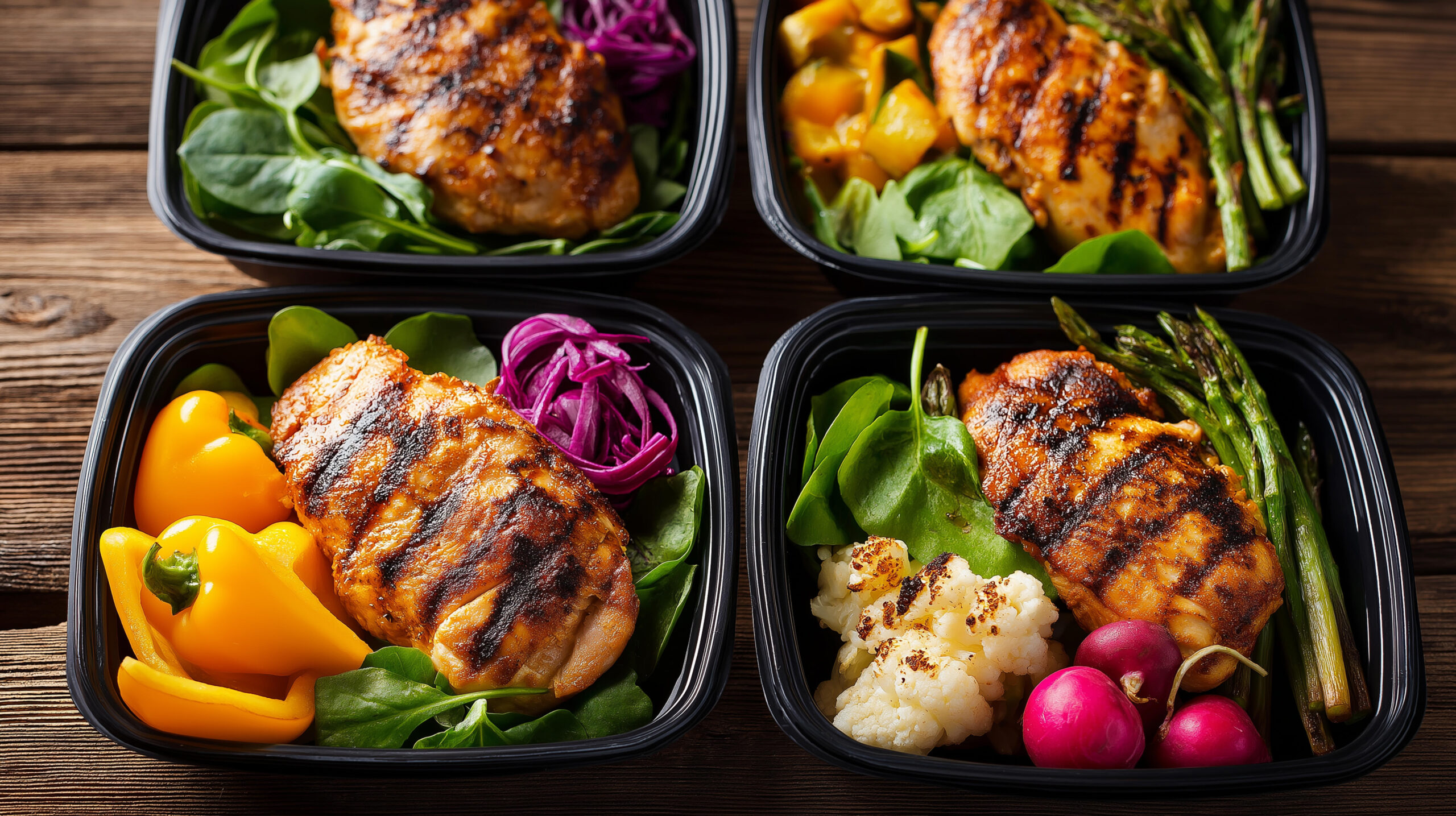
- Grilled chicken, sweet potato mash, and a big serving of broccoli
- Salmon, rice, and a mix of asparagus and peppers
- Tofu stir fry with a moderate scoop of rice and a lot of vegetables in the pan
Beans and lentils are a bit different because they can count as both protein and starch. If they’re your protein, you don’t need a full extra serving of rice or pasta on top.
Instead, you might do lentil or chickpea stew over a small scoop of rice, plus vegetables, or chickpea pasta as the main carb and protein, with a big side of salad or roasted vegetables.
Whether you’re throwing in animal-based options or not, the pattern is still the same. Protein gets locked in first, fibrous carbs fill out the plate, and starch is adjusted up or down based on how hard you’re training and how many calories you have to work with.
FINISH WITH FATS
The last piece of the meal is fat.
Depending on which option you choose, a lot of fat might already be built into your protein source:
- Salmon, whole eggs, higher-fat beef, or pork
- Cheese and whole-milk dairy
- Nuts and seeds or nut butters used with protein
Before you start pouring oil or layering cheese, look at what’s already on the plate. A salmon fillet cooked in oil with a big handful of nuts on top is a very different meal than chicken breast grilled dry with vegetables.
Don’t get me wrong. Fats have an important purpose. Added fats like saturated fat and polyunsaturated fats are there to support hormones, help you absorb fat-soluble vitamins, and make the meal satisfying and taste like something you want to eat. With that said, they’re not supposed to compete with protein and starch for space.
For main meals, most of the plate should be protein and fibrous carbs or starch. Added fats should be a small portion of the plate or one to two “thumb-sized” amounts.
In practice, that can look like:
Cooking Fats:
- 1–2 teaspoons of oil or butter in the pan, not a deep pool
On-Top Fats:
- A light sprinkle of cheese
- A small handful of nuts or seeds
- A few slices of avocado
- A spoonful of pesto, hummus, or nut-based sauce
If your protein is already higher-fat (salmon, 80/20 beef, whole-egg omelet with cheese), keep most of your extra fats very modest or skip them. In that case, the protein itself is doing double duty as protein and fat.
If your protein is very lean (chicken breast, white fish, egg whites, low-fat Greek yogurt), you have more room to add some fats back in without blowing past your calories.
4) HIGH PROTEIN MEALS GROCERY CHEAT SHEET
If you want high protein meals to be your default, your kitchen has to be set up for it. You can’t just build meals and snacks out of random leftovers and condiments.
This grocery cheat sheet does the heavy lifting for you.
Start with the protein sections, then layer in vegetables, whole grains, fats, and flavor.
Copy it into your notes, take it to the store, and you’ve got everything you need to turn the “protein first” framework into your favorite meal prepped options.
ANIMAL PROTEIN STAPLES (LEAN MEATS & SEAFOOD)
- Chicken breast
- Chicken thighs (trimmed)
- Ground chicken (90%+ lean)
- Ground turkey (90%+ lean)
- Turkey breast slices / turkey tenderloin
- Turkey sausage (lean)
- Pork tenderloin
- Extra-lean pork chops
- Beef / red meat (choose lean cuts):
- 90–96% lean ground beef
- Sirloin steak
- Flank steak
- Eye of round / top round roast
- Lamb chop
FISH & SEAFOOD
- Salmon fillet
- Cod
- Tilapia
- Haddock
- Canned tuna (in water)
- Canned salmon
- Sardines
- Shrimp
- Seared scallops (fresh or frozen)
DAIRY & EGGS
- Whole eggs (e.g., boiled eggs)
- Egg whites (carton)
- Greek yogurt (plain, low sugar)
- Skyr (Icelandic yogurt)
- Cottage cheese
- String cheese / cheese sticks (light)
- Shredded parmesan cheese
- Reduced-fat cheddar / mozzarella
- Dairy milk (skim or 1% for lower calories) or milk powder
PLANT-BASED PROTEINS
- Firm / extra-firm tofu
- Tempeh
- Edamame (frozen or fresh)
- Lentils (dry or canned)
- Black beans
- White beans (cannellini, navy, Great Northern)
- Chickpeas (garbanzo beans)
- Kidney beans
- Seitan (if you tolerate gluten)
- Plant-based “ground” or crumble (look for higher protein, lower fat/sodium)
HIGH-PROTEIN CARB SOURCES (PLANT-BASED + WHOLE GRAINS)
- Chickpea pasta
- Lentil pasta
- Whole-wheat pasta
- Soba noodles (for citrus soba bowls)
- Quinoa
- Puffed quinoa (for yogurt / dessert toppings)
- Brown rice, jasmine rice, basmati rice
- Steel-cut oats, rolled oats
- Farro, barley, bulgur
- Whole-grain bread / sprouted bread
- Whole-grain tortillas / wraps / pitas
HIGH PROTEIN SNACK & CONVENIENCE OPTIONS
- Protein powder (whey, casein, or plant-based)
- Ready-to-drink protein shakes
- Low-sugar protein bars
- Greek yogurt cups (single serve)
- Cottage cheese cups
- Deli turkey or chicken (minimal additives, low sodium if possible)
- Rotisserie chicken (skin trimmed)
- Pre-cooked grilled chicken strips
- Frozen turkey or chicken meatballs (check protein per serving)
- Canned chicken
VEGETABLES
- Spinach
- Romaine
- Mixed salad greens / spring mix
- Kale
- Arugula
- Broccoli
- Brussels sprouts (potassium-rich foods)
- Cauliflower
- Green / red / Napa cabbage
- Bok choy
- Green beans
- Asparagus
- Carrots
- Celery
- Cucumbers
- Snap peas / snow peas
- Bell peppers (all colors)
- Tomatoes (for marinara sauce, caprese chickpea salad, eggplant parmesan)
- Zucchini (including zucchini noodles)
- Yellow squash
- Eggplant
- Onions, leeks, scallions
- Garlic
- Frozen mixed vegetable blends
- Frozen stir-fry veggie blends
- Frozen spinach
- Frozen broccoli / cauliflower / brussels sprouts
FRUIT
- Strawberries
- Blueberries
- Raspberries
- Blackberries
- Apples
- Pears
- Oranges / clementines / mandarins
- Grapefruit
- Kiwi
- Frozen mixed berries (for shakes, yogurt, cottage cheese)
- Bananas (especially for shakes / pre-workout carbs)
HEALTHY FATS
- Avocado
- Natural peanut butter / almond butter
- Olive oil / avocado oil (cooking + dressings)
- Nuts: almonds, walnuts, pistachios, cashews
- Seeds: pumpkin seeds, sunflower seeds, chia seeds, flaxseeds
- Tahini
SAUCES, CONDIMENTS & COOKING BASICS
- Salsa
- Hot sauce
- Mustard
- Low-sugar ketchup
- Light mayonnaise / Greek-yogurt–based sauces
- Marinara sauce (low sugar)
- Tomato paste / crushed tomatoes
- Soy sauce or tamari
- Low-sodium soy sauce
- Rice vinegar
- Sesame oil (small amounts)
- Fermented soybean pastes (miso, gochujang, doenjang)
- Chili paste / sriracha
- Ginger (fresh or paste)
- Garlic (fresh or minced)
- Salt, black pepper
- Paprika, smoked paprika
- Cumin, chili powder
- Italian seasoning, oregano, basil
- Garlic powder, onion powder
- Curry powder, turmeric
5) WHAT ARE THE BEST HIGH PROTEIN BREAKFAST IDEAS?
Mornings fall apart fast.
You’re half awake, short on time, and it’s way easier to grab coffee and something sweet than it is to build a plate that helps you hit your protein goals.
The fix is having a few repeatable high protein breakfast structures you can run on autopilot.
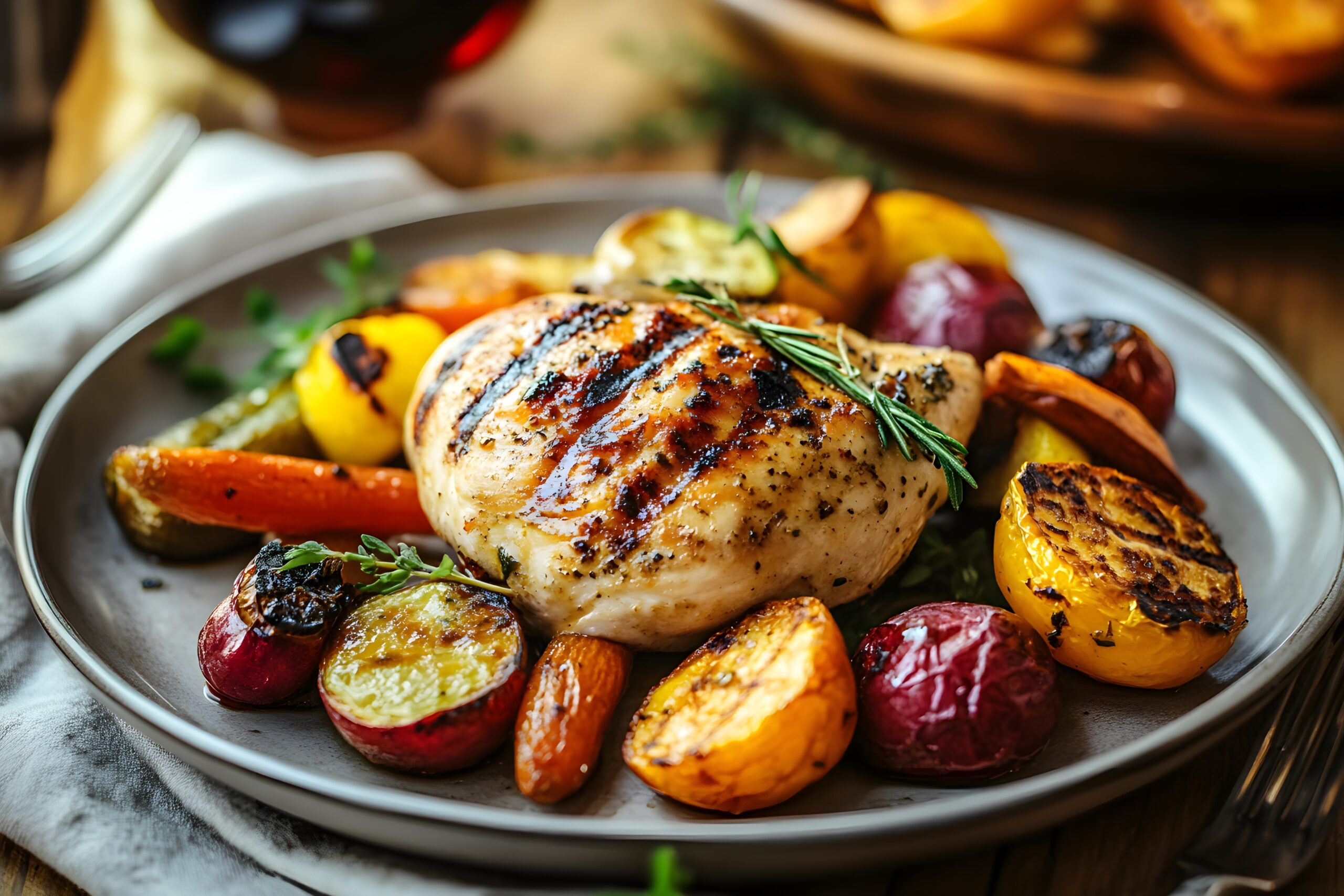
For most lifters, the goal at breakfast is still around 25 to 40 grams of protein, built from the same framework you’ve already seen:
- Protein first
- Fibrous carbs from fruit and/or vegetables
- Starch and fats adjusted to match training and total calories
Here are six high-protein breakfast ideas that use that structure without turning breakfast into a meal plan marathon.
EGG & VEGETABLE SCRAMBLE CUPS
What You Need:
- 6 large whole eggs (~36 g protein)
- 1 cup liquid egg whites (~24–26 g protein)
- 2 cups mixed vegetables, finely chopped (e.g., peppers, onions, spinach, mushrooms)
- ½ teaspoon salt (or to taste)
- Pepper and any seasoning you like (paprika, garlic powder, etc.)
- Cooking spray or a little oil for the muffin tin
How to Prep It:
- Preheat the oven to about 350°F (175°C).
- Whisk the whole eggs and egg whites together in a bowl.
- Stir in the chopped vegetables, salt, and seasonings.
- Lightly grease a muffin tin with cooking spray or a small amount of oil.
- Pour the mixture evenly into 8 muffin cups.
- Bake until the cups are set and just firm in the center (usually 15–20 minutes, depending on your oven).
- Let them cool, then store in the fridge.
Protein Breakdown:
- The whole batch gives you roughly 60–65 g of protein.
- 3–4 cups will usually land you in the 25–35 g protein range.
BAKED EGG MUFFINS WITH TURKEY & VEGETABLES
What You Need:
- 6 large whole eggs (~36 g protein)
- ½ cup liquid egg whites (~12–13 g protein)
- 8 oz (about 225 g) cooked lean turkey sausage or ground turkey (~40–45 g protein)
- 2 cups chopped vegetables (e.g., spinach, peppers, onions, zucchini)
- ½ teaspoon salt (or to taste)
- Pepper, herbs, and spices of your choice
- Parchment paper muffin liners or a lightly oiled muffin tin
How to Prep It:
- Preheat the oven to about 350°F (175°C).
- Brown the turkey in a pan until fully cooked, then let it cool slightly.
- Whisk the eggs and egg whites together in a large bowl.
- Fold in the cooked turkey and chopped vegetables, plus salt and seasonings.
- Line a muffin tin with parchment liners or lightly oil each cup.
- Pour the mixture evenly into 12 muffin cups.
- Bake until firm and lightly golden on top (about 18–22 minutes).
Protein Breakdown:
- The whole batch provides roughly 90–95 g of protein.
- 3–4 muffins typically give you around 25–35 g of protein, depending on how evenly you portion them.
GREEK YOGURT PROTEIN BOWLS
What You Need:
- 1–1¼ cups (about 240–300 g) plain Greek yogurt or skyr
- ½–1 cup fruit (e.g., berries, apple slices, banana)
- 2–3 tablespoons oats, puffed quinoa, or high-fiber cereal (optional, for extra carbs)
- 1 tablespoon nuts or seeds (optional, for fat and crunch)
How to Prep It:
- Add 1–1¼ cups Greek yogurt to a bowl or container (enough to hit 20–30 g protein based on the brand).
- Top with fruit for carbs and fiber.
- Add 2–3 tablespoons of oats, puffed quinoa, or higher-fiber cereal if you want more carbs or texture.
- Finish with about 1 tablespoon of nuts or seeds if you need a bit more fat and crunch.
Protein Breakdown:
- Base yogurt serving: usually 20–30 g protein.
- If you need more, either slightly increase the yogurt portion or choose a higher-protein brand to land closer to 30–35 g at breakfast.
COTTAGE CHEESE WITH FRUIT & SEEDS
What You Need (1 serving):
- 1–1¼ cups (about 225–280 g) low-fat cottage cheese
- ½–1 cup fresh or thawed frozen fruit (e.g., berries, pineapple, peaches, apple)
- 1 tablespoon seeds (e.g., pumpkin seeds, chia, flax, sunflower)
How to Prep It:
- Scoop 1–1¼ cups cottage cheese into a bowl or meal-prep container.
- Top with ½–1 cup fruit.
- Add about 1 tablespoon of seeds for texture, extra nutrients, and a bit of fat.
Protein Breakdown:
- Base cottage cheese serving: roughly 25–30 g protein.
- If you need more, increase the cottage cheese slightly or pair this bowl with a small protein shake to land in the 30–40 g range.
TOFU & VEGETABLE BREAKFAST SCRAMBLE
What You Need (1 large serving):
- 10–12 oz (about 280–340 g) firm or extra-firm tofu
- 1½–2 cups mixed vegetables, chopped (e.g., peppers, onions, greens, mushrooms, tomatoes)
- 1–2 teaspoons oil for the pan (or nonstick spray)
- Salt, pepper, garlic powder, turmeric, paprika
- Or a splash of soy sauce / tamari
How to Prep It:
- Press the tofu briefly with paper towels to remove some excess moisture if needed.
- Heat oil or nonstick spray in a pan over medium heat.
- Crumble the tofu into the pan and cook until warmed through and lightly browned.
- Add the chopped vegetables and cook until tender.
- Season well with salt, pepper, and spices, or a small splash of soy sauce.
Protein Breakdown:
- 10–12 oz tofu will usually give you about 25–30 g protein for the scramble.
- If you need more, bump the tofu closer to the upper end of that range or add a small side of plant-based yogurt with added protein.
LENTIL BREAKFAST BOWLS
What You Need (1 serving):
- 1–1½ cups cooked lentils
- 1–1½ cups roasted or sautéed vegetables (e.g., brussels sprouts, carrots, peppers, onions, greens)
- Optional: ½ cup cooked quinoa, potatoes, or another whole grain
- Salt, pepper, herbs, or a light sauce
How to Prep It:
- Cook a batch of lentils ahead of time (or use canned, drained, and rinsed).
- Roast or sauté a tray of mixed vegetables until tender and lightly browned.
- In the morning, combine 1–1½ cups lentils with 1–1½ cups vegetables in a bowl and reheat.
- Add about ½ cup cooked quinoa or potatoes if you need more carbs for heavier training days.
- Season with salt, pepper, herbs, or a light sauce.
Protein Breakdown:
- At 1 cup lentils, you’re usually around 18–20 g protein.
- At 1½ cups, you’re closer to 25–27 g protein.
- If you consistently want to be in the 25–30 g range at breakfast, lean toward the larger lentil portion.
6) WHAT ARE THE BEST HIGH PROTEIN LUNCH IDEAS?
Lunch is where a lot of people lose the plot.
You’re in the middle of the day, juggling work, messages, and whatever else is going on, and lunch becomes whatever is closest: a giant sandwich with a thin layer of meat, a big bowl of pasta with barely any protein, or a “healthy” salad that’s mostly lettuce and dressing.
It’s rushed, repetitive, and usually built around convenience carbs instead of protein.
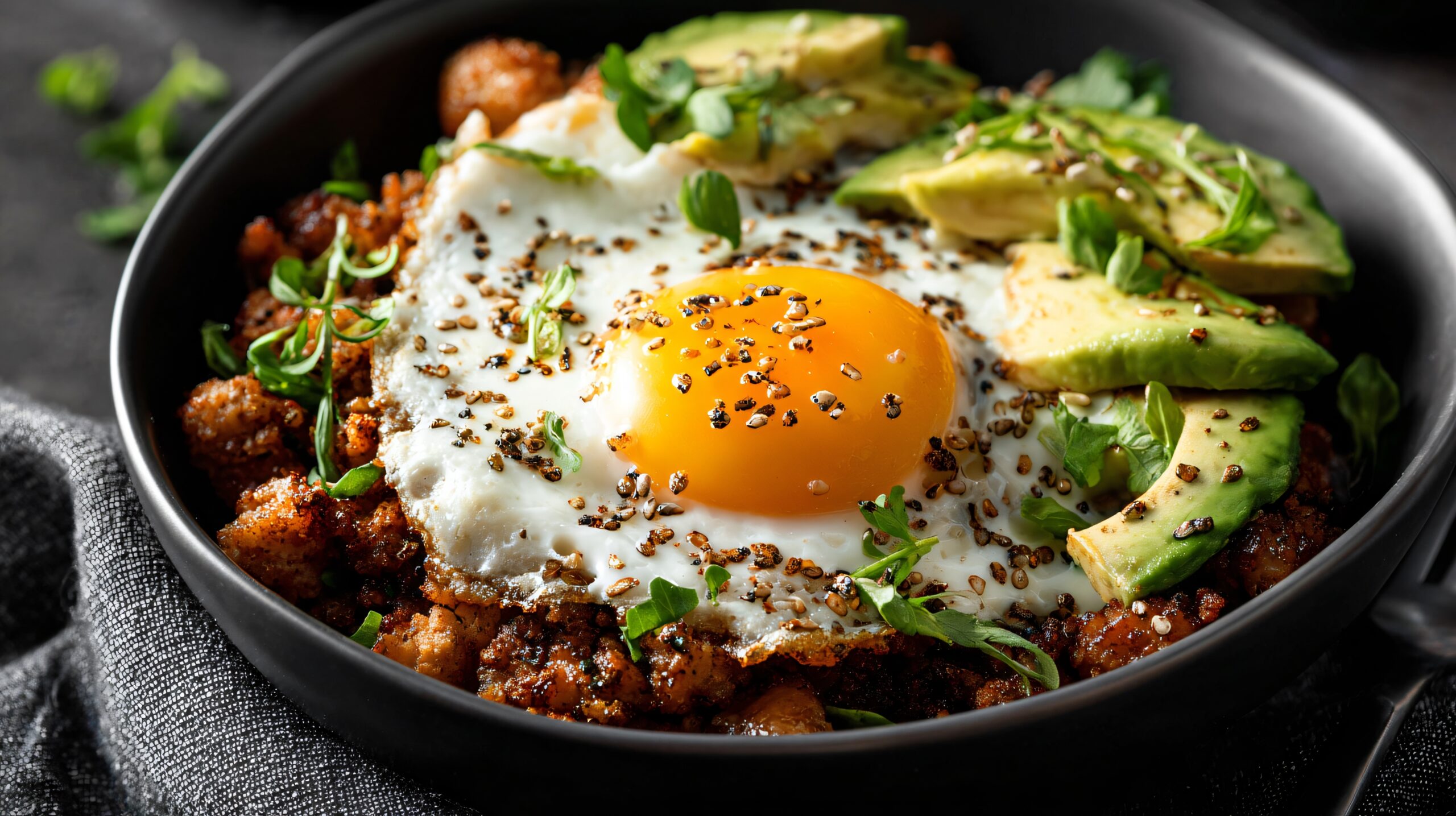
Here are six high protein lunch ideas that use that structure and still work in a weekday schedule.
GRILLED CHICKEN PASTA BOWL WITH GREENS
What You Need (1 serving):
- 5–6 oz grilled or baked chicken breast, sliced
- 1 cup cooked whole-wheat pasta
- ½ cup marinara sauce (low added sugar if possible)
- 2 cups mixed greens (e.g., spinach, arugula, romaine)
- 1 teaspoon olive oil
- Vinegar, salt, and pepper
How to Prep It:
- Grill or bake the chicken breast until cooked through, then slice.
- Warm the whole-wheat pasta and marinara sauce together in a pan or microwave.
- Toss the mixed greens with olive oil, vinegar, salt, and pepper.
- Build your plate or bowl: pasta + marinara on the bottom, chicken on top, greens on the side.
Protein Breakdown:
- 5–6 oz chicken breast: roughly 35–40 g protein
- 1 cup whole-wheat pasta: about 7–9 g protein
- Total: usually 40–45 g protein for the meal
CHICKEN & VEGETABLE WHOLE-WHEAT WRAP
What You Need (1 serving):
- 5 oz cooked chicken breast, chopped (~35 g protein)
- 1 whole-wheat wrap (medium size)
- ½ cup sliced onions and mushrooms
- ¼ cup diced tomatoes
- Hot sauce (to taste)
- ½ cup low-fat Greek yogurt (on the side or used as a spread)
How to Prep It:
- Sauté the onions and mushrooms in a pan until they’re soft.
- Add the chopped chicken and tomatoes to the pan just long enough to warm everything through.
- Lay out the whole-wheat wrap and spoon the chicken–vegetable mixture into the center.
- Add hot sauce to taste.
- Roll the wrap tightly.
- Serve with ½ cup Greek yogurt on the side or spread some inside the wrap instead of a heavy sauce.
Protein Breakdown:
- 5 oz chicken breast: about 35 g protein
- ½ cup low-fat Greek yogurt: about 10–12 g protein
- Whole-wheat wrap: around 4–6 g protein, depending on the brand
- Total: typically, 45–50 g protein
LEAN GROUND BEEF RICE & VEGETABLE BOWL
What You Need (1 serving):
- 5–6 oz lean ground beef (90–96% lean)
- ¾ cup cooked rice (white, jasmine, or brown)
- 1–2 cups mixed vegetables (e.g., peppers, onions, broccoli slaw, carrots)
- 1 teaspoon olive or avocado oil (if needed for cooking)
- Minced garlic, salt, pepper
- Optional: a splash of a soy sauce-based sauce or simple seasoning blend
How to Prep It:
- Cook the ground beef in a pan with minced garlic, salt, and pepper until browned and fully cooked. Drain excess fat if needed.
- In the same pan, sauté the mixed vegetables until tender, adding a small amount of oil if necessary.
- Warm the cooked rice.
- Assemble the bowl: rice on the bottom, ground beef, and vegetables on top.
- Finish with a small splash of soy sauce-based sauce or your preferred seasoning if you like.
Protein Breakdown:
- 5–6 oz lean ground beef: roughly 30–36 g protein
- ¾ cup cooked rice: about 4–6 g protein
- Total: usually 35–40+ g protein
SALMON GRAIN BOWL WITH GREENS & SUN-DRIED TOMATOES
What You Need (1 serving):
- 5–6 oz salmon fillet (baked, grilled, or leftover sheet-pan salmon)
- ¾ cup cooked rice or another whole grain (e.g., quinoa or farro)
- 1–2 cups leafy greens (spinach, mixed greens, or shredded cabbage)
- 2 tablespoons chopped sun-dried tomatoes (ideally packed in water or drained well)
- Salt and pepper
- Optional: lemon juice or a light drizzle of olive oil
How to Prep It:
- Bake or pan-cook the salmon fillet until it’s just cooked through and flaky. Leftover oven baked salmon, salmon sheet-pan dinner, or soy-ginger salmon from the night before also work well here.
- Layer the greens into a bowl.
- Add the cooked grain on top of the greens.
- Place the salmon over the grains, then scatter the chopped sun-dried tomatoes on top.
- Season with salt, pepper, and a bit of lemon juice. Add a small drizzle of olive oil if you need more fat in the meal.
Protein Breakdown:
- 5–6 oz salmon: about 30–36 g protein
- ¾ cup cooked grain: roughly 4–6 g protein
- Total: typically, 35–40+ g protein
SLOW COOKER GROUND PROTEIN & LENTIL SOUP BOWL
What You Need (makes 3–4 servings):
- 15–20 oz lean ground protein (ground beef, chicken, or turkey)
- 3 cups cooked lentils (or about 1½ cups dry lentils + enough time to cook in the slow cooker)
- 6–8 cups low-sodium broth
- 3–4 cups mixed vegetables (e.g., carrots, celery, onions, peppers, spinach, or cabbage)
- Salt, pepper, and spices (e.g., garlic powder, smoked paprika, Italian seasoning)
How to Prep It:
- If you’re using very lean meat, you can brown it quickly in a pan first; otherwise, add the raw ground protein straight into the slow cooker, breaking it up with a spoon.
- Add the lentils, vegetables, and broth.
- Season lightly with salt, pepper, and spices (you can always adjust at the end).
- Cook on low in the slow cooker until the ground protein is fully cooked, lentils are tender, and flavors come together (typically several hours).
- Portion into bowls for lunch and store the rest for later in the week.
Protein Breakdown:
- Ground protein: about 25–30 g protein per serving (if you divide into 3–4 portions)
- Lentils: roughly 6–10 g protein per serving (from the total lentil amount)
- Total: generally
- 30–40+ g protein per bowl
LENTIL & VEGETABLE POWER BOWL
What You Need (1 serving):
- 1–1½ cups cooked lentils
- 1 cup: ~18–20 g protein
- 1½ cups: ~25–27 g protein
- 1–2 cups mixed vegetables (e.g., steamed broccoli, carrots, bell peppers)
- ¾ cup cooked rice or quinoa
- Salt, pepper, and herbs (e.g., parsley, basil, oregano)
How to Prep It:
- Warm the cooked lentils in a pan or microwave.
- Steam or sauté the mixed vegetables until tender.
- Warm the cooked rice or quinoa if needed.
- Combine lentils, vegetables, and grain in a bowl.
- Season with salt, pepper, and herbs to taste.
Protein Breakdown:
- At 1 cup lentils + grains: usually 20–24 g protein
- At 1½ cups lentils + grains: closer to 25–30 g protein
7) WHAT ARE THE BEST HIGH PROTEIN DINNER IDEAS?
Dinner is usually where structure disappears.
You’re done with the day, your decision-making battery is low, and whatever is easiest wins: takeout, oversized bowls of pasta, or something fried with a tiny strip of protein hiding under sauce and cheese. It feels good for a few minutes and then you’re stuffed, sluggish, and nowhere near your protein goals.
High-protein dinners flip that. They give you enough protein to support recovery, plenty of vegetables, and just the right amount of starch to avoid going to bed feeling heavy.
Here are six high-protein dinners to try:
SLOW COOKER SALSA VERDE CHICKEN PLATE
What You Need (1 serving):
- 5–6 oz cooked chicken breast, shredded or sliced
- 2–3 tablespoons salsa verde
- 2 cups steamed or roasted vegetables (e.g., broccoli, zucchini, peppers)
- Optional: ½–¾ cup cooked rice or potatoes
How to Prep It:
- Add chicken breasts and salsa verde to a slow cooker and cook on low until the chicken is very tender and shreds easily.
- Steam or roast your vegetables until they’re tender.
- For dinner, portion 5–6 oz of the cooked chicken onto a plate, top with some of the cooking juices/salsa, and add a big serving of vegetables.
- If you’re training hard or need more carbs, add a small scoop of rice or potatoes.
Protein Breakdown:
- 5–6 oz cooked chicken breast: roughly 35–40 g protein
GARLIC HERB PORK CHOP WITH ROASTED VEGETABLES
What You Need (1 serving):
- 5–6 oz lean pork chop
- 2 cups roasted vegetables (e.g., broccoli, carrots, squash, brussels sprouts)
- 1–2 teaspoons olive or avocado oil (for roasting)
- Salt, pepper, garlic powder, and dried herbs
How to Prep It:
- Preheat the oven to about 400°F (205°C).
- Toss chopped vegetables with a small amount of oil, salt, pepper, and garlic powder. Spread on a baking sheet and roast until tender and browned.
- Season the pork chop with salt, pepper, and herbs. Pan-sear on medium heat until browned on both sides, then finish in the oven if needed until cooked through.
- Serve the pork chop with a heap of roasted vegetables. Add a small portion of potatoes or rice if you need extra starch.
Protein Breakdown:
- 5–6 oz lean pork chop: about 32–38 g protein
BEEF BURGUNDY–STYLE DINNER
What You Need (1 serving):
- 5–6 oz lean beef (sirloin or top round), cut into cubes
- 1 cup sliced mushrooms
- ½ cup sliced onions
- ½–1 cup low-sodium beef broth
- 1 teaspoon oil (for browning)
- Salt, pepper, and herbs (e.g., thyme, rosemary, bay leaf)
- Optional: ½–¾ cup cooked potatoes or whole-grain noodles
How to Prep It:
- Heat a teaspoon of oil in a pan or pot and brown the beef cubes on all sides.
- Add mushrooms and onions and cook until they start to soften.
- Pour in enough beef broth to partially cover the mixture. Add herbs, salt, and pepper.
- Simmer on low until the beef is tender and the liquid has reduced slightly.
- Serve in a bowl with vegetables and broth. Add a small serving of potatoes or whole-grain noodles if you want more carbs.
Protein Breakdown:
- 5–6 oz lean beef: roughly 32–40 g protein
OVEN-BAKED SALMON WITH VEGETABLES
What You Need (1 serving):
- 5–6 oz salmon fillet
- 2 cups mixed vegetables (e.g., asparagus, green beans, brussels sprouts, peppers)
- 1–2 teaspoons olive oil (for vegetables)
- Salt, pepper, lemon juice, and herbs (e.g., dill, parsley)
How to Prep It:
- Preheat the oven to 400°F (205°C).
- Place the salmon fillet on a parchment-lined baking sheet. Season with salt, pepper, and a squeeze of lemon.
- On the same sheet (or another one), toss the vegetables with a small amount of olive oil, salt, and pepper.
- Bake until the salmon is flaky and the vegetables are tender and slightly browned.
Protein Breakdown:
- 5–6 oz salmon: about 30–36 g protein
LENTIL & VEGETABLE DINNER BOWL
What You Need (1 serving):
- 1–1½ cups cooked lentils
- 1 cup: ~18–20 g protein
- 2 cups roasted or sautéed vegetables (e.g., cauliflower, carrots, peppers, onions, greens)
- 1 teaspoon olive oil (for roasting or sautéing)
- Salt, pepper, and herbs (e.g., parsley, cumin, smoked paprika)
How to Prep It:
- Cook a batch of lentils ahead of time or use canned, drained, and rinsed lentils.
- Roast or sauté mixed vegetables with a small amount of oil, salt, and pepper until tender and browned.
- Warm the lentils if needed, then combine 1–1½ cups with the vegetables in a bowl.
- Season with salt, pepper, and herbs to taste.
Protein Breakdown:
- At 1 cup lentils: usually 18–20 g protein
- At 1½ cups lentils: closer to 25–27 g protein
TOFU & VEGETABLE STIR-FRY
What You Need (1 serving):
- 10–12 oz firm or extra-firm tofu, cubed
- 2 cups mixed stir-fry vegetables (e.g., broccoli, bell peppers, snap peas, carrots, onions)
- 1–2 teaspoons oil for the pan
- 1–2 tablespoons soy sauce or tamari
- Garlic, ginger, and chili flakes (optional)
- Optional: ½–¾ cup cooked rice or another whole grain
How to Prep It:
- Press the tofu briefly with paper towels to remove some moisture, then cut into cubes.
- Heat oil in a pan or wok over medium-high heat.
- Add tofu and cook until the sides are browned and slightly crisp.
- Add the vegetables and stir-fry until they’re bright and tender-crisp.
- Stir in soy sauce (and garlic, ginger, or chili if you’re using them), tossing everything to coat.
- Serve as a plated dinner or over a small portion of rice if you need more carbs.
Protein Breakdown:
- 10–12 oz tofu: about 25–30 g protein
8) WHAT ARE THE BEST HIGH PROTEIN DESSERTS?
Dessert is usually where the “I’ll be good tomorrow” cycle starts.
You finish dinner, you’re still looking for something, and the easiest option is ice cream, cookies, or whatever’s in the cabinet. It takes you further from your protein target and closer to a late-night calorie dump you didn’t plan for.
Here are six high protein desserts and are simple enough to keep in the regular rotation.
HIGH-PROTEIN RICOTTA WHIP
What You Need (1 serving):
- ¾ cup low-fat ricotta
- 1 scoop vanilla or unflavored protein powder
- ½ teaspoon vanilla extract
- 1–2 tablespoons milk of choice (dairy or protein milk), as needed for texture
- Optional: a few berries or a light sprinkle of cinnamon on top
How to Prep It:
- Add ricotta, protein powder, vanilla, and 1 tablespoon of milk to a bowl or blender.
- Blend or whisk until smooth and slightly airy. If it’s too thick, add a bit more milk, a teaspoon at a time.
- Spoon into a small bowl or ramekin.
- Chill in the fridge for 15–20 minutes before eating if you want a colder, thicker texture.
- Top with a few berries or cinnamon if you want more flavor without adding much volume.
Protein Breakdown:
- ¾ cup low-fat ricotta: ~18–20 g protein
- 1 scoop protein powder: ~20–25 g protein
- Total: roughly 38–45 g protein (you can cut the portion in half if you want a smaller dessert with ~18–22 g).
HIGH-PROTEIN BANANA BREAD SQUARES
What You Need (makes ~6 squares):
- 2 medium ripe bananas, mashed
- 2 scoops protein powder (vanilla or cinnamon works well)
- ½ cup oat flour or finely ground oats
- ½ teaspoon baking powder
- 1 whole egg
- ¼ cup milk of choice (dairy or protein milk)
- ½ teaspoon vanilla extract
- Optional: a pinch of cinnamon
How to Prep It:
- Preheat the oven to 350°F (175°C). Line a small baking dish with parchment paper.
- Mash the bananas in a bowl until mostly smooth.
- Stir in the egg, milk, and vanilla.
- Add protein powder, oat flour, baking powder, and cinnamon if you’re using it. Mix until you get a thick batter.
- Spread the batter evenly into the lined baking dish.
- Bake for about 20–25 minutes, or until the top is set and a toothpick comes out mostly clean.
- Let it cool, then cut into 6 squares. Store leftovers in the fridge.
Protein Breakdown:
- Protein powder (2 scoops): ~40–50 g protein
- Egg: ~6–7 g protein
- Oat flour: ~6–7 g protein
- Total batch: ~52–64 g protein
HIGH-PROTEIN RICOTTA CAKE CUPS
What You Need (makes 4 servings):
- 1½ cups low-fat ricotta
- 2 scoops vanilla or lemon-flavored protein powder
- 2 whole eggs
- ½ teaspoon vanilla extract or lemon zest
- Optional: nonstick spray and 4 small ramekins
How to Prep It:
- Preheat the oven to 325°F (165°C). Lightly grease 4 ramekins with nonstick spray.
- Add ricotta, protein powder, eggs, and vanilla or lemon zest to a bowl.
- Blend or whisk until completely smooth.
- Divide the mixture evenly among the 4 ramekins.
- Place ramekins on a baking tray and bake for about 20–25 minutes, or until the tops are just set and barely firm in the center.
- Let them cool slightly; you can serve warm or chilled.
Protein Breakdown:
- 1½ cups low-fat ricotta: ~36–40 g protein
- 2 scoops protein powder: ~40–50 g protein
- 2 eggs: ~12–14 g protein
- Total batch: around 88–104 g protein
- Per cake cup (4 servings): roughly 22–26 g protein
PROTEIN ICE CREAM (BLENDER SOFT SERVE)
What You Need (1 large serving or 2 smaller):
- 1 scoop protein powder (vanilla, chocolate, or similar)
- ¾ cup milk of choice (dairy, lactose-free, or protein milk)
- ½ frozen banana or a handful of ice cubes (for thickness)
- ½ teaspoon vanilla extract
- Optional: a teaspoon cocoa powder (for chocolate), or a sprinkle of cinnamon
How to Prep It:
- Add milk, frozen banana or ice, protein powder, vanilla, and any optional flavorings to a blender.
- Blend until thick and smooth. Add ice if you want it thicker, or a splash more milk if it’s too thick to blend.
- Serve immediately in a bowl like soft serve. If you prefer a firmer texture, freeze for 30–45 minutes and stir once halfway through.
Protein Breakdown:
- 1 scoop protein powder: ~20–25 g protein
- ¾ cup milk: ~6–8 g protein (depending on type, more if using high-protein milk)
- Total: roughly 26–33 g protein
- Split into two bowls if you want a lighter dessert with ~13–16 g protein each.
FROZEN PROTEIN YOGURT BARK
What You Need (makes ~6 pieces):
- 1½ cups plain Greek yogurt (2% or nonfat)
- 1 scoop vanilla protein powder
- ½ teaspoon vanilla extract
- Optional toppings (use sparingly): a few berries, a teaspoon mini chocolate chips, or a light sprinkle of chopped nuts
How to Prep It:
- Line a small baking sheet or flat dish with parchment paper.
- In a bowl, stir together Greek yogurt, protein powder, and vanilla until completely smooth.
- Spread the mixture evenly over the parchment in a thin, even layer (about ¼–½ inch thick).
- Lightly scatter your chosen toppings across the surface.
- Freeze for a few hours until solid.
- Break into 6 pieces and store in a container in the freezer.
Protein Breakdown:
- 1½ cups Greek yogurt: ~30–36 g protein
- 1 scoop protein powder: ~20–25 g protein
- Total batch: ~50–61 g protein
CHOCOLATE PROTEIN MUG CAKE
What You Need (1 serving):
- 1 scoop chocolate or vanilla protein powder
- 2 tablespoons oat flour or finely ground oats
- ½ teaspoon baking powder
- 2 tablespoons milk of choice
- 1 egg white or 1 whole egg (depending on how rich you want it)
- 1 teaspoon unsweetened cocoa powder (if using vanilla protein)
- Optional: a teaspoon of dark chocolate chips on top
How to Prep It:
- Add protein powder, oat flour, baking powder, cocoa (if using), milk, and egg/egg white to a large mug.
- Stir until you have a smooth batter with no dry pockets.
- Microwave on high for about 45–75 seconds, watching closely so it doesn’t overflow or overcook.
- The cake should be just set in the middle. If it’s still very wet, give it another 5–10 seconds at a time.
- Let it cool slightly before eating.
Protein Breakdown:
- 1 scoop protein powder: ~20–25 g protein
- Egg white: ~3–4 g protein
- or whole egg: ~6–7 g protein
- Oat flour: ~2–3 g protein
- Using a whole egg, you’re usually around 28–35 g protein for the mug cake. With just an egg white, it’s closer to 25–30 g protein.
9) WHAT ARE THE BEST HIGH PROTEIN SNACKS?
Snacks are where a lot of people quietly undo their work.
You miss out on protein at a meal, hunger creeps up, and the easiest option nearby is usually something sweet, crunchy, and low on actual protein. By the end of the day, you’ve eaten plenty of calories, but very little that helps with muscle or appetite control.
Snacks shouldn’t be mini-cheat meals. They’re small chances to reinforce what your main meals are already doing: keep protein high, keep you satisfied, and stop you from raiding the pantry because you’re running on fumes.
Here are six high-protein snacks:
SAVORY COTTAGE CHEESE SNACK JARS
What You Need (1 snack):
- ¾–1 cup low-fat cottage cheese
- ¼ cup chopped cucumber, bell pepper, or a mix
- Fresh herbs (e.g., chives, parsley, dill) or cracked black pepper
How to Prep It:
- Spoon ¾–1 cup cottage cheese into a small jar or container.
- Add the chopped vegetables on top.
- Finish with herbs or a few turns of black pepper.
- Seal and keep in the fridge for a grab-and-go option.
Protein Breakdown:
- ¾ cup cottage cheese: usually around 18–22 g protein
- 1 cup cottage cheese: closer to 24–28 g protein
LEAN DELI ROLL-UP SNACK BOX
What You Need (1 snack):
- 4–5 oz sliced deli turkey or chicken breast (look for lean, lower-sodium options)
- 1 oz slice or sticks of a lighter cheese (e.g., part-skim mozzarella or similar)
- Sliced cucumber, bell pepper strips, or cherry tomatoes
How to Prep It:
- Lay out the deli turkey or chicken slices.
- Cut the cheese into thin strips.
- Roll the cheese inside the meat slices to make simple roll-ups.
- Pack the roll-ups with a handful of raw vegetables in a small container.
Protein Breakdown:
- 4–5 oz lean deli turkey/chicken: about 24–30 g protein
- 1 oz cheese: around 6–7 g protein
- Total: typically, 30–35 g protein
SMOKED SALMON SNACK BOX
What You Need (1 snack):
- 3½–4 oz smoked salmon (single-serve pack or sliced from a larger pack)
- ¼–½ cup sliced cucumber or mini bell peppers
- 1–2 thin whole-grain crackers or rice cakes (optional)
- Lemon wedge and cracked pepper
How to Prep It:
- Portion 3½–4 oz smoked salmon into a small container.
- Add sliced cucumber or peppers on the side.
- Include a lemon wedge and a couple of thin crackers or a rice cake if you want a small amount of carbs.
- When it’s snack time, squeeze lemon over the salmon, add pepper, and eat with the vegetables and cracker/rice cake.
Protein Breakdown:
- 3½–4 oz smoked salmon: roughly 20–25 g protein
PEANUT BUTTER–OAT PROTEIN CUPS
What You Need (makes ~8 cups):
- ½ cup natural peanut butter
- ½ cup rolled oats
- 2 scoops protein powder (whey or plant-based)
- 1–2 tablespoons honey or calorie-free sweetener (optional)
How to Prep It:
- In a bowl, stir together peanut butter, oats, and protein powder.
- Add just enough honey or sweetener (and a splash of water or milk if needed) to form a thick dough that holds together.
- Press the mixture into silicone molds or a mini muffin tray to form about 8 cups.
- Refrigerate until firm, then store them in the fridge.
Protein Breakdown:
- Peanut butter: ~16–18 g protein
- Oats: ~6–7 g protein
- Protein powder (2 scoops): ~40–50 g protein
- Total batch: roughly 62–75 g protein
HOMEMADE HIGH-PROTEIN SNACK BARS
What You Need (makes ~6 bars):
- 1½ cups rolled oats
- 2 scoops protein powder
- ½ cup nut or seed butter (e.g., peanut, almond, or sunflower)
- ¼ cup milk or yogurt (add more as needed for texture)
How to Prep It:
- Combine oats, protein powder, and nut/seed butter in a bowl.
- Add milk or yogurt slowly, stirring until you get a thick, sticky dough that holds together but isn’t runny.
- Press the mixture firmly into a small lined pan or dish.
- Refrigerate until solid, then slice into 6 bars.
Protein Breakdown (whole batch):
- Oats: ~15–18 g protein
- Protein powder: ~40–50 g protein
- Nut/seed butter: ~16–18 g protein
- Total: roughly 70–85 g protein
JERKY, NUTS & FRUIT PACK
What You Need (1 snack):
- 2–2½ oz beef jerky or other lean jerky (look for higher protein, lower sugar)
- ¼ cup nuts (e.g., almonds, cashews, or a mix)
- 1 small piece of fruit (e.g., an apple or a clementine)
How to Prep It:
- Portion 2–2½ oz jerky into a small bag or container.
- Add ¼ cup nuts to another small container or bag.
- Keep a piece of fruit on hand (desk drawer, bag, or fridge).
Protein Breakdown:
- 2–2½ oz jerky: usually 20–25 g protein
- ¼ cup nuts: around 4–6 g protein
- Total: roughly 24–30 g protein
10) WHAT ARE THE BEST PROTEIN SHAKE RECIPES?
Protein shakes aren’t meant to be your main diet. Their job is to make everything else easier.
They step in when you don’t have time to cook, when you’re not hungry enough for a full meal, or when you want something that digests quickly around training without feeling heavy.
With that in mind, here are six protein shake recipes that earn their place in your day.
PRE-WORKOUT BERRY SMOOTHIE
What You Need (1 serving):
- 1 scoop whey or whey–isolate protein (vanilla works well)
- 1 cup unsweetened almond milk or low-fat dairy milk
- ½ medium banana
- ½ cup frozen mixed berries
- A small handful of spinach (optional, for micronutrients)
- Ice as needed
How to Prep It:
- Add milk, protein powder, banana, berries, and spinach to a blender.
- Throw in a few ice cubes if you want it colder and slightly thicker.
- Blend until smooth and drink 45–60 minutes before training.
Protein Breakdown:
- Protein powder: ~20–25 g
- Milk: ~6–8 g
- Total: about 26–32 g protein
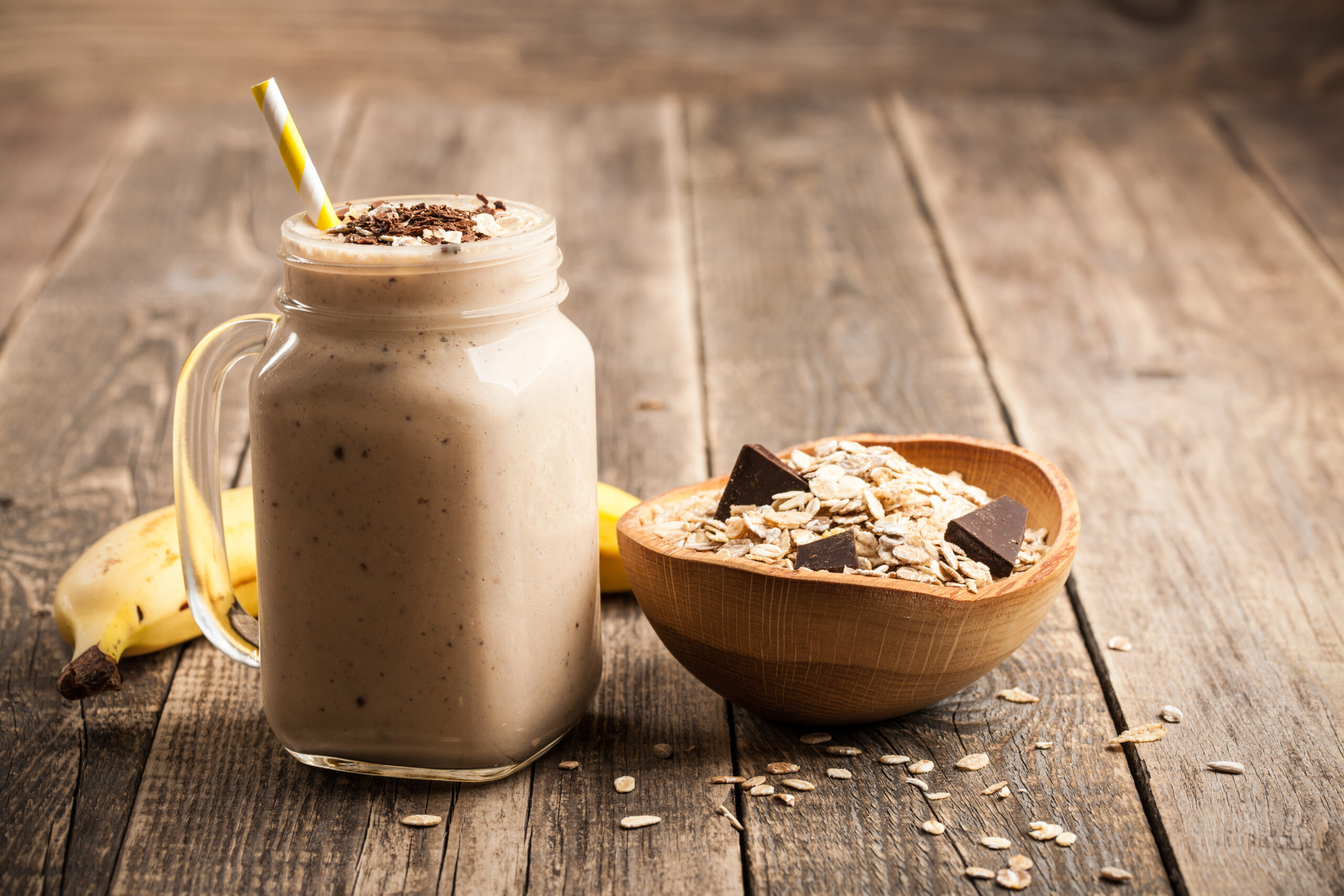
CHOCOLATE OAT POST-WORKOUT SHAKE
What You Need (1 serving):
- 1½ scoops chocolate protein powder
- 1 cup low-fat dairy milk or high-protein milk
- ¼ cup rolled oats
- ½ medium banana
- Ice if you want more thickness
How to Prep It:
- Add milk, protein powder, oats, and banana to the blender.
- Blend until the oats are fully broken down and the texture is smooth.
- Adjust with a bit more milk or ice if this chocolate protein shake is too thick.
Protein Breakdown:
- Protein powder (1½ scoops): ~30–35 g
- Milk: ~8–10 g
- Oats: ~3–4 g
- Total: roughly 40–45 g protein
MOCHA PROTEIN COFFEE SHAKE
What You Need (1 serving):
- 1 scoop chocolate or vanilla protein powder
- ½ cup cold brew coffee (or strong chilled coffee)
- ½–¾ cup milk of choice (dairy, almond, or protein milk)
- 3–4 ice cubes
- Optional: 1 teaspoon cocoa powder if you’re using vanilla protein
How to Prep It:
- Add cold brew, milk, protein powder, ice, and cocoa (if using) to a blender.
- Blend until smooth and slightly frothy.
- If you want it thinner, add a splash more coffee or water.
Protein Breakdown:
- Protein powder: ~20–25 g
- Milk: ~4–8 g (depends on type)
- Total: about 24–33 g protein
PEANUT BUTTER BANANA MUSCLE GAIN SHAKE
What You Need (1 serving):
- 2 scoops whey or blend protein (vanilla or chocolate)
- 1 medium banana
- 1¼ cups dairy milk or protein milk
- 1 tablespoon natural peanut butter
- ¼ cup rolled oats
- Ice as needed
How to Prep It:
- Add milk, protein powder, banana, peanut butter, and oats to the blender.
- Blend until completely smooth; add ice to thicken if you want more volume.
- This is closer to a small meal than a light snack, so use it when extra calories are actually needed.
Protein Breakdown:
- Protein powder (2 scoops): ~40–50 g
- Milk: ~10–12 g
- Peanut butter + oats: ~7–8 g combined
- Total: roughly 55–65 g protein
TROPICAL PLANT-BASED PROTEIN SMOOTHIE
What You Need (1 serving):
- 1 scoop plant-based protein (pea or pea–rice blend)
- 1 cup unsweetened soy milk or pea milk
- ½ cup frozen pineapple chunks
- ½ cup frozen mango
- A small handful of spinach or kale (optional)
- 1 teaspoon ground flaxseed or chia seeds
How to Prep It:
- Add soy/pea milk, protein powder, fruits, greens, and flax/chia to the blender.
- Blend until smooth. Add a bit more liquid if it’s too thick.
Protein Breakdown:
- Plant-based protein powder: ~20–25 g
- Soy/pea milk: ~7–10 g
- Flax/chia: ~1–2 g
- Total: about 28–35 g protein
NIGHT-TIME CASEIN SMOOTHIE BOWL
What You Need (1 serving):
- 1 scoop casein protein powder (or a slow-digesting blend)
- ¾ cup dairy milk or calcium-fortified plant milk
- ¼ cup plain Greek yogurt (optional, for extra thickness and protein)
- ½ cup frozen berries
- A few ice cubes
How to Prep It:
- Add milk, casein, yogurt, berries, and ice to a blender.
- Blend until thick and creamy. If it’s very thick, stop and scrape the sides once or twice.
- Pour into a bowl and eat with a spoon.
Protein Breakdown:
- Casein protein: ~20–25 g
- Milk: ~6–8 g
- Greek yogurt: ~4–6 g
- Total: roughly 30–38 g protein
11) WHAT ARE THE BEST VEGAN HIGH PROTEIN MEALS?
Eating plant-based doesn’t automatically mean low protein, but you do have to play the game a little differently.
Animal foods tend to be compact, complete, and easy to plug into a plate. With plant protein, you’re often getting less protein per bite, some sources don’t cover the full amino acid profile by themselves, and there’s usually more carbohydrates or fat coming along for the ride.
None of that is a dealbreaker if you’re smart about your choices.
Once you know which vegan foods are truly protein-focused and how to pair them, you can still hit the same daily targets and use the exact framework you’ve already seen: build around a protein foundation first, then layer in vegetables, starch, and fats on purpose.
From there, it’s just about turning those vegan protein sources into breakfasts, lunches, dinners, snacks, and shakes that happen to be plant-based instead of animal-based.
Here are six plant-based high protein recipes to get you through the week:
TOFU SCRAMBLE BREAKFAST BOWL
What You Need (1 serving):
- 10–12 oz firm tofu, crumbled
- 1½–2 cups vegetables (peppers, onions, spinach, mushrooms)
- 1–2 teaspoons oil or nonstick spray
- Turmeric, garlic powder, salt, pepper, and paprika
How to Prep It:
- Heat oil or spray in a pan over medium heat.
- Crumble tofu into the pan and cook until warmed through and lightly browned.
- Add chopped vegetables and cook until tender.
- Season generously with spices and salt.
Protein Breakdown:
- 10–12 oz tofu: typically, 25–30 g protein
SOY YOGURT & GRANOLA PROTEIN BOWL
What You Need (1 serving):
- 1½ cups high-protein soy yogurt (check the label)
- ½ cup berries or chopped fruit
- ¼ cup high-protein or homemade granola
How to Prep It:
- Add soy yogurt to a bowl.
- Top with fruit.
- Sprinkle granola over the top.
Protein Breakdown:
- Soy yogurt: often 20–25 g per 1½ cups
- Granola with nuts/seeds: 4–6 g
- Total usually lands in the 24–30 g range.
TEMPEH & VEGETABLE STIR-FRY BOWL
What You Need (1 serving):
- 5–6 oz tempeh, sliced or cubed
- 2 cups mixed stir-fry vegetables (broccoli, peppers, snap peas, carrots)
- 1–2 teaspoons oil for cooking
- 2–3 tablespoons soy sauce or tamari, plus garlic and ginger
- Optional: ½–¾ cup cooked rice or quinoa
How to Prep It:
- Heat a pan or wok with a small amount of oil.
- Cook tempeh until browned on most sides.
- Add vegetables and stir-fry until tender-crisp.
- Add soy sauce, garlic, and ginger, tossing everything to coat.
- Serve in a bowl, with rice or quinoa if you need extra carbs.
Protein Breakdown:
- 5–6 oz tempeh: usually 25–30 g protein
LENTIL & TOFU POWER BOWL
What You Need (1 serving):
- ¾–1 cup cooked lentils
- 4–6 oz baked or pan-seared tofu
- 1–2 cups roasted vegetables (e.g., cauliflower, carrots, onions, greens)
- 1 teaspoon olive oil (for roasting)
- Salt, pepper, and spices
How to Prep It:
- Roast vegetables with a small amount of oil, salt, and pepper until browned and tender.
- Cook or reheat lentils.
- Bake or pan-sear tofu until the outside is lightly crisp.
- Build the bowl: lentils on the bottom, tofu on top, vegetables around.
Protein Breakdown:
- Lentils: 12–18 g depending on portion
- Tofu: 15–25 g depending on portion size
- Together, it’s easy to reach 25–35 g protein in a single bowl.
CHICKPEA PASTA & VEGETABLE SKILLET
What You Need (1 serving):
- 2 oz dry chickpea pasta (measured before cooking)
- ¾–1 cup marinara sauce (look for lower added sugar)
- 1–2 cups vegetables (zucchini, peppers, spinach, mushrooms)
- ½ cup cooked chickpeas or white beans (optional, for extra protein)
How to Prep It:
- Cook chickpea pasta according to package instructions.
- In a pan, cook vegetables until tender.
- Stir in marinara sauce and chickpeas/beans.
- Add the cooked pasta and toss everything together.
Protein Breakdown:
- Chickpea pasta (2 oz dry): often 13–15 g
- Chickpeas/beans (½ cup): ~7–8 g
- Total usually lands around 20–23 g. Bump pasta or beans slightly higher if you want to nudge closer to 25–30 g.
ROASTED CHICKPEAS & EDAMAME SNACK BOX
What You Need (1 snack):
- ½ cup roasted chickpeas (store-bought or homemade)
- ½ cup shelled edamame (boiled or steamed)
- Optional: raw vegetables or a small piece of fruit
How to Prep It:
- Roast chickpeas with a bit of oil and seasoning until crunchyC0020 or buy a pre-roasted version with reasonable ingredients.
- Cook edamame and let it cool.
- Pack both in a small container.
Protein Breakdown:
- Roasted chickpeas (½ cup): ~7–8 g
- Edamame (½ cup): ~8–10 g
- Total: around 15–18 g. Increase portions slightly or add a small vegan protein shake if you want 20–25 g.
High protein diet recipes connect your training to changes in muscle, strength, and body composition.
When you know your target, hit your protein goal at each meal, and use a simple structure to build plates around it, the nutrition side becomes clear and predictable.
Use the examples in this guide, adjust portions to your body and training, and build your days from meals that match the results you want.
Check out our complete line of ATHLEAN-RX Supplements and find the best training program for you based on your fitness level and goals.
HIGH PROTEIN MEALS FAQ
Good high protein meals have three things in common: a big protein portion, enough vegetables to keep you full and functioning, and carbs and fats that are there on purpose instead of just filling space on the plate.
Here are some examples:
- Grilled chicken breast with a big serving of roasted vegetables and a scoop of rice
- Salmon with asparagus and potatoes
- Tofu or tempeh stir-fries loaded with vegetables and a moderate amount of noodles or rice
- Lentil or bean bowls with greens and a small amount of grain
In each case, the main item is doing the protein work, the vegetables handle volume and micronutrients, and the starch and fats are sized to match how hard you’re training and what your total calories look like.
When you lean on options like salmon, trout, or sardines for some of those meals, you also get omega-3 fatty acids that support heart health markers when paired with an overall balanced way of eating and decent blood pressure control.
That’s the bigger picture: you’re not only making muscle building and appetite easier, but you’re also eating in a way that lines up with long-term healthy eating and lowers your risk profile for things like heart disease as you age.
Start by deciding how many times you’re going to eat and what each of those is responsible for. A simple setup is three main meals and one or two protein-focused snacks or shakes.
If you aim for roughly 35 to 40 grams of protein at breakfast, lunch, and dinner, you’ve already covered about 105 to 120 grams.
Add one snack or shake with 25 to 30 grams of protein and you’re essentially at 130 to 150 grams.
From there you can nudge portions slightly up or down depending on your size and training: an extra ounce or two of meat or tofu, a slightly larger scoop of Greek yogurt or cottage cheese, or a second smaller snack, if you consistently come in low.
You make it much easier to hit 150 grams of protein per day when your main meals are the foundation of your protein each day.
If breakfast is light and lunch only includes a small amount, you’re stuck trying to find 80 to 100 grams between midafternoon and night, right when you’re tired and more likely to grab whatever is around.
Give each meal a clear protein target and 150 grams turns into your normal training intake, not something you only manage on perfect days.
Start by knowing what 30 grams looks like from common foods. Roughly, you’re aiming for one of these at each meal:
- Meat, poultry, fish: about 4–5 oz cooked chicken, turkey, lean beef, pork, or fish
- Eggs: about 3 whole eggs plus some egg whites
- Greek yogurt / cottage cheese: about 1–1¼ cups
- Tofu / tempeh: about 8–10 oz
- Beans / lentils: usually 1½ cups cooked, or 1 cup plus another small protein source (like soy yogurt or a sprinkle of seeds)
Once you know those portions, you can focus on putting them on the plate. If the meal is mostly bread, pasta, or rice with only a small amount of meat, tofu, or beans, you’re probably nowhere near 30 grams.
Build meals so that your main protein source is clearly present in one of the portions above, then add vegetables and a controlled amount of starch and fat around it.
Do that at breakfast, lunch, and dinner, and you’ll hit roughly 30 grams per meal without needing to overthink it.
Forty grams of protein per meal is more important when you’re bigger, training hard, or aiming for a daily target in the 160 to 200-gram range. To reach that level, you need portions that are sized for it, not snack amounts.
For most animal proteins, 40 grams of protein looks like 6 to 7 ounces cooked of chicken breast, turkey, lean beef, or pork.
A salmon fillet in that range will do the same and also provides omega-3 fatty acids, which support cardiovascular health and fit well with a long-term healthy eating pattern, especially if you’re also paying attention to bodyweight and blood pressure instead of only looking at the mirror.
You can also get to 40 grams with dairy by using a larger serving of Greek yogurt or cottage cheese and adding a small scoop of protein powder, if the label on your usual portion only gets you into the high 20s or low 30s.
On a plant-based setup, you’ll usually need either a bigger serving of tofu or tempeh, or a combination: for example, a bowl built on lentils, chickpeas, or black beans with tofu or tempeh added on top, or a bean-and-grain base plus a side of soy yogurt.
The point is to combine enough high protein foods so that the total from the plate lands in the 35 to 40-gram range, not to rely on a small amount of one ingredient.
If you keep your protein portions in the 35 to 40 g bracket, with vegetables and a moderate amount of starch and fat filling the rest of the space, hitting a higher daily protein target becomes routine instead of something you only manage once in a while.
Jeff Cavaliere M.S.P.T, CSCS
Jeff Cavaliere is a Physical Therapist, Strength Coach and creator of the ATHLEAN-X Training Programs and ATHLEAN-Rx Supplements. He has a Masters in Physical Therapy (MSPT) and has worked as Head Physical Therapist for the New York Mets, as well as training many elite professional athletes in Major League Baseball, NFL, MMA and professional wrestling. His programs produce “next level” achievements in muscle size, strength and performance for professional athletes and anyone looking to build a muscular athletic physique.