








WHY CHOOSE PROTEIN MUFFINS?
It isn’t fried and it can even have fruit baked into it. So, that passes as something reasonable to eat in the morning, right?
Then there’s the label.
A big bakery muffin can run 450 to 600 calories with 30 to 40 grams of sugar and only a few grams of protein.
Put bluntly, that’s closer to a slice of cake than a snack.
Protein muffins keep everything good about the original, drastically reduce the problematic stuff (sugar), and add what the bakery version skips (protein).
Unfortunately, a lot of protein muffin recipes don’t get there.
Some come out dry and rubbery. Others taste great but pack the same sugar and calories as the bakery muffin, with a scoop of powder stirred into the batter.
So, the question is whether a muffin can hold serious protein and still bake and taste right. It can, and this guide breaks down how.
I’m going to cover what separates a good protein muffin recipe from a bad one, how much protein to aim for, how to build a batter that stays tender, and the best protein muffin recipes to bake.

HOW MUCH PROTEIN SHOULD A PROTEIN MUFFIN ACTUALLY HAVE?
How much protein a muffin needs depends on your day’s total, so start there.
For most people who train, a solid daily target is 0.7 to 1.0 grams of protein per pound of bodyweight.
Where you land in that range tracks your experience and goal. You can use our Protein Calculator to determine your specific daily protein needs.
Newer lifters, lighter training weeks, and maintenance phases sit near the bottom. Harder training, building muscle, a fat-loss phase, or holding muscle while you push for size moves you toward 1 gram per pound.
Here’s what that range looks like in practice:
- A 150-pound lifter: about 105 to 150 grams of protein a day
- A 180-pound lifter: about 126 to 180 grams a day
- A 200-pound lifter: about 140 to 200 grams a day
Against a number like that, a protein muffin is a supportive tool, not your main protein source.
A chicken breast, a few eggs, or one of your usual protein shakes recipes will always have more protein than a muffin, and they should.
A muffin earns its place in the gaps: a between-meals bite that adds 20-some grams toward the day when the alternative has none, or a quick hit of protein after a workout when a baked good sounds better than another shake.
That’s why the recipes here target 10 to 15 grams of protein a muffin.
One is a light snack on its own. Two, at 20 to 30 grams, covers about a sixth of a 150-gram day in one sitting, which is the better call after the gym or when you’re behind heading into the evening.
Either way, you’re adding protein toward the total, not swapping a meal for a muffin.
COMMON MISTAKES WHEN MAKING PROTEIN MUFFINS
A solid recipe doesn’t guarantee a good muffin.
Most protein muffins get ruined in the execution, not the ingredient list, and it’s usually one of these five things.
OVERBAKING THEM
Protein muffins cross from soft to chalky faster than regular muffins do.
The powder is already pulling at the moisture in the batter, so two extra minutes in the oven is the difference between tender and overbaked.
Use a toothpick, but know what you’re looking for.
Comes out clean, you went too long. Comes out with wet batter on it, they need another minute or two. Comes out with a few damp crumbs clinging to it, that’s exactly where you want them.
They also keep cooking on the hot pan after they leave the oven, so pull them at that damp-crumb stage.
Check at the earliest time your recipe gives, never the latest.
OVERMIXING THE BATTER
Once the flour goes in, stir only until everything comes together. A few lumps are fine.
Overmixing knocks the air out of the batter, so the muffins bake up flat and heavy instead of light and risen.
It happens most with protein batters, because people keep working them trying to smooth out the powder.
Smooth the powder out early, while it’s safe to.
Mix the wet ingredients and the powder hard until there are no lumps, then add the flour at the end and fold it in: turn the batter over itself with a spatula a few times and stop the moment it’s combined.
Folding is gentler than stirring, and that’s the point.
SKIPPING THE REST
Protein powder and oat flour both soak up liquid slowly.
Mix the batter and bake it right away, and it goes in thin and loose, so the muffins spread flat and the centers can turn gummy before they set.
Let the batter sit for about 5 minutes before you fill the cups.
It firms up as the powder and oats take on water, which holds the muffins’ shape and helps them bake through evenly.
For almond-flour batters it’s less of an issue. For anything with oat flour or rolled oats, the rest is the step most people skip.
MIX-INS THAT SINK
Blueberries, dark chocolate chips, and chopped nuts are heavier than the mix around them, and protein muffin batter tends to run looser than the usual kind, so they sink.
You get a bare top and an overloaded bottom.
Toss them in a teaspoon of flour first, enough to lightly coat them. The coating grabs the batter and holds them in place while the muffins set.
Fold them in last and gently, after it’s rested.
THEY STICK TO THE LINER
Half the muffin tearing off with the wrapper is the most common protein-muffin complaint there is, and standard paper muffin liners are usually behind it.
It comes down to fat: protein muffins run leaner than regular ones, and fat is what normally keeps a muffin from gripping the paper.
Switch to parchment or foil liners, which release a lean batter far better.
Whichever you use, give them a light coat of nonstick spray or oil first, and grease the tin itself if you bake without liners.
One more thing: don’t pull them out hot.
A warm protein muffin is soft and tears easily, so let the batch firm up for a few minutes before you lift any out.
HIGH-PROTEIN MUFFIN BLUEPRINT
Behind every recipe in this guide is a four-part structure: the protein, the flour, the moisture, and the leavening and flavor that finish it.
Once you understand these four parts, you’re not locked into following a recipe exactly.
When a batch comes out flat or gummy, you’ll know which part to change.
You can swap ingredients without ruining the texture, fix a recipe that isn’t turning out, and make your own versions instead of hunting for the perfect one online.
Here’s each part, and how to get it right.
THE PROTEIN
The powder drives the macros and the flavor, so start there.
The recipes here use ATHLEAN-RX PRO-30G for the whey muffins and PRO-30G Vegan for the dairy-free ones, both 30 grams of protein a scoop.
A vanilla protein powder is the most flexible base: it works across blueberry, banana, and lemon without fighting the flavor, and you can swap in a chocolate one where the recipe wants it.
The type of protein changes how it bakes.
Whey Protein: This type of protein adds structure and helps the muffins rise, so it’s the easiest to work with, though it can bake dry on its own, which is why the whey recipes lean on Greek yogurt and applesauce for moisture.
Casein Protein: Sometimes sold as micellar casein protein, this protein holds water and keeps a crumb soft, but it bakes mushy alone. That softness is already in the dairy since Greek yogurt and cottage cheese are mostly casein. In other words, you don’t need to go out and buy a tub of casein protein powder because whole foods will provide it naturally.
Plant-Based Protein: Pea protein, brown rice protein powder, and soy absorb the most liquid and bake denser, so the vegan recipes need extra applesauce, banana, and flax to keep them from drying out.
You don’t need a cabinet full of powders. One whey and one plant based protein powder cover every recipe here.
THE FLOUR
Protein powder can’t create a muffin on its own. It needs a flour for body and structure, and the one you pick sets the texture and the carb count.
Oat Flour: This is the default for most of these recipes since it bakes soft, has a mild flavor, and adds some fiber. Buy it ready-made, or make your own by blitzing wholesome oats or gluten-free oats into a fine flour in a food processor, which costs less.
Almond Flour: This one is the move for grain free and gluten free muffins. It’s lower in carbs and has a tender, slightly rich crumb, but it has no starch to set the structure, so almond-flour batters need eggs to hold together.
Whole Wheat Flour: This works when gluten isn’t a concern. It has the most classic muffin texture and the most fiber, with a heartier, denser result than oat or almond.
Lupin Flour: This is the high-protein option. It runs about 40 grams of protein per 100 grams with very few net carbs, so a small amount pushes protein up fast. One caution: lupin is a legume related to peanut, and people with a peanut allergy can react to it, so skip it if that’s you.
THE MOISTURE AND BINDER
Moisture is what keeps a protein muffin soft instead of chalky, and the binder is what holds it together.
Most recipes use a couple of these.
Greek Yogurt and Cottage Cheese: These do two things at once, adding moisture and a boost of protein.
Unsweetened Applesauce and Banana Puree: These keep things moist while letting you cut added fat and sugar, and banana adds sweetness of its own.
Eggs: These are the main binder, setting as the muffin bakes and holding everything together. For dairy-free muffin recipes or egg-free baking, a flax egg stands in: 1 tablespoon of ground flax stirred into 3 tablespoons of water, rested a few minutes until it gels.
Milk: Almond milk is the easy pick for the liquid. Any dairy-free milk works, including unsweetened cashew milk, and regular dairy milk is fine if you’re not avoiding it.
Nut Butters: These add fat and flavor. Almond butter or peanut butter make a richer muffin, while powdered peanut butter adds the flavor with far less fat when you want to keep calories down.
THE LEAVENING, SWEETENER, AND FLAVOR
The last group is small, but it’s what makes a muffin a muffin.
Baking Powder and Baking Soda: These are the lift. Baking powder works on its own, so it’s the default. Baking soda only activates when it meets an acid, so recipes use it when something tangy is in the mix, like Greek yogurt or lemon. Use whichever the recipe calls for; they aren’t interchangeable.
Sweetener: You don’t need much refined sugar. A little maple syrup or a monkfruit sweetener (a no-calorie sweetener from the monk fruit) is enough, and banana or applesauce add some of their own.
Vanilla and Salt: These are the finish. The vanilla rounds out the flavor and the salt keeps the muffins from tasting flat. Skip them and the muffins taste like what they are: protein powder and flour.
PROTEIN MUFFIN GROCERY LIST
Nearly every recipe here pulls from a short core of ingredients: a protein powder, a flour, Greek yogurt, eggs, and pantry basics like baking powder, vanilla, and salt.
Get those into your kitchen once and you’re set for most of the lineup.
After that, the main thing that changes from one recipe to the next is the mix-in, a cup of blueberries for one, a spoonful of peanut butter for another.
The list below is grouped to match the blueprint, so it’s clear which items you’ll always need and what you grab only for a specific flavor.
PROTEIN POWDER
- French Vanilla Bean
- Chocolate Fudge Brownie
- Chocolate Coconut
- Vanilla Bean
- Rich Double Chocolate
DAIRY AND EGGS
- Plain nonfat Greek yogurt
- Large eggs (several recipes use the whites separately)
FLOURS AND DRY BASE
- Oat flour (or rolled oats to blend your own)
- Almond flour, for the grain-free recipes
- Unsweetened cocoa powder
MOISTURE AND BINDERS
- Unsweetened almond milk
- Unsweetened soy milk, for the plant-based recipes (it adds protein)
- Unsweetened applesauce, for the plant-based recipes
- Ripe bananas
- Ground flaxseed, for the flax eggs in the plant-based recipes
- Unsweetened creamy peanut butter
- Coconut oil (or any neutral oil)
LEAVENING, SWEETENER, AND FLAVOR
- Baking powder
- Baking soda
- Maple syrup
- Vanilla extract
- Ground cinnamon
- Sea salt
MIX-INS AND ADD-INS
- Blueberries, fresh or frozen (or mixed berries)
- Mini chocolate chips
- Dark chocolate chips (dairy-free for the vegan recipes)
- Chopped walnuts
- Unsweetened shredded coconut
- Poppy seeds
- Lemons, for zest and juice

BAKING TIPS FOR PROTEIN MUFFINS
A regular muffin is forgiving. It’s mostly flour, sugar, and fat, so it bakes up soft almost no matter what you do. A protein muffin is leaner and denser, which leaves a lot less margin for error.
That’s why the technique around the recipe makes a real difference here.
None of these habits are complicated, but together they separate a flat batch from tall, soft muffins that keep all week.
THE PAN
A muffin tin and a muffin pan are two names for one thing, and a standard one has 12 cups, which is what the recipes here are designed for.
If yours is dark metal, it runs hotter than a light pan and browns the bottoms faster, so a lighter tin is the safer choice.
ROOM-TEMPERATURE INGREDIENTS
Pull your eggs, Greek yogurt, and milk out ahead of time.
Cold ingredients don’t blend smoothly and can stiffen the batter, while room-temperature ones mix evenly and rise better.
BAKERY-STYLE MUFFIN TOPS
Want taller, domed tops? Start the muffins hot, around 425°F, for the first 5 minutes, then drop to 350°F for the rest.
The early blast sets the edges fast and forces the center up.
It’s optional, since the recipes here bake straight through at 350°F, but it’s an easy upgrade.
Keep the hot phase to those few minutes, though, because a lean protein batter browns and firms up faster than a regular one.
Fill the cups about three-quarters for even muffins, or closer to the top for more dome (but watch for overflow), and don’t open the oven door while they rise, or the cool air collapses the top before it sets.
COOLING
Once they’re firm enough to lift, move them to a wire rack. Left sitting in the pan, the trapped steam turns the bottoms soggy.
STORAGE AND MEAL PREP
Protein muffins are made for this. Bake a batch and you’ve got a high-protein meal prep snack ready all week, and liners make grab-and-go even easier.
They keep 2 to 3 days at room temperature, up to 5 days in the fridge, and up to 3 months in the freezer in a sealed freezer container.
Freeze them spread out first so they don’t clump, then bag them.
Reheat straight from frozen in the microwave for 30 to 60 seconds; the fridge dries them out a little, so a quick warm-up brings a cold one back to soft too.
MEASURING
If you want your macros to be accurate, weigh your protein powder and flour on a kitchen scale instead of scooping with cups.
The two measurement methods aren’t equal: a packed cup of flour or an uneven scoop of powder can throw the protein and calorie numbers off across a whole batch.
It’s the easiest way to keep the nutritional information on these recipes matching what you bake.
CLASSIC PROTEIN MUFFINS
These are the everyday high-protein muffins, straight from the blueprint: oat flour, whey, and dairy.
They run from a plain vanilla you can eat any time to a peanut butter version rich enough to pass for dessert, and every one is anchored by PRO-30G with a base of Greek yogurt and eggs.
Each lands around 150 to 190 calories with 11 to 13 grams of protein, so this makes for a solid healthy snack.
If you eat dairy and gluten isn’t a concern, start here. The grain-free and plant-based versions come next.
CLASSIC VANILLA PROTEIN MUFFINS
Learn this one first. It’s a soft, plain vanilla muffin, and it’s the base every other flavor in this section is built on, so dial it in before you start swapping. Two scoops of PRO-30G and a cup of Greek yogurt set the protein for the whole batch.
NUTRITIONAL INFORMATION
- Prep Time: 10 minutes
- Bake Time: 20 minutes
- Yield: 12 muffins
- Serving Size: 1 muffin
- Calories Per Serving: about 150
- Protein Per Serving: about 11 grams
- Carbs Per Serving: about 17 grams
- Fat Per Serving: about 5 grams
INGREDIENTS
- 1¾ cups (210 g) oat flour
- 2 scoops (about 78 g) ATHLEAN-RX PRO-30G, French Vanilla Bean
- 1 cup plain nonfat Greek yogurt
- 2 large eggs, plus 2 egg whites
- 3 tablespoons maple syrup
- 2 tablespoons melted coconut oil (or any neutral oil)
- ½ cup unsweetened almond milk
- 2 teaspoons baking powder
- ½ teaspoon baking soda
- 2 teaspoons vanilla extract
- ¼ teaspoon sea salt
HOW TO MAKE IT
- Preheat the oven to 350°F and line a 12-cup muffin tin with parchment or foil liners.
- In a large bowl, whisk the oat flour, PRO-30G, baking powder, baking soda, and sea salt until there are no lumps.
- In a second bowl, whisk the eggs, egg whites, Greek yogurt, maple syrup, oil, almond milk, and vanilla until smooth.
- Pour the wet into the dry and fold with a spatula until the flour disappears. A few lumps are fine. Let the batter rest 5 minutes.
- Divide the batter among the 12 cups, filling each about three-quarters full.
- Bake 18 to 22 minutes, until the tops spring back and a toothpick comes out with a few moist crumbs. Cool in the tin 5 minutes, then move to a wire rack.
FLAVOR SWAP: Frosted Cinnamon Bun PRO-30G turns these into a cinnamon-roll version with no other changes.
BLUEBERRY PROTEIN MUFFINS
These blueberry protein muffins are probably the flavor people bake most. They’re the vanilla base with a cup of blueberries folded in, and the only trick is keeping the berries from sinking.
NUTRITIONAL INFORMATION
- Prep Time: 10 minutes
- Bake Time: 22 minutes
- Yield: 12 muffins
- Serving Size: 1 muffin
- Calories Per Serving: about 155
- Protein Per Serving: about 11 grams
- Carbs Per Serving: about 18 grams
- Fat Per Serving: about 5 grams
INGREDIENTS
- 1¾ cups (210 g) oat flour
- 2 scoops (about 78 g) ATHLEAN-RX PRO-30G, French Vanilla Bean
- 1 cup plain nonfat Greek yogurt
- 2 large eggs, plus 2 egg whites
- 3 tablespoons maple syrup
- 2 tablespoons melted coconut oil
- ½ cup unsweetened almond milk
- 1 cup blueberries, fresh or frozen
- 2 teaspoons baking powder
- ½ teaspoon baking soda
- 2 teaspoons vanilla extract
- ¼ teaspoon sea salt
HOW TO MAKE IT
- Preheat the oven to 350°F and line a 12-cup muffin tin with liners.
- Whisk the oat flour, PRO-30G, baking powder, baking soda, and sea salt in a large bowl.
- In a second bowl, whisk the eggs, egg whites, Greek yogurt, maple syrup, oil, almond milk, and vanilla until smooth.
- Fold the wet into the dry until the flour disappears, then let the batter rest 5 minutes.
- Toss the blueberries in a teaspoon of oat flour, then fold them in gently so they don’t sink or streak the batter blue.
- Fill the cups three-quarters full and bake 20 to 24 minutes, until a toothpick comes out with a few moist crumbs. Cool in the tin 5 minutes, then move to a wire rack.
FLAVOR SWAP: Use a cup of mixed berries in place of the blueberries for a more tart muffin.
CHOCOLATE CHIP BANANA PROTEIN MUFFINS
Ripe bananas do two things here: sweeten the batter and keep it moist. That’s why these banana protein muffins need almost no added sugar.
NUTRITIONAL INFORMATION
- Prep Time: 10 minutes
- Bake Time: 22 minutes
- Yield: 12 muffins
- Serving Size: 1 muffin
- Calories Per Serving: about 180
- Protein Per Serving: about 11 grams
- Carbs Per Serving: about 21 grams
- Fat Per Serving: about 6 grams
INGREDIENTS
- 1¾ cups (210 g) oat flour
- 2 scoops (about 78 g) ATHLEAN-RX PRO-30G, French Vanilla Bean
- 1 cup plain nonfat Greek yogurt
- 2 ripe bananas, mashed into a smooth banana puree
- 2 large eggs, plus 2 egg whites
- 2 tablespoons melted coconut oil
- ¼ cup unsweetened almond milk
- ⅓ cup mini chocolate chips
- 2 teaspoons baking powder
- ½ teaspoon baking soda
- 2 teaspoons vanilla extract
- ¼ teaspoon sea salt
HOW TO MAKE IT
- Preheat the oven to 350°F and line a 12-cup muffin tin with liners.
- Whisk the oat flour, PRO-30G, baking powder, baking soda, and sea salt in a large bowl.
- In a second bowl, whisk the banana puree, eggs, egg whites, Greek yogurt, oil, almond milk, and vanilla until smooth.
- Fold the wet into the dry until the flour disappears, then let the batter rest 5 minutes.
- Toss the mini chocolate chips in a little oat flour and fold them in last.
- Fill the cups three-quarters full and bake 20 to 24 minutes, until a toothpick comes out with a few moist crumbs. Cool in the tin 5 minutes, then move to a wire rack.
FLAVOR SWAP: Belgian Maple Waffle PRO-30G gives these a maple-banana flavor.
DOUBLE CHOCOLATE PROTEIN MUFFINS
Cocoa, Chocolate Fudge Brownie PRO-30G, and dark chocolate chips push this one into chocolate-muffin territory. It’s one of the few protein desserts you can prep a week ahead.
NUTRITIONAL INFORMATION
- Prep Time: 10 minutes
- Bake Time: 20 minutes
- Yield: 12 muffins
- Serving Size: 1 muffin
- Calories Per Serving: about 170
- Protein Per Serving: about 11 grams
- Carbs Per Serving: about 18 grams
- Fat Per Serving: about 6 grams
INGREDIENTS
- 1½ cups (180 g) oat flour
- ¼ cup unsweetened cocoa powder
- 2 scoops (about 78 g) ATHLEAN-RX PRO-30G, Chocolate Fudge Brownie
- 1 cup plain nonfat Greek yogurt
- 2 large eggs, plus 2 egg whites
- 3 tablespoons maple syrup
- 2 tablespoons melted coconut oil
- ½ cup unsweetened almond milk
- ⅓ cup dark chocolate chips
- 2 teaspoons baking powder
- ½ teaspoon baking soda
- 2 teaspoons vanilla extract
- ¼ teaspoon sea salt
HOW TO MAKE IT
- Preheat the oven to 350°F and line a 12-cup muffin tin with liners.
- Whisk the oat flour, cocoa powder, PRO-30G, baking powder, baking soda, and sea salt in a large bowl until the cocoa is evenly mixed in.
- In a second bowl, whisk the eggs, egg whites, Greek yogurt, maple syrup, oil, almond milk, and vanilla until smooth.
- Fold the wet into the dry until the flour disappears, then let the batter rest 5 minutes.
- Toss the dark chocolate chips in a little oat flour and fold them in last.
- Fill the cups three-quarters full and bake 18 to 22 minutes, until the tops are set and a toothpick comes out with a few moist crumbs. Cool in the tin 5 minutes, then move to a wire rack.
FLAVOR SWAP: Mint Chocolate Chip PRO-30G makes a mint-chocolate version.
PEANUT BUTTER PROTEIN MUFFINS
The richest of the classics. Unsweetened creamy peanut butter adds the fat and flavor, and these need no extra oil, since the peanut butter is the fat here.
NUTRITIONAL INFORMATION
- Prep Time: 10 minutes
- Bake Time: 20 minutes
- Yield: 12 muffins
- Serving Size: 1 muffin
- Calories Per Serving: about 190
- Protein Per Serving: about 13 grams
- Carbs Per Serving: about 18 grams
- Fat Per Serving: about 8 grams
INGREDIENTS
- 1¾ cups (210 g) oat flour
- 2 scoops (about 78 g) ATHLEAN-RX PRO-30G, French Vanilla Bean
- 1 cup plain nonfat Greek yogurt
- ½ cup unsweetened creamy peanut butter
- 2 large eggs, plus 2 egg whites
- 2 tablespoons maple syrup
- ½ cup unsweetened almond milk
- 2 teaspoons baking powder
- ½ teaspoon baking soda
- 2 teaspoons vanilla extract
- ¼ teaspoon sea salt
HOW TO MAKE IT
- Preheat the oven to 350°F and line a 12-cup muffin tin with liners.
- Whisk the oat flour, PRO-30G, baking powder, baking soda, and sea salt in a large bowl.
- In a second bowl, whisk the peanut butter, eggs, egg whites, Greek yogurt, maple syrup, almond milk, and vanilla until smooth. If the peanut butter is stiff, warm it for a few seconds first so it blends in.
- Fold the wet into the dry until the flour disappears, then let the batter rest 5 minutes.
- Fill the cups three-quarters full and bake 18 to 22 minutes, until a toothpick comes out with a few moist crumbs. Cool in the tin 5 minutes, then move to a wire rack.
FLAVOR SWAP: Swap the creamy peanut butter for powdered peanut butter to cut the fat, or use almond butter for a milder flavor.
LEMON POPPY SEED PROTEIN MUFFINS
The light one. Lemon and poppy seeds keep it bright instead of heavy, and the baking soda reacts with the lemon and yogurt for a good rise.
NUTRITIONAL INFORMATION
- Prep Time: 10 minutes
- Bake Time: 20 minutes
- Yield: 12 muffins
- Serving Size: 1 muffin
- Calories Per Serving: about 160
- Protein Per Serving: about 11 grams
- Carbs Per Serving: about 17 grams
- Fat Per Serving: about 5 grams
INGREDIENTS
- 1¾ cups (210 g) oat flour
- 2 scoops (about 78 g) ATHLEAN-RX PRO-30G, French Vanilla Bean
- 1 cup plain nonfat Greek yogurt
- 2 large eggs, plus 2 egg whites
- 3 tablespoons maple syrup
- 2 tablespoons melted coconut oil
- ½ cup unsweetened almond milk
- 2 tablespoons poppy seeds
- Zest of 2 lemons, plus 3 tablespoons lemon juice
- 2 teaspoons baking powder
- ½ teaspoon baking soda
- ¼ teaspoon sea salt
HOW TO MAKE IT
- Preheat the oven to 350°F and line a 12-cup muffin tin with liners.
- Whisk the oat flour, PRO-30G, poppy seeds, lemon zest, baking powder, baking soda, and sea salt in a large bowl.
- In a second bowl, whisk the eggs, egg whites, Greek yogurt, maple syrup, oil, almond milk, and lemon juice until smooth.
- Fold the wet into the dry until the flour disappears, then let the batter rest 5 minutes.
- Fill the cups three-quarters full and bake 18 to 22 minutes, until a toothpick comes out with a few moist crumbs. Cool in the tin 5 minutes, then move to a wire rack.
FLAVOR SWAP: Leave out the poppy seeds for a plain lemon muffin.
GRAIN-FREE PROTEIN MUFFINS
Swap the oat flour for almond flour and the muffin turns grain-free and gluten-free. If you have celiac disease or a gluten sensitivity, that’s reason enough.
But almond flour changes the nutrition too.
It trades the grain’s starch for almonds’ fats, fiber, vitamin E, and magnesium, so it bakes up denser and more filling, and lower in carbs.
It’s also a low-glycemic flour, which makes for a nutrient-dense muffin that’s less likely to spike your blood sugar the way a refined-flour one can. You’ll find it in the baking aisle at most grocery and health food stores.
Two things before you bake.
Almond flour has no gluten to provide structure, so these recipes depend on extra eggs to hold together and come out moister and heavier than the classics.
They also run higher in fat, since almonds are fat-dense, even as the carbs come down. That’s the trade for going grain-free, and both recipes still clear 11 grams of protein a muffin.
GRAIN-FREE BANANA NUT PROTEIN MUFFINS
These grain-free protein banana muffins use mashed banana and almond flour for a moist, dense crumb, with chopped walnuts folded in for texture. No oats, no gluten.
NUTRITIONAL INFORMATION
- Prep Time: 10 minutes
- Bake Time: 22 minutes
- Yield: 12 muffins
- Serving Size: 1 muffin
- Calories Per Serving: about 175
- Protein Per Serving: about 11 grams
- Carbs Per Serving: about 11 grams
- Fat Per Serving: about 11 grams
INGREDIENTS
- 1½ cups (168 g) almond flour
- 2 scoops (about 78 g) ATHLEAN-RX PRO-30G, French Vanilla Bean
- 2 ripe bananas, mashed
- 3 large eggs
- ½ cup plain nonfat Greek yogurt
- ⅓ cup chopped walnuts
- 2 tablespoons maple syrup
- 1 teaspoon baking powder
- 1 teaspoon baking soda
- 2 teaspoons vanilla extract
- 1 teaspoon ground cinnamon
- ¼ teaspoon sea salt
HOW TO MAKE IT
- Preheat the oven to 350°F and line a 12-cup muffin tin with liners.
- In a large bowl, whisk the almond flour, PRO-30G, baking powder, baking soda, cinnamon, and sea salt, breaking up any clumps in the almond flour.
- In a second bowl, whisk the eggs and mashed banana with the Greek yogurt, maple syrup, and vanilla until smooth.
- Fold the wet into the dry until no dry flour remains. The batter is thicker than an oat-flour batter, which is what you want. Let it rest 5 minutes.
- Fold in the walnuts, then divide the batter among the 12 cups, filling each three-quarters full.
- Bake 20 to 24 minutes, until the tops are golden and a toothpick comes out with a few moist crumbs. Almond flour browns fast, so tent the pan with foil if the tops darken early.
- Cool in the tin 10 minutes before moving to a wire rack. Almond-flour muffins are fragile while warm.
FLAVOR SWAP: Belgian Maple Waffle PRO-30G leans the flavor toward maple, or swap the walnuts for pecans.
GRAIN-FREE CHOCOLATE COCONUT PROTEIN MUFFINS
Chocolate Coconut PRO-30G, cocoa, and shredded coconut on an almond-flour base. It’s the grain-free answer to the double chocolate, rich enough to read as dessert.
NUTRITIONAL INFORMATION
- Prep Time: 10 minutes
- Bake Time: 22 minutes
- Yield: 12 muffins
- Serving Size: 1 muffin
- Calories Per Serving: about 190
- Protein Per Serving: about 12 grams
- Carbs Per Serving: about 12 grams
- Fat Per Serving: about 12 grams
INGREDIENTS
- 1½ cups (168 g) almond flour
- ¼ cup unsweetened cocoa powder
- 2 scoops (about 78 g) ATHLEAN-RX PRO-30G, Chocolate Coconut
- 1 cup plain nonfat Greek yogurt
- 3 large eggs
- ⅓ cup unsweetened shredded coconut
- ⅓ cup dark chocolate chips
- 3 tablespoons maple syrup
- ¼ cup unsweetened almond milk
- 1 teaspoon baking powder
- 1 teaspoon baking soda
- 2 teaspoons vanilla extract
- ¼ teaspoon sea salt
HOW TO MAKE IT
- Preheat the oven to 350°F and line a 12-cup muffin tin with liners.
- In a large bowl, whisk the almond flour, cocoa powder, PRO-30G, baking powder, baking soda, and sea salt until the cocoa is evenly worked in.
- In a second bowl, whisk the Greek yogurt, eggs, maple syrup, almond milk, and vanilla until smooth.
- Fold the wet into the dry until no dry flour remains, then let the batter rest 5 minutes.
- Toss the dark chocolate chips in a teaspoon of almond flour so they don’t sink, then fold them in with the shredded coconut.
- Divide the batter among the 12 cups, filling each three-quarters full. Bake 20 to 24 minutes, until the tops are set and a toothpick comes out with a few moist crumbs. Tent with foil if the tops darken early.
- Cool in the tin 10 minutes before moving to a wire rack.
FLAVOR SWAP: Leave out the shredded coconut and use Chocolate Fudge Brownie PRO-30G for a straight double-chocolate version.

PLANT-BASED PROTEIN MUFFINS
No dairy, no eggs. These run on PRO-30G Vegan and work as a dairy-free muffin recipe for anyone who’s vegan, lactose-intolerant, or cutting back on animal products.
Plant proteins have different nutritional properties than whey: they digest a little slower and add more fiber, though one plant source rarely covers every amino acid, which is why a good vegan powder blends a few of them together.
Plant-based muffins are the toughest to get right.
Without eggs you need a binder, so these use a flax egg (ground flaxseed and water, whisked and rested until it gels) plus applesauce to hold everything together.
Plant protein also drinks up liquid, so the batter rests longer and the crumb comes out denser and heartier than the whey versions.
Both clear 11 grams of protein a muffin, and a little soy milk helps get them there.
VEGAN DOUBLE CHOCOLATE PROTEIN MUFFINS
The vegan answer to the double chocolate. Rich Double Chocolate Vegan PRO-30G and cocoa do the chocolate, dark chocolate chips finish it, and a flax egg stands in for the eggs.
NUTRITIONAL INFORMATION
- Prep Time: 15 minutes
- Bake Time: 22 minutes
- Yield: 12 muffins
- Serving Size: 1 muffin
- Calories Per Serving: about 180
- Protein Per Serving: about 11 grams
- Carbs Per Serving: about 20 grams
- Fat Per Serving: about 7 grams
INGREDIENTS
- 1½ cups (180 g) oat flour
- ¼ cup unsweetened cocoa powder
- 3 scoops (about 129 g) ATHLEAN-RX PRO-30G, Rich Double Chocolate Vegan
- 3 tablespoons ground flaxseed, plus 9 tablespoons water
- ¾ cup unsweetened applesauce
- ¾ cup unsweetened soy milk
- 3 tablespoons maple syrup
- 2 tablespoons melted coconut oil
- ⅓ cup dairy-free dark chocolate chips
- 2 teaspoons baking powder
- ½ teaspoon baking soda
- 2 teaspoons vanilla extract
- ¼ teaspoon sea salt
HOW TO MAKE IT
- Whisk the ground flaxseed with the water and let it sit 10 minutes, until it thickens into a gel.
- Preheat the oven to 350°F and line a 12-cup muffin tin with liners.
- In a large bowl, whisk the oat flour, cocoa powder, PRO-30G, baking powder, baking soda, and sea salt.
- In a second bowl, whisk the flax gel, applesauce, soy milk, maple syrup, oil, and vanilla until smooth.
- Fold the wet into the dry until no dry flour remains. The batter is thick, so let it rest 10 minutes to hydrate.
- Toss the dark chocolate chips in a little oat flour and fold them in.
- Fill the cups three-quarters full and bake 20 to 24 minutes, until the tops are set and a toothpick comes out with a few moist crumbs.
- Cool in the tin 10 minutes, then move to a wire rack. Vegan muffins firm up as they cool, so give them the time.
FLAVOR SWAP: Stir in 2 tablespoons of peanut butter with the wet ingredients for a chocolate-peanut butter version.
VEGAN CHOCOLATE CHIP COOKIE DOUGH PROTEIN MUFFINS
These taste like protein cookie dough baked into a muffin: vanilla, a hit of salt, and chocolate chips, all dairy-free and egg-free. They scratch the cookie-dough itch without turning into a sugar muffin recipe.
NUTRITIONAL INFORMATION
- Prep Time: 15 minutes
- Bake Time: 22 minutes
- Yield: 12 muffins
- Serving Size: 1 muffin
- Calories Per Serving: about 185
- Protein Per Serving: about 11 grams
- Carbs Per Serving: about 21 grams
- Fat Per Serving: about 7 grams
INGREDIENTS
- 1¾ cups (210 g) oat flour
- 3 scoops (about 129 g) ATHLEAN-RX PRO-30G, Vanilla Bean Vegan
- 3 tablespoons ground flaxseed, plus 9 tablespoons water
- ¾ cup unsweetened applesauce
- ¾ cup unsweetened soy milk
- 3 tablespoons maple syrup
- 2 tablespoons melted coconut oil
- ⅓ cup dairy-free chocolate chips
- 2 teaspoons baking powder
- ½ teaspoon baking soda
- 1 tablespoon vanilla extract
- ½ teaspoon sea salt
HOW TO MAKE IT
- Whisk the ground flaxseed with the water and let it sit 10 minutes, until it thickens into a gel.
- Preheat the oven to 350°F and line a 12-cup muffin tin with liners.
- In a large bowl, whisk the oat flour, PRO-30G, baking powder, baking soda, and sea salt.
- In a second bowl, whisk the flax gel, applesauce, soy milk, maple syrup, oil, and vanilla until smooth.
- Fold the wet into the dry until no dry flour remains, then let the batter rest 10 minutes.
- Toss the chocolate chips in a little oat flour and fold them in.
- Fill the cups three-quarters full and bake 20 to 24 minutes, until the tops are set and a toothpick comes out with a few moist crumbs.
- Cool in the tin 10 minutes, then move to a wire rack. They firm up as they cool.
FLAVOR SWAP: Fold in 2 tablespoons of chopped walnuts for a cookie-dough-with-nuts version.
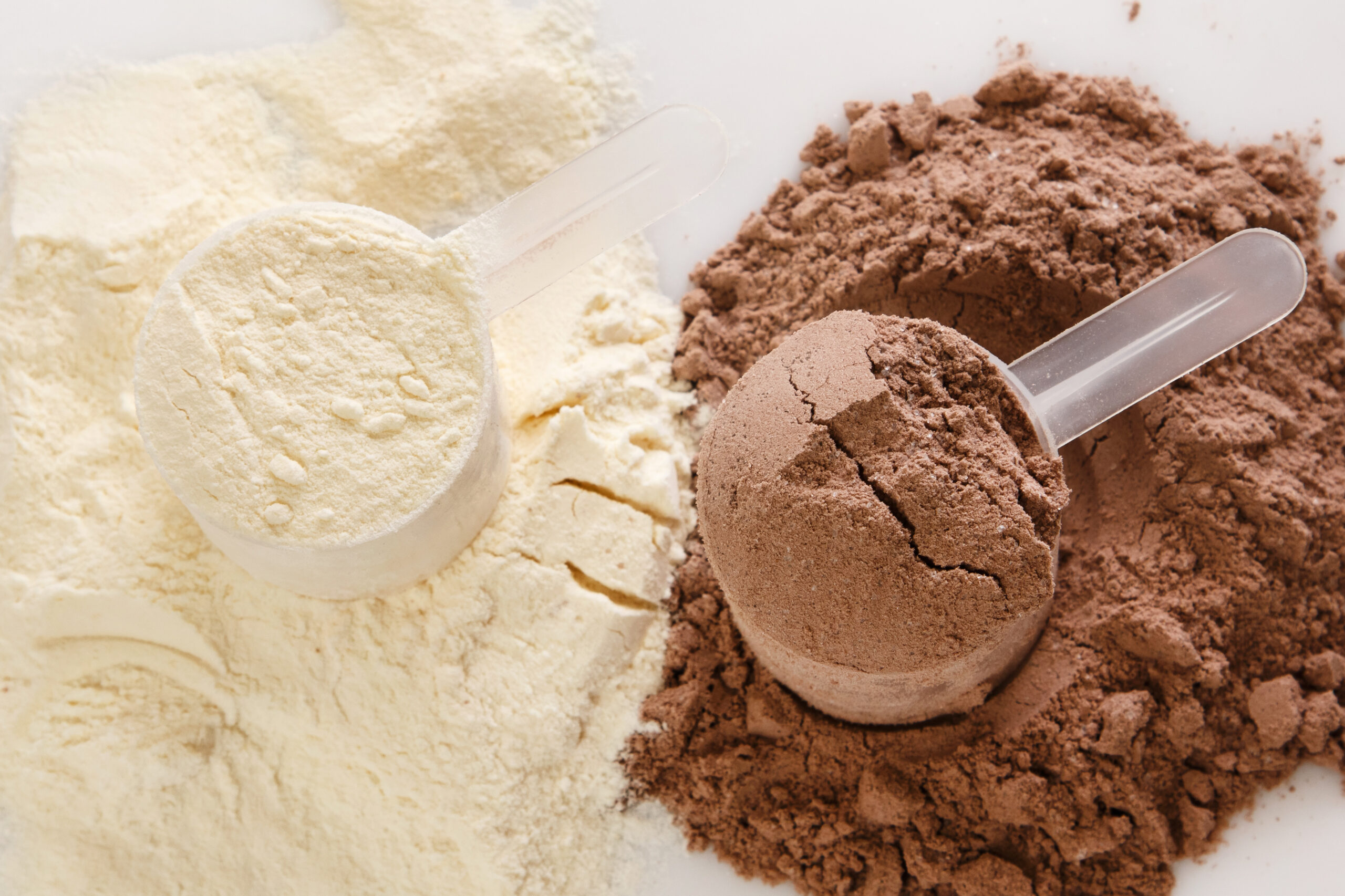
A good protein muffin comes down to three things: 10 to 15 grams of protein, calories that keep it a snack rather than a meal, and a soft, tender texture instead of a dry, dense brick.
Every recipe here is built around those numbers, so you can pick a flavor without doing the math yourself.
Bake a dozen at the start of the week, and you’ll have a high-protein snack on hand for the times you’d otherwise reach for a doughnut.
Check out our complete line of ATHLEAN-RX Supplements and find the best training program for you based on your fitness level and goals.

- Daily target is 0.7 to 1.0 grams of protein per pound of bodyweight. A muffin or two supports that; it isn’t your main source.
- A protein muffin that’s done right has 10 to 15 grams of protein, keeps calories around 150 to 250, and actually reminds you of a typical muffin.
- In the classics, the protein is two scoops of PRO-30G plus a base of Greek yogurt and eggs.
- Most mistakes are about technique, not ingredients: overbaking, overmixing, skipping the batter’s rest, mix-ins that sink, and liners that stick.
- Three ways to make protein muffins: oat flour and whey for the classics, almond flour for grain-free (lower carb and low glycemic), or a vegan powder and a flax egg for plant-based.
- Bake at 350°F, fill the cups three-quarters, pull them at a moist-crumb toothpick, and cool on a rack.
- Storage: two to three days at room temperature, up to five in the fridge, up to three months in the freezer.
PROTEIN MUFFINS FAQS
Yes, but it takes more than a scoop and a stir. And that’s because protein powder behaves nothing like flour.
Whey soaks up liquid and tightens as it bakes, so adding it straight to a standard recipe gives you dry, rubbery muffins, and adding too much turns them into hockey pucks.
The reliable approach is to replace about a third of the flour with powder rather than piling it on top, then add liquid to cover what the powder absorbs, roughly 2 to 3 tablespoons per scoop.
Back it up with a moisture source like Greek yogurt, applesauce, or mashed banana, and cap it around two scoops for a standard 12-muffin batch.
Plant and casein powders drink up even more liquid and need a binder such as egg or flax to hold together, so they take the most adjustment.
If you'd rather skip the trial and error, start with one of the recipes above, which are already balanced around the powder.
Made right, yes, but the name on its own guarantees nothing.
A homemade protein muffin with 10 to 15 grams of protein is a far better choice than a bakery muffin running 450 to 600 calories on sugar and refined flour.
The problem is that "high protein" on a package says nothing about the rest of the muffin.
Plenty have as much sugar and oil as a slice of cake, where the protein is almost an afterthought.
Read the full nutrition panel, not the protein number alone: look for 10 grams of protein or more against 150 to 250 calories, a few grams of fiber, and not much added sugar.
Even then, treat it as what it is, a high-protein snack that fits a solid diet rather than a health food that fixes a shaky one.
Work three levers, and you can take a muffin from a couple of grams of protein up to 10 or 15.
First, the powder: a 30-gram scoop like PRO-30G beats a 20-gram one, and two scoops across a batch of 12 add about 5 grams per muffin on their own.
Second, the base: you can get the moisture from protein-dense ingredients instead of oil, butter, and water. A cup of Greek yogurt adds about 23 grams, a cup of cottage cheese about 25, and each egg white another 3.5.
Third, the flour: replace part of it with extra powder, or reach for a higher-protein flour like almond or lupin, then add a splash of liquid so the crumb stays soft.
Stack all three and you land at 10 to 15 grams a muffin, which is where every recipe in this article sits.
Jeff Cavaliere M.S.P.T, CSCS
Jeff Cavaliere is a Physical Therapist, Strength Coach and creator of the ATHLEAN-X Training Programs and ATHLEAN-Rx Supplements. He has a Masters in Physical Therapy (MSPT) and has worked as Head Physical Therapist for the New York Mets, as well as training many elite professional athletes in Major League Baseball, NFL, MMA and professional wrestling. His programs produce “next level” achievements in muscle size, strength and performance for professional athletes and anyone looking to build a muscular athletic physique.