






is cheese a good protein source?
It goes on the double burger, the loaded nachos, the pan of baked ziti, and the midnight pizza. Those meals were heavy before any cheese gets tossed on top of them. But cheese is the part that gets blamed.
Strip away the comfort food and you’re left with concentrated milk, the same raw material behind the whey protein in your kitchen.
You know whey is packed with protein, but does cheese have protein? And if it does, is there enough of it to count toward a daily target?
That depends on which cheese you’re using.
A hard, aged wedge and a tub of cottage cheese come off the same process at different stopping points, and their nutritional numbers look nothing alike.
Let’s take a closer look at the protein content in cheese, which types have the most, why the ranking changes depending on how you measure it, and how to work it into your meals.
PROTEIN IN CHEESE (BY THE NUMBERS)
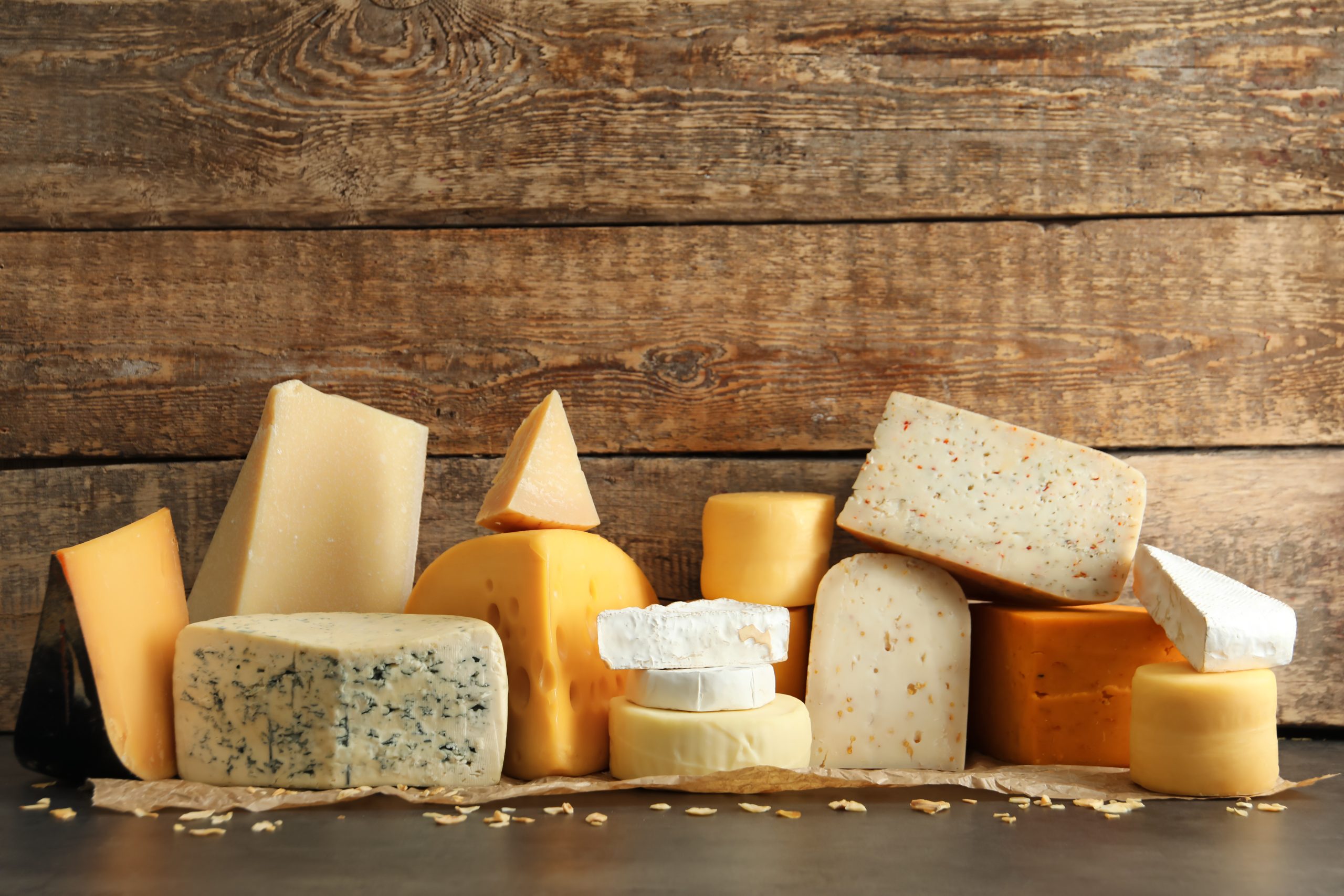
Cheese has protein, but there’s no single number that covers it. An ounce of hard parmesan has about 10 grams. An ounce of cream cheese has 2.
Five times the difference, same weight, same shelf.
Type is only half of it. Cheese also gets sold four different ways, and each one puts a different amount in front of you.
We’ll start with the portions.
HOW CHEESE IS SOLD (AND WHY THE NUMBERS DON’T LINE UP)
Cheese is sold four different ways, and that’s where the confusion starts.
It comes in slices, in a block you cut by the ounce, in a bag of shreds measured by the cup, and in a tub, you scoop by the cup.
Four portions, four sets of numbers, and the panel on the back is written against whichever one the manufacturer picked.
Here’s what each portion actually weighs:
- 1 deli or sandwich slice: about 1 oz
- 1 wrapped American single: about 0.75 oz
- 1 oz off a block: a 1-inch cube, roughly the size of four dice
- 1/4 cup shredded: about 1 oz
- 1 cup shredded: about 4 oz
- 2 tablespoons grated hard cheese: about 0.35 oz
- 1 cup cottage cheese or ricotta: about 8 oz
A cup of shredded cheese weighs four times what a slice does. A cup of cottage cheese weighs eight times what it does.
That’s how two guys can both say they had cheese with lunch and be more than 20 grams of protein apart.
HOW MUCH PROTEIN IN A SLICE OF CHEESE?
A deli slice runs about an ounce, so for most cheeses a slice and an ounce are close to the same question.
Here’s what one slice puts on your sandwich:
- Swiss cheese: ~8g protein
- Provolone: ~7g protein
- Cheddar: ~7g protein
- Low-moisture part-skim mozzarella: ~7g protein
- Monterey Jack or pepper jack: ~7g protein
- American single (0.75 oz): ~4g protein
Two slices of Swiss on a sandwich comes to about 15 grams of protein. That beats two large eggs.
The American single sits at half the protein of everything above it. Part of that gap is the smaller slice. The rest comes down to what’s printed on the wrapper, and that gets its own section further down.
HOW MUCH PROTEIN IN AN OUNCE OF CHEESE?
An ounce is the serving size printed on most cheese packages, so this is the number to memorize.
Most firm cheeses sit between 6 and 8 grams of protein per ounce. Cheddar, gouda, provolone, mozzarella, Monterey Jack, and Colby all fall inside that band.
The outliers on either end are where it gets interesting.
At the top:
- Parmesan cheese (hard): ~10g protein
- Romano: ~9g protein
- Hard goat cheese: ~9g protein
- Gruyère: ~8.5g protein
- Swiss: ~8g protein
At the bottom:
- Feta: ~4g protein
- Cream cheese: ~2g protein
The band is the useful part here. Grab a firm cheese off the shelf without checking the panel, and you’ll be within a gram of 7 per ounce either way.
HOW MUCH PROTEIN IN A CUP OF SHREDDED CHEESE?
This is the portion that catches people out.
A cup of shredded cheese is about 4 ounces, which means four ounces’ worth of protein and four ounces’ worth of calories:
- Cheddar: ~26g protein, ~455 calories
- Low-moisture part-skim mozzarella: ~27g protein, ~333 calories
- Swiss: ~30g protein, ~444 calories
That’s about the protein of a 4 oz chicken breast with roughly two and a half times the calories.
Shred size moves this a little. A fine shred packs lighter into the cup than a thick one, so weigh it if you want the number exact.
None of this means skip the cheese on taco night. But if you’re covering a casserole in a cup of shredded cheddar and not logging it, that’s 455 calories going into your day unaccounted for.
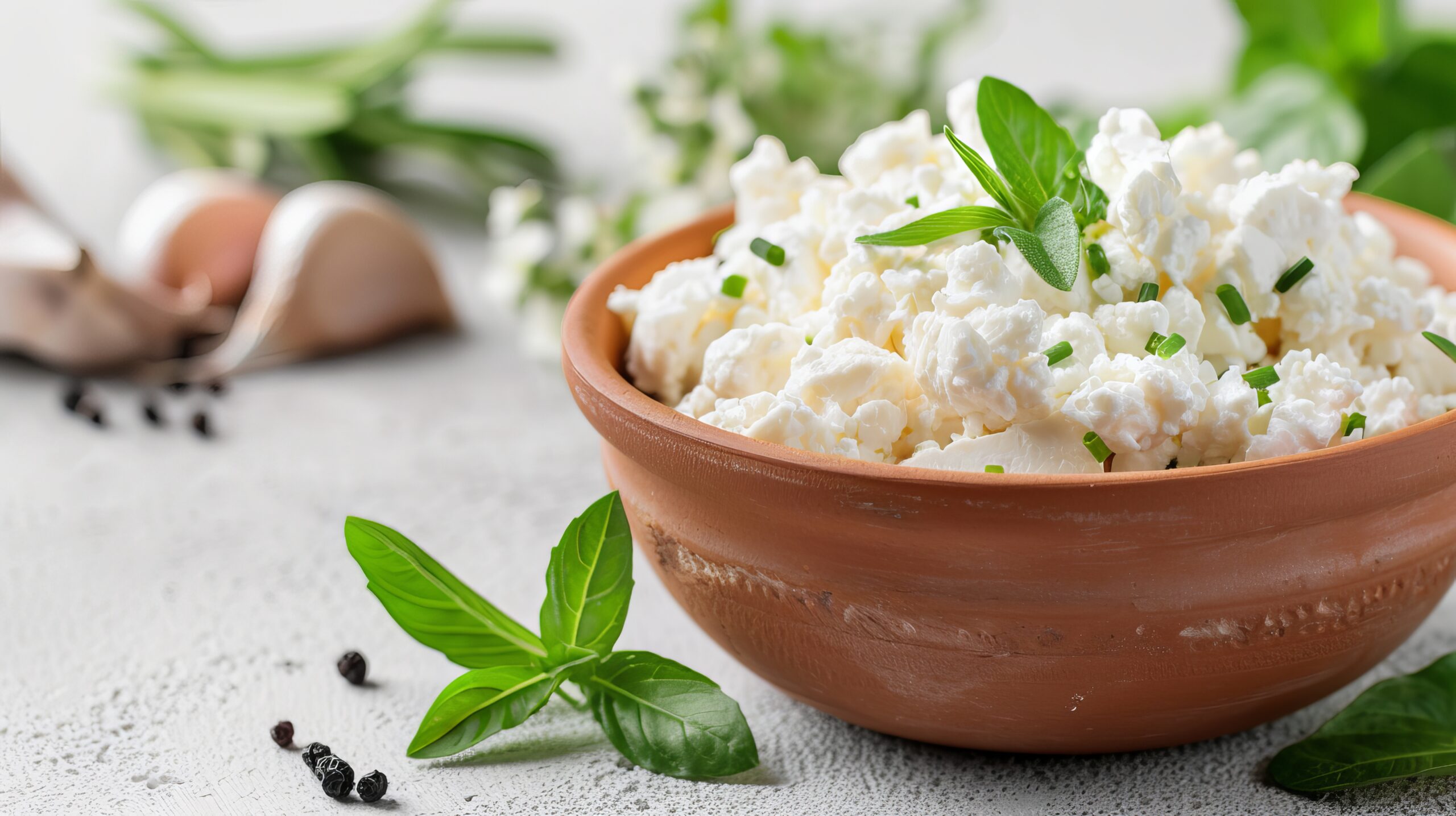
HOW MUCH PROTEIN IN COTTAGE CHEESE AND RICOTTA?
Cottage cheese and ricotta don’t get sliced or cut off a block. They get scooped, and that changes how they read on paper.
Cottage cheese runs 12 to 14 grams of protein per half cup and 23 to 28 grams per cup. The fat content moves the calories a lot more than it moves the protein:
- Nonfat: ~24–28g protein, ~160–200 calories per cup
- Low-fat (2%): ~23–28g protein, ~180–200 calories per cup
- Full-fat cottage cheese (4%): ~23–26g protein, ~220–240 calories per cup
Protein barely budges across all three. Picking a fat level is a calorie decision, not a protein decision. We break this down further in our guide to cottage cheese protein content.
Ricotta splits the same way:
- Part-skim: ~14g protein per half cup, ~170 calories
- Whole milk: ~9g protein per half cup, ~186 calories
Part-skim puts 50% more protein in the bowl for fewer calories.
Set a cup of cottage cheese next to a cup of shredded cheddar and they come out even on protein. The cottage cheese does it at less than half the calories.
So, which cheeses have the most protein?
WHICH CHEESES HAVE THE MOST PROTEIN?
No two cheeses are the same, and the gap between them is wider than most people expect.
Some of it runs against the reputations. The rich, aged cheeses that get treated as an indulgence have the most protein per ounce. The lighter, fresher ones have the least.
We’re sticking to the cheeses you’d find on a normal grocery run. There are dozens of varieties out there, but the uncommon ones are tough to find.
Rank cheese by the ounce and you get one order. Rank it by calorie and you get a different one. Both lists are below.
THE MOST PROTEIN PER OUNCE
This is the straight weight-for-weight ranking. Same portion on the scale, most protein in it:
| CHEESE (1 OZ) | PROTEIN | CALORIES |
| Parmesan (hard) | ~10g | ~110 |
| Swiss | ~8g | ~110 |
| Provolone | ~7g | ~100 |
| Gouda | ~7g | ~100 |
| Monterey Jack | ~7g | ~105 |
| Cheddar | ~7g | ~115 |
| Mozzarella (low-moisture, part-skim) | ~7g | ~85 |
| Blue | ~6g | ~100 |
| Brie | ~6g | ~95 |
| American (process) | ~5g | ~105 |
| Feta | ~4g | ~75 |
| Cream cheese | ~2g | ~100 |
A few that didn’t make the table but belong in the conversation: Romano at ~9g, hard goat cheese at ~9g, and Gruyère at ~8.5g per ounce.
There’s a catch at the top of this list, though.
An ounce of grated parmesan is close to six tablespoons. Nobody shakes six tablespoons over a bowl of pasta. A normal pass with the grater is about two tablespoons, which puts roughly 3.5 grams on the plate.
Parmesan has the most protein per ounce of any cheese here, and the least practical way of getting it to you.
THE MOST PROTEIN PER CALORIE
Now the same question with calories factored in. For every 100 calories of cheese, how many grams of protein come with it?
| CHEESE | PROTEIN PER 100 CALORIES |
| Cottage cheese (nonfat) | ~14g |
| Cottage cheese (2%) | ~13g |
| Cottage cheese (4%) | ~11g |
| Parmesan (hard) | ~9g |
| Ricotta (part-skim) | ~8g |
| Mozzarella (part-skim) | ~8g |
| Provolone | ~7g |
| Gouda | ~7g |
| Swiss | ~7g |
| Monterey Jack | ~6.5g |
| Brie | ~6g |
| Blue | ~6g |
| Cheddar | ~6g |
| Feta | ~5g |
| American (process) | ~5g |
| Ricotta (whole milk) | ~5g |
| Cream cheese | ~2g |
Cheddar drops from the middle of the first list to near the bottom of this one. Cottage cheese goes from not appearing at all to owning the top three spots.
If you’re cutting, this is the table that matters to you.
HOW CHEESE IS MADE (AND WHY THAT DECIDES THE PROTEIN)
Both rankings come down to one thing: water.
Here’s the cheese-making process in four steps.
Milk gets warmed and a starter culture goes in. That’s the bacteria that sours the milk and gets the curd forming. Most cheeses also get rennet, an enzyme that speeds up the set.
The milk splits in two. Solid curd on one side, liquid whey on the other. About 80% of the protein in milk is casein, and casein stays with the curd. The whey drains off, and that’s the liquid that gets dried into the protein powder you’re familiar with.
The curd then gets drained, pressed, and salted. Every bit of water squeezed out concentrates what’s left behind.
Finally, the ageing process pulls out more water still. The longer a cheese ages, the harder and drier it gets, and the more protein ends up packed into the same ounce.
That’s the entire explanation for both tables. Parmesan sits at the top of the per-ounce list because it’s been aged a year or more and there’s almost no water left in it. Cream cheese sits at the bottom because it’s mostly water and fat.
Cottage cheese runs the same process and stops early. Pasteurized nonfat milk gets cultured, the curd is cut and drained, and a cream or milk dressing is stirred back in at the end. That dressing is what separates nonfat from 4%.
You don’t need a background in food science to use this. Hard and dry means concentrated protein. Soft and wet means diluted protein, but the calories are diluted right along with it.
THE BEST HIGH-PROTEIN CHEESE FOR YOUR GOAL
Neither table is the right one. Pick based on the job.
If cheese is the meal: Go with cottage cheese and part-skim ricotta. They’re the only two that reach a full serving of protein without 400 calories attached.
If you’re adding cheese to a meal and you’re in a deficit: Opt for part-skim mozzarella and Swiss. Both sit high on the per-ounce list and high on the per-calorie list, which almost nothing else on these tables does. Parmesan works here too, since a small weight goes a long way on flavor.
If you’re not counting calories: Aged cheddar, gouda, and blue all sit around 6 to 7 grams an ounce and do more for a plate than the leaner options. Feta is lower at 4 grams, but it’s also the lightest on calories in that group.
WHAT KIND OF PROTEIN IS IN CHEESE?
The protein in cheese is casein. It’s a complete protein, and it digests slower than almost anything else you’d use to hit a daily target.
Slow digestion is the reason casein protein gets sold on its own as a pre-bed supplement. Cheese is that same protein in food form.
CHEESE IS A COMPLETE PROTEIN
Your body builds muscle out of amino acids. Nine of them are called essential, meaning your body can’t produce them and you have to get them from food.
Cheese has all nine.
So do meat, fish, eggs, and every other dairy food. Most plant sources come up short on at least one, which is why plant-based diets take more planning to reach the same result.
Dairy protein is also high in leucine, the amino acid that triggers muscle protein synthesis. That’s the process your body uses to turn what you ate into new muscle protein.
CASEIN OR WHEY: WHICH ONE ENDS UP IN CHEESE
Milk protein comes in two forms. About 80% is casein and about 20% is whey.
Cheese making separates them. When the curd sets, the casein stays in the solid, and the whey drains off as liquid. The curd becomes cheese. The whey gets filtered and dried into whey protein powder.
Both halves come out of the same step. Buy whey and you’re getting the fast-digesting 20%. Eat cheese and you’re getting the slow digesting 80%.
Ricotta is the exception. It’s traditionally made from the whey left behind after another cheese is finished, which is why its numbers read differently in the last section.
WHY CASEIN DIGESTS SLOWLY
Casein curdles when it hits stomach acid, the same way it curdles during cheesemaking.
Those curds slow everything down. Instead of passing through quickly, the protein empties out of your stomach gradually, and amino acid absorption spreads across hours instead of minutes.
Here’s the difference in protein digestion between the two:
- Whey: blood amino acids peak within about an hour and return near baseline in two to three hours
- Casein: blood amino acids rise more slowly and stay elevated for four to seven hours
Whey is the better choice right after training, when a fast, high peak is the point. Casein is the better choice before a long stretch without food, which for most people means overnight.
WHAT THE RESEARCH SAYS ABOUT CHEESE AND MUSCLE
Most of what we know about protein and muscle comes from studies using powders. Whole foods get tested far less often, and cheese barely at all. A 2022 trial in The Journal of Nutrition is one of the few that looked at it directly.
Twenty healthy men aged 18 to 35 did a leg press and leg extension session, training one leg and leaving the other alone so each man served as his own comparison. Afterward, half got 30 grams of protein from cheese and half got 30 grams from a milk protein concentrate powder.
For scale, 30 grams of protein is roughly 4.5 oz of cheddar cheese…
Researchers tracked blood for the next four hours and took a muscle biopsy, a small sample of tissue, to measure muscle protein synthesis rates directly instead of estimating them.
Two results came out of it.
Plasma amino acids climbed after both, but the peak was 38% higher after the powder than after the cheese. That’s what slow digestion looks like in the blood.
The muscle response was the same regardless. At rest, muscle protein synthesis rates rose by roughly 50 to 65%. After training they more than doubled. The postprandial muscle protein synthetic response was no different between the cheese group and the powder group.
The smaller blood spike didn’t produce a smaller result in the muscle.
Keep the size of the study in mind. Twenty young men in a single trial doesn’t prove cheese beats a shake. It shows cheese isn’t worse at the same dose.
WHAT ELSE COMES WITH IT
Is there any other worthwhile nutrition in cheese? An ounce of cheddar also has the following:
- Calcium: about 200 mg, roughly 15% of a day
- Phosphorus: about 145 mg, roughly 12%
- Vitamin B12: about 0.24 mcg, roughly 10%
- Zinc: about 0.9 mg, roughly 8%
Research links dairy intake to markers of musculoskeletal health, though most of that work is observational and dairy tends to travel alongside other habits, so it isn’t proof on its own.
So, how does cheese compare to chicken, eggs, and a scoop of whey?
CHEESE VS. OTHER PROTEIN SOURCES
Per calorie, cottage cheese beats salmon, ground beef, and Greek yogurt. Cheddar comes in below whole eggs. Fat is what separates them.
Every protein source costs you something. Chicken breast costs prep time. Whey costs money. Cheese costs calories, and how many depends entirely on which one you pick.
That’s what this comparison is for. Not to rank cheese against chicken, but to show what an ounce of cheese buys you next to everything else those calories could go toward.
THE HEAD-TO-HEAD COMPARISON
Comparing protein sources by weight makes cheese look better than it is. An ounce of cheddar has nearly as much protein as an ounce of chicken breast and two and a half times the calories.
Here’s the comparison per 100 calories. For every 100 calories, this is what you get back in protein. Cheeses are in bold so you can see how they compare.
| SOURCE | PROTEIN PER 100 CALORIES |
| Egg whites | ~22g |
| Tuna (canned in water) | ~21g |
| Whey protein | ~20g |
| Chicken breast | ~19g |
| Ground turkey (93/7) | ~16g |
| Cottage cheese (nonfat) | ~14g |
| Cottage cheese (2%) | ~13g |
| Salmon | ~12.5g |
| Cottage cheese (4%) | ~11g |
| Ground beef (90/10) | ~10g |
| Greek yogurt (plain, 2%) | ~10g |
| Tempeh | ~10g |
| Parmesan | ~9g |
| Eggs (2 large) | ~9g |
| Ricotta (part-skim) | ~8g |
| Mozzarella (part-skim) | ~8g |
| Lentils (cooked) | ~8g |
| Swiss | ~7g |
| Tofu (firm) | ~7g |
| Cheddar | ~6g |
| Feta | ~5g |
| Cream cheese | ~2g |
The table splits cheese into two groups.
Cottage cheese belongs with the lean proteins. Nonfat comes in above salmon and ground beef, and at the same fat level it edges out Greek yogurt.
Firm cheese doesn’t. Cheddar returns about a quarter of what egg whites do, because roughly three quarters of its calories come from fat.
WHERE CHEESE WINS
Cheese takes no preparation. No cooking, no thawing, no cleanup, and a block keeps for weeks in the fridge.
The other advantage is taste. Plain chicken and vegetables is a hard meal to eat five days a week, and an ounce of sharp cheddar costs about 115 calories to fix that.
Against protein powder, cheese is a whole food. Powders and protein isolates are filtered down to mostly protein, while cheese comes with the calcium, phosphorus, and B12 still attached. Based on the research in the last section, you’re not trading away muscle response to get that.
WHAT TO WATCH
Protein isn’t the only number on the package.
Sodium: Cheese is salted during production, and some varieties sit in brine on top of that. Per ounce:
- Swiss: ~54 mg
- Cheddar: ~185 mg
- Part-skim mozzarella: ~189 mg
- Gouda: ~232 mg
- Feta: ~260 mg
- American (process): ~474 mg
The daily limit is 2,300 mg. An ounce of cheddar uses 8% of it. An ounce of processed American uses 21%. Swiss uses 2%.
Saturated Fat: An ounce of cheddar has about 5 to 6 grams, a quarter to a third of the 20-gram daily value. Two ounces across a day covers more than half.
If cheese shows up at more than one meal a day, Swiss and part-skim mozzarella keep both numbers lowest.
So, why does cheese still get treated as junk food?
DEBUNKING 6 CHEESE MYTHS
The arguments against cheese don’t all come from the same place.
Some are left over from the low-fat era. Some come from the marketing on a competing product. Some just get repeated enough that nobody checks them.
Here are the six that come up most often.
MYTH 1: CHEESE MAKES YOU FAT
Cheese is calorie dense. An ounce of cheddar runs about 115 calories and a cup of shredded runs 455. None of that is in dispute.
But calorie density and weight gain aren’t the same thing.
Almonds are 164 calories an ounce. Peanut butter is 167 calories. Olive oil is 251 calories. All three beat cheese on density and none of them carry the same reputation.
Body fat comes down to total calories over time.
Cheese only creates a problem when it goes uncounted, and it’s unusually easy to leave uncounted, because it usually arrives shredded over something else or melted into it.
A weighed ounce is 115 calories you planned for. An unmeasured handful over a casserole can be 200 to 400 calories that never reached the log.
Weigh an ounce once and you’ll recognize it by eye after that.
MYTH 2: CHEESE WRECKS YOUR CHOLESTEROL
Cheese does contain saturated fat, roughly 5 to 6 grams per ounce of cheddar. The assumption has always been that this raises LDL the way any saturated fat would.
But that’s not what the studies say.
A 2011 study put 49 men and women through two six-week periods, replacing 13% of their daily calories with either cheese or butter at matched fat levels. Cheese produced lower total and LDL cholesterol than butter did, and it didn’t raise either one compared to their normal diets.
A 2015 meta-analysis of controlled trials found the same pattern. Against butter at equal fat, cheese came out about 6.5% lower on LDL.
Researchers call the explanation the food matrix. The same saturated fat behaves differently depending on what it’s packaged in, and cheese packs it alongside calcium, protein, and a solid structure that butter doesn’t have.
Compared to tofu or fat-modified cheese, cheese did raise LDL, so this isn’t a cholesterol-lowering food.
And if you already have high cholesterol or heart disease, this is a conversation for your doctor.
MYTH 3: YOU CAN’T EAT CHEESE IF YOU’RE LACTOSE INTOLERANT
Lactose is the sugar in milk. Lactose intolerance means your body doesn’t produce enough of the enzyme that breaks it down, so it ferments in your gut instead.
Cheese removes most of it twice over.
Lactose is water-soluble, so the bulk of it drains away with the whey during production. The bacteria added at the start then eat what’s left over the following weeks.
By the time an aged cheese is finished, there’s almost nothing there.
Parmesan, aged cheddar, aged gouda, Swiss, and Gruyère all test at or below 0.1 grams per serving, and several test below the detection threshold entirely.
For reference, most people with lactose intolerance handle around 12 grams before symptoms show up, which is about a cup of milk.
The cheeses that hold onto lactose are the fresh ones: ricotta, fresh mozzarella, cottage cheese, and processed slices.
There’s a way to check any package yourself.
Lactose is the only carbohydrate that occurs naturally in cheese, so if the panel says 0g carbohydrate and no sugar appears in the ingredients, there’s effectively no lactose in it.
MYTH 4: LOW-FAT CHEESE IS ALWAYS THE BETTER CHOICE
On protein per calorie, low-fat wins. Nonfat cottage cheese returns 14 grams per 100 calories against cheddar’s 6 grams of protein. Part-skim mozzarella beats whole milk mozzarella. Those gaps hold up.
The problem is what happens outside the numbers.
Fat carries flavor, so removing it changes how a cheese tastes and melts. Some reduced-fat versions replace it with starch or stabilizers. If the low-fat version tastes like nothing, using twice as much to compensate cancels the savings.
Where low-fat holds up, take it. Part-skim mozzarella and cottage cheese are both close to their full-fat versions, and cottage cheese barely changes on protein across every fat level.
Where flavor is the point, run the math. An ounce of sharp cheddar costs 115 calories. Two ounces of mild reduced-fat costs about 160 calories.
MYTH 5: PROCESSED CHEESE SLICES AREN’T REAL CHEESE
Partly true, and the packaging tells you exactly how true.
The FDA regulates four separate categories, and each one has less cheese in it than the last. Per 100 grams:
- Natural cheddar: ~23g protein
- Pasteurized processed cheese: ~18g protein
- Pasteurized processed cheese food: ~17g protein
- Pasteurized processed cheese product: ~13g protein
Cheese spread sits in the same family. The further down that list you go, the more added water, emulsifying salts, and other ultra-processed ingredients replace the cheese itself.
Slice for slice, one wrapped American single has about 4 grams of protein and 350 mg of sodium. One slice off of a block of cheddar has about 7 grams and 185 mg.
American cheese still has a use. It melts more evenly than natural cheese, which is why it belongs on a burger. But the nutrition label answers the question in about three seconds, and the natural version is usually two feet away on the same shelf.
MYTH 6: CHEESE IS INFLAMMATORY
This one gets repeated a lot and the research doesn’t back it.
Researchers went through 52 clinical trials on dairy and inflammation and found the opposite of what the claim predicts. Across all of them, the number of results pointing to more inflammation was tiny. Added up, dairy came out anti-inflammatory.
A separate randomized controlled trial comparing saturated fat from cheese against butter, carbohydrates, and unsaturated fats found no difference between any of the diets on inflammation markers.
The one exception in that review was people with a diagnosed milk allergy, which is a different thing than not handling dairy well.
Some people react badly to cheese, and if that’s you, no study overrides what you notice in your own body. But there’s no general case that cheese drives inflammation in people who tolerate it.
HOW MUCH PROTEIN DO YOU NEED (AND WHERE CHEESE FITS)
There are two ways cheese shows up in a day of eating.
It either tops off a meal that’s already close to target, or it becomes the meal. Which one applies comes down to the cheese you pick and the number you’re trying to hit.
HOW MUCH PROTEIN DO YOU NEED EACH DAY?
The official recommended intake is 0.36 grams per pound. For a 180-pound guy, that comes to 65 grams a day.
Sounds low, right? It is. The problem here is that number gets misread constantly. It’s a floor, not a target.
The calculation behind it asks how little protein a healthy adult can eat without running a shortfall. It never asks what happens to someone lifting four days a week.
A 2018 meta-analysis pooled 49 studies covering 1,863 people and concluded that eating at the RDA is insufficient for anyone whose goal is gaining strength or size from resistance exercise.
That analysis found gains stopped increasing at around 1.6 grams per kilogram of bodyweight on average. Because an average carries uncertainty, the researchers noted the true figure could run as high as 2.2 grams and suggested aiming there to cover it.
In pounds, that’s 0.73 at the average and 1.0 at the upper edge. That’s where the standard 0.7 to 1.0 target comes from, and it works out to roughly double the RDA at the bottom and nearly triple at the top.
This isn’t only a lifting question. Protein does more for fullness per calorie than carbs or fat, which makes a calorie deficit easier to hold. And holding onto muscle gets harder with age, which raises the requirement rather than lowering it.
There is a ceiling. Above 1 gram per pound, no evidence shows further benefit. No evidence shows harm either, at least in people with normal kidney function, so overshooting isn’t dangerous. It just doesn’t add anything.
Where you sit inside those numbers comes down to your training and your goal:
- 7 g/lb: training two or three days a week, bodyweight holding steady
- 85 g/lb: training four or more days a week, trying to add size
- 0 g/lb: eating in a calorie deficit, where the extra protein protects muscle mass while everything else comes down
Then split the daily number across three to five meals, aiming for 25 to 40 grams each time. Hitting 140 grams is easier in four meals of 35 grams than in two meals of 70 grams.
WHAT CHEESE ADDS TO A DAY
An ounce of firm cheese adds about 7 grams of protein to whatever you put it on.
That sounds small until it repeats. An ounce on eggs at breakfast, an ounce on a salad at lunch, an ounce melted over chicken at dinner, and that’s 21 grams with no extra cooking and nothing planned around it.
At the low end, 21 grams is a sixth of a 180-pound guy’s daily total.
That’s the realistic job for cheddar, Swiss, gouda, and the rest of the firm cheeses. Add an ounce to a meal sitting at 25 grams of protein and it moves to 32 grams.
WHEN CHEESE IS THE MEAL
Cottage cheese and ricotta are the exceptions. A cup of either puts you at or near the bottom of that 25-to-40-gram target on its own, and one small addition brings it comfortably inside.
- A cup of cottage cheese with an ounce of almonds: about 31 grams
- A cup of part-skim ricotta with a slice of toast: about 32 grams
- A cup of cottage cheese with two large eggs: about 38 grams
All three sit inside the target. The first one takes about thirty seconds to put together.
HIGH-PROTEIN CHEESE MEALS (BY GOAL)
Here’s what those numbers look like as actual meals.
Each one is built on the figures from earlier in this article:
- 1 oz firm cheese ≈ 7g protein
- 1 cup cottage cheese ≈ 25g protein
- 1/2 cup part-skim ricotta ≈ 14g protein
None of these are strict recipes. You can swap the vegetables, change the fruit, scale the portions to your own body weight. The cheese is the part to leave alone.
COTTAGE CHEESE POWER BOWL
Most people default to cottage cheese with fruit. Savory is the better move, and it turns a snack into an actual lunch.
Goal: Fat loss / high protein per calorie
Protein: ~27g at about 270 calories
Ingredients:
- 1 cup low-fat (2%) cottage cheese
- 1/2 cup cherry tomatoes, halved
- 1/2 cucumber, diced
- 1 tbsp everything bagel seasoning
- 1 tsp olive oil
- Cracked black pepper
Instructions:
- Spoon the cottage cheese into a bowl.
- Pile the tomatoes and cucumber on top rather than stirring them through, so you get some of each in every bite.
- Add the seasoning and pepper, then drizzle the oil over.
- Two minutes, no heat, and nothing to wash but a bowl.
COTTAGE CHEESE SCRAMBLED EGGS
Three eggs on their own come to about 20 grams of protein. Folding cottage cheese in at the end pushes it past 30 without changing how it tastes.
Goal: Lean mass / breakfast
Protein: ~31g at about 340 calories
Ingredients:
- 3 large eggs
- 1/2 cup low-fat cottage cheese
- 1 tsp butter
- Salt and pepper
- Chopped chives
Instructions:
- Beat the eggs with salt and pepper. Melt the butter in a nonstick pan over medium-low heat. Keep the heat down, because cottage cheese turns grainy if you cook it hard.
- Pour the eggs in and push them around with a spatula. When they’re about 70% set and still glossy, pull the pan off the burner and fold in the cottage cheese. Residual heat finishes the eggs and warms the curds without breaking them.
- Scatter the chives over the top. The cottage cheese adds 12 grams of protein for 90 calories.
RICOTTA TOAST WITH EGGS
Avocado toast gets all the attention, and a whole avocado has about 3 grams of protein. Half a cup of ricotta on the same slice has 14 grams.
Goal: Everyday / balanced
Protein: ~35g at about 480 calories
Ingredients:
- 2 slices whole-grain bread
- 1/2 cup part-skim ricotta
- 2 large eggs
- Lemon zest
- Cracked pepper and flaky salt
Instructions:
- Soft boil the eggs for 7 minutes, then run them under cold water and peel.
- Toast the bread hard. Ricotta is wet, and soft toast collapses under it.
- Spread the ricotta thick across both slices, grate lemon zest over the top, then halve the eggs and lay them on. Salt and pepper at the end.
- Don’t skip the lemon. Part-skim ricotta is mild to the point of bland, and the acid is what gives it flavor.
BAKED FETA AND CHICKEN PASTA
The baked feta pasta that was popular a few years ago was mostly carbs and fat. Adding chicken makes it something you can eat on a training day.
Goal: Training day / higher carbs
Protein: ~40g per serving at about 645 calories. Makes 2.
Ingredients:
- 6 oz cooked chicken breast, sliced (about 8 oz raw)
- 4 oz block feta
- 4 oz dry pasta
- 2 cups cherry tomatoes
- 2 tbsp olive oil
- 3 garlic cloves, smashed
- Dried oregano, black pepper
Instructions:
- Heat the oven to 400°F. Put the block of feta in the middle of a baking dish, surround it with the tomatoes and garlic, pour the oil over everything, and season.
- Bake 30 minutes, until the tomatoes burst and the feta goes soft. Boil the pasta while it’s in there.
- Mash the feta and tomatoes together into a sauce with a fork, then fold in the drained pasta and the chicken. Loosen it with a splash of pasta water if it’s tight.
- Use the block, not crumbled feta. Crumbles are drier and won’t melt into a sauce.
CHEESE AND EGG WHITE OMELET
Egg whites are the leanest protein in the fridge and taste like almost nothing on their own. An ounce of cheese fixes that for about 110 calories.
Goal: Low carb / cutting
Protein: ~37g at about 335 calories
Ingredients:
- 6 large egg whites
- 1 whole egg
- 1 oz Swiss cheese, grated
- 1 cup spinach
- 1/2 cup mushrooms, sliced
- 1 tsp butter
- Salt and pepper
Instructions:
- Cook the mushrooms in a dry pan first until the water comes out and evaporates, then add the spinach and let it wilt. Take the vegetables out.
- Beat the whites with the whole egg. The yolk is there for color and flavor, since an all-white omelet cooks up pale and rubbery.
- Butter the pan, pour in the eggs over medium-low, and lift the edges as they set. When the top is nearly done, add the cheese and vegetables to one half and fold the other over.
- Swiss is the right pick here. At 8 grams per ounce, it’s the highest-protein sandwich cheese, and at 54 mg of sodium it’s the lowest. This is also the leanest meal on the list, at 11 grams of protein per 100 calories.
HIGH-PROTEIN MAC AND CHEESE
Blended cottage cheese makes a sauce close enough to the real thing, and it puts 28 grams of protein in a bowl of mac and cheese.
Goal: Comfort food that still fits
Protein: ~28g per serving at about 430 calories. Makes 2.
Ingredients:
- 4 oz dry elbow pasta
- 1 cup low-fat cottage cheese
- 2 oz sharp cheddar, grated
- 1/4 cup milk
- 1/2 tsp mustard powder
- Paprika, salt, pepper
Instructions:
- Blend the cottage cheese with the milk and mustard powder until completely smooth. This takes about a minute, and any curds you leave behind will be obvious in the finished sauce.
- Boil the pasta and drain it, keeping half a cup of the water.
- Return the pasta to the warm pot off the heat. Pour in the blended cottage cheese and add the cheddar, stirring until it melts through. Loosen with pasta water as needed.
- Use sharp cheddar rather than mild. There’s half the cheese here that a standard recipe calls for, so what’s in there needs to be strong enough to taste.
DESK-DRAWER SNACK BOX
Not every meal happens in a kitchen. This one is for the days when the choice is a vending machine or nothing.
Goal: No fridge, no microwave
Protein: ~24g at about 335 calories
Ingredients:
- 2 sticks part-skim string cheese
- 1 oz beef jerky
- 1 apple
Instructions:
- Build three or four of these at the start of the week and leave them in a drawer. String cheese holds several hours at room temperature, which is why it works here when a tub of cottage cheese wouldn’t.
- This is a protein-rich snack rather than a meal, and it sits just under the 25-gram mark. A second ounce of jerky pushes it over.
PRE-BED COTTAGE CHEESE BOWL
Most late-night eating is carbs and not much else. This one is built around the cheese, and it takes about as long to put together as opening the container.
Goal: Overnight recovery
Protein: ~29g at about 325 calories
Ingredients:
- 1 cup low-fat cottage cheese
- 1/2 cup blueberries
- 1 tbsp almond butter
- Cinnamon
Instructions:
- Stir the almond butter through the cottage cheese first, then top with the berries and cinnamon.
- This is where the casein comes in. Cottage cheese is casein-dominant, casein releases amino acids over four to seven hours, and overnight is usually the longest stretch anyone goes without eating.
Cheese isn’t only the guilty pleasure sitting on top of your favorite meals. It’s also one of the few protein sources that goes from fridge to plate with nothing done to it.
It’s not going to be your main protein source. But pick the right type, measure what you’re using, and cheese becomes one of the easiest ways to add protein to your day.
Check out our complete line of ATHLEAN-RX Supplements and find the best training program for you based on your fitness level and goals.

- Yes, cheese has protein, and most types carry a useful amount. An ounce of hard parmesan has about 10 grams, cheddar and Swiss land around 7, and cream cheese trails at 2.
- Cheese is sold four different ways and the portions aren’t close. A deli slice is an ounce, a cup of shredded is four ounces, and a cup of cottage cheese is eight.
- Parmesan tops the per-ounce list, but an ounce is roughly six tablespoons, and nobody grates that much over a plate. Cottage cheese tops the per-calorie list, and that’s the one to use if you’re cutting.
- The firmer and drier the cheese, the more protein in an ounce. Aged cheeses have had the most water pressed out of them, so everything left behind is more concentrated.
- The protein in cheese is casein, which releases amino acids over four to seven hours instead of one or two. That’s the opposite of whey, and it’s why cottage cheese works as the last meal of the day.
- Cheese doesn’t affect cholesterol the way its saturated fat suggests. Against butter at matched fat, cheese comes out about 6.5% lower on LDL.
- Aged cheese is close to lactose-free. Parmesan, aged cheddar, gouda, Swiss, and Gruyère all test at or below 0.1 grams per serving, and a 0g carbohydrate line on the pack means there’s effectively none in there.
- The word on the front tells you what you’re buying. Cheese, processed cheese, cheese food, and cheese product are four separate categories, and protein drops at every step.
- For anyone training, the daily target is 0.7 to 1.0 grams of protein per pound of bodyweight, split across three to five meals at 25 to 40 grams each.
CHEESE PROTEIN FAQS
Yes, up to a point.
Cheese is a complete protein, meaning it contains all nine essential amino acids your body can't make on its own. That puts it in the same category as meat, fish, and eggs, and ahead of most plant sources.
The catch is calories. Six ounces of cooked chicken breast gives you 50 to 55 grams of protein for about 280 calories. Six ounces of cheddar gives you 39 grams and costs 685 calories.
That's what separates cheese from the foods you build a meal around. In the one-to-two-ounce range it's a genuine protein source. Past that, each additional gram costs more calories than it's worth. Cottage cheese is the exception, at 25 grams per cup for under 200 calories.
Hard parmesan leads by weight at about 10 grams of protein per ounce. Romano and hard goat cheese follow at 9 grams of protein per ounce, then Gruyère and Swiss at 8 grams of protein per ounce.
Measured per calorie, cottage cheese takes the top spots. Nonfat returns about 14 grams of protein per 100 calories against cheddar's 6 grams of protein.
There's a third way to look at it that neither list covers, which is what you get from a portion you'd realistically eat:
- 2 tbsp grated parmesan over pasta: ~3.5g
- 1/4 cup shredded cheddar on eggs: ~7g
- 1 slice of Swiss on a sandwich: ~8g
- 1 cup of cottage cheese: ~25g
The cheeses you eat by the cup beat the ones you eat by the tablespoon, even when the tablespoon cheese is denser.
Cheese by weight, eggs by calorie.
An ounce of cheddar has about 7 grams of protein. An ounce of egg, which is a bit over half a large one, has about 3.5 grams of protein. Cheese is close to twice as dense.
Calories reverse it. Two large eggs give you 13 grams of protein for 144 calories. Two slices of cheddar give you 14 grams for 228 calories.
Egg whites beat both by a wide margin. At 22 grams per 100 calories, they return close to four times what cheddar does for the same calories.
Which one to reach for depends on your constraint. If calories are tight, eggs. If you want protein added to a dish without cooking anything, cheese.
Yes, and it gets more useful with age.
There's a change called anabolic resistance, where your muscles respond less to the same amount of protein than they did at 25. The practical result is that older lifters need more protein per meal, not less, to get the same effect.
Hitting that higher number three times a day is the hard part. Another chicken breast means cooking. An ounce of cheese means opening the fridge.
For anyone trying to reach 25 to 40 grams at a sitting, cheese closes small gaps fast. A meal that comes to 20 grams gets to 27 with one slice.
REFERENCES
- Hermans WJH, Fuchs CJ, Hendriks FK, Houben LHP, Senden JM, Verdijk LB, van Loon LJC. Cheese Ingestion Increases Muscle Protein Synthesis Rates Both at Rest and During Recovery from Exercise in Healthy, Young Males: A Randomized Parallel-Group Trial. J Nutr. 2022 Apr 1;152(4):1022-1030. doi: 10.1093/jn/nxac007. PMID: 35020907; PMCID: PMC8971000.
- Hjerpsted J, Leedo E, Tholstrup T. Cheese intake in large amounts lowers LDL-cholesterol concentrations compared with butter intake of equal fat content. Am J Clin Nutr. 2011 Dec;94(6):1479-84. doi: 10.3945/ajcn.111.022426. Epub 2011 Oct 26. PMID: 22030228.
- de Goede J, Geleijnse JM, Ding EL, Soedamah-Muthu SS. Effect of cheese consumption on blood lipids: a systematic review and meta-analysis of randomized controlled trials. Nutr Rev. 2015 May;73(5):259-75. doi: 10.1093/nutrit/nuu060. Epub 2015 Mar 29. PMID: 26011901.
- Brassard D, Tessier-Grenier M, Allaire J, Rajendiran E, She Y, Ramprasath V, Gigleux I, Talbot D, Levy E, Tremblay A, Jones PJ, Couture P, Lamarche B. Comparison of the impact of SFAs from cheese and butter on cardiometabolic risk factors: a randomized controlled trial. Am J Clin Nutr. 2017 Apr;105(4):800-809. doi: 10.3945/ajcn.116.150300. Epub 2017 Mar 1. PMID: 28251937.
- Bordoni A, Danesi F, Dardevet D, Dupont D, Fernandez AS, Gille D, Nunes Dos Santos C, Pinto P, Re R, Rémond D, Shahar DR, Vergères G. Dairy products and inflammation: A review of the clinical evidence. Crit Rev Food Sci Nutr. 2017 Aug 13;57(12):2497-2525. doi: 10.1080/10408398.2014.967385. PMID: 26287637.
- Morton RW, Murphy KT, McKellar SR, Schoenfeld BJ, Henselmans M, Helms E, Aragon AA, Devries MC, Banfield L, Krieger JW, Phillips SM. A systematic review, meta-analysis and meta-regression of the effect of protein supplementation on resistance training-induced gains in muscle mass and strength in healthy adults. Br J Sports Med. 2018 Mar;52(6):376-384. doi: 10.1136/bjsports-2017-097608. Epub 2017 Jul 11. Erratum in: Br J Sports Med. 2020 Oct;54(19):e7. doi: 10.1136/bjsports-2017-097608corr1. PMID: 28698222; PMCID: PMC5867436.
Jeff Cavaliere M.S.P.T, CSCS
Jeff Cavaliere is a Physical Therapist, Strength Coach and creator of the ATHLEAN-X Training Programs and ATHLEAN-Rx Supplements. He has a Masters in Physical Therapy (MSPT) and has worked as Head Physical Therapist for the New York Mets, as well as training many elite professional athletes in Major League Baseball, NFL, MMA and professional wrestling. His programs produce “next level” achievements in muscle size, strength and performance for professional athletes and anyone looking to build a muscular athletic physique.