






are eggs good or bad for you?
In one decade, eggs are considered harmful. The next, they’re the perfect food.
Then we’re right back to “the yolk is basically poison,” and everyone’s scrambling to separate whites like it’s the only way to eat an egg without ruining your health.
That back-and-forth is exactly why so many people still don’t know what to believe, especially when the loudest headlines always seem to be the scariest ones.
So, having lived through the mess, what do I think about eggs?
Here’s my confession: I’m an egg eater. A daily egg eater. Most days, I’ll eat four to five eggs without thinking twice.
But I get why people hesitate. When you’ve spent years hearing buzzwords like cholesterol, heart disease, and “avoid the yolk,” it’s hard not to wonder if something that seems healthy is working against you.
This guide is here to separate fact from fiction using nutritional science.
I’ll discuss the recycled fears of eggs including what eggs actually do (and don’t do) when it comes to cholesterol, heart health, and whether the yolk is really the “dangerous” part of the egg.
Then I’ll get practical and break down how much protein is in eggs, how egg size changes the numbers, when to use whole eggs vs. whites, and the simplest “egg math” to build a 30 to 40-gram protein meal without turning breakfast into a calorie trap.
By the end, you’ll know exactly how to use eggs to hit your protein goals and support your resistance exercise training.
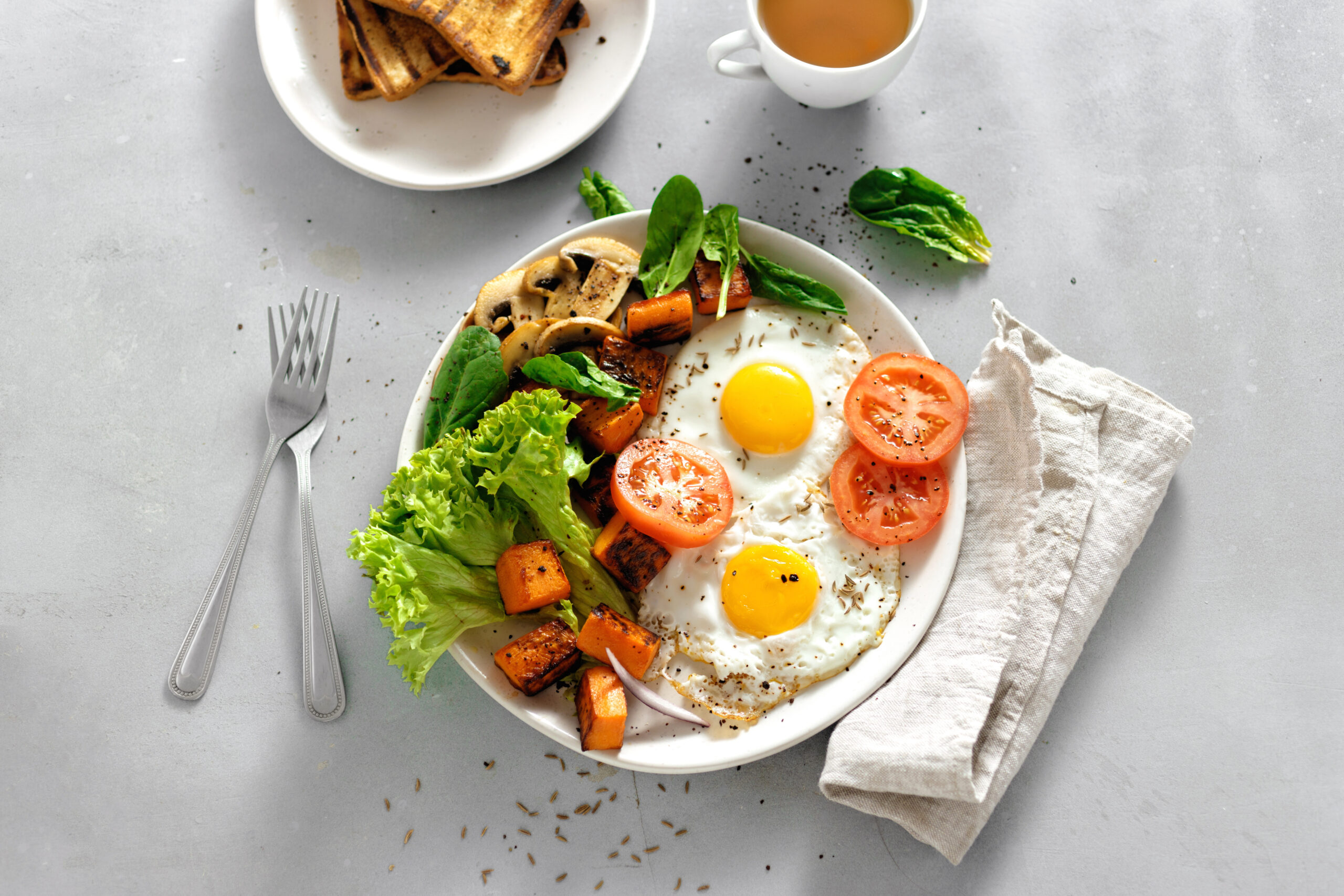
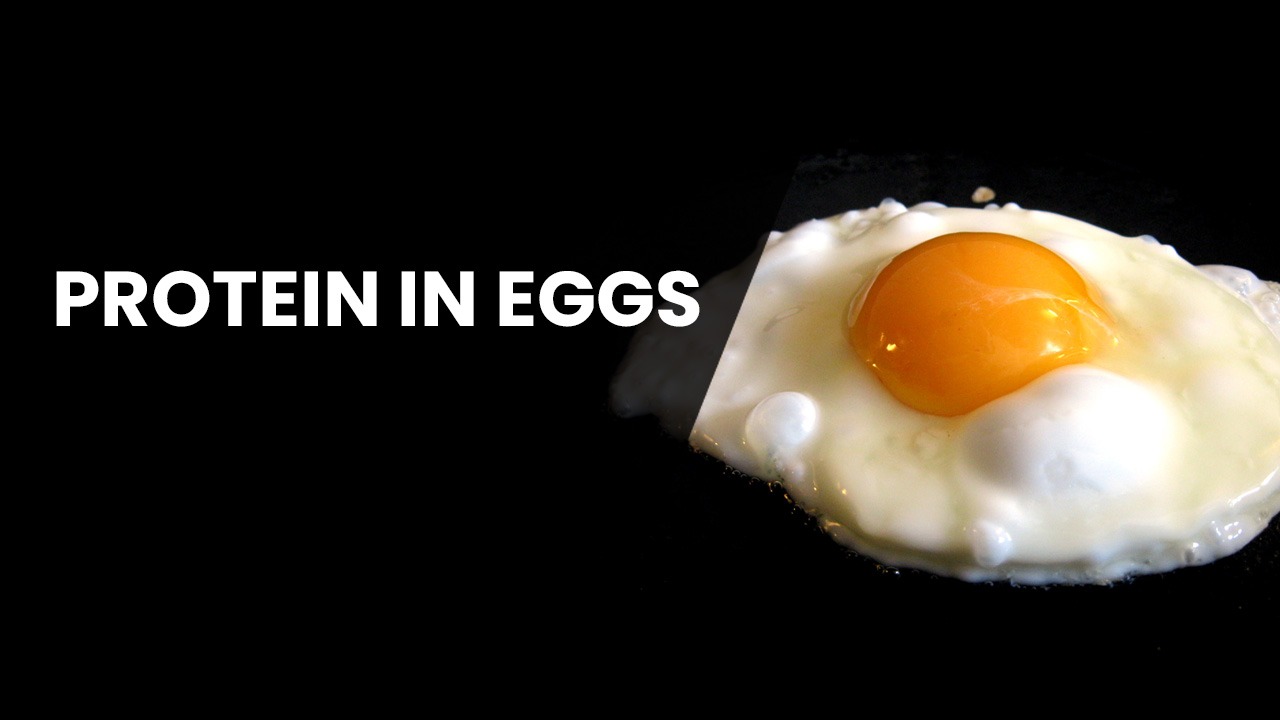
PROTEIN IN EGGS (BY THE NUMBERS)
Chicken eggs have become a default choice for high-protein diets because they’re cheap, easy to prepare, and they can help with muscle gain, fat loss/weight loss, or maintenance.
But not all eggs are the same on paper.
The nutrient numbers change based on egg size, whether you’re eating whole eggs or just egg whites, and how you build the meal around them.
Here’s a complete breakdown of the protein in eggs based on different variables:
CHICKEN EGG SIZE BREAKDOWN (BY WEIGHT)
Before we talk egg protein numbers, I want to make sure we’re all on the same page about egg sizes.
Here in the States, when you walk into any grocery store, you’ll typically see eggs arranged by size: small, medium, large, and extra-large. I’ve even seen a few places that offered “jumbo” eggs.
Why does that really matter?
Well, if you buy a pack of small eggs, you’ll save money, but you won’t be getting the same amount of protein content as you would had you bought a carton of large eggs.
And for anyone serious about hitting their daily protein needs, these numbers matter.
In the U.S., chicken egg sizes are classified by minimum net weight per dozen, not by how big they look in the carton.
- Small: 18 oz/dozen (≈ 1.5 oz per egg)
- Medium: 21 oz/dozen (≈ 1.75 oz per egg)
- Large: 24 oz/dozen (≈ 2.0 oz per egg)
- Extra-Large: 27 oz/dozen (≈ 2.25 oz per egg)
- Jumbo: 30 oz/dozen (≈ 2.5 oz per egg)
Since this standard lets you estimate the average weight per egg, it also explains why egg size directly affects your protein totals.
HOW MUCH PROTEIN IN WHOLE EGGS?
The complete high-quality protein in whole eggs scales with size because size is a weight class. If you’re counting eggs (instead of weighing cooked egg portions), the simplest way to stay accurate is to match your protein estimate to the size on the carton.
- Small: ~5g protein
- Medium: ~5–6g protein
- Large: ~6–7g protein
- Extra-Large: ~7g protein
- Jumbo: ~8g protein
Whole eggs give you a defined amount of protein per size, and once you know that number, the math becomes predictable.
But whole eggs aren’t the only way to drive protein higher because when you separate the yolk from the egg whites, the protein-to-calorie equation changes significantly. That’s where egg whites come in.
HOW MUCH PROTEIN IN EGG WHITES?
Once you remove the egg yolk, you remove nearly all of the fat, the dietary cholesterol, and most of the vitamins A, D, E, K, along with B12 and choline. What’s left is primarily water and protein.
That’s why egg whites are often treated as a precision tool for building muscle mass, protecting lean mass, and improving body composition.
Unlike whole eggs, chicken egg whites are not classified by size on the carton. Their protein content scales by volume or weight.
Here’s what that looks like in practical terms:
- 1 large egg white: ~3–4g protein
- 100g egg whites: ~10–11g protein
- ½ cup liquid egg whites: ~13g protein
- 1 cup liquid egg whites: ~26g protein
Egg whites make it easier to get more complete proteins while keeping calories controlled. For anyone adjusting intake based on body weight, resistance training volume, or body composition goals, that flexibility can be extremely helpful.
But if you’re getting all the protein you need without the calories, do you really need whole eggs?
WHOLE EGGS VS. EGG WHITES
The difference between whole eggs and egg whites isn’t about “good” versus “bad.” The real difference comes down to what you’re choosing to keep and what you’re choosing to remove.
Egg whites are basically a targeted protein delivery system. They’re mostly water and protein with minimal fat.
That’s why they’re so easy to plug into meal plans when your protein needs are high and your calories are tight. You’re getting the dietary amino acid profile you need for muscle protein synthesis and muscle repair, without dragging saturated fat along for the ride.
Whole eggs are a different animal. You still get the protein, but now you’re getting the egg yolk too and the yolk changes the nutritional profile.
It brings fat (including some saturated fat), dietary cholesterol, and most of the nutrients that make eggs more than just a protein number including:
- Vitamin A
- Vitamin D
- Vitamin E
- Vitamin K
- Vitamin B12
- Choline
Why pick one over the other?
You reach for egg whites when you’re treating your nutrition like you treat your resistance exercise training: controlled.
If your protein needs are high, calories are low, and you’re trying to keep muscle mass while leaning out, egg whites let you push protein up without the extra fat. They’re the easy plug-in when you’ve already got healthy fats coming from other food sources in your day.
You lean on whole eggs when you want more than just a number in your food log.
The yolk brings the rest of the nutritional package and the kind of “stay full” factor that helps you stick to your plan, especially if you’re training hard and don’t want to be starving an hour after breakfast.
The smartest move isn’t to exile one and worship the other. It’s to let each do what it’s best at.
Use one or two whole eggs as the base so you get the yolk’s nutrients and satiety index, then add egg whites to bring the total protein up to where it needs to be for your body weight and training. That way, you’re not giving up the benefits of whole eggs, and you’re not blowing your calories just to hit your protein target.
RAW EGGS VS. COOKED EGGS
The protein in chicken eggs is essentially the same whether it’s a raw egg or a cooked egg. You don’t gain protein by drinking it from a glass, and you don’t lose protein by turning it into a vegetable omelet.
The biggest difference between raw eggs and cooked eggs isn’t the macro count. It’s bioavailability.
Cooked eggs, regardless of the cooking method, are easier to digest. This means your body can access those essential amino acids more efficiently for protein synthesis, muscle development, and exercise performance.
With raw eggs, you’re taking on a food safety risk without any additional muscle-building benefit.
In fact, research shows you may only absorb around half to two-thirds of the protein from raw eggs, compared to over 90% from cooked eggs.
If you’re only absorbing half the protein from raw eggs, that’s half the building material actually reaching your body tissue for repair and recovery.
So, do yourself a favor and skip the Rocky Balboa approach to eggs. Stay safe and provide your muscles with the protein they need by cooking your eggs.
DEBUNKING 8 EGG NUTRITION MYTHS
Depending on who you listen to, eggs are either a breakfast heart attack or nature’s multivitamin.
The problem isn’t the egg.
It’s that a lot of the headlines people still quote are based on older nutrition ideas that don’t match what we know now.
When you actually look at the research, eggs fit comfortably into a performance-focused, balanced diet for most healthy people.
I want to settle things once and for all when it comes to egg nutrition myths.
Let’s run through the biggest claims about eggs and their influence on cholesterol, heart disease, liver health, blood pressure, digestion, immune function and stroke. I’ll show you what the evidence really says, so you can eat eggs without second-guessing every time you crack one.
EGGS RAISE YOUR BLOOD CHOLESTEROL
For a long time, the logic was simple: eggs contain cholesterol, you eat eggs, your blood cholesterol shoots up, and you’re suddenly on the fast track to cardiovascular disease.
Sure, it sounds convincing… but it’s not true.
There’s a difference between dietary cholesterol (what’s in food) and blood cholesterol (what shows up on your labs).
Your body makes cholesterol on its own, and your liver adjusts production based on what you eat. For most healthy people, cholesterol from fresh eggs doesn’t translate 1:1 into higher blood levels the way old nutrition rules suggested.
That’s why the 2015 Dietary Guidelines Advisory Committee dropped the old 300 mg/day cholesterol cap and stated that cholesterol is “not a nutrient of concern for overconsumption” for the general population. They noted there’s no appreciable relationship between dietary cholesterol and serum cholesterol in typical intakes.
Instead, they focused on bigger drivers such as saturated fat, trans fats, fiber, total calories, and the overall pattern of the diet.
For example, an egg alongside fruit and whole grains in a solid plan is not the same as an egg buried under processed meat and eaten on top of a day full of ultra-processed junk.
More recent controlled diet studies back this up.
When saturated fat is kept in check, adding eggs doesn’t reliably spike LDL the way people assume. Changes in LDL track far more with saturated fat intake and overall diet quality than with the cholesterol in the egg itself.
None of this means cholesterol is irrelevant or that everyone gets a free pass.
If you already have high cholesterol, a strong family history, or existing cardiovascular disease, you should listen to your doctor, not an article from an exercise physiologist or personal trainer like myself.
But blaming eggs by themselves, while ignoring everything else on the plate and the lack of movement between your gym routines or home exercises, misses the real target.
For most lifters eating a reasonably balanced diet, eggs are not the thing pushing blood cholesterol out of range. The rest of the lifestyle usually is.
EGGS CAUSE HEART DISEASE
Once eggs were blamed for raising blood cholesterol, it didn’t take long for the next claim to show up: if you eat eggs, you’re asking for heart disease.
That sounds serious, so it’s worth looking at what happens in real people over time, not just on paper.
Large population studies have followed hundreds of thousands of adults for years while tracking how often they eat eggs and who goes on to develop cardiovascular disease.
When researchers account for the rest of the diet, activity levels, smoking, body weight, and other factors, a consistent pattern shows up:
Eating around one chicken egg per day is not associated with a higher risk of heart attack or stroke in the general population.
In some analyses, moderate egg intake inside an otherwise solid nutrition pattern looks neutral from a heart standpoint. In other words, it’s just another whole food protein source that fits.
If eggs aren’t causing heart disease, what does matter?
- Overall saturated fat and calorie intake
- Fiber and whole-food carb choices (think whole grains, fruits, vegetables, black beans, etc.)
- Whether you train regularly or sit all day
- Blood pressure, sleep, and smoking status
Just like I mentioned above, your overall lifestyle is what determines heart disease risk, not the fact that you had eggs for breakfast.
EGGS INCREASE STROKE RISK
Once eggs were blamed for cholesterol and heart disease, stroke got stapled onto the warning label too.
Same assumption: more eggs, more risk.
But when you look at large meta-analyses that pool data from hundreds of thousands of people, a different pattern shows up.
In many of these analyses, moderate egg intake is not linked to a higher stroke risk. And in some cases, people who eat eggs regularly actually have a slightly lower risk compared to those who rarely eat them, once overall diet and lifestyle are accounted for.
That doesn’t mean eggs are a cure-all for strokes or cardiovascular diseases.
It just means they’re not the ticking time bomb they’ve been made out to be. The same things that drive stroke risk, including blood pressure, smoking, inactivity, excess body fat, and ultra-processed diets, still matter far more than whether you eat an egg-based breakfast.
If your cholesterol, blood pressure, and overall lifestyle are under control, eggs aren’t the thing pushing you toward a stroke.
Speaking of blood pressure…
EGGS INCREASE BLOOD PRESSURE
Eggs have been blamed for just about everything, so it’s no surprise they’ve been accused of cranking up blood pressure too.
But in healthy people, that claim doesn’t hold up.
Studies looking specifically at egg intake and hypertension don’t find a clear link between eating eggs and developing high blood pressure when the rest of the diet and lifestyle are under control.
In fact, researchers have isolated a peptide in egg whites that acts a bit like a mild ACE inhibitor in the body, meaning it can help relax blood vessels and slightly lower blood pressure in some cases.
EGG YOLK IS BAD FOR YOU
The “skip the yolk” advice is a leftover from the no-fat era, when anything with fat or cholesterol was treated like a problem by default.
A lot of people got in the habit of cracking eggs, tossing every yolk, and feeling like they were doing the healthy thing.
They weren’t just cutting fat. They were cutting out most of what makes an egg valuable.
The yolk is where you’ll find:
- Most of the vitamins and minerals
- Fat-soluble vitamins like A, D, E, K
- B12 and choline
- Lutein and zeaxanthin (carotenoids for eye and brain health)
- And roughly 40% of the egg’s total protein
If you buy organic eggs or free range eggs that are enriched, the yolk is also where you’ll pick up extra omega-3 fatty acids, including omega-3 fatty acid DHA. Egg production method is not a minor detail if you care about heart and brain support as part of your overall nutrition.
When you throw out yolks across an entire week, you’re not just trimming a few grams of fat. You’re stripping away a chunk of protein and most of the micronutrition, turning a complete food into a weaker protein source.
You also lose some of the food synergy that comes from eating nutrients together in a natural, whole-food context instead of trying to patch everything with separate pills and fortified foods.
EGGS MAKE YOU FAT
This one never really made sense when you put numbers to it.
Take four large eggs. You’re looking at roughly 280 to 300 calories with about 24 to 28 grams of complete protein in a tight, natural, whole food matrix.
Now, compare that to common “safe” breakfasts people don’t question like a short stack of pancakes with syrup, a big plain bagel, or a doughnut or two.
You’re easily in the 350 to 500+ calorie range with barely a smidge of protein, if any at all. Plus that dense carbohydrate serving can cause a blood sugar spike if you have insulin sensitivity or metabolic syndrome.
Add cream cheese, extra syrup, or sugary coffee on top and you’ve blown past the calories that four eggs give you without any of the actual nutrition.
The difference is what those calories do for you.
Four eggs give you a meaningful source of protein and they keep you satisfied for a few hours, which helps with weight loss. The pancake, bagel, or doughnut route gives you a fast carb spike, a crash, and a much easier path to overeating the rest of the day.
By themselves, eggs will not make you fat. In fact, they may help you lose weight because of their protein content.
What causes you to gain body fat is if your total intake is higher than what your body needs. In other words, you’re consuming more than you’re burning in a given day.
Labeling eggs as “fattening” while ignoring bigger calorie bombs and low-protein breakfasts is backwards. And including eggs in your health and wellness regimen for dietary reasons can actually be beneficial.
EGGS ARE BAD FOR YOUR LIVER
For a while, egg yolks got framed as a problem for your liver: more cholesterol, more fat, more “stress” on the system.
What we’ve learned since points in the opposite direction.
Eggs are one of the richest food sources of choline, a nutrient your liver needs to package and move fat out of the liver instead of letting it pile up.
Adequate choline intake is associated with better liver health and a lower risk of non-alcoholic fatty liver disease.
Could someone with advanced liver disease have specific diet instructions that limit certain foods? Sure.
But for a healthy, active person, eating eggs in a reasonable amount isn’t overloading the liver. If anything, the choline in the yolk is one of the reasons eggs deserve a spot in a well-structured diet, not a reason to avoid them.
BROWN EGGS ARE HEALTHIER THAN WHITE EGGS
Brown shells and white shells come from different breeds of hens, not different “health levels.” Shell color doesn’t change the protein, fat, vitamins, or minerals inside the egg.
You’ll even see blue or speckled shells from some breeds. Same story: different shell, same basic nutrition as long as the size and farming conditions are similar.
What does change visibly is the yolk color.
A deeper orange or golden yolk usually means the hen was eating a more nutrient-rich diet with more pigment-containing plants or feed.
That often tracks with better farming practices and a stronger overall nutrient profile, especially for things like carotenoids and some fats, but it doesn’t turn the egg into a completely different macro source.
You’re still dealing with the same ballpark of protein, fat, and calories regardless of whether they come from the industrial food system or a local source.
Real nutritional differences come from how the hens were raised and fed (e.g., organic eggs, free range eggs, or omega-3–enriched feed), not from the shell being brown instead of white.
When you’re choosing eggs, look at the protein quality: how they were produced, what the hens were eating, and whether that fits your plan. Shell color is just packaging. The yolk tells you more.
HOW MUCH PROTEIN DO YOU NEED (& HOW CAN EGGS HELP)?
Knowing how much protein is in an egg is useful. Knowing how much you really need each day is where it starts to matter.
Most people either under-shoot and wonder why their muscle mass never really changes or they just throw protein rich foods at their day without any real target and hope it works out.
Neither approach is great.
Let’s set a clear daily protein range based on body weight and training, then break that down into realistic per-meal targets. Once that’s in place, we’ll plug eggs into the plan and show you exactly how many you need at breakfast to build a 30 to 40-gram protein meal without guessing.
HOW MUCH PROTEIN DO YOU NEED EACH DAY?
Once you care about skeletal muscle health, strength, weight management, and staying lean, the usual Recommended Dietary Allowance for protein (0.36 g per pound / 0.8 g per kg) stops being a goal and starts being a safety net. It’s there to prevent deficiency, not to support hard training.
For active lifters, a much better target is 0.7 to 1.0 grams of protein per pound of body weight or about 1.6 to 2.2 grams per kilogram of body weight.
Where you land in that range depends on how you train and what you’re trying to do:
Lower End (around 0.7–0.8 g/lb): You lift a few times per week, you’re maintaining body weight, and your sessions are tough but not brutal. You want to support muscle synthesis and recovery without pushing food intake to the edge.
Middle of the Range (around 0.8–0.9 g/lb): You’re consistent in the gym, mixing heavier work with some conditioning, and you care a lot about body composition. You want enough protein to hang onto muscle mass while staying relatively lean.
Higher End (around 0.9–1.0 g/lb): You’re training hard and often, maybe in a calorie deficit, or coming back from a layoff and really pushing progression. In that scenario, more protein gives you a buffer to protect muscle mass while you lean down.
Hitting 25 to 40 grams of protein per meal doesn’t just help muscle repair. It also keeps blood sugar levels and overall energy levels steadier between meals so you’re not crashing mid-morning and raiding the pantry.
Instead of cramming all of that into one or two giant meals, break it up and aim for 25 to 40 grams of protein per meal, spread over 3 to 5 meals per day.
That makes it easier to hit your total using normal protein-rich sources (meat, chicken breast, eggs, dairy, plant proteins etc.), keeps appetite under control, and covers a big piece of your daily body requirements for recovery. This is assuming the rest of your basics, like water intake and sleep, aren’t completely neglected.
HOW EGGS HELP YOU HIT THAT NUMBER
This is where eggs stop being a debate topic and start doing work for you.
You’ve got your daily protein range. You know you should be hitting 25 to 40 grams of protein per meal a few times per day. The easiest place to lock that in is breakfast, because once the first meal is dialed in, the rest of the day gets a lot easier.
That’s where eggs earn their spot.
They cook fast, they go with pretty much anything, and unlike a lot of “healthy” breakfast options, you can predict exactly what you’re getting from them.
From earlier, remember that:
- 1 large whole egg = about 6 to 7 grams of protein
- 1 large egg white = about 3 to 4 grams of protein
Once you know those two numbers, it’s just plug-and-play. You’re not guessing, you’re not hoping your breakfast has enough protein, and you’re not trying to live off protein shakes because nothing else fits your macros.
Here are some simple ideas for your egg-based breakfast foundation to hit the 25 to 40 grams of protein window:
2 whole eggs + 4 egg whites: This provides roughly 26 to 30 grams of protein. It’s a clean option if you’re smaller, cutting, or closer to the lower end of the protein range.
3 whole eggs + 2 egg whites: This gives you around 30 to 34 grams of protein. It’s a great middle-of-the-road setup if you’re training hard and want one solid anchor meal.
3 whole eggs + a serving of Greek yogurt: You’ll get approximately 35 to 40 grams of protein with this one. It’s ideal if you’d rather keep fewer egg whites in the pan and add a high-protein side instead.
Once you know what each egg and each egg white contributes, you can build a breakfast that reliably covers a quarter to a third of your daily protein target before you even leave the house.
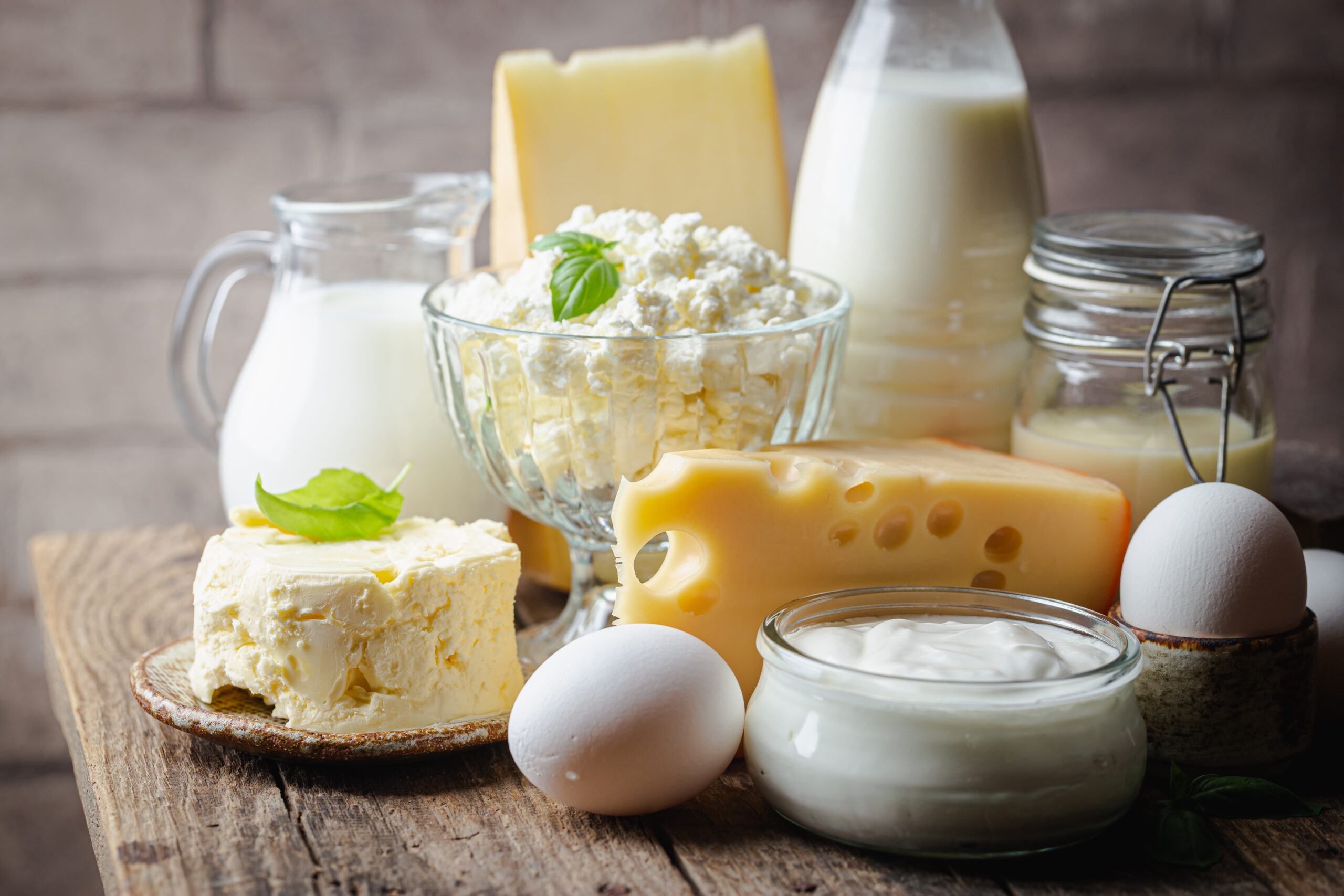
HIGH-PROTEIN EGG MEALS (BY GOAL)
You know how much protein you need, and you know what each egg and egg white gives you. Now it’s time to turn that into real meals you can cook without thinking.
These are framework recipes that include simple ingredients, quick instructions, and approximate protein totals based on what we discussed before. These will keep you from stopping off for a breakfast sandwich on your way to work:
- 1 large whole egg ≈ 6–7g protein
- 1 large egg white ≈ 3–4g protein
Pick the ones that match your fitness goal and then plug them straight into your day. Treat them like templates: swap veggies, adjust portions, keep the protein spine of the meal the same.
MUSCLE-BUILDING BREAKFAST OMELET
Goal: Lean mass / higher calories
Protein: ~30–35g (eggs only, more with egg & cheese)
Ingredients:
- 3 whole eggs
- 2 egg whites
- ¼ cup diced bell peppers
- ¼ cup diced onion
- Handful of spinach
- 1–2 oz shredded cheese (optional)
- 1–2 slices whole-grain toast (optional)
Instructions:
- Whisk the whole eggs and egg whites in a bowl.
- Spray a non-stick pan and sauté peppers and onion for 2–3 minutes.
- Add spinach and cook until wilted.
- Pour in the egg mixture and let it set around the edges.
- Add cheese (if using), fold the omelet, and cook until set.
- Serve with toast if you want extra carbs for training.
LOW CAL SCRAMBLE (LOWER CALORIES, HIGH PROTEIN)
Goal: Fat loss / weight loss / keep muscle
Protein: ~26–30g
Ingredients:
- 2 whole eggs
- 4 egg whites
- ½ cup sliced mushrooms
- Handful of spinach
- ½ cup chopped tomatoes
- Salsa (to taste)
Instructions:
- Whisk the eggs and egg whites together.
- In a non-stick pan, cook mushrooms for 2–3 minutes.
- Add spinach and tomatoes, cook until softened.
- Pour in the egg mixture and scramble until fully cooked.
- Top with salsa and eat as-is or with a small piece of fruit.
BALANCED “EVERYDAY” BREAKFAST
Goal: Maintenance / body recomposition
Protein: ~18–21g (from eggs) plus more from oats
Ingredients:
- 3 whole eggs
- ½–1 cup dry oats
- Water or milk of choice
- ½–1 cup berries or a sliced banana
Instructions:
- Cook oats according to package directions with water or milk.
- While oats cook, fry, scramble, or poach the eggs in a pan.
- Top oats with berries or banana.
- Plate the eggs alongside the oats and eat together.
HIGH-CARB TRAINING DAY PLATE
Goal: Hard leg day / high-volume session
Protein: ~30+g (eggs)
Ingredients:
- 3 whole eggs
- 2 egg whites
- 1–1½ cups cooked rice or potatoes
- ½–1 cup mixed vegetables (fresh or frozen)
- Salt, pepper, hot sauce (optional)
Instructions:
- Reheat or cook rice/potatoes and veggies.
- Whisk eggs and egg whites in a bowl.
- Scramble eggs in a non-stick pan until cooked through.
- Serve eggs over or alongside the rice/potatoes and veggies.
- Season with salt, pepper, or hot sauce.
LOW-CARB / KETO-LEANING BREAKFAST
Goal: Low-carb phase / higher satiety
Protein: ~30g
Ingredients:
- 3 whole eggs
- 2 egg whites
- ½ avocado, sliced
- ½ cup sautéed non-starchy veggies (spinach, peppers, zucchini, etc.)
Instructions:
- Sauté your veggies in a pan with a bit of spray or oil.
- Whisk eggs and egg whites and pour over the veggies.
- Scramble or make into an omelet and cook until done.
- Plate with sliced avocado on the side.
GRAB-AND-GO EGG MUFFIN CUPS
Goal: Meal prep / busy mornings
Protein: ~6–8g per muffin (depending on egg mix)
Ingredients (for 12 muffins):
- 8 whole eggs
- 8 egg whites
- 1 cup chopped veggies (peppers, onions, spinach, etc.)
- ½ cup shredded cheese (optional)
- Salt and pepper
Instructions:
- Preheat oven to 350°F (175°C).
- Whisk eggs and egg whites in a large bowl.
- Stir in chopped veggies, cheese (if using), salt, and pepper.
- Spray a muffin tin and pour mixture evenly into 12 cups.
- Bake for 18–22 minutes, or until set.
- Store in the fridge. Eat 2–3 muffins as a quick 12–24g protein breakfast with fruit or yogurt.
DESK-FRIENDLY PROTEIN BOX
Goal: Office / no microwave
Protein: ~30–40g (eggs + dairy)
Ingredients:
- 3 hard-boiled eggs (at least 1–2 whole, rest can be whites)
- 1 single-serve Greek yogurt or cottage cheese cup
- Handful of baby carrots, cucumber slices, or cherry tomatoes
- Piece of fruit (optional)
Instructions:
- Hard-boil eggs ahead of time and peel them.
- Pack eggs, yogurt/cottage cheese, and veggies into a container.
- Add a piece of fruit if you want extra carbs.
- Store in the fridge and grab it on your way out. Eat cold at your desk.
POST-WORKOUT EGG & RICE BOWL
Goal: Simple meal after lifting
Protein: ~25–30g
Ingredients:
- 2 whole eggs
- 3 egg whites
- 1 cup cooked jasmine or basmati rice
- ½–1 cup frozen mixed veggies
- Soy sauce or hot sauce
Instructions:
- Microwave frozen veggies until hot.
- Reheat or cook rice.
- Whisk eggs and egg whites, then scramble them in a non-stick pan.
- Combine rice, veggies, and scrambled eggs in a bowl.
- Top with soy sauce or hot sauce and eat.
LIGHT LATE-NIGHT PROTEIN MEAL
Goal: Protein before bed without a heavy meal
Protein: ~18–22g
Ingredients:
- 1 whole egg
- 4–5 egg whites
- ½ cup sautéed veggies (optional)
Instructions:
- Whisk the whole egg and egg whites together.
- Sauté veggies if using, then add the egg mixture.
- Scramble until cooked through.
- Eat as a simple, light, high-protein meal before bed.
EGG WHITE PROTEIN SHAKE
Goal: One of my favorite protein drinks when you don’t want to cook
Protein: ~30–45g (depending on amounts)
Ingredients:
- ½–1 cup pasteurized liquid egg whites
- 1 scoop whey or casein protein
- 8–12 oz water or milk/alt
- Optional: handful of berries, 1 tbsp peanut butter, ice
Instructions:
- Add pasteurized egg whites, protein powder, and liquid to a blender.
- Add berries, peanut butter, and ice if you want more flavor and texture.
- Blend until smooth.
- Drink as a quick 30–45g protein hit when you’re short on time.
If you strip away the noise, eggs are exactly what you need them to be: a dense, predictable source of high-quality protein you can build real meals around.
Use whole eggs and whites in the right mix for your goal. Go for more yolks when you want more nutrients and lasting fullness, and lean on extra egg whites when you need to push protein higher while keeping calories in check.
Do that consistently, inside an overall high-protein diet and training plan, and you’ll be using eggs to move the needle on strength, muscle, and leanness.
Check out our complete line of ATHLEAN-RX Supplements and find the best training program for you based on your fitness level and goals.

- The “egg argument” has been around for decades. First eggs were dangerous, then they were perfect, and vice versa. Most of that came from old ideas about dietary cholesterol that don’t line up with what we know now.
- Not every egg gives you the same protein. Size is a weight class: small, medium, large, extra-large, and jumbo all carry different totals.
- A large whole egg lands around 6–7 grams of protein, while a large egg white gives roughly 3–4 grams.
- Whole eggs vs egg whites isn’t good vs bad, it’s trade-offs. Yolks bring fats, cholesterol, vitamins A/D/E/K, B12, choline, carotenoids, and about 40% of the egg’s protein. Egg whites strip away almost everything except protein and water.
- The most effective move isn’t to pick a side, it’s to combine them: use 1–2 whole eggs for nutrients and satiety, then layer in extra whites to push protein up without dragging calories and fat along for the ride.
- Raw vs cooked eggs: You absorb far less protein from raw eggs and take on a food safety risk; cooked eggs are safer and far more bioavailable.
- The big egg myths don’t hold up in context: for most healthy people, eggs do not automatically spike blood cholesterol, do not independently cause heart disease, and are not driving stroke risk when the rest of the diet and lifestyle are under control.
- Brown eggs aren’t better than white eggs. Shell color comes from the hen’s breed, not the health of the egg. If you want to judge protein quality, look at how the hens were raised and fed and pay more attention to the yolk than the shell.
PROTEIN IN EGGS FAQ
Short answer: for most people who lift or train regularly, no.
Two large eggs (a standard serving) gives you about 12 to 14 grams of protein total. Now line that up against a realistic daily target for someone who lifts:
- 150 lb lifter: roughly 105–150g protein/day
- 180 lb lifter: roughly 125–180g protein/day
In that context, two eggs cover less than 15% of what you need for strength, muscle, and solid recovery. They’re useful, but they could be doing more to help you hit your daily protein intake target.
With that said, two eggs can work as the base of a meal but not the whole thing. For example, you can pair it with other high-protein sources:
- 2 eggs + Greek yogurt
- 2 eggs + cottage cheese
- 2 eggs + turkey, chicken, or smoked salmon
- 2 eggs + a scoop of protein in a shake on the side
Making meals like this is when breakfast jumps into the 25 to 40 grams of protein range, which is where you want to be per meal.
Now, this is a very different story if we’re talking about sedentary, non-training adults just trying to avoid nutrient deficiency. For this population, the basic RDA is lower, and two eggs move the needle more there.
But if you’re in the gym, putting your joints and muscles under load, and expecting progress, two eggs by themselves are underpowered.
Use them as a component of a high-protein day, not the only thing carrying the load.
For most healthy people, yes, an egg a day fits just fine inside a solid diet, as long as you don’t have an egg allergy.
The old fear sounded like this: “Eggs have cholesterol, you eat eggs, your blood cholesterol skyrockets, you get heart disease.” Modern data doesn’t support that chain of events for the general population when the rest of the diet and lifestyle are under control.
One egg a day, inside a balanced diet with good protein sources, vegetables, whole grains, and reasonable saturated fat, is not linked to a higher risk of heart disease or stroke in healthy people.
What matters far more is the overall pattern: total calories, saturated fat intake, fiber, whether you train or sit all day, plus sleep, smoking, and stress.
When you actually train, there are at least five reasons eggs earn a spot in your high-protein diet.
First, they give you high-quality protein in a small package. A large egg has around 6 to 7 grams of protein with a solid amino acid profile, which makes it an easy way to anchor breakfast or plug a gap in your daily total without needing another scoop of powder.
Second, the yolk carries most of the good stuff. That is where you get vitamins A, D, E, and K, plus B12, choline, and carotenoids that support eye and brain health, along with a meaningful share of the egg’s protein. If you toss every yolk, you are not just cutting fat, you are throwing away most of the micronutrition you are paying for.
Third, eggs pull their weight for muscle, recovery, and appetite. The protein supports muscle repair and retention when you are lifting or dieting, and a few eggs in a meal will keep you satisfied longer than something like cereal or a bagel with similar calories. That makes it easier to keep total intake under control over the course of the day.
Fourth, they are easy to adapt to different goals. Whole eggs work well when you want nutrients and staying power. Egg whites let you push protein higher when calories are tight or you need to keep fat lower. A simple mix such as one or two yolks plus extra whites can fit a bulk, a maintenance phase, or a cut just by adjusting how many you use.
Finally, eggs are fast, inexpensive, and simple to prepare. You can boil, scramble, poach, bake them into muffin cups, or throw them into rice bowls and breakfast burritos, and they still fit almost any meal plan. Compared to a lot of meats and overpriced “health” products, they remain one of the most cost-effective protein sources you can keep in your kitchen.
Jeff Cavaliere M.S.P.T, CSCS
Jeff Cavaliere is a Physical Therapist, Strength Coach and creator of the ATHLEAN-X Training Programs and ATHLEAN-Rx Supplements. He has a Masters in Physical Therapy (MSPT) and has worked as Head Physical Therapist for the New York Mets, as well as training many elite professional athletes in Major League Baseball, NFL, MMA and professional wrestling. His programs produce “next level” achievements in muscle size, strength and performance for professional athletes and anyone looking to build a muscular athletic physique.