






IS STEAK THE BEST MUSCLE BUILIDING PROTEIN?
But is it really the protein-packed food it’s made out to be?
Like anything else in nutrition, the protein in steak depends on what you’re eating. Not every cut has the same amount of protein, and the fat and calorie content can look very different from one steak to the next.
Today, we’re going to break down how much protein is in steak, how different cuts change the numbers, and how steak stacks up against other protein choices when your goal is building muscle and eating smarter.
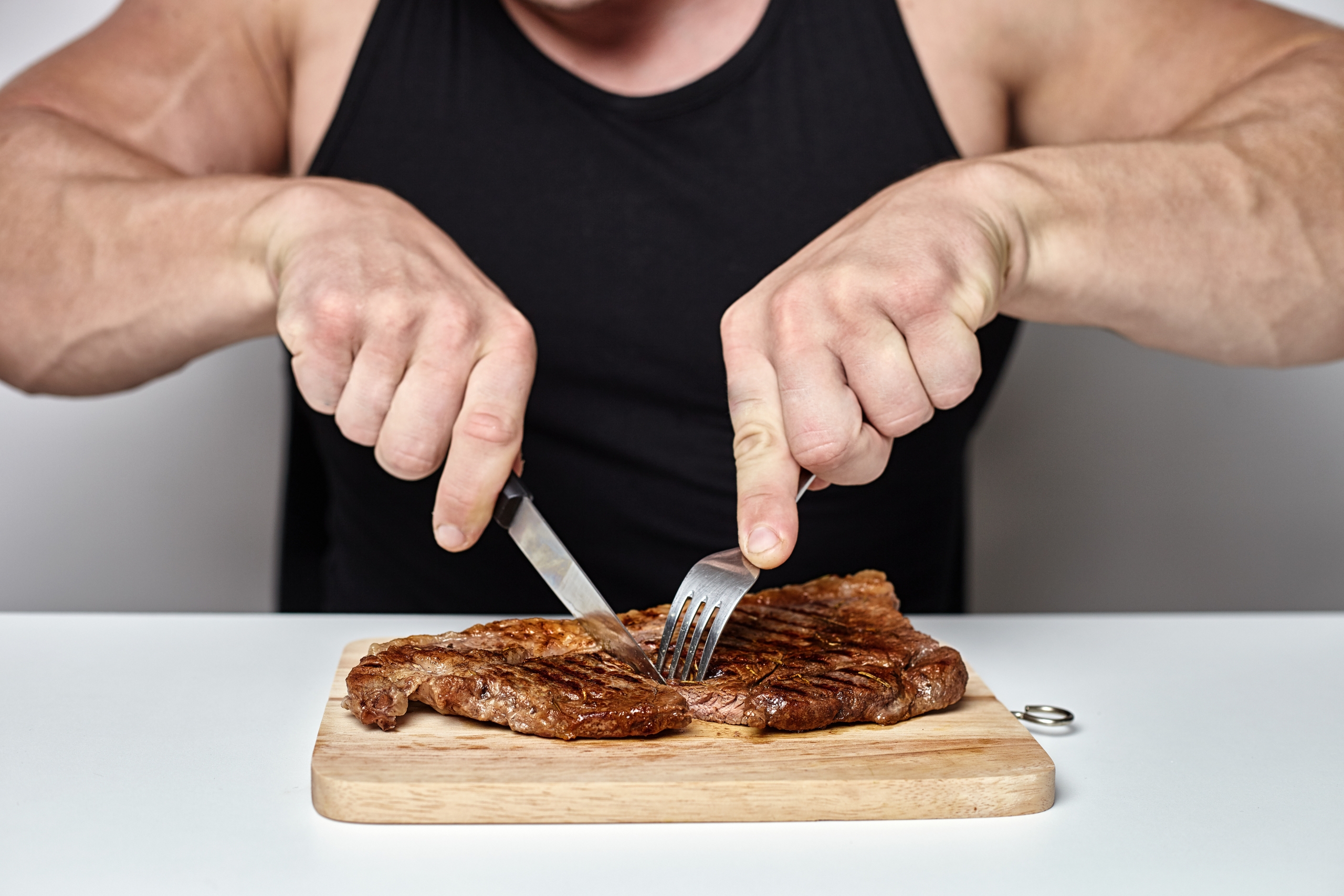
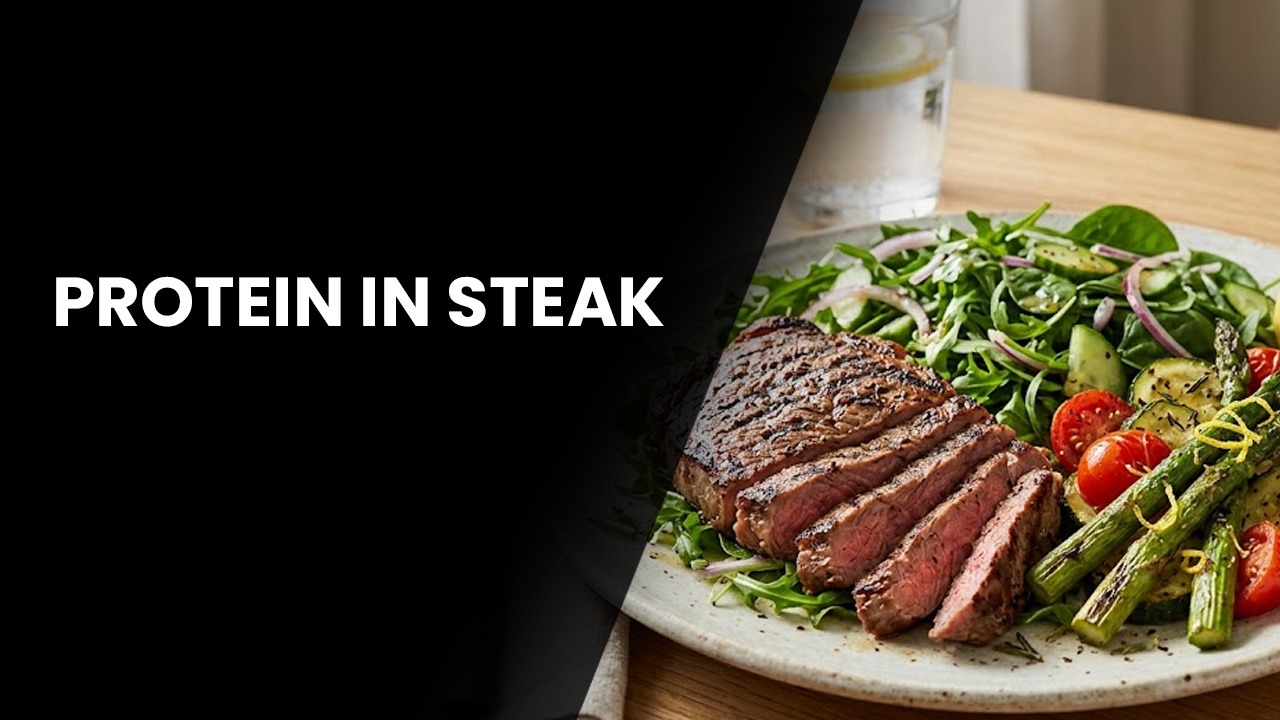
PROTEIN IN STEAK
If your goal is muscle growth, you do not estimate protein intake. You measure it. Protein content changes with the cut, the portion size, and whether you are weighing it raw or cooked.
So, how much protein is in steak?
Here is the general breakdown for cooked beef steak:
- Per 100 grams: about 25 to 31 grams of protein
- Per ounce: about 7 to 9 grams of protein
- Typical 6 oz cooked steak: about 42 to 54 grams of protein
That puts steak among the more protein-dense whole-food options in a muscle-focused diet. But the numbers are not identical across the board.
A leaner cut like sirloin steak usually has more protein per calorie, which makes it great for weight loss, body composition, and anyone trying to keep fat content under control.
A fattier cut can still deliver plenty of amino acids and total protein, but it also brings more saturated fat and more calories with it. That changes the nutritional value of the meal fast.
NOT ALL STEAK IS EQUAL
Steak nutrition depends heavily on the cut. Two pieces of red meat can look similar on the plate and bring very different nutritional values once you factor in protein, fat content, and calories.
Here is how common cuts stack up:
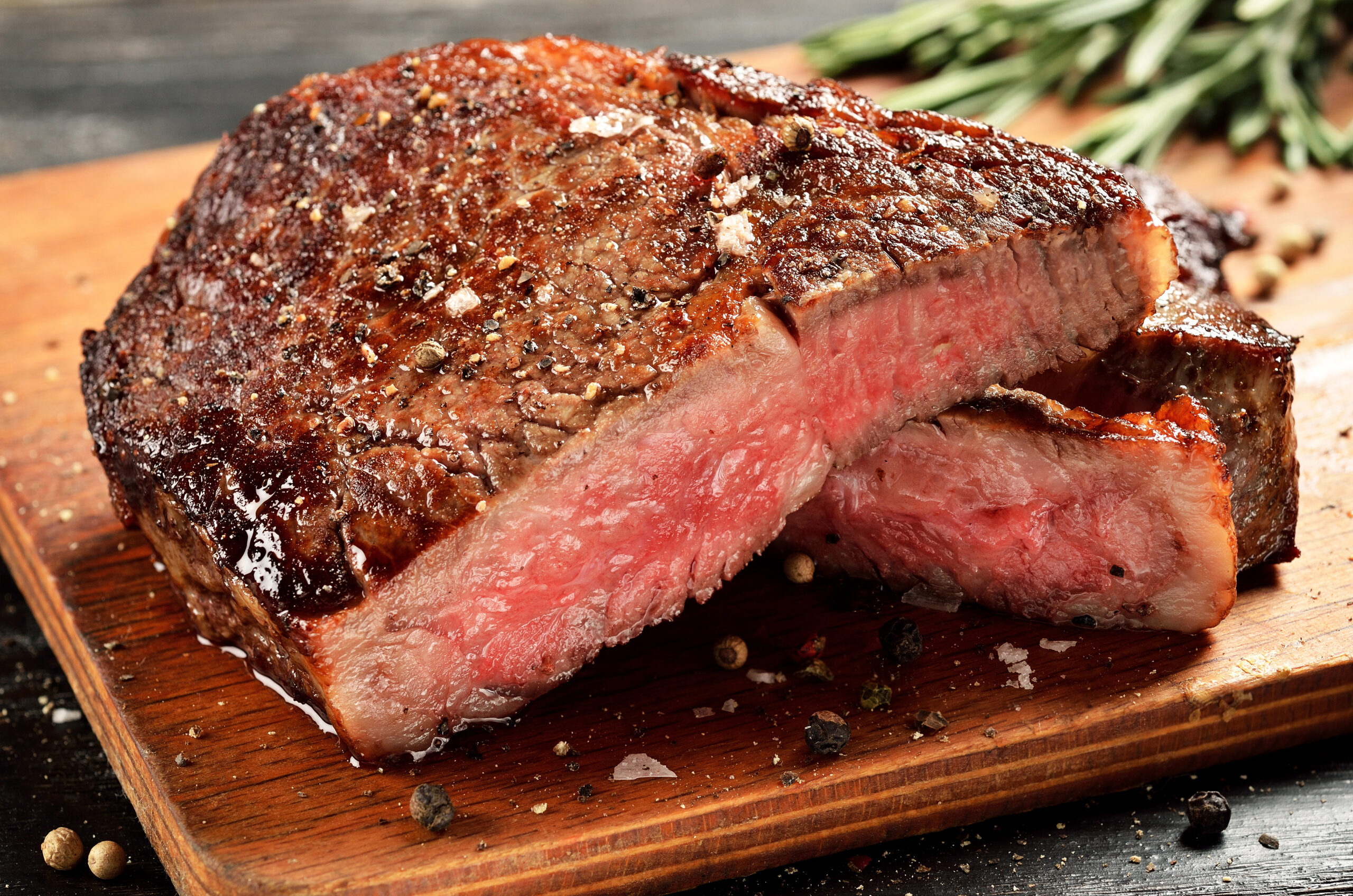
Sirloin Steak: About 25 to 26 grams per 3 oz and 50 to 52 grams per 6 oz. It is one of the best all-around choices for lean protein.
Top Round / Eye of Round: About 25 to 26 grams per 3 oz and 50 to 52 grams per 6 oz. These are some of the leanest, highest protein cuts you can buy.
Filet Mignon / Tenderloin: About 25 to 27 grams per 3 oz and 50 to 54 grams per 6 oz. Lean, tender, and high in protein, but usually more expensive.
New York Strip: About 24 to 26 grams per 3 oz and 48 to 52 grams per 6 oz. Solid protein content with moderate fat.
Ribeye: About 20 to 23 grams per 3 oz and 40 to 46 grams per 6 oz. Plenty of protein, but much higher fat content and calories because of the marbling.
T-Bone Steak: About 21 to 25 grams per 3 oz and 42 to 50 grams per 6 oz. Great protein numbers, but fat can vary depending on which section of the steak you are eating.
Porterhouse Steak: About 14 to 24 grams per 3 oz and 28 to 48 grams per 6 oz. Protein stays solid here, but fat content can swing more depending on the cut and trim.
Flank Steak: About 23 to 24 grams per 3 oz and about 46 to 48 grams per 6 oz. Fairly lean, high in protein, and perfect for meal prep.
If your goal is adding lean mass without driving calories too high, sirloin steak, top round, and eye of round usually make more sense than a heavily marbled beef rib eye steak.
A fattier cut may fit better when you want higher calorie intake, but it is a different play than choosing a leaner cut for cleaner steak nutrition.
RAW VS. COOKED: WHY THE NUMBERS CHANGE
This is where a lot of people get sloppy with tracking.
Cooking reduces water weight, not protein. That means the protein becomes more concentrated by weight after cooking. The steak gets smaller, but the total protein in that piece of meat stays close to the same.
For example:
- 4 oz raw steak gives you less protein per ounce by weight, because it still contains more water.
- 4 oz cooked steak has slightly more protein per ounce because some of that water has cooked off.
This is one reason the same cut can look different in a food log depending on whether the numbers are listed raw or cooked.
The cooking variations are also something to consider.
Grilling, pan-searing, and other dry-heat cooking methods reduce water differently, which can slightly affect the final weight and the protein concentration per ounce.
The key is consistency. If you track your beef steak raw, keep tracking it raw. If you track it cooked, keep tracking it cooked. Mixing the two throws off your protein content, calories, and portion size fast.
STEAK NUTRITION BENEFITS
Steak earns its place in a muscle-focused diet for more than one reason. The protein matters, but so does everything else that comes with it.
When you choose the right cut, steak is more than a macro.
It is a nutrient-dense food that can improve training, recovery, and overall performance in a way a lot of single-purpose protein sources do not.
Protein is the headline, but it is not the only reason steak earns a place in a muscle-focused diet:
COMPLETE PROTEIN FOR MUSCLE GROWTH
Steak contains all nine essential amino acids, which makes it a complete protein. Your body cannot produce those amino acids on its own, so they need to come from food.
That distinction is important because not every protein source has the same profile. Some foods contain protein but come up short in one or more essential amino acids. Steak doesn’t.
That is what makes it useful for muscle repair, muscle protein synthesis, and post-workout recovery. You are giving your body the building blocks it needs to rebuild tissue after training and adapt to the work you put it through.
Steak also delivers those amino acids in a dense, efficient serving.
You do not need to combine multiple lower-protein foods just to get the same result. For lifters trying to keep protein intake high, steak is a concentrated source of quality protein that fits easily into a plan built around strength, recovery, and muscle growth.
That is one reason it continues to show up alongside staples like chicken breast, eggs, and protein powders.
RICH IN IRON AND B VITAMINS
Steak also brings key micronutrients that boost training and recovery.
Heme iron helps carry oxygen through the body, which plays a direct role in training output, endurance, and energy levels. When oxygen delivery suffers, performance usually drops with it. That is why iron status can influence how strong, explosive, or recovered you feel.
Vitamin B12 enhances energy metabolism and nervous system function. Both are important when training volume climbs and recovery demands increase. If your workouts feel flat or your recovery feels slow, the issue is not always total protein. In some cases, the missing piece is the nutrient support that helps your body keep up.
This is where whole-food protein separates itself from a number on a label. It contains nutrients that reinforce the work the major macros are supposed to do.
ZINC AND CREATINE ADVANTAGE
Steak is also a wonderful source of zinc, which promotes immune function, recovery, and hormone health. That becomes more valuable when training stress is high and your body is trying to keep pace with both performance and repair.
It also naturally contains creatine. That gives steak an advantage over some other whole-food protein sources for lifters focused on strength and power. Creatine drives short, intense efforts like heavy sets, explosive reps, and repeated bursts of force.
That does not make steak a substitute for a creatine supplement, but it does add another layer to its value as a performance food. You are getting protein, micronutrients, and a compound closely tied to strength output in the same meal.
HIGH SATIETY
Steak is filling, and that can work in your favor when calories are tighter.
During a fat loss or cutting phase, hunger can break consistency fast. Foods that leave you satisfied make it easier to stay on plan, control portions, and avoid the kind of off-track eating that slows progress.
Steak helps because it combines high-quality protein with a level of fullness that many lower-satiety foods do not provide. A lean cut in the right portion can keep you satisfied, help you hit your protein target, and keep calories in a manageable range.
This is where cut selection becomes important. Leaner cuts give you the protein and micronutrients with fewer calories from fat. Fattier cuts can still fit, but they serve a different purpose in a nutrition plan.
STEAK VS. OTHER PROTEIN SOURCES
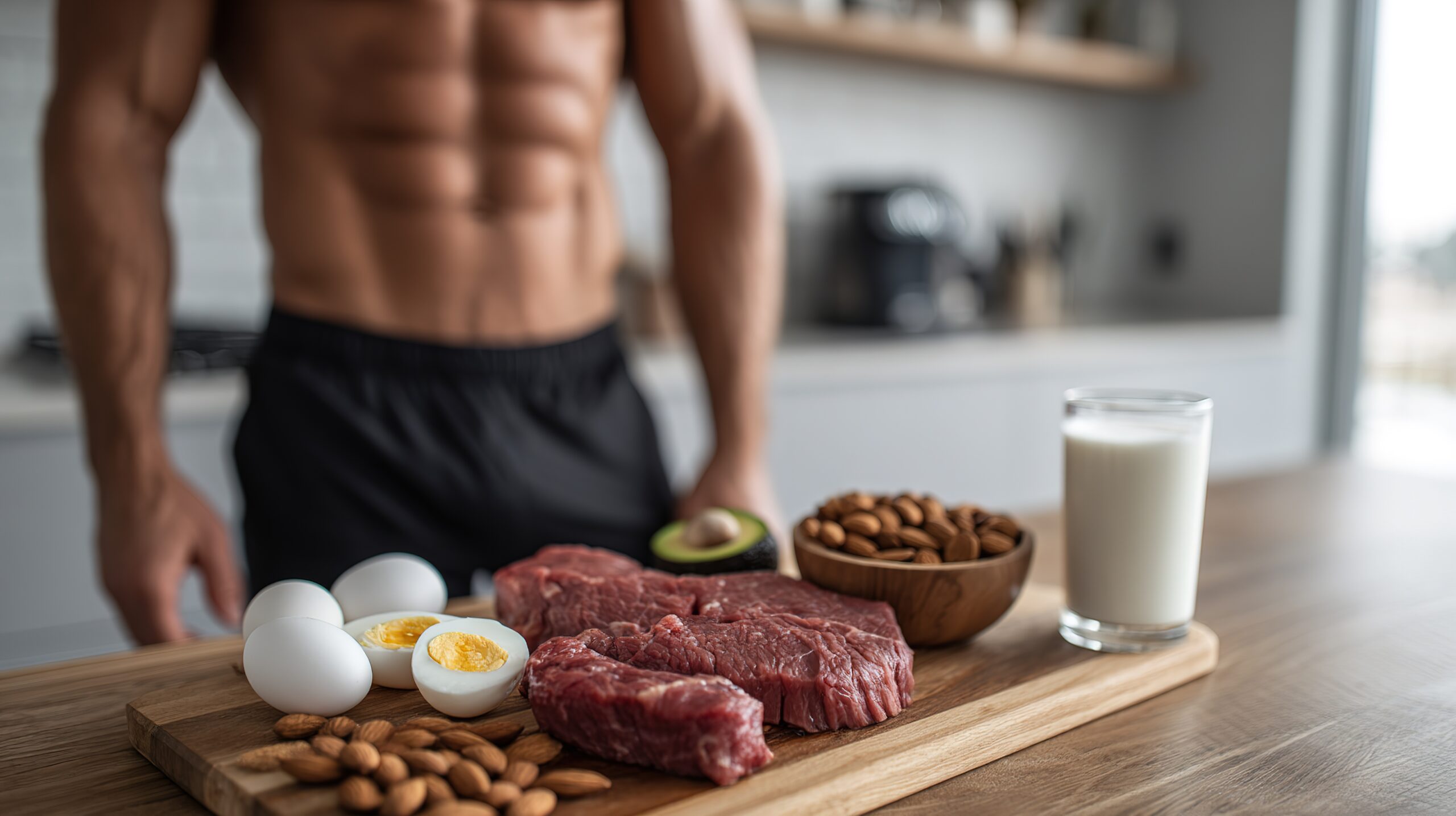
Protein quantity matters, but protein-to-calorie ratio gives you a better read on how efficient a food is in a high-protein diet.
Here is how steak stacks up against other common protein sources:
| PROTEIN SOURCE | PROTEIN | CALORIES |
| Lean sirloin steak, 3 oz cooked | 22.9g | 207 |
| Ribeye steak, 3 oz cooked | 19.9g | 233 |
| Beef chuck, 3 oz cooked | 25g | 180 |
| Beef fillets, 3 oz cooked | 23g | 160 |
| Chicken breast, 100g cooked | 31g | 165 |
| Chicken thighs, 3 oz cooked | 23g | 180 |
| Chicken drumsticks, 3 oz cooked | 24g | 185 |
| Chicken wings, 3 oz cooked | 23g | 240 |
| Ground beef (90/10), 3 oz cooked | 22.2g | 184 |
| Ground turkey (93/7), 3 oz cooked | 22.6g | 181 |
| Salmon, 100g cooked | 25.4g | 206 |
| Tuna, 100g | 23.6g | 116 |
| Eggs, 2 large | 12.6g | 156 |
| Greek yogurt, plain nonfat, 170g | 17.3g | 100 |
| Protein powder, 1 scoop | 20–25g | 110–150 |
| Tofu, firm, 100g | 17.3g | 144 |
| Lentils, cooked, 1 cup | 17.9g | 230 |
| Nuts and seeds, 1 oz | 4–9g | 160–180 |
With all these great protein-packed options, the question is…
WHICH SHOULD YOU CHOOSE?
That depends on the job.
If you want the most protein for the fewest calories, chicken breast and whey protein usually come out on top.
If you want a whole-food option with a lot of protein, more satiety, and a broader micronutrient profile, lean steak holds up well.
If you want omega-3 fats along with protein, salmon is a great option.
If you want lower-cost, flexible options, eggs, Greek yogurt, ground turkey, and ground beef can all work.
The best approach is not forcing one food to do everything. Build your diet around a mix of high-quality protein sources.
That gives you variety, makes it easier to hit your intake consistently, and covers more nutritional bases than relying on one staple alone.
Lean steak can be part of that mix, but it fits best alongside other options like chicken breast, eggs, fish, Greek yogurt, and protein powders.
IS STEAK GOOD FOR BUILDING MUSCLE?
Steak can be an excellent muscle-building food when it is a part of a healthy eating plan and consistent resistance training routine.
Your body digests steak into individual amino acids, then uses those amino acids to repair the muscle tissue you break down in training.
That only pays off if your workouts give your body a reason to adapt. A steak dinner without progressive resistance training does not build muscle. A solid hypertrophy program plus enough high-quality protein does.
With that said, let’s talk about why steak is great for muscle gains:
HIGH-QUALITY PROTEIN
One of steak’s biggest strengths is protein quality.
It provides all nine essential amino acids in amounts that assist with recovery and growth, which is a big advantage when your goal is adding size or preserving lean mass.
You are not just eating protein for the sake of hitting a number. You are eating a protein source your body can use well once digestion breaks it down.
PLENTY OF LEUCINE
That includes leucine, the amino acid most closely tied to signaling muscle protein synthesis. Think of leucine as the green light for rebuilding muscle tissue.
Training creates the damage. Amino acids from food help drive the repair process.
Steak has both the quantity and the profile to contribute to that process in a meaningful way.
SMALL SERVING, BIG PROTEIN
It also helps that steak can deliver a large amount of usable protein in one sitting.
That makes it easier to reach the kind of per-meal intake that drives hypertrophy, especially for lifters who struggle to spread enough protein across the day.
Instead of piecing together several smaller foods, one well-portioned steak can cover a big chunk of the job.
EASY TO COMPLEMENT
Steak also fits easily into meals built around training.
Pair it with potatoes, rice, or fruit, and now you have protein for repair and carbohydrates to help restore glycogen.
That makes steak useful for any fitness goal where performance, building muscle and recovery stay high on the priority list.
WHY THE TRAINING PART STILL COMES FIRST
Food provides the raw material for growth. Training creates the demand for it.
If you are not following a proper hypertrophy program with enough effort, volume, and progression, steak is not going to turn into muscle by itself. The lifter who trains hard and eats steak with purpose gets far more from it than the guy who orders a strip steak on the weekend and calls that a muscle-building plan.
This is where people oversimplify nutrition.
It is not about chasing one “bodybuilding food.” It is about giving your body the raw material to adapt to hard training. Steak can do that well, but only when the stimulus is there first.
WHEN STEAK WORKS AGAINST YOU
The downside shows up when cut selection and portion control get sloppy.
A leaner cut can fit cleanly into a muscle-building diet. A heavily marbled cut eaten too often can push calories up fast. The protein is still there, but now it comes packaged with a lot more fat, which changes how useful that meal is for someone trying to stay relatively lean.
Preparation can create the same problem. Butter-heavy restaurant steaks, oversized portions, and calorie-dense sides can turn a solid protein source into a meal that does not line up well with your goal.
HITTING YOUR PROTEIN GOALS WITH STEAK
Getting enough protein is one thing. Distributing it well across the day is what makes that intake more useful.
A lot of lifters load most of their protein into dinner, add a shake somewhere around training, and hope that covers it.
A better approach is to give your body a steady supply of high-quality protein across the day.
THE 30-GRAM RULE
Most lifters do well with about 0.8 to 1.2 grams of protein per pound of bodyweight, depending on training volume, recovery demands, and overall goal.
That total gets a lot easier to hit when you spread it across 3 to 5 meals instead of trying to cram it into one or two.
A simple target is 30 to 40 grams of protein per meal.
- For a 150-pound lifter, that usually means around 120 to 180 grams per day.
- For a 180-pound lifter, that usually means around 145 to 215 grams per day.
Once you break that into meals, the numbers become much more manageable. Instead of chasing a huge daily total in your head, you just need to make each meal do its job.
HOW STEAK HELPS YOU GET THERE
This is where steak becomes useful.
A lean cooked steak provides a large amount of protein in one serving, which makes it easy to hit that per-meal target without having to combine a bunch of smaller foods.
Here is the rough breakdown:
- 4 oz cooked lean steak = about 28 to 32 grams of protein
- 6 oz cooked lean steak = about 42 to 48 grams of protein
- 8 oz cooked lean steak = about 56 to 64 grams of protein
That means one steak meal can cover an entire meal’s protein requirement on its own.
That is a big advantage when you want meals that are simple, filling, and easy to build around. Add rice, potatoes, fruit, or vegetables, and you have a meal that is great for both recovery and performance without overcomplicating things.
SAMPLE DAILY PLAN
Here is what this can look like for a 170-pound man whose goal is to gain muscle. Let’s say he lifts 4 days per week, does 2 cardio sessions, and wants to keep protein high enough for recovery and growth.
A solid target would be around 170 grams of protein per day, which puts him at roughly 1 gram of protein per pound of bodyweight.
Splitting that across five meals makes the goal much easier to hit. That lines up well with the general recommendation of about 0.8 to 1.2 grams of protein per pound of bodyweight for active lifters.
Here is a practical setup:
| MEAL | FOOD | PROTEIN | CALORIES |
| Breakfast | 3 whole eggs + 1 cup plain nonfat Greek yogurt + 1 cup dry oats + 1 cup berries | ~44g | ~690 |
| Mid-Morning Snack | 1 scoop whey protein + 1 banana + 2 tbsp peanut butter | ~33g | ~405 |
| Lunch | 6 oz cooked sirloin steak + 1.5 cups cooked rice + 1 cup vegetables + 1 tbsp olive oil | ~51g | ~735 |
| Afternoon Snack | 1 cup low-fat cottage cheese + 1 medium apple | ~28g | ~255 |
| Dinner | 6 oz cooked salmon + 10 oz baked potato + 2 cups salad greens + 1 tbsp olive oil | ~42g | ~640 |
What makes this plan work is the distribution.
Instead of putting most of the day’s protein into one big dinner, it spreads intake across five meals. That setup creates multiple chances to stimulate muscle protein synthesis while keeping each meal practical.
It also balances convenience with whole food. You have steak as a major anchor meal, but the rest of the day is covered with eggs, Greek yogurt, whey, cottage cheese, and salmon. That supplies a mix of complete protein sources without forcing you to eat steak at every meal.
The carb timing also helps. Oats, rice, fruit, and potatoes give you fuel for training and help replenish glycogen after hard sessions. That is a better setup for performance and recovery than trying to build a muscle-gain plan around protein alone.
Just as important, the calorie load is high enough for muscle gain without turning the day into a junk-food cheat day. The meals are built from foods that make it easier to control quality, adjust portions, and stay consistent over time.
That is the real value of a plan like this. It is not just high in protein. It is structured in a way that lines up with training, recovery, and muscle gain across the full day.
HOW TO COOK STEAK (THE RIGHT WAY)
A good cut of steak can fit your diet well. The way you cook it decides whether it stays a high-protein meal or turns into a calorie-heavy one.
Here’s how to cook your steak and pair it with the right foods to maximize nutrition and bioavailability:
KEEP THE COOKING METHOD CLEAN
The best options are grilling, pan-searing, broiling, and air frying. Each one can work well as long as you keep added fats under control.
Grilling: Use high heat and cook the steak directly over the grates until you get a browned exterior. Flip once, then finish to your preferred doneness. This works well for sirloin, strip steak, flank steak, and ribeye.
Pan-Searing: Heat a skillet until hot, add a small amount of oil, then sear the steak for a few minutes per side. You’ll get a solid crust and it lets you control exactly how much fat goes into the pan.
Broiling: Place the steak on a broiler pan or wire rack and cook it under high heat in the oven. Broiling means the same top-down high heat effect as grilling without needing extra oil.
Air Frying: Preheat the air fryer, season the steak, and cook it in a single layer. This is one of the easiest ways to get a browned exterior with very little added fat.
A little oil is fine. Salt, pepper, garlic, and dry spices are fine. Heavy butter, creamy sauces, and excess oil drive calories up fast and change the entire meal.
WATCH PORTION SIZE
Portion control starts with the steak itself.
A restaurant steak can be 12 to 16 ounces, which can push calories far higher than most people realize, especially with fattier cuts.
A better guide looks like this:
- 4 to 6 ounces cooked for a standard meal
- 6 to 8 ounces cooked for bigger protein needs or higher-calorie phases
If you want consistency, weigh the steak after cooking and track it the same way each time.
KEEP THE OUTSIDE SEARED, NOT BURNT
You want browning, not a black crust.
A hard sear is all about flavor and texture. Leaving the steak over heat for too long dries it out and pushes the outside past the point where it adds anything useful.
Cook it until the surface is browned, then pull it once it reaches the doneness you want.
PAIR IT SMART
Steak works better when the rest of the plate has a purpose.
Add one controlled carb serving such as:
- 1 cup cooked rice
- 8 to 10 ounces of potato or sweet potato
- 1 medium baked potato
- 1 cup fruit if you want a lighter option alongside the meal
Add one carb source to help restore glycogen and keep training performance high without letting the meal get out of hand.
Then add 1 to 2 cups of vegetables or another fiber-rich side to improve fullness and round out the plate.
A simple setup looks like this: 6 ounces of sirloin steak, 1 cup of cooked rice, and 1 to 2 cups of vegetables. That’s a clear protein serving, a defined carb portion, and enough volume to make the meal satisfying.
STEAK FOR GAINS: COMMON MISTAKES
Steak can help you build muscle. It can also burn through calories fast when you use it without a plan.
Here are the mistakes that throw people off.
PICKING THE FATTIEST CUT EVERY TIME
Cut selection changes the whole meal.
A ribeye brings protein, but it also brings a lot more fat than a leaner cut like sirloin or top round. That can fit if you’re looking for maximum calorie intake, but it is a different choice than a lean cut built for tighter calorie control.
Use the cut to match the goal.
If you are trying to stay leaner, choose sirloin, top round, eye of round, or flank steak more often. If calories are higher and you want more flexibility, fattier cuts can show up occasionally without taking over the plan.
THINKING MORE STEAK AUTOMATICALLY MEANS MORE MUSCLE
A bigger steak does not create bigger gains on its own.
Muscle growth still comes from the combination of hard training, enough total daily protein, and calories that line up with your goal.
Once your meal already provides a solid protein foundation, piling on another six or eight ounces does not magically speed up the process.
A smarter move is to hit a solid portion, then build the rest of the day well.
For most meals, 4 to 6 ounces cooked is the sweet spot. With that said, 6 to 8 ounces can make sense when your size, training load, or calorie target is higher. Go past that only when it fits the full plan.
IGNORING COOKED VS. RAW WEIGHT
Tracking gets messy fast when you switch between raw and cooked numbers.
Steak loses water during cooking, which changes the weight. That means 6 ounces raw and 6 ounces cooked are not the same thing on paper.
Pick one method and stick with it.
If you track cooked steak, always log cooked steak. If you track raw steak, keep doing that every time. Consistency makes the numbers useful. Mixing methods turns portion tracking into guesswork.
ORDERING STEAKHOUSE MEALS AND CALLING IT CLEAN EATING
A steakhouse meal can look like a high-protein choice and still miss the mark.
The steak may be fine. The problem usually comes from everything around it: butter on top, oil in the pan, oversized baked potatoes loaded with sour cream and cheese, and sides that push the meal far past what you planned.
If you order steak at a restaurant, keep the structure simple:
- Choose a leaner cut when possible
- Ask for butter or sauce on the side
- Pick one carb source
- Add vegetables
- Keep the portion in a range that fits your day
That keeps the meal aligned with your goal instead of turning it into a pile of calories with a steak in the middle.
USING STEAK AS YOUR ONLY PROTEIN SOURCE
Steak is an excellent protein source. It works better in a rotation than as the whole strategy.
Using a mix of proteins gives you more flexibility with calories, cost, digestion, convenience, and nutrient intake. Some days steak makes sense. Other days chicken, eggs, Greek yogurt, salmon, cottage cheese, or whey fit better.
That variety also makes it easier to stay consistent. You are less likely to burn out on your meals, and you can match the food to the situation.
The best play is simple: let steak be one of your anchor proteins, not your only one.
Steak earns its place in a muscle-building diet because it delivers high-quality protein, a strong amino acid profile, and key nutrients that help you recover and perform at a higher level.
The best results come from choosing the right cut, keeping portions in check, and using steak within a balanced high-protein plan built around hard training.
Pair it with a solid hypertrophy program, smart carbs, and consistent daily intake, and steak can be one of the most effective foods on your plate.
Check out our complete line of ATHLEAN-RX Supplements and find the best training program for you based on your fitness level and goals.

- Steak is a complete protein, which means it provides all 9 essential amino acids your body needs for muscle repair and growth.
- Most cooked steak delivers about 25 to 31 grams of protein per 100 grams, with a typical 6 oz serving giving you roughly 42 to 54 grams depending on the cut.
- Leaner cuts like sirloin, top round, and eye of round give you more protein per calorie, which makes them a stronger choice for staying lean while building muscle.
- Fattier cuts like ribeye still bring plenty of protein, but they also drive calories up much faster because of the extra fat.
- Steak also provides nutrients like heme iron, vitamin B12, vitamin D, zinc, and creatine that help with training performance, energy, and recovery.
- If your goal is muscle gain, aim for around 0.8 to 1.2 grams of protein per pound of bodyweight and spread that intake across 3 to 5 meals per day.
- A single steak meal can make that easier. Around 4 oz of cooked lean steak translates to about 28 to 32 grams of protein, while 6 oz supplies about 42 to 48 grams.
- Steak is best when you pair it with the right setup: a solid hypertrophy program, a smart carb source like rice or potatoes, and portion sizes that match your goal.
- The best approach is using steak as one anchor protein, not your only one. A strong plan includes variety from foods like eggs, Greek yogurt, chicken, fish, and whey.
PROTEIN IN STEAK FAQ
An 8 oz cooked steak usually contains about 53 to 61 grams of protein, depending on the cut.
A leaner cut like sirloin, top round, or strip steak will usually land near the upper end of that range, while a fattier cut like ribeye comes in lower because more of the total weight comes from fat instead of protein.
For muscle-building purposes, that is a serious amount of protein in one meal. It is enough to cover a full feeding on its own and then some, which makes steak a practical anchor food when you are trying to hit a higher daily target.
The main thing to watch is that an 8 oz steak can bring a very different calorie load depending on whether you chose a lean sirloin or a heavily marbled ribeye, so the cut still shapes how well that meal fits your goal.
A 4 oz cooked steak usually includes about 26 to 30 grams of protein.
That is one reason a 4 oz portion works so well in a muscle-focused meal plan. It puts you right around the kind of per-meal protein target many lifters use without forcing the portion size too high.
This is also where tracking gets cleaner. A 4 oz cooked serving is easy to build around with a carb source like 1 cup cooked rice or a medium potato plus vegetables.
That gives you a balanced meal with enough protein to take care of recovery, enough carbs to support training, and a portion size that stays under control.
If you are trying to stay lean while building muscle, 4 to 6 oz of a leaner cut is usually a strong place to start.
Among the most common meats people eat regularly, chicken breast usually comes out on top for protein per calorie. It’s commonly listed as providing around 31 grams of protein per 100 grams cooked.
Lean beef cuts come close, but chicken breast usually wins on efficiency because it carries less fat. That is why it shows up so often in muscle-building diets.
That said, “highest in protein” can mean two different things.
If you mean pure protein density, very lean cuts of chicken usually lead. If you mean best overall muscle-building meat, steak stays in the conversation because you get high-quality protein plus iron, zinc, B12, creatine, and more satiety in one meal.
Chicken breast usually wins the numbers game, while steak brings a broader performance package.
Jeff Cavaliere M.S.P.T, CSCS
Jeff Cavaliere is a Physical Therapist, Strength Coach and creator of the ATHLEAN-X Training Programs and ATHLEAN-Rx Supplements. He has a Masters in Physical Therapy (MSPT) and has worked as Head Physical Therapist for the New York Mets, as well as training many elite professional athletes in Major League Baseball, NFL, MMA and professional wrestling. His programs produce “next level” achievements in muscle size, strength and performance for professional athletes and anyone looking to build a muscular athletic physique.