







why choose high protein desserts?
They get used up during the day when you’re making the toughest choices for your work, training, and main meals. When your day is over, discipline is spent.
Naturally, that’s when nutrition becomes hardest to manage. Sure, your dinner may be solid, but then the cravings start and dessert is often where discipline fades and easy, unhealthy choices take over.
How do you have your (figurative) cake and eat it too? By prepping the best protein desserts.
A high-protein dessert reduces the need for decision-making at night. It also continues protein delivery after dinner, supports overnight muscle recovery, and helps appetite settle instead of restarting the search for food.
Today, you’ll learn how to make and store simple high-protein desserts that work when energy and willpower are low.
Does that mean you’ll be making a bunch of flavorless foods masquerading as “dessert?” Not a chance.
I’ll show you how to make healthy versions of your favorites like protein brownies, protein mug cakes, and yogurt parfaits.
The goal here is consistency at the point where most diets lose it, using dessert as a reliable way to finish the day aligned with your protein goals.

YES… YOU CAN HAVE DESSERT
Desserts get a bad rap. People usually associate “dessert” with calorie bombs of cookies, cake, and ice cream.
But done right, dessert can help you hit your daily protein intake while supporting your fitness goals.
The idea is to match your meals with a defined role.
Clear boundaries keep intake predictable and support appetite regulation. Here’s how to change your mindset when it comes to your meal plan:
MEALS BUILD THE FOUNDATION
Meals form the backbone of daily intake. They provide the largest share of calories and protein and establish the rhythm of eating.
Their purpose is accumulation, meeting energy needs, delivering essential nutrients, and supporting training demands.
Because meals carry the most volume, they tolerate greater complexity. It’s okay to get creative and mix things up because you’re setting aside time each week or each day to make these meals.
Multiple food groups, broader macronutrient ranges, and higher calorie totals belong here. This is where intake is built deliberately and methodically.
SNACKS MAINTAIN CONTINUITY
Snacks exist to manage time. Their role is to stabilize energy and appetite between meals without interfering with the next eating window. They are smaller by design and more focused in composition.
Effective snacks reduce urgency rather than eliminate hunger. The calories you get from a snack shouldn’t be anywhere near what you get during a larger meal.
They keep the system moving smoothly by preventing long gaps while preserving room for full meals later. Their function is maintenance, not completion.
In other words, they ensure that you don’t allow yourself to get so hungry that you fall off the bandwagon and reach for something that tastes good but has no nutritional value.
DESSERTS CONCLUDE THE DAY
Now, when it comes to desserts, it’s important to understand that they should complement your diet and wrap things up for the day.
That means high protein and super low in sugar and fat.
You can look at their role as resolution. A well-structured dessert satisfies taste and that sweet tooth while telling your body that you’re done eating for that day.
WHEN SHOULD YOU EAT DESSERT?
Timing determines how a high protein dessert functions. The same ingredients can either support recovery and appetite control or feel disruptive, depending on when they are eaten.
Digestion speed becomes more influential in the evening than earlier in your day. In general, you don’t want to be eating a calorie-loaded dessert and then jumping into bed.
Faster-digesting options tend to pass through quickly, which can stimulate appetite and pull attention back toward food. Slower-digesting proteins, by contrast, release nutrients more gradually in a way that aligns with overnight physiology.
Choosing slower-digesting proteins extends amino acid availability through the night without increasing volume or heaviness. This approach reinforces recovery while helping the eating window close cleanly.
With that said, there are three windows where I’d say protein desserts fit best.
IMMEDIATELY AFTER DINNER
A protein dessert eaten shortly after dinner behaves like a continuation of the meal rather than a new eating event.
Digestion is already active, appetite is engaged, and the dessert helps bring the eating window to a defined close.
In this window, protein extends amino acid availability without reactivating hunger. The body moves smoothly from feeding into recovery, and dessert supports satiety instead of pushing intake forward.
60 TO 120 MINUTES AFTER DINNER
When dinner is lighter or the gap between dinner and sleep is longer, this window allows dessert to function as a stabilizer rather than a trigger.
Appetite has settled, but a small, structured protein dessert prevents hunger from resurfacing later in the evening.
This is especially helpful for anyone who finds themselves waking up in the middle of the night due to hunger pangs.
For most people, this also places the final calories of the meal plan two to three hours before bed, which supports digestion and allows the body to transition into rest without competing demands.
POST-WORKOUT EVENING SESSIONS
Evening training shifts priorities. In this context, a protein dessert supports overnight muscle recovery by extending amino acid delivery after physical output.
It also brings structure to the post-training window, reducing the chance of unplanned eating later at night.
Here, dessert functions as recovery nutrition, not indulgence.
HOW MUCH PROTEIN SHOULD A DESSERT PROVIDE?
The appropriate amount of protein in a dessert starts with knowing your total daily protein intake, which is set by bodyweight and adjusted based on training and recovery demands.
Once that number is clear, protein is distributed across meals, snacks, and finally dessert.
For most active individuals, the recommended daily protein intake typically falls between 0.7 and 1.0 grams per pound of bodyweight per day.
Where someone lands in that range depends on factors such as training frequency, intensity, and overall recovery needs.
In general, higher training volume, frequent resistance sessions, or periods of calorie control often push protein needs toward the upper end. Lower training frequency or lighter activity days bring protein needs closer to the lower end.
For example, a 170-pound individual training four to five days per week may target 140 to 170 grams of protein per day.
On harder training weeks or during a calorie deficit, protein intake may sit closer to the higher end to support muscle recovery. On lighter weeks or rest days, the lower end may be sufficient. In both cases, the total sets the framework before any single eating occasion is considered.
Your main meals usually account for most of this intake.
If that same individual reaches 110 to 130 grams through meals and snacks, dessert becomes the final opportunity to reinforce the day’s total. A protein dessert providing 20 to 30 grams of protein completes intake cleanly without extending eating too close to sleep or requiring additional food later.
Desserts are not designed to repair under-eating. They work best when meals and snacks already establish a strong foundation and dessert simply finishes the distribution.
PROTEIN RANGE FOR DESSERTS
In practice, most protein desserts fall between 20 and 35 grams of protein. This range supports overnight amino acid availability while remaining light enough to digest comfortably.
The higher end of that range is most useful on evenings that follow training sessions or when the overnight fasting window is longer.
For instance, a 180-pound individual completing an evening workout may benefit from a dessert closer to 30 to 35 grams of protein to help carry recovery through the night.
The lower end fits better when dessert follows a protein-dense dinner or on days with lower activity. A 150-pound individual who already met most of their protein needs earlier in their day may only need a 20-gram protein dessert to close intake effectively.
When protein amounts are anchored to bodyweight and adjusted for training demands, desserts become precise tools rather than arbitrary additions.
HOW TO STRUCTURE A HIGH-PROTEIN DESSERT
The simplest way to build a high-protein dessert is to pay attention to the macros. Dessert doesn’t need complexity, but it does need order.
Protein should take the lead, while carbohydrates and fats play supporting roles rather than driving the recipe.
When protein is the dominant macro, dessert continues contributing to daily intake instead of just adding sweetness. Carbohydrates work best when they’re kept minimal and used for flavor, and fat should be naturally included in small amounts.
This approach keeps desserts compact, satisfying, and easy to repeat.
Protein does the work, carbs provide enjoyment, and fat stays in the background, allowing dessert to fit cleanly into a high-protein diet without pulling attention away from recovery or appetite control.
Here’s a breakdown for how to build your high protein desserts:
PROTEIN (≈70%+)
In the evening, protein continues amino acid availability, supports muscle recovery overnight, and helps appetite settle as intake winds down.
For a dessert to earn its place, protein should make up roughly 70% or more of total calories. This keeps the portion compact and functional while preventing carbohydrates or fats from taking over.
Dessert-friendly protein sources work well because they deliver high amino acid density without excessive saturated fat and digest steadily. They also allow desserts to stay small and controlled rather than volume driven.
PROTEIN GROCERY LIST
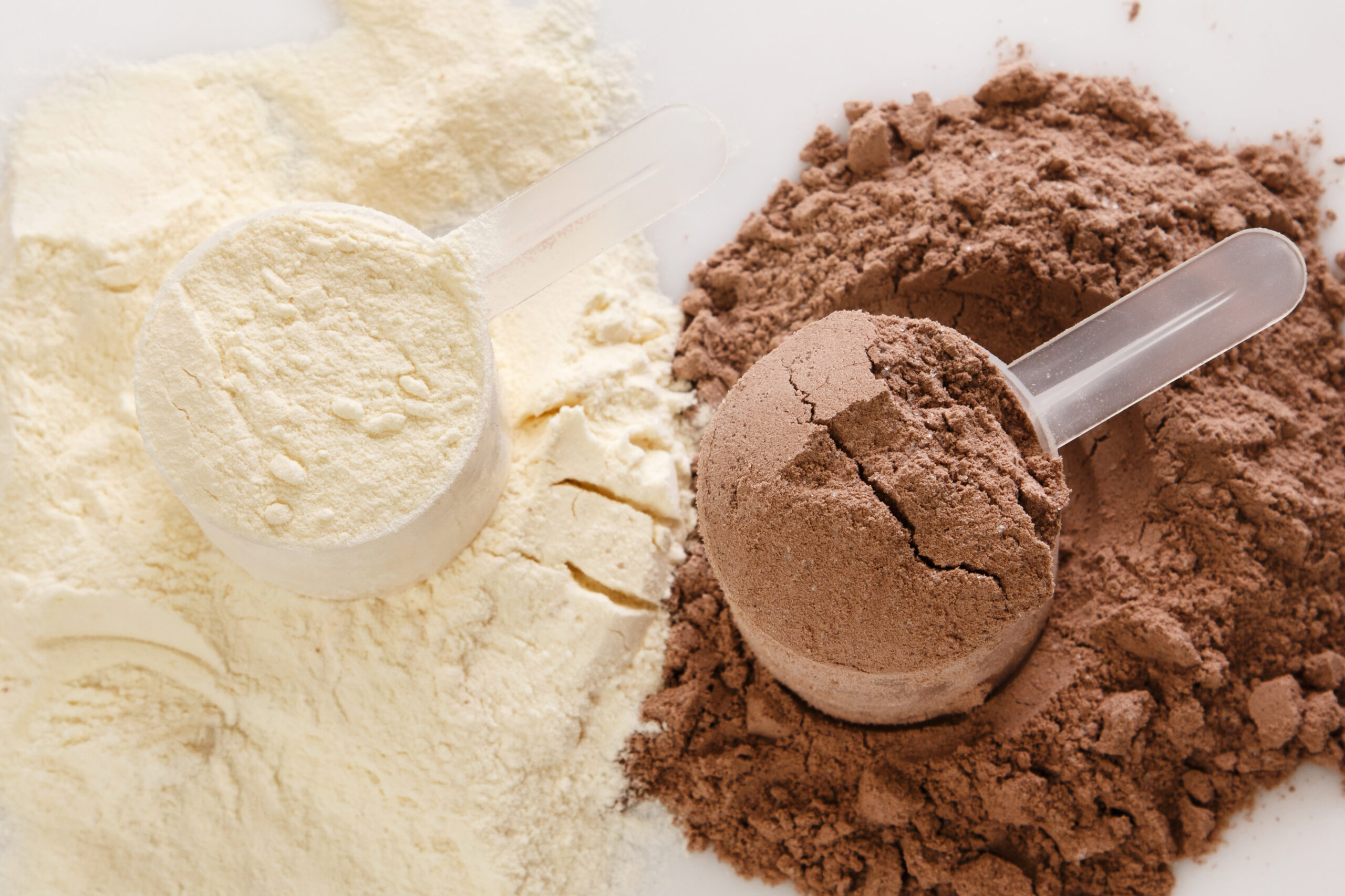
- Protein powder (whey or plant-based)
- Casein protein powder
- Greek yogurt or Greek-style yogurt
- Cottage cheese
- Low-fat ricotta
- Silken tofu
- Liquid egg whites
- Soy milk
- High-protein milk or pea protein milk
- Unsweetened kefir (optional)
- Lactose-free dairy options
CARBOHYDRATES (≈15–25%)
Carbohydrates provide sweetness, texture, and satisfaction, but in an evening dessert, their role is limited and deliberate. They are not there to add bulk or drive calories.
Kept in second place, carbohydrates help maintain a steadier postprandial metabolic response and reduce late-night sugar fluctuations.
Slower, fiber-containing sources work best, allowing dessert to satisfy without extending eating beyond its purpose.
CARBOHYDRATE GROCERY LIST
- Oat flour
- Rolled oats
- Almond flour
- Coconut flour
- Puffed quinoa
- Unsweetened cocoa powder
- Carob powder (caffeine-free chocolate alternative)
- Maple syrup
- Honey
- Bananas
- Unsweetened applesauce
- Dates or date paste
- Pomegranate seeds
- Frozen berries (blueberries, strawberries, raspberries)
- Low-sugar chocolate chips (avoid dark chocolate chips before bed because of theobromine content)
FAT (≈5–15%)
Fat improves texture and flavor, but in evening desserts it requires restraint. High fat intake late in your day slows digestion, increases calorie density, and can interfere with appetite regulation before sleep.
In high-protein desserts, fat works best in small, supporting amounts. It rounds out flavor and satisfaction without turning the dessert into a heavy or slow-digesting load.
FAT GROCERY LIST
- Peanut butter (natural, unsweetened)
- Peanut butter powder (high in protein, low in fat)
- Almond butter
- Cashew butter
- Pecan butter
- Tahini (sesame seed paste)
- Sour cream
- Ground flax seed
- Chia seeds
- Coconut cream or full-fat coconut milk
- Raw nuts (almonds, walnuts, pecans, etc.)
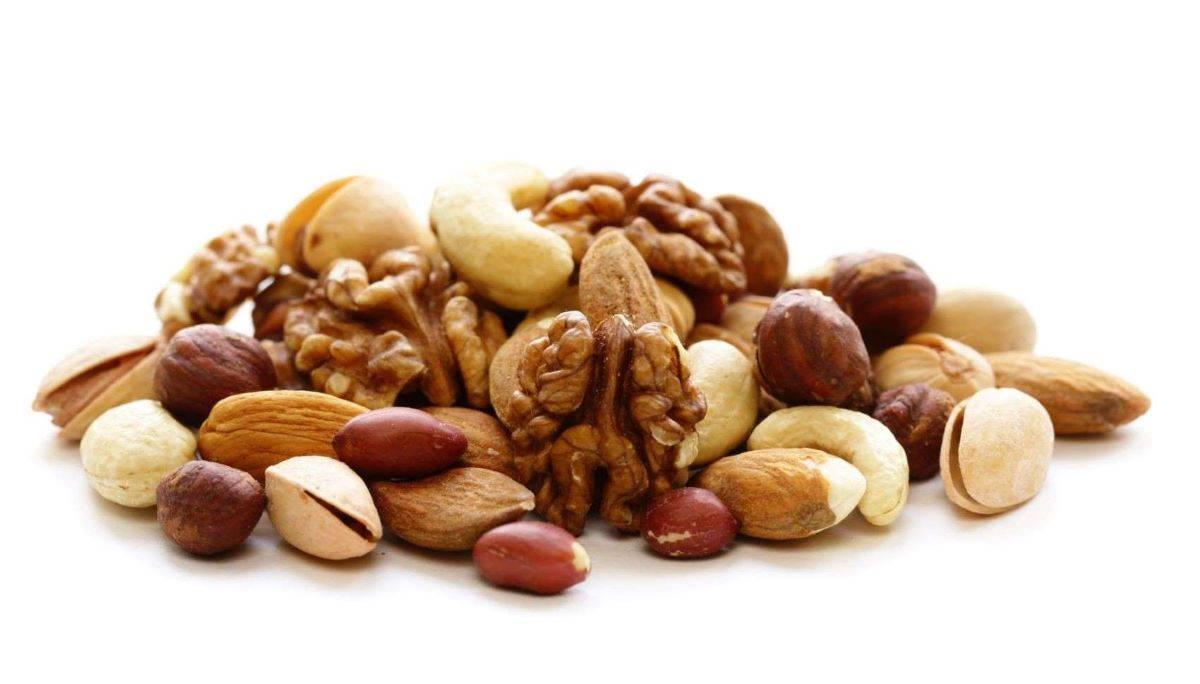
PROTEIN DESSERTS: NO COOK
When the goal is to finish the day with structure intact, no-cook protein desserts do the heavy lifting.
These recipes are built around lean dessert proteins, short ingredient lists, and blending instead of baking. They’re easy to portion, easy to repeat, and simple enough to rely on when energy is low.
No baking dish, no muffin tins, no parchment paper. Just clean execution that fits real evenings and supports post-workout recovery when needed.
CHOCOLATE COTTAGE CHEESE PUDDING
- 1 cup low-fat cottage cheese
- 1 scoop protein powder (chocolate or unflavored)
- 1 tablespoon cocoa powder
- ½ teaspoon vanilla extract
- 1–2 tablespoons water or lactose free milk (as needed)
Directions:
- Add all ingredients to a food processor or high-speed blender.
- Blend until completely smooth, stopping to scrape the sides as needed.
- Adjust thickness with small amounts of liquid.
- Chill for 30 minutes before serving.
VANILLA COTTAGE CHEESE CREAM CUPS
- 1 cup low-fat cottage cheese
- 1 scoop vanilla protein powder
- ½ teaspoon vanilla extract
- 1–2 tablespoons milk
Directions:
- Blend all ingredients until smooth.
- Spoon into small containers or jars.
- Refrigerate until cold and set.
GREEK YOGURT PROTEIN PUDDING CUPS
- ¾ cup Greek yogurt or Greek-style yogurt
- ½ scoop protein powder
- 1 teaspoon cocoa powder (optional)
- Sweetener to taste (optional)
Directions:
- Whisk or blend ingredients until fully combined.
- Portion into a bowl or container.
- Chill before serving for a firmer texture.
GREEK YOGURT PARFAITS WITH COCOA
- ¾ cup Greek yogurt
- 1 teaspoon cocoa powder
- 1 tablespoon dark chocolate chips
- Optional: small amount of fiber-rich ingredients (such as berries)
Directions:
- Stir cocoa powder into yogurt until smooth.
- Layer yogurt and chocolate chips into a small container.
- Refrigerate and eat cold.
HIGH-PROTEIN RICOTTA WHIP
- ¾ cup low-fat ricotta
- 1 scoop protein powder
- ½ teaspoon vanilla extract
- 1 tablespoon milk (optional)
Directions:
- Blend all ingredients until airy and smooth.
- Portion into a small bowl.
- Chill briefly before serving.
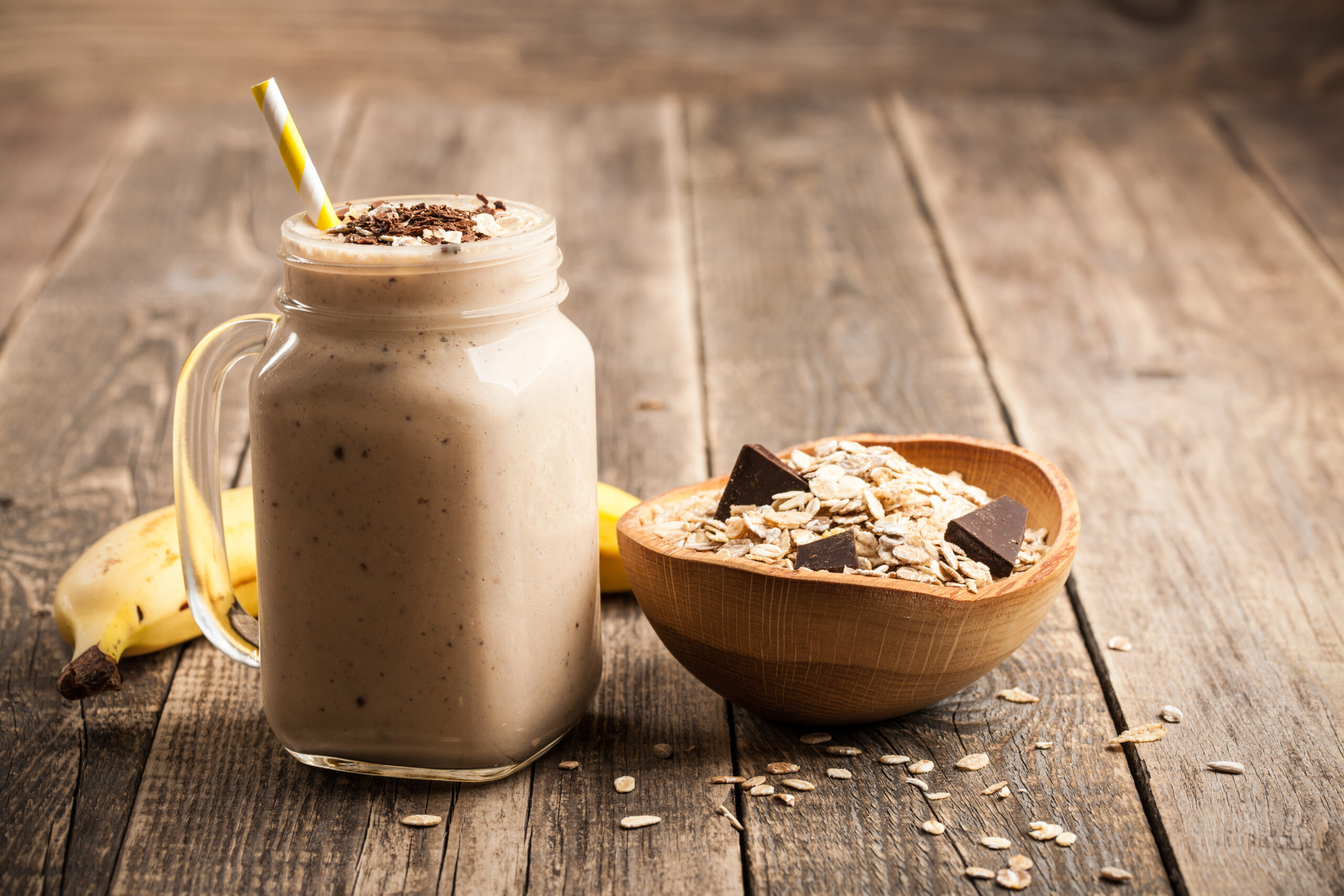
PROTEIN DESSERTS: FROZEN
Frozen protein desserts work well on nights when you want something that lasts longer without adding more food.
These recipes rely on blending and freezing rather than baking. The result is a dessert that feels indulgent while staying compact and controlled.
SUGAR-FREE FROZEN YOGURT
- 1½ cups plain Greek yogurt or Greek-style yogurt
- ½ scoop protein powder (unflavored or vanilla)
- Liquid sweetener to taste (optional)
- ½ teaspoon vanilla extract
Directions:
- Whisk all ingredients until smooth.
- Spread into a shallow freezer-safe container.
- Freeze 2–3 hours, stirring once halfway through.
- Scoop and serve cold.
PROTEIN ICE CREAM
- 1 scoop protein powder
- ¾ cup milk of choice (dairy, lactose-free, or protein milk)
- ½ teaspoon vanilla extract
- Ice as needed for thickness
Directions:
- Add ingredients to a high-speed blender.
- Blend on high, adding ice gradually until thick.
- Serve immediately for soft-serve texture or freeze briefly to firm.
FROZEN CHEESECAKE PROTEIN BITES
- ¾ cup low-fat cottage cheese
- ½ cup low-fat ricotta
- 1 scoop protein powder
- ½ teaspoon vanilla extract
Directions:
- Blend until completely smooth.
- Spoon into mini molds or small dollops on parchment.
- Freeze until solid and store frozen.
FROZEN GREEK YOGURT BARK
- 1½ cups Greek yogurt
- 1 scoop protein powder
- ½ teaspoon vanilla extract
- 1 tablespoon dark chocolate chips (optional)
Directions:
- Mix yogurt, protein powder, and vanilla until smooth.
- Spread thin on parchment-lined tray.
- Sprinkle chips lightly, if using.
- Freeze until solid, then break into pieces.
FROZEN PROTEIN PUDDING SQUARES
- 1 cup Greek yogurt
- 1 scoop protein powder
- 1 tablespoon cocoa powder
- ½ teaspoon vanilla extract
- 1–2 tablespoons milk (as needed)
Directions:
- Blend all ingredients until fully smooth.
- Spread into a shallow container.
- Freeze until firm.
- Cut into small squares and keep frozen.
PROTEIN DESSERTS: BAKED
Baked protein desserts are designed to be prepared once, portioned cleanly, and used across several days.
Compared to frozen or no-cook options, baked desserts feel more traditional, which makes them useful when you want something that resembles familiar homemade desserts without losing control of protein intake.
Because heat and storage are involved, this category also emphasizes food safety, clear portions, and repeatability.
Each recipe below can live on a single recipe card and be paired easily with a protein shake when higher intake is needed.
PROTEIN MUG CAKE
- 1 scoop protein powder
- 2 tablespoons all-purpose flour
- ¼ teaspoon baking powder
- 2 tablespoons evaporated milk
- 1 tablespoon water
- ½ teaspoon vanilla extract
Directions:
- Mix all ingredients in a microwave-safe mug.
- Stir until smooth with no dry pockets.
- Microwave for 60–75 seconds until set.
- Let cool briefly before eating.
BAKED PROTEIN OAT CUPS
- 2 scoops protein powder
- ½ cup rolled oats
- ½ teaspoon baking powder
- ½ cup evaporated milk
- 1 egg
- ½ teaspoon vanilla extract
Directions:
- Preheat oven to 350°F (175°C).
- Mix all ingredients until evenly combined.
- Divide batter evenly into a lightly greased muffin tin.
- Bake 18–22 minutes until set and lightly firm on top.
- Let cool before removing and storing.
PROTEIN COOKIES
- 1 scoop protein powder
- ¼ cup flour
- ¼ teaspoon baking powder
- 2 tablespoons evaporated milk
- 1 tablespoon nut butter
- ½ teaspoon vanilla extract
Directions:
- Preheat oven to 350°F (175°C).
- Mix ingredients into a thick dough.
- Form small cookies and place on parchment-lined tray.
- Bake 10–12 minutes until edges are set.
- Cool before serving.
HIGH-PROTEIN BANANA NUT BREAD
- 1 ripe banana, mashed
- 2 scoops protein powder
- ½ cup flour
- ½ teaspoon baking powder
- ¼ cup evaporated milk
- 1 egg
Directions:
- Preheat oven to 350°F (175°C).
- Mix all ingredients until smooth.
- Pour into a small parchment-lined loaf pan.
- Bake 30–35 minutes until set.
- Cool completely before slicing.
BAKED PROTEIN DESSERT SQUARES
- 2 scoops protein powder
- ½ cup flour
- ½ teaspoon baking powder
- ⅓ cup evaporated milk
- ½ teaspoon vanilla extract
Directions:
- Preheat oven to 350°F (175°C).
- Mix ingredients into a thick batter.
- Spread evenly into a parchment-lined baking dish.
- Bake 20–25 minutes until firm.
- Slice into even squares once cooled.
PROTEIN DESSERTS: GRAB-AND-GO
These desserts are built in advance, then used when it matters. Once they’re made and stored, there’s no mixing, measuring, or decision-making left to do. You take a portion, eat it, and move on.
The advantage of grab-and-go protein desserts is predictability. Portions are set before hunger shows up, protein is obvious, and intake stays contained.
They work well on busy days, after training, or any time dessert needs to fit into the schedule instead of slowing it down.
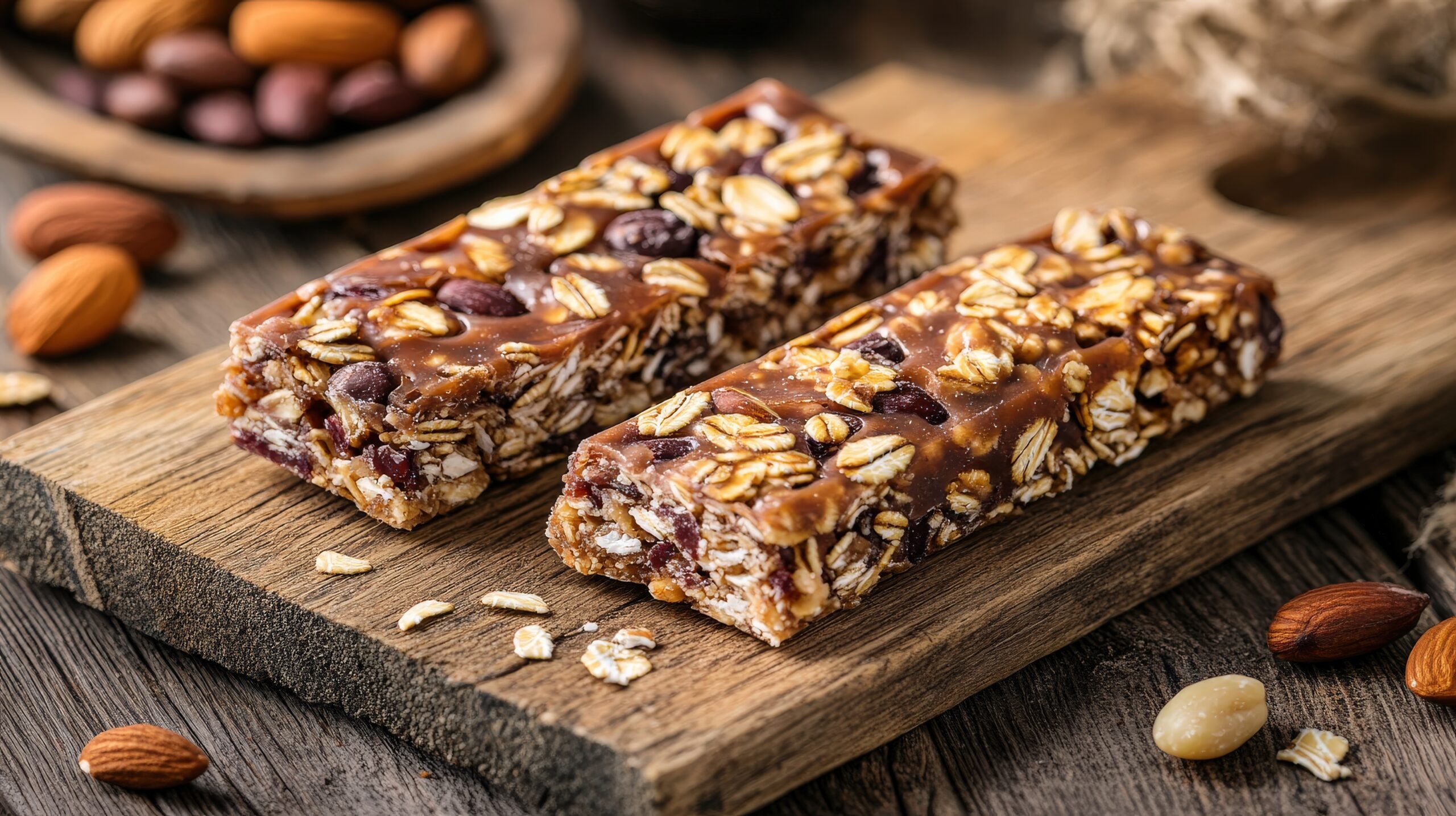
CHOCOLATE PEANUT BUTTER PROTEIN BARS
- 2 scoops chocolate protein powder
- ½ cup rolled oats
- ¼ cup peanut butter
- ¼ cup milk of choice
- ½ teaspoon vanilla extract
Directions:
- Mix all ingredients until a thick dough forms.
- Press firmly into a parchment-lined container.
- Refrigerate until firm.
- Slice into equal bars and store chilled.
CINNAMON ROLL–STYLE PROTEIN BARS
- 2 scoops protein powder
- ½ cup rolled oats
- ¼ cup milk
- 1 teaspoon cinnamon
- ½ teaspoon vanilla extract
Directions:
- Mix ingredients into a thick dough.
- Press into a lined container.
- Refrigerate until firm.
- Slice into bars and serve cold.
PROTEIN BALLS
- 1 scoop protein powder
- ¼ cup peanut butter
- ¼ cup rolled oats
- 1–2 tablespoons milk
- ½ teaspoon vanilla extract
Directions:
- Mix ingredients into a firm dough.
- Roll into bite-sized balls.
- Refrigerate until set.
- Eat one or two at a time.
PROTEIN PEANUT BUTTER CUPS
- ¼ cup peanut butter
- 1 scoop protein powder
- 1 tablespoon cocoa powder
- 1–2 tablespoons milk
Directions:
- Mix protein powder, cocoa, and milk into a thick paste.
- Spoon a small layer into silicone molds.
- Top lightly with peanut butter.
- Chill until firm, then store refrigerated.
PUFFED QUINOA + GROUND FLAX SEED BARS
- 2 scoops protein powder
- ½ cup puffed quinoa
- 2 tablespoons ground flax seed
- ¼ cup milk
- ½ teaspoon vanilla extract
Directions:
- Mix all ingredients until evenly combined.
- Press firmly into a shallow container.
- Refrigerate until set.
- Cut into small bars.
PROTEIN DESSERTS: PLANT-BASED
Plant-based protein desserts solve a different problem than their dairy-based counterparts. They emphasize digestion, fiber support, and steady energy while still focusing on protein.
These options work well in the evening for those avoiding dairy or rotating protein sources, and they rely on simple blending or mixing rather than baking-heavy techniques.
All of the recipes below stay compact, easy to portion, and repeatable.
SILKEN TOFU PUDDING
- 1 (12 oz) package silken tofu
- 1 scoop plant-based protein powder
- ½ teaspoon vanilla extract
- Sweetener to taste (optional)
- 1–2 tablespoons water or plant milk (as needed)
Directions:
- Add all ingredients to a blender.
- Blend until completely smooth.
- Adjust thickness with small amounts of liquid.
- Chill before serving.
CHICKPEA COOKIE DOUGH
- 1 cup canned chickpeas, rinsed and drained
- 1 scoop plant-based protein powder
- 1 tablespoon nut butter
- ½ teaspoon vanilla extract
- 1–2 tablespoons water (as needed)
Directions:
- Blend all ingredients until a thick dough forms.
- Scrape down sides and blend again for even texture.
- Portion into small scoops and refrigerate.
GLUTEN FREE PROTEIN BLACK BEAN BROWNIES
- 1½ cups canned black beans, rinsed and drained
- 2 scoops gluten free protein powder
- 2 tablespoons cocoa powder
- ½ teaspoon baking powder
- ¼ cup evaporated milk
- 1 teaspoon vanilla extract
Directions:
- Preheat oven to 350°F (175°C).
- Blend all ingredients until completely smooth.
- Pour batter into a parchment-lined baking dish.
- Bake for 20–25 minutes until set.
- Cool fully before slicing into squares.
PLANT-BASED PROTEIN PUDDING CUPS
- 1 scoop plant-based protein powder
- ¾ cup unsweetened plant milk
- ½ teaspoon vanilla extract
Directions:
- Whisk or blend until fully combined.
- Refrigerate 1–2 hours to thicken.
- Stir and serve cold.
WHITE BEAN VANILLA PROTEIN CREAM
- 1 cup canned white beans (cannellini or great northern), rinsed and drained
- 1 scoop plant-based protein powder
- ½ teaspoon vanilla extract
- 2–3 tablespoons unsweetened plant milk
- Sweetener to taste (optional)
Directions:
- Add all ingredients to a blender.
- Blend until completely smooth, scraping sides as needed.
- Adjust thickness with small amounts of plant milk.
- Chill 30–60 minutes before serving.
PROTEIN DESSERT RULES & COMMON MISTAKES
Dessert sits in the most fragile part of the day. By the time it shows up, meals are finished, energy is lower, and attention has already been spent.
Appetite is still present, but the structure that guided earlier food choices has largely shut down.
This is where habits take over. They reduce the need for restraint by removing decisions entirely.
When dessert is guided by structure instead of impulse, it becomes a defined endpoint, one that supports recovery and intake goals without reopening appetite or extending the day.
Let’s go over some rules to set for yourself when making protein desserts along with the most common mistakes.
PROTEIN LEADS
Dessert must be organized around a clear protein source from the start.
When protein leads, portion size stays contained, sweetness stays secondary, and calorie density remains predictable.
If protein is treated as a supporting ingredient, dessert almost always drifts toward being carbohydrate- or fat-driven without realizing it.
DESSERT HAS A JOB
Some nights, dessert exists purely to close intake after dinner. Other nights, especially after training, it helps extend protein delivery to support recovery.
The mistake is treating dessert as the same event every night.
When dessert has a defined purpose, its size, texture, and digestion speed naturally align with what your day actually demands.
PORTIONS ARE SET EARLY
Dessert is decided before the first bite, not during it. Once eating starts, appetite overrides intention.
Pre-sliced portions, individual containers, or single-serving builds remove the need to self-regulate in the moment.
Physical boundaries matter more than mental ones, especially late in the day when willpower is already depleted.
DIGESTION MATCHES TIMING
The way dessert digests should reflect when it’s eaten.
After training, faster-digesting protein can be useful and appropriate. Later in the evening, slower digestion helps appetite settle and prevents hunger from resurfacing.
When digestion speed is mismatched, dessert either feels unfinished or triggers a second wave of eating.
SIMPLE REPEATS
Dessert should not require problem-solving at night. Recipes with few ingredients and familiar formats reduce friction and improve follow-through.
Complexity increases the likelihood of skipping structure altogether.
The desserts that support progress are the ones you can repeat without thinking, not the ones that look impressive on paper.
Now, let’s dive into the common mistakes of protein desserts:
TURNING DESSERT INTO A REWARD
When dessert becomes something earned rather than something planned, portions tend to expand and frequency increases.
Emotional framing changes how food is chosen and used.
What starts as a structured protein option slowly turns into a permission slip, making consistency harder to maintain over time.
LETTING FAT LEAD
Fat has a strong impact on satisfaction, which makes it easy to overuse.
When fat becomes the primary driver of enjoyment, protein slips into a supporting role.
Digestion slows past what’s useful late at night, calorie density rises, and appetite signals become harder to interpret.
TRUSTING LABELS OVER STRUCTURE
Many products market themselves as “protein desserts” or “functional treats,” but their label tells a different story.
When protein isn’t clearly dominant, these options behave more like conventional desserts than tools.
DRINKING DESSERT WITHOUT BOUNDARIES
Liquid desserts are easy to consume and difficult to self-regulate.
Without clear portions and defined protein targets, intake escalates quickly while satiety lags behind.
What feels light in the moment often fails to close appetite effectively.
USING DESSERT TO COMPENSATE
Dessert is sometimes overloaded to make up for missed protein or skipped meals earlier.
This pushes too much intake into a single window, disrupts digestion, and blurs the purpose of dessert entirely.
When meals do their job, dessert can stay small and precise.
Protein desserts work when they follow structure, not emotion.
When protein leads, portions are decided early, and digestion matches the time of day, dessert becomes a quiet extension of your nutrition instead of a point of failure.
Get that right, and the final meal of the day supports recovery, appetite control, and consistency without needing willpower to hold it together.
Check out our complete line of ATHLEAN-RX Supplements and find the best training program for you based on your fitness level and goals.

- Dessert is one of the last nutrition decisions of the day, which makes its design matter more than its novelty.
- Protein should be immediately identifiable. If it isn’t clear where the protein is coming from, the dessert is likely doing more harm than good.
- A well-chosen dessert brings eating to a close rather than carrying it forward. The right combination settles appetite instead of prolonging it.
- Portions need to be determined before eating starts. Late-day decisions favor convenience over control, so boundaries have to exist ahead of time.
- How a dessert digests matters at night. Options that digest too quickly or too slowly tend to interfere with appetite regulation and recovery.
- Fat changes dessert behavior rapidly. Small amounts can improve satisfaction, but larger amounts shift digestion and calorie density in the wrong direction.
- Repetition improves reliability. A short list of familiar options works better than constant variation at the end of the day.
- Homemade desserts offer clearer composition than packaged “protein” products, which are often built to resemble treats first and nutrition second.
- The best protein desserts don’t feel special. When they blend seamlessly into the routine, consistency becomes effortless.
PROTEIN DESSERTS FAQ
Desserts with the highest protein content are those where protein supplies most of the calories, not just a noticeable presence.
In a well-built protein dessert, roughly 70% or more of total calories come from protein, with carbohydrates and fats scaled back to supportive roles. This keeps portions small while still delivering a meaningful amount of protein.
In practice, the highest-protein desserts are usually no-cook or lightly blended.
Yogurt- and cottage cheese–based desserts, protein puddings, dense blended options, and tofu-based desserts consistently outperform baked or pastry-style options.
Baking and pastry formats require flour and fat for structure, which lowers protein density. When the texture of the dessert comes from protein itself instead of added ingredients, protein intake stays high without increasing overall calories.
Now, with that said, baked and pastry-style protein desserts can help to mix things up and feel more like a traditional dessert so it’s okay to include them when your schedule and motivation to prep allows.
Healthy protein desserts are built from the inside out. Before thinking about flavors or formats, start with the macro balance.
A reliable target is to have protein provide roughly 70% of total calories, with carbohydrates filling in about 20–25% for taste and structure, and fat kept to 5–10% to support texture without slowing digestion unnecessarily.
This means selecting the protein source first and deciding the portion size upfront. That choice sets the ceiling for the dessert.
Once protein is locked in, carbohydrates are added deliberately to make the dessert satisfying without turning it into a volume-driven or sugar-heavy option.
Fat stays minimal and intentional, so it enhances the experience without changing how the dessert behaves later in the evening.
The final step is execution. Short ingredient lists, familiar builds, and repeatable formats remove friction when energy is low.
When protein desserts are designed this way, they consistently close out intake, support recovery, and fit into daily eating without requiring restraint to keep them in check.

Jeff Cavaliere M.S.P.T, CSCS
Jeff Cavaliere is a Physical Therapist, Strength Coach and creator of the ATHLEAN-X Training Programs and ATHLEAN-Rx Supplements. He has a Masters in Physical Therapy (MSPT) and has worked as Head Physical Therapist for the New York Mets, as well as training many elite professional athletes in Major League Baseball, NFL, MMA and professional wrestling. His programs produce “next level” achievements in muscle size, strength and performance for professional athletes and anyone looking to build a muscular athletic physique.