





ARE VEGETABLES HIGH PROTEIN?
That’s how most guys eat vegetables.
Something you get through so you can feel okay about the real food sitting next to it. The protein comes from the meat. Vegetables are just there for the vitamins, right?
That’s how I used to see it too.
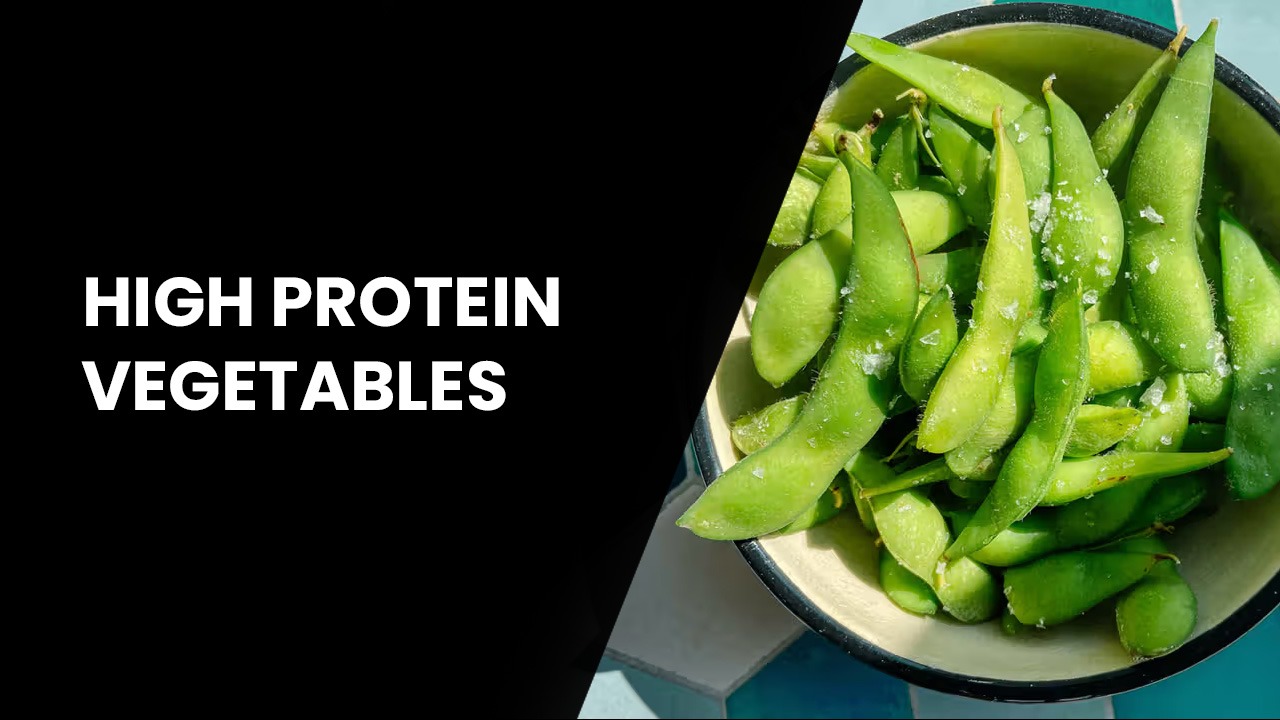
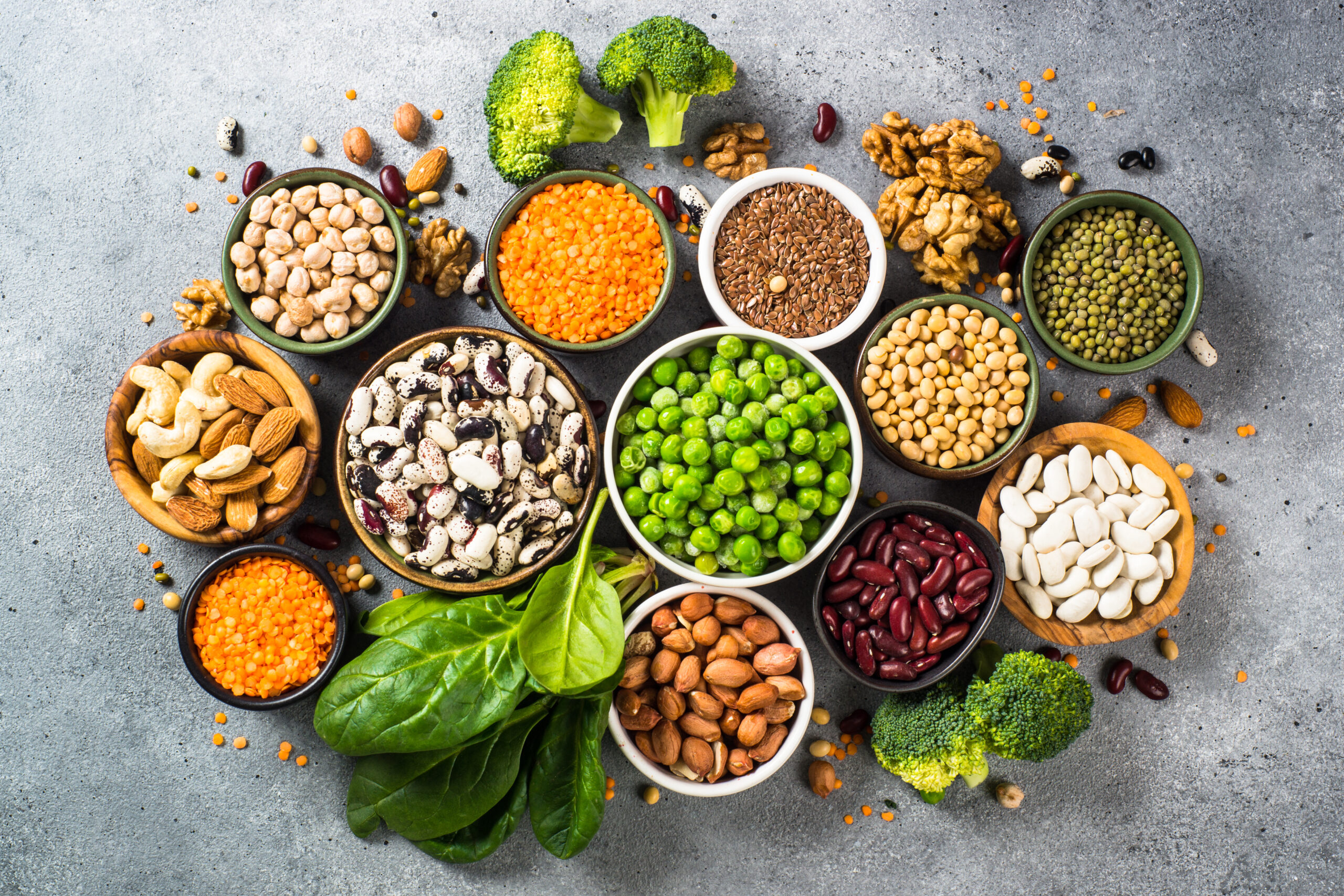
But some vegetables and plant foods bring more protein than people give them credit for. A cup of edamame has around 18 grams of protein. Green peas, beans, and lentils stack up faster than you’d think.
Now, I’m not going to sit here and tell you broccoli is going to build your arms. It won’t.
Pound for pound, chicken, steak, eggs, and whey still beat anything you can grow in a garden.
But that’s not the job we’re hiring vegetables for. Their job is support.
The right plant foods help you hit your daily protein, round out a meal, and pack in fiber and nutrients that meat alone doesn’t give you.
I’ll break down which high-protein vegetables give you the most, how they compare to meat and other animal proteins, whether you can build muscle on them, and how to put them to work in a high-protein diet.
HIGH-PROTEIN VEGETABLES: THE NUMBERS
So how much protein do vegetables give you? That depends a lot on what you’re counting as a vegetable.
“Vegetables” is a loose bucket term.
It covers leafy greens like spinach, cruciferous vegetables like broccoli and brussels sprouts, starchy items like potatoes and corn, and the beans, peas, and lentils people lump in with the rest.
(Those last ones are technically legumes, but nobody orders a side of “legumes,” so we’ll keep them in the conversation.)
How much protein you get depends on which of those you reach for.
The true vegetables, meaning the leafy greens and the cruciferous ones, give you about 3 to 5 grams per cooked cup.
Starchy and grain-type foods like corn, potato, and wild rice fall in roughly the same range, with wild rice topping out near 7.
The legumes are where it climbs, from 8 grams all the way up to 18.
Here’s how the most common ones break down.
| VEGETABLE | SERVING | PROTEIN | CALORIES |
| Edamame, shelled | 1 cup | 18g | 190 |
| Lentils | 1 cup | 18g | 230 |
| Black beans | 1 cup | 15g | 227 |
| Pinto beans | 1 cup | 15g | 245 |
| Mung beans | 1 cup | 14g | 212 |
| Fava beans | 1 cup | 13g | 187 |
| Lima beans | 1 cup | 12g | 210 |
| Green peas | 1 cup | 8g | 134 |
| Wild rice | 1 cup | 7g | 166 |
| Spinach | 1 cup | 5g | 41 |
| Collard greens | 1 cup | 5g | 63 |
| Sweet corn | 1 cup | 5g | 143 |
| Broccoli | 1 cup | 4g | 55 |
| Brussels sprouts | 1 cup | 4g | 56 |
| Asparagus | 1 cup | 4g | 40 |
| Mustard greens | 1 cup | 4g | 36 |
| White potato | 1 medium | 4g | 160 |
Cooked, roughly one cup unless noted. Protein and calorie numbers are approximate and based on USDA data.
NOT ALL VEGETABLES ARE EQUAL
Look down that list and the pattern is hard to miss.
The legumes are where the protein is. A cup of edamame or lentils has about 18 grams, roughly what you’d get from three eggs.
Black beans and pinto beans land around 15 grams. Mung beans, fava beans, and lima beans aren’t far off.
If protein is what you’re after, start here.
Next are the starchy and grain options. Wild rice, sweet corn, and a white potato won’t anchor a meal on protein alone, but they give you a few grams on top of the carbs, so a side of them adds a little to the plate.
Then come the leafy and cruciferous vegetables.
Broccoli, brussels sprouts, asparagus, spinach, collard greens, mustard greens. Three to five grams a cup isn’t much on its own.
But these are easy to eat in volume, they cost you almost no calories, and they go onto a plate without much thought.
Nobody’s hitting their protein target on spinach, but it brings fiber and vitamins along with those few grams of protein.
If you’re ranking these as protein sources, the priority is simple.
Legumes do the work, and everything else is supporting cast. Between the rest, it comes down to what else you want from the food: carbs and a few grams from the starchy group, or volume and nutrition for almost nothing from the leafy greens.
WHY ONE CUP CAN FOOL YOU
The per-cup number hides two things.
The first is volume.
A cup of broccoli has about 4 grams of protein. To reach 30 grams, the kind of number you want from a main course, you’d be eating seven or eight cups of the stuff. Good luck with that.
A cup of edamame and a cup of lentils clear that same 30 grams without you forcing down a salad bowl the size of your head.
The second is calories, and this one cuts the other way.
Some of those light vegetables are surprisingly efficient for what they cost you. A cup of cooked asparagus runs about 40 calories, and a good chunk of that is protein.
You’re not getting many grams, but you’re barely spending any calories to get them. That’s a different kind of value than a cup of beans, which has more protein but more carbs and calories with it.
Want to push your protein up with vegetables? Go with legumes.
Want volume and nutrition for almost no calories? Load up on leafy greens.
DO YOU NEED TO WORRY ABOUT COMPLETE PROTEINS?
You’ve probably heard that plant proteins are “incomplete.” Let me explain what that means, and why it’s not the problem it’s made out to be.
Your body builds protein out of 20 amino acids.
Nine of them are essential amino acids, meaning your body can’t produce them itself, so they have to come from food.
- Histidine
- Isoleucine
- Leucine
- Lysine
- Methionine
- Phenylalanine
- Threonine
- Tryptophan
- Valine
A “complete” protein gives you all nine in decent amounts. Meat, eggs, and dairy are all complete proteins.
Most plant proteins aren’t, at least not by themselves.
They’re usually a little short on one or two of the nine, and which ones depends on the food.
Across the common plant proteins, the high and low points look like this:
| PLANT FOOD | STRONG IN | SHORT ON |
| Beans, lentils, peas | Lysine | Methionine |
| Soy (edamame, tofu) | All nine | Nothing |
| Grains (rice, wheat, oats) | Methionine | Lysine |
| Corn | Methionine | Lysine, tryptophan |
| Potato | All nine | Nothing |
You’ll notice the leafy and cruciferous vegetables from earlier didn’t make the list.
They have so little protein that their amino acid balance barely registers, so the completeness question isn’t really about a side of broccoli. It’s about the foods you use to meet your protein needs.
And the pattern is easy to spot.
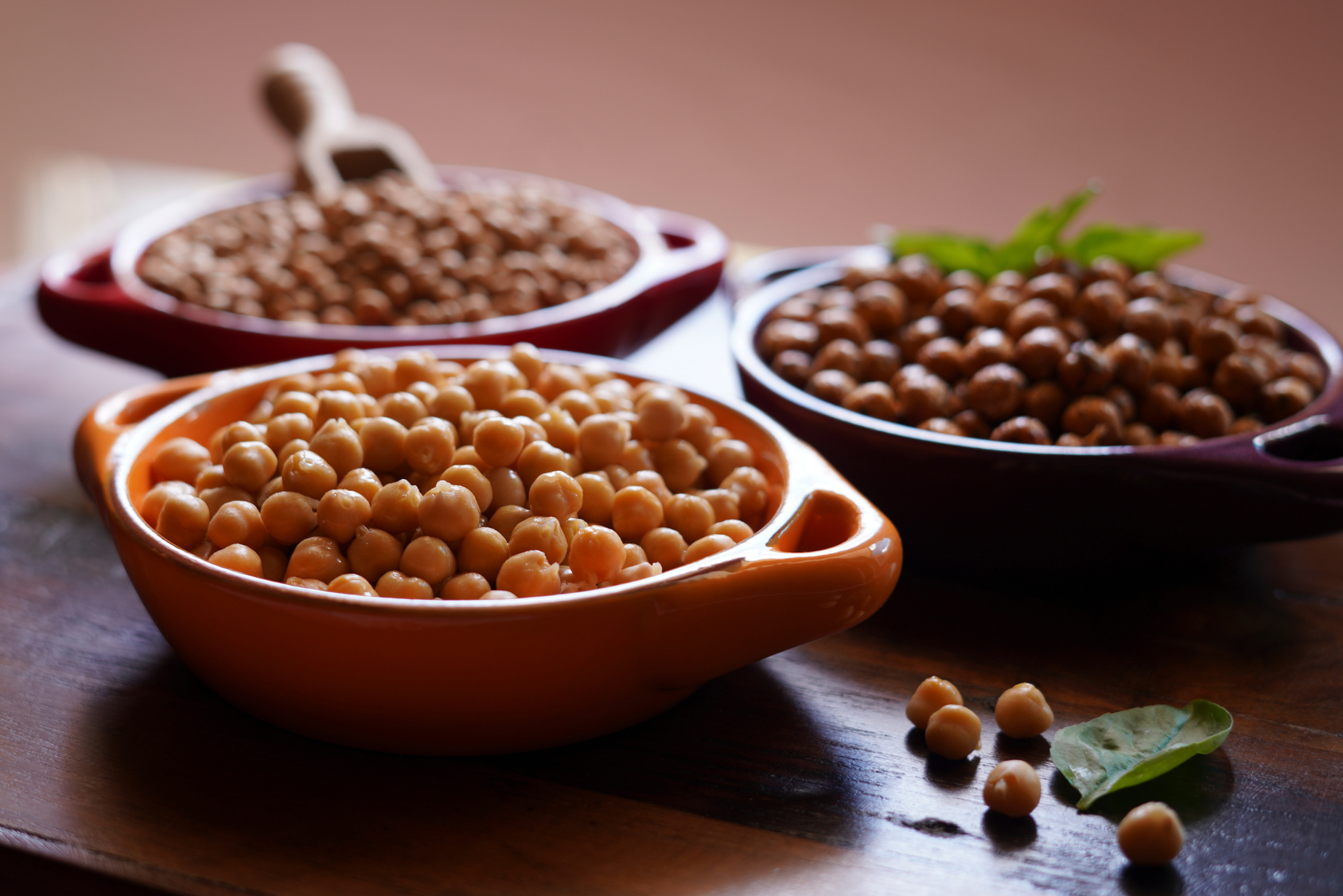
Beans are high in lysine and short on methionine. Grains are the mirror image, high in methionine and short on lysine. Eat them together and they fill each other’s gaps.
Soy products and, surprisingly, the humble potato bring all nine on their own, even if the potato only provides a few grams.
Now, the part that trips people up.
There’s an old rule that says you have to pair those foods at the same meal to “complete” the protein, like rice with beans, every single time.
It’s outdated. Your body doesn’t tally amino acids meal by meal. It pulls from everything you’ve eaten across the day.
So, the beans at lunch and the rice at dinner still cover for each other. You don’t need a spreadsheet, and you don’t need to engineer every plate.
The fix is variety.
Eat a mix of plant-based proteins over the week, throw in some grains and seeds, add whatever animal protein you already eat, and the amino acid math sorts itself out.
BEYOND THE PROTEIN
Protein is why we’re here, but it’s not the only reason to put these foods on your plate.
The best plant options come with fiber, a range of vitamins, and a couple of extras you won’t get from meat or whey.
None of it builds muscle on its own.
What it does is keep the rest of you working right, and that pays off when you’re training hard and trying to recover from it.
FIBER
Most plant foods are loaded with dietary fiber, and meat has basically none.
Fiber slows how fast your meal turns into blood sugar, so you sidestep the post-meal spikes and crashes that leave you foggy and starving an hour later.
It also keeps you full longer, which makes eating in a deficit a lot less miserable. Beans and lentils are some of the densest sources around.
VITAMINS AND MINERALS
A single cup of vegetables can hand you a serious chunk of your daily vitamin C and vitamin A, plus folate, the food form of what supplements call folic acid.
Beans and leafy greens also bring minerals like potassium, magnesium, and iron.
It’s not flashy, but it’s what keeps your body running, from your immune system to how well you bounce back from a hard session.
GUT HEALTH
That same fiber pulls a second shift in your gut.
The part you don’t digest feeds the bacteria living there, and a well-fed gut microbiome is tied to smoother digestion along with a list of other benefits researchers are still untangling.
You don’t need to follow every gut-health trend on the internet to get this one. Eating more plants covers it.
HEART HEALTH
Most plant foods are naturally low in saturated fat, the kind that comes with red and processed meats.
Diets that include more fiber-rich plants and fewer foods high in saturated fat are linked to lower rates of cardiovascular disease.
Plants aren’t a cure for anything, and one salad won’t undo a bad diet. But over time, eating more of them tilts the odds in your favor.
OMEGA-3S
This one’s for the seed crowd. Chia seeds and ground flaxseed are packed with omega-3 fatty acids, the same family of fats people praise in fish.
The plant version is called ALA, and your body only converts a fraction of it into the active forms, so it’s not a straight swap for salmon.
It still counts, though. A spoonful stirred into oats or a smoothie is an easy way to add a fat most guys don’t get enough of.
Add it all up and these foods are doing far more than helping you reach your daily protein target.
CAN VEGETABLES BUILD MUSCLE?
They can help. But they won’t do it alone, and neither will any other single food.
Muscle gets built by two things working together: a reason to grow and the material to grow with.
Training is the reason. When you push a muscle hard enough, you tell your body it needs to come back stronger.
Protein is the material it rebuilds with. Food doesn’t build muscle on its own any more than a stack of lumber builds a house. You need the work, too.
Plants can supply that material. They’re a tougher way to do it, though, and it comes down to three things.
LOWER PROTEIN DENSITY
Plant foods give you less protein per bite, and your body doesn’t even use all of what’s on the label.
Plant protein is digested less efficiently than meat or dairy, so only about three-quarters of it gets absorbed, versus nearly all of an animal source.
Put those together and hitting a muscle-building intake takes more food and more calories.
It takes a lot more lentils to match a chicken breast, and where a scoop of whey protein powder hands you around 25 grams in seconds, you work harder for the same from plants.
One study found a fully plant-based diet needed about 300 extra calories a day to match the essential amino acids of a meat-based one.
LESS LEUCINE
Leucine is the amino acid that flips the switch on muscle growth, the one your body reads as the cue to start building. Animal protein sources are rich in it.
Most plant proteins have less. Studies put the amount that fully triggers that response at roughly 2.5 to 3 grams of leucine in a meal, and animal protein gets there easily.
A plant meal usually has to be bigger to hit the same mark.
THE COMPLETE-PROTEIN GAP
On their own, most plant proteins are low in one amino acid or another, the same gap we covered earlier.
Eat a range of them and they fill in for each other, so this one solves itself as long as you’re not living on a single food.
MAKING IT WORK
None of this puts muscle off-limits. When researchers match people for total protein, plant-based eaters build just as much muscle mass as meat eaters.
It only takes more intention.
You spread your protein across the day, go for options like soy and lentils, and many people add a scoop of pea or rice protein to make the math easier.
A good blend of plant proteins can come close to animal protein for triggering growth.
And don’t get lost in the food.
The muscle still comes from training that challenges you, enough hard sets taken close to failure, with the weight or reps climbing over time.
You can nail your protein on the cleanest diet on earth and grow nothing if the training isn’t there to demand it.
So, can vegetables build muscle?
As part of a well-designed, protein-focused nutrition plan, yes, but only as a form of support. Use them to add to your protein and let the training do what food can’t.

USING HIGH-PROTEIN VEGETABLES TO HIT YOUR GOALS
I keep telling you to eat more protein. Let’s put a number on it, then I’ll show you how to get there with these foods.
First, the number.
To build or hold muscle, most protein recommendations land around 0.7 to 1 gram of protein per pound of bodyweight a day.
At 180 pounds, that’s 125 to 180 grams.
You can calculate your daily protein intake using our Protein Calculator.
It also helps to spread it out instead of saving it all for one big dinner. Your body handles protein better in steady doses, so aim for 25 to 40 grams across four or five meals.
Getting there with plants takes a little assembling, since no single vegetable hands you 30 grams on its own.
Build the meal in layers, like this:
Start with Beans or Lentils: They’re your base. A cup has 15 to 18 grams before you’ve added a thing. Nail this part and you’re halfway to a full meal already.
Add a Whole Grain: Spoon the beans over whole grains like brown rice or quinoa. You pick up another 5 to 8 grams, and the grain makes up for the amino acids that beans are missing, so together they act like a complete protein.
Top It with Seeds or Nut Butter: A handful of pumpkin seeds, a spoonful of nut butter, a little hemp. Any of them adds 8 to 10 grams without taking up much room. It’s the easiest way to take a meal from decent to high protein.
Add Meat or Dairy If You Eat It: Not vegan? Even simpler. Make a lean protein the main part of the plate, chicken breast, canned tuna, egg whites, Greek yogurt, cottage cheese, or some bison, and fill the rest with vegetables. You get the protein of the meat and the fiber and nutrients of the plants in one bowl. It’s the kind of balanced diet most guys do best on.
Here are a few combinations that ensure you reach 30 grams of protein:
A black bean and wild rice bowl with pumpkin seeds on top
- Black beans: 15 grams
- Wild rice: 7 grams
- Pumpkin seeds: 9 grams
- Total: About 31 grams
Lentils over quinoa with a side of broccoli
- Lentils: 18 grams
- Quinoa: 8 grams
- Broccoli: 4 grams
- Total: About 30 grams
A pinto bean and egg scramble with a side of green peas
- Pinto beans: 15 grams
- Egg scramble: 12 grams
- Green peas: 8 grams
- Total: About 35 grams
These are everyday foods you can throw together on a weeknight.
That’s all there is to it. You’re not trading your steak or your shake for a plate of broccoli. You’re using these high-protein foods to close the gaps, add to your daily protein total, and get more out of every meal.
WHAT ABOUT HIGH-PROTEIN FRUITS?
Quick detour because people always ask: does fruit have any protein?
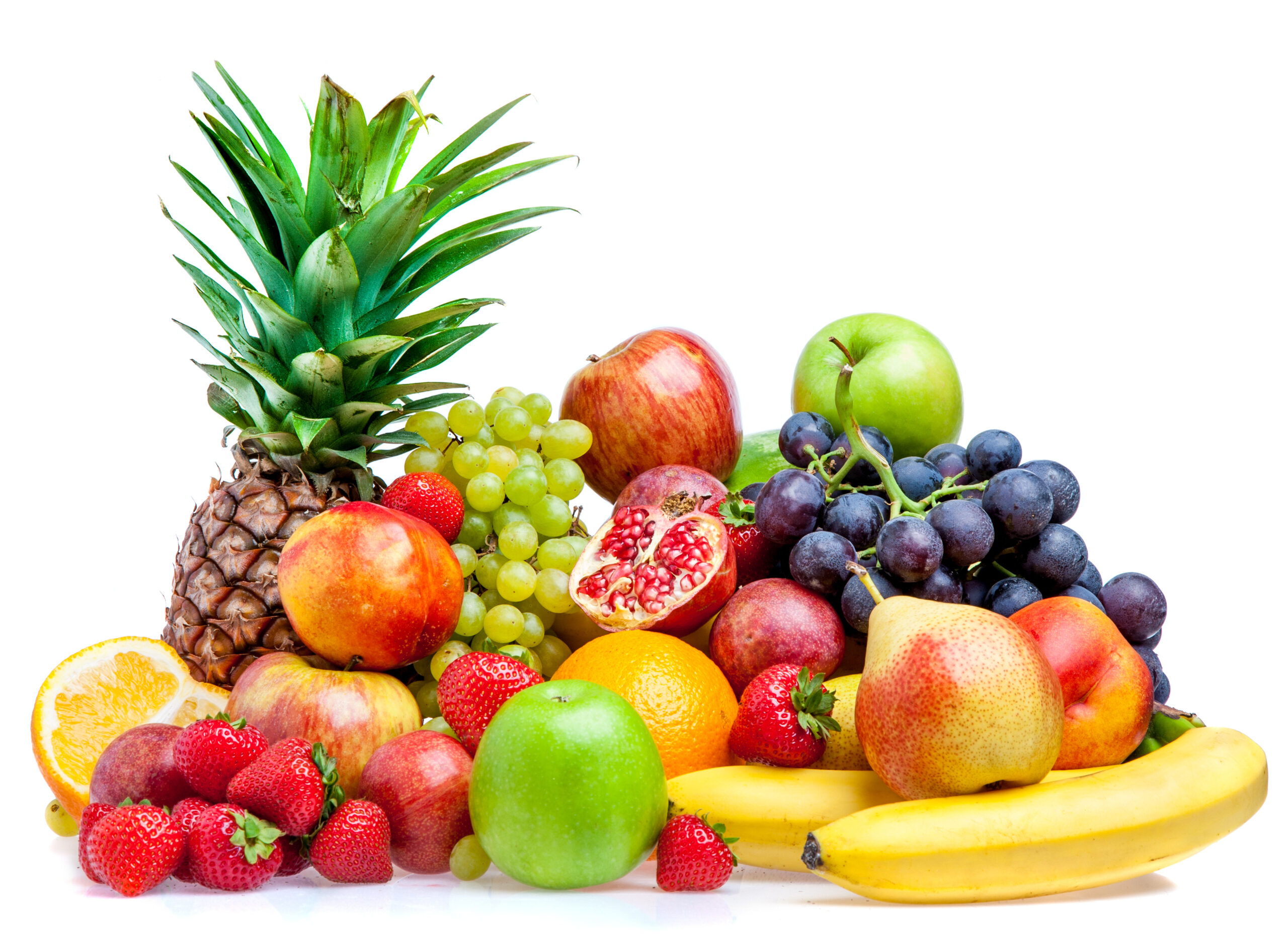
Fruit is mostly water, sugar, and fiber, so the protein barely registers. The fruit you’d normally grab, an apple, an orange, a handful of grapes, has a gram or two at most.
A few climb higher, but not by much. Here’s where the protein shows up:
| FRUIT | SERVING | PROTEIN | CALORIES |
| Passion fruit | 1 cup | 5g | 230 |
| Guava | 1 cup | 4g | 112 |
| Avocado | 1 cup | 3g | 240 |
| Jackfruit | 1 cup | 3g | 145 |
| Apricots | 1 cup | 2g | 75 |
| Kiwi | 1 cup | 2g | 110 |
| Blackberries | 1 cup | 2g | 62 |
| Banana | 1 cup | 1.5g | 135 |
Protein and calories are approximate and based on USDA data.
Passion fruit sits at the top, but even the best of them barely matches the bottom of the vegetable table.
A full cup of passion fruit has 5 grams. A cup of lentils provides 18 grams. And hardly anybody eats a whole cup of passion fruit in one sitting anyway.
I’d say eat fruit for what it’s good at: the fiber, the vitamins, and the fact that it beats most desserts.
Don’t count on it for protein.
When people go looking for high protein fruits and vegetables, it’s the vegetables holding up the “high protein” part.
HIGH-PROTEIN VEGETABLES RECIPES: VEGETABLES ONLY
No meat, no dairy, all plants. Each one starts with protein-rich foods, beans, chickpeas, or soy-based meat substitutes like tofu, so it eats like a full meal instead of a side dish.
Want to push the number higher?
A spoonful of seeds or nut butters on top does it. Built this way, plant sources can support muscle building, not only your fiber intake.
TOFU & EDAMAME STIR-FRY
Two hits of soy in the same pan. That makes it a complete protein on its own, no grain needed, and pressing the extra-firm tofu first is what gets you crisp edges instead of mush.
Ingredients:
- 6 oz extra-firm tofu, cubed
- ½ cup shelled edamame
- 2 cups mixed vegetables (broccoli, peppers, snap peas)
- 2 tbsp soy sauce
- Sesame oil, garlic, ginger
- ½ cup cooked brown rice
Directions:
- Press the tofu, then sear the cubes in a hot pan with a little sesame oil until golden.
- Add the vegetables and edamame and stir-fry until tender crisp.
- Stir in the soy sauce, garlic, and ginger and toss to coat.
- Serve over brown rice.
Protein:
- About 35 grams
WHITE BEAN & KALE SKILLET
A 15-minute skillet dinner for the nights you don’t want to think about cooking. The hemp seeds aren’t there for looks. They add a few grams of protein and some of the omega-3s most guys run short on.
Ingredients:
- 1½ cups white beans (cannellini or navy)
- 1 cup chopped kale
- 1 can diced tomatoes
- 2 tbsp hemp seeds
- Garlic, olive oil, salt, pepper
Directions:
- Sauté the garlic in olive oil, then add the kale and cook until wilted.
- Stir in the beans and tomatoes and simmer until heated through.
- Season and top with hemp seeds.
Protein:
- About 30 grams
CURRIED CHICKPEAS OVER RICE
This tastes even better the next day, so cook a big batch. The chickpeas and rice fill in each other’s weak spots, so the bowl covers all nine essential amino acids before the cashews even pitch in.
Ingredients:
- 1½ cups chickpeas
- 1 cup cooked brown rice
- ¼ cup cashews
- 1 cup fresh spinach
- 1 can diced tomatoes
- Curry powder, onion, garlic, olive oil
Directions:
- Cook the onion and garlic in olive oil, then toast the curry powder for a few seconds.
- Add the chickpeas, tomatoes, and cashews and simmer about 10 minutes.
- Fold in the spinach until it wilts.
- Serve over brown rice.
Protein:
- About 30 grams
HIGH-PROTEIN VEGETABLES RECIPES: VEGETABLES WITH MEAT OR DAIRY ADD-ONS
This one is for the flexible eaters. Start with a base of plant-based foods, beans, lentils, or peas, then fold in a little dairy or meat.
The plants handle the fiber and the volume, and the animal products bring the density.
Gram for gram, animal protein foods are more concentrated than any plant, so even a small portion adds a lot of protein fast.
LENTIL & FETA SALAD
Lentils sit at the top of the plant-protein list, so this salad is loaded before the feta even shows up. Better still, it keeps in the fridge for days, an easy lunch to make ahead on a Sunday.
Ingredients:
- 1 cup cooked lentils
- ½ cup crumbled feta
- Cucumber, cherry tomatoes, red onion
- Handful of parsley
- Olive oil, lemon, salt, pepper
Directions:
- Toss the lentils with the chopped vegetables.
- Crumble the feta over the top.
- Dress with olive oil and lemon, season, and serve cold.
Protein:
- About 28 grams
BLACK BEAN & CHICKEN BOWL
This is the lean-protein-and-plants combo from earlier, built into one bowl. Swapping Greek yogurt for the usual sour cream is a free upgrade: same creamy finish, more protein, less fat.
Ingredients:
- 1 cup black beans
- 2 oz cooked chicken breast, shredded
- ½ cup cooked brown rice
- Corn, peppers, salsa
- ¼ cup Greek yogurt
Directions:
- Layer the rice, black beans, and corn in a bowl.
- Top with the shredded chicken and peppers.
- Finish with salsa and a spoonful of Greek yogurt.
Protein:
- About 40 grams
COTTAGE CHEESE & PEA PASTA
Blended cottage cheese makes a silky sauce that eats like alfredo with a fraction of the fat. The peas add another 8 grams, so the bowl tops 30 grams of protein without any meat.
Ingredients:
- 1 cup cooked pasta
- ¾ cup cottage cheese
- 1 cup green peas
- Garlic, parmesan, black pepper
Directions:
- Blend the cottage cheese until smooth.
- Warm it with the garlic, then fold in the cooked pasta and peas.
- Top with parmesan and a crack of black pepper.
Protein:
- About 35 grams
HIGH-PROTEIN VEGETABLES RECIPES: ANIMAL-FOCUSED WITH VEGETABLE ADD-ONS
This one’s for the meat-first crowd. Most guys’ dietary practices already put meat at the center of the plate, and there’s nothing to fix there.
The move is swapping the lazy side, the fries, or the white rice, for a high-protein vegetable.
Red meats, chicken, or fish out front, a scoop of beans or lentils alongside, and the plant-based sources take these meals into 50-gram territory.
STEAK & BUTTER BEAN MASH
Swap the mashed potatoes for a butter bean mash: same creamy, garlicky side, a lot more protein. The steak’s the protein, and the beans make the side worth eating instead of taking up space.
Ingredients:
- 5 oz sirloin steak
- 1 cup butter beans (large lima beans)
- Garlic, olive oil, lemon
- A green vegetable, like asparagus or broccoli
- Salt, pepper
Directions:
- Salt the steak, sear it to your liking, then let it rest.
- Warm the butter beans, then mash with garlic, olive oil, and a squeeze of lemon.
- Serve the steak over the mash with the greens on the side.
Protein:
- About 55 grams
BISON CHILI
Bison meat runs leaner than beef but tastes just as rich, so it makes a chili that’s hearty without the extra fat. The kidney beans aren’t filler; they add 15 grams of protein on their own and make it a full meal instead of a bowl of plain meat.
Ingredients:
- 6 oz ground bison
- 1 cup kidney beans
- 1 can diced tomatoes
- Onion, peppers, garlic
- Chili powder, cumin, salt
Directions:
- Brown the bison with the onion, peppers, and garlic.
- Stir in the kidney beans, tomatoes, and spices.
- Simmer 20 to 30 minutes and serve hot.
Protein:
- About 50 grams
SALMON OVER LENTILS
Salmon over lentils tastes fancier than it is, and it’s on the table in 20 minutes. The salmon brings the omega-3s the plant version only hints at, and the lentils add 18 grams of protein plus the fiber to keep you full.
Ingredients:
- 5 oz salmon fillet
- 1 cup cooked lentils
- Spinach or arugula
- Lemon, olive oil, garlic, herbs
Directions:
- Season and pan-sear or roast the salmon until just cooked through.
- Warm the lentils with garlic, olive oil, and a handful of greens.
- Set the salmon over the lentils and finish with lemon.
Protein:
- About 50 grams
Vegetables won’t be your main protein, but the right ones (beans, lentils, and soy) deserve a regular place on your plate anyway.
They top up your daily total, bring the fiber and nutrients meat doesn’t, and give you more ways to get your protein in.
Keep training hard, keep your protein high, and let these foods do the rest.
Check out our complete line of ATHLEAN-RX Supplements and find the best training program for you based on your fitness level and goals.

- Beans, lentils, and edamame are the standout vegetables for protein, 15 to 18 grams a cup. Leafy and cruciferous types top out around 3 to 5, so treat them as a side, not a source.
- It would take a mountain of broccoli to equal one cup of lentils, so how much you’d have to eat matters as much as the gram count itself.
- Most plant proteins are missing a little of one amino acid or another, but you don’t need to pair foods at every meal to make up for it. Eat a variety throughout the day and your body handles the balance.
- The protein isn’t the only reason to eat these foods. You also get fiber, a wide range of vitamins and minerals, and gut and heart benefits that add up over the long run.
- You can build muscle on plants, but it just takes more food and more thought. Plant protein is less concentrated and lower in the leucine that signals growth, so favor options like soy and lentils.
- Food is only half of it. The muscle comes from training hard, and protein is the raw material, nothing more.
- Aim for 0.7 to 1 gram of protein per pound of bodyweight a day, spread across a few meals. With plants you get there by combining a few sources: a legume base, a grain, some seeds, and a little meat or dairy if you eat it.
- Fruit brings almost no protein, even the top types. Eat it for the fiber and vitamins and look to vegetables for the protein.
- As backup rather than the star, the right plants make a high-protein diet more varied, more filling, and better for you overall.
HIGH PROTEIN VEGETABLES FAQ
Legumes are the vegetables highest in protein, including beans, lentils, and edamame. The top of the group runs 15 to 18 grams a cooked cup, with black and pinto beans around 15 and lentils and edamame highest at 18 grams.
A middle tier sits below them: green peas, wild rice, and corn land in the 5-to-8-gram range, handy on the side but not a main source of protein.
Then come the vegetables most guys picture first, spinach, kale, and broccoli, which have only 3 to 5 grams a cup.
They feel like the healthy choice, and they are, but healthy and high protein aren't the same thing.
So, if protein is the goal, build the meal off beans, lentils, or soy, and keep a few cans or a bag of frozen edamame around so it's never a hassle to hit your target.
Edamame and lentils tie for the lead at about 18 grams a cooked cup.
Right behind them are the common beans including black, pinto, and kidney, all near 15 grams, with mung, fava, and lima a couple of grams lower.
But protein grams aren't the whole story.
Edamame is soy, which makes it a complete protein with all nine essential amino acids in one food, while beans and lentils are missing one or two amino acids.
And edamame isn't even the top option for soy: a serving of tofu or tempeh outpaces a cup of edamame, with tempeh running about 20 grams in a 3-ounce portion.
For the highest-quality, highest-protein plant on the list, the answer is soy. Choose edamame for snacking, and tofu and tempeh when you want it as the main protein.
Easier than it sounds, and there's a route for however you eat.
If you're vegetarian, dairy does most of the work: a cup and a half of Greek yogurt or cottage cheese runs about 35 grams, so you're nearly there before adding anything else, and a spoon of nut butter or some seeds tips you over 40 grams.
If you're fully plant-based, soy and legumes do it: a serving of tofu (around 20 grams) with a cup of edamame (18 grams) clears 38 grams on its own, and a cup of beans or a scoop of pea protein takes it well past 40 grams.
No single plant or vegetable hits 40 grams of protein, but two or three protein-dense ones together get there without much effort.
None of these require eating meat, and the whole-food versions skip the protein powder too.

Jeff Cavaliere M.S.P.T, CSCS
Jeff Cavaliere is a Physical Therapist, Strength Coach and creator of the ATHLEAN-X Training Programs and ATHLEAN-Rx Supplements. He has a Masters in Physical Therapy (MSPT) and has worked as Head Physical Therapist for the New York Mets, as well as training many elite professional athletes in Major League Baseball, NFL, MMA and professional wrestling. His programs produce “next level” achievements in muscle size, strength and performance for professional athletes and anyone looking to build a muscular athletic physique.