






is SHRIMP a good protein source?
Chicken breast, rice, ground beef, eggs.
Shrimp shows up… almost never.
That’s odd for the most-eaten seafood in America. It’s in every grocery store freezer case, it cooks in under five minutes, and it thaws while you’re changing out of your gym clothes.
Two things keep it off the list.
The first is cholesterol, which shrimp has been tagged with since the eighties.
Second is the fact that most of us meet shrimp breaded, fried, or sitting in butter, which tells you very little about the actual protein hiding underneath.
Pull it out of the batter and you’re looking at one of the most nutrient-rich seafood options in the freezer case.
In this guide to protein in shrimp, I’ll cover the numbers by weight and by the count on the bag, where the cholesterol question stands, how shrimp compares to the proteins already in your week, and how to buy and cook it so you’re not paying for water or chewing on rubber.
PROTEIN IN SHRIMP: THE NUMBERS
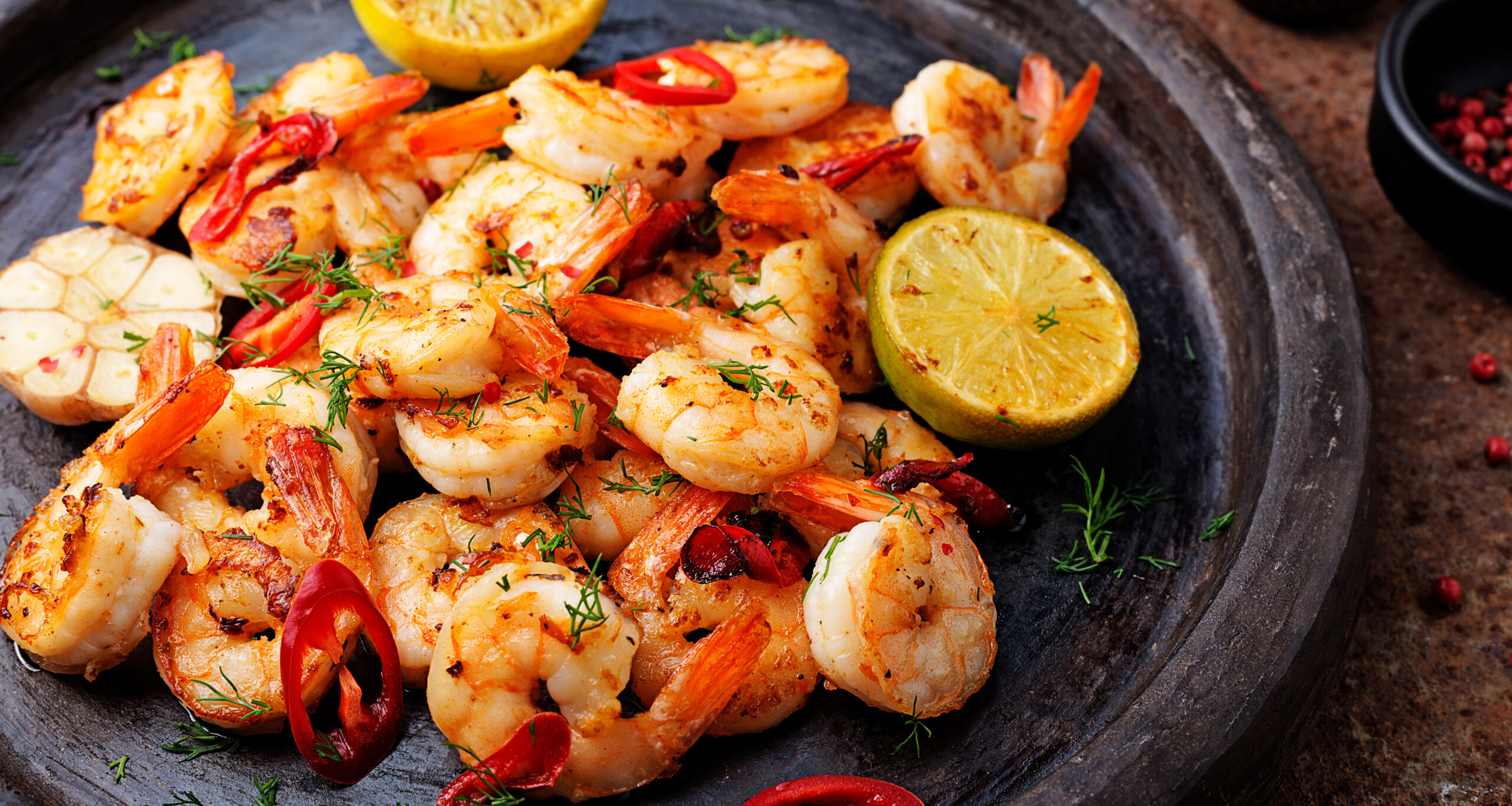
Shrimp is almost entirely protein and water.
There’s no skin to pull off, no fat cap to trim, no marbling running through it. Whatever comes out of the bag is what ends up on your plate.
Here’s what that looks like:
THE MACRONUTRIENT BREAKDOWN
According to the United States Department of Agriculture, 100 grams of cooked shrimp contains:
| NUTRIENT | AMOUNT |
| Calories | 99 |
| Protein | 24 g |
| Fat | 0.3 g |
| Saturated fat | 0.08 g |
| Carbohydrates | 0.2 g |
| Cholesterol | 189 mg |
| Sodium | 111 mg |
Look at that fat number again. Three tenths of a gram.
Here’s how the protein content breaks down across the portions you’d eat:
| PORTION (COOKED) | PROTEIN | CALORIES |
| 1 oz (28 g) | ~7 g | ~28 |
| 3 oz (85 g) | ~20 g | ~84 |
| 4 oz (113 g) | ~27 g | ~112 |
| 6 oz (170 g) | ~41 g | ~168 |
| 8 oz (227 g) | ~54 g | ~225 |
Six ounces puts you at 41 grams of protein for 168 calories. If you’re eating 1,800 calories a day, that’s a 40-gram protein meal for under 10% of your daily total.
SHRIMP SIZE AND WHAT THE NUMBER ON THE BAG MEANS
Walk up to the freezer case and you’ll see bags marked 21/25, 31/40, 41/50, sometimes U/15.
That number is how many shrimp it takes to make a pound.
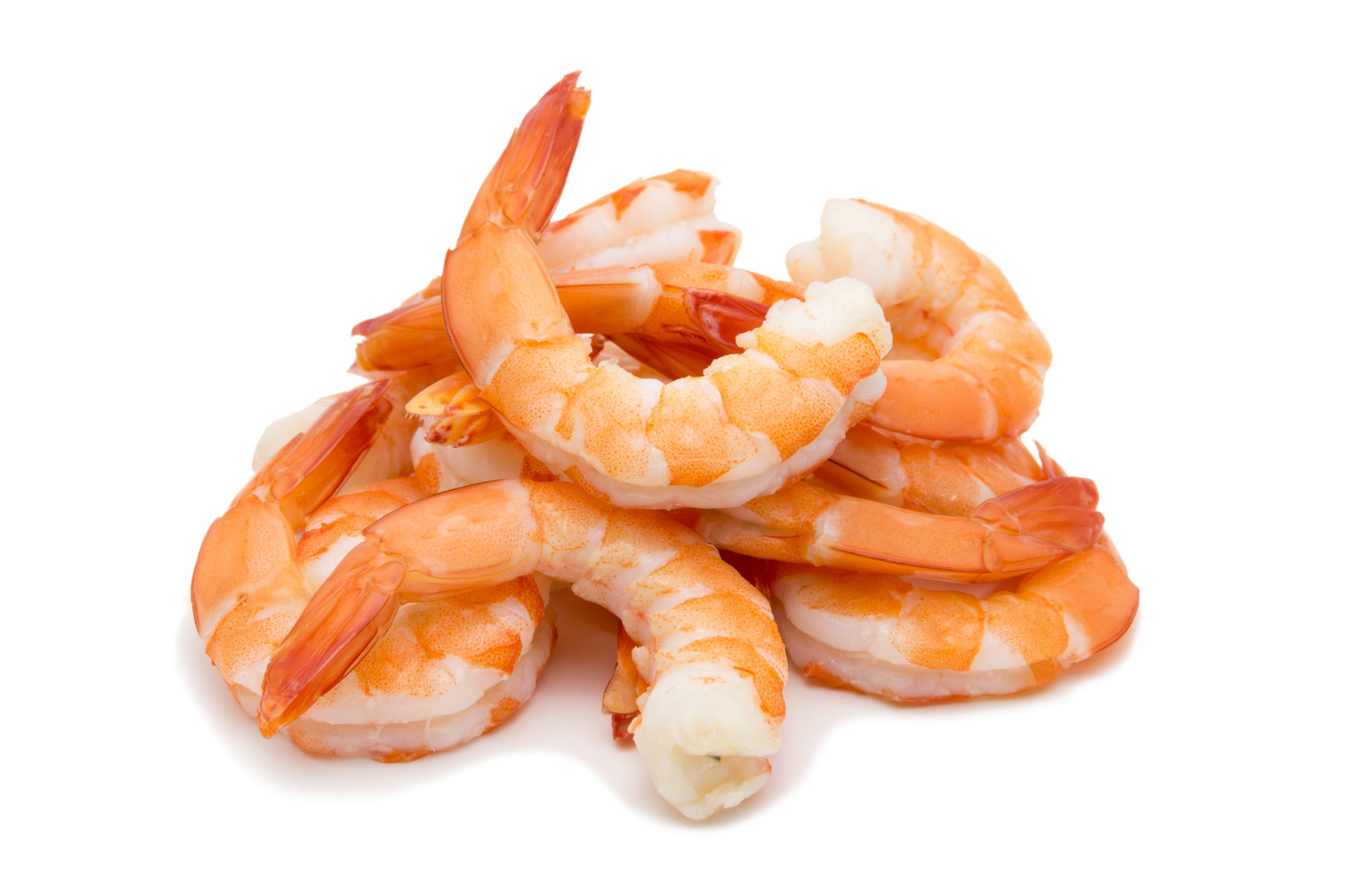
A bag marked 31/40 holds between 31 and 40 shrimp per pound. Smaller number, bigger shrimp. U/15 means “under 15 per pound,” which is about as big as shrimp gets.
| LABEL | COUNT PER LB | PER 3 OZ COOKED SERVING | PROTEIN PER SHRIMP |
| Jumbo | 21/25 | 5 to 6 shrimp | ~3.5 to 4 g |
| Extra large | 26/30 | 6 to 7 shrimp | ~3 g |
| Large | 31/40 | 8 to 9 shrimp | ~2.3 to 2.5 g |
| Medium | 41/50 | 10 to 15 shrimp | ~1.5 to 2 g |
| Small | 51/60 | 15 or more | ~1.3 g |
The size names in that first column aren’t regulated. A 16/20 count gets sold as “extra jumbo” by one company and “colossal” by another, and the same word can cover different counts depending on who packed the bag.
The adjective is marketing. The count is the specification.
Notice what the shrimp size doesn’t change, though. Three ounces of cooked shrimp is about 20 grams of protein whether that’s five jumbo or fifteen small. All the size decides is how many pieces sit on your plate and how long they take to cook.
RAW VERSUS COOKED
Shrimp shrinks visibly in the pan, more than chicken does, and that trips people up when they’re weighing food.
A pound of raw shrimp comes out of the skillet at somewhere around 12 ounces. What’s left is water. The protein stayed exactly where it was, just concentrated into a smaller package, which is why the per-ounce numbers climb after cooking.
So, weigh it raw or weigh it cooked, but pick one and stay with it. Six ounces of raw shrimp logged as six ounces of cooked shrimp adds about 6 grams of protein you never ate. Do that four or five times a week and you’re off by a full meal’s worth.
I weigh raw, before it goes in the pan, because that’s the number already printed on the package.
IS THE CHOLESTEROL IN SHRIMP A PROBLEM?
Shrimp has more cholesterol per ounce than steak, and there’s no point pretending otherwise.
This is the first thing people bring up when I suggest adding shrimp to their rotation, and it usually isn’t a strong objection. It’s more of a “should I be eating this?” pause in front of the freezer case and then reaching for chicken instead.
Here’s what shrimp contains, what the research says about it, and who needs to think twice.
THE TWO NUMBERS ON THE LABEL
A three-ounce serving of cooked shrimp contains about 161 milligrams of cholesterol.
I’m not going to talk you out of that number. It’s real, and if you’ve been avoiding shrimp because of it, you weren’t inventing a reason.
But it’s only half of what’s on the label.
That same three-ounce serving contains less than a tenth of a gram of saturated fat. Compare that to a three-ounce ribeye, which carries about 7 grams of saturated fat alongside its cholesterol.
That difference matters because saturated fat, not dietary cholesterol, is what research has most consistently linked to LDL levels. Your liver manufactures the majority of the cholesterol in your bloodstream, and it adjusts production based on how much you take in through food.
Saturated fat interferes with that regulation. Cholesterol you eat, for most people, largely doesn’t.
Shrimp brings the cholesterol without bringing the thing that usually accompanies it. And what little fat shrimp does contain skews toward polyunsaturated fatty acids rather than saturated ones.
WHAT THE GUIDELINES SAY
For decades the standing advice was to cap dietary cholesterol at 300 milligrams a day. Two shrimp cocktails and you were done.
In 2015, the Dietary Guidelines Advisory Committee dropped that specific limit, concluding that the evidence no longer supported a numerical cap. The committee’s report stated that cholesterol was not a nutrient of concern for overconsumption.
The guidelines didn’t declare dietary cholesterol irrelevant. They still advise keeping intake as low as is practical within a healthy eating pattern. What changed is that the hard ceiling came off, because the research didn’t support drawing the line at 300.
WHO SHOULD STILL PAY ATTENTION
Some people’s blood cholesterol responds more noticeably to what they eat than average. Researchers call them hyper-responders, and you don’t know whether you’re one without testing.
If you have diagnosed high cholesterol, existing cardiovascular disease, or a family history that has your doctor watching your numbers, this is a conversation to have with them rather than with an article. That isn’t a dodge. It’s that your bloodwork tells you something no general guideline can.
For everyone else, the evidence doesn’t support treating shrimp as a food to avoid.
WHAT CHANGES THE MEAL
Six ounces of steamed shrimp and a basket of fried popcorn shrimp are the same animal and completely different meals. The batter, the fryer oil, the butter sauce, the mayonnaise-based dip on the side. That’s where the calories and the saturated fat come from, and none of it was in the shrimp when you bought it.
If you’re worried about how shrimp fits into your diet, look at the preparation, not the shrimp. I’ll cover the cooking methods that keep it lean further down.
THE BENEFITS OF SHRIMP PROTEIN
Shrimp gives you all nine essential amino acids.
That’s the designation that separates a complete protein from an incomplete one, and it puts shrimp in the same category as chicken, beef, and eggs.
What sets it apart from those is the micronutrient profile riding alongside it.
A COMPLETE PROTEIN FOR MUSCLE REPAIR
Your body needs 20 amino acids to build tissue. It manufactures 11 of them on its own. The other nine have to come from food every day, which is why they’re called essential.
Those nine essential amino acids are:
- Histidine
- Isoleucine
- Leucine
- Lysine
- Methionine
- Phenylalanine
- Threonine
- Tryptophan
- Valine
Shrimp contains all nine.
Three of those get grouped together as the branched-chain amino acids: leucine, isoleucine, and valine.
Leucine gets the most attention in training circles, because it’s the amino acid most directly tied to switching on muscle protein synthesis. It functions less like a building block and more like a signal that tells your body there’s enough raw material on hand to start building.
All nine matter once you’re training.
Resistance training creates microscopic damage in muscle fibers, and the repair process that follows is what produces adaptation. That process runs on amino acids pulled from your bloodstream.
Come up short on any one of the nine and the repair work gets bottlenecked, no matter how many total grams you ate. It’s the same problem as having every part for an engine except the crankshaft.
THE MICRONUTRIENT PROFILE
Shrimp carries micronutrients that chicken breast doesn’t.
A three-ounce serving of cooked shrimp contains:
| NUTRIENT | AMOUNT | % DAILY VALUE |
| Selenium | ~35 mcg | ~64% |
| Vitamin B12 | ~1.4 mcg | ~58% |
| Phosphorus | ~200 mg | ~16% |
| Vitamin D | ~3.2 mcg (129 IU) | ~16% |
| Zinc | ~1.4 mg | ~13% |
| Choline | ~69 mg | ~13% |
Selenium: This is the standout. Two-thirds of your daily requirement in one serving. Your body uses it to build selenoproteins, which handle antioxidant defense and support immune system function. It’s also required to convert thyroid hormones into their active form, and those hormones set how fast you burn energy at rest.
Vitamin B12: This vitamin runs red blood cell production and energy metabolism. One serving covers more than half a day’s requirement.
Zinc: This mineral matters for anyone doing resistance training. It’s involved in hormone production, including testosterone, along with immune function and wound healing.
Iodine: Shellfish is among the best food sources of it, and most people never think about it. Your thyroid uses iodine as the raw material for the hormones that regulate your metabolic rate.
Vitamin D: This vitamin is unusual to find in a non-fatty seafood. About 16% of the Daily Value per serving, though the amount varies by species and by whether the shrimp was wild or farmed.
Astaxanthin: This nutrient won’t appear on any nutrition label. It’s the carotenoid that turns shrimp pink when it hits heat, and it functions as an antioxidant. Early research points toward anti-inflammatory effects, but the human evidence is still preliminary, so I’d file it as a bonus rather than a reason to buy.
THE OMEGA-3 QUESTION
Shrimp contains omega-3 fatty acids. You’ll see that on a lot of shrimp articles, usually written as though shrimp were salmon.
It isn’t. A three-ounce serving supplies roughly 0.1 to 0.3 grams of combined EPA and DHA. The same serving of salmon carries 1.5 to 2 grams.
Eat shrimp twice a week and you’re adding maybe a third of a gram toward a weekly target. If omega-3s are the reason you’re standing at the seafood counter, buy the salmon or the sardines and eat the shrimp for everything else it’s carrying.
SHRIMP VS. OTHER PROTEIN SOURCES
A six-ounce serving of ribeye and a six-ounce serving of shrimp both give you about 41 grams of protein.
One has 168 calories. The other has 495 calories.
Total protein is only half the picture, because every food costs you calories to deliver it, and the foods that charge less leave more room for everything else you eat that day.
THE COMPARISON TABLE
All figures per 100 grams, cooked:
| FOOD | CALORIES | FAT | PROTEIN | SATURATED FAT | PROTEIN PER 100 CAL |
| Shrimp | 99 | 24 g | 0.3 g | 0.08 g | 24 g |
| Canned tuna (in water) | 116 | 26 g | 0.8 g | 0.2 g | 22 g |
| Cod | 105 | 23 g | 0.9 g | 0.2 g | 22 g |
| Scallops | 111 | 21 g | 0.8 g | 0.1 g | 19 g |
| Chicken breast | 165 | 31 g | 3.6 g | 1.0 g | 19 g |
| Greek yogurt (nonfat) | 59 | 10 g | 0.4 g | 0.1 g | 17 g |
| Sirloin (lean) | 212 | 29 g | 10 g | 3.8 g | 14 g |
| Salmon (Atlantic) | 206 | 22 g | 12 g | 3.1 g | 11 g |
| Eggs (whole) | 143 | 13 g | 9.5 g | 3.1 g | 9 g |
| Ribeye | 291 | 24 g | 21 g | 8.5 g | 8 g |
That last column is the one to read. It answers a different question than the protein column does: not how much protein a food contains, but how many calories it costs you to get that protein.
HOW SHRIMP STACKS UP
Shrimp tops that last column, ahead of chicken breast by about 25%. Here’s what that looks like at a full meal’s worth of protein.
To get 40 grams of protein from shrimp, you eat about 6 ounces and spend 168 calories. To get the same 40 grams from ribeye, you eat about 6 ounces and spend 495 calories, with roughly 14 grams of saturated fat riding along.
Same protein. Same weight of food. A 327-calorie difference.
If you’re eating 2,000 calories a day, that single swap is 16% of your daily budget, freed up without giving up a gram of protein.
Shrimp only narrowly beats the other seafood on the table, and canned tuna wins when it comes to total protein. Six ounces of canned tuna gives you 44 grams against shrimp’s 41 grams of protein. What shrimp wins on is calories: 168 calories against tuna’s 197 calories.
Chicken breast is the better comparison. A six-ounce cooked chicken breast gives you 53 grams of protein for 280 calories. Six ounces of shrimp gives you 41 grams for 168 calories.
What chicken doesn’t have is shrimp’s micronutrient profile or its five-minute cook time.
THREE THINGS SHRIMP WON’T DO FOR YOU
Protein per calorie is one metric, and shrimp wins it.
There are others. Salmon finishes near the bottom of that column and is still the fish to buy if you’re eating seafood for the omega-3s. Chicken finishes below shrimp and still ends up in more meal prep containers.
Omega-3s: Shrimp contributes a small amount. Salmon and sardines are what you buy when the goal is to get more omega-3 fatty acids.
Cost: Shrimp typically runs $8 to $16 per pound depending on size and origin, against $3 to $5 for chicken breast. Per gram of protein, that’s roughly double to triple. Canned tuna beats everything on the table on cost per gram.
Volume: Shrimp is about 75% water, so a 40-gram protein serving is a lot of food to get through. In a calorie deficit that works in your favor. Eaten often enough, some people find it tedious.
None of these are reasons to skip shrimp. They’re reasons to keep chicken, salmon, and canned tuna in the rotation alongside it.
HOW SHRIMP FITS YOUR TRAINING GOALS
The protein in shrimp doesn’t change based on what you’re training for. The rest of the plate does.
Whether you’re trying to lose fat, build muscle, or hold your weight steady, you’re still getting about 20 grams of protein in a three-ounce serving, almost no fat, almost no carbohydrate.
Because shrimp brings so little besides protein, the carbohydrate and fat on the plate come almost entirely from what you put next to it. That’s the part you adjust.
SHRIMP FOR FAT LOSS AND WEIGHT MANAGEMENT
Weight loss requires a calorie deficit. You achieve weight loss when you eat less energy than you burn, consistently, over weeks.
What breaks most people isn’t willpower. It’s hunger. A deficit that leaves you hungry at 9 p.m. every night is a deficit you’ll abandon by week three.
Protein helps with that in two ways.
It’s the most satiating of the three macronutrients, so a high-protein meal keeps you full longer than the same calories from carbohydrate or fat.
It also carries the highest thermic effect, meaning your body spends roughly 20% to 30% of protein’s calories digesting and processing it, against 5% to 10% for carbohydrate and no more than 3% for fat.
For example, if you eat 168 calories of shrimp, you net closer to 130 calories.
Here’s what a shrimp-focused dinner looks like when calories are tight:
- 6 oz cooked shrimp: 168 calories, 41 g protein
- 2 cups roasted vegetables with a teaspoon of olive oil: about 100 calories
- ½ cup cooked rice: about 100 calories
That’s roughly 370 calories and 44 grams of protein, and it fills a dinner plate. That’s a quarter of your day’s protein for a fifth of a 1,800-calorie budget.
SHRIMP FOR MUSCLE BUILDING
Building muscle takes two things: enough protein spread throughout the day, and training hard enough to give your body a reason to use it.
The research points toward 0.8 to 1.2 grams of protein per pound of bodyweight daily for anyone doing resistance training, spread across three to five meals rather than stacked into one or two. For most people that lands somewhere between 30 and 40 grams per meal.
The reason for spreading it is that muscle protein synthesis climbs with the size of a protein serving up to somewhere around 20 to 40 grams, then flattens out. Past that point the extra protein still gets used, but not for building tissue.
That’s where the volume issue comes back.
Reaching 40 grams takes about 6 ounces cooked, or 16 to 18 large shrimp. A single chicken breast gets you there in one piece of food.
If you’re eating four or five protein meals a day, that volume becomes a consideration by the third one, and it’s the main reason shrimp works better as one or two meals in a week than as the protein you default to.
HOW SHRIMP FITS COMMON DIETS
Most protein sources force a tradeoff somewhere. Steak brings saturated fat, beans bring carbohydrate, and cheese brings both.
Shrimp brings almost nothing but protein, which is why it survives the restrictions that knock other foods off the list.
Here’s how it lines up against the most common frameworks.
Low-Carb and Ketogenic Diets: A six-ounce serving of shrimp has less than half a gram of carbohydrate. There’s no version of a low-carb diet that shrimp doesn’t fit, and it’s one of the few proteins you can eat without checking the number first. One caution: breaded shrimp and many pre-seasoned frozen products add carbohydrate, so the coating is what to look at, not the shrimp.
The Mediterranean Diet: This one is built around seafood, olive oil, and vegetables, so shrimp is native to it rather than tolerated by it. Shrimp sautéed in olive oil with garlic, tomatoes, and greens is a Mediterranean meal without any modification.
A Balanced Diet: If you’re already eating eggs, nuts, olive oil, and the occasional steak, you’re getting plenty of fat from your protein sources. Shrimp adds about half a gram of fat to a six-ounce serving, so it lets you hit a protein target without adding to your fat total for the day.
BUILDING A PLATE AROUND SHRIMP
A plate of shrimp by itself isn’t a meal. You need a carbohydrate and a fat source next to it.
Pick one from each column:
| CARBOHYDRATE | FAT | VEGETABLES |
| White rice, 1 cup cooked (~200 cal) | Olive oil, 1 tbsp (~120 cal) | Broccoli |
| Jasmine or basmati rice, 1 cup (~200 cal) | Avocado, ½ medium (~120 cal) | Asparagus |
| Baked potato, 1 medium (~160 cal) | Almonds, 1 oz (~165 cal) | Brussels sprouts |
| Sweet potato, 1 medium (~100 cal) | Cashews, 1 oz (~155 cal) | Bell peppers |
| Pasta, 1 cup cooked (~200 cal) | Tahini, 1 tbsp (~90 cal) | Zucchini |
| Quinoa, 1 cup cooked (~220 cal) | Butter, 1 tbsp (~100 cal) | Spinach |
| Corn tortillas, 2 (~120 cal) | Sesame oil, 1 tbsp (~120 cal) | Green beans |
| Farro, 1 cup cooked (~200 cal) | Coconut milk, ¼ cup (~110 cal) | Cabbage |
The carbohydrate column is where you adjust for the day. If you’re training in the afternoon, take the full cup of rice. If you’re sitting at a desk all day, take the sweet potato and keep 100 calories.
The fat column matters more with shrimp than with most proteins, because shrimp contributes almost none of its own. A tablespoon of olive oil in the pan isn’t an indulgence here; it’s the meal’s entire fat content.
The vegetable column is the one people skip, and it’s the cheapest volume on the plate. Two cups of most fiber-rich vegetables provides 60 to 100 calories, fills a third of the plate, and the fiber slows digestion enough to keep you full past the two-hour mark.
Shrimp plus one from each column is a complete meal in about 500 calories, with 40+ grams of protein and enough carbohydrate and fat to hold you until the next meal.
HITTING YOUR PROTEIN GOALS WITH SHRIMP
Shrimp can cover a full meal’s protein in about 4.5 ounces.
Take a 180-pound lifter eating five meals a day. His daily protein target runs somewhere between 144 and 216 grams, so each meal needs to carry roughly 30 to 43 grams. A six-ounce serving of shrimp puts 41 grams on the plate, which covers that on its own before you’ve added rice or vegetables.
This section covers the daily target by bodyweight, how much shrimp it takes to hit a meal’s share of it, and a sample day showing where shrimp fits alongside everything else you’re eating.
THE DAILY NUMBER
Aim for 0.8 to 1.2 grams of protein per pound of bodyweight, depending on training volume and what you’re training for.
| BODYWEIGHT | DAILY PROTEIN TARGET |
| 140 lbs | 112 to 168 g |
| 160 lbs | 128 to 192 g |
| 180 lbs | 144 to 216 g |
| 200 lbs | 160 to 240 g |
| 220 lbs | 176 to 264 g |
Divide any of those across three to five meals and you land at 30 to 40 grams per meal.
WHAT 30 GRAMS OF SHRIMP LOOKS LIKE
Against a 30-to-40-gram target, shrimp lands in a narrow band:
- 5 oz cooked puts you at 30 grams
- 6 oz cooked puts you at 41 grams
In pieces, that’s 12 to 14 large shrimp for the first and 16 to 18 for the second.
That makes meal planning simple: a pound of raw shrimp yields roughly 12 ounces cooked, or two six-ounce servings.
A SAMPLE DAY
Here’s a day built for a 160-pound lifter, with shrimp anchoring dinner and other proteins covering the rest.
| MEAL | FOOD | PROTEIN |
| Breakfast | 3 whole eggs + ½ cup cottage cheese | ~33 g |
| Mid-morning | 1 cup nonfat Greek yogurt | ~23 g |
| Lunch | 5 oz cooked chicken breast, rice, vegetables | ~44 g |
| Afternoon | 3 oz canned tuna | ~22 g |
| Dinner | 6 oz cooked shrimp, baked potato, green beans | ~41 g |
| TOTAL | ~163 g |
That’s roughly 1 gram per pound of bodyweight, and no single meal is carrying more than 44 grams.
Notice that shrimp shows up once, at dinner. Four other proteins cover the rest of the day.
HOW TO BUY SHRIMP
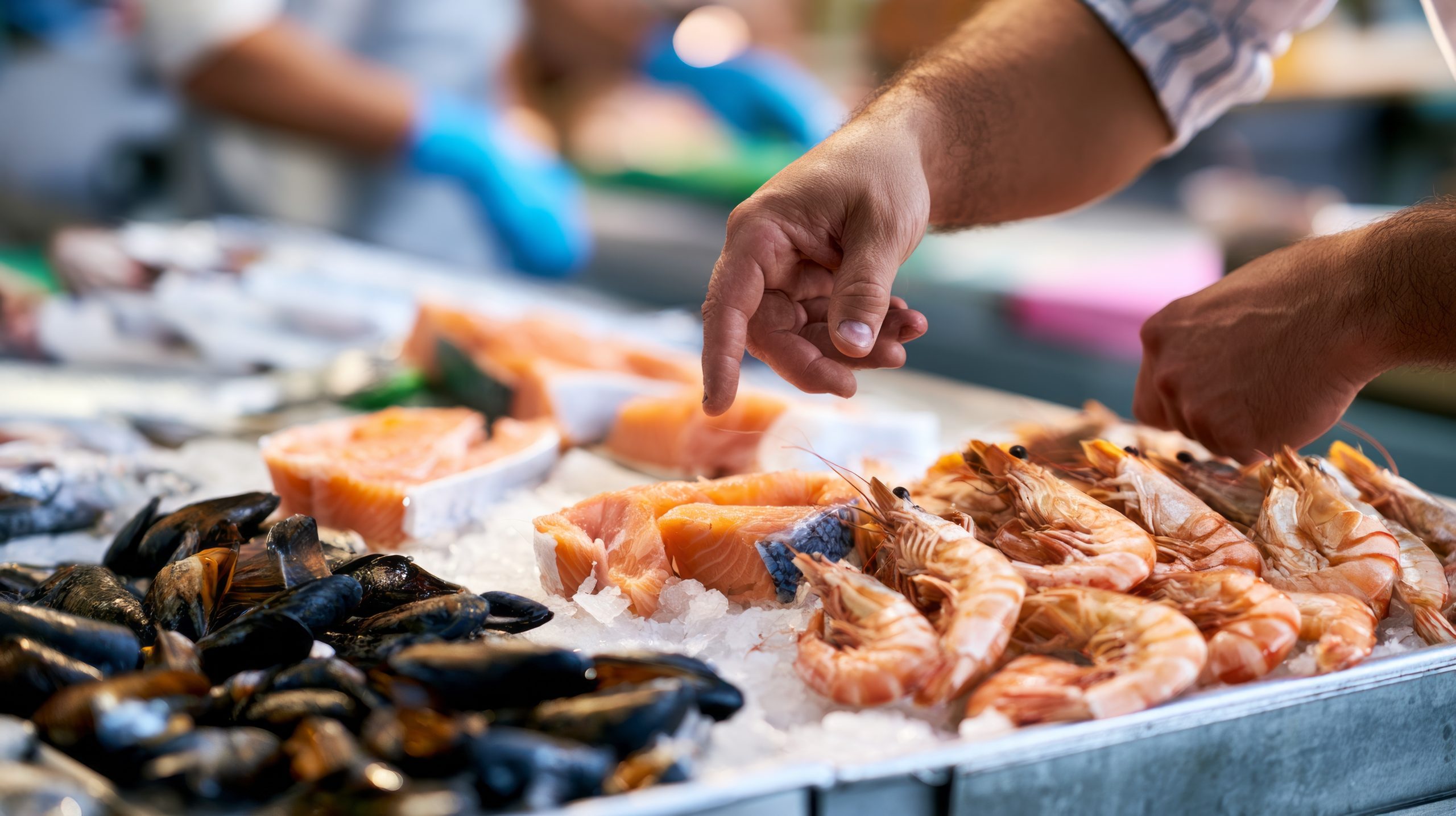
Almost all shrimp sold in America was frozen at some point, including the shrimp sitting on ice at the fish counter.
The thing to check isn’t freshness. It’s what got added to the bag, and whether what’s on the label matches what’s inside it.
FROZEN BEATS FRESH
Shrimp is usually frozen on the boat or within hours of harvest, which locks in the texture before it starts to break down.
The “fresh” shrimp in the display case is almost always thawed frozen shrimp. You’re paying a premium for the same product, except now it has two days of shelf life instead of several months.
Buying frozen seafood also solves the portioning problem. A two-pound bag lets you thaw six ounces on a Tuesday and leave the rest alone.
LEARN TO READ THE LABEL
A bag of shrimp should have one ingredient.
Plenty of processed varieties have more. The most common addition is sodium tripolyphosphate, or STPP, a phosphate salt that helps shrimp hold water through freezing and thawing. It’s FDA-approved and it does what it claims to do.
It also means you’re buying water at shrimp prices.
Treated shrimp releases that water in the pan, so instead of searing, it steams in its own liquid and ends up rubbery. If your shrimp has ever thrown off a puddle in a hot skillet, that’s why.
Two things to check on the bag:
Ingredient List: If you see sodium tripolyphosphate, phosphates, or “treated with,” the shrimp has been soaked.
Shell-on Shrimp: Most treatment is applied to peeled shrimp, so shell-on is less likely to be soaked.
The same logic applies to the size grade. Read the number on the bag, not the adjective printed above it.
SHRIMP FRAUD IS REAL
In a 2014 study, Oceana ran DNA tests on shrimp products sold across the United States and found food fraud in 30% of them.
Across the 111 vendors they surveyed, 35% were selling shrimp that didn’t match the label.
The most common swap was farmed shrimp sold as wild-caught, or generic imported shrimp labeled as Gulf shrimp. In some cases, the species in the package wasn’t one the label named at all.
You can’t DNA test a bag in the freezer aisle, and buying a name you recognize doesn’t fix it either.
Oceana found mislabeled product across the retail supply, not just at the bottom of it, so Chicken Of The Sea, Bumble Bee Shrimp, and Seaquest Seafood Corporation are subject to the same imported supply chain as everyone else.
What you can do is check that the label carries the information federal law requires:
- Country of Origin
- Farmed or Wild-Caught
- Species Name
If a bag doesn’t list where the shrimp came from or whether it was farmed, put it back and pick one that does.
SHRIMP FOOD SAFETY
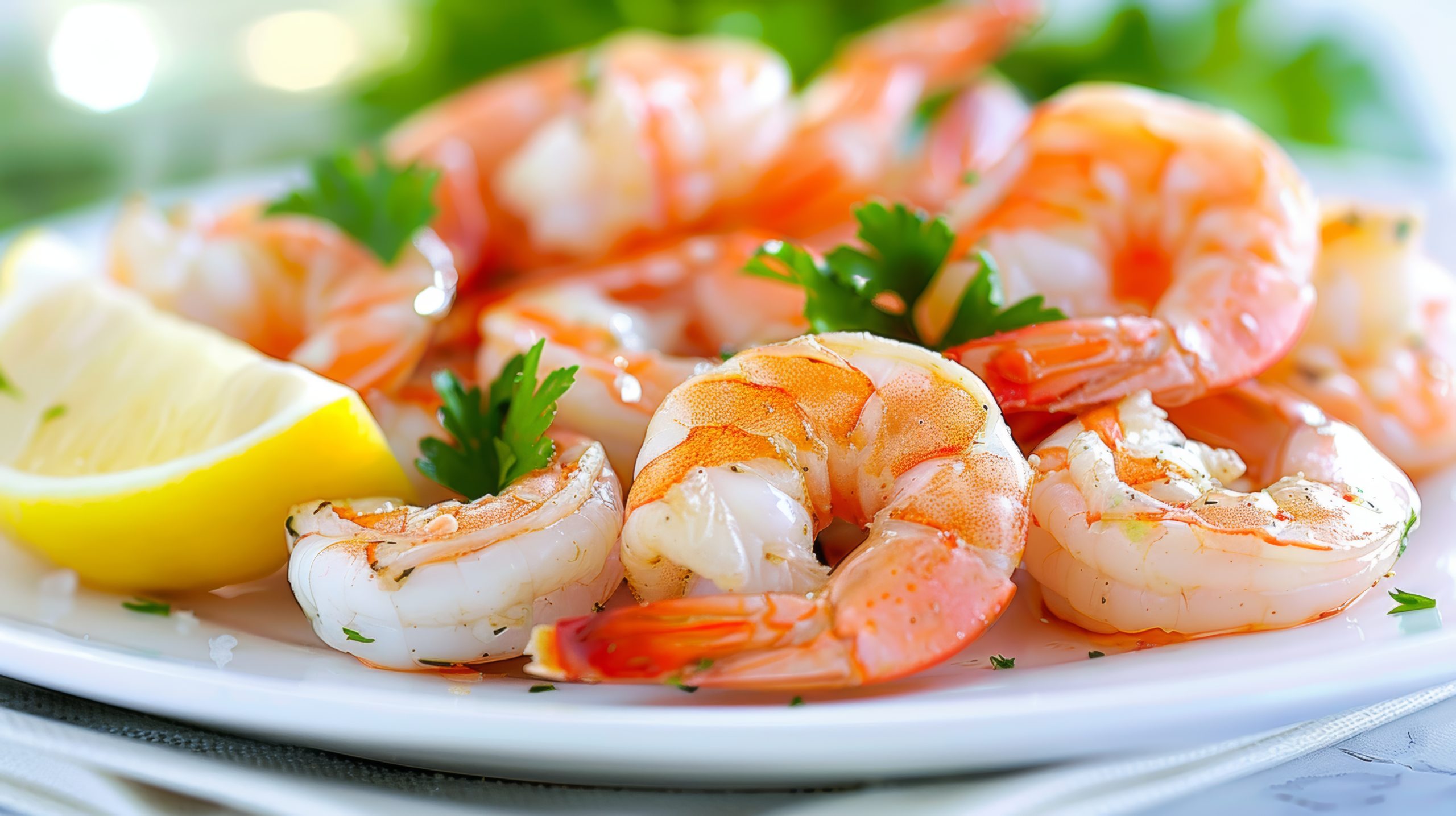
Shrimp needs to reach an internal temperature of 145°F.
That’s the FDA target for all seafood. Shrimp is small enough that it gets there fast, which makes it easy to cook safely and easy to overcook.
The other things that matter happen before it hits the pan and after it comes off.
THAW IT IN THE FRIDGE OR IN COLD WATER
Two ways to thaw frozen shrimp:
You can put the bag of shrimp in a bowl and leave it overnight in the refrigerator. A one-pound bag takes about 12 hours.
Or you can place them in cold water. Seal the shrimp in a bag, submerge it, and leave it for 15 to 20 minutes.
Never thaw shrimp on the counter or in warm water. Bacteria multiply fastest between 40°F and 140°F, and the outside of the shrimp sits in that range long before the center thaws.
If you forget to plan ahead, you can cook shrimp straight from frozen. Add two or three minutes and expect a little more water in the pan.
DEVEIN IT IF THE SHRIMP IS LARGE
The dark line running along the back of a shrimp is its digestive tract, usually called the sand vein.
It isn’t harmful and it won’t make you sick. On larger shrimp it can carry grit and a muddy taste, which is the only reason to bother.
To devein shrimp, run a paring knife about a quarter inch deep along the back, then lift the vein out with the tip of the knife or rinse it away under cold water.
On medium and small shrimp, skip it. The vein is too small to taste.
HOW TO TELL WHEN IT’S DONE
A thermometer is the reliable way to confirm 145°F, but shrimp is small enough that most people cook it by sight.
There are two things to watch for when you cook shrimp:
- Color: Raw shrimp is translucent gray. Cooked shrimp is opaque and pink.
- Shape: Properly cooked shrimp curls into a loose C. If it curls into a tight O, it went too long.
Shrimp goes from done to rubbery in under a minute, so pull it off the heat the moment the color turns.
VIBRIO BACTERIA AND RAW SHRIMP
Several species of Vibrio bacteria live naturally in warm coastal water and end up in raw shellfish.
The two that most often make people sick in the United States are Vibrio parahaemolyticus and Vibrio vulnificus. A related species, Vibrio cholerae, is the one that causes cholera.
The Centers for Disease Control and Prevention estimates about 80,000 cases of vibriosis a year in the United States, 52,000 of them from contaminated food. Vibrio vulnificus is the dangerous one. About one in five people who get that infection die, sometimes within a day or two of becoming ill.
Cooking kills these bacteria. Freezing does not. That’s why raw or barely cooked shrimp carries a risk that properly cooked shrimp doesn’t.
The risk of severe infection is higher for people with liver disease, diabetes, or a weakened immune system. If that includes you, cook your shrimp all the way through and skip raw shellfish entirely.
HANDLE AND STORE IT LIKE RAW MEAT
Four habits that prevent foodborne illnesses:
- Use a separate cutting board for raw shrimp or wash it with hot soapy water before anything else touches it.
- Wash your hands after handling raw shrimp.
- Get cooked shrimp into the refrigerator within two hours.
- Eat cooked shrimp within three to four days.
SHELLFISH ALLERGY: WHAT TO KNOW
Shellfish allergy affects nearly 7 million Americans, which makes it one of the most common food allergies in the country.
Every other section of this article is about reasons to eat shrimp. This one isn’t.
If you have a shellfish allergy, none of the protein numbers matter, and the rest of this guide is not for you.
Here’s what the allergy involves.
WHAT CAUSES THE REACTION
The trigger is tropomyosin, a protein found in the muscle of shrimp, crab, lobster, and other shellfish.
Because that same protein appears across the crustacean family, someone who reacts to shrimp often reacts to crab and lobster as well.
Allergists call this cross-reactivity. It doesn’t automatically extend to mollusks like clams, oysters, and scallops, which is why some people can eat one group and not the other.
IT USUALLY SHOWS UP IN ADULTHOOD
Most food allergies start in childhood, and many are outgrown. Shellfish allergy runs the other way.
It commonly appears for the first time in adults, including adults who have eaten shrimp their whole lives without a problem. And unlike milk or egg allergies, it rarely goes away.
A long history of eating shrimp safely is not a guarantee about the next time.
COOKING DOESN’T REMOVE THE ALLERGEN
Heat destroys some food allergens. Tropomyosin isn’t one of them. Boiled, grilled, or fried, the protein is still there.
The steam is a factor too.
Some people with severe shellfish allergies react to the vapor from shrimp cooking, which is why a restaurant kitchen can be a problem even when no shellfish reaches the table.
Cross-contact matters for the same reason. A pan, a fryer, or a cutting board that handled shrimp can carry enough protein to trigger a reaction.
THE IODINE MIX-UP
A shellfish allergy has nothing to do with iodine.
People with shellfish allergies are sometimes told to avoid iodized salt or warned about the iodine contrast dye used in medical imaging.
The allergy is to a muscle protein, not to a mineral. Iodine is not the trigger.
IF YOU THINK YOU HAVE ONE
See an allergist and get tested. Skin prick tests and blood tests can confirm it. Guessing can cost you either way.
Guess wrong in one direction and you cut a food out of your diet for no reason.
Guess wrong in the other and you keep eating something that could send you to an emergency room, because reactions to shellfish tend to be more severe than reactions to most other foods.
The American College of Allergy, Asthma, and Immunology is a reliable place to start reading.
HOW TO COOK SHRIMP
Shrimp cooks in two to three minutes per side.
There’s no resting period, no carryover cooking to plan around, and no thick cut that needs time to come up to temperature. You put shrimp on heat, it turns pink, you take it off.
The problem is that two minutes doesn’t feel like long enough, so people leave it on. Shrimp goes from being done to rubbery in under a minute, and that minute is the one that matters.
The color and shape cues from the safety section are what to watch. Here’s how to apply them across the methods you’d use.
SAUTÉING
Fastest method, and the one that gives you browning.
Get a skillet hot over medium-high heat with a teaspoon of olive oil. Add the shrimp in a single layer, without crowding the pan. Two to three minutes on the first side, one to two on the second.
If the shrimp is releasing liquid instead of browning, the pan wasn’t hot enough or the shrimp was treated with phosphates.
GRILLING
Thread the shrimp onto skewers so they don’t fall through the grates or use a grill basket.
Direct heat, two to three minutes per side. Shell-on shrimp handles the grill better than peeled, since the shell shields the meat from drying out.
BROILING
Arrange the shrimp in a single layer on a sheet pan, four to six inches from the element. Three to five minutes total, no flipping required.
This is the easiest method for cooking a pound at once.
AIR FRYING
Preheat to 400°F. Single layer in the basket, six to eight minutes, shaking once halfway through.
Frozen shrimp works here without thawing. Add two or three minutes.
POACHING AND STEAMING
The leanest options, and the best ones for batch cooking.
To poach, bring water to a bare simmer, drop the shrimp in, and pull them out after two to three minutes. To steam, put them in a basket over boiling water for four to six minutes.
Neither method browns anything, so both need seasoning after the fact. Both also produce shrimp that reheats better than sautéed shrimp does.
DON’T THROW OUT THE SHELLS
Shrimp shells make a good cooking stock, and most people put them in the trash.
Simmer the shells in water with an onion, a carrot, and a few peppercorns for 20 to 30 minutes, then strain. Use it for rice, grits, risotto, or any soup that would otherwise take chicken stock.
You already paid for the shells when you bought the shrimp.
THE CLASSIC DISHES
Shrimp creole and shrimp gumbo are built on shrimp, tomatoes, peppers, onions, and celery. Those ingredients aren’t what makes the dishes heavy.
What adds up is the roux, the andouille sausage, and the portion of white rice underneath.
You don’t need to abandon either dish. Thin the roux, cut the sausage in half, and serve it over a cup of rice instead of two.
SHRIMP MEAL PREP: SIX RECIPES
Shrimp reheats badly, which is the main reason it never makes it into anyone’s meal prep rotation.
You can cook six chicken breasts on Sunday, microwave one on Thursday, and it’s fine. Do that with shrimp and Thursday’s portion is rubber.
There are three ways around it, and every recipe below uses one.
The first is to prep everything except the shrimp. The rice, the vegetables, and the sauce get made in advance, and the shrimp goes in a hot pan for five minutes the night you eat it.
The second is to poach the shrimp instead of searing it. Poached shrimp survives a second heating far better than sautéed shrimp does, and it’s good cold.
The third is to roast it in the oven. Dry oven heat pulls less moisture out of shrimp than a hot skillet does, so roasted shrimp reheats without turning tough.
Shrimp weights below are raw, since that’s what’s on the bag. A pound of raw shrimp yields about 12 ounces cooked.
SHEET PAN SHRIMP AND VEGETABLES
Cook this once on Sunday and eat it four times. Everything goes on two sheet pans and comes out in about 25 minutes.
Goal: Batch cooking, four servings at once
Protein: About 41 g per serving
INGREDIENTS
- 2 lbs raw shrimp, peeled and deveined (31/40 count)
- 2 lbs mixed vegetables: broccoli, bell peppers, red onion, zucchini
- 3 tbsp olive oil
- 4 cloves garlic, minced
- 1 tsp paprika
- 1 tsp salt
- ½ tsp black pepper
- 1 lemon
INSTRUCTIONS
- Heat the oven to 425°F.
- Toss the vegetables with 2 tbsp olive oil, half the garlic, the paprika, salt, and pepper. Spread across two sheet pans in a single layer.
- Roast for 15 minutes.
- Toss the shrimp with the remaining oil and garlic. Push the vegetables to one side of each pan and add the shrimp in a single layer.
- Return to the oven for six to eight minutes, until the shrimp is opaque and pink.
- Squeeze lemon over everything. Divide into four containers.
- Reheat at 350°F for eight minutes rather than microwaving.
POST-TRAINING SHRIMP AND RICE BOWL
Built for the meal after a hard session, when you want carbohydrate alongside the protein. The rice and sauce keep for days, so this comes together in five minutes.
Goal: Carbohydrate and protein after a hard session
Protein: About 52 g per serving
INGREDIENTS (PER SERVING)
- 6 oz raw shrimp, peeled
- 1 cup cooked jasmine rice
- 1 cup shelled edamame
- 1 tsp sesame oil
- 1 tbsp soy sauce
- 1 tsp rice vinegar
- 1 tsp honey
- 1 clove garlic, minced
- Sliced scallions
INSTRUCTIONS
- Cook the rice in advance. It keeps for four days in the refrigerator.
- Whisk the soy sauce, vinegar, honey, and garlic together. This keeps for a week.
- When you’re eating: heat the sesame oil in a skillet over medium-high. Add the shrimp in a single layer, two to three minutes per side.
- Add the sauce to the pan for the last 30 seconds and toss.
- Serve over the rice with the edamame and scallions.
GARLIC SHRIMP SKILLET
One pan, seven ingredients, and almost no carbohydrate. Start to finish in under 10 minutes. It has about 6 grams of carbohydrate in the whole dish. Serve it with a green salad or cauliflower rice.
Goal: Low-carb and ketogenic diets
Protein: About 41 g per serving
INGREDIENTS (PER SERVING)
- 8 oz raw shrimp, peeled
- 1 tbsp olive oil
- 4 cloves garlic, thinly sliced
- ¼ tsp red pepper flakes
- 2 tbsp dry white wine or chicken stock
- 1 tbsp fresh parsley
- ½ lemon
INSTRUCTIONS
- Heat the olive oil in a skillet over medium heat. Add the garlic and pepper flakes and cook for about a minute, just until the garlic softens and turns pale gold. Burnt garlic will make the whole dish bitter.
- Raise the heat to medium-high and add the shrimp in a single layer. Two to three minutes on the first side.
- Flip, add the wine, and cook one to two minutes more.
- Off the heat, add the parsley and a squeeze of lemon.
MEDITERRANEAN SHRIMP AND CHICKPEA SALAD
Poach the shrimp rather than searing it. Seared shrimp turns tough and greasy once it’s cold, and this salad never gets heated.
Goal: A cold lunch that needs no reheating
Protein: About 46 g per serving
INGREDIENTS (PER SERVING)
- 6 oz raw shrimp, peeled
- 1 cup canned chickpeas, rinsed
- 1 cup cherry tomatoes, halved
- ½ cucumber, diced
- ¼ red onion, thinly sliced
- 2 tbsp olive oil
- 1 tbsp red wine vinegar
- 1 tsp dried oregano
- 2 tbsp crumbled feta
INSTRUCTIONS
- Poach the shrimp: bring a pot of salted water to a bare simmer, add the shrimp, and cook two to three minutes until pink. Drain and cool.
- Combine everything in a container.
- It keeps for three days.
FROZEN SHRIMP STIR-FRY
Every ingredient here keeps in the freezer or the pantry, so you can make this without shopping for it.
Goal: The cheapest meal in this list, straight from the freezer
Protein: About 34 g per serving
INGREDIENTS (PER SERVING)
- 6 oz frozen raw shrimp
- 2 cups frozen stir-fry vegetable mix
- 1 tbsp sesame oil
- 1 tbsp soy sauce
- 1 tsp fresh ginger, grated
- 2 cloves garlic, minced
- Red pepper flakes
INSTRUCTIONS
- Run the frozen shrimp under cold water for five minutes to thaw. Pat dry.
- Heat the sesame oil in a wok or large skillet over high heat.
- Add the frozen vegetables straight from the bag. Cook four to five minutes, until the water has cooked off.
- Add the garlic and ginger, then the shrimp. Two to three minutes, tossing.
- Add the soy sauce and pepper flakes at the end.
SHRIMP AND VEGETABLE SOUP
A large bowl of food for very few calories, using the shell stock from earlier. The base gets made ahead and the shrimp goes in at the last minute.
Goal: High volume for a low-calorie cost
Protein: About 34 g per serving
INGREDIENTS (FOUR SERVINGS)
- 1½ lbs raw shrimp, peeled (save the shells)
- 8 cups stock, made from the shrimp shells
- 2 carrots, sliced
- 3 stalks celery, sliced
- 1 onion, diced
- 2 cups chopped kale or spinach
- 3 cloves garlic
- 1 tsp thyme
- 1 bay leaf
- Salt and pepper
INSTRUCTIONS
- Simmer the shrimp shells with an onion, a carrot, and a few peppercorns in 8 cups of water for 20 to 30 minutes. Strain.
- In a pot, cook the onion, carrots, celery, and garlic until softened, about eight minutes.
- Add the stock, thyme, and bay leaf. Simmer 15 minutes.
- Refrigerate the soup base at this point if you’re prepping ahead. It keeps for five days.
- To finish: bring a portion to a simmer, add the greens, then add the shrimp and cook two to three minutes until pink.
FIVE MISTAKES PEOPLE MAKE WITH SHRIMP
Shrimp is lean before you touch it, and most of what happens next is what determines whether the meal stays that way.
The food itself doesn’t require much from you. It’s already portioned by the bag, and it cooks in five minutes.
What goes wrong happens around it. The batter, the sauce, the pan, and the assumption that ordering shrimp at a restaurant means ordering something light.
COOKING IT TOO LONG
The most common mistake with shrimp.
Shrimp is done when it turns opaque and pink and curls into a loose C. Thirty seconds past that and the texture starts to go. A minute past and it’s rubber.
Pull it off the heat the moment the color changes. If you’re cooking it in a sauce, take the shrimp out, finish the sauce, and put the shrimp back at the end.
FRYING IT
Frying shrimp turns a six-ounce serving from 168 calories into roughly double that, and everything you added is batter and oil.
Deep frying makes it worse, because the coating absorbs oil in proportion to its surface area, and small pieces of shrimp have a lot of surface area for their weight. Popcorn shrimp is the extreme version, heavily breaded relative to the shrimp inside.
The shrimp underneath is still the same food. If you want the crunch, air fry it with a light dusting of seasoned flour and you’ll get most of the texture for a fraction of the calories.
DROWNING IT IN CREAMY SAUCES
Shrimp alfredo and shrimp scampi are dishes where the shrimp is the smallest part of the total calories.
A restaurant scampi is built on butter, often several tablespoons per serving. Alfredo adds heavy cream and parmesan on top of that.
Garlic, lemon, white wine, and a tablespoon of olive oil gets you a similar dish for a fraction of the calories. The garlic shrimp skillet above is that dish.
ORDERING IT OUT AND ASSUMING IT’S LEAN
Shrimp on a restaurant menu is usually fried, buttered, or breaded.
Chains built around shrimp promotions, Red Lobster among them, sell the fried and scampi preparations because that’s what people order. The shrimp is still shrimp. The preparation is where the calories are.
Grilled, steamed, and boiled preparations are on most of those menus. Shrimp cocktail is one of the leanest appetizers on a chain menu.
EATING IT WITHOUT ANYTHING ELSE
A plate of shrimp is protein and not much else. No carbohydrate to speak of, and half a gram of fat.
Shrimp alone will leave you hungry an hour later. Pair it with a carbohydrate and a fat source. The plate-building table earlier in this article covers what to reach for.
Shrimp isn’t going to be your main protein. It costs too much per gram of protein, and you’d get tired of the volume by the third meal.
But one or two dinners a week is a different question, and there the answer is easy.
It’s the fastest protein you can cook; it comes out of the freezer instead of requiring a shopping trip, and it hits a full meal’s protein target without touching your fat or carbohydrate budget for the day.
Start with one bag. Look for a 31/40 count, shell-on if you can find it, and nothing on the ingredient list but shrimp.
Check out our complete line of ATHLEAN-RX Supplements and find the best training program for you based on your fitness level and goals.

- Six ounces of cooked shrimp gives you 41 grams of protein for 168 calories, with 0.3 grams of fat and almost no carbohydrate.
- For a 30-gram meal, eat 4.5 ounces cooked, or 12 to 14 large shrimp. For 40 grams, eat six ounces, or 16 to 18 large shrimp.
- Shrimp beats chicken breast, salmon, steak, and eggs on protein per calorie.
- Shrimp has more cholesterol than most meats and almost no saturated fat, which is the number that tracks with LDL. Talk to your doctor if you already have high cholesterol.
- Shellfish allergy usually appears in adulthood and rarely goes away. Cooking doesn’t remove the allergen.
- Read the count on the bag, not the size name. A 31/40 bag holds 31 to 40 shrimp per pound.
- Buy frozen. Most “fresh” shrimp at the counter is thawed frozen shrimp with a shorter shelf life and a higher price.
- Cook to an internal temperature of 145°F. Pull it when it turns opaque and pink and curls into a loose C.
- Pair shrimp with a carbohydrate and a fat source. On its own it isn’t a meal.
SHRIMP PROTEIN FAQS
Between 15 and 40 grams, depending entirely on size.
Ten jumbo shrimp (21/25 count) is about 35 to 40 grams. Ten large (31/40) is about 23 to 25 grams. Ten medium (41/50) is about 15 to 20 grams.
That spread is why counting pieces is the least reliable way to track shrimp. A bowl of ten shrimp could be a full meal's protein or half of one. If you're tracking, weigh it. If you're estimating, use the count printed on the bag to figure out roughly what size you're holding.
About three ounces of cooked shrimp, which is five to six jumbo, eight to nine large, or 10 to 15 medium.
Three ounces is a small portion by the standards of a training diet. It's an appetizer or a salad topping, not a dinner. If you want a full meal's protein, the shrimp is doing about half the work and something else needs to do the rest. A cup of Greek yogurt or a cup of beans alongside it will close the gap.
Yes. Six ounces of cooked shrimp gives you 41 grams of protein for 168 calories, which is more protein per calorie than chicken breast, salmon, steak, eggs, or Greek yogurt.
Shrimp tops the comparison in this article, and it holds up more broadly. Canned tuna and cod are the closest common foods and both come in slightly behind. Egg whites are in the same range. Nothing you'd buy at a normal grocery store beats shrimp by a meaningful margin.
Where shrimp loses is protein per bite rather than per calorie. A chicken breast puts more grams on the plate in a smaller volume of food, which matters when you're eating four or five protein meals a day.
About 4.5 ounces of cooked shrimp, which is eight to nine jumbo, 12 to 14 large, or 15 to 22 medium.
Buying by the pound makes this easier to plan. A pound of raw shrimp yields about 12 ounces cooked, or roughly 80 grams of protein, which covers two 40-gram meals.
Remember that 4.5 ounces of shrimp on its own is protein and water. Put a cup of rice and a tablespoon of olive oil next to it and you have a meal that will hold you for more than an hour.
REFERENCES
- U.S. Department of Agriculture, Agricultural Research Service. FoodData Central: Crustaceans, shrimp, mixed species, cooked, moist heat.
- Dietary Guidelines Advisory Committee. Scientific Report of the 2015 Dietary Guidelines Advisory Committee. U.S. Department of Agriculture and U.S. Department of Health and Human Services, 2015.
- Warner, K., et al. Shrimp: Oceana Reveals Misrepresentation of America’s Favorite Seafood. Oceana, 2014.
- U.S. Food and Drug Administration. Selecting and Serving Fresh and Frozen Seafood Safely.
- Centers for Disease Control and Prevention. About Vibrio Infection.
- American College of Allergy, Asthma, and Immunology. Shellfish Allergy: Causes, Symptoms & Treatment.

Jeff Cavaliere M.S.P.T, CSCS
Jeff Cavaliere is a Physical Therapist, Strength Coach and creator of the ATHLEAN-X Training Programs and ATHLEAN-Rx Supplements. He has a Masters in Physical Therapy (MSPT) and has worked as Head Physical Therapist for the New York Mets, as well as training many elite professional athletes in Major League Baseball, NFL, MMA and professional wrestling. His programs produce “next level” achievements in muscle size, strength and performance for professional athletes and anyone looking to build a muscular athletic physique.