






WHY CHOOSE PROTEIN PANCAKES?
You get the soft texture, the sweet flavor, and the syrup on top… and then, not long afterward, you carb crash, you’re hungry again, and your protein intake is still at zero.
Protein pancakes change that.
When protein pancakes are made right, they still feel like dessert for breakfast, but they also help push your daily protein intake higher and fit your meal plans instead of working against them.
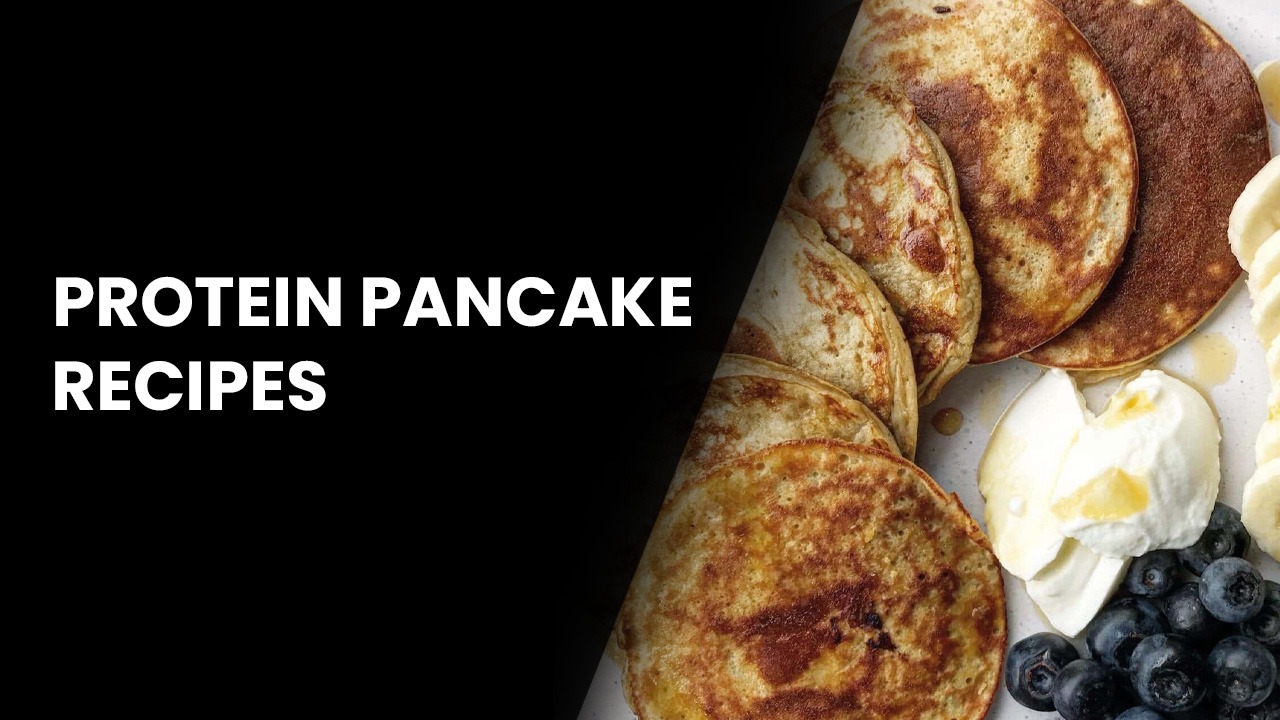
In this guide, I’m going to break down how protein pancakes fit into a higher-protein diet, how much protein you should aim for each day, and the best protein pancake recipes for different goals.
WHAT MAKES A GOOD PROTEIN PANCAKE RECIPE?
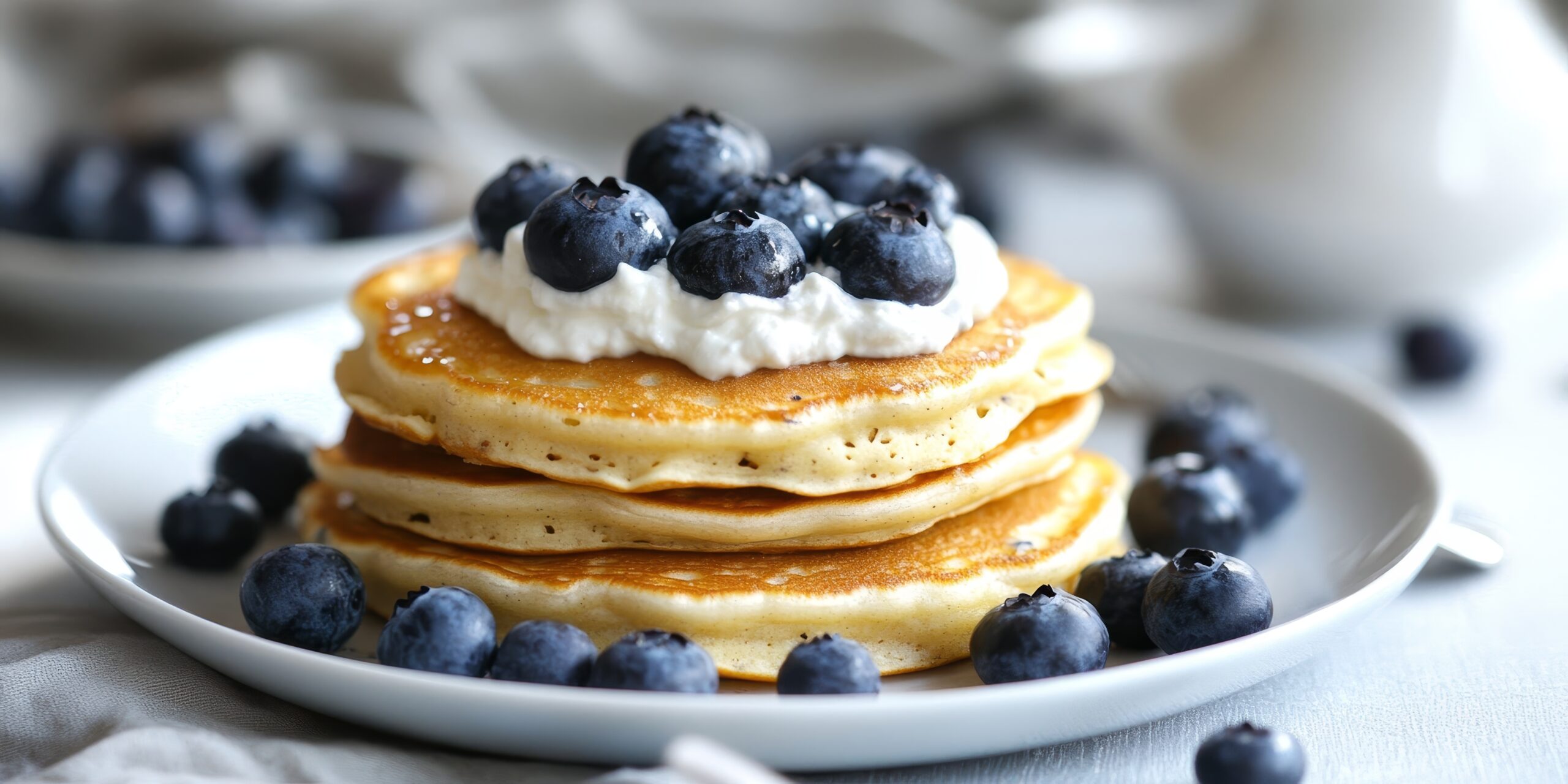
Protein pancakes seem easy to build until the batter hits the pan. One change can throw off the whole recipe.
Protein goes up, texture drops off, and the final stack can end up far less satisfying than a regular pancake breakfast.
A better recipe keeps more than one variable in check at the same time.
Protein still needs to be high enough to move breakfast in the right direction, but the pancakes also need the right texture, the right serving size, and macros that fit the goal behind the meal.
Before getting into the recipes, it helps to set the standard for what a good protein pancake recipe should deliver.
Protein pancakes should do three things:
IT NEEDS ENOUGH PROTEIN
For most people, a full serving of protein pancakes should give you about 25 to 40 grams of protein.
That gives breakfast enough protein to do two things: help you hit your daily target and keep you from getting hungry again an hour later.
If a full stack only gives you 10 to 15 grams, the meal is still light on protein, so you’ll want to consider other foods or a shake to bring the protein numbers up.
A better protein pancake recipe gives you enough protein in the stack itself, not just in whatever you add next to it.
IT STILL HAS TO TASTE AND COOK LIKE A PANCAKE
Protein pancakes still need to cook like pancakes.
The batter should pour into the pan without turning thick and pasty. It should spread, set, and flip cleanly. Once cooked, the pancakes should stay tender in the center instead of turning dry, dense, or rubbery.
That comes down to how the batter is built.
Protein powder helps raise protein, but ingredients like egg whites, oat flour, rolled oats, and baking powder are what give the pancakes better structure and texture.
IT SHOULD MATCH YOUR GOAL
The right protein pancake recipe depends on what breakfast needs to do.
For fat loss, keep protein high and calories tighter. A serving with 25 to 35 grams of protein and more measured toppings fits better here. Vanilla Greek yogurt, berries, or a light amount of sugar-free syrup keeps calories easier to control than a stack loaded with maple syrup, peanut butter, and chocolate chips.
For muscle gain, bring carbs and calories up with the protein. A serving with 30 to 40 grams of protein, plus ingredients like banana, dairy milk, or nut butter, gives you a better setup for harder training and recovery.
For maintenance, stay in between. Keep protein high enough to support recovery, include enough carbs to make breakfast filling, and use a serving size you can repeat throughout the week without needing to rebuild the recipe every time.
HOW MUCH PROTEIN DO YOU NEED EACH DAY?
Protein pancakes can help, but they only make sense when you know the bigger target they are supposed to support.
If your daily protein intake is low, breakfast is one of the easiest places to fix it.
If your daily intake is already structured well, a better protein pancake recipe can give you another option that fits the plan without turning breakfast into a carb-heavy meal that leaves you hungry again by mid-morning.
Protein pancakes are not just about swapping regular flour for whey protein powder. They are one way to get more protein into the first meal of the day while still eating something that feels like breakfast.
HOW MANY GRAMS OF PROTEIN DO YOU NEED PER DAY?
For most people who train, a good daily target is about 0.7 to 1.0 grams of protein per pound of body weight per day. You can use our Protein Calculator to come up with a more accurate protein target for you.
The lower end fits people who are newer to lifting, training a little less often, or not pushing an aggressive fat-loss phase.
The higher end fits harder training, leaner lifters trying to stay lean, and phases where holding onto muscle is a bigger priority.
That range gives you enough structure to plan your meals without turning every day into protein math.
Here is what that range looks like in practice:
- A 150-pound person needs about 105 to 150 grams of protein per day
- A 180-pound person needs about 125 to 180 grams per day
- A 200-pound person needs about 140 to 200 grams per day
Those numbers give context to breakfast fast.
If you are a 180-pound lifter and your daily goal is around 150 to 170 grams, a breakfast with 8 or 10 grams of protein does not do much.
A breakfast with 30 to 40 grams puts you in a far better position before lunch even starts.
HOW MUCH OF THAT SHOULD BREAKFAST COVER?
For most people, breakfast should give you about 25 to 40 grams of protein.
Larger lifters, harder training phases, or higher-volume days may push that closer to 35 to 45 grams. That does not mean breakfast has to be huge. It means the meal needs enough protein density to carry its share of the day.
This is where protein pancakes can help.
A stack built with vanilla protein powder gives breakfast far more protein than the standard restaurant version loaded with syrup and light on staying power.
That shift can help with two things at once: it moves your daily protein intake higher, and it cuts down the odds of crashing into a mid-morning slump after a breakfast that was mostly refined carbs.
MAKING PROTEIN PANCAKES: COMMON MISTAKES
Most protein pancake recipes go off track for the same few reasons.
The powder gets pushed too high, the batter loses structure, the pan runs too hot, or the toppings turn breakfast into a much bigger meal than planned.
Fix those problems, and the stack gets a lot better.
USING TOO MUCH PROTEIN POWDER
Protein powder is the fastest way to raise protein, but it is also the fastest way to wreck texture.
For most single-serving recipes, one scoop, or about 20 to 30 grams of powder, is enough. Add more protein without changing the rest of the batter, and the pancakes become more like cement.
The center gets dry, the edges get heavy, and the stack starts digesting more like a brick than a pancake.
The biggest culprits are pea protein and other plant-based proteins because they soak up more liquid, so keep this in mind if you want to make vegan protein pancakes.
The fix is simple: let the powder share the job.
Use one scoop, then bring in more protein from liquid egg whites, Greek yogurt, or cottage cheese instead of piling more powder into the bowl.
NOT GIVING THE BATTER ENOUGH SUPPORT
Protein powder raises protein. It does not give a pancake much structure on its own.
A better pancake batter needs ingredients that hold moisture, help with browning, and keep the center tender.
Things like oat flour, all-purpose flour, almond flour, rolled oats, gluten-free oats, Greek yogurt, cottage cheese, and liquid egg whites are all great options.
It’s why cottage cheese pancakes, Greek yogurt pancakes, and oatmeal protein pancakes often come out better than powder-heavy recipes. They have more support built into the mix.
The smaller ingredients help too.
Baking powder lifts the batter. Vanilla extract, ground cinnamon, and sea salt improve flavor without changing the macros.
LETTING THE BATTER GET TOO THICK
Good pancake batter should pour easily, spread on its own, and settle into a round shape in the pan.
Once it turns stiff, sticky, or pasty, the pancakes get heavier. Then people leave them in the pan longer to cook through, which pulls even more moisture out of the center.
Aim for a batter that flows off the spoon instead of dropping in one thick lump.
When you need to thin out the batter, add 1 to 2 tablespoons at a time of milk of choice: dairy milk, soy milk, or unsweetened vanilla almond milk until it smooths out.
For some vegan pancakes, a small amount of apple cider vinegar can help open up the texture when the recipe is built like a buttermilk-style batter.
Ground flax or flax seeds can help with binding, though they also thicken the mix, so the liquid has to increase with them.
USING THE WRONG PAN OR TOO MUCH HEAT
Protein pancakes need a controlled cooking surface.
A nonstick skillet (non-stick pan or non-stick frying pan) gives the batter time to set before it grabs. A light coat of avocado oil is plenty. You want a thin film in the pan, not a shallow pool.
Keep the heat around medium. That gives the center time to cook before the outside gets too dark. High heat leaves you with a browned exterior and a soft middle, which leads to extra time in the pan and a tougher pancake.
The same rule applies to batch cooking. For sheet pan pancakes, preheat oven first and spread the batter evenly on the baking sheet so the middle and edges finish baking together.
RUINING THE MACROS WITH TOPPINGS
A protein pancake recipe can start lean and end up far heavier than planned once the toppings go on.
In particular, maple syrup, date syrup, peanut butter, nut butter, and chocolate chips can add calories fast.
For example, two tablespoons of peanut butter brings close to 180 to 200 calories. A heavy pour of syrup can add another 100 calories or more. Do both, and the stack changes fast.
Use toppings based on the goal.
For fat loss, lighter options like berries, sugar free syrup, powdered peanut butter, or a spoonful of vanilla Greek yogurt keep calories tighter.
For muscle gain, banana protein pancakes with peanut butter or maple syrup can fit because the extra carbs and fats are increasing calories.
Toppings are part of the recipe. Count them that way.
HOW TO BUILD A BETTER PROTEIN PANCAKE BATTER
Most bad protein pancake recipes lean too hard on powder and expect the rest of the ingredients to clean it up.
It’s how you end up with a stack that looks fine from the outside and tastes dry in the center.
A better build keeps four jobs covered from the start: protein, structure, moisture, and flavor.
Once those are in place, it gets much easier to make recipes that are high in protein, hold together in the pan, and still feel like breakfast instead of a failed homemade protein shake poured into a skillet.
START WITH THE PROTEIN
The protein source drives the whole recipe, but it should not do the whole job by itself.
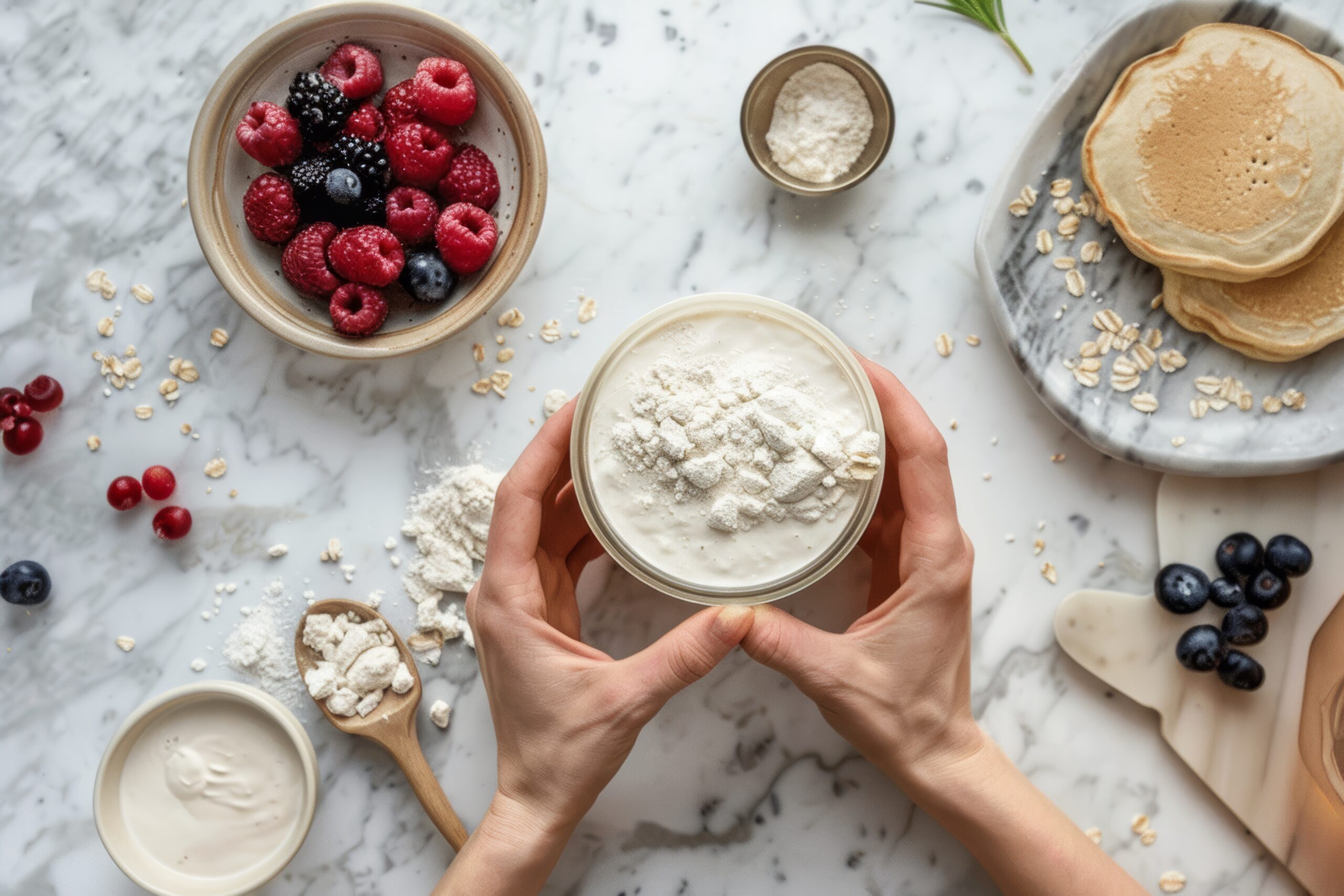
For most pancake recipes, start with a whey protein powder. I’d recommend going with ATHLEAN-X PRO-30G.
It gives you 30 grams of protein per serving, uses a transparent label with no proprietary blends, and it can be used for mixing into pancakes and other dry mixes, so it fits this kind of recipe better than a random shake powder chosen only for taste.
After you have your protein powder, build around it with whole-food protein sources that improve texture instead of fighting it.
You can easily raise protein content without turning the batter chalky.
A scoop of powder can get you part of the way there, but Greek yogurt, cottage cheese, and egg whites increase the protein content while keeping the pancakes softer.
This is also why better high-protein breakfast recipes do not rely on powder alone. They spread the protein across more than one ingredient.
ADD A CARB BASE FOR STRUCTURE
Once the protein is set, the batter needs a base that helps it cook like a pancake.
Time for the carbs. In pancake batter, carbs are not just there for energy. They give the recipe body, help it brown, and keep the center from tightening up too much.
Oat flour and blended rolled oats give you a more classic pancake texture with a little more chewiness. They also bring in complex carbohydrates, which can fit well on training days.
All-purpose flour gives the batter clean structure and a lighter finish. It is a good choice when you want the pancakes to feel closer to a standard stack.
Almond flour doesn’t contain many carbs, so it can fit better in recipes built to stay low in carbs, though it also changes texture and often needs help from eggs, yogurt, or another binder.
For higher-carb training-day versions, banana can help here too. It adds moisture, sweetness, and a softer interior.
USE MOISTURE TO CONTROL TEXTURE
Most protein pancake recipes either have too much or too little moisture.
Protein powder absorbs liquid fast. Oats do too. If the wet ingredients do not keep up, the batter thickens before it even hits the pan.
Greek yogurt and cottage cheese do more than add moisture. They also increase protein and help the batter stay tender. It’s one reason they show up so often in better pancake recipes.
Milk choice changes the texture too. Dairy milk gives a more traditional finish. Soy milk is one of the better plant-based options when you want more protein in the liquid itself. Unsweetened vanilla almond milk keeps calories lower, but it does not add much protein on its own.
If the batter is so thick that it drops off the spoon in a lump, add more liquid before it hits the pan. That one fix can change the whole stack.
FINISH WITH THE SMALL INGREDIENTS
The smaller ingredients are where the batter starts to feel finished.
A little baking powder helps the batter rise instead of sitting flat and heavy.
Vanilla extract and cinnamon make a basic vanilla batter taste more complete.
Sea salt keeps the sweetness from turning dull.
Avocado oil helps the pancakes release cleanly without soaking the surface in grease.
If you want a sweeter batter without adding much sugar, a few drops of stevia glycerite can fit here too.
GROCERY LIST FOR PROTEIN PANCAKES
If you want these recipes to become repeatable, keep the base ingredients in the kitchen. That way the batter comes together fast, and you are not rebuilding the recipe from zero every time.
PROTEIN SOURCES
- Whey protein powder (like ATHLEAN-X PRO-30G)
- Greek yogurt
- cottage cheese
- egg whites
- liquid egg whites
CARB BASES
- oat flour
- rolled oats
- all-purpose flour
- almond flour
- bananas
MOISTURE AND TEXTURE
- dairy milk
- unsweetened vanilla almond milk
- avocado oil
FLAVOR AND LIFT
- baking powder
- vanilla extract
- ground cinnamon
- sea salt
- stevia glycerite
These will cover most of the recipes you are likely to make, whether the goal is a leaner weekday stack, a higher-carb training-day version, or a bigger weekend batch.
PLANT-BASED PROTEIN PANCAKE INGREDIENTS
Plant-based protein pancakes need a little more attention to texture from the start.
Many plant protein powders absorb more liquid and cook up denser than whey, so the supporting ingredients carry more weight.
A better plant-based batter uses a protein source, a carb base, enough moisture, and a binder that helps the pancakes hold together in the pan.
PLANT PROTEIN SOURCES
- vegan protein powder (like ATHLEAN-X PRO-30G VEGAN)
- pea protein
- soy milk
- unsweetened vanilla almond milk
CARB BASES
- oat flour
- rolled oats
- gluten-free oats
- almond flour
- mashed banana
BINDERS AND TEXTURE SUPPORT
- ground flax
- flax seeds
- chia seeds
- applesauce
- dairy-free yogurt
FLAVOR AND LIFT
- baking powder
- vanilla extract
- ground cinnamon
- sea salt
- stevia glycerite
- apple cider vinegar
THE BEST PROTEIN PANCAKE RECIPES
A good protein pancake recipe needs to do more than bump up the grams on paper. It has to fit the job the meal is supposed to do.
Some stacks need more carbs because breakfast is being followed by strength training. Some need tighter calories because the goal is fat loss. Some need a softer texture, better meal prep value, or a plant-based build that still holds together in the pan.
It’s why this recipe section is organized by goal instead of by random flavor variations. It gives you a faster way to find the version that fits your morning, your macros, and your training.
Each recipe below includes:
- ingredients with measurements
- how to make it
- serving size
- nutritional information
- best fit
PRE-WORKOUT PROTEIN PANCAKES
Pre-workout protein pancakes need a different setup than a weekend stack at a diner.
Before training, breakfast should give you enough carbs to support the session, enough protein to move the day forward, and a moderate fat intake so the meal does not sit heavy.
Go too low on carbs and the meal does not do much for performance. Go too high on fat and digestion slows down more than most people want before a workout.
These recipes keep that balance in a better range.
They give you a softer stack than something richer like sour cream pancakes, but they still bring enough structure and flavor to feel like breakfast instead of diet food.
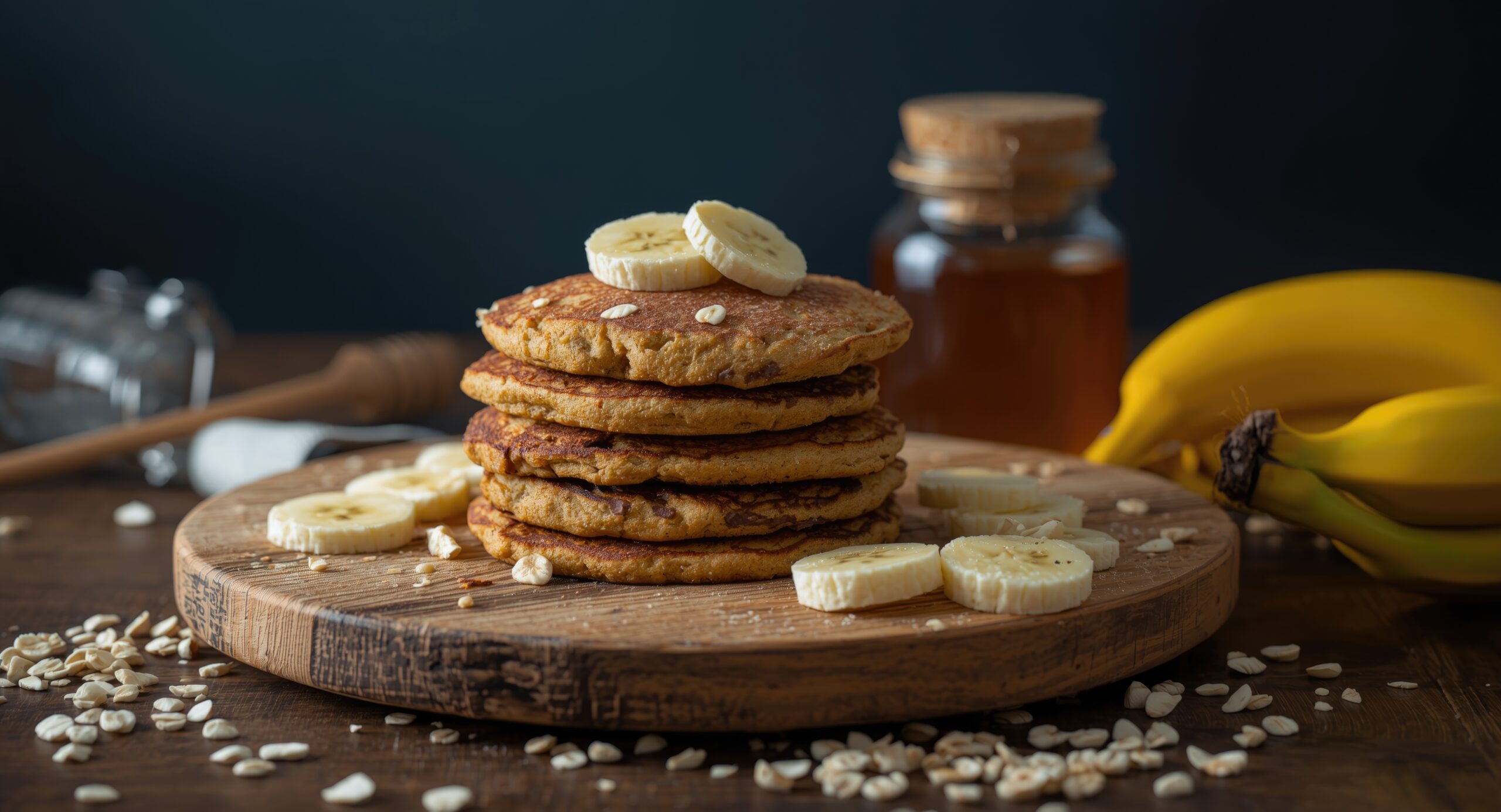
BANANA OAT PRE-WORKOUT PROTEIN PANCAKES
This one gives you more training-day carbs from the banana and oats without pushing fat too high. It can also be used for protein waffles if you want the same ingredients in a different format.
SERVING SIZE
- 1 full batch is about 3 to 4 medium pancakes
INGREDIENTS
- 1 scoop vanilla protein powder (like ATHLEAN-X PRO-30G French Vanilla Bean)
- 1 medium banana
- 1/2 cup rolled oats
- 1/4 cup oat flour
- 1/3 cup dairy milk
- 2 large egg whites
- 1 teaspoon baking powder
- 1/2 teaspoon ground cinnamon
- 1/2 teaspoon vanilla extract
- pinch of sea salt
- light spray or thin coat of avocado oil for the pan
HOW TO MAKE IT
- Add the banana, protein powder, rolled oats, oat flour, dairy milk, egg whites, baking powder, cinnamon, vanilla extract, and sea salt to a blender.
- Blend until smooth.
- Let the batter sit for 2 to 3 minutes so the oats can hydrate.
- Heat a nonstick skillet over medium heat.
- Pour the batter into 3 to 4 pancakes and cook until the bottoms are lightly browned and the tops start to set.
- Flip and cook until the centers are done.
NUTRITIONAL INFORMATION
- Calories: about 620
- Protein: about 50 g
- Carbs: about 84 g
- Fat: about 7 g
GREEK YOGURT PRE-WORKOUT PROTEIN PANCAKES
Greek yogurt helps keep the texture softer while the protein stays high.
This is a good option when you want a stack that lands between a heavier breakfast and a lighter liquid meal.
If your session starts later, pair it with fruit or half a berry protein smoothie.
SERVING SIZE
- 1 full batch is about 4 medium pancakes
INGREDIENTS
- 1 scoop vanilla protein powder (like ATHLEAN-X PRO-30G French Vanilla Bean)
- 1/2 cup plain Greek yogurt
- 1/3 cup all-purpose flour
- 2 tablespoons oat flour
- 1/4 cup dairy milk
- 3 large egg whites
- 1 teaspoon baking powder
- 1/2 teaspoon vanilla extract
- pinch of sea salt
- light spray or thin coat of avocado oil for the pan
HOW TO MAKE IT
- In a bowl, whisk the Greek yogurt, protein powder, dairy milk, egg whites, and vanilla extract until smooth.
- Add the all-purpose flour, oat flour, baking powder, and sea salt.
- Stir just until the batter comes together.
- Let the batter rest for 2 minutes.
- Heat a nonstick skillet over medium heat.
- Pour and cook the pancakes until they set, then flip and finish the second side.
NUTRITIONAL INFORMATION
- Calories: about 530
- Protein: about 60 g
- Carbs: about 54 g
- Fat: about 3 g
BLENDED OATMEAL PROTEIN PANCAKES
This recipe is a good fit for busy mornings because the batter comes together fast, the nutritional information stays predictable, and it can be doubled for meal prep without changing the build too much.
SERVING SIZE
- 1 full batch is about 3 medium pancakes
INGREDIENTS
- 1 scoop vanilla protein powder (like ATHLEAN-X PRO-30G French Vanilla Bean)
- 1/2 cup rolled oats
- 1/4 cup Greek yogurt
- 1/3 cup dairy milk
- 3 large egg whites
- 1 teaspoon baking powder
- 1/2 teaspoon vanilla extract
- 1/2 teaspoon ground cinnamon
- pinch of sea salt
- light spray or thin coat of avocado oil for the pan
HOW TO MAKE IT
- Add all ingredients to a blender.
- Blend until smooth.
- Let the batter rest for 2 minutes.
- Heat a nonstick skillet over medium heat.
- Pour the batter into 3 pancakes.
- Cook until the tops bubble lightly and the bottoms brown, then flip and finish cooking.
NUTRITIONAL INFORMATION
- Calories: about 440
- Protein: about 54 g
- Carbs: about 37 g
- Fat: about 5 g
FAT LOSS PROTEIN PANCAKES
Fat-loss protein pancakes need a different setup than a stack built for training or size.
The job here is simple: keep protein high enough to make breakfast filling, keep calories tighter, and avoid letting the toppings turn the meal into something much bigger than planned.
These recipes do that in different ways.
One leans on cottage cheese for more whole-food protein. One pulls carbs down with almond flour. One uses a sheet pan, so portions stay easy to control during the week.
COTTAGE CHEESE FAT-LOSS PROTEIN PANCAKES
Cottage cheese helps increase protein content without forcing you to pile in more powder. It also gives the batter more body, which helps the pancakes come out filling enough for a cut phase.
SERVING SIZE
- 1 full batch is about 4 medium pancakes
INGREDIENTS
- 1 scoop vanilla cinnamon bun flavored protein powder (like ATHLEAN-X PRO-30G Frosted Cinnamon Bun)
- 1/2 cup low-fat cottage cheese
- 1/4 cup oat flour
- 2 tablespoons all-purpose flour
- 1/4 cup liquid egg whites
- 1 large egg white
- 2 tablespoons unsweetened vanilla almond milk
- 1 teaspoon baking powder
- 1/2 teaspoon vanilla extract
- 1/2 teaspoon ground cinnamon
- pinch of sea salt
- light spray or thin coat of avocado oil for the pan
HOW TO MAKE IT
- Add the cottage cheese, protein powder, liquid egg whites, egg white, almond milk, and vanilla extract to a blender.
- Blend until smooth.
- Add the oat flour, all-purpose flour, baking powder, cinnamon, and sea salt.
- Blend again just until the batter comes together.
- Let it rest for 2 minutes.
- Heat a nonstick skillet over medium heat.
- Pour the batter into 4 medium pancakes and cook until the edges set and the bottoms brown lightly.
- Flip and cook until the centers are done.
NUTRITIONAL INFORMATION
- Calories: about 470
- Protein: about 58 g
- Carbs: about 42 g
- Fat: about 7 g
ALMOND FLOUR LOW-CARB PROTEIN PANCAKES
This decreases carb content while keeping breakfast protein heavy. The texture comes out a little denser than an oat-based stack, so the batter stays smaller and the portion stays easier to control.
SERVING SIZE
- 1 full batch is about 3 medium pancakes
INGREDIENTS
- 1 scoop vanilla protein powder (like ATHLEAN-X PRO-30G French Vanilla Bean)
- 1/3 cup almond flour
- 1/4 cup liquid egg whites
- 1 large whole egg
- 2 tablespoons plain Greek yogurt
- 2 tablespoons unsweetened vanilla almond milk
- 1 teaspoon baking powder
- 1/2 teaspoon vanilla extract
- pinch of sea salt
- light spray or thin coat of avocado oil for the pan
HOW TO MAKE IT
- In a bowl, whisk the protein powder, liquid egg whites, whole egg, Greek yogurt, almond milk, and vanilla extract until smooth.
- Add the almond flour, baking powder, and sea salt.
- Stir until the batter is fully combined.
- Let the banner rest for 2 to 3 minutes so it can thicken slightly.
- Heat a nonstick skillet over medium-low heat.
- Pour into 3 pancakes and cook a little slower than an oat-based batter so the centers set fully.
- Flip and finish the second side.
NUTRITIONAL INFORMATION
- Calories: about 490
- Protein: about 54 g
- Carbs: about 14 g
- Fat: about 25 g
SHEET PAN FAT-LOSS PROTEIN PANCAKES
This recipe is built for meal prep. The sheet pan keeps the batch even, the portions stay easy to cut, and breakfast is already handled for the next few mornings.
SERVING SIZE
- 1 serving is 1/4 of the pan
- makes 4 servings total
INGREDIENTS
- 2 scoops Belgian waffle flavored protein powder (like ATHLEAN-X PRO-30G Belgian Maple Waffle)
- 1 cup rolled oats
- 1/2 cup plain Greek yogurt
- 3/4 cup liquid egg whites
- 1/2 cup unsweetened vanilla almond milk
- 2 teaspoons baking powder
- 1 teaspoon vanilla extract
- 1 teaspoon ground cinnamon
- pinch of sea salt
- light spray or thin coat of avocado oil for the baking sheet or pan
HOW TO MAKE IT
- Preheat oven to 350°F.
- Add the rolled oats to a blender and blend into a flour.
- Add the protein powder, Greek yogurt, liquid egg whites, almond milk, vanilla extract, baking powder, cinnamon, and sea salt.
- Blend until smooth.
- Lightly grease a small baking sheet or baking pan.
- Pour in the batter and spread it evenly.
- Bake for 14 to 18 minutes, until the center is set and the edges are lightly golden.
- Cool slightly, then cut into 4 portions.
NUTRITIONAL INFORMATION
- Calories: about 195
- Protein: about 26 g
- Carbs: about 17 g
- Fat: about 3 g
MUSCLE GROWTH PROTEIN PANCAKES
Muscle-growth protein pancakes need more protein than a leaner breakfast with a few extra toppings.
The meal still has to include enough protein content to support recovery, but it also needs more carbs and more total calories so breakfast can help with training, size, and a calorie surplus.
These recipes take that approach in different ways.
One keeps the build more balanced, one pushes calories up faster, and one leans harder into the dessert-for-breakfast side while still keeping the protein high enough to back it up.
CLASSIC MUSCLE GROWTH PRO-30G PANCAKES
This is the most balanced of the three. It gives you a bigger breakfast, a full serving of protein, and enough carbs to work well after training or if you’re looking to increase weight and muscle mass.
SERVING SIZE
- 1 full batch is about 4 medium pancakes
INGREDIENTS
- 1 scoop Belgian waffle flavored protein powder (like ATHLEAN-X PRO-30G Belgian Maple Waffle)
- 1/2 cup oat flour
- 1/4 cup rolled oats
- 1/2 cup plain Greek yogurt
- 1/3 cup dairy milk
- 2 large whole eggs
- 1 teaspoon baking powder
- 1/2 teaspoon vanilla extract
- 1/2 teaspoon ground cinnamon
- pinch of sea salt
- light spray or thin coat of avocado oil for the pan
HOW TO MAKE IT
- In a bowl, whisk the Greek yogurt, dairy milk, whole eggs, and vanilla extract until smooth.
- Add protein powder, oat flour, rolled oats, baking powder, cinnamon, and sea salt.
- Stir until the batter comes together.
- Let it rest for 2 to 3 minutes so the oats can soften slightly.
- Heat a nonstick skillet over medium heat.
- Pour the batter into 4 medium pancakes and cook until the bottoms brown lightly and the tops begin to set.
- Flip and cook until the centers are done.
NUTRITIONAL INFORMATION
- Calories: about 690
- Protein: about 67 g
- Carbs: about 63 g
- Fat: about 17 g
PEANUT BUTTER BANANA BULK PANCAKES
This recipe includes more carbs and more calories. The banana gives the batter a softer interior, and the peanut butter brings the meal up fast for lifters who need a bigger first meal.
SERVING SIZE
- 1 full batch is about 4 medium pancakes
INGREDIENTS
- 1 scoop cinnamon bun flavored protein powder (like ATHLEAN-X PRO-30G Frosted Cinnamon Bun)
- 1 medium banana
- 1/2 cup rolled oats
- 1/4 cup oat flour
- 1/3 cup dairy milk
- 2 large whole eggs
- 2 tablespoons peanut butter
- 1 teaspoon baking powder
- 1/2 teaspoon vanilla extract
- 1/2 teaspoon ground cinnamon
- pinch of sea salt
- light spray or thin coat of avocado oil for the pan
HOW TO MAKE IT
- Add the banana, protein powder, rolled oats, oat flour, dairy milk, eggs, peanut butter, baking powder, vanilla extract, cinnamon, and sea salt to a blender.
- Blend until smooth.
- Rest the batter for 2 to 3 minutes.
- Heat a nonstick skillet over medium heat.
- Pour into 4 medium pancakes.
- Cook until the bottoms are lightly browned and the tops begin to set.
- Flip and finish cooking the second side.
- Top with a measured drizzle of maple syrup if you want to push carbs a little higher.
NUTRITIONAL INFORMATION
- Calories: about 885
- Protein: about 63 g
- Carbs: about 90 g
- Fat: about 33 g
CHOCOLATE CHIP MUSCLE GROWTH PANCAKES
This is the highest-calorie option in the group and the one that leans hardest into the dessert-for-breakfast feel.
It still keeps protein in a strong range, but it is built more for lifters trying to gain size than for anyone keeping calories tight.
SERVING SIZE
- 1 full batch is about 4 medium pancakes
INGREDIENTS
- 1 scoop chocolate fudge brownie flavored protein powder (like ATHLEAN-X PRO-30G Chocolate Fudge Brownie)
- 1/2 cup rolled oats
- 1/3 cup all-purpose flour
- 1/2 cup plain Greek yogurt
- 1/3 cup milk of choice
- 2 large whole eggs
- 2 tablespoons chocolate chips
- 1 teaspoon baking powder
- 1/2 teaspoon vanilla extract
- pinch of sea salt
- light spray or thin coat of avocado oil for the pan
HOW TO MAKE IT
- Add the rolled oats to a blender and blend into a coarse flour.
- Transfer to a bowl and whisk in the protein powder, all-purpose flour, baking powder, and sea salt.
- In a second bowl, whisk the Greek yogurt, milk, eggs, and vanilla extract.
- Pour the wet ingredients into the dry ingredients and stir until combined.
- Fold in the chocolate chips.
- Let the batter rest for 2 minutes.
- Heat a nonstick skillet over medium heat.
- Pour into 4 medium pancakes and cook until the bottoms brown and the tops begin to set.
- Flip and finish the second side.
NUTRITIONAL INFORMATION
- Calories: about 830
- Protein: about 66 g
- Carbs: about 88 g
- Fat: about 23 g
SNACK / DESSERT PROTEIN PANCAKES
Snack and dessert protein pancakes need a different setup than a full breakfast stack.
The goal here is a smaller portion that still feels like a treat. Protein stays high enough to make the serving worth it, but the size stays tighter so the meal does not drift into full-breakfast territory when you only wanted something sweet.
These recipes take that approach in different ways. One keeps the portion small and simple. One leans into chocolate for more of a snack-stack feel. One borrows the richer texture people like in sour cream pancakes but keeps the serving under better control.
MINI DESSERT PROTEIN PANCAKE STACKS
This one is built for the nights when you want something sweet but do not need a full plate. The portion stays small, the texture stays soft, and the toppings add just enough to scratch the itch without blowing up the meal.
SERVING SIZE
- 1 full batch is about 4 mini pancakes
INGREDIENTS
- 1/2 scoop cookies and cream flavored protein powder (like ATHLEAN-X PRO-30G Cookies and Cream)
- 1/4 cup vanilla Greek yogurt
- 2 tablespoons oat flour
- 1 large egg white
- 2 tablespoons unsweetened vanilla almond milk
- 1/2 teaspoon baking powder
- 1/4 teaspoon vanilla extract
- pinch of sea salt
- light spray or thin coat of avocado oil for the pan
TOPPING
- 1 tablespoon vanilla Greek yogurt
- 1 tablespoon powdered peanut butter, mixed with a little water
- 1 teaspoon maple syrup
HOW TO MAKE IT
- In a bowl, whisk the protein powder, vanilla Greek yogurt, egg white, almond milk, and vanilla extract until smooth.
- Add the oat flour, baking powder, and sea salt.
- Stir until the batter comes together.
- Let it rest for 2 minutes.
- Heat a nonstick skillet over medium-low heat.
- Pour the batter into 4 mini pancakes and cook until the bottoms brown lightly and the tops begin to set.
- Flip and finish the second side.
- Stack the pancakes and top with the Greek yogurt, powdered peanut butter mixture, and maple syrup.
NUTRITIONAL INFORMATION
- Calories: about 265
- Protein: about 30 g
- Carbs: about 29 g
- Fat: about 4 g
CHOCOLATE PROTEIN PANCAKE SNACK STACK
This is the most snack-like option in the group. The chocolate gives it more of a dessert angle, but the portion stays small enough to fit in the afternoon or after dinner without turning into another full meal.
SERVING SIZE
- 1 full batch is about 3 medium pancakes
INGREDIENTS
- 1 scoop chocolate fudge brownie flavored protein powder (like ATHLEAN-X PRO-30G Chocolate Fudge Brownie)
- 1/4 cup oat flour
- 2 tablespoons plain Greek yogurt
- 2 large egg whites
- 3 tablespoons milk of choice
- 1 tablespoon mini chocolate chips
- 1 teaspoon baking powder
- 1/2 teaspoon vanilla extract
- pinch of sea salt
- light spray or thin coat of avocado oil for the pan
HOW TO MAKE IT
- In a bowl, whisk the protein powder, Greek yogurt, egg whites, milk, and vanilla extract until smooth.
- Add the oat flour, baking powder, and sea salt.
- Stir until fully combined.
- Fold in the mini chocolate chips.
- Let the batter rest for 2 minutes.
- Heat a nonstick skillet over medium-low heat.
- Pour into 3 medium pancakes.
- Cook until the bottoms set and the tops begin to bubble lightly.
- Flip and finish cooking the second side.
NUTRITIONAL INFORMATION
- Calories: about 375
- Protein: about 47 g
- Carbs: about 35 g
- Fat: about 6 g
SOUR CREAM–STYLE PROTEIN PANCAKES
This version is built for a richer texture and a softer pancake. It takes the feel of sour cream pancakes and pulls it into a more controlled protein-focused serving.
SERVING SIZE
- 1 full batch is about 3 medium pancakes
INGREDIENTS
- 1 scoop frosted cinnamon bun flavored protein powder (like ATHLEAN-X PRO-30G Frosted Cinnamon Bun)
- 2 tablespoons light sour cream
- 1/4 cup plain Greek yogurt
- 1/4 cup all-purpose flour
- 2 large egg whites
- 2 tablespoons milk of choice
- 1 teaspoon baking powder
- 1/2 teaspoon vanilla extract
- 1/2 teaspoon ground cinnamon
- pinch of sea salt
- light spray or thin coat of avocado oil for the pan
HOW TO MAKE IT
- In a bowl, whisk the protein powder, sour cream, Greek yogurt, egg whites, milk, and vanilla extract until smooth.
- Add the all-purpose flour, baking powder, ground cinnamon, and sea salt.
- Stir just until the batter comes together.
- Let it rest for 2 minutes.
- Heat a nonstick skillet over medium-low heat.
- Pour into 3 medium pancakes and cook until the bottoms are lightly golden and the tops begin to set.
- Flip and finish the second side.
NUTRITIONAL INFORMATION
- Calories: about 420
- Protein: about 47 g
- Carbs: about 38 g
- Fat: about 5 g
PLANT-BASED PROTEIN PANCAKES
Plant-based protein pancakes need more support than whey-based versions.
The powder tends to absorb more liquid, the batter can tighten up fast, and the pancakes need extra help with binding if you want them to stay soft instead of turning dense.
A better plant-based recipe builds that support in from the start with the right flour, enough moisture, and a binder that can hold the stack together in the pan.
These three recipes take different approaches. One is the simplest powder-based version. One uses oats and flax for a softer gluten-free stack. One leans more whole food based with banana and oats, so the batter does not depend as heavily on powder.
SIMPLE VEGAN PROTEIN PANCAKES
This is the most straightforward dairy-free option in the group. It keeps the build simple while giving the batter enough support to handle protein without turning heavy.
SERVING SIZE
- 1 full batch is about 4 medium pancakes
INGREDIENTS
- 1 scoop vanilla vegan protein powder (like ATHLEAN-X PRO-30G Vanilla Bean (Vegan))
- 1/3 cup oat flour
- 2 tablespoons all-purpose flour
- 3/4 teaspoon baking powder
- 1/4 teaspoon ground cinnamon
- pinch of sea salt
- 1/2 cup soy milk
- 1 teaspoon apple cider vinegar
- 1/2 teaspoon vanilla extract
- 1 tablespoon maple syrup
- light spray or thin coat of avocado oil for the pan
HOW TO MAKE IT
- In a small bowl, stir the soy milk and apple cider vinegar together and let it sit for 2 minutes.
- In a larger bowl, whisk the protein powder, oat flour, all-purpose flour, baking powder, cinnamon, and sea salt.
- Pour in the soymilk mixture, vanilla extract, and maple syrup.
- Stir until the batter is smooth.
- Let it rest for 2 to 3 minutes.
- Heat a nonstick skillet over medium-low heat.
- Pour into 4 medium pancakes and cook until the bottoms are lightly browned and the tops start to set.
- Flip and finish the second side.
NUTRITIONAL INFORMATION
- Calories: about 465
- Protein: about 40 g
- Carbs: about 56 g
- Fat: about 9 g
CHOCOLATE GLUTEN-FREE OAT PLANT-BASED PANCAKES
This version leans more on oats and flax, which gives the pancakes a softer texture than many powder-heavy vegan recipes. It is also a good fit for meal prep because the texture holds up better after cooling and reheating.
SERVING SIZE
- 1 full batch is about 4 medium pancakes
INGREDIENTS
- 1 scoop double chocolate flavored vegan protein powder (like ATHLEAN-X PRO-30G Rich Double Chocolate (Vegan)
- 1/2 cup gluten-free oats
- 1/4 cup oat flour
- 1 tablespoon ground flax
- 1 teaspoon flax seeds
- 1 teaspoon baking powder
- 1/2 teaspoon vanilla extract
- 1/2 teaspoon ground cinnamon
- pinch of sea salt
- 1/2 cup unsweetened vanilla almond milk
- 2 tablespoons unsweetened applesauce
- light spray or thin coat of avocado oil for the pan
HOW TO MAKE IT
- Add the gluten-free oats to a blender and blend until fine.
- Add the oat flour, protein powder, ground flax, flax seeds, baking powder, cinnamon, sea salt, almond milk, applesauce, and vanilla extract.
- Blend until smooth.
- Let the batter sit for 3 minutes so the oats and flax can hydrate.
- Heat a nonstick skillet over medium-low heat.
- Pour into 4 medium pancakes and cook until the bottoms are lightly golden and the tops begin to set.
- Flip and finish cooking the second side.
NUTRITIONAL INFORMATION
- Calories: about 535
- Protein: about 41 g
- Carbs: about 62 g
- Fat: about 13 g
WHOLE-FOOD PLANT-BASED BANANA PANCAKES
This version still leans more on whole-food ingredients than the other plant-based recipes, but it brings the protein up enough to function as a full breakfast. The banana adds sweetness, the oats give the stack body, and the extra plant protein and soy milk push the numbers into a better range.
SERVING SIZE
- 1 full batch is about 4 medium pancakes
INGREDIENTS
- 1 scoop vanilla flavored vegan protein powder (like ATHLEAN-X PRO-30G Vanilla Bean (Vegan))
- 1 medium banana
- 1/3 cup rolled oats
- 1/4 cup oat flour
- 1 tablespoon ground flax
- 3/4 cup soy milk
- 1 teaspoon baking powder
- 1/2 teaspoon vanilla extract
- 1/2 teaspoon ground cinnamon
- pinch of sea salt
- light spray or thin coat of avocado oil for the pan
HOW TO MAKE IT
- Add the banana, rolled oats, oat flour, protein powder, ground flax, soy milk, baking powder, vanilla extract, cinnamon, and sea salt to a blender.
- Blend until smooth.
- Let the batter sit for 3 minutes so the oats and flax can hydrate.
- Heat a nonstick skillet over medium-low heat.
- Pour into 4 medium pancakes and cook until the bottoms brown lightly and the tops begin to set.
- Flip and cook until the centers are done.
NUTRITIONAL INFORMATION
- Calories: about 590
- Protein: about 45 g
- Carbs: about 74 g
- Fat: about 14 g
Protein pancakes are one of the easiest ways to turn breakfast into a meal that helps you hit your protein intake goals instead of falling behind before the day even starts.
Keep the full serving around 25 to 40 grams of protein, build the batter so it stays soft and cooks cleanly, and match the carbs, fats, and toppings to whether you are working toward fat loss, maintaining, or trying to grow muscle.
Pick the recipe you will make consistently, because the best protein pancake recipe is the one that keeps showing up on your plate.
Check out our complete line of ATHLEAN-RX Supplements and find the best training program for you based on your fitness level and goals.

- A good protein pancake recipe should give you about 25 to 40 grams of protein per serving, not just add a scoop of powder to an otherwise low-protein breakfast.
- Protein pancakes still need to cook and taste like pancakes. The best recipes balance protein with ingredients like oats, Greek yogurt, cottage cheese, or egg whites so the texture stays soft instead of dry or rubbery.
- For most people who train, daily protein intake should land around 0.7 to 1.0 grams per pound of bodyweight per day, and breakfast is one of the easiest places to start.
- The simplest way to build a better batter is to use 1 protein source, 1 carb base, enough liquid to keep the batter pourable, and a few small ingredients for lift and flavor.
- A basic starting recipe can be as simple as 1 scoop of protein powder, 1/2 cup oats or oat flour, 2 to 3 egg whites, a few spoonfuls of Greek yogurt, 1 teaspoon baking powder, and enough milk to smooth out the batter.
- Different goals call for different pancake builds. Fat-loss versions keep calories tighter, muscle-gain versions bring more carbs and total calories, and plant-based versions need more help with moisture and binding.
- Toppings can change the whole meal fast. A little syrup or nut butter can fit, but large pours and oversized spoonfuls can turn a high-protein breakfast into dessert.
- The best protein pancake recipe is one you can make consistently, enjoy eating, and fit into your goal without having to rethink breakfast every morning.
PROTEIN PANCAKES FAQS
Yes, they can be healthy when you build them with the right ingredients and keep the portion under control.
A protein pancake recipe starts with enough protein for a full breakfast, then adds ingredients that give the batter structure and make the meal more filling.
Think protein powder, Greek yogurt, cottage cheese, egg whites, oats, or oat flour. That gives you a stack with more protein, better texture, and a breakfast that holds up longer than standard pancakes made mostly from white flour and sugar.
The part that throws the meal off is turning it into a calorie and sugar bomb.
A small amount of maple syrup or nut butter can fit, but once the stack gets buried under syrup, chocolate chips, whipped toppings, and oversized portions, it stops being a high-protein breakfast and starts looking a lot more like dessert.
Keep it simple: one protein source, one flour or oat base, one liquid, and one ingredient to help the batter rise.
A basic version can be as easy as one scoop of protein powder, 1/2 cup of oats or oat flour, 2 to 3 egg whites, a few spoonfuls of Greek yogurt, and 1 teaspoon of baking powder.
Blend or whisk it into a smooth batter, let it sit for a couple minutes, then cook it in a nonstick pan over medium heat.
The main thing to watch is texture. The batter should pour and spread on its own. If it turns thick like paste, add a little more milk before it hits the pan.
Yes, but keep the amount under control.
A small amount of protein powder can work in pancake mix, but too much changes the batter fast. The pancakes get thicker, drier, and harder to cook through.
A good starting point is about one scoop per batch, plus a little extra liquid to loosen the mix.
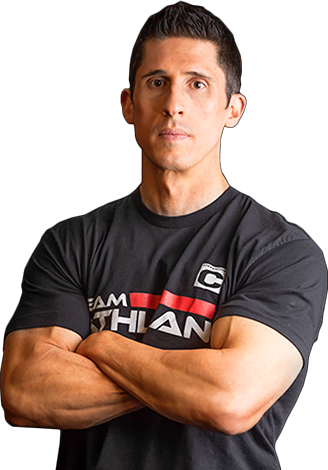
Jeff Cavaliere M.S.P.T, CSCS
Jeff Cavaliere is a Physical Therapist, Strength Coach and creator of the ATHLEAN-X Training Programs and ATHLEAN-Rx Supplements. He has a Masters in Physical Therapy (MSPT) and has worked as Head Physical Therapist for the New York Mets, as well as training many elite professional athletes in Major League Baseball, NFL, MMA and professional wrestling. His programs produce “next level” achievements in muscle size, strength and performance for professional athletes and anyone looking to build a muscular athletic physique.