





high protein lunches
They struggle because lunch is usually rushed, repetitive, and built around whatever is easiest to grab in the moment.
You end up with meals that are low in protein, overly processed, or both, leaving you unsatisfied an hour later and reaching for unhealthy snacks you never planned on eating.
A high-protein lunch doesn’t need to be complicated, restrictive, or boring.
It needs structure. It needs to be built around real food. And, most importantly, it needs to be simple enough that you can repeat it consistently during a busy week.
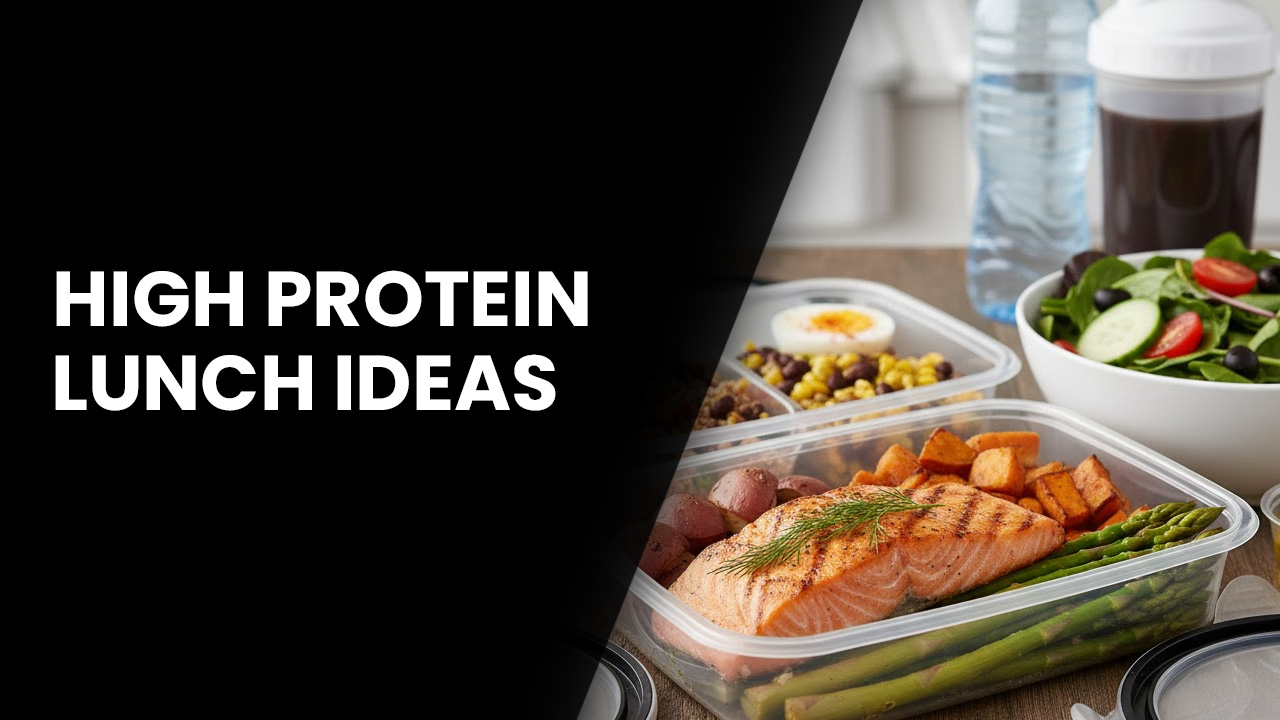
Today, I’m breaking down practical high-protein lunch ideas that are easy to prepare, rotate, and stick to.
Every lunch idea follows the same basic approach: prioritize protein, include smart carbohydrates, minimize processed foods, and keep preparation simple.
Once you understand that structure, putting together a solid lunch stops feeling like work and starts becoming automatic.
HOW TO MAKE A HIGH-PROTEIN LUNCH
Guys, I’m going to give you plenty of high-protein lunch ideas below, but there’s something I want to do first because it’s more important than just telling you what to eat.
I want to teach you how to eat.
I want to show you how to build your own high-protein lunch using the foods you already have and actually enjoy eating.
Once you understand the structure behind a healthy lunch that supports your fitness goals, you don’t need to memorize recipes or follow someone else’s meal plan perfectly.
You can mix and match your own ingredients, adjust flavors, and still end up with a lunch that works for your needs.
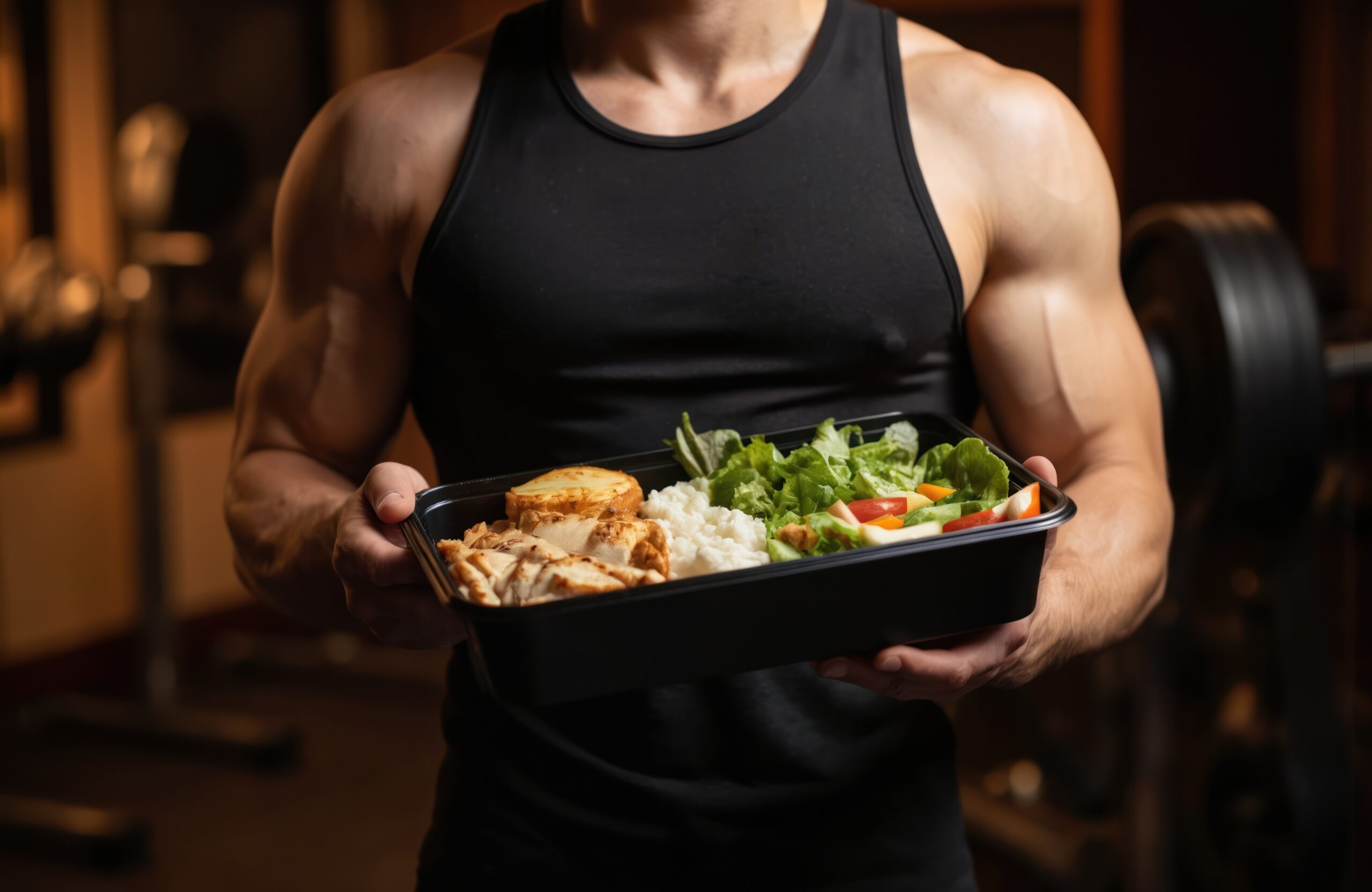
Every effective high-protein lunch that I’m going to suggest follows the same basic framework:
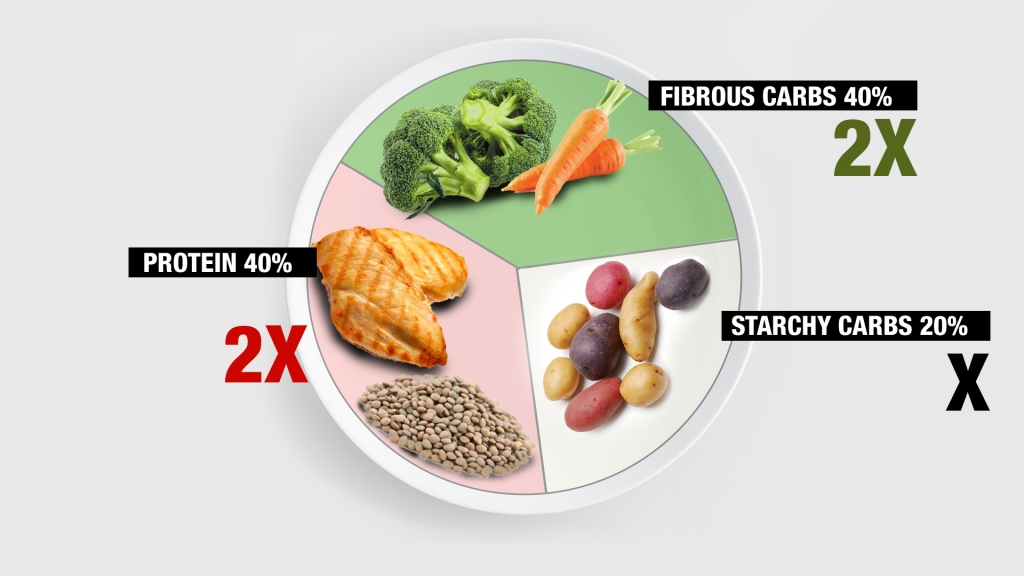
LEAN PROTEIN (~40%)
At the center of every high-protein lunch is a lean, high-quality protein source. This should make up roughly 40% of your plate.
This is non-negotiable.
Protein is the anchor of the meal because it plays a direct role in preserving muscle tissue and supporting recovery, while also slowing digestion and improving satiety.
This helps keep blood sugar more stable across the afternoon, which is why lunches built around adequate protein tend to feel more filling and lasting than low-protein meals that leave you hungry shortly after.
You can use our Protein Calculator to determine how much protein you should be eating on a daily basis.
Here are some of the best protein sources you can choose from when building your high-protein lunch:
ANIMAL PROTEIN SOURCES
- Chicken breast (grilled, baked, or seasoned)
- Turkey breast (roasted)
- Turkey burger
- Turkey sausage
- Lean beef (top round, sirloin)
- Lean pork chop
- Tuna (fresh or canned in water)
- Salmon (grilled, baked, or canned)
- Halibut
- Sole
- Sea bass
- Shrimp
- Scallops
- Sashimi
- Egg whites (scrambled, omelet, soufflé)
- Whole eggs (used strategically)
- Greek yogurt (low-fat or non-fat)
- Cottage cheese (1% or low-fat)
- Skim or low-fat milk
- Low-fat cheese (string cheese, mozzarella, wedges)
- Protein powder (e.g., whey-based)
- Protein bars
PLANT BASED PROTEIN SOURCES
- Lentils
- Beans (including bean-based soups)
- Tofu
- Tempeh
- Veggie burgers (minimally processed)
- High-protein cereals (e.g., Go Lean, Heart to Heart)
- Nuts (almonds, walnuts, mixed nuts)
- Peanut butter
- Hummus
- Vegetarian protein bars
FIBROUS CARBOHYDRATES (~40%)
The next 40% of your lunch should come from fibrous carbohydrates, primarily vegetables.
Fibrous carbs add volume to the meal without driving calories up, which helps improve digestion and increase fullness without relying on excess food or added fats.
Just as importantly, they slow the absorption of the meal, helping regulate blood sugar and prevent the energy crashes that often follow low-fiber lunches.
While protein anchors the meal, fiber is what makes a high-protein lunch sustainable day after day, helping you eat consistently without feeling restricted or unsatisfied.
Here are my picks for the best fibrous carbohydrates:
FRUITS
- Apples
- Bananas
- Berries (blueberries, strawberries, mixed berries)
- Citrus (oranges, tangerines, grapefruit)
- Grapes
- Stone fruit (peach, plum, nectarine)
- Melon (cantaloupe)
- Pears
- Mango
- Papaya
- Pomegranate
- Dried fruit (apricots, cranberries)
- Canned pumpkin
- Pickles
VEGETABLES
- Leafy greens (lettuce, spinach, kale, collard greens)
- Cruciferous vegetables (broccoli, broccoli rabe, Brussels sprouts, cabbage)
- Squash and zucchini
- Bell peppers
- Onions and scallions
- Tomatoes (including grape and sun-dried)
- Mushrooms
- Asparagus
- Eggplant
- Cucumbers
- Carrots
- Celery
- Radishes
- Fennel
- Sprouts
- Chili peppers
- Ginger
LEGUMES
- Beans (black, kidney, navy, lima, black-eyed peas)
- Edamame
STARCHY CARBOHYDRATES (~20%)
The remaining ~20% of the plate can come from starchy carbohydrates, depending on personal preference and energy demands.
These foods are not required at every lunch, but they’re also not something you need to avoid.
Starchy carbs serve a clear purpose: fuel.
They help support training performance, maintain steady energy through the afternoon, and make meals feel complete rather than pieced together.
When included in the right proportion, they complement protein and fiber instead of competing with them.
The mistake isn’t eating starchy carbs. It’s letting them dominate the plate or eliminating them entirely.
When starchy carbs take over, calories climb quickly and the meal loses balance. When they’re removed altogether, energy tends to dip and adherence often suffers.
Kept in proportion, starchy carbohydrates support balanced meals without turning lunch into a calorie overload.
STARCHY (SIMPLE) CARBOHYDRATES
- Rice (brown, jasmine, basmati, long-grain)
- Potatoes (white, red, sweet)
- Pasta (whole-grain or traditional)
- Oats and hot cereals (oatmeal, Cream of Wheat)
- Whole-grain breads and wraps (whole-wheat bread, pita, English muffin, wraps)
- Couscous, quinoa, barley, spelt
- Squash (acorn, butternut)
- Corn and peas
- Cereal and granola-style options (used selectively)
- Crackers and pretzels (best kept controlled)
- Fruit-based starches (banana, applesauce, cranberry sauce)
The key isn’t choosing a “perfect” carb. It’s choosing one, keeping it in the background, and letting protein and fiber remain the focus of the meal.
DIETARY FAT
Healthy fats have a place in a high-protein lunch, but it’s not meant to be something you actively build the meal around.
When lunches are structured correctly, fat sources tend to show up naturally without needing to add more.
Most of the fat in a well-balanced lunch is already present in the foods themselves. Protein sources like chicken, fish, eggs, beef, and dairy all contain some amount of fat on their own.
Choosing between leaner or slightly fattier versions automatically changes how much fat is included, without the need to add anything extra.
When fat is used during cooking, it should be functional, not decorative. A small amount to prevent sticking or help carry flavor is enough. If oil is pooling in the pan or coating the entire meal, it’s doing more than it needs to.
The same applies to sauces and spreads. They can enhance flavor, but they shouldn’t become the most calorie-dense part of the plate. Simple additions like spices, garlic, vinegar, or salsa are often enough. When heavier sauces are used, they’re best kept light so they support the meal rather than overwhelm it.
It’s also worth understanding that not all protein-containing foods are interchangeable. Nuts, nut butters, and certain cheeses do provide protein, but they also carry a lot of fat and calories. Used in small amounts, they can complement a meal. Used as the base, they can easily shift the balance away from what a high-protein lunch is meant to be.
A good rule of thumb is visual: when protein and vegetables make up most of what you see on the plate, and fat is present but subtle, the meal is usually structured well.
The goal isn’t to eliminate fat.
It’s to keep it in a supporting role, so lunches stay easier to control, easier to repeat, and easier to stay consistent with over time.
BE MINIMALISTIC (TO STAY CONSISTENT)
The more processed a food is, the harder it becomes to eat consistently without overthinking your meals.
That’s why high-protein lunches work best when they’re built from foods that are simple, recognizable, and minimally altered.
A useful rule of thumb is this: the closer the food looks to what it started as, the easier it is to control and repeat.
Minimally processed foods make it easier to manage portions without measuring, avoid unnecessary calories, and stick to the same lunches throughout the week without burning out. They also remove a lot of decision-making from the process, which is often where lunches fall apart.
From a real-world standpoint, minimal processing looks like this:
Cook in Bulk: You cook proteins in bulk once or twice per week instead of starting from scratch every day. Grilled, baked, or pan-cooked meats can be reused across sandwiches, bowls, and plates with very little additional effort.
Keep it Simple: You rely on straightforward preparation methods rather than packaged or pre-assembled meals. Simple cooking with basic ingredients goes a long way without turning lunch into a production.
Smart Seasoning: You use seasonings to add flavor, not to mask poor food quality. Spices, herbs, garlic, vinegar, salsa, or a small amount of sauce can make food taste good without overwhelming the meal or adding unnecessary calories.
Limit Processed Options: You’re cautious with highly processed convenience foods. Items that are heavily packaged, heavily sauced, or designed to be “instant” often add calories quickly while making it harder to regulate hunger later in the day.
Minimal processing doesn’t mean boring food, and it doesn’t mean cooking everything from scratch every day.
It simply means choosing foods that are easy to recognize, easy to portion visually, and easy to repeat.
When lunches are built this way, consistency becomes automatic and consistency is what makes any diet or meal plan work long-term.
HOW MUCH PROTEIN SHOULD LUNCH CONTAIN?
“High-protein” is a useful concept, but without context it doesn’t mean much.
To build lunches that support muscle, energy, and satiety, you need a rough target. It doesn’t need to be perfect, just enough clarity to know whether you’re in the right range.
The goal here isn’t to turn lunch into a math problem. It’s to make sure lunch is doing its job instead of quietly falling short.
DAILY PROTEIN TARGET (THE BIG PICTURE)
A solid daily protein intake for active individuals generally falls between 0.7 and 1.0 grams of protein per pound of bodyweight per day.
That range accounts for differences in training volume, body size, appetite, and overall activity levels.
Someone newer to training or exercising a few times per week will often do just fine toward the lower end of the range, while more experienced lifters or those training harder may benefit from aiming higher.
For example:
A 160-lb beginner training a few days per week might aim for 110–130 grams of protein per day.
A 190-lb veteran lifter training consistently and pushing performance may aim closer to 170–190 grams of protein per day.
These are not exact requirements. They’re practical targets.
What matters most is consistency across the day, not hitting a perfect number once in a while. Protein is meant to be spread out across meals, with lunch playing a meaningful role, rather than being saved entirely for dinner.
WHAT THAT MEANS FOR LUNCH
Lunch should provide a meaningful portion of your daily protein intake. For most people, that means roughly 30 to 45 grams of protein.
When lunch is protein-light, the rest of the day often turns into a scramble to catch up. That’s when hunger ramps up, energy dips, and reliance on snacks and convenience foods increases.
A properly built high-protein lunch prevents that domino effect.
SIMPLE VISUAL CUES (NO TRACKING REQUIRED)
You don’t need to weigh or measure protein to hit these targets consistently.
As a visual guide, a solid lunch usually includes about one and a half to two palm-sized portions of protein.
In real-world terms, that’s often a standard chicken breast, a can of tuna, or a serving of lean meat.
Most lunches that miss the mark do so because the protein portion is simply too small. If protein is clearly present and clearly prioritized on the plate, you’re almost always on track.
HIGH-PROTEIN LUNCH IDEAS: CHICKEN
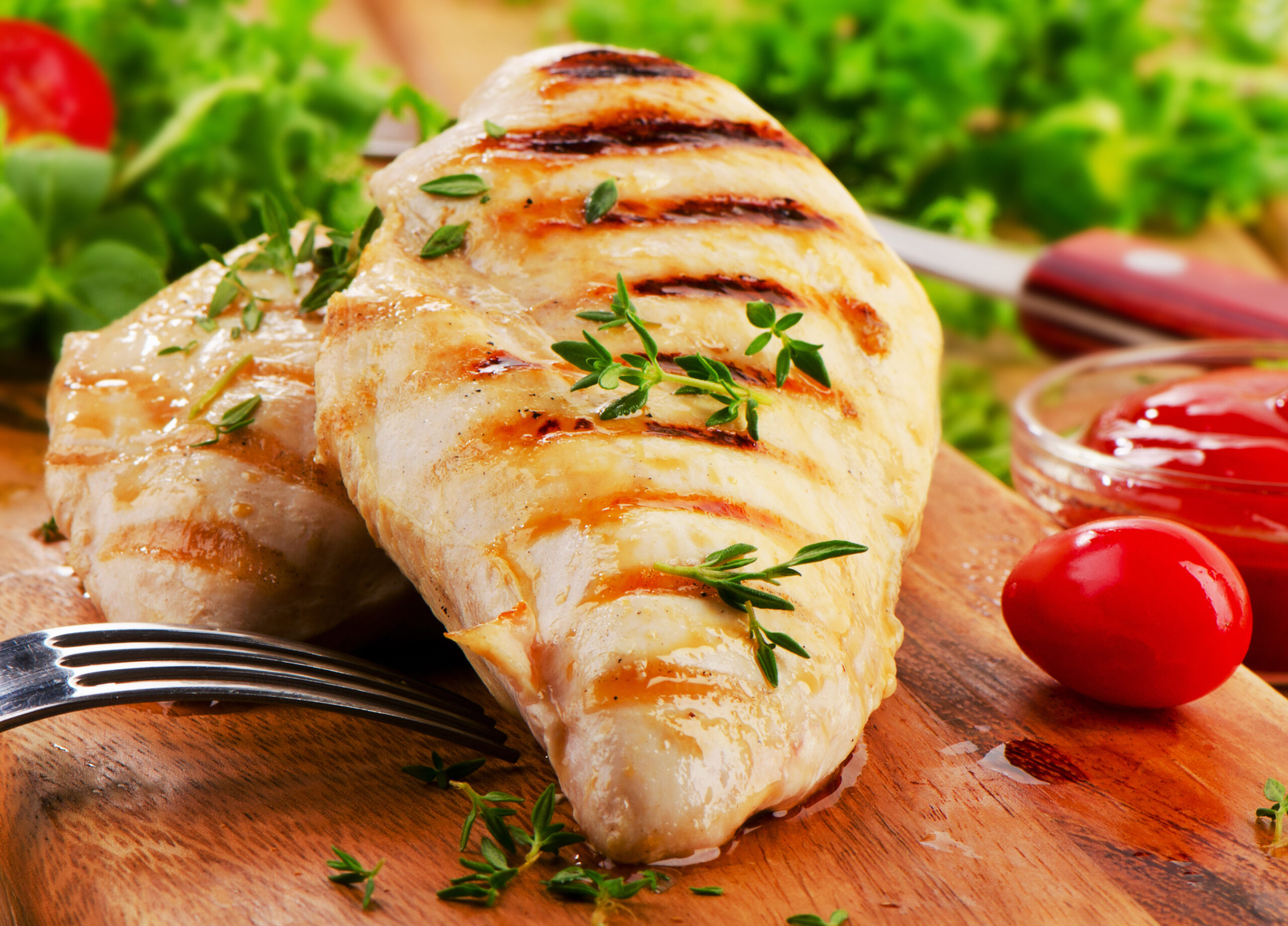
Chicken breast is one of the most reliable and flexible foundations for a high-protein lunch. That’s why it’s a bodybuilding and fitness staple.
It’s lean, widely available, and easy to prepare in bulk, which makes it ideal for building consistent meals throughout the week. And there’s quite a bit of protein in chicken.
When cooked simply, chicken can be reused in multiple lunches without changing the overall structure of the meal.
HOW TO USE CHICKEN AT LUNCH
Chicken works best when it’s prepared ahead of time and then repurposed across different formats.
Once cooked, it can be sliced, chopped, or reheated and paired with vegetables and a controlled portion of starch.
The same batch of chicken can become a sandwich one day, a bowl the next, and a plated meal later in the week.
The key is to treat chicken as the base protein, not the entire meal, and build everything else around it.
WHY CHICKEN IS EFFECTIVE FOR LUNCH
Chicken breast is high in protein, low in fat, and easy to portion visually without measuring.
It digests well, supports steady energy through the afternoon, and holds up better than many proteins when cooked in advance.
Because it takes on different flavors easily, it allows variety without requiring multiple cooking sessions.
Here are some of my favorite chicken-based high-protein lunch recipes:
GRILLED CHICKEN BREAST WITH WHOLE-WHEAT PASTA & GREENS
- 5–6 oz chicken breast
- 1 cup cooked whole-wheat pasta
- ½ cup marinara sauce
- 2 cups mixed greens
- 1 tsp olive oil
- Vinegar, salt, and pepper
Directions:
- Grill or bake the chicken breast until cooked through, then slice.
- Warm the pasta and marinara sauce together.
- Serve chicken over the pasta.
- Toss mixed greens with olive oil, vinegar, salt, and pepper and serve on the side.
CHICKEN & VEGETABLE WHOLE-WHEAT WRAP
- 5 oz cooked chicken breast, chopped
- 1 whole-wheat wrap
- ½ cup sliced onions and mushrooms
- ¼ cup diced tomatoes
- Hot sauce (to taste)
- ½ cup low-fat Greek yogurt
Directions:
- Sauté onions and mushrooms until soft.
- Add chicken and tomatoes, warming through.
- Spoon mixture into the wrap and add hot sauce.
- Roll tightly and serve with Greek yogurt on the side.
ROASTED CHICKEN BREAST WITH POTATOES & SALAD
- 5–6 oz skinless chicken breast
- 1 medium potato, cubed
- 2 cups leafy greens
- 1 tsp olive oil
- Vinegar, salt, pepper
Directions:
- Roast chicken breast in the oven until cooked through.
- Roast potatoes with salt and pepper until tender.
- Build a simple salad with greens, olive oil, and vinegar.
- Serve chicken with potatoes and salad.
CHICKEN VEGETABLE SOUP WITH BAKED POTATO
- 5 oz chicken breast, diced
- 2 cups mixed vegetables
- 2 cups low-sodium broth
- 1 medium baked potato
- Salt, pepper, herbs
Directions:
- Simmer chicken and vegetables in broth until cooked through.
- Season to taste with salt, pepper, and herbs.
- Serve soup with a baked potato on the side.
BOWTIE PASTA SALAD WITH GRILLED CHICKEN
- 5 oz grilled chicken breast, sliced
- 1 cup cooked bowtie pasta
- ½ cup chickpeas
- 1–2 tbsp pesto-style seasoning or light dressing
- ½ cup low-fat Greek yogurt
Directions:
- Combine pasta, chicken, and chickpeas in a bowl.
- Toss lightly with seasoning or dressing.
- Serve chilled or at room temperature with Greek yogurt on the side.
HIGH-PROTEIN LUNCH IDEAS: BEEF AND PORK
Lean cuts of beef and pork are excellent options for building high protein lunch ideas that fill you up while still supporting healthy eating.
When selected carefully and prepared simply, these proteins fit naturally into balanced meals built around protein, vegetables, and controlled portions of starch.
They’re especially useful when you want variety without complicating your meal prep routine.
HOW TO USE BEEF AND PORK AT LUNCH
Beef- and pork-based lunches work best when you focus on lean ground beef or lean whole cuts and cook them in bulk.
Once prepared, they can be portioned out and reused across bowls, plates, or quick & easily reheated meals.
Ground beef and ground pork are especially flexible.
They reheat well, pair easily with vegetables, and can be seasoned differently throughout the week without changing the underlying structure of the meal.
This makes them ideal for lunches that need to be practical rather than perfect.
WHY BEEF AND PORK ARE EFFECTIVE FOR LUNCH
Protein is an essential nutrient, and beef and pork provide high-quality protein that supports overall protein intake while also contributing important micronutrients.
When kept lean, they offer satiety and flavor without excessive fat, which helps keep lunches filling without feeling heavy.
Meals built around lean beef or pork also tend to support stable energy through the afternoon, making them a reliable option for anyone prioritizing consistency, balanced meals, and long-term healthy eating.
Here are my go-to options for beef- and pork-based high-protein lunch recipes:
LEAN GROUND BEEF BOWL WITH RICE & VEGETABLES
- 5–6 oz lean ground beef
- ¾ cup cooked rice
- 1–2 cups mixed vegetables (peppers, onions, broccoli slaw)
- Minced garlic, salt, pepper
Directions:
- Cook ground beef with minced garlic, salt, and pepper until browned.
- Sauté vegetables in the same pan.
- Serve beef over rice and top with vegetables.
FAJITA-STYLE BEEF BOWL
- 5–6 oz lean ground beef
- ¾ cup cooked rice
- Bell peppers and onions
- Fajita seasoning
Directions:
- Cook ground beef with fajita seasoning until browned.
- Sauté peppers and onions until tender.
- Serve as a fajita bowl over rice.
GRILLED SIRLOIN STEAK WITH POTATOES & GREENS
- 5–6 oz sirloin steak
- 1 medium potato
- 2 cups leafy greens
- Olive oil, salt, pepper
Directions:
- Grill or pan-cook steak to desired doneness.
- Bake or roast potato.
- Toss greens lightly with olive oil.
- Serve steak with potato and salad.
GROUND BEEF STIR FRY
- 5 oz lean ground beef
- 1–2 cups mixed vegetables
- Soy sauce
- Ground ginger
Directions:
- Brown ground beef in a pan.
- Add vegetables and cook until tender.
- Finish with a splash of soy sauce and ground ginger.
- Serve on its own or with a small portion of rice.
PORK CHOP WITH SQUASH & VEGETABLES
- 5–6 oz lean pork chop
- Roasted squash
- Mixed vegetables
- Salt, pepper
Directions:
- Season pork chop and cook until done.
- Roast squash until tender.
- Steam or sauté vegetables.
- Serve together as a plated lunch.
HIGH-PROTEIN LUNCH IDEAS: SEAFOOD
Seafood offers a different kind of advantage when it comes to high-protein lunches.
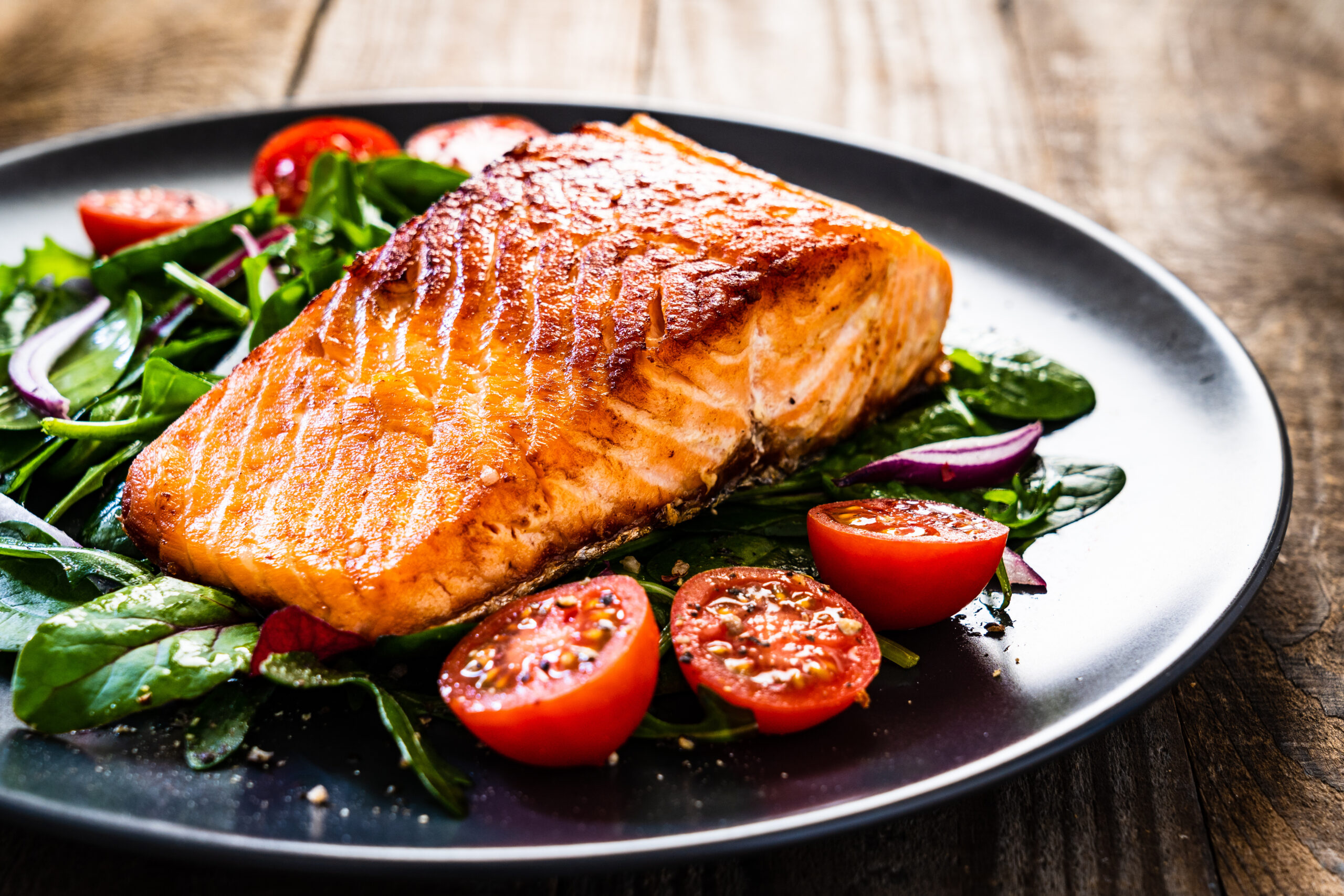
It’s typically lighter, quicker to prepare, and easier to digest than heavier meats, which makes it especially effective for midday meals.
Options like fish and shellfish deliver high-quality protein without leaving you feeling weighed down for the rest of the afternoon.
Seafood-based lunches are also ideal when you want variety without adding complexity.
Many of these meals come together quickly or require minimal prep, which makes them easy to rotate into your weekly routine.
HOW TO USE SEAFOOD AT LUNCH
Seafood works well at lunch because it fits into both quick-assembly meals and simple prepped lunches.
Fresh seafood can be cooked in minutes, while options like canned tuna require no cooking at all.
Once prepared, seafood pairs easily with vegetables, grains, and simple sauces without needing heavy seasoning.
Seafood can be used as the protein base in bowls, plates, or salads, and it adapts well to a wide range of flavors from bright and acidic to savory and smoky.
WHY SEAFOOD IS EFFECTIVE FOR LUNCH
Seafood provides a high protein-to-calorie ratio while remaining relatively light, which helps support steady energy levels through the afternoon.
Many seafood options also contain nutrients that support overall wellness, making them a strong choice for anyone focused on long-term healthy eating.
For those paying attention to hormone balance, seafood-based meals can be especially useful when paired with fiber-rich vegetables and balanced carbohydrates rather than heavy fats or sauces.
Here are some seafood-based high-protein lunch recipes you can use for your next meal prep:
CANNED TUNA & VEGETABLE PLATE
- 1 can tuna (packed in water, drained)
- 1–2 cups mixed vegetables
- 1 tsp olive oil
- Salt, pepper, lemon juice
Directions:
- Drain canned tuna and put into a bowl.
- Toss vegetables with olive oil, salt, and pepper.
- Add tuna to the plate and finish with lemon juice.
- Serve as-is or with a small side of starch if needed.
SALMON BOWL WITH SUN-DRIED TOMATOES
- 5–6 oz salmon fillet
- ¾ cup cooked rice or grain
- 1–2 cups leafy greens
- 2 tbsp sun-dried tomatoes (chopped)
Directions:
- Bake or pan-cook salmon until flaky.
- Layer greens into a bowl and top with rice.
- Add salmon and scatter sun-dried tomatoes over the top.
- Season lightly with salt and pepper.
SHRIMP FAJITA BOWL
- 5–6 oz shrimp, peeled and deveined
- Bell peppers and onions
- ¾ cup cooked rice
- Fajita seasoning
Directions:
- Cook shrimp with fajita seasoning until just done.
- Sauté peppers and onions in the same pan.
- Serve shrimp and vegetables over rice to create a fajita bowl.
WHITE FISH WITH VEGETABLES & ROMESCO-STYLE SAUCE
- 5–6 oz white fish (halibut, sole, or cod)
- 1–2 cups mixed vegetables
- 2 tbsp romesco sauce
Directions:
- Bake or pan-cook fish until opaque.
- Steam or roast vegetables until tender.
- Spoon a small amount of romesco sauce over the fish.
- Serve fish and vegetables together.
TUNA & GREEK YOGURT SALAD PLATE
- 1 can tuna (drained)
- ½ cup protein-rich Greek yogurt
- Celery or onions (chopped)
- Salt, pepper
Directions:
- Mix tuna with Greek yogurt instead of mayo.
- Add chopped vegetables and season to taste.
- Serve over greens or alongside vegetables for a simple lunch.
HIGH-PROTEIN LUNCH IDEAS: GROUND-PROTEIN BOWLS
Ground proteins are one of my favorite ways to build high-protein lunches.
They cook quickly, reheat well, and absorb flavor easily, which makes them ideal for bowl-style meals that can be prepared ahead of time and customized throughout the week.
Whether you’re using ground beef, ground chicken, or rotating in alternatives, ground-protein bowls offer structure without complexity.
HOW TO USE GROUND PROTEINS AT LUNCH
Ground proteins work best when they’re cooked in bulk and used as the foundation of a bowl.
Once prepared, they can be paired with vegetables, grains, or legumes and adjusted with different seasonings to keep meals interesting without changing the overall balance.
Because ground proteins are already broken down, they mix well with vegetables and starches, making them especially effective for bowl meals that need to be quick & easy to assemble and easy to portion visually.
WHY GROUND-PROTEIN BOWLS ARE EFFECTIVE FOR LUNCH
Ground-protein bowls are effective because they combine high protein density with flexibility.
They’re easy to digest, filling without being heavy, and adaptable to different eating styles including mixed diets, vegetarian options, and even vegan options when plant-based protein sources are used.
They’re also ideal for batch cooking using tools like a slow cooker or Instant Pot, which makes them practical for anyone trying to stay consistent during a busy week.
Try one of these ground-protein bowl recipes:
GROUND CHICKEN & VEGETABLE BOWL
- 5–6 oz ground chicken
- 1–2 cups mixed vegetables (zucchini, peppers, onions)
- ¾ cup cooked grain (optional)
- Salt, pepper, herbs
Directions:
- Cook ground chicken in a pan until fully done.
- Add vegetables and sauté until tender.
- Serve as a bowl on its own or over a small portion of grain.
INSTANT POT GROUND PROTEIN & BEAN BOWL
- 5–6 oz ground protein (beef or chicken)
- ¾ cup beans
- 1–2 cups chopped vegetables
- Spices of choice
Directions:
- Add all ingredients to the Instant Pot.
- Cook on pressure until protein is fully cooked and vegetables are tender.
- Serve in bowls and portion as needed.
FAJITA-STYLE GROUND PROTEIN BOWL
- 5–6 oz ground chicken or beef
- Bell peppers and onions
- ¾ cup cooked rice
- Fajita seasoning
Directions:
- Brown ground protein with fajita seasoning.
- Sauté peppers and onions separately.
- Assemble fajita bowls with protein, vegetables, and rice.
SLOW COOKER GROUND PROTEIN & LENTIL SOUP BOWL
- 5 oz ground protein
- ¾ cup cooked lentils
- 2 cups broth
- Mixed vegetables
Directions:
- Add all ingredients to a slow cooker.
- Cook on low until flavors combine and protein is cooked through.
- Serve as a hearty lentil soup–style lunch in a bowl.
PLANT-BASED GROUND-STYLE PROTEIN BOWL
- 1 serving plant-based protein (lentils, crispy tofu crumbles, or legumes)
- 1–2 cups vegetables
- ¾ cup cooked rice, quinoa, or couscous
Directions:
- Cook the plant-based protein according to the package instructions or preparation method.
- Cook the rice, quinoa, or couscous separately until tender.
- Sauté the vegetables until just tender.
- Combine the plant-based protein, vegetables, and cooked grain in a bowl, adjusting portions to maintain a balanced meal.
HIGH-PROTEIN LUNCH IDEAS: PLANT-BASED
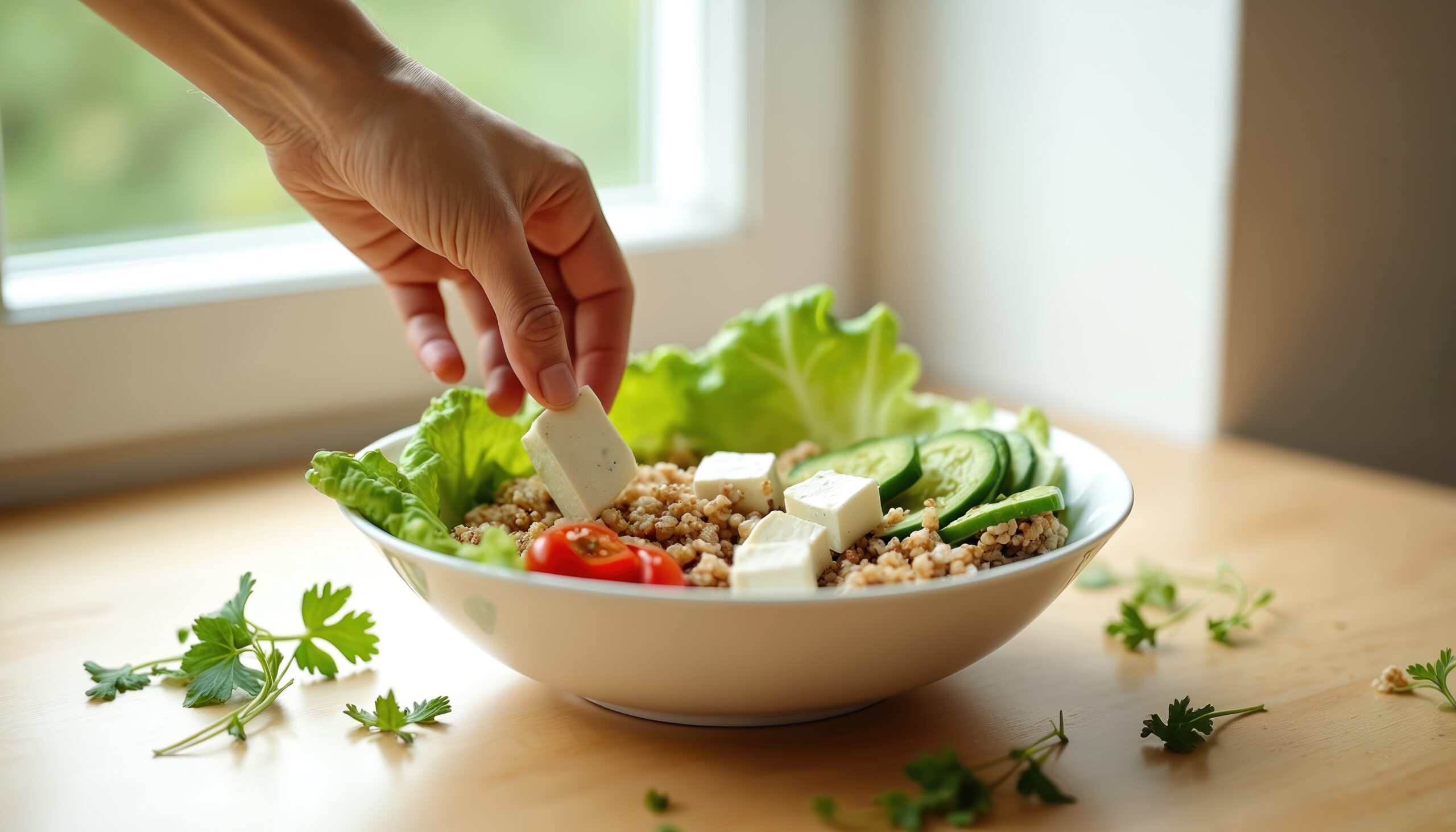
Plant-based lunches can absolutely be high in protein when they’re built intentionally. The key is structure.
Simply removing animal products isn’t enough. You still need a clear protein source, plenty of vegetables, and optional starch to keep the meal balanced and satisfying.
Done right, plant-based lunches support consistency, variety, and energy throughout the day, making them a practical option whether you follow a fully plant-based diet or simply want to rotate in more meatless meals.
HOW TO USE PLANT-BASED PROTEINS AT LUNCH
Plant-based proteins work best when you treat them the same way you would animal proteins. In other words, they are the foundation of the meal.
Lentils, beans, tofu, tempeh, and legume-based foods should take center stage, with vegetables providing volume and starch added intentionally as needed.
Because plant-based meals can skew carb-heavy if protein isn’t prioritized, it helps to start with the protein source first and build outward, rather than adding it as an afterthought.
WHY PLANT-BASED LUNCHES ARE EFFECTIVE
Plant-based high-protein lunches can be lighter, fiber-rich, and easier to digest while still supporting daily protein needs.
When the recipe is plant protein-focused, they help maintain steady energy and support healthy eating without relying on highly processed substitutes.
For those following a plant-based diet, these lunches provide structure and repeatability. For everyone else, they offer variety and flexibility without disrupting the overall approach to balanced meals.
LENTIL & VEGETABLE POWER BOWL
- 1 cup cooked lentils
- 1–2 cups mixed vegetables (broccoli, carrots, peppers)
- ¾ cup cooked rice or quinoa
- Salt, pepper, herbs
Directions:
- Warm cooked lentils in a pan or microwave.
- Steam or sauté vegetables until tender.
- Combine lentils, vegetables, and grain in a bowl.
- Season to taste and serve warm.
TOFU & VEGETABLE STIR-FRY BOWL
- 5–6 oz firm tofu, cubed
- 1–2 cups mixed vegetables
- ¾ cup cooked rice
- Soy sauce or simple seasoning
Directions:
- Sauté tofu in a pan until lightly browned.
- Add vegetables and cook until just tender.
- Serve tofu and vegetables over rice.
BEAN & VEGETABLE PLATE WITH SQUASH
- ¾–1 cup cooked beans (black, kidney, or navy)
- 1 cup roasted squash
- 1–2 cups leafy greens
Directions:
- Warm beans and season lightly.
- Roast squash until tender.
- Serve beans with squash and greens on the side.
CHICKPEA & VEGETABLE GRAIN BOWL
- 1 cup chickpeas
- 1–2 cups vegetables (zucchini, peppers, onions)
- ¾ cup cooked couscous or quinoa
Directions:
- Sauté chickpeas until warmed through.
- Cook vegetables until tender.
- Combine chickpeas, vegetables, and grain in a bowl.
LENTIL SOUP LUNCH PLATE
- 1½–2 cups lentil soup
- 1–2 cups vegetables or side salad
- Optional: small portion of whole-grain bread
Directions:
- Heat lentil soup until hot.
- Serve with vegetables or a simple salad.
- Add bread if additional starch is needed.
This blend supports muscle repair, stabilizes blood sugar, and keeps energy balanced until the next day, making oats a recovery tool, not just a breakfast staple.
MY TOP 10 NUTRITION RULES
Even with the breakdown and dozens of recipes in front of you, it can be easy to overthink and overcomplicate things.
With nutrition, this is expected. Why?
Because there is so much conflicting information out there. That’s why I created my top 10 rules of nutrition.
These “rules” aren’t meant to turn eating into a system you stress over. They exist to reduce friction, remove decision fatigue, and make good meals easier to repeat.
Most importantly, they are based on simplicity and convenience. When something feels easy to do, you’re more likely to do it.
Remember these pieces of advice as you prep your high protein lunch ideas:
1. DON’T WORRY ABOUT THE NUMBERS
Guys, if there’s one habit that stops people in their tracks from eating healthier, it’s counting calories.
Calorie counting gives the illusion of control, but it rarely lasts. Numbers change depending on preparation, portion size, and even labeling accuracy.
That’s why relying on calories alone often leads to frustration or burnout. Instead, focus on building meals the same way every time.
When protein is prioritized, vegetables take up most of the plate, and starch is kept in proportion, calorie intake naturally regulates without tracking.
For lunch, this means choosing foods you can portion visually and repeat confidently rather than meals that require measuring or logging.
2. CHOOSE FOODS YOU LIKE
Forcing yourself to eat foods you hate creates resentment, not consistency. Nutrition doesn’t fail because people don’t know what’s healthy. It fails because they try to follow nutrition plans they don’t enjoy.
Every food category has alternatives.
If you don’t like a certain vegetable, choose a different one. If a protein doesn’t sit well with you, swap it for another with similar nutritional value.
At lunch, this matters even more. A meal you tolerate once won’t survive five workdays in a row. On the other hand, a meal you enjoy has a chance to become a habit.
3. SUPPLEMENTS ARE SUPPLEMENTAL
Supplements exist to support real food, not replace it. They’re most useful when time, access, or logistics get in the way of eating a proper meal.
Protein powders, bars, or shakes can help you maintain protein intake when lunch gets delayed or workdays run long.
But when supplements start replacing meals consistently, it usually points to a preparation issue, not a supplement issue.
The rule is simple: eat real food when you can, supplement when you can’t. Lunch should be based on unprocessed, whole foods whenever possible.
4. PROTEIN IS KING
I sound like a broken record here, but I can’t stress this enough. When you cook and prep, follow the rule that protein is the foundation of every meal.
Protein supports muscle tissue, recovery, satiety, and stable energy levels. When protein is missing or insufficient, meals tend to leave you hungry, distracted, or searching for snacks later.
The most practical way to apply this is to start every lunch decision with one question:
“What’s my protein source?”
Once that’s answered, everything else falls into place. Vegetables and carbs support the protein, not the other way around.
5. BE STRATEGIC WITH CARBS
Carbohydrates aren’t something to earn or avoid. They’re something to use strategically.
Fibrous carbs help with digestion and fullness. Starchy carbs provide fuel and make meals feel complete.
The mistake is either letting carbs dominate the plate or removing them entirely. Both extremes tend to disrupt energy, focus, and long-term adherence.
At lunch, carbs should support the meal, not define it. When they’re used intentionally, they improve performance and satisfaction without excess.
6. USE FAT SPARINGLY
Fat is delicious. That’s just the truth. But… it’s also calorie-dense and easy to overuse, which is why it needs boundaries.
Fat should be present, but it shouldn’t be the centerpiece of the meal.
Most fat should come naturally from protein sources and small amounts used during cooking.
When meals rely heavily on oils, sauces, or spreads, portions become harder to control, and consistency becomes harder to maintain.
7. PREPARATION > WILLPOWER
Willpower is unreliable. Preparation is not.
Most poor lunch choices happen when you’re hungry, busy, and unprepared, not because you lack discipline.
Cooking proteins in advance removes the hardest decision of the day before it ever shows up.
When protein is already cooked, lunch becomes assembly instead of problem-solving.
8. SET YOURSELF UP TO WIN
Complicated meals create friction. Friction kills consistency.
Meals that require special ingredients, constant cooking, or perfect timing don’t survive real life. Simple meals, the ones you can prepare quickly and repeat, are the ones that stick. These are the meals that will help you achieve your goals
Lunch doesn’t need creativity. It needs reliability. Save experimentation for when time and energy are high.
9. STRUCTURE IS THE FOUNDATION
Endless variety sounds appealing, but it often leads to chaos. Structure creates freedom because once the framework is in place, you don’t have to rethink every meal.
Keep the structure simple and consistent:
- Protein first
- Vegetables generously
- Carbs intentionally
Then change flavors, seasonings, and formats as needed. That’s how you get variety without losing control.
10. CONSISTENCY (90% IS GOOD ENOUGH)
Eating well isn’t about getting every meal perfect. It’s about how often you get it right.
Over the course of a week, you’re eating multiple times a day. That adds up quickly. If you’re putting together solid meals most of the time, a few imperfect choices don’t suddenly erase your progress.
Think of it this way: if the majority of your meals follow the structure laid out here, you’re doing exactly what you need to do.
Missing a vegetable once, eating more starch than planned, or relying on convenience when life gets busy doesn’t derail anything. It’s noise, not failure.
Progress is built on average behavior, not flawless execution. When most of your meals are “on point,” results accumulate naturally.
The closer you get to consistently solid meals, the faster you’ll see changes, but you don’t need perfection for those changes to start happening.
High-protein lunches don’t need to be complicated. They just need to be structured.
When you prioritize protein, surround it with vegetables, add carbs intentionally, and keep preparation simple, eating well becomes automatic instead of stressful.
Stick to that framework most of the time, and your lunches will quietly support muscle, energy, and consistency without ever feeling like a diet.
Check out our complete line of ATHLEAN-RX Supplements and find the best training program for you based on your fitness level and goals.

- High-protein lunches aren’t about recipes. They’re about structure. Once the structure is right, food choices become flexible and repeatable.
- Protein comes first. Every solid lunch is built around a meaningful protein source to support muscle, recovery, satiety, and steady energy.
- Aim for ~30–45g of protein at lunch, or roughly one-third of your daily protein intake.
- Build your plate visually, not numerically: ~40% lean protein, ~40% fibrous carbohydrates (vegetables), and ~20% starchy carbs (optional, intentional).
- Fiber makes lunches sustainable. Vegetables add volume, slow digestion, stabilize blood sugar, and keep hunger under control.
- Starchy carbs aren’t the enemy. Use rice, potatoes, pasta dishes, or bread to fuel training, not overwhelm the plate.
- Dietary fat belongs in the background. Let it come from foods and cooking, not heavy sauces and add-ons.
- Minimal processing means easier consistency. The closer food looks to its original form, the easier it is to portion, repeat, and stick with.
- Meal prep beats willpower and motivation. Cooking protein in bulk once or twice a week makes good lunches automatic.
- 90% consistency is more than enough. Solid meals most of the time matter far more than perfect meals occasionally.
BEST HIGH PROTEIN LUNCHES FAQ
A high-protein lunch starts with a real protein source, not a side dish that happens to contain protein.
Solid options include chicken breast, lean beef or pork, seafood, eggs or egg whites, Greek yogurt, cottage cheese, lentils, beans, tofu, or tempeh. From there, you build the meal by adding vegetables for volume and optional starchy carbs for fuel.
If protein is the first thing you choose, and it’s the largest component on the plate, you’re already doing it right.
Start by choosing one protein source that can realistically carry most of the load on its own.
For lunch, that usually means a full serving of lean meat, seafood, or a concentrated protein option rather than small portions of several foods.
In practical terms, this looks like one cooked chicken breast, one can of tuna, a large scoop-plus of Greek yogurt or cottage cheese, or a plant-based meal built around lentils or tofu as the main ingredient.
Build the rest of the meal around that choice, and you’ll hit 30 grams without needing to stack snacks, rely on guesswork, or turn lunch into a protein puzzle.
On their own, no, two eggs are not enough protein for most people. It’s better than nothing, but it’s not ideal.
Two whole eggs provide roughly 12 grams of protein, which is typically too low to function as a true high-protein lunch.
Eggs work much better when they’re augmented, such as adding egg whites, pairing them with Greek yogurt, or combining them with another protein source.
Hitting 50 grams of protein at lunch starts with committing to one primary protein source that carries most of the load, rather than relying on several small, low-impact additions.
This usually means choosing a larger portion of lean protein or pairing one main protein with a secondary, high-protein support.
Here are realistic lunch combinations that land right around 50 grams of protein:
• 7–8 oz cooked chicken breast with roasted veggies and optional starch • 6–7 oz lean beef or pork paired with fibrous carbs • 6 oz salmon or other fatty fish plus a side of Greek yogurt • 1 can of tuna mixed with ¾–1 cup Greek yogurt • 4 whole eggs + 1 cup egg whites with vegetables • 1½ cups lentils paired with tofu or tempeh • Large protein bowl with ground meat as the clear base (not a topping)
The exact foods don’t matter as much as the intentional size of the protein portion. When protein is clearly the dominant part of the meal, reaching 50 grams becomes straightforward without stacking snacks or forcing extra food.
This approach works best for larger individuals, hard trainers, or anyone who prefers fewer, more substantial meals throughout the day.

Jeff Cavaliere M.S.P.T, CSCS
Jeff Cavaliere is a Physical Therapist, Strength Coach and creator of the ATHLEAN-X Training Programs and ATHLEAN-Rx Supplements. He has a Masters in Physical Therapy (MSPT) and has worked as Head Physical Therapist for the New York Mets, as well as training many elite professional athletes in Major League Baseball, NFL, MMA and professional wrestling. His programs produce “next level” achievements in muscle size, strength and performance for professional athletes and anyone looking to build a muscular athletic physique.