





the mindset for getting lean
Well, it’s true. At 15, if it came in a crinkly bag, had a neon label, or could be microwaved in under two minutes, it was basically a food group for me.
So, how did I go from that to being lean and, more importantly, staying lean for over 30 years without falling off the wagon every other month?
I stopped chasing “30-day shred” nonsense and started following a system that actually works in the real world.
And that’s what you’re getting here with this guide for how to get lean. This isn’t a diet. It’s not a meal plan you’ll hate by week two.
I want to lay out the set of skills I use that makes eating for leanness almost automatic.
Getting lean isn’t about suffering more. It’s about thinking differently, setting up your environment correctly, and using a few non-negotiable principles that preserve muscle while stripping fat without turning your life into a miserable calorie-counting prison.
Today, I’m going to break it down step by step exactly how I did it. This method is how I’ve helped thousands of others do it.
And this isn’t going to be a complicated set of instructions. These are just the fundamentals, the basics, of getting lean.
So, if you’ve struggled to stay consistent, if you’ve bounced from plan to plan, or if you’re tired of feeling like your appetite is the enemy, you’re in the right place.
WHAT’S YOUR “WHY?”
If you want to get lean, stay lean, and build the kind of lean muscle that changes your body composition, you’ve got to start in the one place nobody in the fitness industry ever talks about: your head.
Transformation doesn’t start in the kitchen, gym, or the supplement aisle.
Real, lasting fat loss begins with why you’re doing this, not what you’re eating.
Guys, until your “why” is bigger than your cravings, no diet plan, no meal prep, and no kale shakes, or lemon juice cleanses are going to make a meaningful difference. You’ll bounce from strategy to strategy wondering why nothing ever feels automatic.
You need an emotional anchor so that the moment you feel stressed, tired, bored, or hungry, you don’t immediately give in to those bad habits.
Before you start tracking calorie intake, before you dial in macronutrient balance, and before you take your first progress photos, you have to be brutally honest with yourself.
The starting line is defining your purpose.
THE 5-WHY METHOD
This is the method that turned everything around for me. It works, and it works fast, not because it changes your habits, but because it changes the reason behind your habits.
Here’s how it goes:
Ask yourself “why?” five times. I’m serious. Sure, it feels simple, maybe too simple, until you do it. Because every “why” takes you one layer deeper.
My own chain looked like this:
- Why do you want to get lean? I want a six-pack.
- Why do you want a six-pack? I want to get girls.
- Why do you want to get girls? I want to feel desired.
- Why do you want to feel desired? Because the first woman in my life (my mom) left when I was young.
- Why does that matter now? Because I want to feel worthy, confident, and whole.
See what happened? We didn’t end up at crunches, macros, or HIIT (High-Intensity Interval Training). We ended up at identity.
That type of emotional honesty has nothing to do with glycemic index, dietary guidelines, or the best types of exercise for burning belly fat.
But it has everything to do with sticking to the behaviors that reshape your body, mind, and personality.
That deeper “why” becomes the fuel behind every decision including the food you pick, the workouts you complete, how you respond to cravings, and whether you stay the course even when life throws stress, injuries, or plain old fatigue your way.
When you know exactly why you want a leaner physique, the discipline becomes automatic.
You’re no longer relying on willpower to resist snacks, avoid mindless eating, or drag yourself through exercise sessions. You’re simply acting in alignment with who you’ve decided to become.
And your motivation will evolve just like mine did.
At first, I wanted six-pack abs because I wanted attention. Today, my motivation is my kids.
I want to be strong, capable, mobile, and healthy enough to be a role model. I want to move well, manage my blood pressure and blood sugar, and keep my body fat in check so I can be present in their lives for decades.
Your “why” will shift as your life shifts, but the anchor stays powerful.
Once you find your “why,” I want you to write it down and revisit it often. A lot of people write it and display it in the places their cravings often win like the kitchen.
Congrats, guys. This is where getting lean actually begins. Now, let’s move on to the next step.
CHANGE YOUR NUTRITION MINDSET
One of the biggest reasons people fail to get lean is because they start with a broken mindset.
They think fat loss means suffering through extreme dieting, low energy, grinding through hours of cardio exercise, and white knuckling their way through cravings.
But starving yourself has never been the path to a lean, athletic physique. In fact, it’s one of the fastest ways to sabotage your results.
“STARVING YOURSELF” IS NOT FAT LOSS
If you starve yourself, I promise that two things will happen: you’ll burn out and, even worse, you’ll lose muscle mass you should be protecting.
When you undereat, your body doesn’t see it as healthy fat loss. It sees a threat. And when the body feels threatened, one of the first things it does is break down muscle tissue for fuel.
That means you’re losing the one thing that keeps your metabolism high and your body fat levels moving in the right direction.
Your body needs enough fuel to move with intention through strength training and full-body workouts.
It doesn’t matter if you prefer HIIT workouts, steady-state cardio, brisk walking, or a combination of these, you need energy to perform.
And when you don’t have enough energy, your training methodology collapses. You move poorly, you recover slowly, and you’re more likely to deal with nagging issues like shin splints, knee pain, or tightness.
This isn’t exactly the recipe for a long-term plan.
FOCUS ON MODERATE AND SUSTAINABLE
This is where most people overcomplicate things. You don’t need a starvation deficit. You don’t need to cut out olive oil, stop eating after 6 p.m., or fear carbs.
All you need is a controlled, sustainable calorie deficit.
I recommend cutting no more than about 500 calories per day from food. That’s enough to help you lose fat, but small enough to keep your training performance high.
Some of you might be thinking, “But Jeff, 500 calories a day doesn’t sound like much.”
If you want to increase your daily burn, don’t slash calories further. Move more but do it in a moderate, not extreme, way. For example, you can go for an extra walk or gently increase your aerobic activity.
This approach protects your lean muscle, stabilizes your blood glucose, keeps your body fueled for performance, and allows you to train hard enough for building muscle while losing fat.
When you finally grasp that fat loss doesn’t come from suffering but from strategy, everything changes.
You’re no longer trying to survive on willpower. You’re not trying to “burn off” your mistakes with marathon cardio.
You’re feeding your body in a way that supports muscle hypertrophy, protects your joints, preserves your lean body mass, and makes you excited to train.
This slow and steady approach is how you get lean, and stay lean, for life.
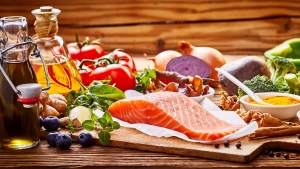
SHOP FOR WHOLE FOODS
Getting lean doesn’t start in the gym. It starts in the grocery store. You can crush your resistance training, but if your kitchen is stocked with nothing but processed junk, your results will always fall short.
The goal here isn’t to eat “perfect.”
It’s to build a setting that supports your training, your recovery, and your ability to make good choices without relying on insane amounts of willpower.
SHOP THE PERIMETER
If you walk into any grocery store and go straight for the aisles, you’re already in trouble.
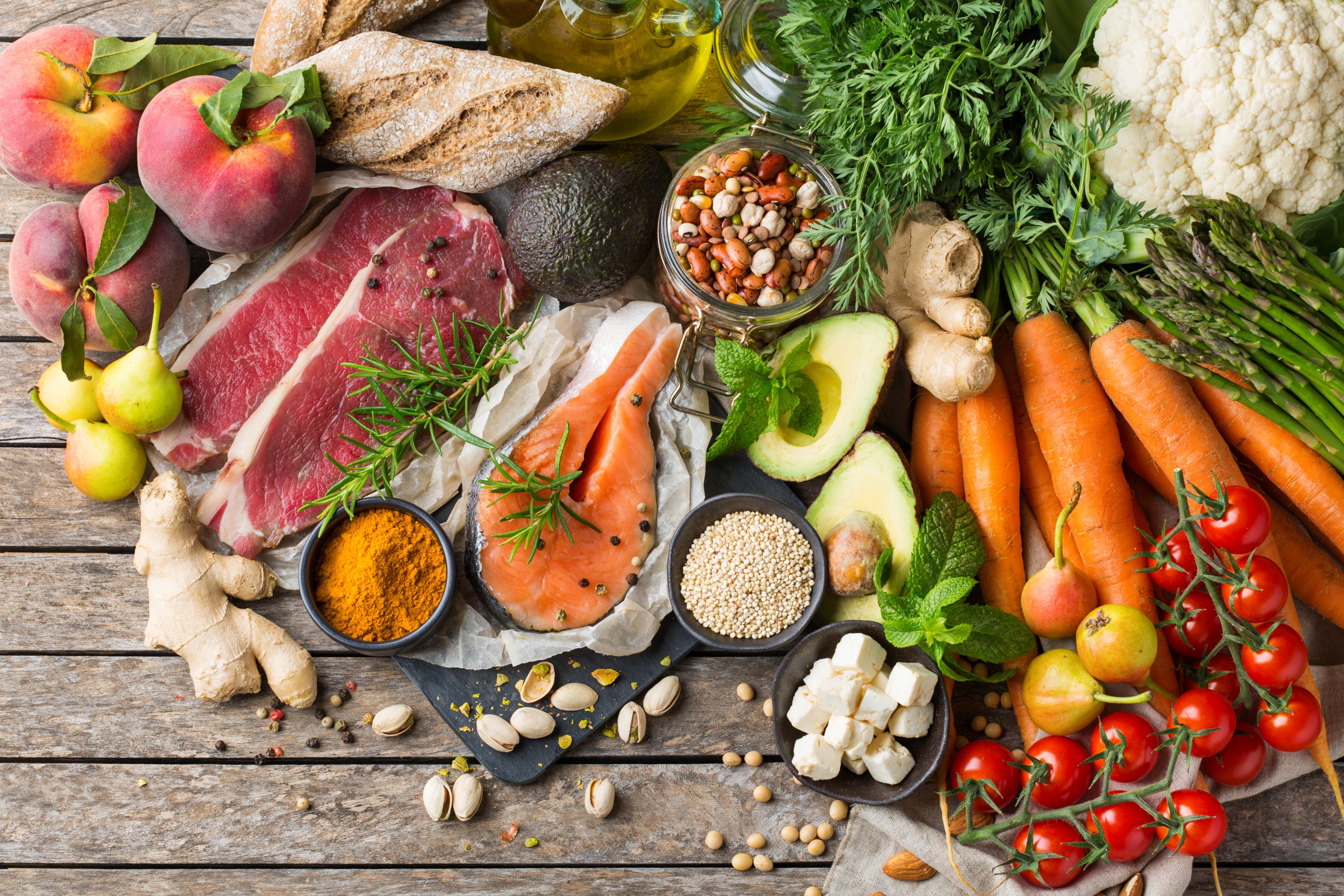
The perimeter is where the real, whole, single-ingredient foods live. These are the foods that support training, optimize recovery, and create the metabolic environment your body needs to drop fat and build lean tissue.
This is where you’ll find:
- Lean meats
- Eggs
- Greek yogurt
- Fish
- Produce
- Fruits
- Potatoes
- Vegetables
These foods are high in nutrient density, meaning they give you more vitamins, minerals, and micronutrients per calorie.
More nutrient density provides a better metabolic response. And a better metabolic response means easier fat loss, faster recovery, and more efficient training.
USE THE AISLES ONLY FOR “FLAVOR ENHANCERS”
Here’s where people get it wrong: they think eating clean means eating bland. Chicken, broccoli, water… rinse and repeat until you’re miserable.
But blandness kills adherence. It’s one of the main reasons people quit and eventually rebound. You do not need to suffer with boring meals in order to get lean.
The aisles are where you pick up the low-calorie flavor upgrades that make whole-food meals taste like something you enjoy eating.
You should only stroll down an aisle to pick up things like:
- Herbs
- Spices
- Vinegars
- Mustards
- Hot sauces
- Salsas
- Broths
- Low-calorie marinades
Think of these as your sustainability weapons. They help you stick to the plan without feeling like you’re trapped in a “diet.”
And when your food tastes good, your lifestyle habits improve, your recovery improves, and your training output stays high.
FOLLOW THE 12/15 RULE
One of the biggest mistakes people make when trying to get lean is they jump straight into a diet without ever figuring out where they’re starting from.
They slash calories, cut carbs, swear off restaurants, and grind through workouts all while having zero clue what their current intake actually is.
You can’t fix what you don’t measure. And you can’t build a long-term plan on a mystery.
Before you tighten up your eating, cut calories, and add more conditioning or steady state cardio, I want you to figure out your baseline.
This is where the 12/15 Rule comes in.
LEARN WHAT YOU’RE EATING
Don’t worry. You won’t have to obsess over counting your calories forever. That’s not the goal here. What we’re doing here is short-term calorie tracking for the purpose of educating yourself.
Most people underestimate what they’re eating by hundreds of calories.
That “healthy” lunch you thought was clean? Yeah, the cheese, breading, sauce, and oil turned your basic chicken breast into a chicken parm calorie bomb.
That’s a caloric blind spot and it’s why so many people grind in the gym and see zero change in body fat percentage.
But when you keep an eye on your calories for a short period (just two weeks), you’ll see the true caloric impact of your everyday meals.
It also forces accountability and helps you understand why your current body composition is what it is.
This isn’t punishment. It’s clarity. And without clarity, fat loss becomes guesswork.
CALCULATE YOUR STARTING INTAKE
Once you’ve logged a few days and have a feel for your food patterns, it’s time to set your baseline caloric intake target.
The rule is simple and it can be broken down into two categories:
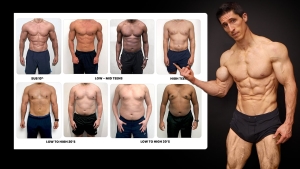
If you can see your abs:
- Multiply your bodyweight by 15.
- This gives you a higher maintenance range because your body fat is already lower and your metabolism is typically more responsive.
If you cannot see your abs:
- Multiply your bodyweight by 12.
- This gives you a more appropriate starting point for fat loss.
This becomes your daily calorie target. Again, it’s not forever, but for the next two weeks.
But here’s the key: You must eat consistently during those two weeks. No wild swings and no 3,000-calorie weekends followed by “I’ll starve myself Monday.”
Consistency is what allows you to accurately judge whether your target is maintenance, deficit, or surplus.
ADJUST BASED ON OUTCOME
Once the two weeks of meal tracking are up, it’s time to look at the scale and the numbers.
This is how you’ll adjust your caloric intake based on your results from the last couple weeks.
If your weight stays the same, congratulations, you found your maintenance calories. This is your true baseline.
If you’re gaining weight, then your calories are too high. Drop them by 10%. A small decrease is all you need.
For those of you who are losing too quickly, listen up. You need to eat more.
Why? Because you’re risking muscle loss, metabolic slowdown, increased fatigue, and the kind of overtraining that ruins your form during workout sessions.
One of the biggest takeaways here is that you should never exceed a 500-calorie deficit from food alone.
If you want to burn more, do it with physical activity, not starvation.
BUILD THE MOST IMPORTANT HABIT
Meal prep has gotten a bad reputation and honestly, for good reason. Most people picture spending six hours on a Sunday cooking seven full recipes, portioning them into plastic containers, and forcing down the same dry chicken for six straight days.
That’s not realistic, enjoyable, or sustainable.
If your nutrition feels like punishment, you won’t stick to it no matter how good your training routine is.
Instead of thinking “meal prep,” think meal assembly and building a habit system that lets you mix and match foods, stay flexible, and build meals quickly without sacrificing your fat-loss goals.
KEEP IT SIMPLE
Meal prep shouldn’t hijack your entire weekend. This isn’t a cooking show. You’re trying to build a habit that keeps you lean.
Stop chasing variety like a gourmet chef and forget about making every meal perfect.
Instead, focus on simplicity: one or two proteins, one batch of veggies, one carb source. Then rotate your seasonings, sauces, and flavor enhancers to keep things interesting without reinventing the wheel.
Simple prep creates predictable routines, and predictable routines deliver the kind of consistency that actually drives results.
The goal here is to build a system you can repeat every single week without burning out.
PUT IT IN YOUR CALENDAR
One of the biggest reasons people fail with meal prep is because they don’t schedule it. If it doesn’t live on your calendar, it doesn’t happen.
You can have the best intentions in the world, but if meal prep is treated like a “maybe,” it becomes a “never.”
The fix is to anchor it to an existing habit, something you already do without thinking.
For example, meal prep right after grocery shopping, while your food is already out. Or make it part of your Sunday morning coffee ritual.
Maybe it’s Friday after work when you’re decompressing, or during your favorite podcast so it feels effortless.
Focus on eliminating decision fatigue so you can build the kind of automatic habit that keeps you consistent without relying on willpower.
USE EFFORTLESS EQUIPMENT
If meal prep feels like a chore, you’ll talk yourself out of it every time. The solution is to use tools that make the process almost effortless.
A sheet pan lets you roast a massive batch of vegetables in one shot with minimal cleanup.
A rice cooker or Instant Pot handles your carbs without requiring any attention.
And an air fryer is great for quick, crispy proteins that don’t need constant babysitting on the stove.
When your equipment does half the work for you, meal prep stops feeling like a project and starts feeling automatic. The less effort required, the more likely you are to show up and repeat the habit week after week.
KEEP FOOD VISIBLE AND ACCESSIBLE
Meal prep only works if you use what you’ve prepped and that means keeping your food visible and easy to grab.
Store your proteins, veggies, and carbs at eye level in the fridge so they’re the first thing you see when you open the door.
Use clear containers so nothing gets forgotten or lost behind random leftovers and condiments.
You can even label things if it helps you move faster.
Visibility drives action. When the lean, prepped option is front and center, you’re far more likely to choose it, and that single decision repeated over time is what builds consistency and keeps you lean.
FOCUS ON BUILDING BLOCKS
It’s pretty common for people to feel overwhelmed at the idea of preparing entire meals that will last them the entire week.
An easier and less stressful way to meal prep is to break things down into building blocks, not whole four-course meals.
I recommend three simple categories: proteins, vegetables, and carbs.
Start by cooking one or two protein sources in bulk like chicken breasts, turkey, lean beef, fish, tofu. You want to do this first because protein is the anchor of almost every meal you’ll eat.
Next, prep a big batch of vegetables by steaming, roasting, or sautéing them.
Finally, prepare several servings of carbs like potatoes, rice, or quinoa and store them separately so they stay fresh longer.
When you prep components instead of finished meals, you get true mix-and-match flexibility.
You’re not locked into the same boring dish five days in a row. You can rotate flavors, add different spices or sauces, and create new combinations without cooking anything extra.
FREEZE THE EXTRAS
When you cook extra protein now and freeze it in portioned bags or containers, you guarantee that you’ll always have a lean, ready-to-go option.
This will be especially helpful during the weeks when your schedule gets crushed and cooking is the last thing on your mind.
Having frozen protein on standby prevents takeout disasters, removes the mental load of figuring out what to eat, and it guarantees consistency during the most stressful, chaotic stretches of your life.
IF YOU MUST EAT OUT…
Even with the best meal prep system in the world, life happens. Meetings run long, kids’ schedules explode, traffic hits, travel pops up and suddenly you’re stuck eating out.
That’s fine. You can stay on track without derailing your progress. Here’s how to handle it like a pro:
Lead with Protein: Choose the meal centered around lean protein: grilled chicken, turkey, fish, steak, eggs. This keeps your hunger under control and protects your muscle.
Swap the Sides: Ask for vegetables or a side salad instead of fries. Simple, easy, effective.
Control the Hidden Calories: Request sauces, dressings, and oils on the side. Restaurants drown everything in calories you never see.
Ask to Change Things Up: Modifying your meal doesn’t make you difficult. Restaurants do this all the time, and no one cares.
Preload with Protein: If you can, before going to a restaurant, have a quick shake, Greek yogurt, or some jerky beforehand. You make better and healthier choices when you’re not running on hunger.
ADOPT THE PLATE MODEL
You don’t need to count calories for the rest of your life. And you don’t need a food scale glued to your hand.
What you do need is a simple visual system that keeps your meals balanced, your energy steady, and your fat-loss goals on track without doing math before every bite.
That system is the Plate Model, and it works every single time, for every body type, at every activity level.
40% LEAN PROTEIN
This is the anchor of every meal. Chicken, turkey, lean beef, fish, eggs, Greek yogurt, or whatever fits your lifestyle and preferences.
Protein keeps you full, protects your muscle fibers, supports recovery, and gives your body the building blocks it needs after resistance training.
40% FIBROUS VEGETABLES
Fill nearly half your plate with veggies like broccoli, spinach, peppers, carrots, cauliflower, asparagus, zucchini. You want any kind of veggie that is high in nutrients and low in calories.
This boosts micronutrient density, supports digestion, helps control hunger, and creates a better metabolic environment for fat loss.
It also gives you the volume you need to avoid overeating without feeling restricted.
20% STARCHY CARBOHYDRATES
Despite what a lot of the low-carb crowd says, rice, potatoes, sweet potatoes, oats, quinoa, and whole grains aren’t the enemy. They’re fuel.
Carbs help you perform during training, maintain energy, and recover faster. The key is controlled portions, not elimination.
If you’re training hard or following physical activity guidelines with lots of movement, you can increase this. If you’re less active that day, pull it back.
WHAT ABOUT FATS?
Fats don’t need a dedicated “section” on the plate. They show up naturally from cooking oils, dressings, marinades, and the food itself.
These incidental fats are important for hormone function and nutrient absorption. They just shouldn’t take over your plate. A drizzle of olive oil or a light dressing is more than enough.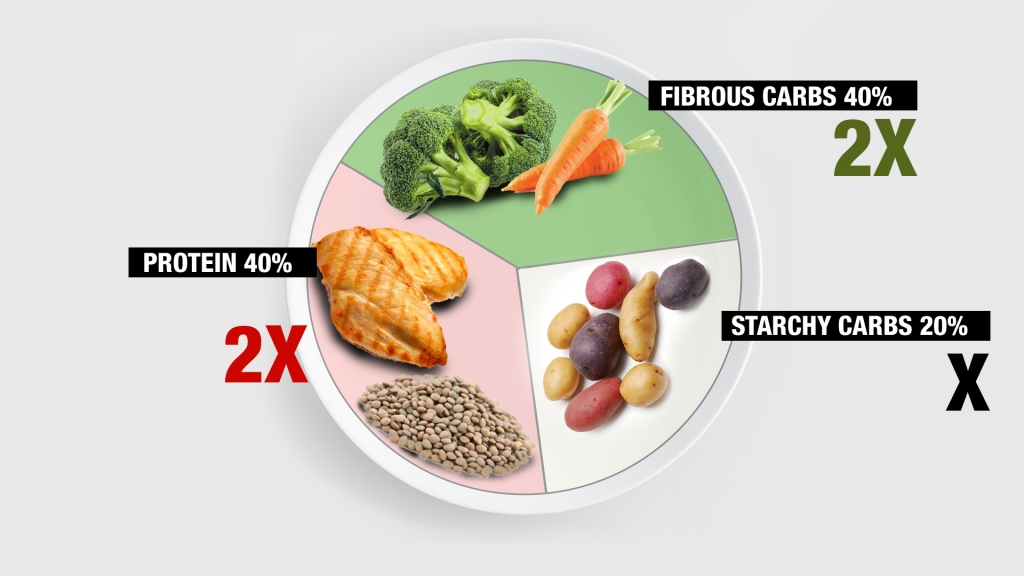
WHY PROTEIN IS KING
Starting every meal with protein is the one nutrition habit that’ll make you leaner, stronger, and more successful than 99% of the population.
If you want to drop body fat, build muscle, stay full, keep your workouts strong, and protect your body from losing the hard-earned muscle you build with compound exercises, protein must be the foundation.
There are three important reasons for this:
Protein Preserves Muscle While You Lose Fat: When you’re in a calorie deficit, your body will happily break down muscle unless it has a steady stream of amino acids available. Lose muscle, and you lower your metabolism, weaken your training performance, and lose the tight, athletic look you want. Adequate protein protects your lean tissue, even when calories drop.
Protein Increases Satiety: People who center their meals around chicken breasts, Greek yogurt, and lean meats stay full longer and naturally eat fewer calories without feeling deprived. Protein lowers cravings, reduces snacking, and prevents the “I’ll just grab anything” moments that wreck fat-loss progress.
Protein Has the Highest Thermic Effect of Food (TEF): Your body burns calories by just digesting it. And you burn more calories breaking down protein than you do digesting carbs or fats. That means simply eating more protein increases your daily energy expenditure without adding more steady-state cardio, more trips to the gym, or more high-intensity interval training sessions.
HOW MUCH PROTEIN DO YOU NEED?
So, protein is important, but how many grams of protein should you eat each day?
I recommend 1 to 1.2 grams of protein per pound of bodyweight per day since it works for most body types, most training styles, and most body fat ranges.
For example, if you weigh 160 pounds, you’re aiming for 160 to 190 grams of protein each day. And if you weigh 200 pounds, you want 200 to 240 grams.
HOW TO HIT YOUR DAILY TARGET
Most people treat protein like an afterthought.
They skip it at breakfast, half-hit it at lunch, panic at dinner, then try to cram 80 grams in one sitting and wonder why they’re bloated, exhausted, and not seeing progress.
Protein isn’t complicated but it does need to be consistent.
That means you need to get protein in at every meal, spread throughout the day, not all at once. But why?
Muscle building is triggered by a process called muscle protein synthesis (MPS), and MPS has a ceiling. You get a strong dose response when you eat protein, but after that point, the muscle-building signal doesn’t get stronger.
If you eat 100 grams of protein at dinner but almost none earlier in the day, you’re giving your muscles one stimulus instead of three or four.
That means you’re missing multiple opportunities for recovery and growth.
But it’s also worth noting that eating protein at every meal has a ton of other benefits. It stabilizes hunger, prevents energy crashes, regulates appetite hormones, slows digestion, and improves workout performance.
Here are my top 10 tips for hitting that target protein intake:
- Build every meal around a lean protein source. Protein first then carbs, then fats. This single rule fixes 90% of the problem.
- Get protein at every meal (every 3 to 4 hours). Evenly spaced doses keep muscle protein synthesis elevated all day.
- Use casein or whey protein powder shakes to fill gaps. Busy morning? Post-workout? On the go? A shake guarantees you don’t fall behind.
- Keep high-protein snacks on hand. Convenience always wins so stock up on Greek yogurt, cottage cheese, jerky, tuna packets, protein bars.
- Cook proteins in bulk so they’re always ready. Meal prep once so you can hit your protein target all week.
- Add egg whites, Greek yogurt, or protein powder to meals you already make. Easy mix-ins equals effortless extra grams.
- Choose higher-protein versions of foods you already eat. Fairlife milk, protein pasta, protein oatmeal, high-protein wraps.
- Eat a protein-focused meal before going out. Pre-gaming with 20 to 30 grams of protein prevents overeating later.
- Build a rotation of 5 protein breakfasts, 5 lunches, 5 dinners. When your options are predetermined, consistency becomes automatic.
- Keep a “protein backup” in your car, bag, or desk. Jerky, tuna, or a ready-to-drink shake saves you every time life gets chaotic.
PRIORITIZE HYDRATION
People spend so much time worrying about macros, supplements, and the perfect training split and they completely overlook one of the most important habits for getting lean: hydration.
If you’re not drinking enough water, nothing else in your plan works the way it should.
This includes your metabolism, energy, and ability to train hard and push progressive overload.
Think of water as the delivery system your body runs on. Every metabolic process from fat oxidation to muscle recovery depends on being hydrated. When you’re low on fluids, the entire system slows down.
Most importantly, and something most people don’t realize, dehydration mimics hunger.
If you’ve ever grabbed a snack when you weren’t really hungry, there’s a good chance you were just under-hydrated. Eating when you really just need water is one of the fastest ways to sabotage your fat loss without realizing it.
Hydration also affects training.
When you’re dehydrated, your heart rate rises faster, endurance plummets during aerobic exercise, strength tanks during lifts, and your body form and technique break down.
This is why endurance athletes never go anywhere without water. They understand that hydration is performance. And performance is fat loss. Now, you get it too.
TARGET WATER INTAKE
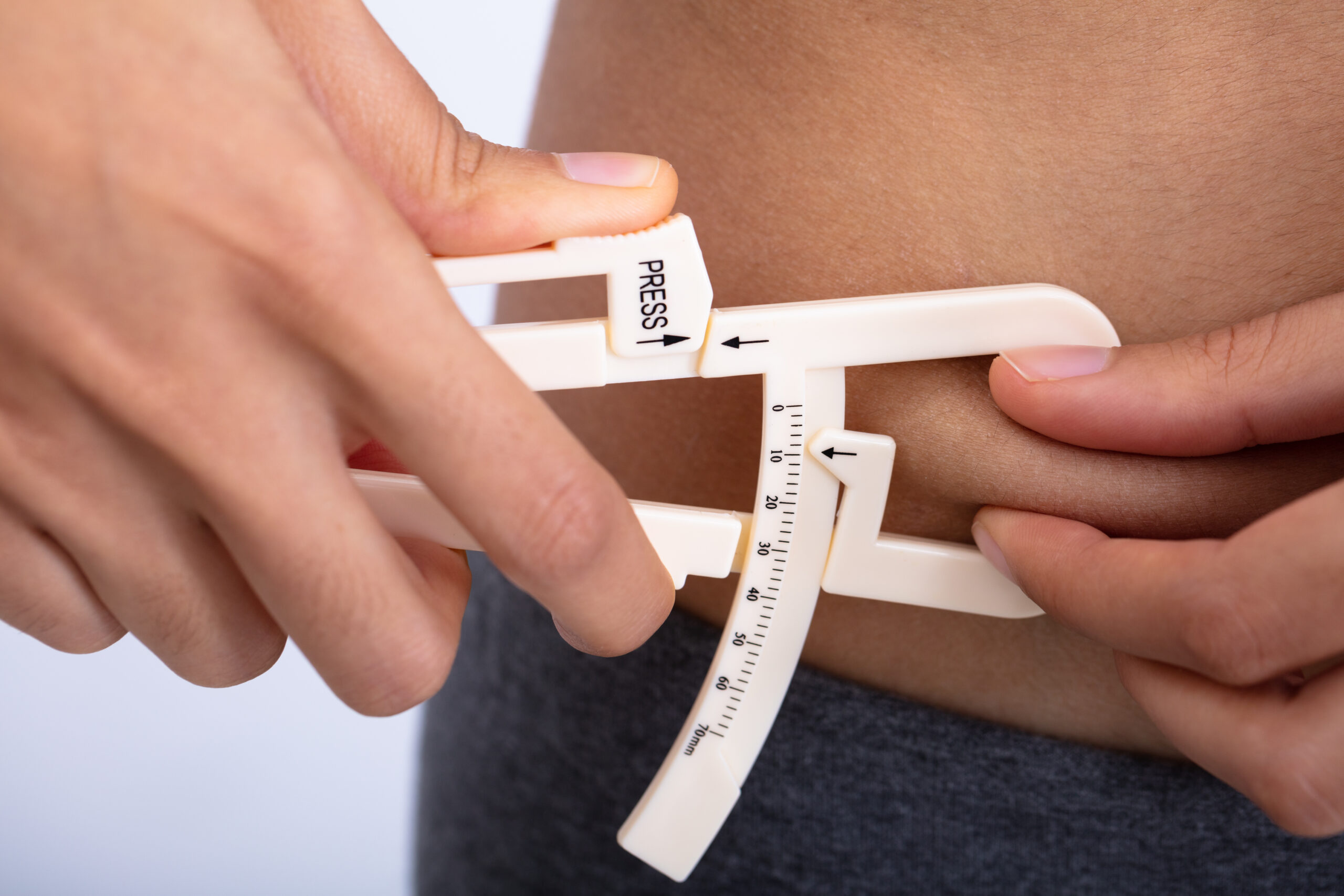
Luckily, fixing water intake is simple. You don’t have to pull out a skinfold caliper, change your food frequency/timing, or make huge lifestyle sacrifices. You simply need to hit your number.
I recommend drinking 75 ounces of water per 100 pounds of bodyweight.
That means if you’re:
- 160 pounds: You should aim for 120 ounces per day.
- 200 pounds: 150 ounces/day
- 140 pounds: 105 ounces/day
And the easiest way to start? As soon as you wake up, drink two cups (16 ounces) of water.
No excuses here, guys. Before coffee, breakfast, or physical activity, your first “rep” of the day should be two cups of water.

EAT FOR YOUR WORKOUTS
Most people approach fat loss like they’re trying to punish their body into submission with endless cardio, chasing calorie burn on weight machines, and grinding through routines that beat them down more than they build them up.
That’s not how you get lean. And that’s definitely not how you stay lean.
If you want a tight, athletic physique, your nutritional choices should complement your training and vice versa.
Here’s exactly how to do that.
PRIORITIZE THE BASICS
Strength training and resistance workouts are the engine of fat loss.
Without it, you’re just losing weight and weight loss without muscle is how you end up skinny-fat, tired, and constantly battling hunger.
You don’t need fancy weight machines or endless circuits. You just need the fundamentals.
To get lean, you want the exercises that activate the most muscle fibers at once. The movements with the biggest return on investment. That includes the following exercises:
- Squats
- Deadlifts
- Rows
- Pull-ups
- Presses
- Reverse lunges
- Carries
These movements stress the entire kinetic chain including your upper body, lower legs, transverse abdominis, stabilizers, joint structures, everything.
They also produce a much stronger metabolic effect than isolation work.
This is because your body has to coordinate more muscles, more tension, and more control, especially during the eccentric lift portion, where most of the strength and hypertrophy signaling happens.
Compound movements also directly support bone health, balance, posture mechanics, and long-term resilience.
USE PROGRESSIVE OVERLOAD
Most people stop pushing themselves when they’re trying to lose fat. They train lighter, they play it safe, and they wonder why their body composition doesn’t change.
If you want to stay lean while cutting, you need to keep a progressive overload mindset, but you don’t need to overcomplicate it.
For example, you choose one of the following overload options:
- Add a rep
- Throw on a few more pounds
- Expand your range of motion
- Improve your execution
- Slow down the eccentric lift
- Tighten your posture
- Shorten your breaks
CHOOSE CONDITIONING THAT SUPPORTS LIFTING
You don’t need to live on the treadmill. You don’t need two hours of cardio every day. You don’t even need high-intensity intervals five times a week.
What you need is conditioning that complements your lifting.
Guys, let me say this again: cardio should not replace your time on the bench. Cardio should work with, not against, your resistance training.
Here are some of the best conditioning options for getting lean:
- Brisk walking (daily — effortless recovery work for the lower legs)
- Short, smart HIIT sessions (1–2×/week)
- Sled pushes, carries, athletic intervals
- Moderate steady-state cardio 1–2×/week if you enjoy it
This keeps your joints happy, keeps your posture clean, and maintains movement quality without beating your body into the ground.
AVOID THE “MORE IS BETTER” TRAP
Most people think getting lean means adding more workouts, more volume, more everything. But this mindset destroys results.
More volume without recovery? You get burnout, form breakdown, tight hips, cranky knees, and you end up Googling “home treatments” and “simple stretches” for overuse issues.
More cardio with low calories? You lose muscle, not fat.
More training days with poor sleep and stress? You increase inflammation and fatty infiltration in the muscle tissue. This is the exact opposite of what you want.
The goal isn’t to train more. The goal is to train better.
BREAK DOWN YOUR WEEKLY WORKOUTS
If you want to get lean and stay lean, you can’t wing your workouts. You need a weekly plan that’s simple, effective, and repeatable.
Here are two proven templates that deliver every time:
Option A: 4-Day Upper/Lower Split
- Day 1: Upper
- Day 2: Lower
- Day 3: Upper
- Day 4: Lower
- Walking daily
- Short conditioning 1–2×/week
Option B: 3-Day Full Body
- Day 1: Full body
- Day 2: Full body
- Day 3: Full body
- Optional conditioning
- Daily walking
Getting lean is about mastering the fundamentals and repeating them with intention.
When you build your environment, your habits, and your training around the basic principles I outlined above, fat loss stops being a fight and starts being automatic.
Now it’s your turn: take the system, apply it consistently, and watch your body change in ways you once thought weren’t possible.
Check out our complete line of ATHLEAN-RX Supplements and find the best training program for you based on your fitness level and goals.

- Start with your WHY. Fat loss doesn’t begin with macros or workouts. It begins with the emotional anchor that drives every decision when cravings and stress hit.
- Starving yourself is not fat loss. Extreme restriction destroys muscle, tanks metabolism, and guarantees burnout. Sustainable fat loss comes from a controlled, moderate deficit.
- Build your environment for success. Shop the perimeter, stock whole foods, and reserve the aisles for flavor enhancers so your kitchen naturally supports lean eating.
- Use the 12/15 Rule to establish your baseline. Short-term tracking reveals caloric blind spots and gives you an honest starting point for maintenance, deficit, or surplus.
- Prep proteins, veggies, and carbs separately so you can mix, match, and stay consistent without spending six hours cooking every Sunday.
- Get 1 to 1.2 grams per pound of bodyweight and spread it across the day to maximize muscle protein synthesis, recovery, and appetite control.
- Aim for 75 ounces per 100 pounds of bodyweight and start each morning with 16 ounces to prevent dehydration-driven hunger and poor training.
- Strength training is your fat-loss engine. Big, compound movements that challenge multiple muscle fibers protect your lean tissue, boost metabolism, and create the athletic look you want.
- Condition smart. Brisk walking, short bursts of HIIT, and athletic conditioning complement your lifting without beating down your lower legs, posture, or recovery.
- Use a 3-day full-body or 4-day upper/lower split, walk daily, and prioritize progressive overload to maintain muscle while cutting body fat.
HOW TO GET LEAN FAQ
The fastest way to get lean is to stop doing the things that slow you down: extreme dieting, endless cardio, and programs you can’t follow longer than two weeks.
You get lean by stacking the habits that work every single day.
Strength training comes first because it protects your muscle, keeps your metabolism high, and gives your body the shape you’re trying to reveal.
Pair that with a moderate calorie deficit, high-protein meals spaced throughout the day, hydration, and a simple meal-assembly system, and you’ll finally create a routine that’s impossible to fall off.
Calories dictate the direction of your progress. You use a deficit for fat loss, maintenance for recomposition, and surplus for growth. But macronutrients determine the quality of that progress.
If you cut calories but ignore your macros, you’ll lose weight, but a lot of it will be muscle, which slows your metabolism, tanks your performance, and leaves you with the “skinny-fat” look.
Protein protects muscle, boosts recovery, and makes dieting easier by keeping you full.
Carbs fuel hard training sessions so you can actually push weight and keep strength.
Fats support hormones, brain function, and nutrient absorption.
When calories and macros work together, your body burns fat while holding onto the muscle you’ve earned and that’s what creates a lean, athletic physique instead of just a smaller version of where you started.
REFERENCES
Jeff Cavaliere M.S.P.T, CSCS
Jeff Cavaliere is a Physical Therapist, Strength Coach and creator of the ATHLEAN-X Training Programs and ATHLEAN-Rx Supplements. He has a Masters in Physical Therapy (MSPT) and has worked as Head Physical Therapist for the New York Mets, as well as training many elite professional athletes in Major League Baseball, NFL, MMA and professional wrestling. His programs produce “next level” achievements in muscle size, strength and performance for professional athletes and anyone looking to build a muscular athletic physique.