






is edamame a good protein source?
But you won’t find it on most lifters’ dinner plate. Why?
Edamame is soy. Ask any muscle-bound guy in the gym about soy and the answer comes fast.
Avoid it. It raises estrogen, lowers testosterone, and kills your gains.
To be fair, there’s something to that argument, but it’s oversimplified and misunderstood.
First, not all soy is the same.
Second, people usually only read the part about “higher estrogen,” but they totally miss the most important thing: it’s all about the amount of soy.
In this guide to edamame protein, I’ll cover how much soy it takes before any of that becomes a concern, how many grams of protein you get in a serving, how edamame ranks against other foods, and where it fits in your meal prep.
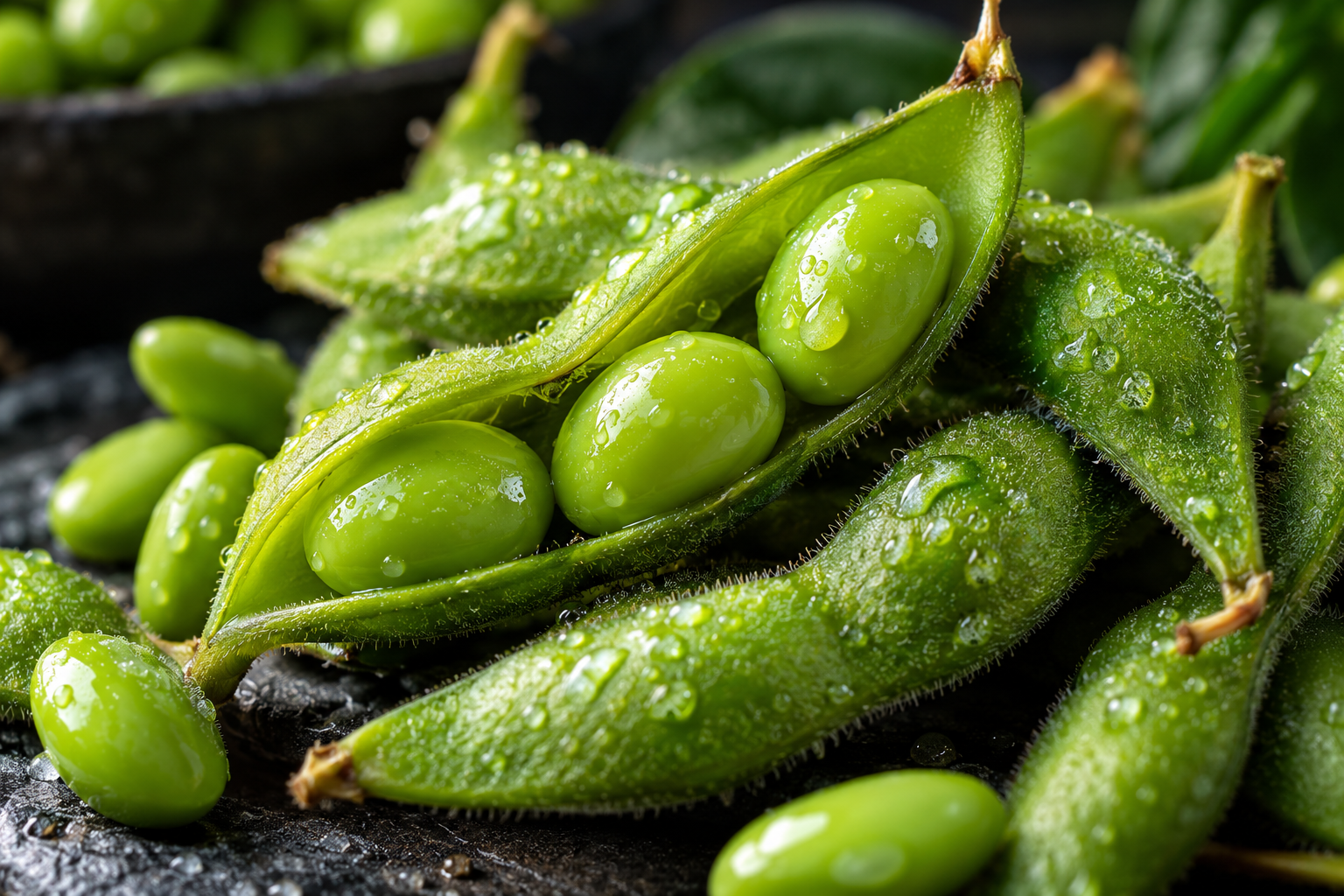
PROTEIN IN EDAMAME: THE NUMBERS
The good news is that one cup of shelled edamame gives you 18.5 grams of protein for 188 calories.
The bad news: that number counts only if you shell the beans and cook them before you measure.
Skip either step and you get less food in the cup. Pods take up space and get thrown out. Uncooked beans don’t fill a cup the way cooked ones do.
The table below covers the cup and every portion from one ounce to eight. Every figure comes from USDA’s records for frozen edamame, cooked and uncooked.
START WITH THE CUP
The cup is USDA’s own portion for this food, so anchor to it and use the ounce rows for anything larger or smaller.
| PORTION | PROTEIN | CALORIES | FIBER | FAT | CARBS |
| 1 cup | 18.5 g | 188 | 8.1 g | 8.1 g | 13.8 g |
| 1 oz | 3.4 g | 34 | 1.5 g | 1.5 g | 2.5 g |
| 3 oz | 10.1 g | 103 | 4.4 g | 4.4 g | 7.6 g |
| 4 oz | 13.5 g | 137 | 5.9 g | 5.9 g | 10.1 g |
| 6 oz | 20.3 g | 206 | 8.8 g | 8.8 g | 15.2 g |
| 8 oz | 27.0 g | 274 | 11.8 g | 11.8 g | 20.2 g |
Every row is shelled beans, so pop the pods off before you weigh anything.
Three ounces gives 10.1 grams of protein for 103 calories. That’s a little over half a cup, and it’s the portion the comparison table later in this article runs on.
YOU GET FIBER TOO
One cup of shelled edamame carries 8.1 grams of fiber. Three ounces carries 4.4 grams.
No meat matches that, because fiber is plant material. Chicken breast, top loin steak, farmed Atlantic salmon, cooked shrimp, and hard-boiled eggs all sit at zero, whatever the portion.
Getting both from a chicken breast takes a vegetable alongside it. In edamame the fiber is already in the bean.
AN UNCOOKED CUP IS SMALLER
USDA publishes a separate record for uncooked edamame. By the ounce, the two are nearly identical, at 3.2 grams of protein uncooked against 3.4 grams cooked. By the cup they aren’t.
| PER CUP | UNCOOKED | COOKED |
| Protein | 13.2 g | 18.5 g |
| Calories | 129 | 188 |
| Fiber | 5.7 g | 8.1 g |
One cup of uncooked edamame gives you 5.2 grams less protein than one cup cooked, and a food log records both as a cup of edamame.
Neither number is wrong.
Measure uncooked and use the uncooked column, measure cooked and use the cooked one. The mistake is scooping a cup out of the freezer bag and logging the cooked figure.
DOES EDAMAME AFFECT YOUR HORMONES?
Soy moves one hormone in men, and it isn’t testosterone.
The typical gym bro warning makes two claims: soy lowers testosterone and soy raises estrogen. For any guys trying to build muscle, that sounds like a horror story.
But research has tested both ideas and spoiler alert, testosterone didn’t move. Estrogen did, but only once the dose got high enough.
Both claims point at the same compounds in the bean, so that’s where this starts.
THE ROLE OF ISOFLAVONES
Quick biology lesson, then we’ll get to the studies.
Hormones work like keys. Your cells are covered in locks called receptors, and a hormone does nothing until its key finds the right one. Estrogen has its own locks. Testosterone has different ones.
Soybeans contain compounds called isoflavones, and they’re shaped closely enough to estrogen that they fit the estrogen locks.
That’s the chemistry the whole soy panic is built on, and it’s real. Isoflavones do fit. But here’s the part that gets left out. Fitting a lock and turning it aren’t the same thing.
The American Cancer Society describes soy isoflavones as sitting in those receptors and blocking the stronger natural estrogen already in your blood. A compound that looks like estrogen can end up getting in estrogen’s way.
Chemistry only counts if it shows up in a blood test, though. Two meta-analyses went looking.
TESTOSTERONE STAYS PUT
In 2021, a research team pulled together 41 clinical studies on men eating soy and pooled the results.
They went wider than the gym warning does. Testosterone in two forms, total and free. Estradiol and estrone, the two estrogens. And sex hormone binding globulin, the protein that decides how much of your testosterone is available to do anything. Five hormones, and up to 1,753 men depending on which one.
Not one of the five shifted.
Then they ran it again two more ways. Once splitting the studies by isoflavone dose, to see whether the heavy soy eaters looked different from the light ones. Once splitting by how long each study lasted, to see whether the effect needed time to appear. Same answer both times.
A second team came at this from a different direction and got the same result on testosterone. Estradiol is where the two papers part ways.
ESTROGEN MOVES WITH DOSE
The 2021 team had sorted their studies into dose groups. A 2025 team treated dose as a sliding scale instead, and on that model, estradiol started climbing.
Testosterone still went nowhere, which is the one thing both papers agree on completely.
At 72.2 milligrams of isoflavones a day above baseline, estradiol rose by about 6.5 picograms per milliliter. Sex hormone binding globulin rose by about 9 nanomoles per liter at 120 milligrams of isoflavones a day.
Now put that in food.
One cup of shelled edamame carries about 28 milligrams of isoflavones, which puts the estrogen threshold at roughly three cups a day. Two cups gets you to 55.6 milligrams, still short of it.
One caveat on that three-cup figure. USDA tested four samples of cooked edamame and graded the result in its second-lowest confidence band, and a cup runs anywhere from 21 to 30 milligrams depending on the batch. Three cups is just an estimate, not a red line.
THREE QUARTS A DAY
A handful of case reports do describe soy moving a man’s hormones, and the intakes behind them were enormous.
In 2008, a 60-year-old man turned up at a clinic with enlarged breasts, erectile dysfunction, and estrogen four times above the top of the reference range.
His doctors pointed at three quarts of soy milk a day, roughly 361 milligrams of isoflavones. Put that in edamame and it comes to about 13 cups. Daily.
Even then it wasn’t settled. The journal ran a commentary alongside the case arguing on three separate grounds that isoflavones couldn’t account for his numbers.
NO INCREASED CANCER RISK
There’s a second version of this fear, and it comes up more often for women. Estrogen receptors sit in breast tissue too.
The American Cancer Society reviewed the human research, and they said that soy’s estrogen effects appear to either do nothing to breast cancer risk or reduce it.
The clearest signal comes from Asian countries where people eat soy across a lifetime. Edamame is one of the foods it names.
The research on men points the same way.
A 2018 review pooled the observational studies and found higher soy intake associated with a lower risk of prostate cancer.
WHOLE FOODS, NOT SUPPLEMENTS
Everything above involves eating soy. Isoflavone capsules are the shortcut, and they’re the one product that clears three cups a day without a meal attached.
The trials behind those supplements run 52 to 120 milligrams of isoflavones a day. At 28 milligrams per cup of shelled edamame, the low end of that range is about two cups, and the high end is more than four.
For cancer prevention the American Cancer Society recommends getting nutrients from food rather than from capsules, because a supplement can carry more isoflavones than foods naturally contain.
Edamame is a bean in a bag, not a pill.
BENEFITS OF EDAMAME PROTEIN
Plenty of foods are considered “high protein.” But it’s a technicality because a lot of that protein never gets absorbed.
That’s the usual complaint on plant proteins, and it’s the reason a guy who eats chicken twice a day looks at a bag of beans and keeps walking.
Edamame is a different story.
What follows is the science on absorption, the one thing FDA has been arguing with itself about for eight years, and the single nutrient where one cup handles your entire day.
A PROTEIN YOUR BODY USES
There are nine amino acids that are labeled as essential because your body doesn’t make them. You must get them from whole foods, or from a protein powder like whey or pea protein.
Edamame provides you with all nine, which makes it one of the few vegan protein sources that’s considered a complete protein. For vegetarian athletes, that’s rare enough to matter.
Here are the essential amino acids and how much you’ll get in one cup of edamame:
| AMINO ACID | PER CUP |
| Leucine | 1.15 g |
| Lysine | 1.15 g |
| Phenylalanine | 0.76 g |
| Threonine | 0.51 g |
| Valine | 0.50 g |
| Isoleucine | 0.47 g |
| Histidine | 0.41 g |
| Methionine | 0.22 g |
| Tryptophan | 0.20 g |
Eating an amino acid and absorbing it aren’t the same thing. Some of what you swallow passes through your gut and comes out the other end without ever reaching your bloodstream. Plant foods lose more this way than meat does.
That’s why researchers don’t just count what’s in a food. They measure what makes it into you.
The measurement is called DIAAS, and it works by tracking each amino acid from your plate to the end of your small intestine, then scoring what’s left.
The UN’s Food and Agriculture Organization sets the standard, and it treats scores from 75 to 99 as good quality, with 100 and above counting as high.
A 2022 review pooled every soy study it could find and came out at 84.5 across soy products as a group, putting it inside that good-quality band.
IT MAY LOWER CHOLESTEROL
In 1999 the FDA authorized a health claim: 25 grams of soy protein a day, in a diet low in saturated fat and cholesterol, may reduce the risk of heart disease. Soy packaging has carried it ever since.
For edamame, 25 grams of soy protein works out to just under a cup and a half a day.
The claim has been under attack since 2017, when FDA moved to revoke it. The agency reviewed more than 700 publications, decided the evidence no longer cleared its bar, and proposed pulling the claim, the first time it had ever tried to pull one.
Eight years later, nothing has happened. The proposal was never finalized, and the regulation is still in the books as of August 2026. The claim stands, and the agency that wrote it has said in writing that it doubts it.
IT BARELY AFFECTS BLOOD SUGAR
No lab has run a glycemic index test on edamame. The Glycemic Index Foundation lists soybeans at 18 home cooked and 14 canned, near the bottom of a scale that runs past 100.
The reason sits in the carbohydrate column. One cup of shelled edamame carries 13.8 grams of carbohydrate, and 8.1 grams of that is fiber, which passes through undigested.
IT COVERS YOUR DAILY FOLATE
FDA counts 20% or more of the Daily Value as high. Eight nutrients in a cup of shelled edamame clear that line.
| NUTRIENT | PER CUP | % DV |
| Folate | 482 mcg | 121% |
| Manganese | 1.59 mg | 69% |
| Copper | 0.53 mg | 59% |
| Vitamin K1 | 41.4 mcg | 34% |
| Thiamin | 0.31 mg | 26% |
| Magnesium | 99 mg | 24% |
| Phosphorus | 262 mg | 21% |
| Iron | 3.5 mg | 20% |
Folate is the one that stands out at 121% of the Daily Value. A single cup handles the whole day.
Lutein and zeaxanthin come in at 2,509 micrograms per cup. FDA hasn’t set a Daily Value for either one, so there’s no percentage to put next to them.
WHAT TO EAT ALONGSIDE
Edamame comes up short on three things, and all three come from animals.
Vitamin B12: A cup of edamame has none at all. Not a small amount, zero. B12 comes from animal foods, and your nervous system and red blood cells both need it. Three ounces of any of these covers your day:
- Steak, 159% of the Daily Value
- Salmon, 99%
- Shrimp, 59%
- Eggs, 39%
Selenium: A cup of edamame gives you 2% of the Daily Value, and FDA counts anything at 5% or less as low. Seafood is where this one lives:
- Shrimp, three ounces, 42 mcg
- Salmon, three ounces, 35 mcg
- Steak, three ounces, 23 mcg
EPA and DHA: Edamame has 0.55 grams of ALA per cup, a plant omega-3 that your body converts into EPA and DHA slowly and in small amounts. Oily fish skips the conversion:
- Salmon, three ounces, 1.8 g of EPA and DHA
- Shrimp, three ounces, 0.24 g
The short version: put a cup of edamame next to three ounces of salmon and all three gaps close in one meal.
| NUTRIENT | AMOUNT | % DAILY VALUE |
| Vitamin B12 | 2.4 mcg | 99% |
| Selenium | 35.2 mcg | 64% |
| Vitamin D | 11.2 mcg | 56% |
| Niacin (B3) | 6.9 mg | 43% |
| Vitamin B6 | 0.6 mg | 33% |
| Phosphorus | 214 mg | 17% |
| Choline | 77 mg | 14% |
| Riboflavin (B2) | 0.1 mg | 9% |
| Potassium | 326 mg | 7% |
| Vitamin A | 58.7 mcg | 7% |
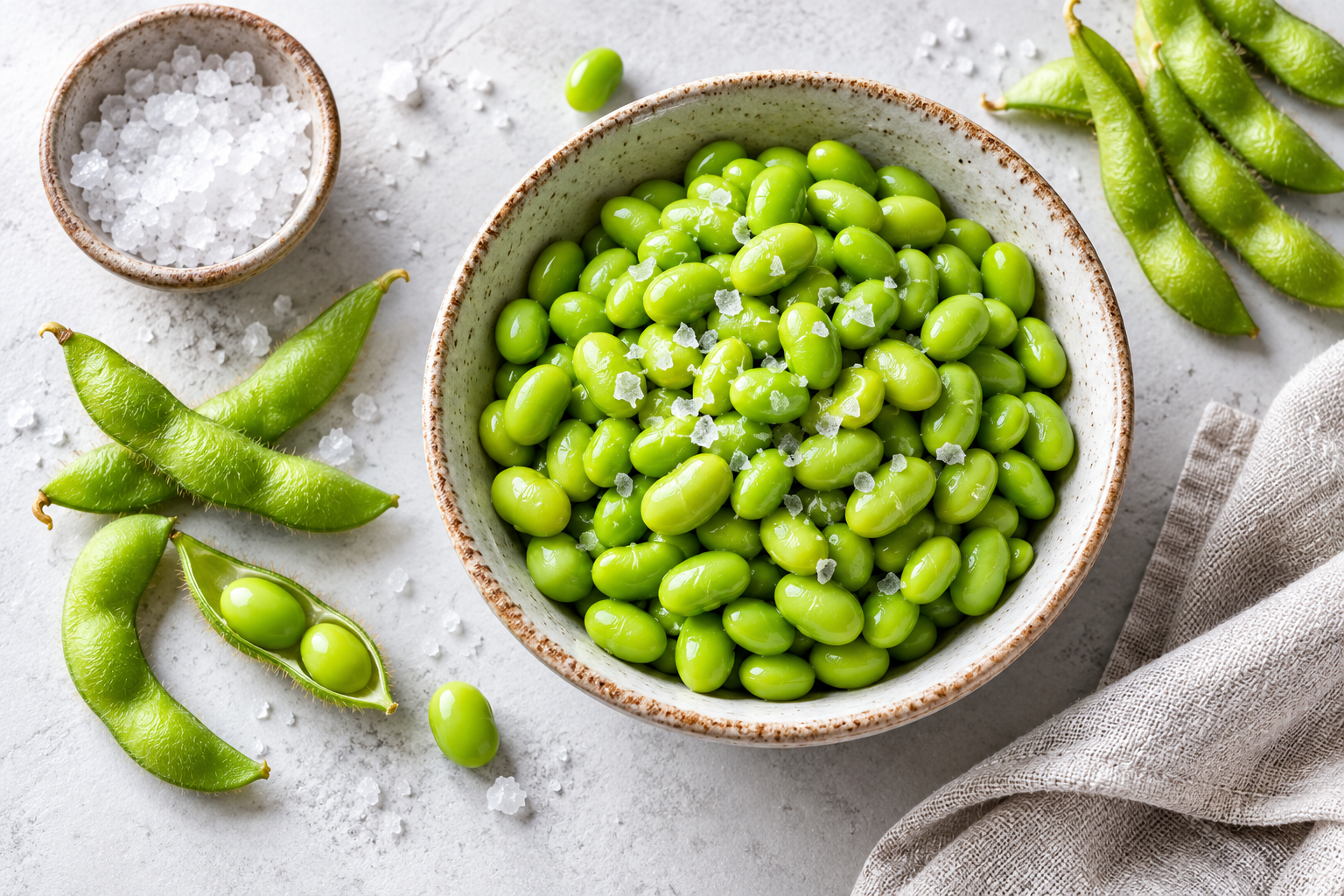
EDAMAME VS. OTHER PROTEIN SOURCES
Edamame gets grouped with the vegetables, and that’s the wrong group to judge it in.
Next to broccoli and green beans, any bean looks like a protein-rich food. The useful comparison is against the other proteins you’d cook instead.
Ten foods, one database, three ounces of each. The order they came out in surprised me, and it changes when you count calories instead of grams.
HOW DOES EDAMAME COMPARE?
Every row below is three ounces, cooked, pulled from the USDA records this article has used throughout.
| FOOD | PROTEIN | CALORIES | PROTEIN PER 100 CAL |
| Chicken breast | 26.4 g | 140 | 18.8 g |
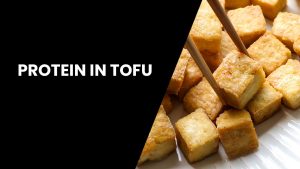
| Tofu, firm | 7.7 g | 66 | 11.6 g |
| Tempeh | 16.9 g | 166 | 10.2 g |
| Edamame | 10.1 g | 103 | 9.8 g |
| Egg | 10.7 g | 132 | 8.1 g |
| Lentils | 7.7 g | 99 | 7.8 g |
| Black beans | 7.5 g | 112 | 6.7 g |
| Green peas | 4.4 g | 66 | 6.6 g |
| Chickpeas | 7.5 g | 139 | 5.4 g |
| Quinoa | 3.7 g | 102 | 3.7 g |
A six-ounce farmed Atlantic fillet has more EPA and DHA than two six-ounce sockeye fillets.
WHY THE FATTIER FISH WINS
Omega-3s are stored in fat. Farmed Atlantic has more than double the fat of sockeye, and the EPA and DHA track it.
With chicken, the breast is leaner than the thigh, and that’s the selling point. With salmon it runs backwards. Trimming fat off a salmon fillet takes the omega-3s with it.
HOW MUCH YOU NEED
The Dietary Guidelines call for at least eight ounces of seafood a week.
The American Heart Association recommends two three-and-a-half-ounce servings of non-fried fish, and it names salmon as one of the better choices.
For salmon that’s two four-ounce fillets, or a single eight-ounce fillet split across two meals.
FILLETS VS. FISH OIL
That AHA advisory ties two servings of fish a week to lower rates of heart failure, coronary heart disease, sudden cardiac arrest, and ischemic stroke.
Those are heart health outcomes, and they’re the best-evidenced reason to eat fish. Claims about blood pressure and brain function show up constantly in omega-3 marketing and rest on far weaker ground.
The recommendation covers fish, not fish oil. A separate AHA advisory deals with supplements, and it does not recommend omega-3 capsules for the general public to prevent cardiovascular disease. The evidence that supplements change cardiovascular outcomes isn’t there, however there are plenty of good reasons to take an omega-3 supplement including muscle growth, strength, reducing DOMS, strengthening bones, improving heart and lung functioning, and enhancing cognitive functioning.
But definitely buy the fillet. You get the EPA and DHA in the form the heart health research was done on, and the protein, vitamin D, and B12 come with it.
SALMON VS. OTHER PROTEIN SOURCES
Salmon loses the protein-per-calorie contest to almost everything it sits next to.
Chicken breast beats it. So does shrimp, canned tuna, beef, and dark meat chicken.
But stick with me here.
That ranking is only measuring one thing, though. There are two nutrients where salmon buries every other protein on the list, and neither one shows up in a protein count.
Here’s how the whole field stacks up.
PROTEIN PER CALORIE
All figures are for a three-ounce cooked serving. The last column divides protein by calories, so a higher number means more protein at the same calorie cost.
| FOOD | CALORIES | PROTEIN | FAT | PROTEIN PER 100 CAL |
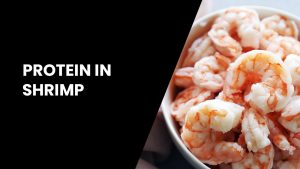
| Shrimp | 84 | 20.4 g | 0.2 g | 24.3 g |
| Canned tuna, light, in water | 73 | 16.7 g | 0.8 g | 22.9 g |
| Chicken breast, roasted | 140 | 26.4 g | 3.0 g | 18.8 g |
| Salmon, sockeye | 133 | 22.5 g | 4.8 g | 17.0 g |
| Beef tenderloin, grilled | 168 | 26.1 g | 7.1 g | 15.5 g |
| Dark meat chicken (thigh), roasted | 152 | 21.0 g | 7.0 g | 13.8 g |
| Salmon, Atlantic farmed | 175 | 18.8 g | 10.5 g | 10.7 g |
| Eggs, hard-boiled | 133 | 10.7 g | 9.0 g | 8.1 g |
Three ounces of edamame gives you 10.1 grams of protein for 103 calories.
Of the eight plant foods on that list, only one is higher. Tempeh comes in at 16.9 grams of protein for 166 calories.
Everything else on the list comes in under edamame. Tofu and lentils tie at 7.7 grams, black beans and chickpeas at 7.5 grams, green peas at 4.4 grams, and quinoa at 3.7 grams.
The egg beats it too, at 10.7 grams, though the egg and the chicken are the only animal foods on the list.
The table doesn’t show fiber. Three ounces of edamame has 4.4 grams of it, and the chicken and the egg have none.
TOFU WINS PER CALORIE
The last column answers a different question. It measures protein density, meaning how much protein you get for every 100 calories you spend.
Edamame works out to 9.8 grams of protein per 100 calories. Tofu runs 11.6 grams, even though three ounces of tofu holds less protein than three ounces of edamame, 7.7 grams against 10.1 grams.
Tofu is lighter in calories, 66 against 103 at three ounces, so a fixed number of calories buys you more of it.
That reshuffles the order. On protein per 100 calories, edamame sits fourth of the ten, behind chicken breast at 18.8 grams, tofu at 11.6 grams, and tempeh at 10.2 grams. Nothing else on the table is ahead of it.
Which column to use depends on the meal. Filling a plate, go by the grams in a portion. Holding calories down, go by protein per 100 calories.
CHICKEN IS STILL AHEAD
Chicken breast tops both columns.
Three ounces of chicken breast puts 26.4 grams of protein on the plate for 140 calories.
Matching that from edamame takes eight ounces, which means 27.0 grams of protein and 274 calories.
Same protein, roughly double the calories, and more than twice the food by weight.
Edamame was never going to beat chicken on protein, and it doesn’t need to. The best plate has both on it.
HOW EDAMAME FITS YOUR TRAINING GOALS
Edamame is a side dish and a snack, and no training goal turns it into a main course.
That isn’t a knock on it. What changes between goals is how much you eat and the food you put next to it.
Weight loss, muscle building, keeping carbohydrates down: each goal looks at a different number on the same portion.
NINE OUNCES FOR 30 GRAMS
Most protein targets for a single meal are around 30 grams. Three ounces of edamame gives you a bit over 10 grams of protein.
Covering the whole 30 grams of protein from the bean alone means eating nine ounces. If you wanted to eat that much edamame, it would put you just over the 30-gram goal, coming in at 309 calories.
Nine ounces also carries 13.3 grams of fiber. FDA sets the Daily Value at 28 grams, so one serving covers 48% of it.
At that point, the edamame is the meal, and it costs triple the calories of a three-ounce side.
LOW CALORIES FOR THE PROTEIN
Three ounces of edamame costs 103 calories and returns 10 grams of protein.
It also has 4.4 grams of fiber in it, 16% of the Daily Value.
In a calorie deficit, getting fiber and protein from one side dish leaves more room for the main course.
The full cup is where the calories add up. One cup runs 188 calories and about 18 grams of protein, which is enough to stand in for a snack.
Weigh it shelled and cooked. Every figure here assumes both.
TEN GRAMS TOWARD THE MEAL
Three ounces of edamame adds another 10 grams of protein to whatever is already on the plate, which is an easy way to top up a meal built for muscle gain.
Put it next to three ounces of chicken breast and the meal comes to about 36 grams of protein.
That clears 30 grams without a second helping of meat.
That same 10 grams goes on top of eggs, fish, or tofu.
KETO AND LOW-CARB BOTH WORK
A keto diet counts net carbohydrate, which is the total on the label minus the fiber.
One cup of shelled edamame comes to 5.7 grams of net carbohydrate. Three ounces works out to 3.2 grams.
Daily carbohydrate limits vary, so where that fits is your call. At 3.2 grams, a side of edamame leaves room for the rest of the day.
HITTING YOUR PROTEIN GOALS WITH EDAMAME
Your protein target is set for the day, not for one plate.
Bodyweight decides how big that number is. Each meal contributes a share.
Edamame won’t cover a day by itself. What I wanted to know is how much of one it does cover, so I built a full day for a lifter and added up every gram.
YOUR BODYWEIGHT SETS THE TARGET
Let’s start by understanding how much total protein you should be getting throughout the day.
I recommend aiming for 0.8 to 1.2 grams of protein per pound of bodyweight a day. Where you fall in that range depends on how hard and how often you train.
Here’s what that comes to across a range of bodyweights.
| BODY WEIGHT | DAILY TARGET | PER MEAL AT 4 MEALS |
| 140 lbs | 112 to 168 g | 28 to 42 g |
| 160 lbs | 128 to 192 g | 32 to 48 g |
| 180 lbs | 144 to 216 g | 36 to 54 g |
| 200 lbs | 160 to 240 g | 40 to 60 g |
| 220 lbs | 176 to 264 g | 44 to 66 g |
Split that across three to five meals and each one needs 30 to 40 grams of protein.
Four meals is the easiest way to divide it. At the low end of each target, that comes to:
- 30 grams of protein per meal at 150 pounds
- 35 grams of protein per meal at 175 pounds
- 40 grams of protein per meal at 200 pounds
Train harder and the target rises. Add a fifth meal or make the portions bigger.
For example, here’s a full day for a 175-pound lifter.
| MEAL | FOOD | PROTEIN |
| Breakfast | 3 large eggs, 1 cup nonfat Greek yogurt | ~44 g |
| Mid-morning | 1 cup edamame | ~18 g |
| Lunch | 4 oz chicken breast, 1 cup quinoa, vegetables | ~43 g |
| Afternoon | 1 cup lowfat cottage cheese | ~24 g |
| Dinner | 5 oz salmon, 3 oz edamame, vegetables | ~41 g |
| TOTAL | ~170 g |
The total comes to 170 grams of protein. For that bodyweight, the target runs 140 to 210 grams, so the day sits near the middle of it.
That works out to just under a gram of protein per pound.
No meal carries more than 44 grams of protein, so nothing about the day requires an oversized sitting.
Edamame appears twice, as a snack in the morning and a side at dinner. Those two servings come to about 28 grams of protein, roughly a sixth of the day’s total.
Both go alongside a main protein rather than replacing one.
HOW TO BUY EDAMAME
Not every bag of edamame in the freezer aisle holds the same thing.
Some hold loose shelled beans. Others hold whole pods, salted versions, or roasted snacks.
Which one you pick changes how you weigh a portion, how much sodium you get, and whether the numbers in this article apply at all.
SHELLED BEANS OR WHOLE PODS
Buy shelled if you weigh your food. Buy pods if you don’t.
Every edamame figure in this article is shelled beans, cooked. Pods take up room in the bag and get discarded, so the weight printed on the front includes a part that never reaches the plate.
USDA doesn’t publish a conversion from pods to beans, so there’s no clean way to work backward from that bag to grams of protein.
Shelled beans go straight onto a scale. Pods are for eating by hand, and no weighing is involved.
USDA has never measured roasted edamame, so go by the label on that package rather than the numbers here.
SALT ADDS 200 MG SODIUM
FDA sets the sodium Daily Value at 2,300 milligrams a day.
Plain frozen edamame carries 5 milligrams of sodium in three ounces, well under 1% of that.
USDA carries a salted and an unsalted version of the same cooked green soybeans. The two match on protein, calories, fat, carbohydrate and fiber, and sodium is the only line that moves.
Salting adds about 200 milligrams of sodium to a three-ounce serving. That takes the portion to 213 milligrams, or 9% of the Daily Value.
Salt it yourself after cooking and you control how much goes on. Buy it salted and that choice is already made.
EDAMAME AND SOY ALLERGY
Edamame is a soybean, so a soy allergy rules it out.
Edamame is obvious. Soy in everything else is not.
Federal labeling law catches most of it, at least on packaged food. Off the shelf and onto a restaurant table is where things aren’t as certain.
THE LABEL HAS TO SAY SOY
Soybeans are one of nine major food allergens named in U.S. law, and FDA requires packaged food products to declare them.
The declaration shows up in one of two formats:
- In parentheses after the ingredient, written as lecithin (soy)
- On a separate line below the ingredient list, as in Contains wheat, milk, and soy
One format is enough, not both.
Wording like may contain soy or produced in a facility that also uses soy is voluntary. A bag without it hasn’t been declared soy-free.
FDA has also set no threshold for any allergen, so there’s no official cutoff between a safe amount and an unsafe one.
THE RULE STOPS AT RESTAURANTS
The labeling law covers packaged goods. It doesn’t cover most of what a restaurant or a food-service counter serves without a package and a label.
A bowl of edamame brought to a table carries no label, and none is required. Raw produce is exempt as well, so fresh edamame sold loose in the pod may carry no allergen information either.
Without a label, asking is the only check left. A server can take the question to the kitchen before you order.
WHAT A REACTION LOOKS LIKE
Symptoms usually show up between a few minutes and a few hours after eating.
FDA lists the signs to watch for:
- Hives, flushed skin, or a rash
- Tingling or itching in the mouth
- Swelling of the face, tongue, or lips
- Vomiting, diarrhea, or abdominal cramps
- Coughing or wheezing
- Dizziness or lightheadedness
- Swelling of the throat and vocal cords
- Difficulty breathing
A severe reaction is called anaphylaxis, and it can be life-threatening.
Anyone with a known food allergy who starts having these symptoms should stop eating right away, decide whether emergency medication such as epinephrine is needed, and get medical attention.
These signs don’t always come from an allergen, so a diagnosis from a doctor is the only way to know.
If soy is confirmed, avoiding it is the only treatment there is.
Thankfully, you don’t have to look far for a soy protein replacement. Chicken, eggs, lentils, black beans, and quinoa are staple protein sources with no soy in them.
HOW TO COOK EDAMAME
Frozen edamame goes straight into the pot, no thawing.
Heat the pods until the beans inside go tender, and that’s it.
Four methods do that. Three of them finish soft, and one finishes crisp.
BOILING
Bring a pot of salted water to a boil and add the pods still frozen.
Start the clock once the water comes back to a boil, not the moment the pods go in.
Cook uncovered for about five minutes, until a pod gives easily when you press it, then drain thoroughly.
Season after draining, not before. Salt, pepper, spices, or Parmesan all work.
Serve them hot or cold.
STEAMING AND MICROWAVING
Steaming runs five to seven minutes. Put two to three inches of water in the pot, sit the basket above the surface, and steam on high.
Let the pods cool for two to three minutes before you handle them.
The microwave needs a covered dish and a splash of water, then one-minute bursts until the pods are tender.
AIR FRYING
An air fryer dries the beans out and crisps the skins instead of leaving them tender.
Shell them first. Air fryers vary by model, so watch the beans rather than a timer. They’re ready when the skins have browned and wrinkled.
SHELL THEM WITH ONE SQUEEZE
Hold the top of the pod in one hand and squeeze from the top down. The beans drop out into a bowl.
That’s how you shell a whole bag at once. Roasting, blending, and weighing all need the beans out of the pods first.
Eating them from the pod at the table takes no technique but put out a bowl for the empties. The pods aren’t edible.
EDAMAME MEAL PREP: SIX RECIPES
Frozen edamame holds its quality for a year, so buying ahead costs you nothing but freezer space.
Once it’s cooked, the limit drops to four days in the fridge, and every recipe below works inside that.
These recipes cover breakfast, a packed lunch, a crunchy snack, a dip, a hot side, and one bowl that beats the rest on protein per calorie.
All six start with edamame already boiled and shelled. Cook a batch at the start of the week and another midweek.
EDAMAME BREAKFAST SCRAMBLE
Added off the heat, the edamame stays firm instead of going soft in the eggs. This recipe delivers about 29 grams of protein per serving.
INGREDIENTS (PER SERVING)
- 3 large eggs
- ½ cup shelled edamame, cooked
- 1 cup raw spinach
- 1 tsp olive oil
- Salt and pepper
INSTRUCTIONS
- Heat the olive oil in a nonstick skillet over medium.
- Add the spinach and cook until it wilts, about a minute.
- Beat the eggs, pour them in, and stir until they set.
- Fold in the edamame off the heat and season.
CHICKEN AND EDAMAME GRAIN BOWL
Nothing in it gets reheated, so the texture on day two is the texture on day one. You’ll get around 45 grams of protein per serving.
INGREDIENTS (PER SERVING)
- 3 oz cooked chicken breast, sliced
- 1 cup cooked quinoa
- ½ cup shelled edamame, cooked
- ½ cup diced red pepper
- ½ cup halved cherry tomatoes
- 1 tbsp olive oil
- 1 tbsp lemon juice
- Salt and pepper
INSTRUCTIONS
- Cook the quinoa ahead and let it cool completely.
- Whisk the olive oil and lemon juice with salt and pepper.
- Layer everything into a container and pour the dressing over the top.
- Seal and refrigerate.
CRISP AIR-FRYER EDAMAME
Drying the beans before they go in is what separates crunchy from chewy. Expect about 18 grams of protein per serving.
INGREDIENTS (PER SERVING)
- 1 cup shelled edamame, cooked
- 1 tsp olive oil
- ½ tsp garlic powder
- ¼ tsp salt
INSTRUCTIONS
- Pat the cooked beans dry. Wet beans steam instead of crisping.
- Toss with the oil, garlic powder, and salt.
- Air fry with the beans spread out, shaking the basket once partway through, until the skins brown and wrinkle.
- Eat them the same day. They soften as they sit.
EDAMAME DIP
One batch on Sunday covers snacks through the middle of the week. This one gives you about 9 grams of protein per serving.
INGREDIENTS (SIX SERVINGS)
- 2 cups shelled edamame, cooked
- ½ cup plain nonfat Greek yogurt
- 2 tbsp tahini
- 2 tbsp olive oil
- 1 lemon, juiced
- 2 cloves garlic
- ½ tsp salt
INSTRUCTIONS
- Blend everything except the olive oil in a food processor until smooth.
- With the blender running, pour the oil in slowly.
- Note: Thin it with water a spoonful at a time if it’s too thick to scoop.
SKILLET EDAMAME WITH LEMON
Direct heat gives the beans blistered spots that boiling can’t. This is a hot side that cooks while the main course rests. You’ll get about 10 grams of protein per serving.
INGREDIENTS (PER SERVING)
- 3 oz shelled edamame, cooked
- 1 tsp olive oil
- Pinch of red pepper flakes
- Zest of half a lemon
- Salt
INSTRUCTIONS
- Get a dry skillet hot over medium-high heat.
- Add the oil, then the edamame spread across the pan. Leave them alone two minutes so they blister.
- Toss, add the pepper flakes, and cook another minute.
- Finish off the heat with lemon zest and salt.
COTTAGE CHEESE AND EDAMAME BOWL
Nothing to cook once the edamame is done and best of all, it has more protein per calorie than the other five recipes. You’ll get about 33 grams of protein per serving.
INGREDIENTS (PER SERVING)
- 1 cup lowfat cottage cheese
- ½ cup shelled edamame, cooked, and cooled
- Cracked black pepper
- Everything bagel seasoning, optional
INSTRUCTIONS
- Spoon the cottage cheese into a bowl.
- Top with the edamame.
- Season and eat.
COMMON EDAMAME PROTEIN MISTAKES
Edamame is hard to cook badly and easy to count wrong.
Every mistake below happens after the pot comes off the heat. Two are logging errors, one happens at the table, and one happens in front of the freezer.
None of them ruins a meal, which is why they’re easy to keep making.
A RESTAURANT BOWL ISN’T MEASURED
A restaurant bowl arrives with the pods with no label and no weight.
The pods get discarded, and USDA publishes no conversion from them to beans, so there’s no working backward to a number.
A cup of shelled edamame is 18.5 grams of protein and 188 calories. Whether that bowl held a cup, half a cup, or more isn’t something you can tell by looking.
Log it as an estimate and move on or keep tracked portions to what you cooked and weighed yourself.
OIL AND TAHINI ADD CALORIES
Blend edamame into a dip and the ratio moves.
Plain edamame gives 9.8 grams of protein per 100 calories. The dip in this article gives 6.3.
The gap is the olive oil and the tahini. Both add calories and neither adds much protein.
That doesn’t make the dip a bad choice. It makes it a different line in the tracker.
THE BAG SALTED IT ALREADY
Salted edamame leaves the bag with 213 milligrams of sodium in a three-ounce serving.
A quarter teaspoon of table salt on top of that adds another 581 milligrams.
Together it comes to 794 milligrams, or 35% of the 2,300 milligram Daily Value, from a side dish.
The check takes two seconds. If salt is on the ingredient list, it’s already seasoned.
THAWED ISN’T RUINED
A bag that thawed in the fridge overnight is fine.
USDA says food thawed in a refrigerator can go back in the freezer without cooking, and the cost is quality rather than safety.
If it still holds ice crystals, or feels as cold as a refrigerator, it’s safe to refreeze or to cook.
The limit is time spent out of the fridge. Two hours on the counter, or one hour if the room is above 90 degrees, and it shouldn’t go back in the freezer.
A bag thawed in the fridge is still food. A bag that sat out through dinner doesn’t go back in.
Edamame is a great source of plant-based protein.
Sure, it won’t replace a steak dinner, but it makes an easy side, and there’s room for it in most of the meal prep you’re already doing.
If you want a high-protein addition with fiber and no fuss, edamame is what I’d reach for.
Check out our complete line of ATHLEAN-RX Supplements and find the best training program for you based on your fitness level and goals.

- One cup of shelled edamame gives you more than 18 grams of protein for under 200 calories.
- Edamame has all nine essential amino acids, which is rare for a plant food.
- Three ounces carries more than 4 grams of fiber. Chicken, steak, salmon, shrimp, and eggs have none.
- Edamame is soy, and soy does not lower testosterone. Estrogen only shifts at around three cups of edamame a day, and even that is an estimate.
- Of the ten protein foods in the comparison table, only chicken breast, tofu and tempeh beat edamame on protein density.
- Hitting 30 grams of protein from edamame alone takes nine ounces, so treat it as a side and a snack rather than the main course.
- Weigh it shelled and cooked. A cup of uncooked beans is about 13 grams of protein against more than 18 cooked.
- Soy is one of nine major allergens, so packaged foods have to include it on the label. Restaurant food doesn’t have to, and “may contain” labels are voluntary.
- Boil the pods about five minutes. A frozen bag holds 12 months, and once cooked, four days in the fridge.
EDAMAME PROTEIN FAQS
Yes. One cup of shelled edamame gives you more than 18 grams of protein for under 200 calories, and it has all nine essential amino acids, which is rare for a plant food.
Not all the protein on a label gets absorbed, and plant foods lose a bigger share of it than meat does. Researchers score what makes it through on a scale called DIAAS, where 75 and above counts as high quality. Soy protein comes in at 84.5.
Among ten common protein sources, only chicken breast, tofu and tempeh do better per calorie. Three ounces of edamame also has over 4 grams of fiber. Meat and eggs have none.
Weigh it shelled and cooked. A cup of uncooked edamame beans is about 13 grams of protein against more than 18 after boiling, and a food log records both as a cup of edamame.
Portion size is the limit. Three ounces, the amount that goes next to a main course, comes to about 10 grams. Reaching a full meal's 30 grams from edamame alone takes nine ounces, so it works as a side and a snack rather than the main protein.
Sometimes. Tofu comes in several forms, and the protein swings more than the label suggests.
USDA lists more than a dozen tofus labeled firm or harder. At three ounces they run from about 7 grams of protein to nearly 15 grams. Edamame sits at 10 grams, so it beats some of them and loses to the rest.
The firmness level doesn't tell you how much protein tofu contains. Two might both be labeled firm and differ by nearly double the protein, one set with calcium sulfate and the other with nigari. That difference shows up in the ingredient list.
Per calorie the answer changes. Most of those tofus beat edamame on protein per 100 calories, because tofu carries fewer calories for the amount of protein it has.
Fiber is where edamame wins outright. Three ounces has over 4 grams of it. The same weight of any of those types of tofu tops out at 2 grams.
Choose firm tofu if calories are tight, and edamame if you want fiber alongside the protein. Neither of those shows on the front of the package.
REFERENCES
- U.S. Food and Drug Administration. (1999). Health claims: Soy protein and risk of coronary heart disease. 21 CFR 101.82.
- Martinez, J., & Lewi, J. E. (2008). An unusual case of gynecomastia associated with soy product consumption. Endocrine Practice, 14(4), 415–418.
- Environmental gynecomastia [Commentary]. (2008). Endocrine Practice.
- U.S. Department of Agriculture, Agricultural Research Service. (2008). USDA database for the isoflavone content of selected foods, Release 2.1.
- U.S. Food and Drug Administration. (2017, October 31). Food labeling: Health claims; soy protein and coronary heart disease [Proposed rule]. 82 FR 50324.
- Applegate, C. C., Rowles, J. L., Ranard, K. M., Jeon, S., & Erdman, J. W. (2018). Soy consumption and the risk of prostate cancer: An updated systematic review and meta-analysis. Nutrients, 10(1), 40.
- U.S. Department of Agriculture, Agricultural Research Service. (2018). FoodData Central, SR Legacy. — records 168410, 168411, 169283, 170017, 170108, 170457, 170530, 170894, 171287, 171413, 171477, 171971, 172182, 172421, 172448, 172475, 173424, 173468, 173735, 173757, 174290, 174291, 175168, 168604, 168631, 168462, 168917, 172467
- Reed, K. E., Camargo, J., Hamilton-Reeves, J., Kurzer, M., & Messina, M. (2021). Neither soy nor isoflavone intake affects male reproductive hormones: An expanded and updated meta-analysis of clinical studies. Reproductive Toxicology, 100, 60–67.
- North Dakota State University Extension. (2022, reviewed March). Field to fork: Edamame! (FN1836).
- van den Berg, L. A., Mes, J. J., Mensink, M., & Wanders, A. J. (2022). Protein quality of soy and the effect of processing: A quantitative review. Frontiers in Nutrition, 9, 1004754.
- Rajaie, S. H., Mohseni-Takalloo, S., Sadeghi, O., & Hashempur, M. H. (2025). The impact of soy products and isoflavones on male reproductive hormones: A systematic review and dose–response meta-analysis of randomized controlled trials. *Food Frontiers, 6*(6), 3166–3179.
- U.S. Food and Drug Administration. (2026, March 11). Food allergies.
- American Cancer Society. (n.d.). Soy and cancer risk: Our expert’s advice.
- U.S. Food and Drug Administration. (n.d.). Daily value on the nutrition and supplement facts labels.
- U.S. Food and Drug Administration. (n.d.). The lows and highs of percent daily value on the nutrition facts label.
- U.S. Department of Agriculture, Food Safety and Inspection Service. (n.d.). Freezing and food safety.

Jeff Cavaliere M.S.P.T, CSCS
Jeff Cavaliere is a Physical Therapist, Strength Coach and creator of the ATHLEAN-X Training Programs and ATHLEAN-Rx Supplements. He has a Masters in Physical Therapy (MSPT) and has worked as Head Physical Therapist for the New York Mets, as well as training many elite professional athletes in Major League Baseball, NFL, MMA and professional wrestling. His programs produce “next level” achievements in muscle size, strength and performance for professional athletes and anyone looking to build a muscular athletic physique.