





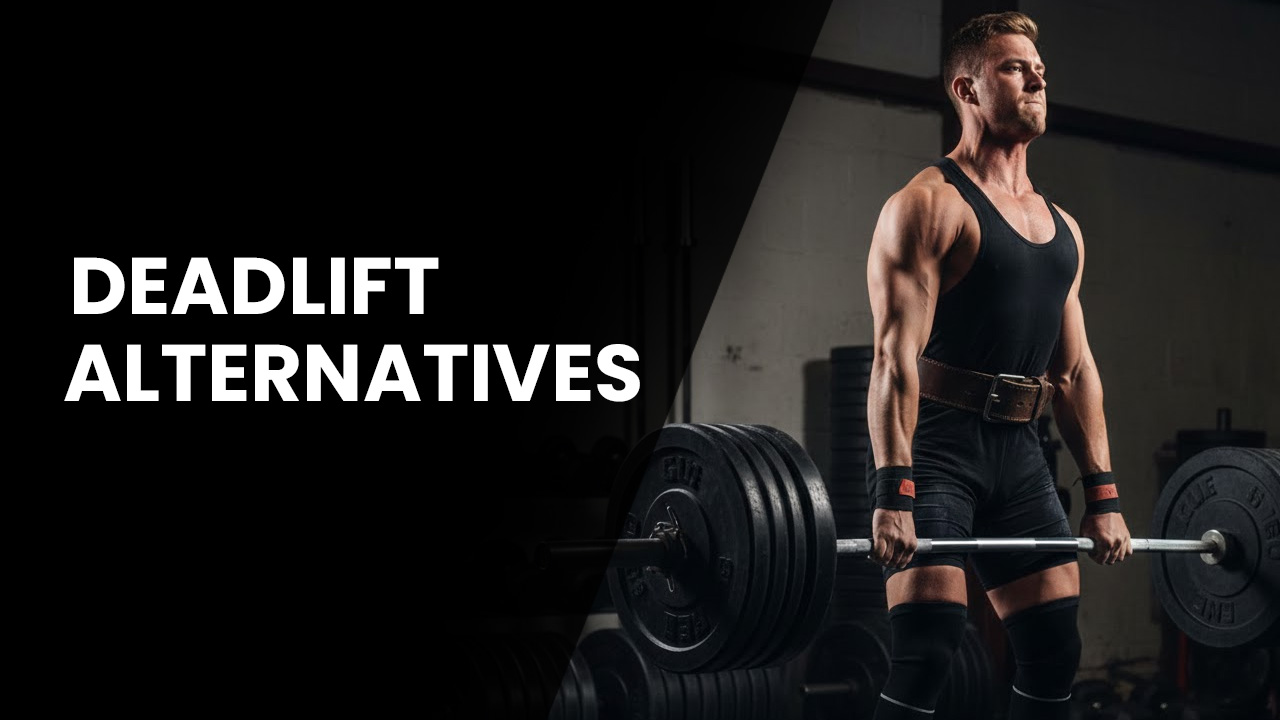
WHY do deadlift alternatives?
Most people don’t realize that the deadlift is a movement pattern. It’s not just a singular exercise or just a piece of equipment.
If you understand the mechanics behind the deadlift pattern, you can build the same size and strength with deadlift alternatives.
Today, you’ll learn about the muscle groups involved in the deadlift movement pattern and the best barbell-free deadlift alternatives.
I’ll also cover how to build them into a smart, effective training routine whether you work out at home, in a cramped gym, or with nothing but a pair of dumbbells.
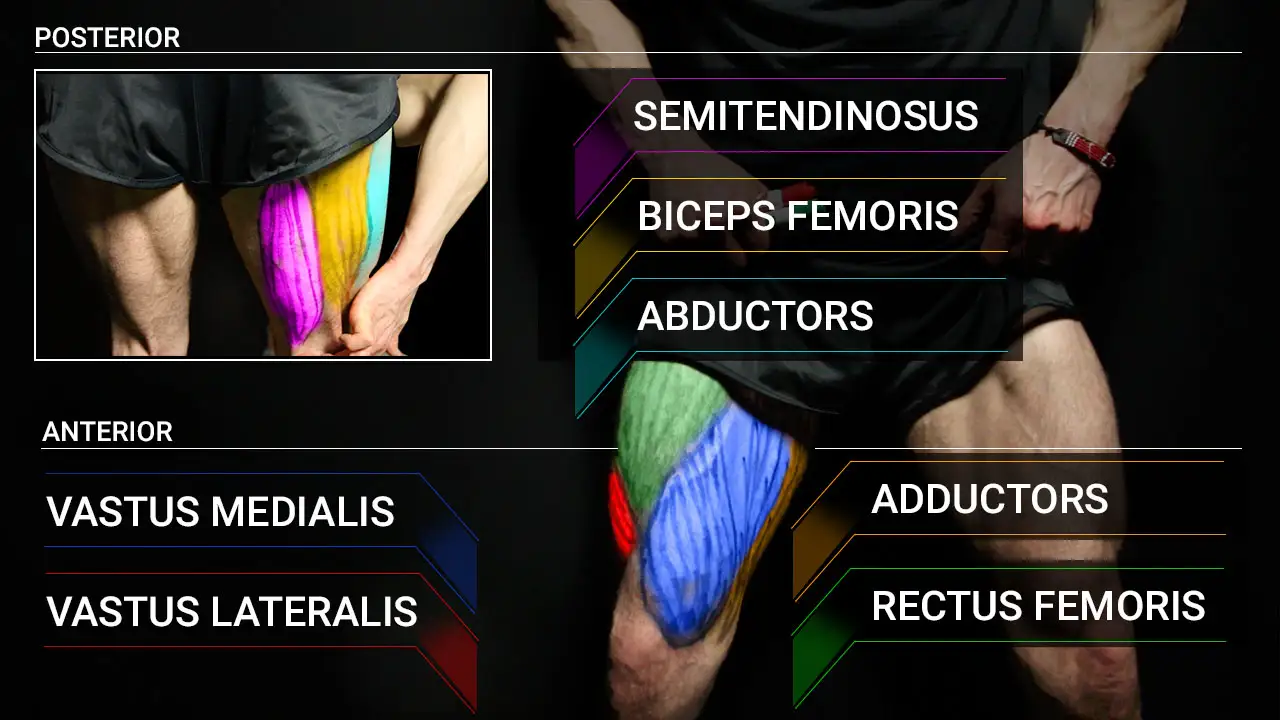
DEADLIFT ALTERNATIVES: MUSCLES WORKED
When you break down the deadlift to its core elements of hip hinge mechanics, hip mobility, and coordinated posterior chain tension, it becomes obvious that the movement isn’t defined by a barbell, a trap bar, or a power rack.
It’s a movement pattern you can reproduce with different exercises like Dumbbell Romanian Deadlifts, Cable Pull-Throughs, and Hip Thrusts.
But before we dive into my picks for the most effective deadlift alternatives, I want to break down the muscles that make this movement pattern happen.
GLUTES
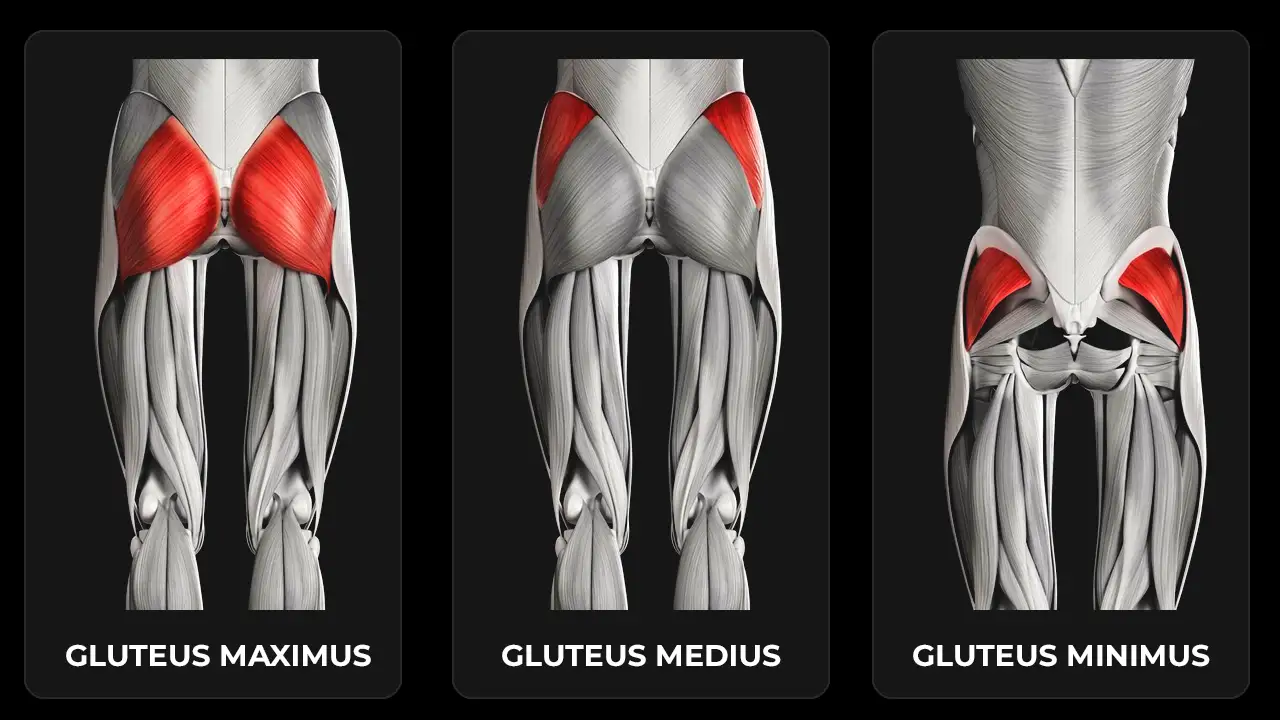
The glutes sit across the backside of the hips and include three major muscle groups: the gluteus maximus, gluteus medius, and gluteus minimus.
The gluteus maximus is the primary hip extensor and the main driver in any hinge pattern, while the medius and minimus handle pelvic stability and lateral control, so the hips don’t collapse or rotate under load.
Together, they manage hip extension, pelvic alignment, and overall power at the top of the lift.
When you perform the deadlift, the glutes finish the movement by locking out the hips and keeping the lower back from doing the work alone.
Any exercise that loads hip extension such as Hip Thrusts, Glute Bridges, and Kettlebell Swings can train these same functions without requiring a Barbell Deadlift.
HAMSTRINGS
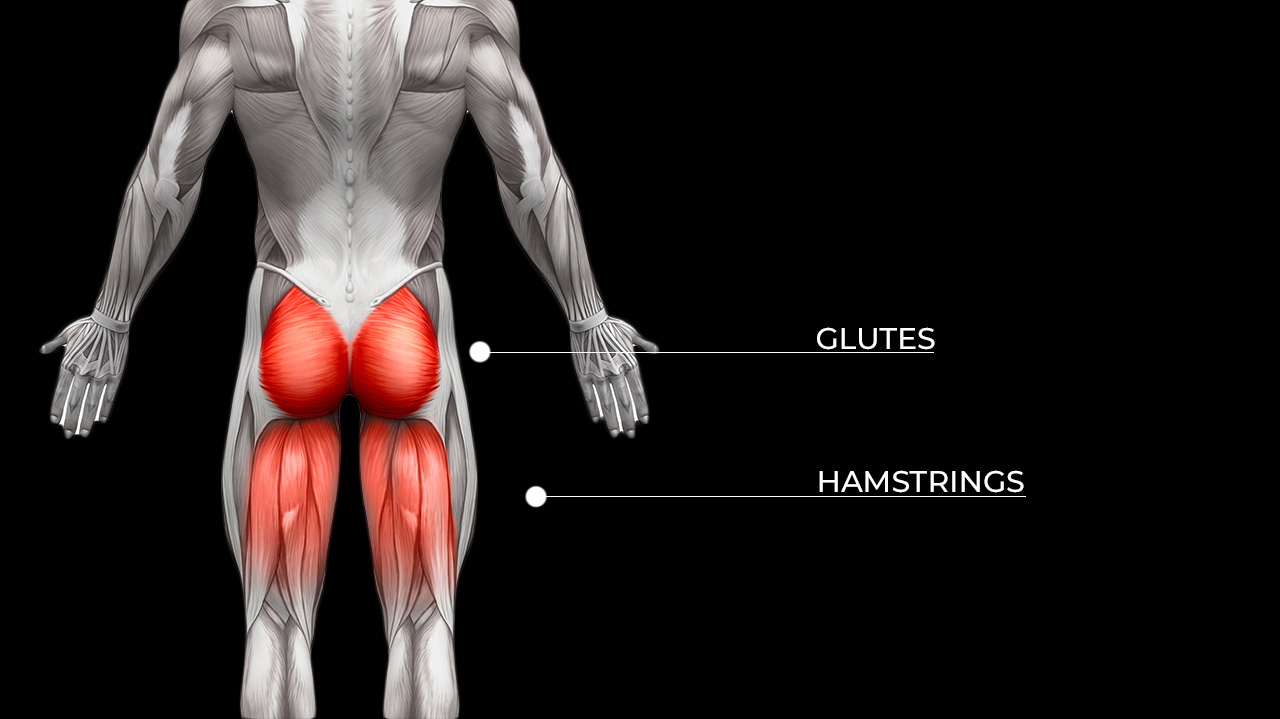
The hamstrings muscles run down the back of the thigh, and they include the biceps femoris and semitendinosus.
This muscle group extends the hip, flexes the knee, and manages the stretch-reflex tension at the bottom of the hinge movement pattern.
During a deadlift, the hamstrings control the descent, store elastic energy, and help initiate the upward pull while coordinating proper lumbopelvic rhythm.
This same function is trained through movements like the Single-Leg Romanian Deadlift and Nordic Hamstring Curls, especially when heavy spinal loading isn’t an option.
LOWER BACK / ERECTORS
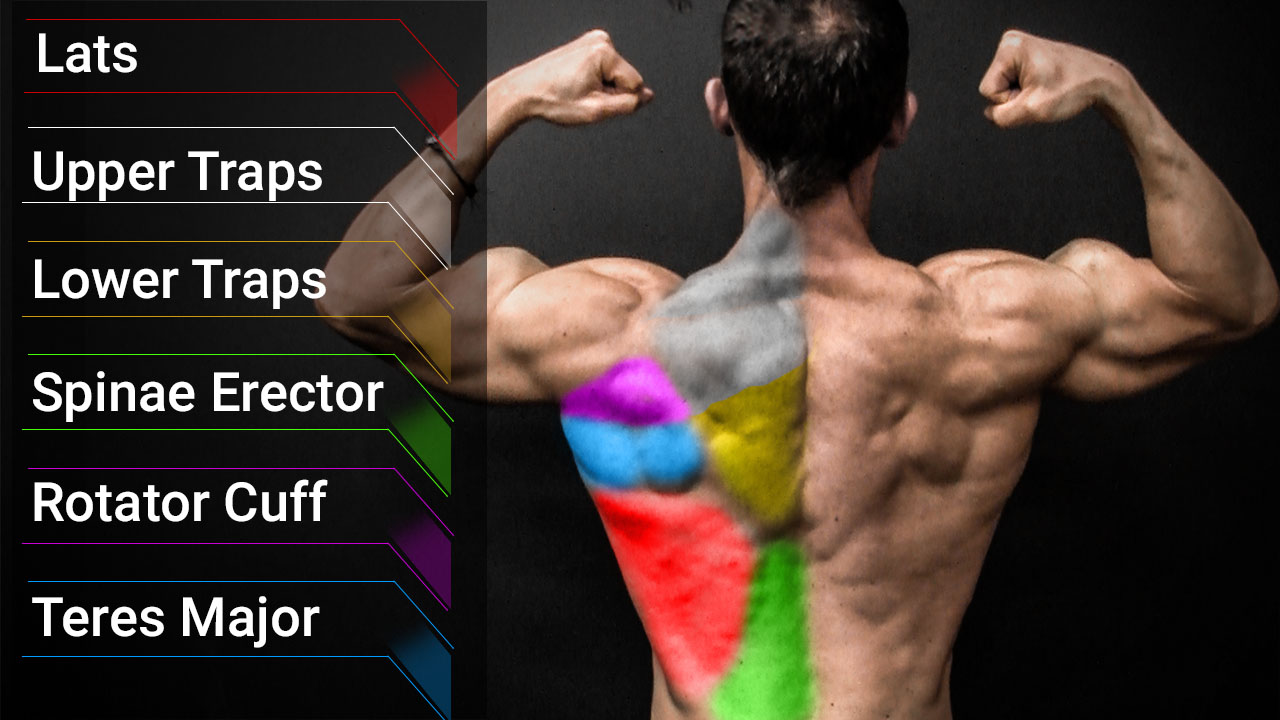
The spinal erectors run vertically along the spine from the pelvis to the upper back. Their job is to keep the torso from collapsing forward by resisting flexion under load.
In the deadlift, they work isometrically to maintain a neutral low back and transfer force from the hips to the bar.
This stabilizing role can be trained safely with exercises like Back Extensions, Reverse Hyper Extensions, and Controlled Good Mornings.
LATISSIMUS DORSI (LATS)
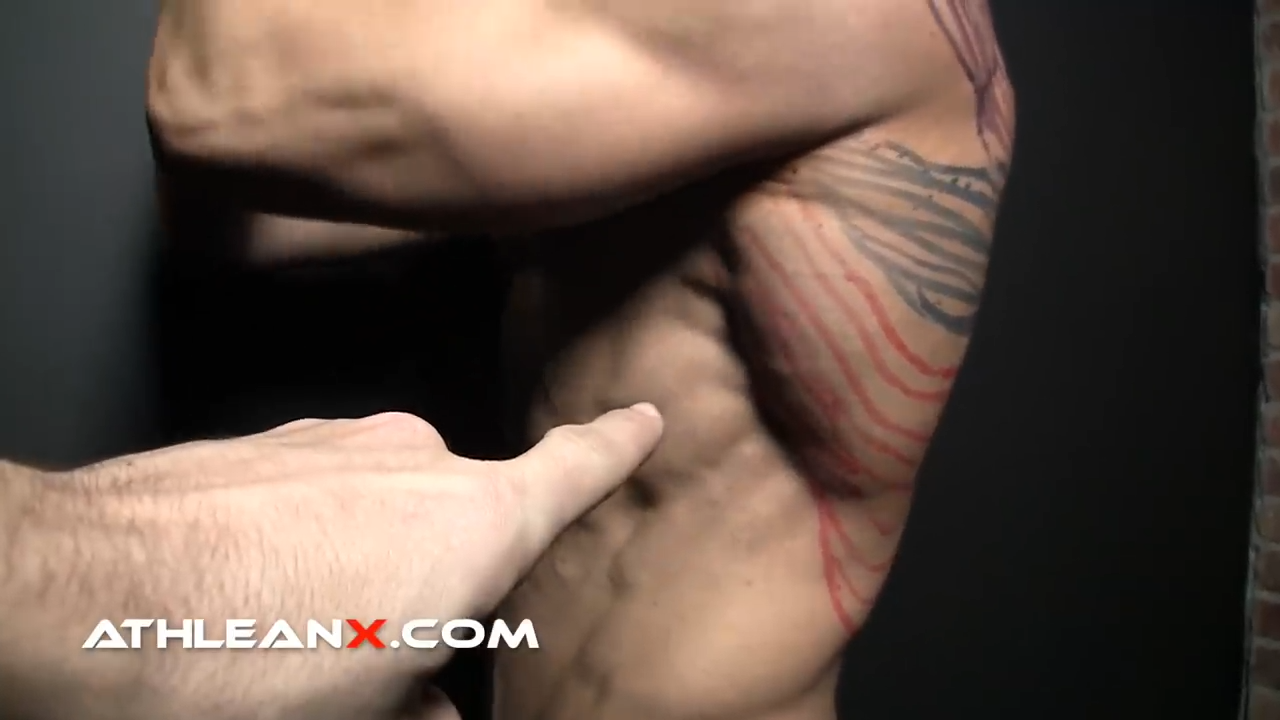
The lats span the sides of the torso from the upper arm down to the lower back. Their function is to keep the arms tight to the body and maintain torso rigidity during the hinge.
As you perform a deadlift, the lats control the bar path, prevent the weight from drifting forward, and create full-body tension from the overhand grip all the way down to the hips.
This stabilizing effect is present in exercises like Landmine Deadlifts and Russian Swings, where the load must stay close to the body.
GRIP
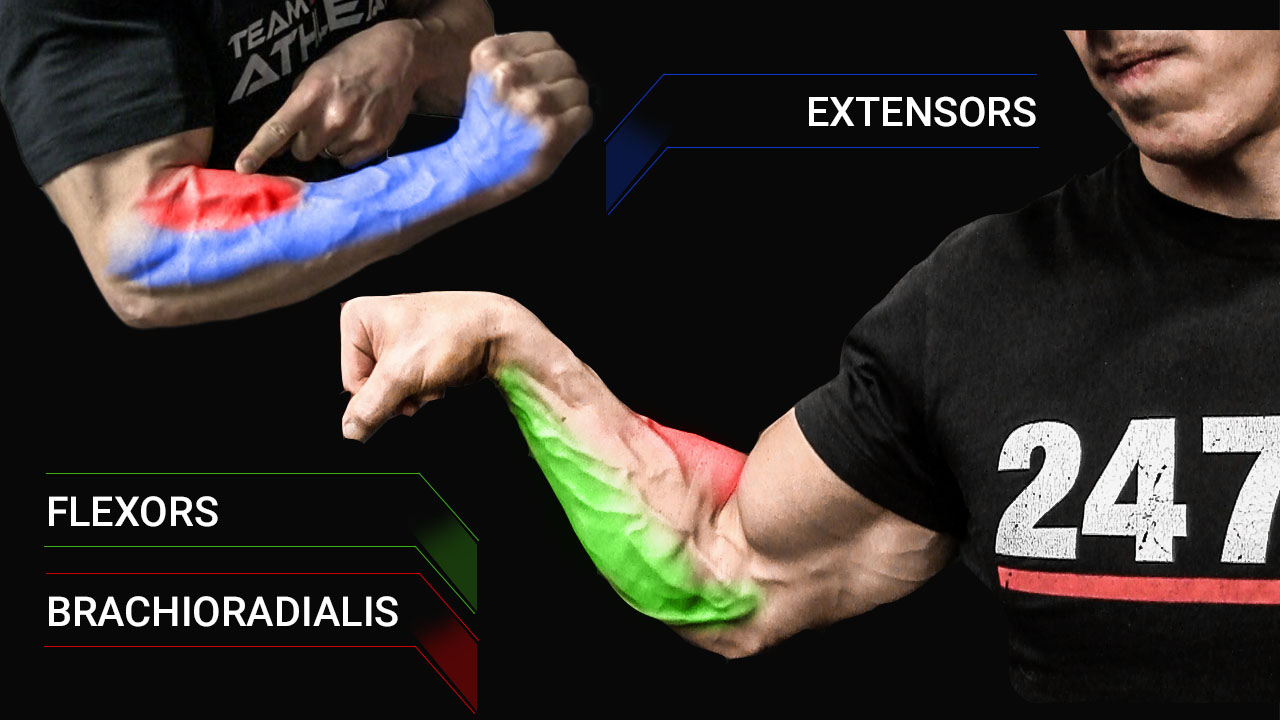
Grip strength comes from the muscles of the hands and outer forearm. Its function is to hold onto the weight and maintain tension throughout the hinge.
During the deadlift, grip often fails before the larger muscle groups, making it a limiting factor in the lift.
But you can strengthen grip through other exercises like Farmer’s Walks, Dumbbell Step-Ups, and even bodyweight movements like good old-fashioned Pull-Ups.
WHEN SHOULD YOU AVOID THE BARBELL DEADLIFT?
Guys, it shouldn’t come as a surprise that the traditional Barbell Deadlift is a great compound exercise. It’s on my list of go-to exercises.
With that said, it’s not the right hinge movement for everyone.
And forcing a lift that doesn’t match your mechanics or experience is the fastest way to stall progress, irritate your lower back, and limit how much muscle mass and strength you can build.
Sometimes, the smartest strength move you can make is choosing a hinge variation that fits your structure, mobility, and training environment.
Here are some reasons you might want to reconsider the Barbell Deadlift (at least for the time being).
ZERO EXPERIENCE WITH DEADLIFTS
Longtime lifters make the traditional Barbell Deadlift look simple, but it’s one of the most technically demanding movements you can perform.
It requires coordinated timing between the hips, knees, core, lats, and grip, all while maintaining tension through the posterior chain.
Beginners often don’t have the neuromuscular efficiency or motor control yet to manage that complexity under load.
When that coordination isn’t there, the body compensates in a number of ways. For example, the lower back takes over, the bar drifts away from the shins, or the hips rise faster than the chest.
Instead of forcing a pattern you’re not ready for, it’s far safer and more productive to build the hinge with regressions.
Movements like Romanian Deadlifts, Cable Pull Through variations, Glute Bridges, Landmine Hinge Drills, or even Bodyweight Deadlift progressions help develop the pattern and the control needed before you ever add weight plates to the bar.
LIMITED MOBILITY OR CHRONIC TIGHTNESS
If your hips or ankles don’t allow you to get into a clean starting position, your body will find a workaround and usually it’s your spine that pays the price.
Poor hip mobility, tight hamstrings, or restricted range of motion often lead to rounding and excessive tension in the external obliques to stabilize what the hips can’t.
In cases like this, Trap Bar Deadlifts, Rack Pulls, or Block Pulls, can put you in a safer position.
And if the bar path is still uncomfortable, you can shift to body weight or dumbbell alternatives that reduce the mobility demands while still training the posterior muscles effectively.
LOWER-BACK PAIN OR LUMBAR COMPENSATION
If you consistently feel the deadlift in your low back instead of the posterior chain, something’s off.
Often, it’s the spine taking over because the hips aren’t doing their job or the glutes aren’t producing enough force.
If this sounds familiar, I’d recommend movements that support the hinge without heavy spinal loading like Barbell Hip Thrusts and the Reverse Hyper machine. These exercises allow you to build strength without beating up the spine.
Even Single-Leg Dumbbell Deadlifts, Sliding Floor Bridge Curls, or Glute-Ham Raises help keep tension where it belongs while letting the back recover.
CRAMPED OR LIMITED TRAINING SPACE
A lot of people train in garages, bedrooms, or corners of crowded gyms.
If your space doesn’t allow room for weight plates, proper bar paths, or safety bars, forcing a barbell setup is more risk than reward.
Dumbbells, Resistance Bands, Kettlebells, or a cable machine give you plenty of hinge options without needing a full rack.
BODYWEIGHT DEADLIFT ALTERNATIVES
You don’t need a barbell, hex bar, or a full setup of safety pins and weight clips to train the deadlift pattern effectively.
Some of the best alternatives you can do require nothing more than dumbbells, a kettlebell, or even your own bodyweight.
Regardless of the exercise or equipment, the goal stays the same. You want to load the hips, challenge the posterior chain, and avoid letting the lower back take over.
Below, I’m going to cover my picks for the best deadlift alternatives that focus on using only your bodyweight.
GLUTE BRIDGES
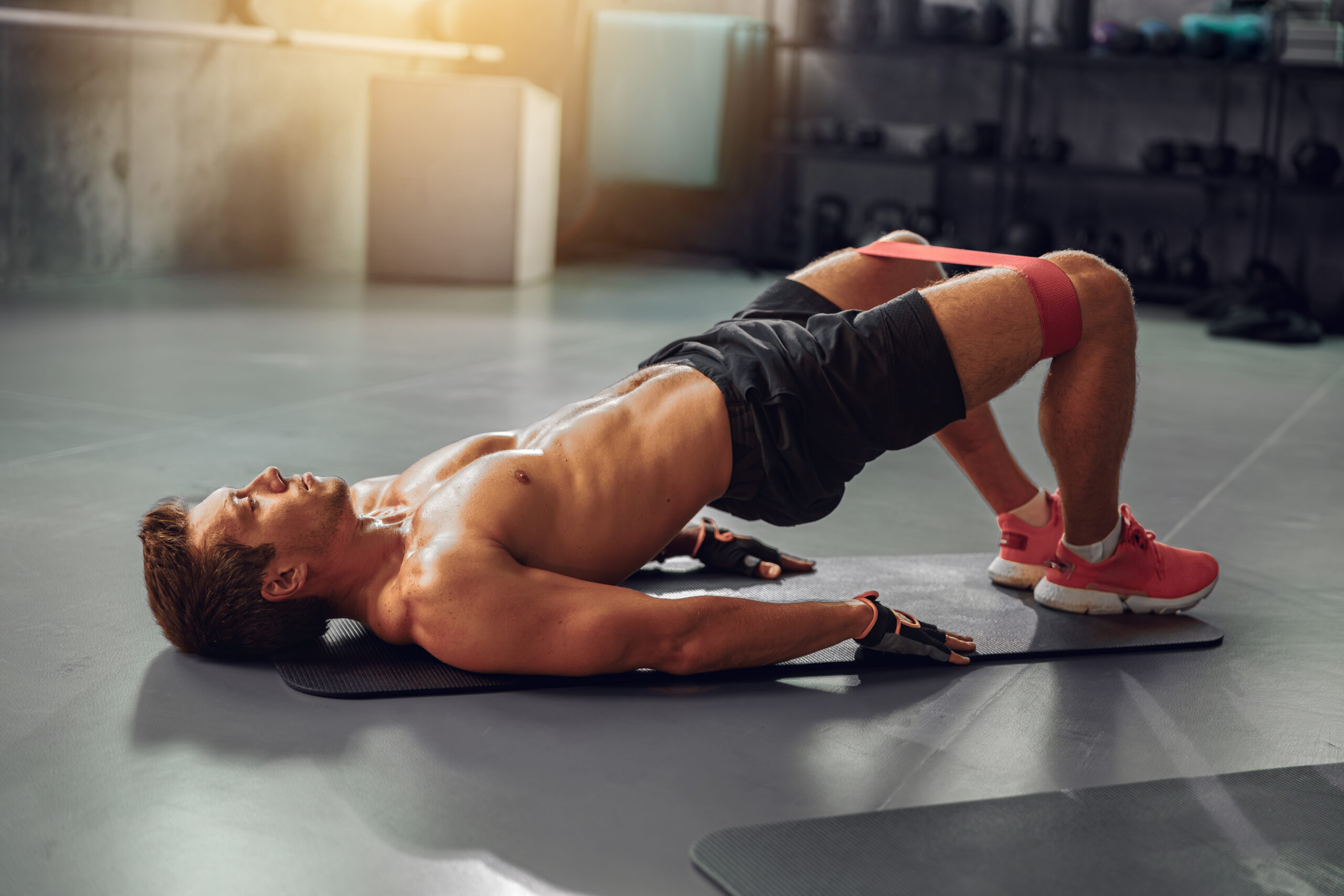
HOW TO DO THE GLUTE BRIDGE:
- Lie on your back with your knees bent, feet flat, and heels about a hand’s length from your glutes.
- Before you lift, flatten your lower back into the floor with a slight posterior pelvic tilt. This shuts off compensation from the lumbar spine and forces the right muscles to do the work.
- Drive through your heels and keep your knees tracking straight ahead. If they cave in or flare out, the glutes stop doing their job and your quads or lower back take over.
- Push your hips upward until your body forms a straight line from shoulders to knees. Don’t overextend at the top. Your ribs shouldn’t pop up, and your spine shouldn’t arch.
- Pause for a few seconds, squeezing the glutes as hard as possible. Lower under control, keeping tension the entire way down. Every rep should feel deliberate, not bounced.
WHAT MAKES IT EFFECTIVE: The Glute Bridge isolates pure hip extension, and this is the same motion that drives the lockout in a Dumbbell Deadlift, Sumo Deadlift, Trap-Bar Deadlift, and Deficit Deadlift. It teaches your body to fire the glutes first, not the quads or lower back, and reinforces the exact muscles used to stabilize the hip hinge pattern.
BRIDGE MARCH

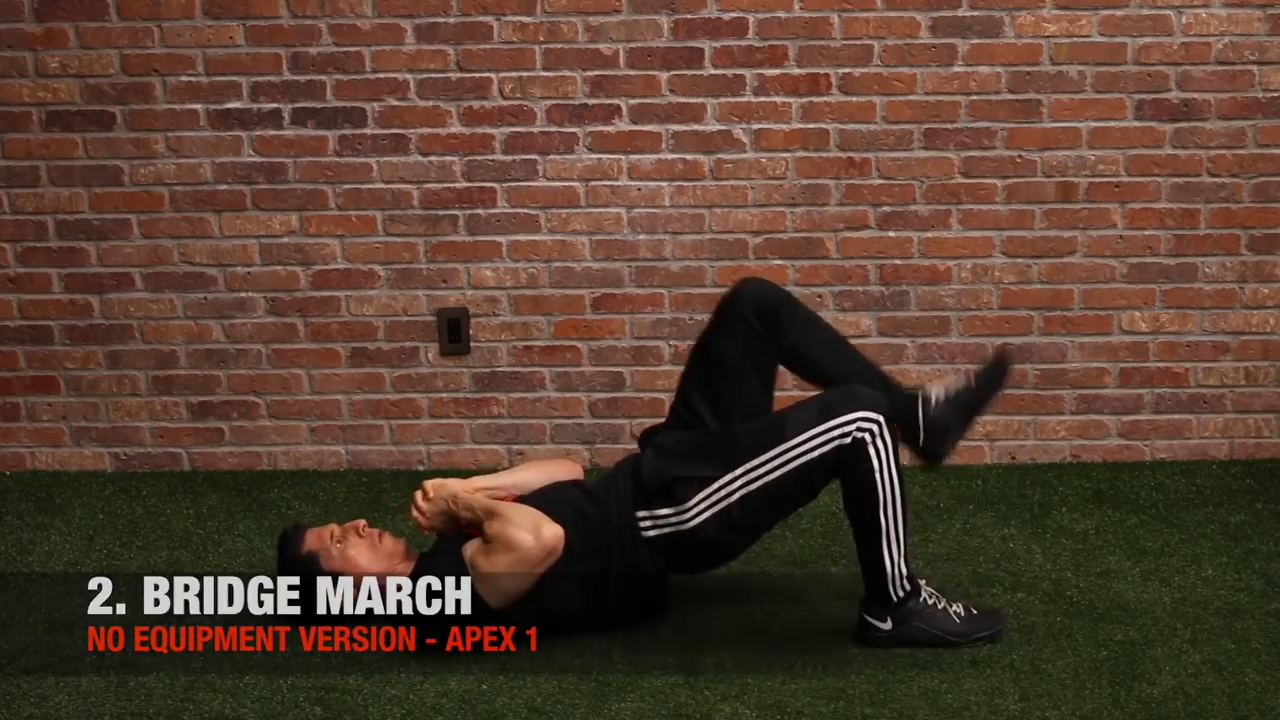
HOW TO DO THE BODYWEIGHT BRIDGE MARCH:
- Start on your back. Your knees should be bent with your feet planted firmly into the floor, ready to drive through your heels.
- Before you move, squeeze your glutes and drive through your heels to lift your hips into a solid Glute Bridge position. Your ribs should stay down, your core braced, and your pelvis level. There’s no arching through the lower back.
- From here, lift one knee toward your chest while keeping the opposite foot firmly planted. Do not let your hips drop or rotate.
- Lower the leg back down under control and immediately switch sides, lifting the other knee.
- Keep alternating while maintaining a stable bridge the entire time.
- If your hips wobble, twist, or sag, reset your brace and slow the tempo. The goal isn’t speed. It’s maintaining perfect alignment under unilateral load.
WHAT MAKES IT EFFECTIVE: Bridge Marches aren’t strength builders like Sandbag Deadlifts or Tire Flips, but they are a foundation builder. And if you want a safer, stronger deadlift, your foundation matters. Bridge Marches train unilateral glute strength, hip stability, and anti-rotation control. By lifting one leg at a time while maintaining a stable bridge, you force each glute to work independently while your core fights rotation.
REVERSE HYPEREXTENSION
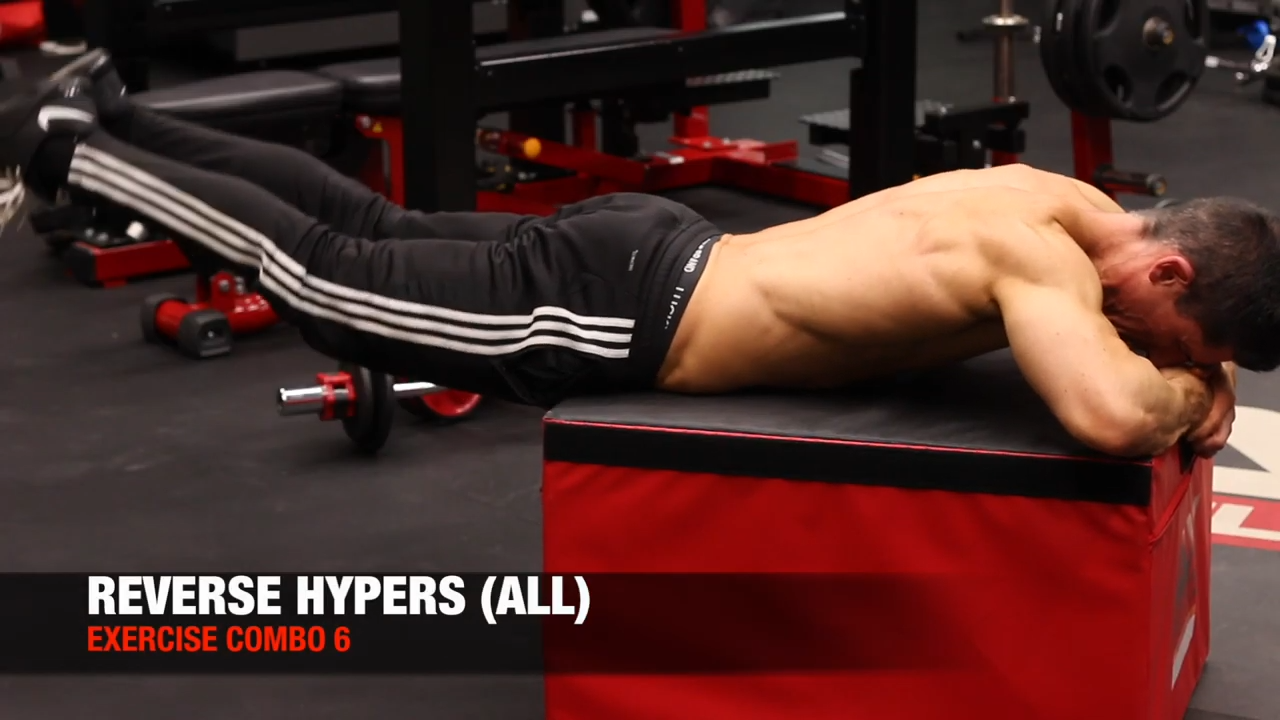
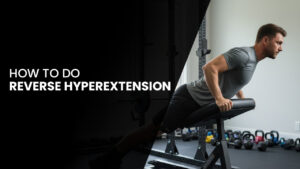
HOW TO DO THE REVERSE HYPEREXTENSION:
- Lie face-down on a GHD machine, bench, or sturdy box with your hips just past the edge so your legs can move freely.
- Hold onto the handles or the sides to keep your torso locked in place. Your upper body is the anchor, and your hips do the work.
- Keep your spine neutral from head to tailbone and brace your core before you move.
- With your legs starting straight down, lift them by squeezing your glutes and hamstrings until they line up with your torso. Don’t swing or kick. This movement should be smooth, controlled hip extension.
- Pause briefly at the top, then lower your legs slowly until you feel the glutes stretch just below the pad.
WHAT MAKES IT EFFECTIVE: Since your torso stays fixed and the legs move through the range of motion, you train the glutes and hamstrings hard while avoiding the compressive forces that irritate the lower back. It also allows light decompression at the bottom of each rep, making it a powerful posterior-chain builder for lifters who want deadlift-strength benefits while protecting their spine.
DUMBBELL DEADLIFT ALTERNATIVES
Most people treat dumbbells like “backup equipment,” but the truth is they’re one of the most versatile tools you can use to load a hinge.
You don’t need a platform, bumpers, or a full barbell setup to build serious posterior-chain strength.
With just a pair of dumbbells, you can challenge the hips from multiple angles, attack weak links one side at a time, and strengthen your deadlift pattern without ever stepping near a rack.
DUMBBELL ROMANIAN DEADLIFTS

HOW TO DO THE DUMBBELL ROMANIAN DEADLIFT:
- Start by holding a pair of dumbbells at your sides or slightly in front of your thighs with a firm, neutral grip.
- Stand with your feet hip-width apart and screw your feet into the ground to lock in stability from the ground up.
- Before you move, set your spine: lift your chest, widen your collarbones, and lightly engage your glutes to establish a neutral, supported torso.
- Initiate the movement by pushing your hips straight back, not by bending your knees first. Think about closing a drawer with your glutes or sliding your pinkies into the crease where your thigh meets your torso.
- Maintain only a slight knee bend throughout. The angle shouldn’t change once you begin lowering.
- As you descend, keep a small anterior pelvic tilt so your hamstrings stay tensioned and the dumbbells track vertically along your thighs.
- Lower only until your hamstrings reach their stretch limit without letting your lower back round or your pelvis tuck under.
- To return to the top, drive through your hips and squeeze your glutes, thinking about pushing the floor away instead of pulling the weights up with your back. Finish tall without overextending or leaning back.
WHAT MAKES IT EFFECTIVE: The Dumbbell Romanian Deadlift is one of the best deadlift alternatives because it trains the same hinge mechanics without the setup demands or spinal loading of a Barbell Deadlift. With the dumbbells held at your sides, the resistance stays closer to your center of gravity, making it easier to control form and eliminate energy leaks. You get all the benefits of a powerful hip hinge without needing a barbell, rack, or plates.
DUMBBELL SINGLE-LEG DEADLIFT
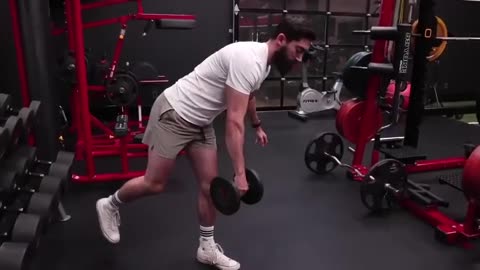
HOW TO DO THE DUMBBELL SINGLE-LEG DEADLIFT:
- Stand tall with a dumbbell in one hand (the same side as the leg that will be lifting behind you).
- Shift your weight onto the opposite leg and unlock the knee with a slight bend.
- From here, hinge at the hips and let your torso lower as the non-working leg extends straight back behind you.
- The dumbbell should travel straight down along your standing leg, staying close to your body as your chest stays up and your spine stays flat.
- Lower until you feel a deep stretch in the hamstrings and glutes of the standing leg.
- Pause briefly at the bottom, then drive through your heel and squeeze your glutes to return to standing.
- Keep your hips square and don’t let the dumbbell pull you into rotation.
WHAT MAKES IT EFFECTIVE: The Dumbbell Single-Leg RDL targets the hinge pattern while forcing each hip to work independently. Bilateral hinges can mask weaknesses, but with a single dumbbell pulling you off-center, your stabilizers and core have no place to hide. The working leg gets direct tension through the hamstrings and glutes, while the off-center load builds anti-rotation strength that carries over to every major hinge exercise.
BARBELL DEADLIFT ALTERNATIVES
Now, even though a barbell isn’t a requirement, I’m still going to include some barbell-based movements in this article, but that’s by design. Why?
Because nearly every barbell variation here can be swapped out instantly for a dumbbell or kettlebell version without losing any of the benefits.
Try swapping out your Barbell Deadlifts for one or two of these substitutions:
SUITCASE DEADLIFT
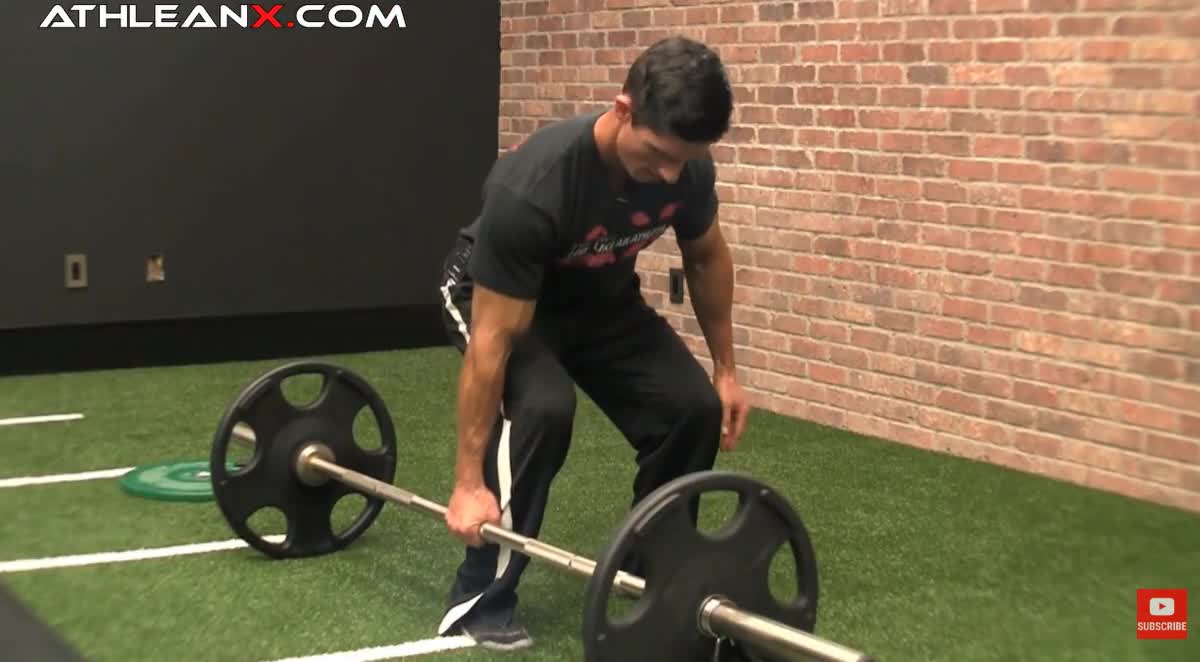
HOW TO DO THE SUITCASE DEADLIFT:
- Set up beside the barbell (or a single dumbbell), not in front. Stand with the bar running parallel to your body, just like you would when picking up a heavy suitcase.
- Ideally, line your hand up with the center knurling. If your bar doesn’t have one, adjust your grip until the bar stays balanced without tipping forward or backward.
- Hinge first, then bend your knees. Place your hands on your thighs. Push your hips back as far as you can without bending your knees.
- Once your hands reach knee level, allow your knees to bend just enough to get down to the bar.
- Grab the bar with a firm grip, keeping your shoulders level and chest square.
- Your torso will naturally want to tip toward the loaded side but don’t let it happen. Brace your core and lock in.
- Drive through the floor, pushing evenly through both legs as you rise. Keep your hips and shoulders square the entire time.
- Stand tall by driving your hips forward together, not twisting or shifting toward the weight.
- Lower with control, reversing the hinge: hips back first, torso follows, and knees bend only after your hands reach knee height.
WHAT MAKES IT EFFECTIVE: The Suitcase Deadlift targets a weakness most lifters overlook: lateral core strength. Unlike Traditional Deadlifts that challenge mostly anterior/posterior stability, this variation forces your obliques and deep stabilizers to fight constant rotational pull from the single-sided load. That reduces the energy leaks that rob your Barbell Deadlift, Squat, and Overhead Press of power, while teaching true anti-rotation strength, stable hip drive, and better force transfer from the legs through the core.
BARBELL HIP THRUSTS
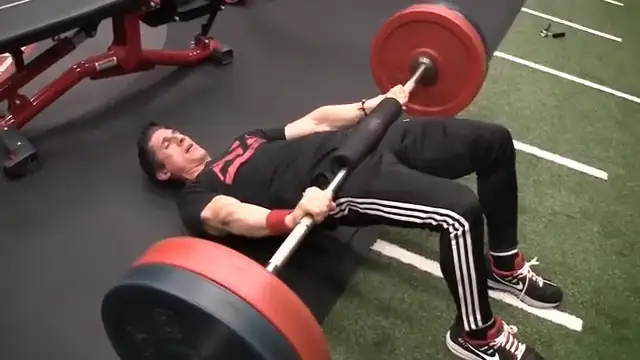
HOW TO DO THE BARBELL HIP THRUST:
- On the floor, roll the barbell into position directly over your hips. Be sure to use a pad or towel for the barbell to rest on. Keep in mind that you can also use a heavy dumbbell or kettlebell in place of the barbell.
- Set your feet at shoulder-width and close enough that your knees hit about a 90-degree angle at the top of the lift. Before you move, brace your core and lock your ribs down so the lift comes from your hips, not your lower back.
- Push through your heels. Focus on lifting your hips until your body forms a straight line.
- Squeeze your glutes hard at the top. If you feel it in your lower back, you’re overextending, so pull your ribs down and keep the tension in the glutes.
- Lower under control, keeping the bar stable and never letting it crash back to the floor. Reset, stay tight, and repeat for your target reps.
- Start light and build up as you develop the strength and control to handle heavier loads safely.
WHAT MAKES IT EFFECTIVE: The Barbell Hip Thrust trains pure hip extension, which is the same motion that drives the lockout of every deadlift. The key difference is that you don’t have to worry about the spinal loading or hinge mechanics that some lifters struggle with. By putting the gluteus maximus in its strongest position, the Hip Thrust lets you load the glutes heavier than almost any other movement, building power, stability, and strength where it matters most.
BARBELL ROMANIAN DEADLIFT
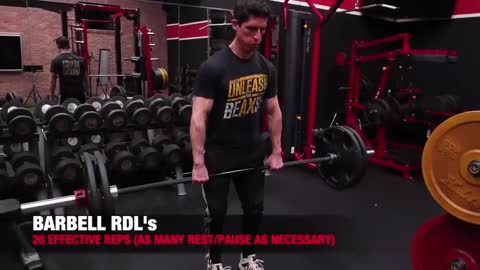
HOW TO DO THE BARBELL ROMANIAN DEADLIFT:
- Start by gripping the bar just outside shoulder width and stand with your feet hip-width apart.
- Before you move, set your spine by lifting your chest, keeping the ribs down, and lightly squeezing your glutes. This locks in neutral without arching your lower back.
- From here, push your hips straight back as you slide the bar down your thighs. The bar should stay close to your body the entire time. If it drifts away, you’ll start pulling with your lower back instead of loading your hamstrings.
- Keep a slight bend in your knees, but don’t let the knees travel forward. Your hips should be the only thing moving back.
- Lower until you feel a deep stretch through the hamstrings while keeping your back flat and pelvis neutral.
- To return, drive your hips forward and squeeze your glutes as you stand tall. Think “push the floor away,” not “pull the bar up.”
- Reset and repeat with control.
WHAT MAKES IT EFFECTIVE: The Barbell RDL hits hip mechanics and strengthens the glutes and hamstrings through a long range of motion while teaching you how to control the bottom position. If your goal is to build posterior-chain strength safely and learn to hinge instead of squatting your deadlifts, the Barbell RDL is one of the smartest movements you can do.
DEADLIFT ALTERNATIVES: MORE EQUIPMENT OPTIONS
Having access to more equipment opens up smart ways to load the hinge, whether you’re working with exercise machines, a hyperextension machine, or just different tools around the gym.
No matter what you’re using, the goal stays the same. You want to challenge hip extension and build the posterior chain without relying on a single piece of equipment.
From an exercise science standpoint, changing the tool changes the muscle lever arm, which can actually make some variations safer, more joint-friendly, or better suited for certain resistance training workouts.
GLUTE HAM RAISE
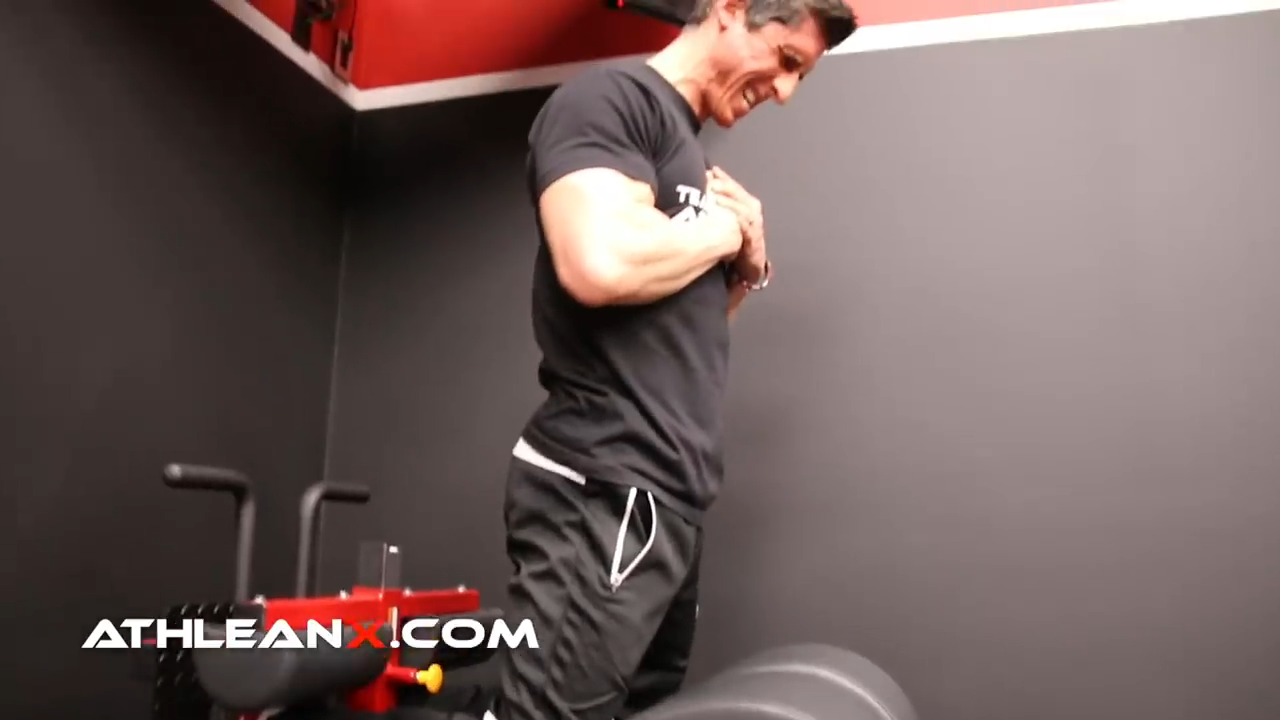
HOW TO DO THE GLUTE HAM RAISE:
- Start by adjusting the GHD machine so your knees rest just behind the pad and your feet are locked securely under the rollers. This setup is important because if your knees are too far forward or your feet aren’t anchored, you won’t be able to generate proper force through the posterior chain.
- Begin in a tall, straight line from your head to your heels, glutes, and core lightly braced.
- From here, slowly lower your torso by hinging at the knees and hips at the same time. Think about “pulling yourself forward” under control, not collapsing into the bottom.
- Keep your ribs down, your hips extended, and your core activated. If you feel your lower back taking over, reset and tighten your brace.
- Once you reach the point where you can no longer control the descent, stop and drive your toes into the footplate to initiate the return.
- Fire your hamstrings first, then squeeze your glutes to pull yourself back up to the starting position.
- Keep your body in a straight line the entire time. There’s no bending at the waist and no throwing your chest back to cheat the rep.
- Every inch of the movement should feel controlled. If you can’t perform a full rep yet, use a shorter range of motion or keep a light band in front of you for assistance until your strength catches up.
WHAT MAKES IT EFFECTIVE: This glute ham developer forces the hamstrings to perform their full role, which involves both knee flexion and hip extension. More importantly, the GHR builds strength in the mid-range of the posterior chain, where energy leaks and technical breakdowns usually happen during RDLs, Deadlifts, and Good Mornings.
CABLE PULL THROUGH
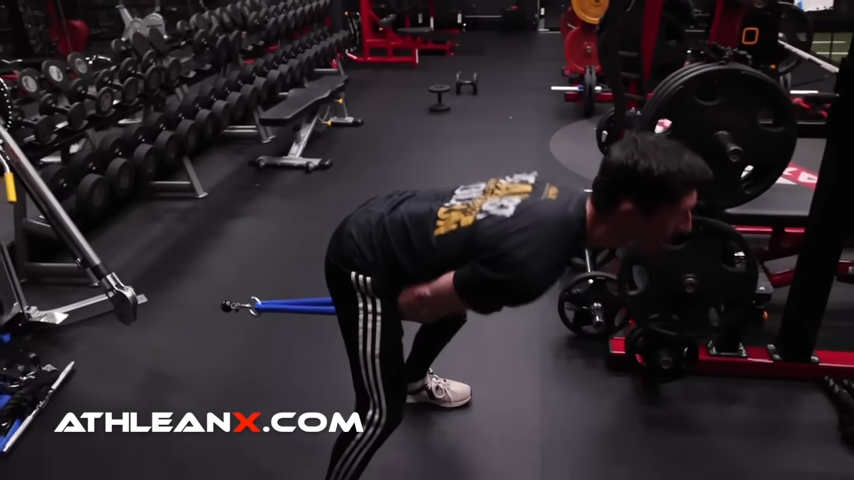
HOW TO DO THE CABLE PULL THROUGH:
- Set a rope attachment on the lowest setting and stand facing away from the machine.
- Step forward until the cable has tension, then reach through your legs and grab the rope with straight arms.
- Keep your feet about hip-width, knees slightly bent, and your spine neutral.
- From here, push your hips straight back and let the cable pull your torso into the hinge. The goal is not to bend at the knees. It’s to load the glutes and hamstrings by shifting your hips behind you.
- Keep your chest up, back flat, and arms long the entire time.
- At the bottom, you should feel a clear stretch through the hamstrings. Drive through your whole foot and squeeze your glutes hard as you return to standing.
- Finish tall with your ribs down and hips fully extended, but don’t overextend the lower back.
WHAT MAKES IT EFFECTIVE: The Cable Pull-Through keeps tension on the glutes and hamstrings through the entire range of motion, reinforcing the exact hinge mechanics you need while removing the vertical load that often beats up the lower back. For lifters who struggle with squatting their deadlifts, rounding off the floor, or relying too much on their quads, the pull-through teaches you to hinge correctly, load the posterior chain, and finish the rep with glute drive, not lumbar extension.
PHYSIOBALL CIRCLE CURLS
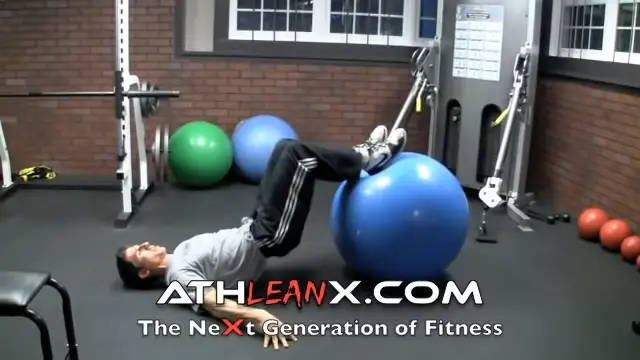
HOW TO DO PHYSIOBALL CIRCLE CURLS:
- Lie on your back with your heels on a Swiss ball and your arms braced at your sides.
- Squeeze your glutes and press through your heels to lift your hips into a straight-line position from your shoulders to your knees.
- From here, bend your knees and pull the ball in, but instead of rolling straight forward, trace a controlled circle with your feet.
- Keep your hips lifted and level the entire time and perform the same number of reps clockwise and counterclockwise before lowering under control.
WHAT MAKES IT EFFECTIVE: Physioball Circle Curls take the Standard Hamstring Curl and turn it into a full posterior-chain stability challenge. By moving the ball in a circular path, you recruit the hamstrings, glutes, and hip stabilizers from multiple angles while forcing your core to fight rotation. You’re not replacing the deadlift here, but you are building the hamstring control, pelvic alignment, and anti-rotation strength that make your deadlift safer and stronger. This is a smart accessory hinge that helps bulletproof the areas most lifters ignore.
CHOOSE THE RIGHT DEADLIFT ALTERNATIVE
Every hinge variation isn’t right for every lifter. The key is choosing the exercise that best matches your goal.
Instead of rotating through every variation you’ve ever seen, think about what you want out of the movement.
Do you want more strength, more muscle, more power, or a lower-back-friendly option?
Once you know your goal, select the hinge that delivers that specific benefit.
STRENGTH
If your priority is getting stronger in the hinge pattern, stick with movements that allow heavier loading and consistent progression.
These exercises let you build power and drive through the hips without needing a conventional barbell deadlift setup.
Best options for strength:
- Barbell Romanian Deadlift
- Suitcase Deadlift
- Barbell Hip Thrust
HYPERTROPHY
For muscle growth, choose alternatives that place the most tension on the glutes and hamstrings through a long range of motion.
These movements emphasize stretch, time under tension, and controlled hip extension, which are key drivers of posterior-chain hypertrophy.
Best options for hypertrophy:
- Dumbbell Romanian Deadlift
- Dumbbell Single-Leg Deadlift
- Cable Pull-Through
- Glute Ham Raise
- Reverse Hyperextension
ATHLETIC POWER
If you’re looking to build explosive hip extension for sports performance or faster lockout strength, choose movements that emphasize force production through the hips rather than spinal loading.
These options build speed and power without needing heavy pulls from the floor.
Best options for athletic power:
- Barbell Hip Thrust
- Reverse Hyperextension
- Glute Bridges
LOWER-BACK-FRIENDLY OPTIONS
If you’re coming back from an injury, managing lower-back discomfort, or simply want a hinge option that spares the spine, choose exercises that load the hips without stacking weight directly on the back.
These alternatives train hip extension while keeping stress away from sensitive areas.
Best lower-back-friendly options:
- Glute Bridges
- Bridge March
- Reverse Hyperextension
- Physioball Circle Curls
- Cable Pull-Through
If you understand why the deadlift works, you can replicate it with smarter choices.
When you focus on the movement pattern rather than the equipment, your training opens up in a big way.
Every option in this guide reinforces strong hip mechanics and a powerful posterior chain.
Pick the variation that matches your goal and stay consistent. The results will take care of themselves.
Check out our complete line of ATHLEAN-RX Supplements and find the best training program for you based on your fitness level and goals.

- Some lifters can be limited during the traditional Barbell Deadlift because their limb proportions, mobility, or lower-back history.
- Others simply train in environments where heavy barbells aren’t practical. Forcing the movement anyway usually leads to poor mechanics and unnecessary strain. That’s where deadlift alternatives can help.
- Glute Bridges reinforce hip extension without requiring a deep hinge angle, making them ideal when you need posterior-chain work from a stable position.
- Bridge March forces each side of the pelvis to stabilize independently, revealing side-to-side weaknesses that often disrupt heavier hinge patterns.
- Reverse Hyperextension loads the hips through a long arc while sparing vertical compression, letting you strengthen the posterior chain under less spinal stress.
- Dumbbell Romanian Deadlifts stretch the hamstrings under constant tension and teach a clean hinge path without relying on heavy setup or equipment.
- Dumbbell Single-Leg Deadlift challenges your balance and hip control, so each leg learns to contribute equally during bilateral pulling.
- Suitcase Deadlift exposes lateral core deficits by creating an uneven pull that forces the trunk to stay level and transfer force cleanly.
- Barbell Hip Thrusts put the glutes in their strongest position for hip extension and build lockout strength that carries over to hinge mechanics.
- Barbell Romanian Deadlift emphasizes the eccentric control and hamstring loading that lifters typically lose when they “squat” their deadlifts.
- Glute Ham Raise trains knee-flexion strength and hip extension together, filling the exact gap most hinge variations leave untouched.
- Cable Pull-Through keeps tension on the hips throughout the movement and trains the hinge without stacking load vertically on the spine.
- Physioball Circle Curls teach the hamstrings to stabilize the pelvis through changing vectors, strengthening the posterior chain in ways straight-line hinges don’t.
DEADLIFT ALTERNATIVES FAQ
If you don’t have access to a barbell, the Dumbbell Romanian Deadlift is the closest match to the hip-dominant hinge pattern we’re trying to train.
You still get the long hamstring lever, the stretch under load, and the same glute-driven hip extension that makes a traditional deadlift so effective.
Unlike something like a Jump Lunge or a Dumbbell Burpee, this variation keeps the emphasis exactly where we want it: posterior chain strength, not just leg conditioning or athletic power.
If you don’t have dumbbells either, the Cable Pull-Through comes next in line because you can mimic the same hip hinge using a cable machine.
The cable actually keeps tension through the entire range of motion, which can help teach the hinge to people who struggle with bar path or spinal positioning.
And because there’s no heavy bar in front of you, it’s much easier on the lower back while still loading hip extension correctly.
If your priority is pure strength, stick with hinge variations that let you load weight progressively while keeping the hips in charge.
Barbell Romanian Deadlifts, Suitcase Deadlifts, and Barbell Hip Thrusts are the heavy hitters here because they put you in safer positions and let you move more load without relying entirely on grip capacity or floor pulling mechanics.
A Pause Deadlift using dumbbells is another way to improve strength without stacking more plates on the bar. Stopping just below the knee or right above the floor forces you to brace, stay tight, and build power from the hip instead of yanking with your back.
And don’t overlook landmine exercises, especially landmine hinge variations. They’re easier to learn, safer on the spine, and they let you build strength without fighting your proportions.
If grip is your limiting factor, drop the ego and switch to hip thrust variations. You’ll build more usable hip extension strength, which transfers way better to any hinge than swinging dumbbells around.
REFERENCES
Jeff Cavaliere M.S.P.T, CSCS
Jeff Cavaliere is a Physical Therapist, Strength Coach and creator of the ATHLEAN-X Training Programs and ATHLEAN-Rx Supplements. He has a Masters in Physical Therapy (MSPT) and has worked as Head Physical Therapist for the New York Mets, as well as training many elite professional athletes in Major League Baseball, NFL, MMA and professional wrestling. His programs produce “next level” achievements in muscle size, strength and performance for professional athletes and anyone looking to build a muscular athletic physique.