



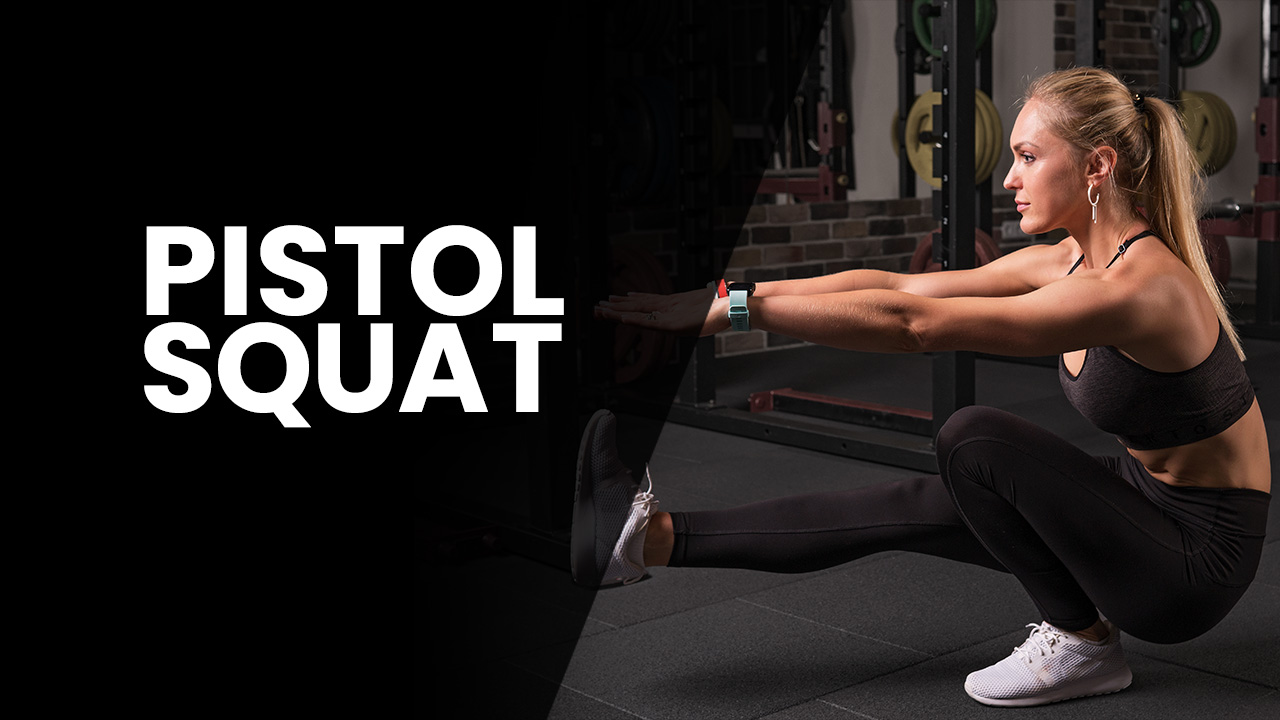
WHY do pistol squats?
Because strength isn’t just about how much weight you can move. It’s about how well you can control it.
The Pistol Squat or Single Leg Squat calls out weaknesses that Heavy Barbell Squats and leg machines can easily hide.
This isn’t just another bodyweight exercise.
It’s a diagnostic tool for your entire lower-body system that exposes the truth about your hip stability, ankle mobility, and movement integrity.
In this guide, you’ll learn more than just how to do the Pistol Squat correctly.
I’m going to cover which muscles actually power the movement, how to build the control to hit full depth without pain, the most common mistakes that destroy form, and how to progress it safely.
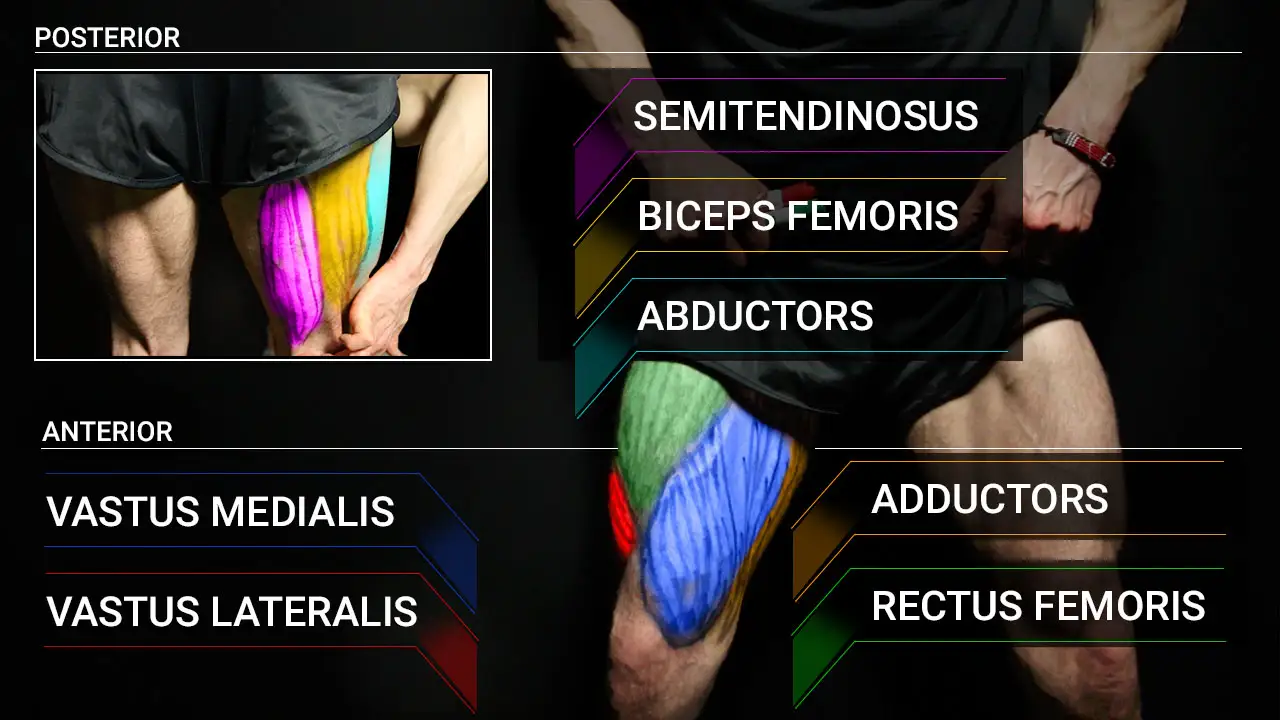
PISTOL SQUAT: MUSCLES WORKED
The Pistol Squat is one of the toughest tests of lower body control you can perform.
It requires total coordination from your toes to your core muscles, demanding balance, strength, and precision through every joint and muscle involved.
Here’s a breakdown of the key muscles involved that make the Pistol Squat work and how each contributes to strength, stability, and seamless movement.
GLUTE MAXIMUS
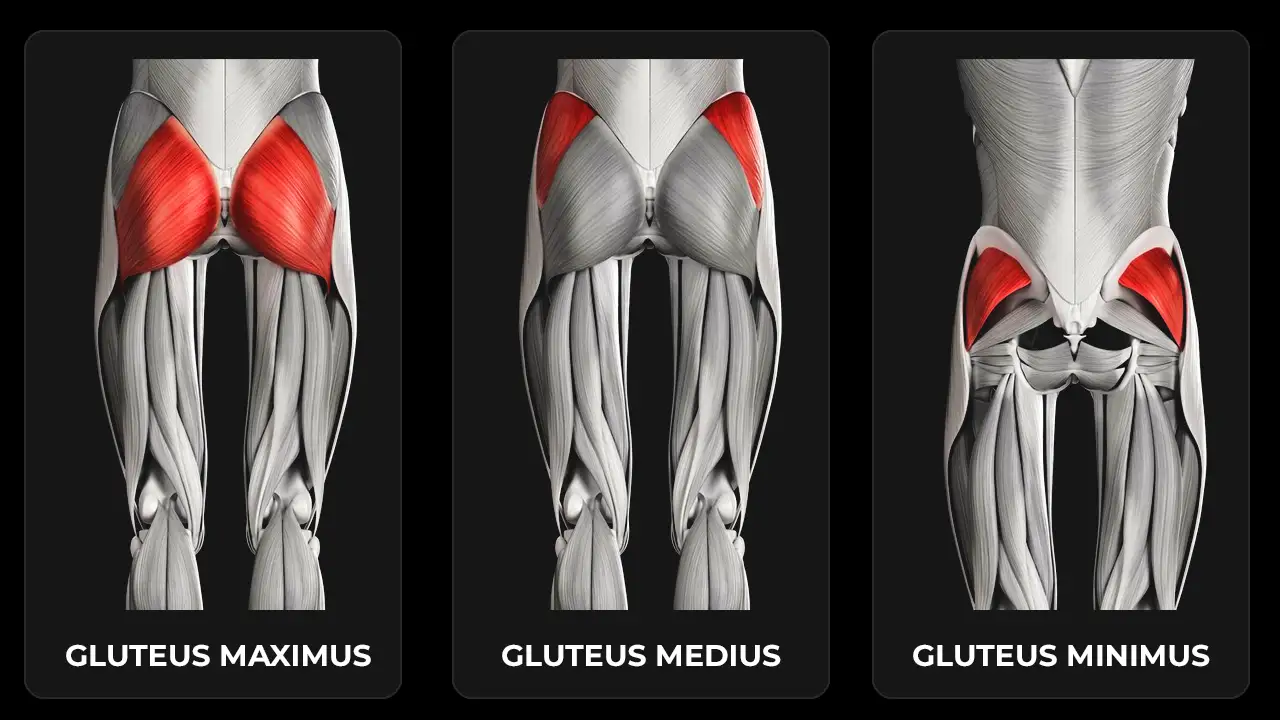
The gluteus medius is positioned on the outer hip and it stabilizes the pelvis and controls side-to-side movement throughout the rep.
When it underperforms, you’ll see hip shifting, knee collapsing, or dynamic knee valgus, especially in athletes with limited hip-abduction strength or tight hip mobility.
Glute med coordination works isometrically to keep the pelvis level, ensuring frontal-plane control and proper alignment of the knee over the foot.
Strengthening it improves pelvic stability, glute coordination, and joint protection, reducing the risk of anterior cruciate ligament stress. This is often the cause of knee instability and tears during sudden direction changes.
It also helps you avoid patellofemoral pain syndrome, a condition marked by pain around or behind the kneecap due to poor tracking and muscular imbalances.
QUADRICEPS
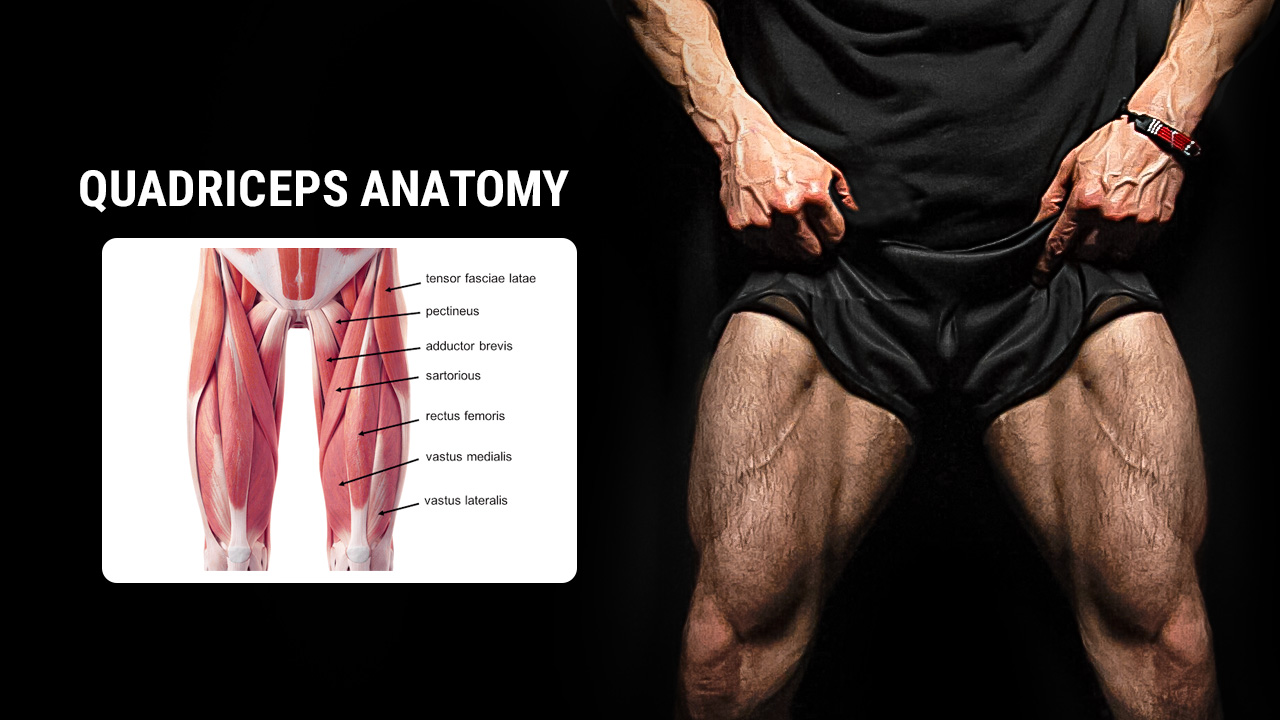
The quads, located on the front of the thigh, control knee extension and bear the brunt of the work during both the eccentric (lowering) and concentric (rising) phases of the movement.
In a Deep Single-Leg Squat, the vastus medialis oblique (VMO) is essential for patellar tracking and joint stability, helping to prevent compression at the bottom of the squat.
Developing single leg strength here transfers directly to movements like Air Squats and Leg Blasters.
For those dealing with limited ankle dorsiflexion or poor knee-to-wall/box test scores, targeted mobility work for the feet/ankles can drastically improve squat depth and joint comfort.
HAMSTRINGS
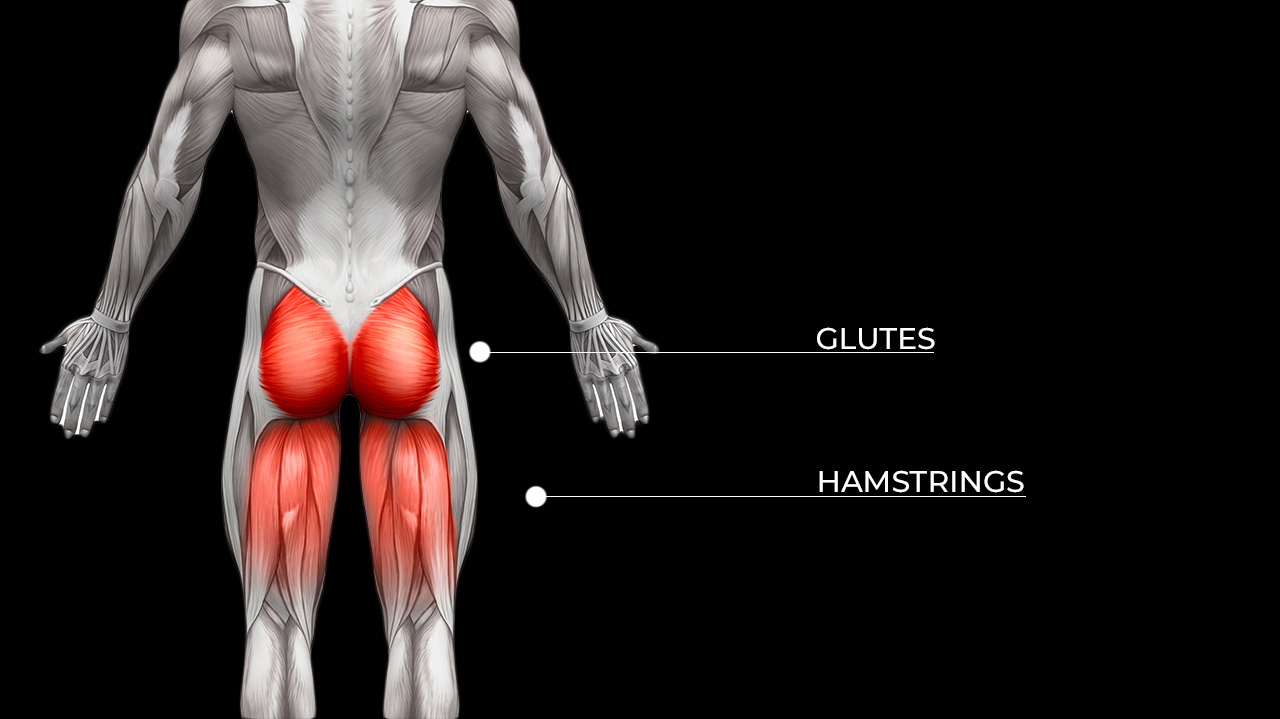
The hamstrings act as stabilizers and decelerators in the Pistol Squat. During the descent, they control hip flexion and knee movement, maintaining tension through the posterior chain.
In combination with the glutes, they help reverse direction smoothly at the bottom. This prevents jerky or uncontrolled movement that can cause knee compression pain.
Good hamstring mobility and hip control are essential for full range of motion and avoiding compensations like rounding the spine or losing balance.
CALVES
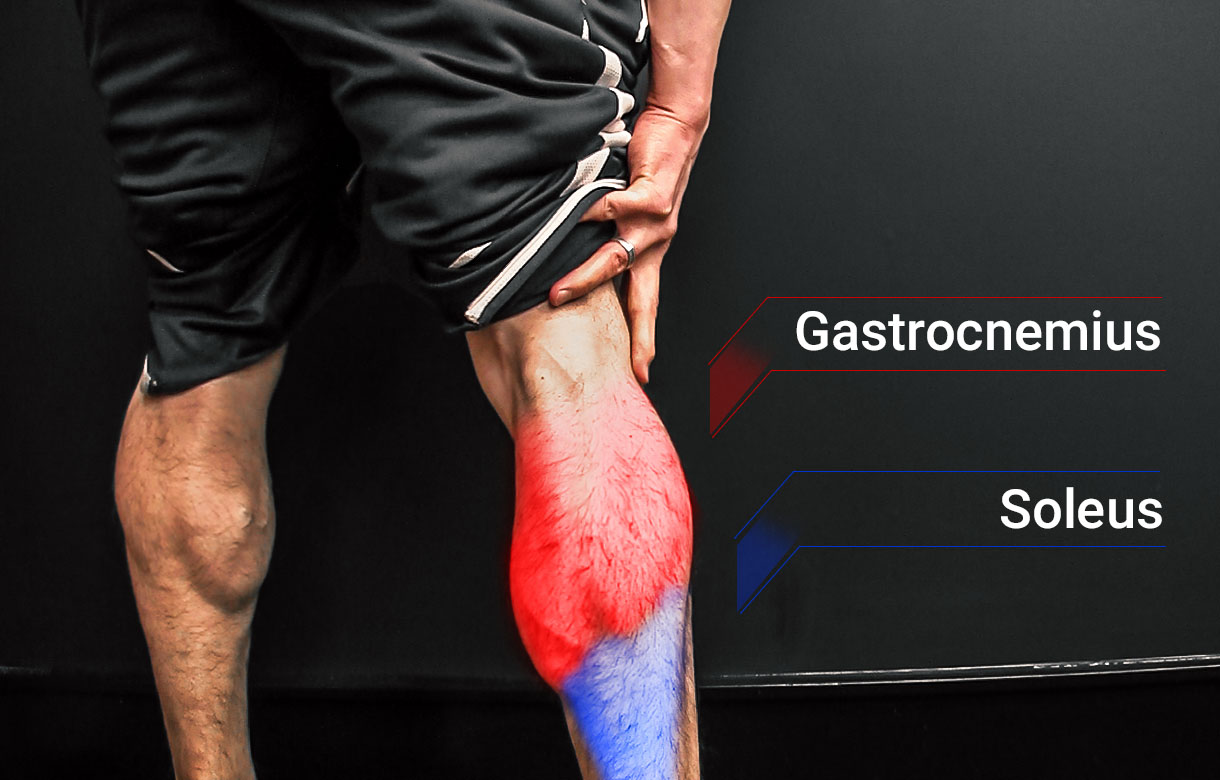
Your calves play a big part in balance and ankle mobility drills. The gastrocnemius and soleus stabilize the ankle and keep the foot grounded throughout the rep, especially during the eccentric phase.
Limited dorsiflexion in these muscles is one of the most common reasons people can’t perform a full Pistol Squat or Deep Squat without falling backward.
Regular mobility training with exercises like Ankle Stretches, Toe Squats, or Elevated Pistol Squats helps improve range of motion and power transfer.
A stable ankle joint also protects the knee and hip from poor frontal-plane projection angles and compensatory shifts.
CORE

The core’s role in the pistol squat goes far beyond “keeping your balance.” It maintains spinal alignment, stabilizes the pelvis, and transmits force between the lower and upper body.
A weak core leads to hip shifting, trunk collapse, or loss of balance.
Neuromuscular training programs and anti-rotation work (Medicine Ball Twists, Bulgarian Sandbag Holds) can help reinforce the core’s ability to stabilize during single-leg loading.
Strong obliques and spinal erectors ensure efficient motor patterning, preventing compensations that lead to chronic low-back strain or loss of stability at the bottom of the rep.
HOW TO DO pistol squats
Most people can’t jump straight into a Bodyweight Pistol Squat and that’s completely fine! It’s one of the toughest bodyweight movements you can do.
That’s why I recommend starting with the Single-Leg Skater Squat first.
This precursor to the Pistol Squat builds the balance and control your body needs before you get to the main event.
Even then, I’m not going to throw you into an unsupported Pistol Squat. I want you getting better, not biting off more than you can chew.
So, once you feel comfortable performing the Skater Squat, you’ll progress to a Modified Pistol Squat that uses a resistance band.
The band is just there for guidance and maybe a bit of reassurance, but you’re the one doing all of the work.
Only after you graduate from the Skater Squat and the Modified Pistol Squat will you be ready to do the real thing with no support or bands needed!
SKATER SQUAT


HOW TO DO THE SKATER SQUAT:
- Stand tall on one leg. Place a folded towel or pad directly behind you on the floor. This marks where your back knee will land.
- Keep your working foot grounded, core braced, and your non-working leg bent behind you.
- Begin lowering your body slowly, hinging slightly at the hips while bending your standing knee. Keep your chest tall and arms extended forward for counterbalance.
- Your goal is to guide your back knee down to the towel under control. Do not drop into it. Think of “aiming” your knee toward the towel as you fight to keep balance and alignment.
- Once your back knee lightly touches the towel, pause for a beat but don’t rest here. Push through your heel, engage your glutes and quads, and return to standing in one smooth motion.
- Perform all reps on one leg before switching.
WHAT MAKES IT EFFECTIVE: By forcing you to aim your knee toward a fixed point (the towel), you teach your body precise motor patterning. It’s also easier on your joints. Because your non-working leg moves behind you instead of in front, there’s less knee compression and reduced shear stress on the patellofemoral joint. That makes it a safe, scalable way to build integral strength and bulletproof your knees before progressing to the Pistol Squat.
PISTOL SQUATS
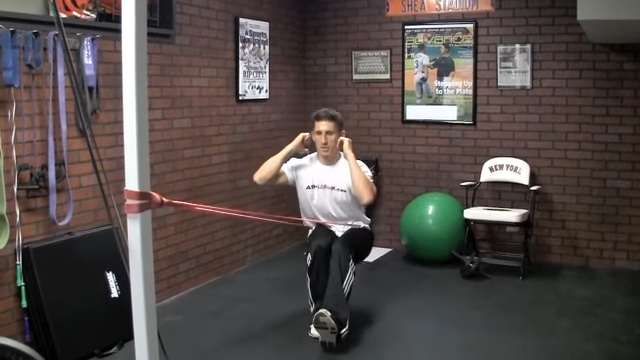
HOW TO DO THE PISTOL SQUAT:
- Anchor a resistance band to a sturdy post like a squat rack or power rack at waist height.
- Stand facing the anchor point and step back until there’s a bit of tension in the band. It should feel like a light counterbalance, not a crutch.
- Shift your weight onto one leg and extend the other leg straight out in front of you.
- Engage your core, keep your chest tall, and focus on driving your foot firmly into the ground.
- Your arms stay straight and slightly forward to help stabilize your center of gravity.
- Begin to sit back and down into the movement by bending your working knee and hinging slightly at the hip.
- Use the resistance band to guide your balance as you descend, not to pull yourself down. Keep the extended leg straight and lifted and avoid letting your knee cave inward.
- Lower until your glutes are just above your heel or as far as your ankle mobility allows without rounding your back or letting your heel rise.
- Push through your heel, engage your glutes and quads, and rise back to standing. Use the resistance band only enough to smooth out the sticking point. Again, don’t rely on it for the lift.
- Keep your motion slow and deliberate from bottom to top.
- You can also perform this as a TRX Pistol Squat using the TRX straps. But as your single-leg strength and control improve, gradually reduce the assistance by stepping closer to the anchor point or use a lighter band. When you can complete full reps without losing balance or knee alignment, remove the band entirely and perform the Pistol Squat as a true bodyweight exercise.
WHAT MAKES IT EFFECTIVE: The Pistol Squat or One-Legged Squat forces your entire body to work as one unit. Using the resistance band gives you just enough help to stay aligned without removing the challenge, teaching you how to move correctly while still earning every inch of the rep. As you reduce the band’s assistance, your strength and stability naturally improve. You’re not just getting better at the exercise. You’re training your body to move efficiently, stay balanced, and generate explosive leg power from the ground up.
PISTOL SQUAT: COMMON MISTAKES
Most people fail when performing the Pistol Squat not because they lack strength, but because their lower body isn’t used to this type of movement.
As I mentioned above, this exercise magnifies every weakness in your chain including hip control, ankle mobility, posture, and balance. If even one piece is off, the rep breaks down.
Here’s what’s really holding most people back, and how to fix it.
KNEE COLLAPSING INWARD (VALGUS)
When your knee caves toward the center line, it’s a stability issue. The glutes, especially the gluteus medius, aren’t firing hard enough to keep the femur aligned.
This causes the knee to drift inward, creating stress at the joint and killing your power output.
The fix is better hip control. Add targeted glute work into your bodyweight leg training or warm-ups. This can include Banded Lateral Walks, Single-Leg Bridges, and hip mobility stretches that open up the abductors.
Then, reinforce clean movement patterns with controlled Single-Leg Box Squats or Floater Squats. These help you build awareness of knee tracking and strengthen the stabilizers that prevent valgus collapse.
ROUNDING THE BACK
When your spine rounds forward during the descent, it’s a sign your hips can’t move freely enough to let you sit deep while staying upright.
Tight hamstrings and limited hip flexion pull your pelvis under (posterior tilt), which compromises your spine position and core stability.
You can’t fix this by “pulling your chest up.” You need better hip mechanics.
Spend time in mobility workshops or dedicated hip mobility stretches that target the glutes, hip flexors, and hamstrings.
You can also use counterbalance drills like holding a lightweight plate or medicine ball in front of you to retrain your posture and learn how to stay tall under tension.
FALLING BACKWARD
This is one of the most common breakdowns in the pistol squat and it usually has nothing to do with strength.
When your heel pops up or your torso drifts behind the midline, you lose your balance because your ankle dorsiflexion can’t handle the depth. Limited ankle range forces you to compensate by leaning back or tipping over.
A simple knee-to-wall test will tell you how bad it is.
If your knee can’t touch the wall while your heel stays flat, your ankles are limiting your squat depth.
Fix it with daily ankle mobility work, which should include exercises like Deep Knee Bends, Heel-Elevated Squats, or loaded stretches between sets.
USING MOMENTUM TO “BOUNCE” OUT OF THE BOTTOM
Dropping quickly and bouncing out of the bottom might help you complete the rep, but it defeats the purpose.
The rebound relies on stored elastic energy, not muscular control. That’s why most people who do this can’t pause at the bottom or control their descent.
To correct this, slow everything down.
Lower for three to four seconds, pause briefly at the bottom, then drive up smoothly without relying on momentum.
You’ll immediately feel the difference in how your legs and core engage. If you can’t control that tempo, regress to Single-Leg Skater Squats or Hindu Squats until you can earn that control back.
NEGLECTING THE ECCENTRIC PHASE
The eccentric (lowering) phase is where your body learns control and coordination but it’s also the part most people rush through or skip entirely.
Dropping down fast removes the chance to build strength where it matters most: in the transition between lowering and lifting.
If you can’t do a full Pistol Squat yet, make your training eccentric focused. Try negative-only reps, lowering yourself slowly on one leg for 4 to 5 seconds, then use both legs to stand back up.
Over time, this builds the motor control and joint stability needed for full, unassisted reps.
Incorporate these into your training program a few times a week, ideally after your primary lower-body exercises when you’re still fresh enough to move with precision.
PROGRAMMING AND PROGRESSION
You don’t go from zero to a clean Pistol Squat by forcing it. You build it layer by layer.
Sure, it’s not glamorous, but each stage develops strength, balance, and coordination through a range you can actually control.
This is about earning movement quality before chasing reps.
Here’s how I’d recommend putting the Pistol Squat into your program and then how to progress it to keep the gains coming.
PLACEMENT
The Pistol Squat belongs early in your bodyweight training program when your stabilizers are fresh, and your coordination is sharp.
For most lifters, it should come after your warm-up and mobility work, but before high-volume compound lifts like Weighted Squats and Barbell Deadlifts.
If you’re already following a strength block with heavier bilateral work, you can also use the Pistol Squat as an accessory movement afterward.
In this case, keep the volume moderate and focus on maintaining clean technique rather than pushing fatigue.
The Pistol Squat can also be used as a stability finisher at the end of a lower-body session, but only if you can execute it under control. Think of it as fitness skills reinforcement, not conditioning.
HOW TO PROGRESS
Progressing toward a full Pistol Squat is about mastering control, not rushing depth. Beginners should start with the One-Leg Skater Squat to develop the control needed for single-leg stability.
Focus on smooth, consistent range of motion and maintaining even pressure through the working foot. This builds the foundation for proper alignment and confidence on one leg.
Once you can handle that movement with precision, transition to the Modified Pistol Squat using a resistance band anchored in front of you.
The band provides light assistance, guiding your descent and offering a small amount of help as you drive back up.
It won’t do the work for you, but it allows you to train through full range while learning how to stay balanced and upright under tension.
From there, progress to the Bodyweight Pistol Squat. At this stage, your body should have the strength, stability, and coordination to control the entire movement unassisted.
SETS, REPS, AND TEMPO
For most lifters, 3 to 4 sets of 6 to 10 reps per leg is the sweet spot. That range is enough to build strength and coordination without letting fatigue break down form.
Once your form starts to drift or your balance shifts off-center, the set is over. Quality reps build skill while sloppy ones build bad habits.
Each repetition should move with deliberate rhythm. Take three to four seconds on the way down, staying in full control of your descent.
Pause briefly at the bottom to remove momentum, then drive through your heel to rise smoothly back up.
The slower pace increases time under tension, reinforces proper alignment, and keeps your stabilizers firing through the entire range of motion.
FREQUENCY
Perform Pistol Squats (or the precursors) twice per week for best results. Just be sure not to perform the exercise on back-to-back days.
The movement taxes your stabilizers, balance, and nervous system, so recovery is as important as practice.
Rotate your focus with one day for strength and control. This means fewer reps and a slower tempo. On another day, prioritize smooth coordination with moderate reps with steady pacing.
This blend of intensity and precision builds both skill and durability, helping you progress without overtraining or breaking down form.
The Bodyweight Pistol Squat exposes how efficiently your body transfers strength through one leg.
When you can perform it cleanly, it proves your foundational joints and muscles (hips, knees, and ankles) are working together, not against each other.
Build that control, and every other lift you do becomes more efficient.
Check out our complete line of ATHLEAN-RX Supplements and find the best training program for you based on your fitness level and goals.

- The Pistol Squat forces your body to stay balanced and strong on one leg while moving through a deep range of motion.
- This one movement teaches control, coordination, and stability in a way that traditional two-leg exercises can’t. When you can master that kind of balance and strength, every other movement you do becomes smoother and more powerful.
- Here’s how to perform a Modified Pistol Squat with a resistance band or suspension trainer, which will allow you to safely improve until you’re ready for a traditional Bodyweight Pistol Squat:
- Start by looping a resistance band around a sturdy post or rack at about waist height. Face the anchor and hold the band with both hands, stepping back until you feel a little tension. It should help you stay balanced, not do the work for you.
- Shift your weight onto one leg and lift the other straight out in front of you. Brace your core, keep your chest up, and lock your eyes on a point straight ahead.
- As you lower yourself, bend your standing knee and push your hips back slightly like you’re sitting into a chair behind you. Use the band to steady yourself, not to pull you down.
- Go as low as your mobility allows (ideally until your hips are just above your heel) without letting your heel lift or your back round. You should feel your glutes, quads, and core working together to control the descent.
- To come up, drive through your heel and stand tall, using the band just enough to help you stay smooth through the hardest part. Keep your tempo slow and steady from start to finish.
- As your balance and strength improve, step closer to the anchor point or switch to a lighter band.
- When you can hit full depth with clean form and no help, ditch the band and perform the Pistol Squat completely on your own.
PISTOL SQUATS FAQ
The Pistol Squat is one of the most complete lower-body training tools you can perform without external load.
It builds single-leg strength, improves balance, and teaches your body how to control force through a full range of motion.
Unlike a Standard Bodyweight Squat, it isolates one limb, forcing your stabilizers, hips, and core to work harder to maintain alignment.
Because it challenges joint control at every phase, it’s especially effective for improving coordination, joint health, and athletic power.
Movements like sprint mechanics, jumping techniques, and quickly changing directions all rely on single-leg force production and that’s exactly what the Pistol Squat trains.
Whether your goal is strength, performance, or joint longevity, it’s a valuable addition to any bodyweight exercises or lower-body program.
The short answer: yes, but not right away. The Pistol Squat requires mobility, balance, and strength that most people haven’t trained directly.
If your ankles are tight or your hips lack control, your body will compensate before you even reach the halfway point. That’s why it’s smart to start with a Box Pistol Squat or band-assisted variation.
These regressions teach the pattern safely and allow you to build strength and confidence through controlled depth.
Over time, your mobility improves, your stabilizers adapt, and your coordination sharpens.
With consistent practice and the right progression strategy, nearly anyone can perform a Pistol Squat.
The Pistol Squat is so tough because it removes all your usual support systems.
You’re balancing on a single leg, keeping your hip-adduction angle aligned, and moving your entire body through a deep range of motion while controlling every joint involved.
That demands not just strength, but neuromuscular coordination, which is your ability to recruit muscles in the right sequence under load.
The movement also exposes limitations in ankle mobility and hip stability that most lifters never address. If one of those weak links fails, the rep falls apart.
On top of that, the eccentric phase (lowering under control) is a major stability challenge, requiring your glutes, quads, and core to stay active the entire time.
Single-Leg Squats are one of the most efficient ways to develop lower-body strength, balance, and stability without heavy loading. They teach you to control your center of mass while improving motor control around the hip, knee, and ankle. Once you master the form and execution, this movement enhances force production on one leg. Coincidentally, this is the same way you move in most sports and real-life activities. Compared to bilateral movements, single-leg variations like the Pistol Squat demand more stabilization and reduce spinal stress. They can also correct strength imbalances between sides, which often go unnoticed with heavy barbell training. Whether your goal is athletic performance, joint health, or building functional strength for something like a CrossFit workout or home routine, Single-Leg Squats are among the most effective bodyweight exercises you can perform. Best of all, you don’t need a BOSU ball or fancy equipment to get results. Just consistency and patience.
REFERENCES
Jeff Cavaliere M.S.P.T, CSCS
Jeff Cavaliere is a Physical Therapist, Strength Coach and creator of the ATHLEAN-X Training Programs and ATHLEAN-Rx Supplements. He has a Masters in Physical Therapy (MSPT) and has worked as Head Physical Therapist for the New York Mets, as well as training many elite professional athletes in Major League Baseball, NFL, MMA and professional wrestling. His programs produce “next level” achievements in muscle size, strength and performance for professional athletes and anyone looking to build a muscular athletic physique.