






WHY DO THE FLOOR PRESS?
That extra dip at the bottom might look like more muscle activation, but for a lot of guys, it’s dumping tension off the pectoralis major and onto the anterior deltoid and AC joint.
So, how do you fix that? The Floor Press.
By limiting the range of motion to the strongest portion of the lift, the Floor Press builds lockout strength, protects the shoulder joints, and reinforces tight scapular stability, all while driving real upper-body power where it counts.
A few added bonuses are a bigger overall bench, more muscle growth, and the convenience of doing this from your home (if you have a barbell or set of dumbbells).
In this article, you’ll learn exactly which muscles the Floor Press targets, how to do it right, common mistakes to avoid, and how to program it to boost your pressing strength without beating up your shoulders.
FLOOR PRESS: MUSCLES WORKED
At first glance, the Floor Press looks like a shortened Bench Press but it’s more than that.
By cutting the bottom portion of the range of motion, you shift tension to the strongest and safest part of the lift, where the target muscles can produce maximum force without stressing the shoulder joints.
Because the floor removes leg drive and stretch reflex, every inch of the movement depends on upper body strength, core activation, and full-body tension.
Whether you’re doing a Barbell Floor Press, Dumbbell Floor Press, or Kettlebell Floor Press, the key muscles involved stay the same.
Let’s go over which muscle groups are targeted while you’re doing the Floor Press.
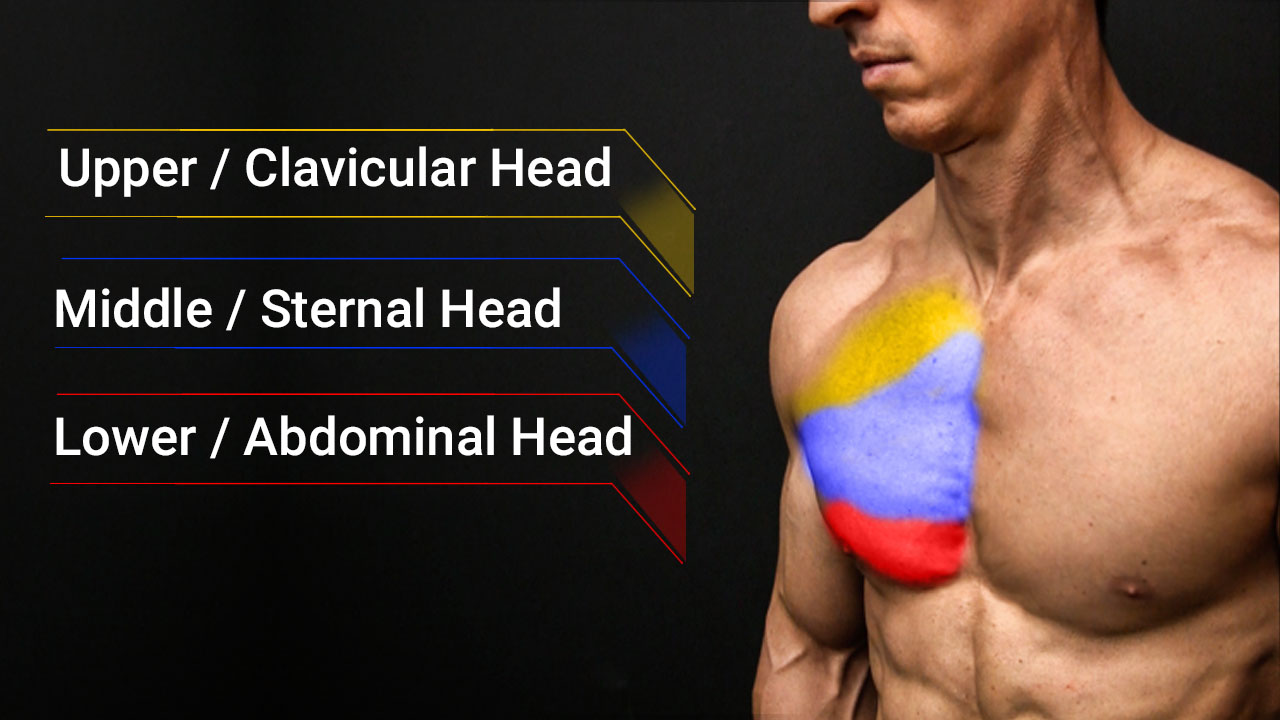
UPPER CHEST (CLAVICULAR HEAD)
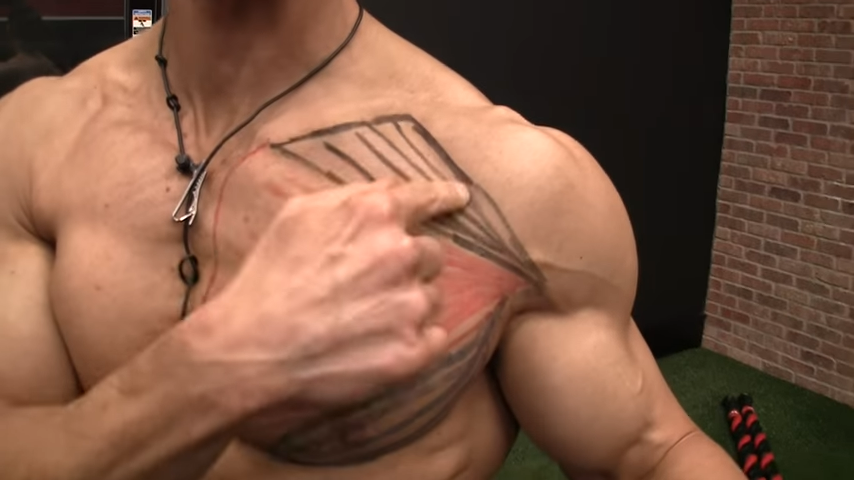
The upper chest or clavicular head of the pectoralis major originates along the collarbone and helps flex the arm upward and inward across the body.
Though exercises like the Incline Bench Press emphasize this region more directly, the Floor Press still activates it as a stabilizer and secondary mover.
Because your elbows stay tucked and your shoulders are fixed against the ground, the upper fibers assist the anterior deltoid during the initial drive off the floor.
This contribution helps maintain shoulder alignment and reduces the tendency for the elbows to flare out and that’s going to promote shoulder stability and long-term joint health.
In short, the upper chest supports the movement, but it’s not the star of the show.
MIDDLE CHEST (STERNAL HEAD)

The middle chest, or sternal head, makes up the bulk of the pectoralis major and is the main driver in the floor press.
These fibers run horizontally from the sternum to the humerus, creating the adduction force that presses the weight away from the mid-line of the body.
Because the Floor Press eliminates the deep stretch at the bottom, it loads the pecs where they’re strongest (the mid-range of motion) maximizing mechanical tension and minimizing joint stress.
The result is stronger, safer muscle growth in the area most responsible for pushing performance.
This is the part of the chest that powers the bar off the floor and through the midline, making it the most heavily activated region in both barbell and dumbbell floor press variations.
LOWER CHEST (COSTAL HEAD)
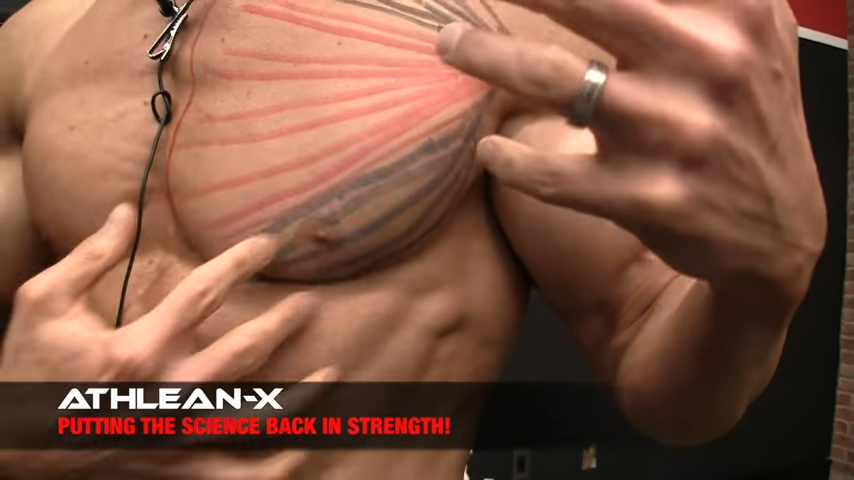
The lower chest, or costal head, attaches along the lower ribs and contributes to bringing the arm downward and inward, which is a motion best emphasized in Decline Bench or Chest Dips.
In the Floor Press, these fibers assist isometrically rather than dynamically.
Because your arms never drop below the level of your torso, the lower pecs don’t stretch fully, limiting their active contribution.
However, they still help stabilize the humerus and maintain tension through the lockout portion, supporting total upper-body strength and pressing balance.
While not the main target, this stabilizing role prevents muscle imbalances between the upper and lower chest, helping maintain aesthetic and functional symmetry across the pectoral region.
TRICEPS BRACHII
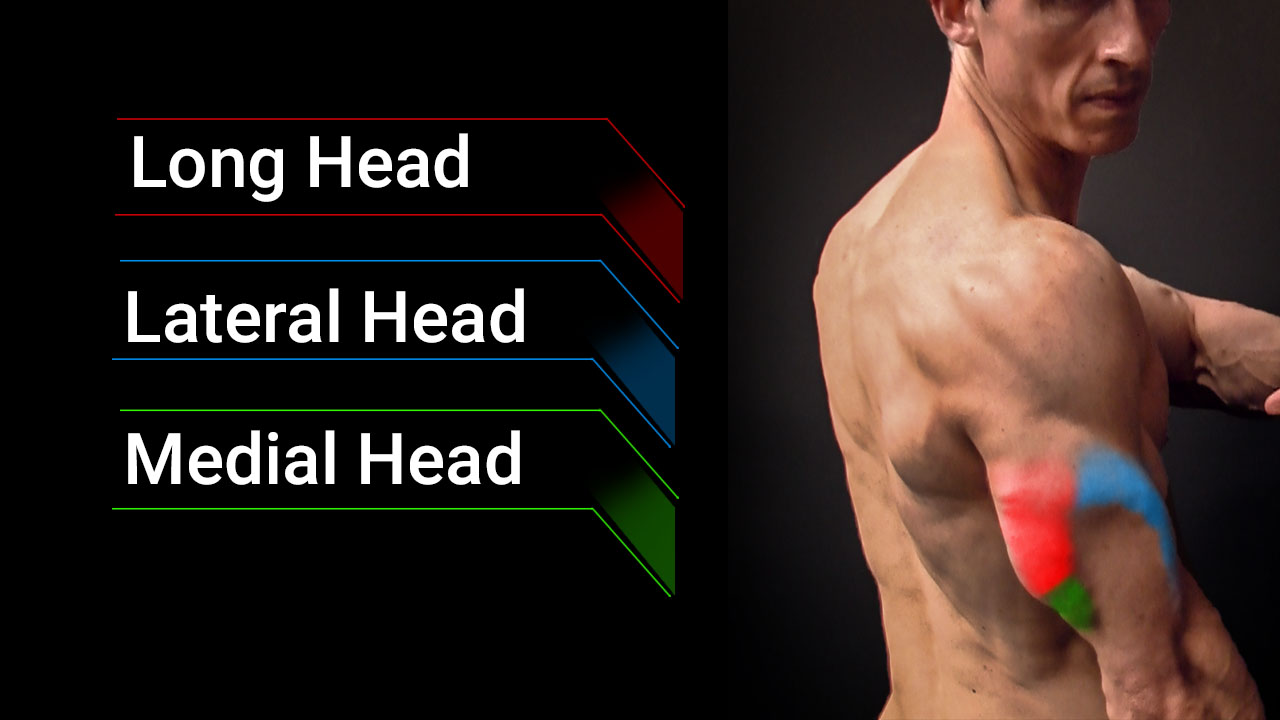
Located on the back of the upper arm, the triceps brachii consists of three heads: the long head (originating from the scapula), and the lateral and medial heads (originating from the humerus).
Their collective role is elbow extension or straightening the arm and stabilizing the shoulder joint during pressing movements.
In the Floor Press, the triceps take center stage.
Because the floor limits the bottom range and removes the stretch reflex, every rep becomes a pure test of triceps power through the lockout portion of the press.
This makes the floor press one of the best tools for addressing sticking points in the top half of a bench press.
Stronger triceps mean smoother bar speed, better elbow control, and improved transfer to all upper-body compound lifts from Weighted Push-Ups to Military Presses.
ANTERIOR DELTOID
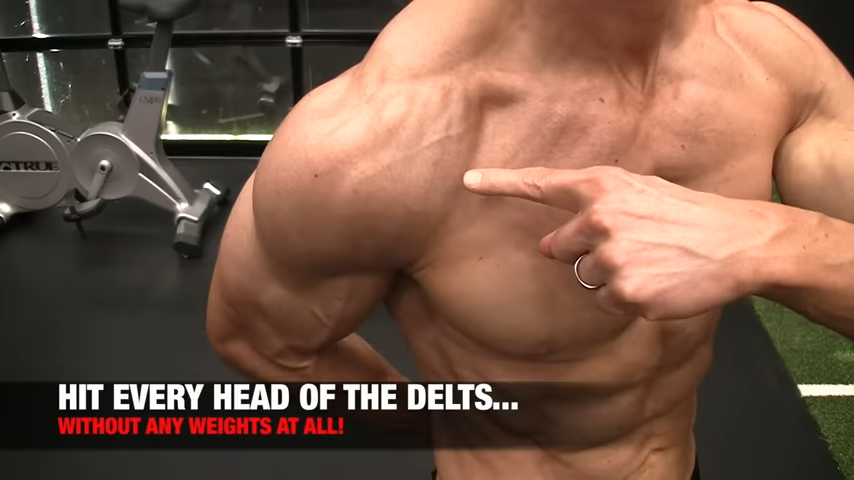
The anterior deltoid forms the front cap of the shoulder, originating from the clavicle and inserting into the humerus.
It functions primarily in shoulder flexion or raising the arm forward and it assists the chest during pressing and pushing movements.
When you do the Floor Press, the anterior delts help initiate the lift off the ground and guide the elbows through a safe pressing path.
Because your shoulder blades are fixed to the floor, the delts have to stabilize the humeral head without excessive rotation, which reduces risk of shoulder impingement, AC joint sprain, or chronic irritation of the anterior portion of the shoulder.
One of the great benefits of the Floor Press is the naturally built-in control that teaches proper shoulder positioning, keeping the elbows tucked, the bar path efficient, and the shoulder girdle stable under load.
CORE

Although the Floor Press removes the legs, it doesn’t remove the need for total-body stability.
The core muscles, including the rectus abdominis, obliques, and serratus anterior, create the foundation for full-body tension and force transfer.
By bracing the trunk and maintaining a neutral thoracic spine, you prevent unwanted movement and keep the rib cage aligned over the shoulder blades.
This core engagement improves postural health and creates a safer environment for the pressing muscles to generate force.
FLOOR PRESS VS. TRADITIONAL BENCH PRESS
Don’t mistake the Floor Press for a watered-down version of the bench.
Taking the bench out of the equation forces your body to move differently, changing joint angles, reducing shoulder stress, and putting the tension on the muscles that press.
Here’s why you should include the Floor Press in your next Chest Day or Push Day workout.
SHOULDER-FRIENDLY RANGE OF MOTION
Unlike the full range of motion used on a Bench Press, the Floor Press stops your upper arms when your triceps contact the ground.
This naturally limits shoulder extension and protects the pectoralis minor, anterior deltoid, and AC joint from overstretching.
For lifters with limited shoulder range of motion, previous pectoralis strain, or chronic training injuries, this reduction in depth acts like built-in safety pins.
You still load the pectoralis major through its strongest range, but you spare the connective tissue that often takes the beating in a deep press.
IMPROVED ELBOW AND WRIST ALIGNMENT
Because the floor fixes your elbow path, the floor press enforces a tighter pressing groove.
Your elbows stay closer to your torso, your wrists stack naturally over your forearms, and your shoulder girdle remains stable.
That alignment minimizes unwanted rotation through the spinal cord and thoracic spine, improving long-term postural health.
This fixed alignment also helps create a better neurological connection with the skeletal muscles that stabilize the shoulder, and this is particularly valuable for advanced lifters managing high training volumes.
TARGETED LOCKOUT AND TRICEPS DEVELOPMENT
The Floor Press removes the bottom stretch and forces you to generate power from the mid-range up.
This makes it one of the best movements for developing the lockout portion of your press, which is where the triceps and pectoralis major drive the load.
By improving elbow extension strength and coordination between muscle groups, you’ll see carryover to the Dumbbell Bench Press, Push Ups, and even heavy Military Press variations.
Over time, this translates into better explosive strength, denser muscle fibers, and more efficient resistance training adaptation.
SAFER AND EASIER SETUP
No squat rack, bench stations, or smith machine needed for this one, guys. The Floor Press is as straightforward as strength training gets.
Whether you’re using a barbell or a pair of dumbbells, setup is fast, stable, and joint-friendly.
For the Dumbbell Floor Press, all you need is open space and a set of weights. Sit down with the dumbbells resting on your thighs, brace your core, and roll back under control until your upper back and shoulder blades are flat against the ground.
The Barbell Floor Press doesn’t require a rack, but you can use one if you have access to it. Most lifters simply set the bar on the floor, slide underneath it, and roll it into position above the mid-chest.
If you do have a power rack, setting safety pins just above elbow height makes the setup even easier since you can unrack and rerack safely without a handoff.
In both variations, the floor acts as a built-in safety net.
If you fail a rep, the bar or dumbbells stop safely at ground level, not on your chest. There’s no overextension, no loss of shoulder stability, and no awkward bailout.
For lifters training alone or in tight spaces, this allows you to train hard, stay consistent, and reduce the risk of weightlifting injuries without sacrificing intensity.
MORE CHEST ACTIVATION THROUGH ADDUCTION
The Dumbbell Floor Press offers a unique advantage over the barbell version: freedom of movement.
Without a fixed grip, you can achieve greater horizontal adduction, bringing the dumbbells toward the mid-line of the body and activating more fibers in the pectoralis major.
This not only increases muscle growth but also enhances your ability to stabilize the load through your core and posterior chain, improving full-body tension and overall upper-body control.
HOW TO DO THE FLOOR PRESS
The Floor Press is one of the most straightforward pressing movements you can perform. There’s no bench, no rack, and no setup headaches.
Yet, it delivers big returns in muscular hypertrophy, functional fitness, and overall upper-body strength.
Because your back stays flat against the floor, the natural longitudinal arch of the spine remains stable without excessive rib cage compression.
This position enhances the body’s alignment along the mid-line of the body, helping the chest, shoulders, and triceps fire together in proper sequence.
Even subtle variations like Bridge Floor Pressing or adding Floor Flys can improve muscle spindle activation, increase metabolic rate, and drive new growth where other presses fall short.
Here’s a breakdown of how to do the Floor Press exercise with a barbell and a set of dumbbells.
BARBELL FLOOR PRESS


HOW TO DO THE BARBELL FLOOR PRESS:
- Find a flat, open area with enough room for your barbell and plates. Load the bar evenly and let it rest on the floor. Sit down with the bar just above your hips and legs extended straight out.
- Roll the bar toward your upper thighs, then lie back until your shoulder blades and upper back are flat on the ground.
- Bend your knees slightly for balance. The bar should line up roughly above your lower chest or upper abs.
- Take a shoulder-width to slightly wider grip, just like your regular Bench Press. Squeeze the bar tight, pull your shoulder blades together, and brace your core.
- Roll the bar up over your chest using a small hip bridge for leverage (similar to a Bridged Floor Press). Once it’s directly over your chest, lock in your elbows, flatten your hips, and you’re ready to press.
- Lower the bar slowly toward your body until your triceps gently touch the floor, Don’t let your elbows slam down.
- From the bottom, press the bar straight up toward the ceiling. Keep your elbows tucked at about 45 degrees and maintain your shoulder blades pinned. Stop just short of full lockout to keep constant tension on the chest and triceps brachii.
- After the final rep, lower the bar carefully to your hips, use a slight roll forward, and sit up with control.
WHAT MAKES IT EFFECTIVE: The Barbell Floor Press builds power where most lifters struggle: the mid to top half of the press. By cutting out the bottom stretch, it removes momentum and the stretch reflex, forcing the pectoralis major, triceps brachii, and anterior deltoid to produce pure strength from a dead stop. The result is stronger pressing mechanics, safer joints, and more functional upper-body strength all without relying on leg drive, excessive arching, or extra equipment.
DUMBBELL FLOOR PRESS
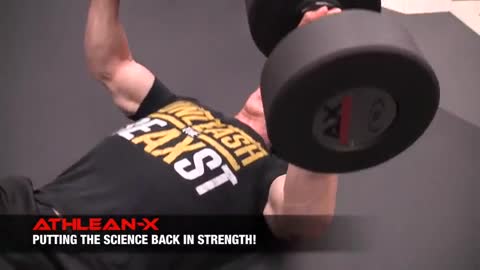
HOW TO DO THE DUMBBELL FLOOR PRESS:
- Grab a pair of dumbbells and sit on the floor with them resting upright on your thighs. Bend your knees slightly for balance.
- Tighten your upper back and core, then roll back under control until your shoulder blades and upper arms contact the ground. The dumbbells should start directly over your chest, not your face.
- Lower the dumbbells slowly until your triceps touch the floor. Keep your elbows at roughly a 45-degree angle to your torso to protect the shoulders.
- Drive the dumbbells upward and slightly inward toward the mid-line of the body, squeezing through the chest at the top. Stop just short of locking out to maintain constant tension.
- After the last rep, bring the dumbbells down to your chest, sit up by rocking forward, and set them on the floor beside you.
WHAT MAKES IT EFFECTIVE: The Dumbbell Floor Press blends strength building with joint protection. Using dumbbells allows a natural wrist and elbow path, increasing horizontal adduction and chest activation while keeping the shoulder joints safe. Because each arm works independently, it helps correct muscle imbalances, stabilizes the shoulder girdle, and improves coordination across the core and posterior chain.
FLOOR PRESS: COMMON MISTAKES
The Floor Press is straightforward in design but unforgiving in execution. When performed with intention, it strengthens the chest, triceps, and shoulders while reinforcing solid joint mechanics.
When rushed or poorly executed, it turns into little more than joint stress and missed progress.
Below are the most common errors that undermine the movement along with how to correct them for maximum return.
BOUNCING ELBOWS OFF THE FLOOR
Treating the floor like a springboard is one of the fastest ways to ruin the exercise.
When you let your elbows slam into the ground, the muscle spindles, the sensors responsible for detecting stretch, disengage from controlled tension and turn the movement into joint shock.
Instead, lower the bar or dumbbells until your triceps lightly touch the floor.
Pause for a moment, keep tension through your pectoralis major and triceps brachii, and then drive the weight back up.
This controlled pause recruits more muscle fibers, reinforces strength through the mid-range, and spares your elbows from unnecessary stress.
OVERARCHING THE LOWER BACK
Arching might help you move more weight, but it defeats the purpose of the Floor Press.
The entire advantage of pressing from the ground is to remove leg drive and stabilize the midline of the body.
When you exaggerate your lumbar arch, you shift tension away from the chest and triceps and into your spine.
Keep your core braced, your glutes grounded, and your thoracic spine neutral. You’ll generate full-body tension safely, maintain better alignment, and get more out of every rep.
LOWERING TOO FAST
Letting gravity handle the descent kills both muscle activation and shoulder health.
Fast, uncontrolled lowering prevents the muscle spindles from doing their job, which is coordinating stretch and contraction for strength and stability.
Instead, aim for a slow eccentric phase. I’d recommend about two to three seconds down.
This controlled lowering maximizes time under tension, boosts muscular hypertrophy, and contributes to long-term lean muscle development without overloading your joints.
PARTIAL REPS ABOVE 90°
The Floor Press is already a shortened range of motion exercise, so skipping the bottom contact point means you’re only doing half the work.
If your triceps never touch the floor, you miss the full strength-building benefit of the pause and lose the chance to train power from a dead stop.
Each rep should include a light, controlled touch of the arms to the ground before pressing up. That brief pause eliminates momentum and builds the stability and force transfer you need for real muscle gains.
ELBOWS FLARING TOO WIDE
Flaring the elbows might feel natural, but it pushes the shoulders into external rotation and reduces pectoralis major engagement.
It’s also one of the fastest ways to irritate the anterior deltoid or cause joint discomfort.
Be sure to keep your elbows tucked around 45 degrees from your torso.
This alignment keeps tension through the chest and triceps, protects the shoulders, and builds lean muscle evenly across the upper body.
Over time, it improves pressing mechanics and supports long-term lean body composition and joint integrity.
ACCESSORY LIFTS TO BOOST YOUR BENCH PRESS
The Floor Press is a powerful tool on its own, but it works best as part of a complete pressing plan.
To build a stronger bench, you need to train the muscles and movement patterns that support it, not just repeat the same lift.
The right accessory work reinforces stability, improves bar control, and attacks weak points from every angle.
These are the lifts that make your floor press gains show up where it matters most: under a heavy bar.
PAUSE BENCH PRESS
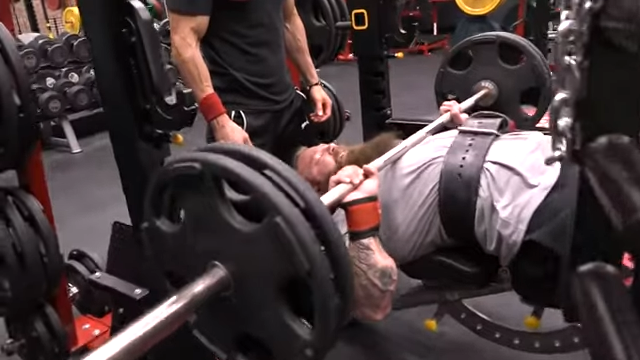
HOW TO DO THE PAUSE BENCH PRESS:
- Start by setting up the same way you would for a Standard Bench Press.
- Center your body, the bar, and the bench so everything lines up evenly. Keep your body stable, ensuring there’s no shifting or leaning, and maintain tight contact with the bench through your upper back and glutes.
- Pull your shoulder blades down and together to create a strong foundation. Don’t shrug here. Instead, think of pulling your shoulders into the bench to activate the stabilizers around the rotator cuff and upper back.
- Grip the bar from underneath, not over the top. This keeps your wrists straight and stacked over your forearms for better force transfer.
- Keep your elbows bent slightly before lift-off, and position them about 75 degrees from your torso, not flared out.
- Unrack the bar and lower it along a straight, diagonal path toward your lower chest. Once it reaches the bottom, pause for two to three seconds.
- Keep your entire body tight with your shoulder blades locked, feet pressing into the floor, and your core braced.
- After the pause, drive the bar upward explosively, keeping that same bar path on the way up.
WHAT MAKES IT EFFECTIVE: The Pause Bench Press strips the movement down to pure strength. By removing the stretch-shortening cycle, you eliminate the elastic rebound that usually helps the bar leave your chest. This forces the pectoralis major, anterior deltoids, and triceps brachii to produce maximum force from a static position.
INCLINE STATIC DUMBBELL PRESS
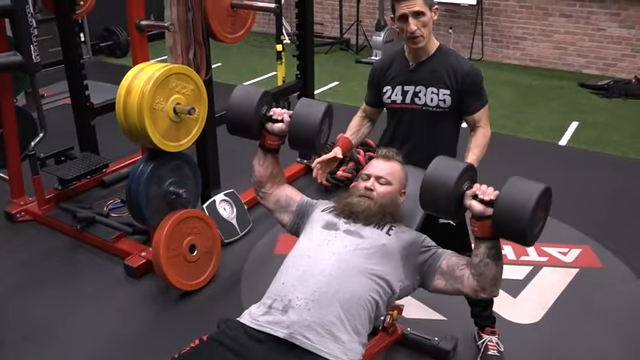
HOW TO DO THE INCLINE STATIC DUMBBELL PRESS:
- Set your bench to a moderate incline (around 30 to 45 degrees) and grab a pair of dumbbells.
- Sit back with your feet flat on the floor and your shoulder blades pulled down and back to create a stable base.
- Press both dumbbells to the top position. From here, hold one arm extended. This will be your static side.
- With the other arm, slowly lower the dumbbell until your upper arm is parallel to the floor. Don’t drop all the way down. Keep the chest fully engaged and the tension on the pectoralis major.
- Press the dumbbell back up, maintaining a controlled pace throughout.
- Perform five reps on one side while the opposite arm remains locked at the top. Then switch sides and repeat another five.
- To finish the set, press with both arms together for a final five reps.
WHAT MAKES IT EFFECTIVE: The Incline Static Dumbbell Press blends isometric and concentric strength into one movement, challenging both control and power at the same time. While one arm moves, the other holds a static contraction, forcing the chest to stay under constant tension. This recruits more muscle fibers across the pectoralis major and anterior deltoids, while improving the stabilizing role of the triceps and core. Because one side is always working isometrically, the muscle fibers never fully relax, creating greater metabolic stress and a stronger growth stimulus. The incline angle also emphasizes the upper chest, improving symmetry and total pressing power.
PROGRAMMING AND PROGRESSION
The Floor Press is one of the best tools for building pressing strength, but how you fit it into your training makes all the difference.
When it’s in line with your goals, it sharpens your technique, strengthens your lockout, and builds the kind of control that transfers directly to a bigger bench.
Here’s how to program it effectively and progress over time.
PLACEMENT
The Floor Press works best as an accessory lift, not your main bench movement.
Perform it after your primary bench press on upper-body or push days, when you’ve already handled heavier loads.
This timing forces you to execute with fatigue, reinforcing proper form and tightness when your body wants to loosen up.
If you’re running a powerlifting-style program, you can also rotate the Floor Press in as a main movement every 3 to 4 weeks to emphasize mid-range power and shoulder recovery between heavier bench cycles.
SETS AND REPS
For strength development, use moderate-to-heavy weight and lower reps. I recommend 3 to 5 sets of 4 to 6 reps with a one-second pause at the bottom of each rep.
The goal here is bar speed and control so you’ll have to drive each rep explosively after the pause.
For muscle growth, focus on higher volume with controlled tempo. Go with 3 to 4 sets of 8 to 10 reps, lowering the weight slowly and pausing briefly on the floor.
This increases time under tension, builds work capacity, and reinforces pressing stability under fatigue.
For stability and shoulder health, try lighter weight for 2 to 3 sets of 12 to 15 reps using dumbbells. This variation teaches better control and enhances coordination between the shoulders and triceps.
FREQUENCY
For most lifters, once per week is enough to see progress without overloading the shoulders or elbows.
Advanced trainees can include it twice weekly. You can do it once with heavy barbell work and once with lighter dumbbell or pause-focused variations as long as recovery stays on track.
Listen to your joints, not your ego. The Floor Press is designed to build longevity in your pressing, not wear you down.
PROGRESSION
Progress on the Floor Press should be slow and deliberate. Add weight only when every rep looks identical with the same bar path, same pause, and same tempo.
Think of progression not just as lifting heavier but lifting cleaner. Once your form is locked in, you can progress by manipulating training variables:
Pause Duration: Extend the pause to 2 to 3 seconds to improve power from a dead stop.
Band or Chain Resistance: Add accommodating resistance to overload the top half of the lift and develop explosive lockout strength.
Single-Arm Variations: Try single-arm dumbbell floor presses to challenge your core and stabilize asymmetries between sides.
Tempo Work: Use a 3–1–1 tempo (three seconds down, one-second pause, one-second press) to build control and tension through the entire range.
The best lifters aren’t the ones who just push more weight. They’re the ones who know how to make every rep count.
The Floor Press forces that kind of discipline. It teaches you to control the bar, respect your shoulder mechanics, and turn raw effort into real, measurable strength.
Keep it in your rotation, and you’ll build power that lasts beyond the bench.
Check out our complete line of ATHLEAN-RX Supplements and find the best training program for you based on your fitness level and goals.

- The Floor Press cuts out the weakest, most injury-prone part of the lift and forces your upper body to produce power from a dead stop.
- By taking the legs and momentum out of the equation, it builds true pressing strength, tighter mechanics, and healthier shoulders, all while reinforcing control where most lifters lose it.
- Here’s how to perform the Floor Press using either a barbell or pair of dumbbells:
- Find a flat, open space with enough room to extend your arms overhead. Sit down with your shoulder blades pulled back and your chest slightly lifted. From here, the setup depends on your equipment:
- If you have a barbell, roll the bar over your hips and lie back until it’s positioned roughly over your lower chest. Your knees should be bent and feet planted lightly for balance, not for leg drive.
- If you’re using dumbbells, sit with the dumbbells resting on your thighs, tighten your core, and roll back smoothly so the weights start directly above your chest.
- In both versions, your shoulder blades should stay retracted and pressed into the floor. That contact point is your “bench.” It stabilizes the shoulder girdle and keeps the upper body locked in for each rep.
- Lower the weight slowly until your triceps lightly touch the ground. That touch point signals the end of the rep.
- Pause briefly, keep your chest engaged, and then drive the weight upward by extending the elbows and pressing through the pectoralis major and triceps brachii.
- With a barbell, the grip is fixed, so focus on keeping the elbows tucked around 45 degrees and the bar path vertical (straight up and down). This keeps stress off the shoulders and maximizes force transfer through the arms.
- With dumbbells, you have more freedom of movement, so take advantage of it. Rotate your wrists slightly and bring the weights together toward the midline of the body at the top. This adds adduction (more chest engagement) and balances both sides independently.
- On each rep, maintain full tension from your core to your shoulders. Avoid arching your lower back or letting your elbows flare.
FLOOR PRESS FAQ
The Floor Press is one of the most efficient ways to build pressing strength without beating up your shoulders.
By cutting off the bottom portion of the lift, you take the stretch out of the movement and force your chest, triceps, and shoulders to produce all the power from a dead stop.
That pause at the bottom eliminates momentum and trains your body to stay tight and explosive.
It’s also an incredible tool for improving lockout strength and for reinforcing proper elbow and wrist alignment under load.
Because you can’t use leg drive or an exaggerated arch, it teaches pure upper-body control and tension.
When you make it a consistent part of your workouts, that control carries over to stronger, safer bench pressing and better shoulder health.
That depends on your goal.
If you’re chasing maximum muscle size or competition-style strength, the Bench Press still gives you a longer range of motion and slightly more pec involvement.
But if your focus is pressing power, joint longevity, or breaking through plateaus, the Floor Press can actually outperform the bench in key areas.
It isolates the upper body by removing leg drive, it improves triceps and mid-range strength, and it lets you train hard even when shoulder mobility or discomfort would normally hold you back.
Most smart lifters use both: the bench to build total pressing capacity, and the Floor Press to refine mechanics and strengthen the parts of the lift that truly matter.
The floor press isn’t perfect… and it’s not meant to be.
The limited range of motion means you’ll get less activation in the lower chest, and you can’t overload the movement as heavily as a full bench because the setup restricts leg drive and stability.
That makes it less ideal as a primary mass-builder.
You also lose the skill carryover of controlling heavier weights through the full descent, which advanced lifters still need to master.
And if you’re training for powerlifting, you’ll want to keep the bench as your main lift.
But for anyone who wants to strengthen the mid-range, fix shoulder pain, or build pressing power without joint wear-and-tear, the tradeoff is well worth it.
REFERENCES
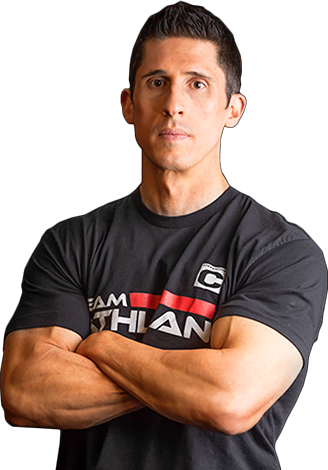
Jeff Cavaliere M.S.P.T, CSCS
Jeff Cavaliere is a Physical Therapist, Strength Coach and creator of the ATHLEAN-X Training Programs and ATHLEAN-Rx Supplements. He has a Masters in Physical Therapy (MSPT) and has worked as Head Physical Therapist for the New York Mets, as well as training many elite professional athletes in Major League Baseball, NFL, MMA and professional wrestling. His programs produce “next level” achievements in muscle size, strength and performance for professional athletes and anyone looking to build a muscular athletic physique.