







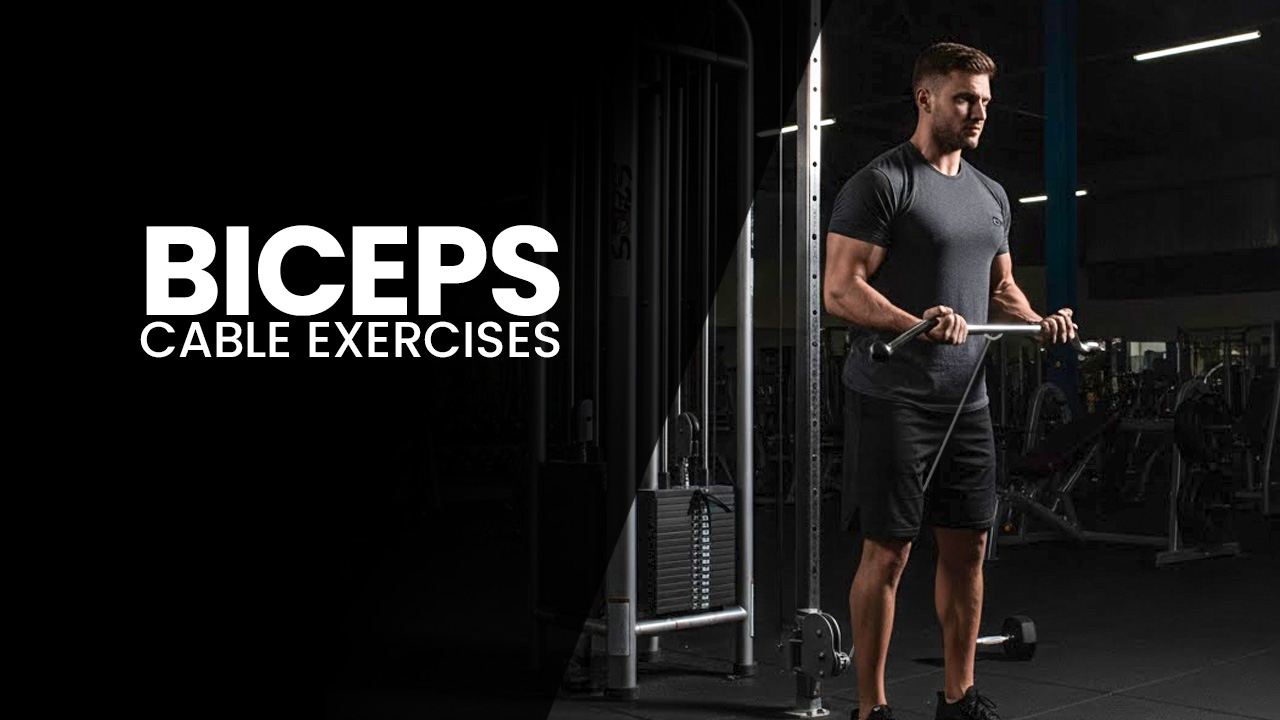
WHY use cables for building biceps?
The cable machine offers something free weights never can: constant tension across the full range of motion, forcing the biceps brachii, brachialis, and brachioradialis to stay engaged from start to finish.
Where Dumbbell Curls and EZ Bar Curls lose load at the top, Cable Curls keep pressure on the muscle even when your arms are fully flexed, driving greater muscle activation and better control through every rep.
Today, we’ll look at the muscles worked during bicep cable workouts, the most effective movements, the common mistakes that sabotage form, and how to build them into a smart training routine that maximizes arm size and muscle symmetry without sacrificing joint health.
BICEP CABLE WORKOUTS: MUSCLES WORKED
The biceps muscle group might look simple with two peaks on the front of your arm, but true bicep training is anything but.
Cable machines allow you to target every key player involved in elbow flexion, wrist stability, and upper-arm development with just as much, if not more, precision than free weights.
Because the resistance comes from the cable, not gravity, your muscle tension stays consistent throughout the range of motion, maximizing muscle engagement and hypertrophic gains from start to finish.
Here’s a breakdown of the muscles you’ll be working during bicep cable exercises:
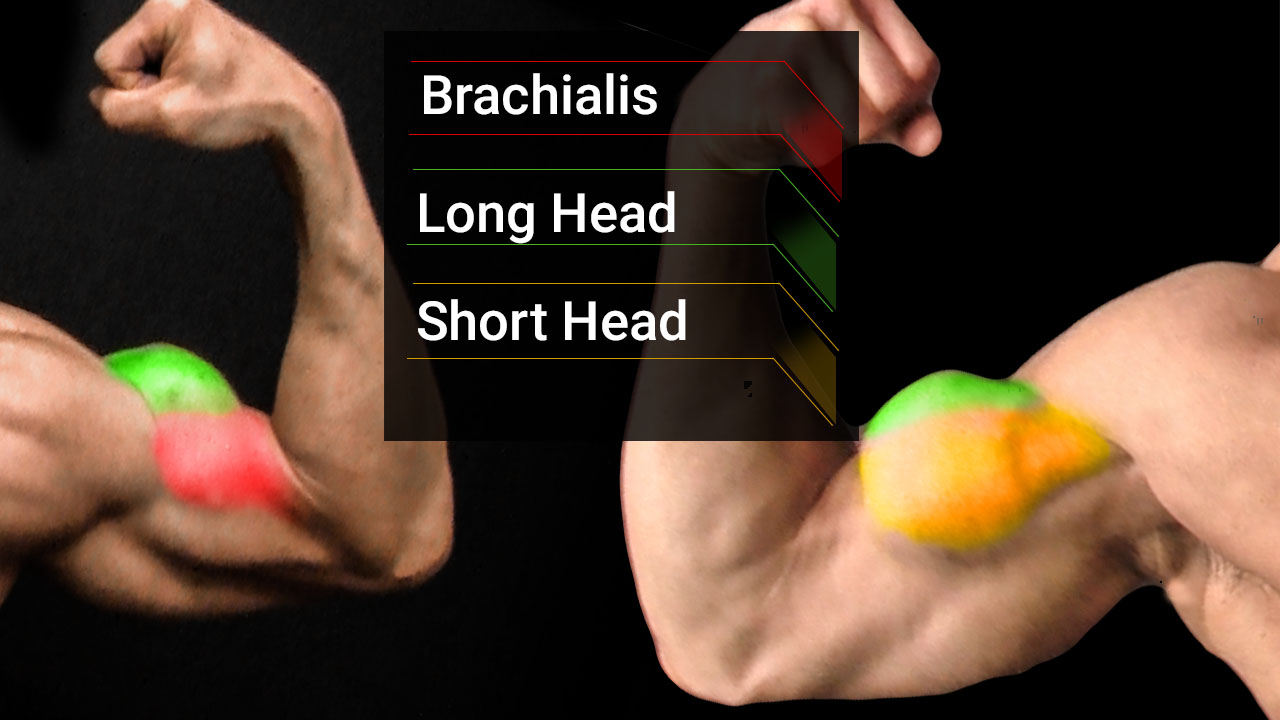
BICEPS BRACHII: SHORT HEAD

The short head of the biceps brachii sits on the inner portion of the upper arm and is responsible for that thick, rounded look when viewed from the front.
It’s most active when the elbows are kept close to the torso and the hands stay in a supinated grip (underhand grip).
Movements like the Cable Biceps Curl, EZ Bar Cable Curl, and Seated Bicep Cable Curl place the muscle in its strongest line of pull, creating deep muscle engagement through the full range of motion.
Because the short head doesn’t cross the shoulder joint, it thrives on control and meticulousness.
Focus on anchoring the elbows, limiting shoulder movement, and flexing hard at the top of each rep.
These positions emphasize internal tension and improve muscle activation, helping to build shape and density where most lifters flatten out over time.
BICEPS BRACHII: LONG HEAD
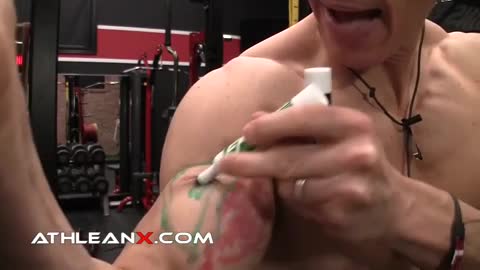
The bicep long head runs along the outer portion of the arm and forms the peak that gives the biceps their height.
Since it crosses the shoulder joint, it’s best trained when the arm moves slightly behind the body or begins from an overhead position.
Exercises like the High Pulley Single Arm Curl, Overhead Cable Curl, and High Cable Bicep Curl lengthen the muscle before contraction, which is a key driver of muscle hypertrophy and peak development.
Small adjustments in grip can completely change the feel.
For example, a single-grip handle isolates the arm individually, while a cable rope attachment allows for external rotation at the top to fully shorten the muscle.
When performed with control and a strong contraction at the finish, these angles teach the long head to fire through its entire mechanical range, improving muscle symmetry and adding visible height to your arm size.
BRACHIALIS
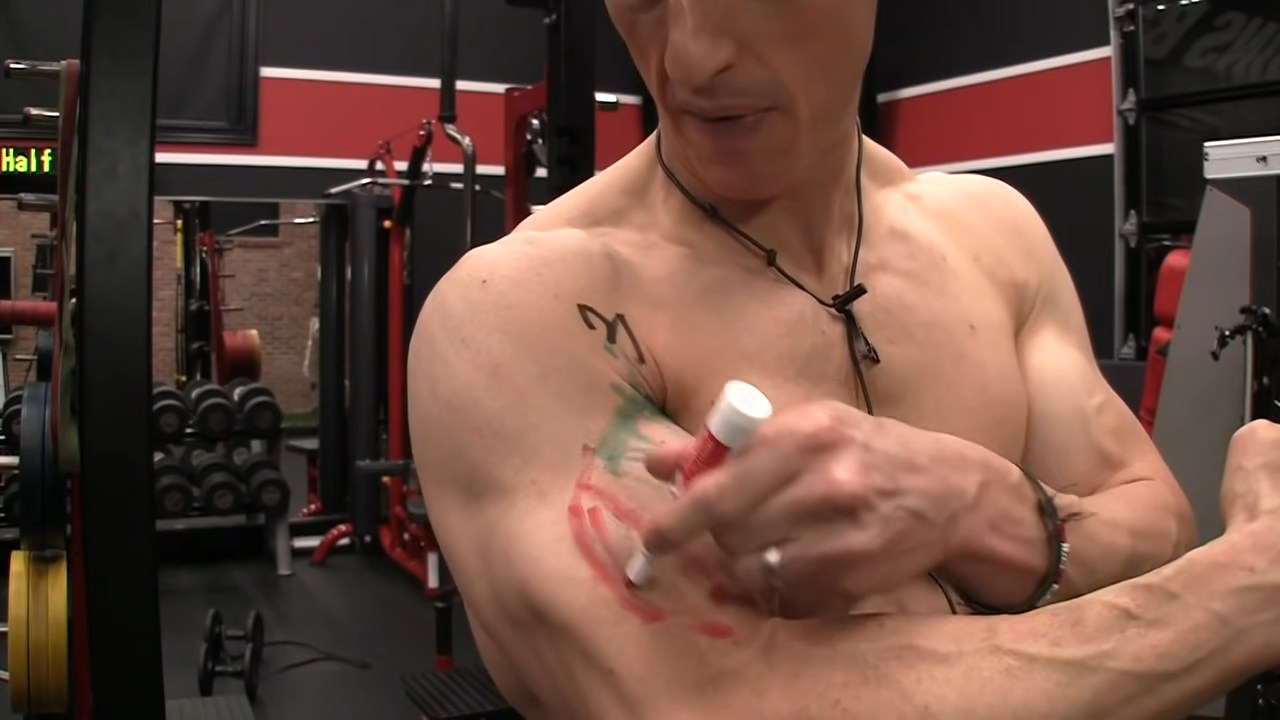
Sitting just beneath the biceps brachii, the brachialis muscle is the true arm-thickener since it pushes the biceps up from below, giving the illusion of larger arms even when relaxed.
Movements like Cable Rope Hammer Curls, EZ Bar Cable Curls, or Reverse Grip Bicep Curls directly target this elbow flexor, especially when performed with neutral or overhand grips.
The Rope Hammer Curl on the cable machine is particularly effective because it combines constant tension with the neutral wrist alignment needed for maximum brachialis activation and that’s something Dumbbell Hammer Curls can’t sustain once momentum kicks in.
BRACHIORADIALIS
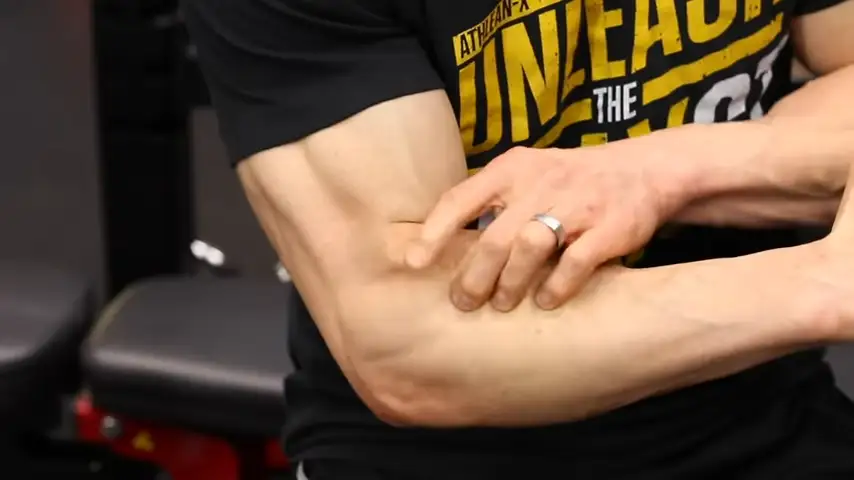
The brachioradialis muscle bridges the gap between the upper arm and the forearm, acting as a key elbow flexor and stabilizer during all forms of bicep training.
It’s especially active when the wrist is in a neutral or overhand grip, making exercises like the Rope Hammer Curl, Reverse Grip Cable Curl, or Cable Rope Hammer Curls ideal for building strength and density through this region.
Because the brachioradialis helps control the forearm’s rotation and assists during mid-range elbow flexion, it plays a major role in overall pulling strength and arm balance.
Training with cables, rather than dumbbells or resistance bands, ensures smooth directional resistance across the entire range of motion, avoiding the uneven loading that often limits muscle growth.
Over time, stronger brachioradialis development also enhances visual fullness from both the front and side of the arm.
FOREARM
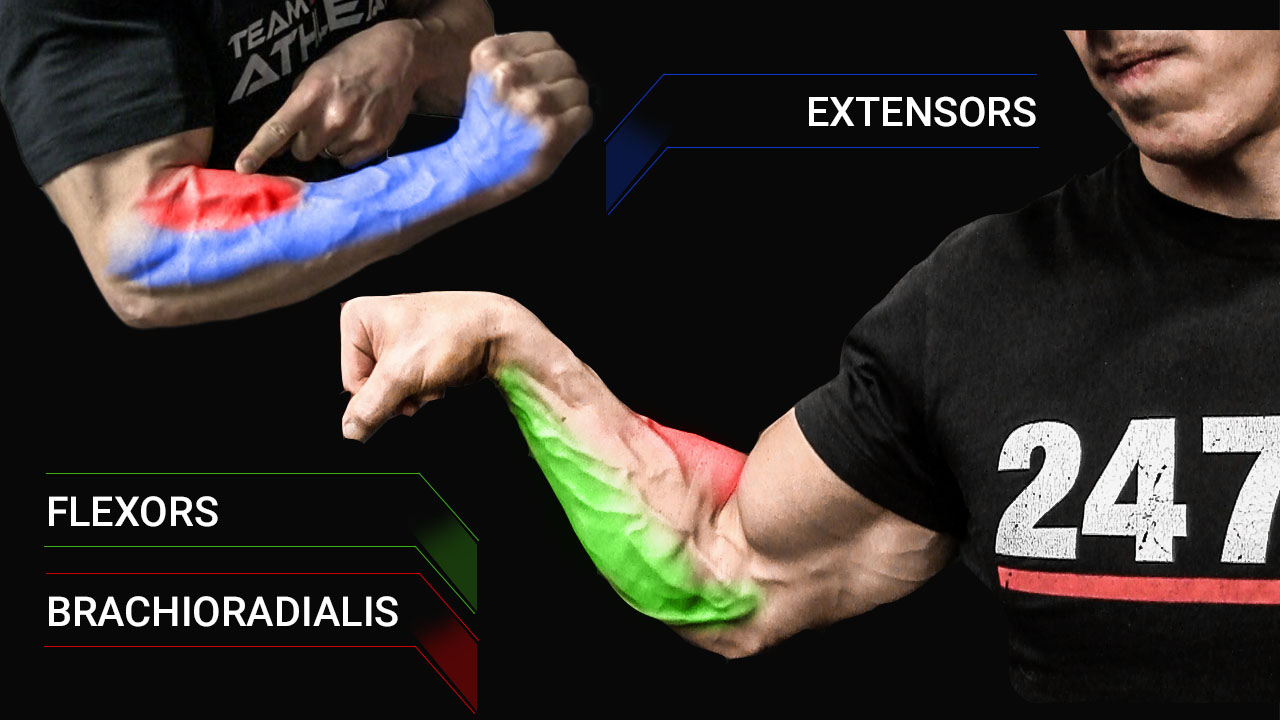
The forearm muscles stabilize the wrist and hand during every curl, anchoring force from the upper arm down to the grip.
Whether you’re performing Reverse Grip Bicep Curls, Rope Hammer Curls, or EZ Bar Cable Curls, these muscles must counter rotation and maintain wrist stability under continuous load.
Weak forearms limit your ability to sustain tension on the biceps while strong ones amplify it.
Cable work is particularly effective for forearm development because the resistance follows your movement pattern, not gravity.
As a result, you’re forced to maintain tension during both flexion and extension, improving grip endurance and coordination.
Consistent muscle activation in the forearms supports greater muscle symmetry, better control in compound lifts, and a noticeable improvement in overall arm size and definition.
BEST BICEP CABLE EXERCISES
When it comes to building your arms, exercise selection matters just as much as effort.
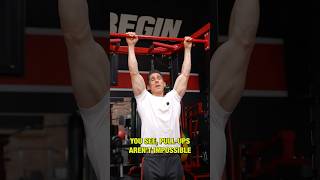
You can do Preacher Curls, Concentration Curls, or even hang from a Pull-Up bar until your arms give out but if your goal is consistent muscular hypertrophy, cables give you something no other workout tool can: a controllable, customizable resistance curve that never lets the tension drop.
The beauty of cable bicep exercises is their versatility.
You can train at multiple resistance levels, fine-tune your repetition scheme, and maintain precise shoulder stabilization throughout every set.
In the following list, we’ll break down the best Cable Biceps Curls and their variations. Each movement has a purpose, and when programmed strategically, they’ll help you build size, shape, and strength that carry far beyond arm day.
CABLE CURL

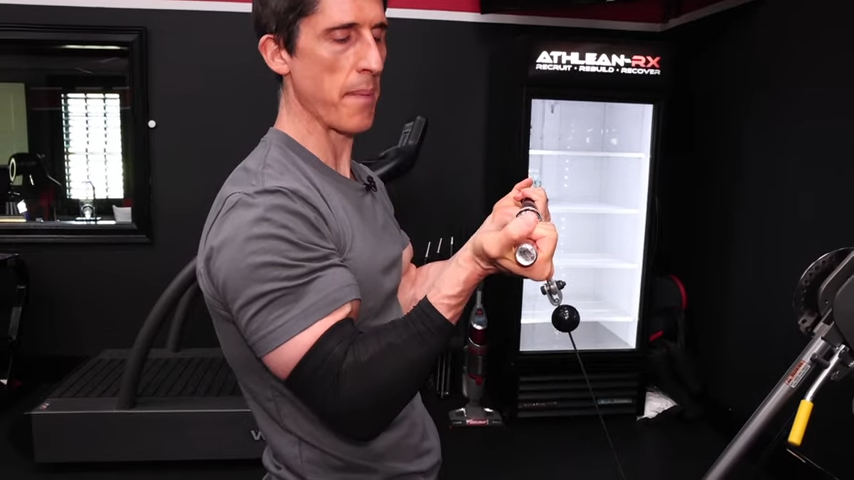
HOW TO DO THE CABLE CURL:
- Step up to the cable station and attach a straight bar to the low pulley.
- Grab it with a supinated grip and lock your feet in at hip-width. Make sure your chest is tall, shoulders are squared, and eyes are forward.
- Before the first rep, rotate your hands so the palms are fully turned up. That little twist? It pre-activates the biceps before you’ve even started.
- Keep your wrists slightly extended, elbows tight to your sides, and arms fully lengthened at the bottom.
- Now curl the weight bar up in a slow, deliberate motion. You’re bending only at the elbows, not the hips or shoulders.
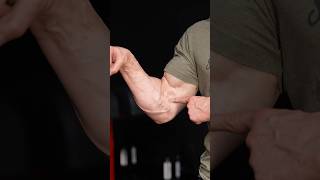
- At the top, squeeze like you’re trying to crush a walnut in your elbow crease. Hold it for a second.
- Then lower under control, fighting gravity all the way down. Don’t let the cable pull you. You need to be pulling against it because every inch of the negative (eccentric) counts.
WHAT MAKES IT EFFECTIVE: The Cable Curl is a tension trap in the best way possible. It keeps the biceps loaded through the entire range, forcing the muscle to contract, stabilize, and control from start to finish. No dead zones, no wasted reps. Just pure mechanical stress where it matters most.
CABLE FLEX CURLS
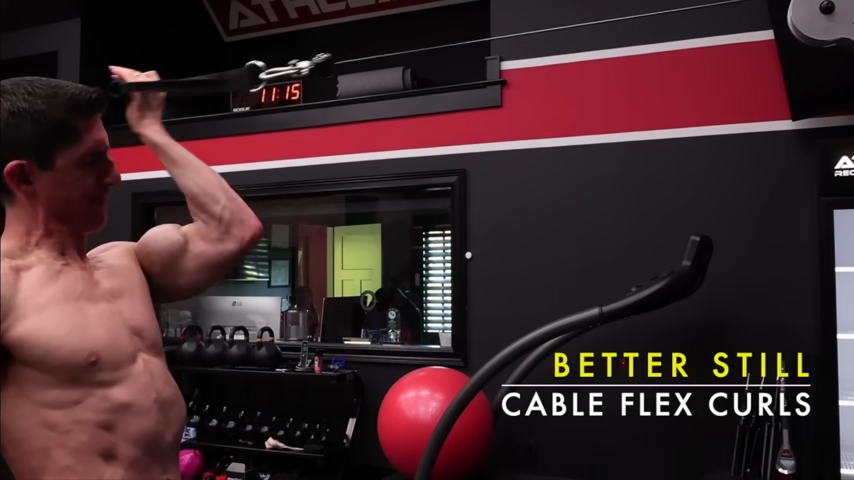
HOW TO DO THE CABLE FLEX CURL:
- Set up a single handle on the high pulley of a cable machine. Stand facing the stack and grab the handle with one hand, palm facing up.
- To reach that position, your shoulder will naturally move into flexion and that’s key. The biceps don’t just bend the elbow. They also help lift the arm at the shoulder. This angle forces both functions to work together, giving you a more complete contraction than standard curls ever could.
- Step slightly back to create tension in the cable and stabilize your body. With your elbow fixed in place and upper arm angled forward, curl the handle toward your forehead or chin in a slow, controlled motion.
- Think of it as trying to bring your fist right up under your lip (hence the nickname “Lip Buster Curl”).
- At the top, bend your wrist back slightly to take the forearms out of the equation and drive the load directly into the biceps.
- Pause for a one-count squeeze, then lower the weight under control until your arm is almost fully
- +2 extended.
- Be sure to keep the cable aligned with your forearm the entire time.
WHAT MAKES IT EFFECTIVE: The Cable Flex Curl hits both major jobs of the biceps (elbow flexion and shoulder flexion) at the same time. The high anchor point puts the muscle in a shortened, high-tension position, making it one of the best movements for achieving a hard, peak contraction. This move isolates the biceps completely, minimizes forearm involvement, and delivers that deep burn right at the top of the range.
CABLE STRETCH DRAG CURLS
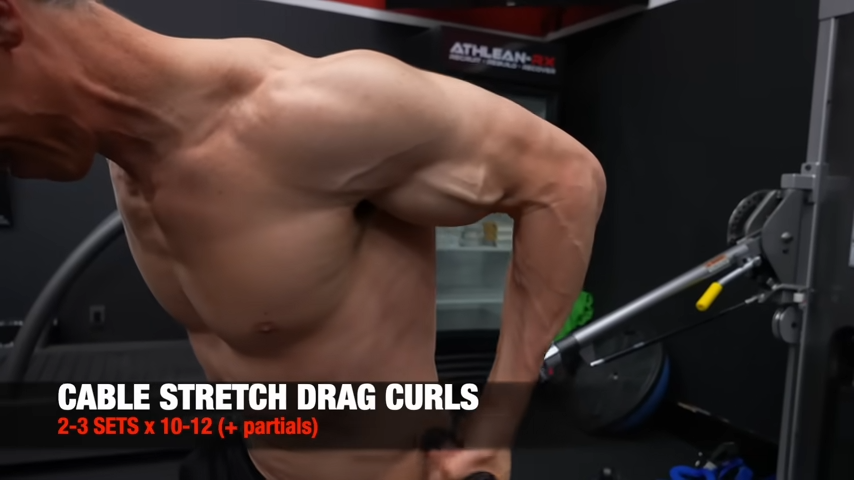
HOW TO DO THE CABLE STRETCH DRAG CURL:
- Set up two low pulley handles on a dual cable station and stand facing away from the machine.
- Grab each handle with a neutral (hammer) grip so your hands are positioned slightly behind your hips.
- Step forward just enough to feel the tension in the cables before the first rep. Your arms should be extended and your chest lifted. This setup immediately places the biceps in a stretched position, which is where the real work begins.
- From here, begin the curl by pulling the handles forward and slightly upward, keeping your elbows close to your sides.
- As you move through the lift, rotate your wrists outward so your palms face forward by the time your hands reach mid-chest height. That twist from hammer to supinated fully engages both heads of the biceps.
- Squeeze hard at the top, as if trying to flex the handles together in front of you.
- Then, lower the weight slowly, allowing the arms to drift slightly behind your body at the bottom to reestablish that loaded stretch.
WHAT MAKES IT EFFECTIVE: The Cable Stretch Drag Curl hits the biceps in their lengthened position under active load. By facing away from the machine, your arms start behind the torso, forcing the biceps long head to stretch before every contraction. The rotation from hammer to palm-up grip ensures full biceps activation through both flexion and supination.
KING KONG CURLS
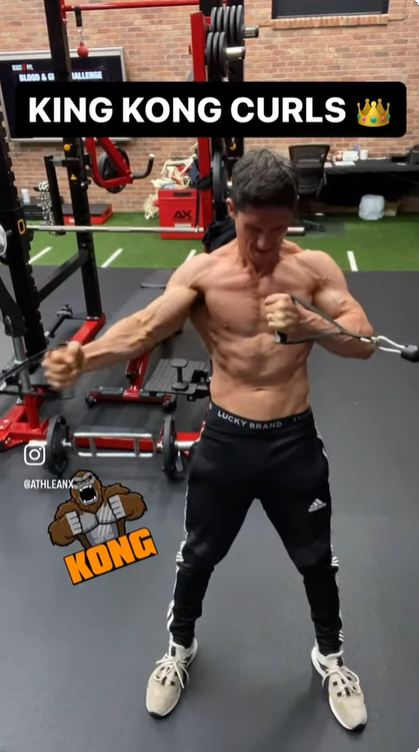
HOW TO DO THE KING KONG CURL:
- Set both pulleys on a dual cable machine to chest height and attach single handles.
- Stand in the middle of the station, grab a handle in each hand, and step slightly forward so the cables stay taut.
- Your hands should start close to your chest in a neutral (hammer) grip, elbows tucked tight to your sides, and chest tall. Think of the posture of a gorilla standing its ground.
- From this starting position, extend one arm slowly and under control toward the machine. Keep your palm facing in and resist the pull.
- Once your arm is fully extended and your bicep is under stretch, curl the handle back toward your chest, focusing on driving the hand in with power while keeping the shoulder still.
- Pause for a brief squeeze at the top, then repeat the same motion on the opposite arm. Both sides together equal one rep.
WHAT MAKES IT EFFECTIVE: The King Kong Cable Curl creates continuous tension without rest, forcing each bicep to stabilize and contract independently while maintaining engagement across the torso. By alternating arms under constant load, you extend the time under tension and develop real muscular endurance, control, and arm density.
MENTZER PULLDOWNS
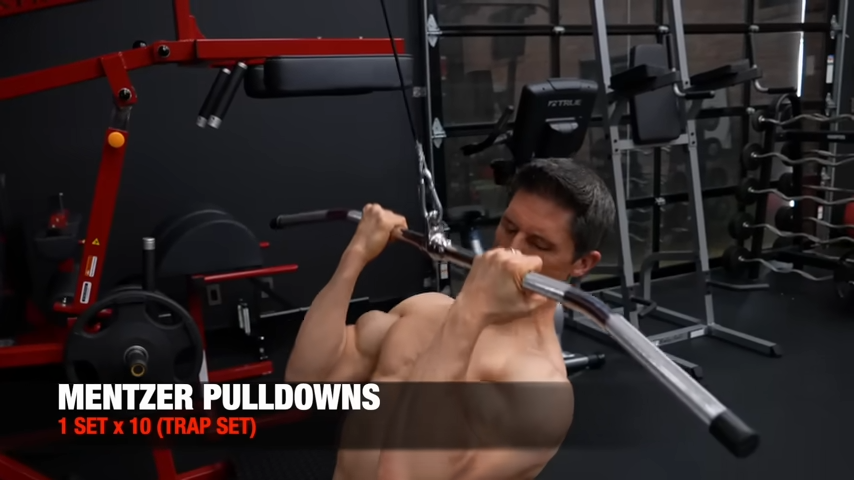
HOW TO DO THE MENTZER PULLDOWN:
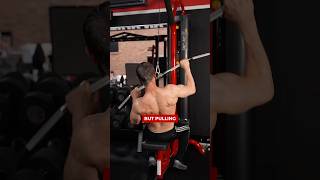
- To perform it, attach a straight bar to the Lat Pulldown station and grip it with a supinated (underhand) grip, hands about shoulder-width apart.
- Sit tall, then lean back just enough to allow your arms to line up directly under the cable. This angle minimizes lat involvement and shifts the emphasis onto the biceps.
- Lead with your hands, not your elbows. As you pull the bar down, think of curling it toward your upper chest rather than dragging it with your back.
- Keep your elbows fixed in position relative to your torso and focus on driving the forearms down and in.
- At the bottom, squeeze your biceps hard for a one-count pause, then control the bar back up until your arms are nearly straight.
WHAT MAKES IT EFFECTIVE: Named after Mike Mentzer, one of the original advocates of high-intensity training, the Mentzer Pulldown takes a traditional Close-Grip Underhand Pulldown and turns it into an effective biceps builder. By leaning back slightly and pulling with the hands, you eliminate momentum and prevent the lats from stealing the load. Mentzer often used this as a trap set, where you reduce the weight after reaching failure and immediately continue the set, extending the time under tension far beyond what normal curls provide.
FOREARM EXERCISES TO SUPPORT THE BICEPS
While the following movements aren’t technically biceps exercises, they’re the missing link in most training programs built around arm development.
Your forearms play a crucial supporting role in every curl by stabilizing the wrist, maintaining grip strength, and keeping tension where it belongs.
If your forearms can’t hold the load, your biceps can’t fully contract.
Think of these exercises as the structural work that allows your isolation work to perform at its best.
PRONE WRIST CURL
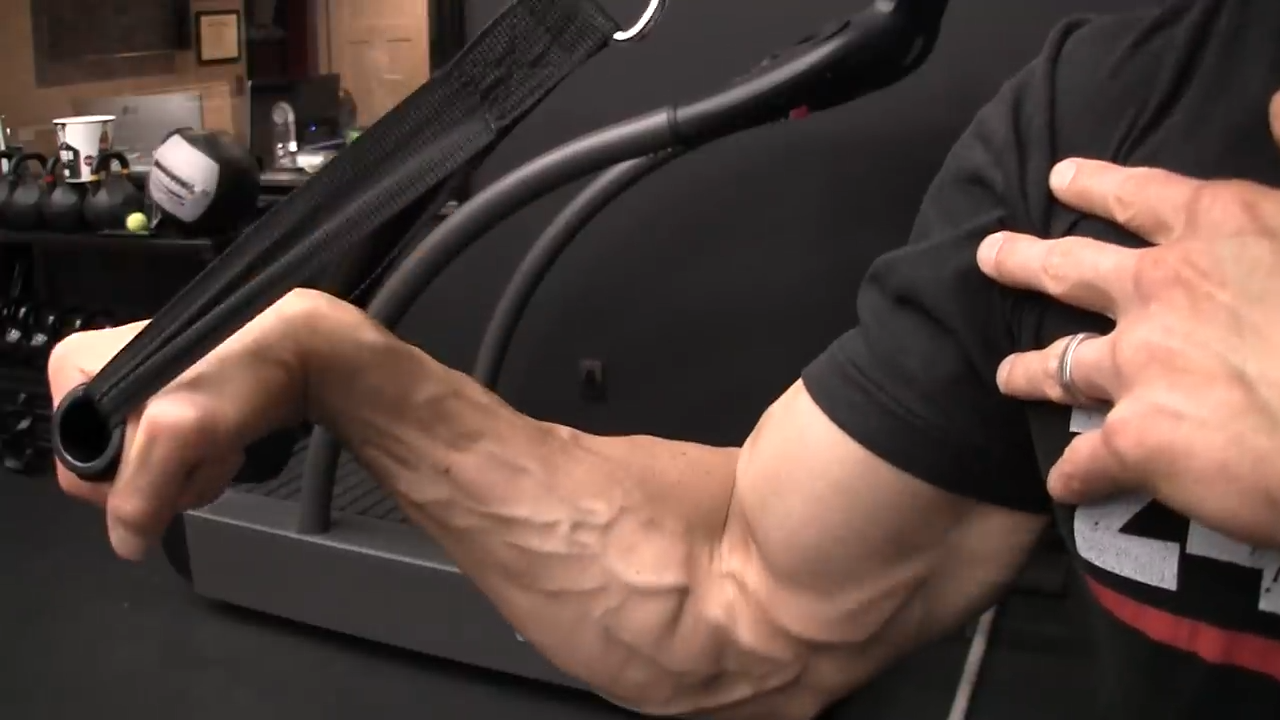
HOW TO DO THE PRONE WRIST CURL:
- Set up at the cable station with a rope attachment on a low pulley. Take an overhand grip with your palms facing down and slightly wider than shoulder width.
- Step back just enough to create tension in the cable before the first rep.
- Now, bend your elbows about 90 degrees to take the biceps out of play. This is a forearm isolation movement, not an arm curl.
- From here, extend your wrists downward under control, then drive them back up by flexing through your forearm extensors.
- The key is to keep the elbows locked in and the upper arms still.
- As you curl the rope up, think about pulling your knuckles toward the ceiling and squeezing the top like you’re trying to crack the rope in half.
- Lower slowly and repeat. Every inch of that movement should burn.
WHAT MAKES IT EFFECTIVE: Most versions of the wrist curl are elbow-wreckers. They overload the joint, rely on momentum, and let the biceps hijack the movement. The Prone Wrist Curl flips that script. With the rope set on a cable machine, you’re hitting the extensors through their full range while maintaining constant resistance. It’s safer, smarter, and far more effective for building forearm size and balanced arm development.
ROPE ULNAR DEVIATION
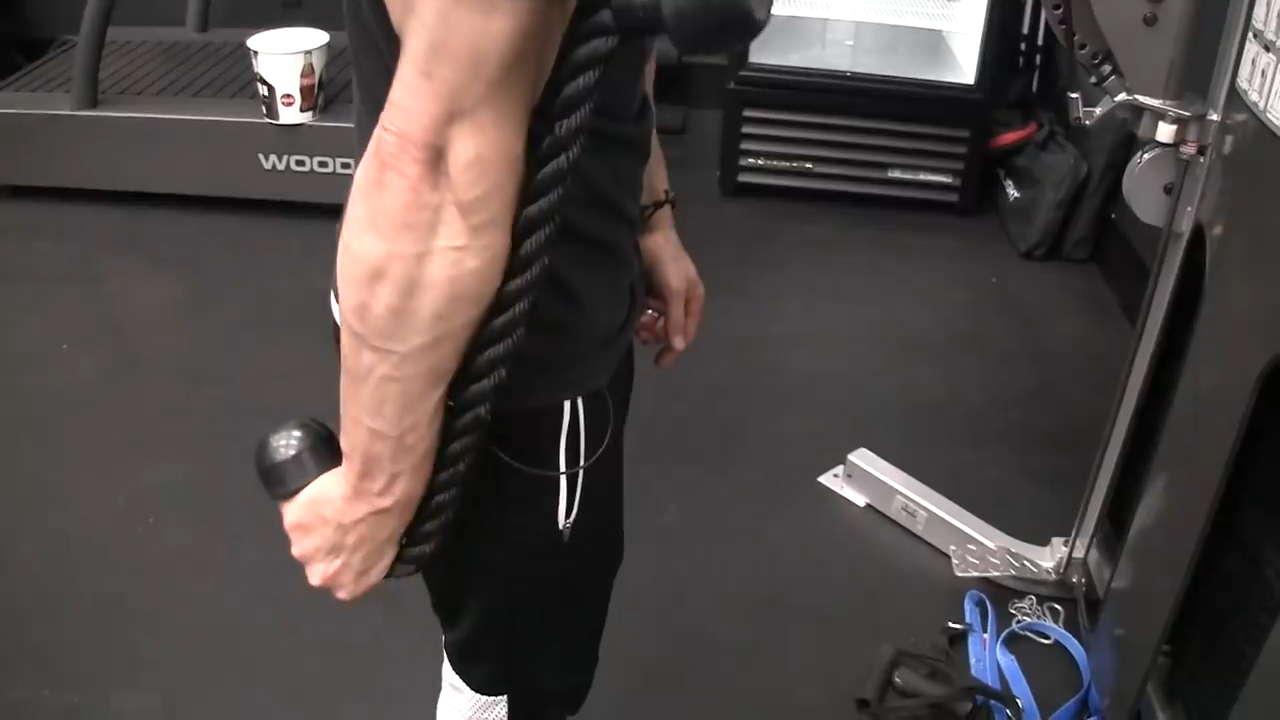
HOW TO DO THE ROPE ULNAR DEVIATION:
- Set up a rope attachment on the high pulley of a cable station. Stand tall with your arms hanging naturally at your sides and grab one end of the rope with your working hand.
- Lock your elbow to your side to keep the upper arm completely still.
- From here, move only your hand and wrist and drive the knuckles downward and slightly outward, bending your wrist toward the pinky side of your forearm.
- That motion is called ulnar deviation, and it directly trains the muscles that stabilize your wrist under load.
- Pause for a brief squeeze at the bottom, then return slowly to the starting position.
WHAT MAKES IT EFFECTIVE: The Rope Ulnar Deviation targets a group of forearm muscles that are responsible for controlling wrist movement during curls, presses, and heavy lifts. Stronger ulnar deviators improve wrist alignment and reduce strain on the elbow and forearm tendons, especially if you do a lot of Cable Preacher Curls or barbell work.
ROPE PRONATION
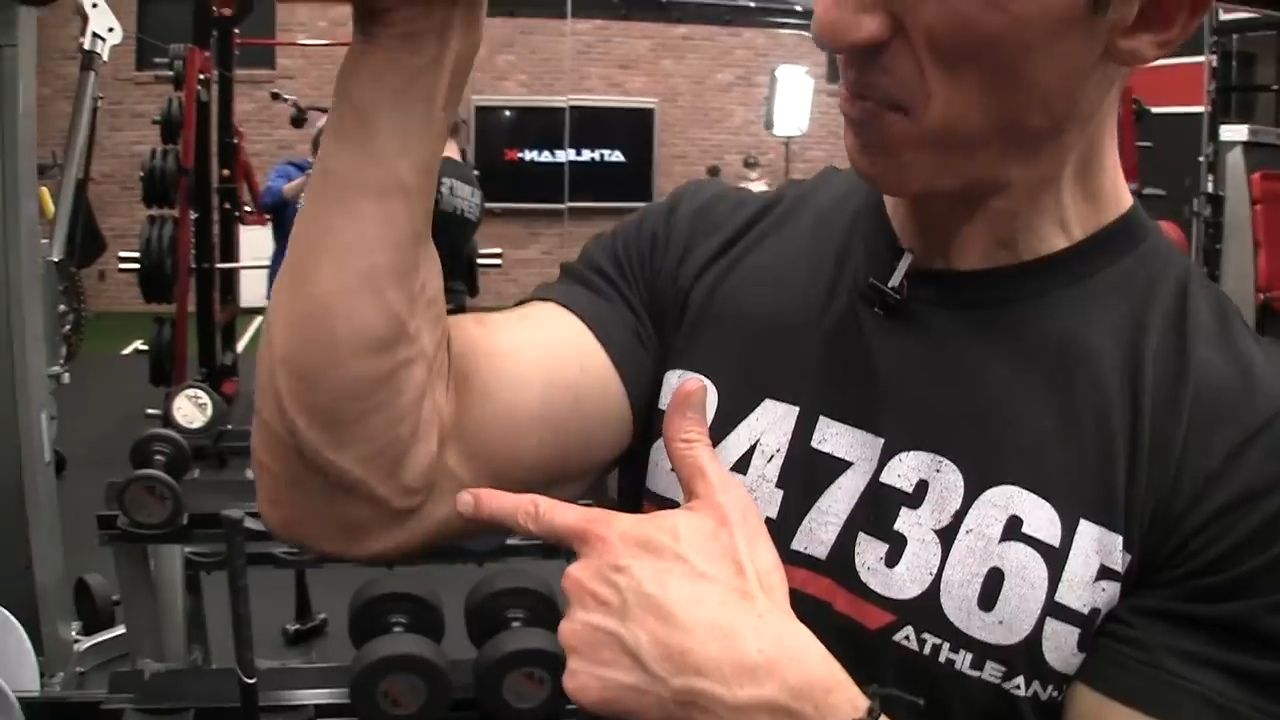
HOW TO DO ROPE PRONATION:
- Attach a rope handle to a pulley and grab one end with your working hand.
- Bring your elbow up so it’s bent at a 90-degree angle, creating an “L” shape with your upper arm parallel to the floor.
- Your forearm should start in a neutral position, palm facing in toward the cable stack.
- From here, keep your upper arm locked in place and rotate your wrist so that your palm turns away from the cable machine. Think of turning a doorknob or pouring out a cup of water.
- Pause briefly at the end of the twist to feel the contraction through the top of your forearm, then slowly reverse the motion back to neutral.
WHAT MAKES IT EFFECTIVE: The Rope Pronation directly targets the pronator muscles, which is a muscle group that helps out with every curl, press, and pull. Strengthening them improves wrist rotation control and protects the elbow joint during heavy biceps and triceps work.
BICEP CABLE WORKOUTS: COMMON MISTAKES
Most lifters turn great cable bicep exercises into shoulder-dominant or momentum-driven movements without realizing it.
When you lose control of the path of the cable handle, bar, or rope, you lose tension, which means you lose growth.
The goal isn’t to move the stack. It’s to master the resistance curve, build stability, and let the biceps do their job.
Here’s how to spot and correct the biggest breakdowns that ruin your form and limit your results.
SWINGING THE WEIGHT
This is the classic “ego lift.” You see it every day. Someone loads up the Cable Curl bar, leans back, and heaves the handles with their hips, shoulders, and even lower back doing half the work.
Sure, the bar moves, but the biceps barely fire. Every time you swing, you’re turning an isolation exercise into a full-body momentum contest.
Instead, plant your feet and lock your body down. Engage your core muscles and brace your deep core, as if you were setting up for Mountain Climbers or Russian Twists.
Keep your torso completely still and move only at the elbows. The less you move, the more your biceps have to stabilize and contract. That’s the kind of tension that builds real muscle, not momentum.
ELBOWS TRAVELING FORWARD
Letting your elbows drift forward during curls shortens the lever arm and takes the biceps out of their strongest position.
You lose range, tension, and that tight stretch that makes curls effective in the first place. It’s a small movement, but it makes a huge difference in what muscle is doing the work.
The fix is to keep your upper arms locked in one place almost like they’re braced against a preacher bench.
If you were performing this on a Preacher Curl bench or Preacher Curl machine, your elbows wouldn’t move so it’s important to replicate that same stability here.
Keep your elbows just slightly behind your torso and let the biceps control every inch of motion. You’ll feel a deeper contraction and a stronger stretch immediately.
INCORRECT CABLE HEIGHT
Setting the pulley too high or too low completely changes the resistance profile of the exercise.
Too low, and you lose tension at the top. Too high, and the cable pulls you out of alignment, forcing your shoulders to take over.
Think of cable height as the steering wheel of the movement. It determines where the resistance hits and how effectively your biceps can contract.
Match the setup to the purpose.
Use a low pulley for Traditional Standing Curls, a mid-level height for Drag Curls, and a high pulley for overhead variations.
OVER-GRIPPING THE HANDLE
Death-gripping the handle is one of the fastest ways to turn a biceps exercise into a forearm workout.
When you squeeze the Cable Curl bar like you’re trying to crush it, your grip and wrist flexors take over, leaving the biceps to play catch-up.
You’ll feel the forearms burn long before the target muscle even starts to fatigue.
Loosen up. Maintain control but keep your fingers relaxed enough that the tension stays in the biceps. Focus on pulling through your fingertips rather than your palms.
This lightens the load on the forearms and lets the biceps handle the work.
Think of it like you’re performing Chin Ups. If you squeeze the bar too hard, your arms lock up before your back can even engage.
SKIPPING ECCENTRIC CONTROL
Most lifters nail the curl on the way up, then let gravity take over on the way down. This is the exact opposite of what you want.
The eccentric, or lowering phase, is where most of the muscular damage and growth stimulus happen. Letting the cable yank your arms straight means you’ve just thrown away half the rep.
The key is to lower the handle slowly and deliberately. I’d say you should aim for two to three seconds from top to bottom.
PROGRAMMING AND PROGRESSION
Programming with cables is about strategy, not just effort. The right setup lets you adjust tension like a dial. You can hit the short head one day, the long head the next, or both in the same workout.
You can manipulate training volume, tweak frequency, and keep the muscle under stress longer without destroying your joints.
Think of it this way: dumbbells build raw strength while cables build control and staying power. Combine both, and you’re training like an athlete.
Here are some tips for how to program cable bicep exercises into your workouts and how to progress them once you’ve plateaued.
HYPERTROPHY
If your goal is muscle growth, aim for 3 to 4 sets of 10 to 12 reps per exercise.
Control every inch of the movement and focus on a full stretch at the bottom before contracting hard at the top.
Tempo matters. Think of the cable as a tension meter. The longer your biceps stay loaded, the greater the hypertrophic signal.
Between sets, take note of your breathing and recovery. If you’re wearing a heart rate monitor, you should see your heart rate rise, then return to baseline before your next set.
That’s a good indicator that your training tools are supporting your performance, not draining it.
STRENGTH
To build real strength, I’d recommend dropping your reps and raising the resistance, aiming for 3 to 5 sets of 6 to 8 reps.
Every rep should feel deliberate and controlled, not explosive and sloppy. This is where the cable machine shines. The tension never disappears, even when the weight isn’t moving.
Slow the eccentric (lowering) phase to three or four seconds per rep. That’s where your biceps learn to stabilize the joint and handle load under stretch.
Most lifters rush through this part but if you want strength that sticks, you have to get comfortable fighting the pull of the cable on the way down.
The benefit goes beyond the muscle itself. Controlled eccentrics build connective tissue resilience, improving tendon integrity around the elbow and shoulder.
That means fewer overuse injuries, stronger joint stability, and better carryover to heavier compound lifts.
WORKOUT PLACEMENT
Where your bicep work fits into the bigger picture depends on your training split.
If you’re hitting biceps on back day, your compound movements like Barbell Rows, Pull-Ups, or Lat Pulldowns should always come first.
Those lifts already hammer the biceps as secondary movers, so by the time you get to isolation work, the muscles are primed and partially fatigued.
That’s the perfect time to move into focused cable work where you can maximize contraction without the distraction of heavy compound strain.
If you’re dedicating a full arm day, flip the script.
Start with your heavier, compound-style bicep movements while your strength, coordination, and grip are fresh. Use this phase to push heavier loads with strict form and controlled tempo.
Then, transition into more isolation and endurance-based work to refine control, tension, and muscle detail.
TRAINING FREQUENCY
Hit your biceps two to three times per week, depending on your overall split.
You can dedicate one full arm day or pair biceps with your back workouts, where they’re already working indirectly through Barbell Rows and Lat Pulldowns.
The trick is finding the sweet spot between stimulus and recovery. You want enough training frequency to reinforce growth signals, but not so much that you burn out the tissue before it can rebuild.
Remember, the biceps are a small muscle group that assists in nearly every pulling motion you do. Every time you grab a bar, handle, or cable, they’re already getting partial work.
That means recovery isn’t just about giving them a day off. It’s about managing training volume intelligently. If you increase frequency, pull back slightly on total sets or intensity to balance the load.
PROGRESSION TIPS
Progression on cables is about training smarter, not sloppier. The biceps respond best to consistent tension and incremental challenge, and cables give you dozens of ways to create that without wrecking your joints.
Start with the basics: track your load, tempo, and total reps every session.
Once you can hit the top end of your rep range with clean form, add a small increase in resistance. Even one plate makes a difference.
If you’re already near your limit, don’t force the weight up. Instead, increase time under tension by slowing the eccentric or adding isometric pauses at the midpoint or peak of the curl. Those extra seconds under load do more for hypertrophy than a sloppy rep ever will.
Next, manipulate angles and grips every 4 to 6 weeks.
Lower the pulley to bias the short head, raise it for the long head, or rotate your grip from underhand to neutral for added variety. Small tweaks like these hit the muscle from new directions without overhauling your whole program.
You can also progress by shortening rest periods slightly while keeping total work the same or add an extra set at the end of your session for volume overload.
The goal is gradual, measurable change. Each week, something should improve such as weight, reps, control, or contraction quality.
The cable stack doesn’t care how strong you think you are. It only rewards control.
Every rep reveals what you can actually stabilize, not what you can throw around.
The more discipline you bring to the movement, the more your biceps respond in size, strength, and balance.
Check out our complete line of ATHLEAN-RX Supplements and find the best training program for you based on your fitness level and goals.

- Cable bicep exercises maintain consistent resistance through the entire range of motion, forcing the muscle to stay active where free weights go slack. This continuous tension builds stronger contractions, steadier control, and a fuller stimulus for growth.
- Here are some of the best cable bicep workouts you can add to your routine:
- Cable Curl: The Cable Curl delivers uniform resistance through the lift, keeping the biceps loaded from full extension to peak contraction without losing tension.
- Cable Flex Curls: The flex curl ties shoulder and elbow flexion together, training both functions of the biceps in one high-tension movement.
- Cable Stretch Drag Curls: This variation lengthens the biceps under load, creating a deep stretch that targets fibers most lifters never reach with free weights.
- King Kong Curls: Alternating arms under constant cable tension builds unilateral control and continuous workload, forcing the biceps to stabilize and contract without rest.
- Mentzer Pulldowns: By pulling with the hands instead of the lats, this underhand pulldown isolates the biceps through a heavy, vertical resistance path that amplifies total fiber recruitment.
BICEP CABLE WORKOUTS FAQ
Training your biceps on cables comes down to controlling direction, not just weight.
Each exercise on the stack challenges the muscle differently. The Cable Curl builds foundational strength and control, the Cable Flex Curl brings in shoulder flexion for a complete contraction, and the Cable Stretch Drag Curl stretches the muscle under load for deep fiber recruitment.
Add King Kong Curls to train alternating control under constant resistance, and finish with Mentzer Pulldowns for a heavier, vertical challenge that overloads the biceps without relying on momentum.
Keep your posture locked in, brace your pelvic floor muscles, and maintain steady body awareness so the biceps stay in charge instead of your shoulders or hips.
Absolutely, and each of these movements proves why. The Cable Curl and Cable Flex Curl use directional resistance to keep the biceps engaged through the entire range of motion, while the Cable Stretch Drag Curl targets the long head in its most lengthened, growth-prone position.
King Kong Curls extend time under tension by alternating arms, and Mentzer Pulldowns load the biceps through a powerful pulling pattern that most people never isolate properly.
Together, they train the biceps to generate strength, control, and stability across multiple planes all while engaging the core and pelvic floor to anchor your body against the cable’s pull.
The best way to build biceps with cables is to combine movements that cover every part of the contraction curve.
Start your workout with Mentzer Pulldowns or Cable Curls to load the muscle heavily while it’s fresh.
Move next to Cable Flex Curls to train both elbow and shoulder flexion, which is a rare combination that fully shortens the biceps.
Then use Cable Stretch Drag Curls to attack the long head at full length, followed by King Kong Curls to finish with alternating control and maximum metabolic fatigue.
Keep your stance solid and your pelvic floor muscles braced throughout because cables don’t forgive instability, and how well you hold tension determines how much muscle you build.
REFERENCES
Jeff Cavaliere M.S.P.T, CSCS
Jeff Cavaliere is a Physical Therapist, Strength Coach and creator of the ATHLEAN-X Training Programs and ATHLEAN-Rx Supplements. He has a Masters in Physical Therapy (MSPT) and has worked as Head Physical Therapist for the New York Mets, as well as training many elite professional athletes in Major League Baseball, NFL, MMA and professional wrestling. His programs produce “next level” achievements in muscle size, strength and performance for professional athletes and anyone looking to build a muscular athletic physique.