




PLANTAR FASCIITIS EXERCISES
Of all the chronic tendonitis ailments or sports injuries we can get, one that tends to keep coming back just as intense as before is plantar fasciitis
You know why?
Because we treat the symptoms and not the cause! I’m about to show you what’s really causing your heel pain so you can finally fix it once and for all.
I urge you to read this even if you don’t have heel pain.
Why?
There are some great tips to prevent plantar fasciitis here, and you can share this info with someone you know who deals with this painful recurring problem.
If you have plantar fasciitis you know it…
Thanks to that sharp, knife-like heel pain!
Especially when you are getting out of bed in the morning, you take that first step, and it feels like someone is ripping the bottom of your foot apart.
The plantar fascia has the main function of supporting your arch in standing. It runs from the heel distally toward the tendon sheaths of the toes, spanning the entire arch of the foot.
The reason the symptoms are particularly worse in the morning is that the plantar fascia has had a chance to shorten and tighten up overnight with your foot remaining in a flexed position from the covers pulling your ankle down.
However, the foot pain is often felt throughout the day and prevents those that suffer from it from walking, running or competing normally.
Let’s take a look at what the true cause of plantar fasciitis is, why treatment for plantar fasciitis pain often doesn’t work, and more importantly, what you can do to fix this!
WHY TYPICAL PLANTAR FASCIITIS TREATMENT DOESN’T WORK
People will often seek out plantar fasciitis treatment, but they’re left with no resolution or worse pain over time.
With rest they may feel an improvement, but then once they start using the foot again, the pain returns quickly.
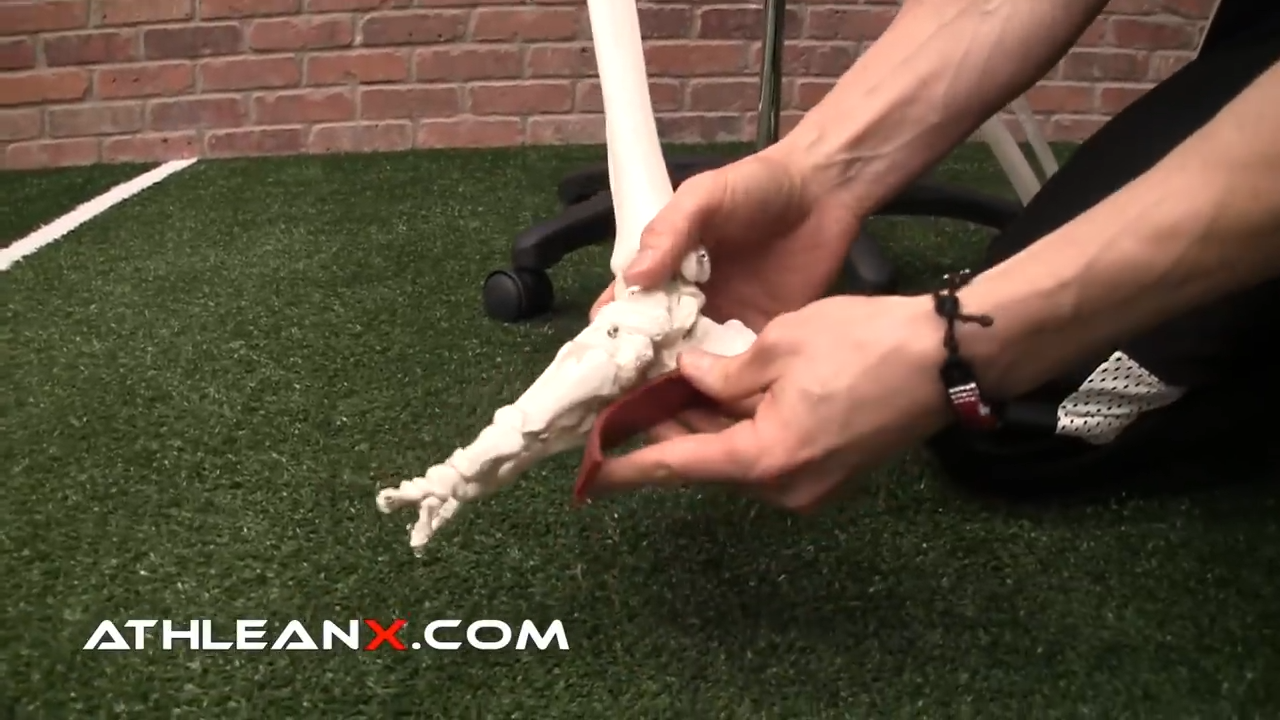
You see, in people with plantar fasciitis, the plantar fascia (represented by the band below) is absorbing stress that it is not meant to absorb due to dysfunction in some other part of the body. The outcome is pain and inflammation in the plantar fascia, but this tendon itself it is not the root of the problem!

That’s why all the plantar fasciitis home treatment that centers on ultrasound, massaging with a rolling pin, tennis ball or frozen water bottle, or stretching the plantar fascia itself often doesn’t solve the problem long term. The toe stretch and towel stretches also tend to only provide short term relief.
This is because you are simply attacking the symptom and not the cause. So, let’s get to the cause!
The plantar fascia is supposed to provide good support for the arch of your foot. What it’s not designed to do is absorb ALL of the force for propulsion when we move our body.
Unfortunately, if we have issues with the mechanics of our foot and ankle, knee, hip or back, we ARE asking it to receive the force from propulsion, and that is where the issues begin.
We have mobility in the heel that allows it to move inward in an inverted fashion or outward in an everted fashion. When the heel moves outward, it’s associated with the ability of the midfoot to flexibly adapt to the surface that it’s on by becoming looser.
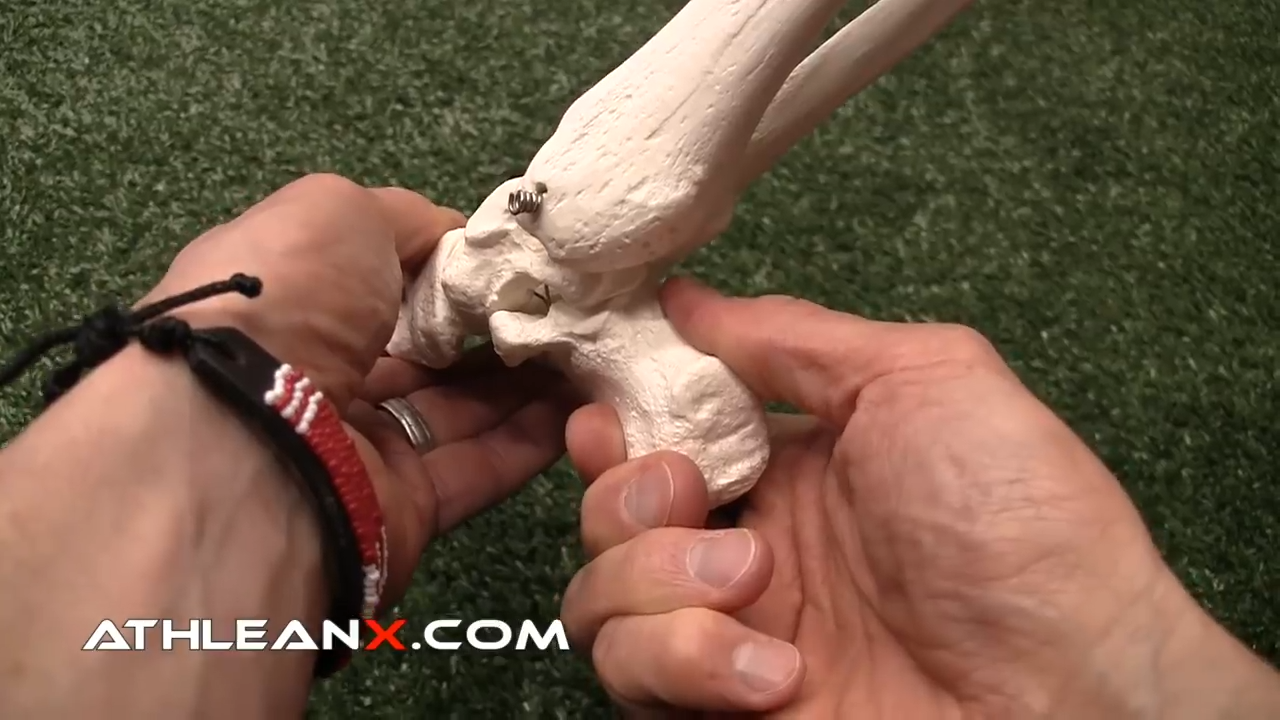
If I move the heel out in an everted manner, the foot pronates and you can see that all the joints in the mid foot are loose and mobile, and I can twist and turn, which is exactly what we want when our foot hits the ground. This allows the foot to absorb some of the force, so you don’t get too much going into the knee, hip or low back.

However, when we push off the foot to propel our body forward, we want the foot to remain more rigid, like a lever. In this case, an inverted heel is ideal. If the heel remains everted with a loose midfoot, the foot becomes unstable when you try to press forward.
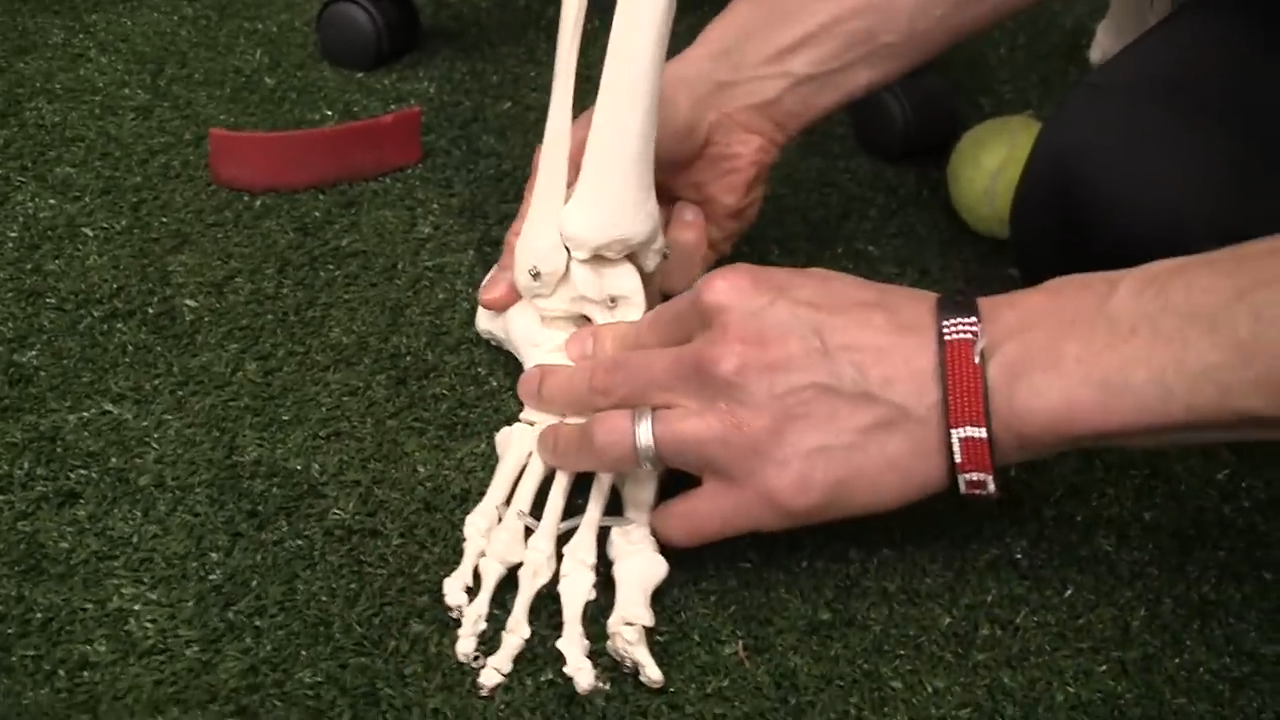
Not only is this not productive to propelling forward with force, it results in a huge amount of stress being shifted to the plantar fascia. Here we are requiring it to do something it’s not equipped to do.
What causes this eversion of the heel during push off?
One of most common causes of an everted heel during push off is a tight calf muscle. It creates a timing issue in which the foot remains loose and force is absorbed by the plantar fascia. This is because we need dorsiflexion (bending of the ankle upward) at the moment of push off.
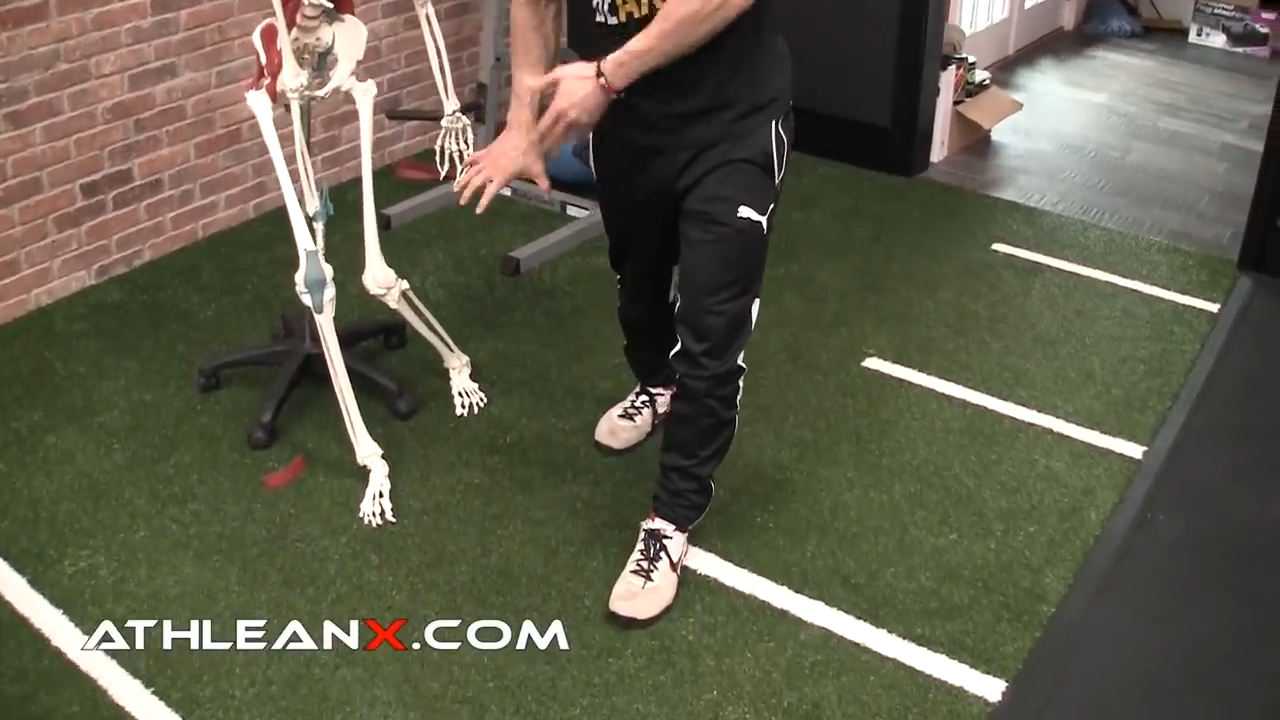
If the calves are too tight, we can’t get the dorsiflexion we need in the ankles to create that inversion of the heel that we need. Instead, the heel kicks outward in eversion which is exactly the opposite of what we want.
Imagine the effect of propelling off a loose, floppy foot for thousands and thousands of steps!
Needless to say, this creates a lot of inflammation and strain in the plantar fascia tendon. Plantar fasciitis, and eventually the formation of heel spurs, occurs because of all that traction stress.
Spending time trying to stretch your foot or your plantar fascia or to massage it may provide short term relief, but it is not the root of the problem. That’s why typical stretching exercises and foot exercises for plantar fasciitis just don’t work.
PLANTAR FASCIITIS EXERCISES FOR TIGHT CALVES
We all know some of the typical calf stretches, right? The problem is that they aren’t helpful for plantar fasciitis.
For example, how about hanging your heels off the back of a staircase to stretch the calves?
That won’t do it because you’re not mimicking the stress that you’re under when you’re at the moment of push off in your gait.
How about a typical calf stretch against the wall?
The usual way of doing this stretch overlooks the position of the heel. I mentioned that the problem with our gait is that the heel is kicked outward into eversion. What we need is for it to be inverted so we get that rigid lever we can propel from.
The good news is that we can modify this to turn it into one of the best exercises for plantar fasciitis.
In this stretch, we can turn the heel in inverted position by driving the leg across our body. You should feel a stretch in your calf in both the back and the side.
CALF WALL STRETCH DRIVING LEG ACROSS BODY
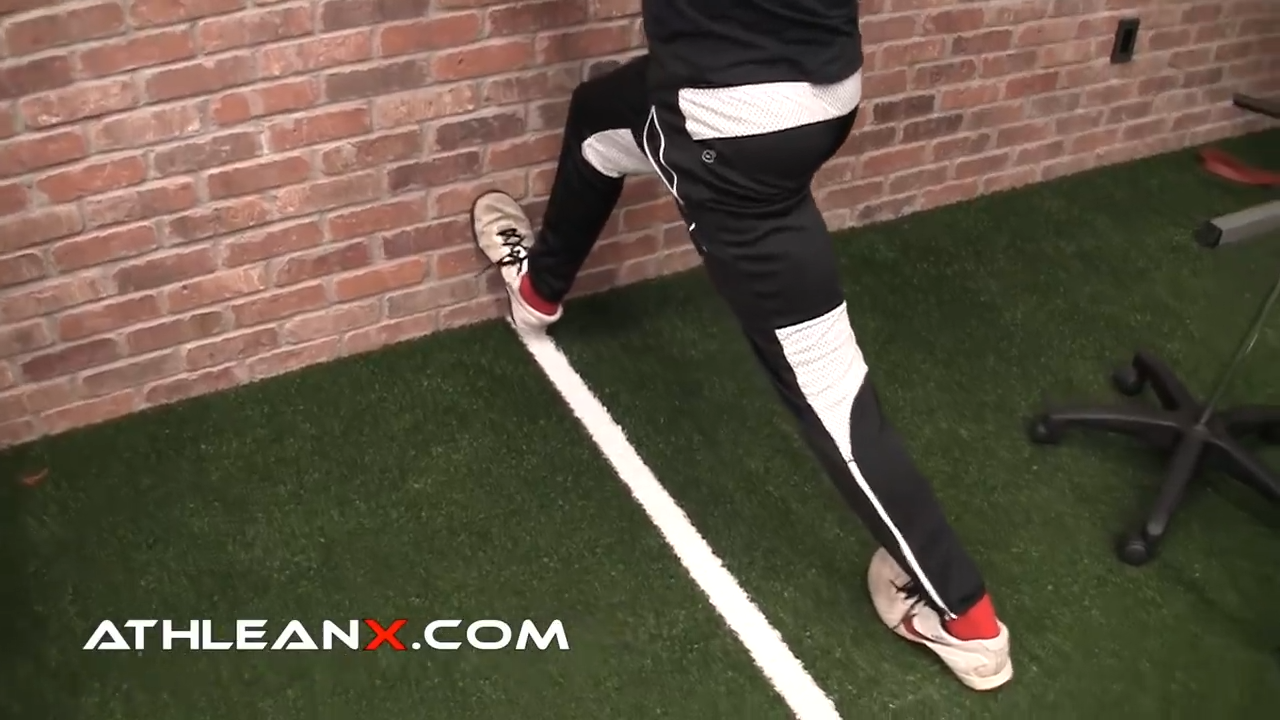
Exercise Notes: Starting position is standing near a wall with one leg straight behind you, the other leg crossing over your body past the opposite straight leg with the ball of the foot positioned against the wall with front knee bent. Hold this position for at least 30 seconds, backing off if you need to and repeat three times.
We can also make this stretch more dynamic by reaching across and even turning in all three directions by rotating back. Do make sure the heel is in contact with the ground to stretch the calf out.
DYNAMIC CALF WALL STRETCH
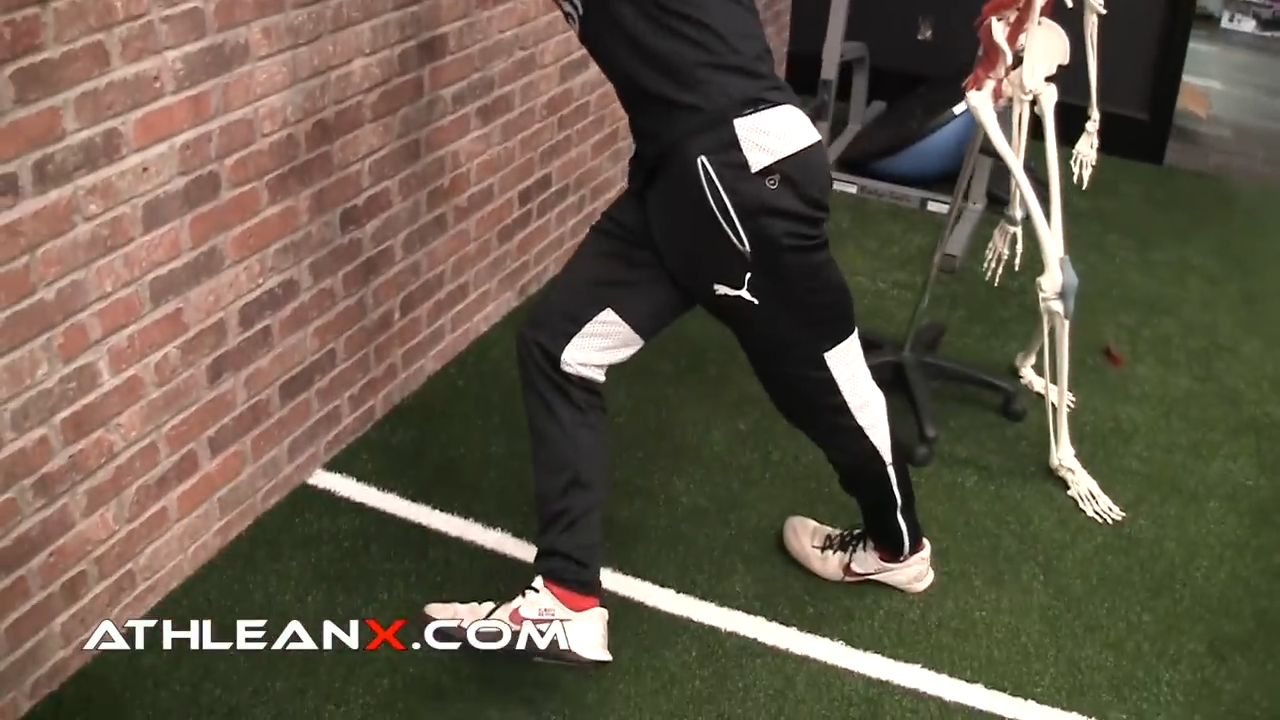
Exercise Notes: Starting position is standing near a wall with one leg straight behind you. Bring the other leg forward and across the body until you feel a calf stretch. Repeat this dynamic movement.
Once the calf is stretched in this way, the heel will be become that lever we’re looking for without stressing the plantar fascia. Perform these plantar fasciitis stretches about 3 to 5 minutes every day, even multiple times per day.
Over the course of a few weeks, by taking the stress off the plantar fascia the inflammation will decrease to help relieve pain, and your problem will be solved once and for all.
WHAT IF YOUR CALVES ARE LOOSE?
What if you check your calf flexibility on the side your foot pain is coming from, and it is NOT tight?
Then I’ve got a different cause and a different solution for you!
It can actually be a problem on the OPPOSITE side of your body.
This could be caused by either a weak gluteus medius, or a lack of thoracic extension or rotation on the opposite side of where your foot pain is located.
When the glute medius is weak on the opposite hip you get a dropping of the hip on that side. This forces the opposite foot into pronation and creates a loose unstable foot once again.
So what strengthening exercises can we do for that opposite side that glute medius? Here’s one of my favorites.
GLUTEus medius WALL EXERCISE
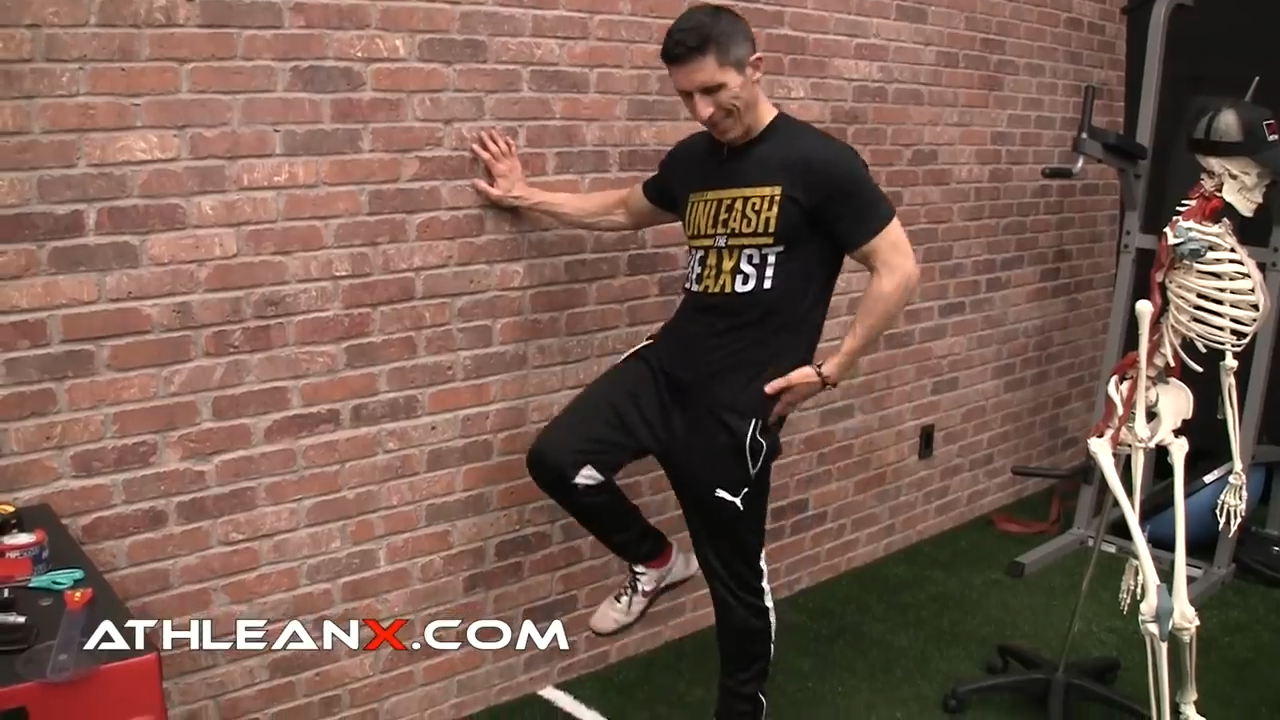
Exercise Notes: Stand sideways against a wall on the side you want to strengthen. Let the opposite hip drop out to the side and drive the wall-side hip toward the wall, squeezing the glute.
Now one last thing…
Lack of lower back mobility could also impact your feet!
You see, when you walk, your torso is supposed to rotate slightly from side to side with each step we take. If we lack flexibility in the low back and that rotation doesn’t occur properly, it will cause a loose unstable foot as well.
Both thoracic extension and rotation are important here, so let’s look at 2 stretches to help with those.
IMG Spinal arching exercise
SPINAL ARCHING EXERCISE
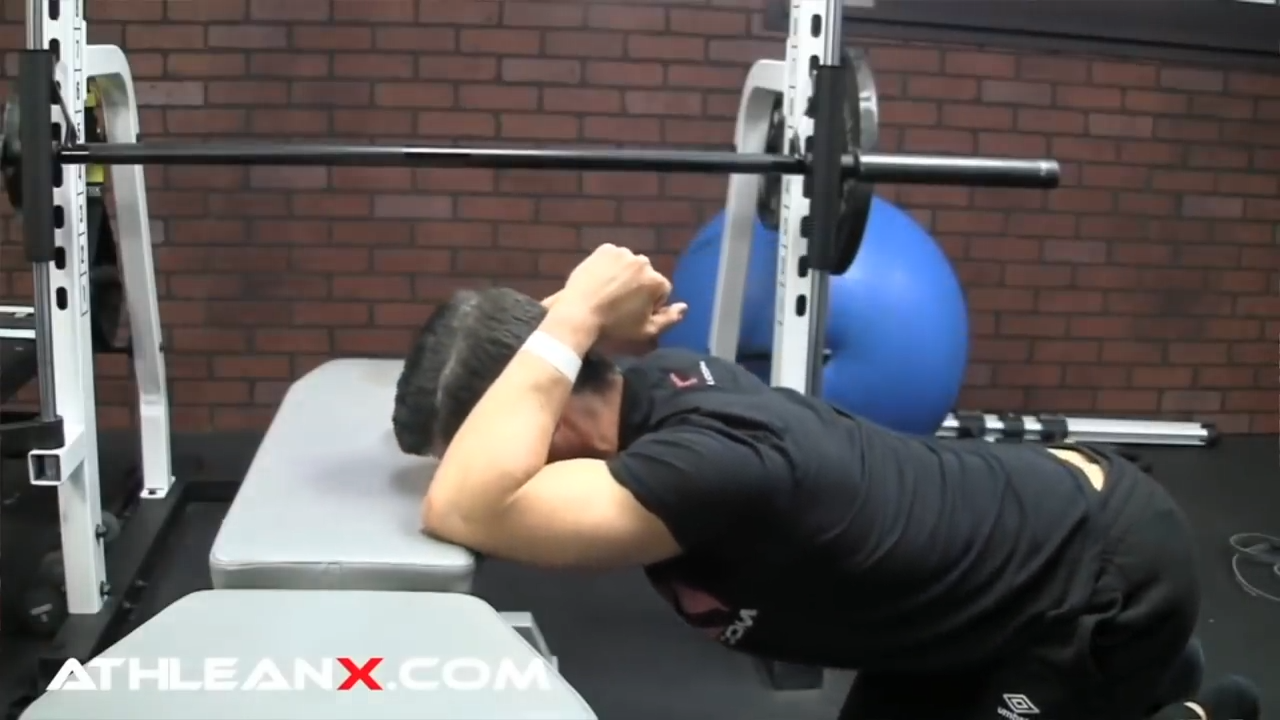
Exercise Notes: With elbows on a bench as shown, slowly perform an up and down cat cow movement, paying attention to the mobility of the thoracic spine.
SPINAL ROTATION EXERCISE

Exercise Notes: Lie facedown, hands overhead holding a light bar. Rotate slowly at the low back to feel a light stretch in the rotating side.
These exercises will allow you to maintain good mobility through your spine, so it doesn’t cause a cascade of issues moving toward your ankle, and into your plantar fascia.
If plantar fasciitis is plaguing you, the first thing you need to do is figure out what is causing your pain. Assess your calf tightness, glute strength and lower back mobility, and employ the stretching and strengthening exercises I’ve given you above. Give it several weeks to months of solid effort, and you’ll start to see improvement!
If you’re looking for a training program that’s built on science with the expertise of a physical therapy professional, you’ve come to the right place. Let me help get you as ripped and strong as you’ve ever been while tackling and preventing injury! Check out our ATHLEAN-X programs to see which one is the best fit for your goals and fitness level.

- Plantar fasciitis is a sharp pain in your heel and foot arch that occurs when the plantar fascia tendon becomes inflamed. You know you have plantar fasciitis when you notice the knife-like pain as soon as you step out of bed in the morning.
- The main function of the plantar fascia is to support your foot arch in standing, NOT to withstand large amounts of force. Often the treatment of plantar fasciitis focuses on stretching or massaging the bottom of the foot, however the plantar fascia itself isn’t the root of the problem! For this reason, many exercises and techniques used to treat plantar fasciitis aren’t helpful in the long term.
- One of the most common reasons for plantar fasciitis is a tight calf muscle, which causes eversion (outward movement) of the heel at push off rather than inversion (inward movement). When the heel is everted, the joints of the foot remain soft and flexible, which is what we want when our foot hits the ground. However, when we push off an inverted heel is preferable because the bones of the foot become rigid like a lever to help us push.
- Typical calf stretches don’t mimic the required action of the foot and ankle when we’re in movement walking or running. I’ve given you one of the best plantar fasciitis treatment exercises for stretching out the calves that does mimic the desired push off movement with heel inversion (rather than eversion).
- If tight calves aren’t an issue for you, your plantar fasciitis is likely being caused by a weak gluteus medius on the opposite side from the foot experiencing pain, or problems with lower back mobility. In this case the best treatment for plantar fasciitis is the glute strengthening exercise and the back mobility exercises that I’ve given you.

Jeff Cavaliere M.S.P.T, CSCS
Jeff Cavaliere is a Physical Therapist, Strength Coach and creator of the ATHLEAN-X Training Programs and ATHLEAN-Rx Supplements. He has a Masters in Physical Therapy (MSPT) and has worked as Head Physical Therapist for the New York Mets, as well as training many elite professional athletes in Major League Baseball, NFL, MMA and professional wrestling. His programs produce “next level” achievements in muscle size, strength and performance for professional athletes and anyone looking to build a muscular athletic physique.