



WHy do stANDING ABS WORKOUTS
If you find yourself hitting your core on the ground more than on your feet, we need to talk.
Let me be clear that there’s nothing wrong with doing core exercises on the floor. But if you’re only doing floor-based core work, it might explain why your core strength isn’t showing up where you need it most.
Almost every lift, sprint, carry, and athletic movement you perform happens in a standing position.
Think about it.
The abs aren’t bending the spine over and over when you’re doing a Barbell Back Squat. They’re maintaining alignment while force is produced through the arms and legs. That upright demand is what keeps your posture intact.
Today, I want to help you break out of the habit of floor-based ab training.
I’m going to discuss the muscles involved, why standing exercises transfer better to real lifts and athletic movement, and the most effective standing abs workout.

STANDING ABS WORKOUT: MUSCLES WORKED
A standing abs workout doesn’t isolate one muscle at a time. It tests the core muscles as a coordinated system.
When you’re upright, gravity, load, and limb movement require the abdominal muscles to stabilize first and assist second.
That distinction is what separates standing ab exercises from floor-based core exercises and why their carryover to real lifting is so strong.
Below is a clear breakdown of where each muscle is, what it does, and how it contributes during standing core exercises.
RECTUS ABDOMINIS
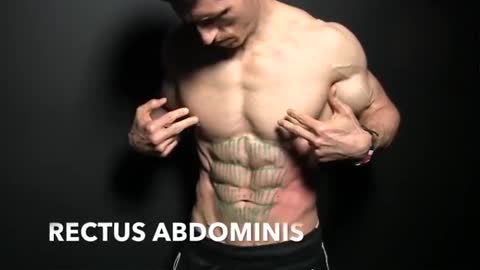
Everyone knows about the rectus abdominis because it’s the muscle that’s always associated with having six-pack abs.
Also, most people tend to think of the rectus abdominis as a spinal-flexion muscle. That’s not wrong but it’s not the only thing it does.
This muscle runs from the ribcage down to the pelvis, and while it can bend the spine, one of its most important jobs is preventing excessive extension. In other words, it is responsible for stopping your lower back from arching when load is overhead or out in front of you.
That’s exactly how it functions during standing ab exercises. When you’re performing a Suitcase Carry, pressing a weight overhead with one arm, or resisting the pull from cable machines, the rectus abdominis is working hard to keep your ribcage stacked over your pelvis.
You might not see it moving, but it’s doing exactly what it was designed to do, which is to maintain position while the rest of the body produces force.
EXTERNAL OBLIQUES
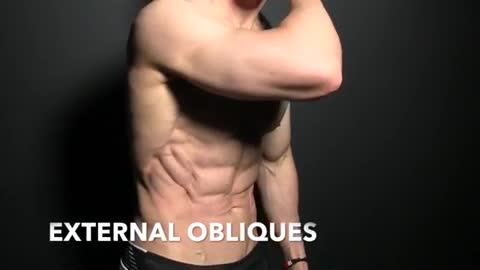
The external obliques sit on the outer layer of the abdominal wall, running diagonally from the ribs down toward the pelvis.
These muscles are heavily involved in producing and resisting rotation, especially when resistance is moving across the body.
In standing ab exercises, the external obliques are activated any time the load pulls you off center.
For example, Single-Arm Presses, Single-Arm Rows, and Rotational Lunges all require the external obliques to control trunk rotation while the limbs move.
If they don’t do their job, the torso twists, posture breaks down, and power leaks before it ever reaches the bar, cable, or dumbbell.
INTERNAL OBLIQUES
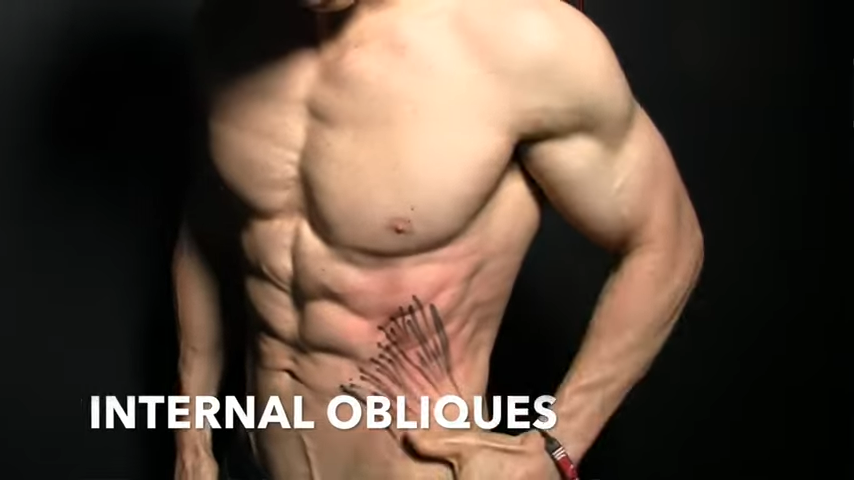
The internal obliques sit beneath the external obliques and run in the opposite fiber direction.
Their role is more about fine control. That means managing rotation, resisting side bending, and assisting with stabilization rather than large visible movement.
During standing core exercises, the internal obliques work closely with the transverse abdominis to lock the trunk in place.
You’ll feel them most during anti-rotation work, offset loading, or slow, controlled movements.
TRANSVERSE ABDOMINIS (TRANSVERSUS ABDOMINIS)
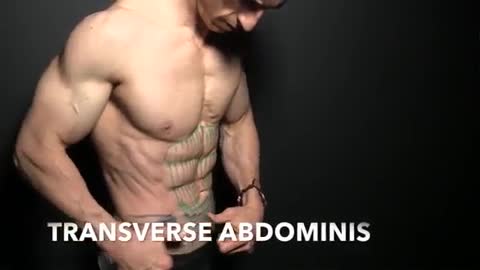
If there’s one muscle that separates an amazing standing abs workout from a sloppy one, it’s the transverse abdominis.
These deep abdominal muscles wrap horizontally around the torso like a corset, and it works closely with the pelvic floor to create internal stability.
Before you move, press, pull, or step, the transverse abdominis typically contributes early to brace the spine.
A classic example is the Pallof Press, a cable-based anti-rotation hold, where the goal isn’t to rotate, but to prevent it. The moment that brace disappears, the upper body shifts, the load takes over, and the exercise turns into something completely different.
In standing ab exercises, the transverse abdominis sets the foundation that allows every other core muscle to do its job. Without it, posture collapses under load, and core strength becomes inconsistent, regardless of how strong the larger abdominal muscles appear.
ERECTOR SPINAE (LOW BACK)
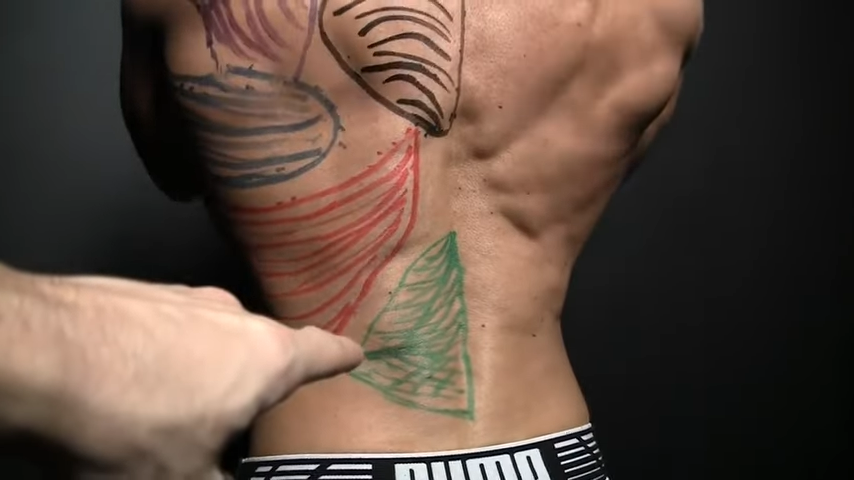
The erector spinae run along the length of the spine and act as the counterbalance to the abdominal muscles. Their job isn’t to move the upper body, but to keep it from folding when load or momentum tries to pull it out of position.
In standing ab exercises, these muscles quietly manage spinal position while the abs handle bracing and control.
You’ll notice their involvement during carries, hinge-based patterns, or anytime weight is held away from the body. The further the load moves from center, the more the erector spinae have to contribute.
When they’re working in sync with the abdominals, posture is controlled and load moves cleanly through the body. When they’re not, the spine absorbs stress it wasn’t meant to handle, and the quality of the movement drops fast.
STANDING VS. SEATED AND LYING AB EXERCISES
Before we go any further, let’s clear something up. Standing ab workouts aren’t “better” than floor-based core exercises. They’re just more transferable.
That difference matters if you care about how your core performs during real lifts, athletic movement, and total-body work.
When you’re upright, the core muscles are there to control what’s acting on the body, not create motion for its own sake.
That shift changes how the core has to function.
Here’s why training your abs on your feet leads to a different and more usable result.
SPORT-SPECIFIC
Most athletic and strength movements don’t take place on the ground.
It doesn’t matter if you’re sprinting, pressing, or changing direction, the core’s primary role is to stabilize the torso while the arms and legs generate force.
Standing core workouts reflect that reality.
In standing exercises like a Curtsy Lunge, Reverse Half Lunge, or Single-Leg Deadlift, the core keeps the upper body controlled while the lower body drives the movement.
The abs aren’t the star of the show, but they’re doing constant background work to keep the movement efficient. That’s exactly how core strength is used in functional fitness and sport.
RESIST UNWANTED MOTION
One of the biggest advantages of standing ab workouts is how well they train what the core is actually supposed to resist: rotation, extension, and side-bending.
Standing abdominal workouts naturally challenge anti-rotation, anti-extension, and anti-lateral flexion without forcing exaggerated motion.
For example, Resistance Band Pallof Presses, Dumbbell Passes, and Single-Arm Overhead Presses demand that the internal and external obliques shut down unwanted movement while the transverse plane is hit from multiple angles.
These anti-movement exercises build real core stability because external load is constantly trying to knock the body out of alignment.
BETTER COORDINATION ACROSS THE BODY
Core strength doesn’t mean much if it doesn’t connect the upper and lower body. Standing ab workouts do this automatically.
When you perform standing exercises that involve the shoulders or hips like Medicine Ball Throws, the core becomes the bridge between them. Effort has to move efficiently from the lower body through the torso and into the arms.
That’s why standing core exercises tend to improve coordination between the abs, gluteus maximus, gluteus medius, and even the rotator cuff muscles without isolating any one area.
This kind of integration is what separates isolated core work from functional strength training.
LESS HIP FLEXOR DOMINANCE
Floor-based ab training often leans heavily on repeated spinal flexion, which can shift too much work onto the hip flexors.
Over time, that pattern surfaces as tight hips, inconsistent muscle engagement, and core exercises that don’t translate well to standing movement.
Standing ab workouts reduce that dependence.
Because the legs are already bearing weight, the hip flexors are less likely to take over. Instead, the abdominal muscles and stabilizing muscles have to work together to control position.
POSTURAL CARRYOVER
One of the most overlooked benefits of standing abdominal workouts is posture.
Upright training makes sure the upper torso and pelvis are aligned under load, which directly improves torso control during both lifting and daily movement.
Over time, this improves posture and control during full-body movements, especially in HIIT workouts where fatigue tends to compromise alignment.
It’s not about standing straighter on purpose. It’s about giving the core no option but to support the position it’s in.
STANDING CORE EXERCISES: ANTI-EXTENSION
Anti-extension is one of the most important functions of the core and one of the most neglected.
It’s simply the ability to stop the lower back from arching when load moves overhead, out in front of the body, or when speed increases. That’s the role your abs are asked to play far more often than bending the spine.
Think about how you train. Overhead pressing, driving into a Sprinter High Knee, or bracing during a lower-body strength training workout all push the spine toward extension.
The core’s job in those moments isn’t to move. It’s to keep the upper torso fixed in place while force is produced elsewhere. When that control is missing, the lower back takes over.
Standing anti-extension exercises train that directly. Whether you’re holding tension through TRX handles, staying upright during battle ropes, or bracing through a total-body workout, the goal is the same: maintain alignment while resisting the urge to over-arch.
Below are my top picks for standing anti-extension exercises that build real, transferable core strength.
FARMER’S CARRY WITH VERTICAL DISPLACEMENT

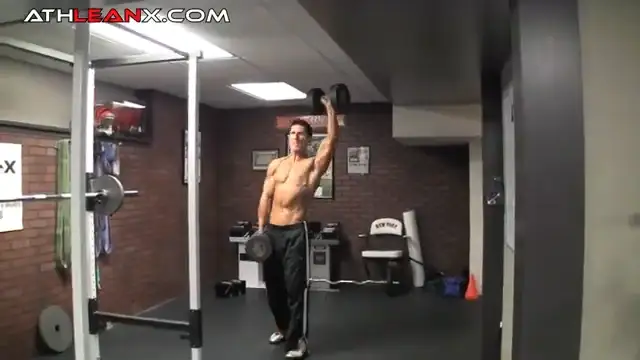
HOW TO DO THE FARMER’S CARRY WITH VERTICAL DISPLACEMENT:
- Select a lighter load to start with. Hold one weight at your side while pressing the opposite weight overhead.
- Stand with a neutral stance, ribs down, and hips set. Lock the overhead arm in line with the shoulder and keep the hanging arm long and active.
- Start walking with deliberate steps. Keep your head, ribs, and pelvis aligned as you move.
- Do not lean or drift. The asymmetrical setup will try to pull you off center and your job is to stay vertical from the first step to the last.
- Walk the prescribed distance or time, then switch sides and repeat.
WHAT MAKES IT EFFECTIVE: This exercise reinforces the exact anti-extension role the core plays in pressing, carrying, and overhead work. With one load overhead, the torso is constantly being pulled toward an arch. The job of the core is to prevent that from happening. The weight at the side adds asymmetry, but you want to keep everything stacked as you walk.
SLINGSHOT KNEE DRIVES
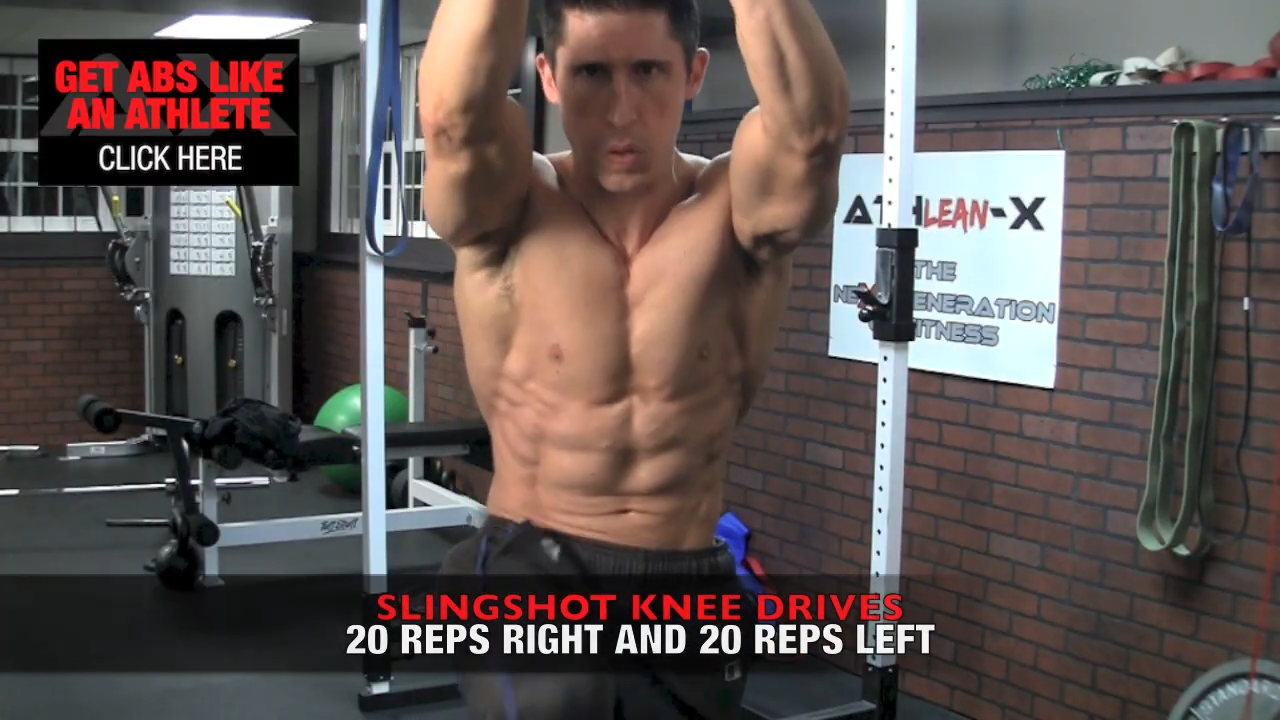
HOW TO DO SLINGSHOT KNEE DRIVES:
- Anchor a resistance band overhead and face away from the attachment point.
- Hold the band with both hands above your head, keeping your arms set and the band under tension.
- Stand tall with your ribs set and hips underneath you. From this position, drive one knee up toward your chest while keeping your torso upright.
- The band will try to pull your upper body backward but do not allow yourself to lean, arch, or hinge to finish the movement.
- Lower the leg with control, reset your posture, and repeat on the same side or alternate legs.
WHAT MAKES IT EFFECTIVE: This exercise supports the core’s role in maintaining alignment during running, knee drive mechanics, and athletic transitions. The overhead band creates a constant pull that wants to flare the ribs as the knee drives up. The core has to prevent that breakdown while the lower body moves dynamically. This makes Slingshot Knee Drives a strong option for training anterior core bracing during movement, especially in situations where speed or rhythm would normally cause posture to slip.
SINGLE-ARM LANDMINE PRESS
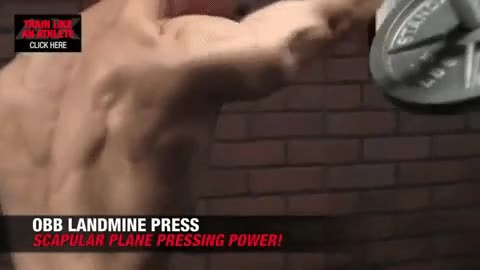
HOW TO DO SINGLE ARM LANDMINE PRESSES:
- Secure one end of a barbell in a landmine attachment, a weight plate, or a wall corner. Load the bar with a weight you can move without leaning back or using momentum.
- Take a hip-width stance and hold the bar with one hand at chest height.
- Set your body angle so it lines up with the bar’s diagonal path: slight hinge at the hips, spine neutral, no rounding.
- Let the free arm hover out to the side for balance. From there, press the bar up and forward along its natural arc.
- Maintain your posture as the bar moves away from you and guide the elbow rather than flaring it.
- Finish with the arm long but not jammed out, shoulder steady. Lower the bar back to the start.
WHAT MAKES IT EFFECTIVE: As the bar travels up and forward, it creates a constant tendency to lean back. The core’s job is to stop that from happening while the upper body produces the press. Because the load is unilateral, even a small shift between the upper torso and hips gets exposed right away. That combination of pressing on one side while remaining tall makes this a great standing option for anterior core work.
DOUBLE-HANDED LANDMINE PRESS
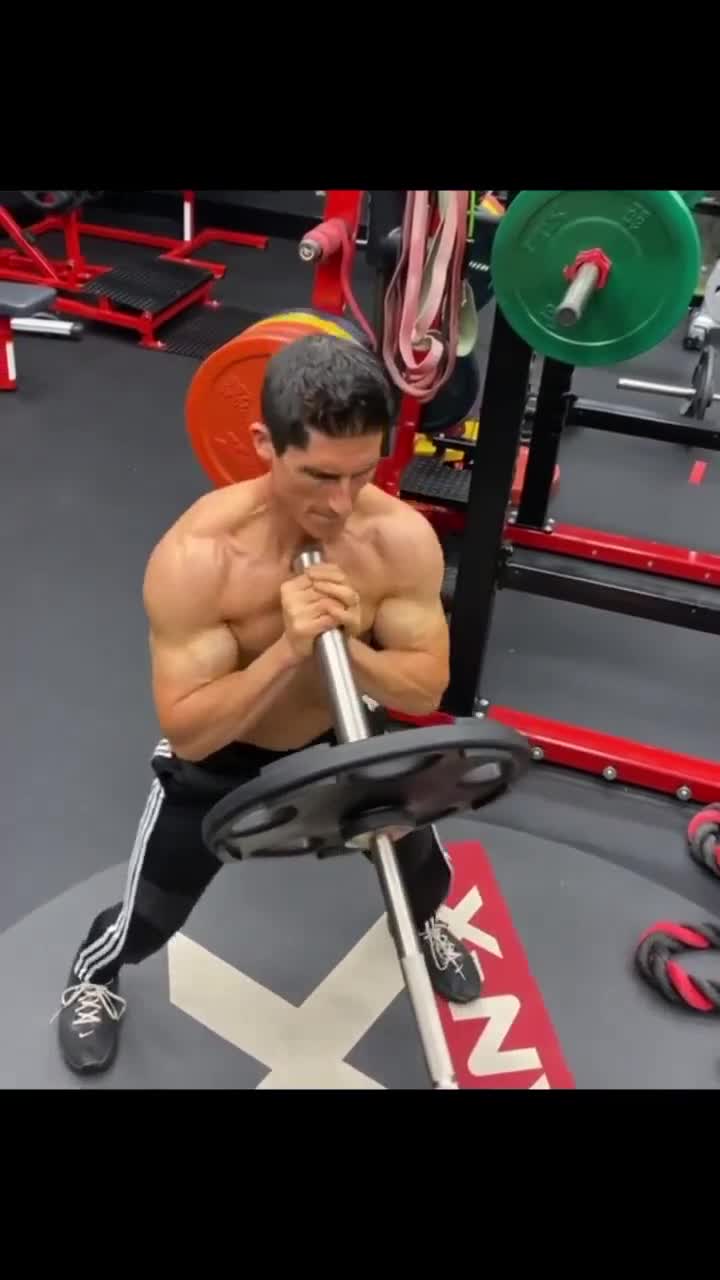
HOW TO DO DOUBLE HANDED LANDMINE PRESSES:
- Stand with your feet about shoulder width and face the bar. Grip the end of the barbell with both hands, fingers overlapped, holding it just below chest height.
- Keep the bar close to your body with the elbows angled slightly in, not flared.
- Set your torso so it lines up with the bar’s path. This means a subtle forward lean from the hips while keeping the spine neutral. You shouldn’t be fighting the angle of the bar or standing straight up underneath it.
- From this position, press the bar up and forward along the landmine’s arc. At the top, your arms should be long but not locked hard.
- Lower the bar back toward the chest with intent. Stay tall, keep the elbows tracking in, and avoid letting the weight pull you out of position on the way down.
WHAT MAKES IT EFFECTIVE: The angled bar path allows heavier loading without the joint stress that comes with vertical pressing. As the bar moves forward, the torso wants to drift backward, which means the core has to be engaged to keep alignment intact. Because both arms share the load, this variation makes it easier to focus on clean pressing mechanics while still challenging the anterior core. It’s a strong option for building pressing strength in a standing position without turning the movement into a lean-back grind.
UPPER CHEST LANDMINE PRESS
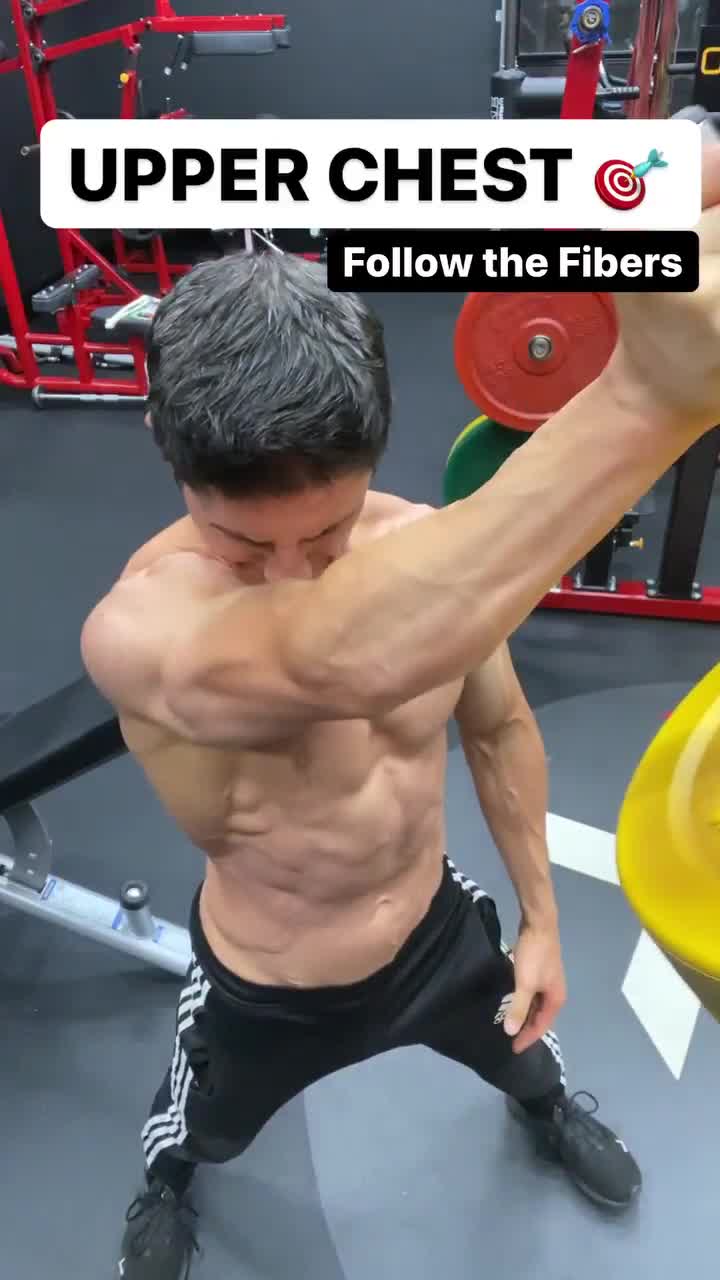
HOW TO DO UPPER CHEST LANDMINE PRESSES:
- Set up nearly perpendicular to the bar so your non-working side faces the landmine. If you’re pressing with the right arm, your left shoulder should be closer to the anchor point.
- Grip the end of the bar with your working hand, palm up, and slightly turned in. Take a staggered stance for stability, keeping your chest tall.
- From the start, press the bar up and across your body along a low-to-high path. The movement should feel closer to an incline fly than a straight press. Let the shoulder move freely but keep the motion smooth and deliberate.
- Finish with your hand reaching about eye level, slightly crossing your midline.
- Pause briefly, then guide the bar back down toward the starting position near your hip, maintaining tension through the top portion of the chest the entire way.
WHAT MAKES IT EFFECTIVE: This variation lines up perfectly with what the upper chest is built to do: raise the arm and bring it inward. The landmine’s angle allows both actions to happen together without forcing the shoulder into an awkward position. By following this diagonal path, you’re able to load the upper chest while keeping the shoulder joint in a strong, natural range, making it a smart option for building size and strength.
STANDING CORE EXERCISES: ANTI-ROTATION
Anti-rotation is what keeps your torso from twisting when the rest of your body is moving.
If that control is missing, it usually shows up fast during presses, rows, carries, or any movement where the load isn’t perfectly centered.
This is why anti-rotation work deserves its own place in a training routine.
In real training, the core isn’t asked to rotate nearly as often as it’s asked to stop rotation. When personal trainers and exercise physiologists program standing anti-rotation drills, it’s because they mirror what happens during lifting and athletics: the arms or legs move, the torso is quiet.
Standing anti-rotation exercises train that relationship directly. You’re upright, off the exercise mat, and learning to control what’s trying to twist you. That makes these movements easy to slot into a dynamic warmup, a full circuit, or even a HIIT session without turning them into isolated core work.
Here are some of my favorite standing anti-rotation ab exercises:
PALLOF PRESS

HOW TO DO THE PALLOF PRESS:
- Set a resistance band or cable at chest height and stand perpendicular to the anchor point. Take a hip-width stance and establish a firm base before the rep starts.
- Hold the handle with both hands centered at your chest. The load should already be pulling you toward the anchor. Your job is to keep yourself locked in.
- From there, extend your arms straight out in front of you at a controlled pace.
- As the handle moves away from your body, resist any turning through the torso or shifting through the hips. Nothing rotates. Nothing drifts.
- Pause briefly at full extension, then guide the handle back to the start just as deliberately.
- Keep the same body position throughout the entire rep. After completing your set, turn around and repeat on the other side.
WHAT MAKES IT EFFECTIVE: The Pallof Press places the midsection under a constant rotational load that has to be shut down rep after rep. As the arms extend, leverage increases. Instead of producing motion, the core is tasked with staying put while the load tries to turn you.
ANTI-ROTATION PRESSOUT
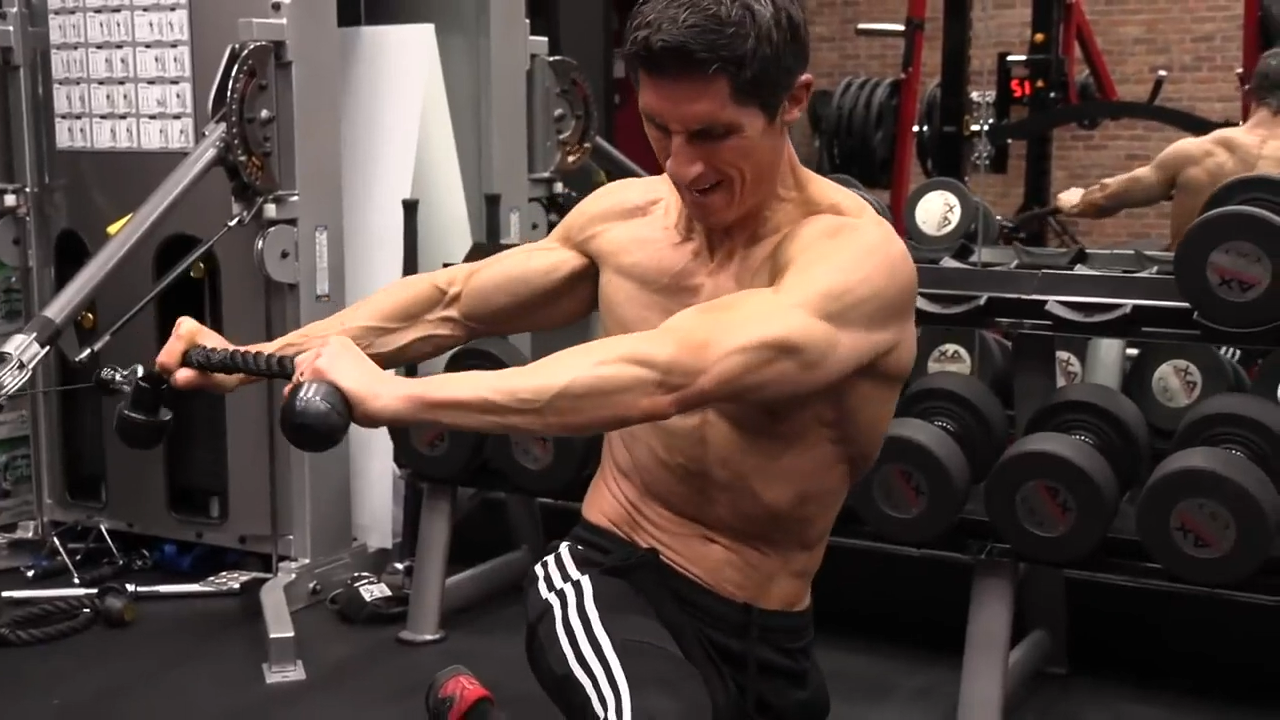
HOW TO DO THE ANTI-ROTATION PRESSOUT:
- Set a cable rope attachment or resistance band at chest height and stand perpendicular to the anchor.
- Grip the handle with both hands at shoulder width and bring it to chest level. Establish your position first, whether that’s half-kneeling or standing.
- Extend your arms straight out in front of you and hold the position. As the handle moves away, the load will try to pull your torso back toward the anchor. Don’t let it do that. The arms are long and the torso is square.
- Pause briefly, then bring the handle back in. Each rep should look identical. After completing your set, turn around and repeat on the opposite side.
WHAT MAKES IT EFFECTIVE: Instead of rotating through the spine, the obliques are tasked with stopping rotation altogether. That mirrors what happens during unilateral presses, offset carries, and athletic movement where uneven loading is unavoidable.
BANDED CAULDRON
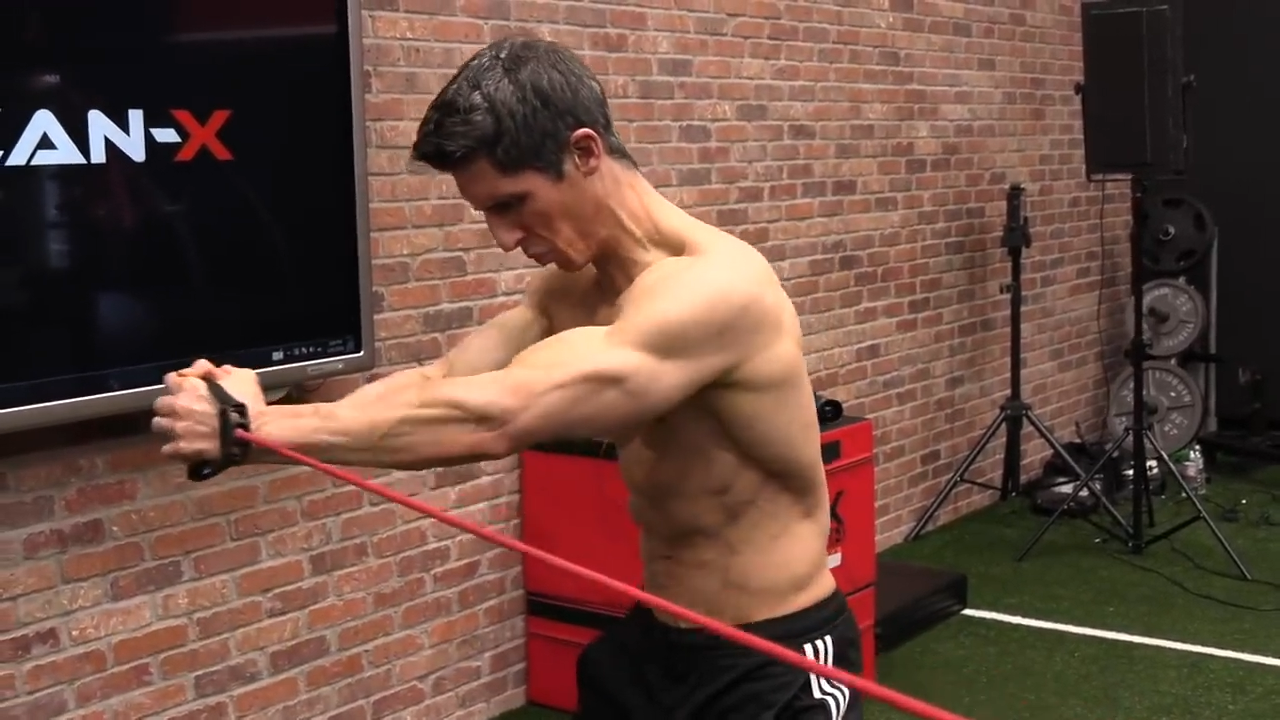
HOW TO DO THE BANDED CAULDRON:
- Anchor a resistance band at chest height and stand sideways to the attachment point.
- Grip the band with both hands and press it straight out in front of you. Establish your position first. Nothing should turn or drift before you start moving.
- With the arms extended, begin drawing small circles in front of your body. The motion comes from the shoulders only. As the circle widens, the band will try harder to pull you back toward the anchor.
- Keep the circles smooth and deliberate. When the set is finished, turn around and repeat on the other side.
WHAT MAKES IT EFFECTIVE: As the arms move farther from the body, leverage increases, and the band’s pull becomes harder to shut down. That’s where the obliques are forced to step in. Unlike static holds, the circular arm path changes the demand throughout the rep.
LANDMINE RAINBOWS
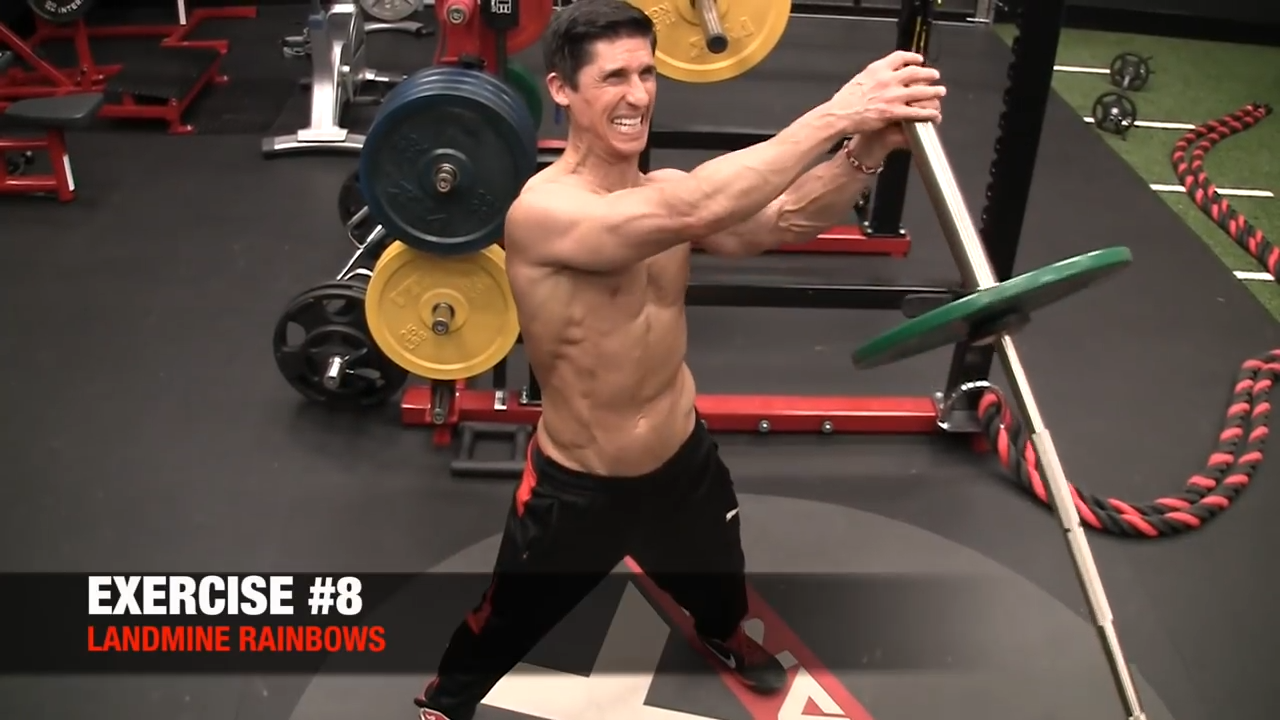
HOW TO DO LANDMINE RAINBOWS:
- Stand facing the landmine with a wider-than-shoulder stance and soft knees. Set your base so your lower body is stable throughout the movement.
- Hold the bar at hip height with one hand. From there, guide the bar upward and across your body in a smooth arc. As it approaches the center of your torso, switch hands without breaking the path.
- Continue the arc down toward the opposite hip, finishing the movement with control. Pause briefly, then reverse the direction, passing the bar back to the original hand as it crosses the midline.
- Move continuously, keeping the arc clean and deliberate from side to side.
WHAT MAKES IT EFFECTIVE: Landmine Rainbows teach the torso to rotate without giving the movement away to the lower back. The changing leverage across the arc needs steady positioning while the shoulders and arms guide the bar. Because the motion travels across the body and switches hands mid-rep, this exercise targets rotational timing, coordination, and positioning in a way static drills can’t.
WALL LOCKS
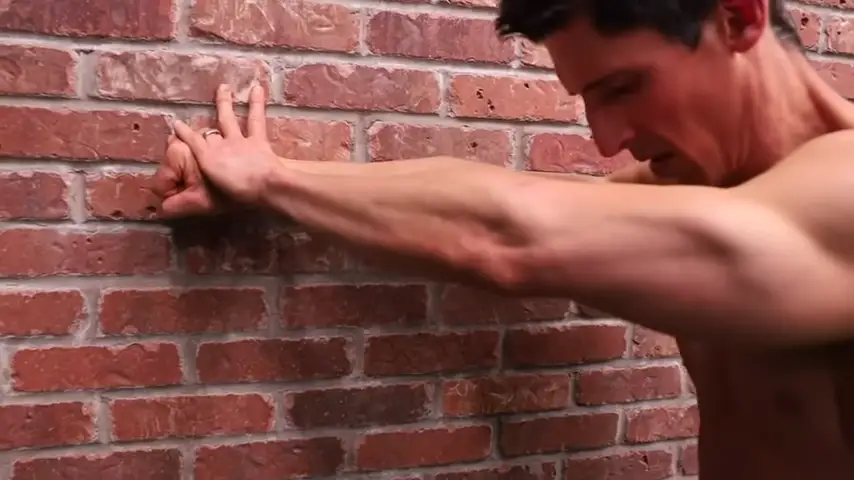
HOW TO DO WALL LOCKS:
- Stand at a slight angle to a wall so one shoulder is closer than the other.
- Place the hand nearest the wall flat against it, then stack your opposite hand on top of that wrist to lock your upper body in place.
- From there, face straight ahead. Your stance is fixed and your arms don’t move. The only thing trying to happen is a turn toward the wall but fight against this.
- Hold the position for the prescribed time, then turn around and repeat on the other side.
WHAT MAKES IT EFFECTIVE: The wall removes momentum and limits leverage, which means the torso has nowhere to hide. The sideways pull creates a constant urge to turn, and the only way to shut that down is by keeping the trunk in place.
STANDING CORE EXERCISES: CONTROLLED ROTATION
Rotation is present everywhere in training, but it’s rarely trained well. Most lifters either avoid it entirely or chase speed without regard for how the torso is moving.
Neither approach carries over. What matters is learning how to rotate through the right segments while keeping the rest of the body prepared.
Standing controlled-rotation exercises bridge that gap.
They teach the torso to turn smoothly as the hips and shoulders contribute, rather than dumping motion into the lower back. That’s why a fitness expert or seasoned coach will treat these movements as skill-based core-strengthening exercises, not burnout finishers.
Done correctly, controlled rotation fits seamlessly into any training plan. It can live inside a tabata routine, show up as part of a warm-up, or be paired with strength work using simple exercise modifications to match ability and intent.
These exercises focus on rotation that transfers to real movement instead of breaking down under it.
STANDING RUSSIAN TWISTS
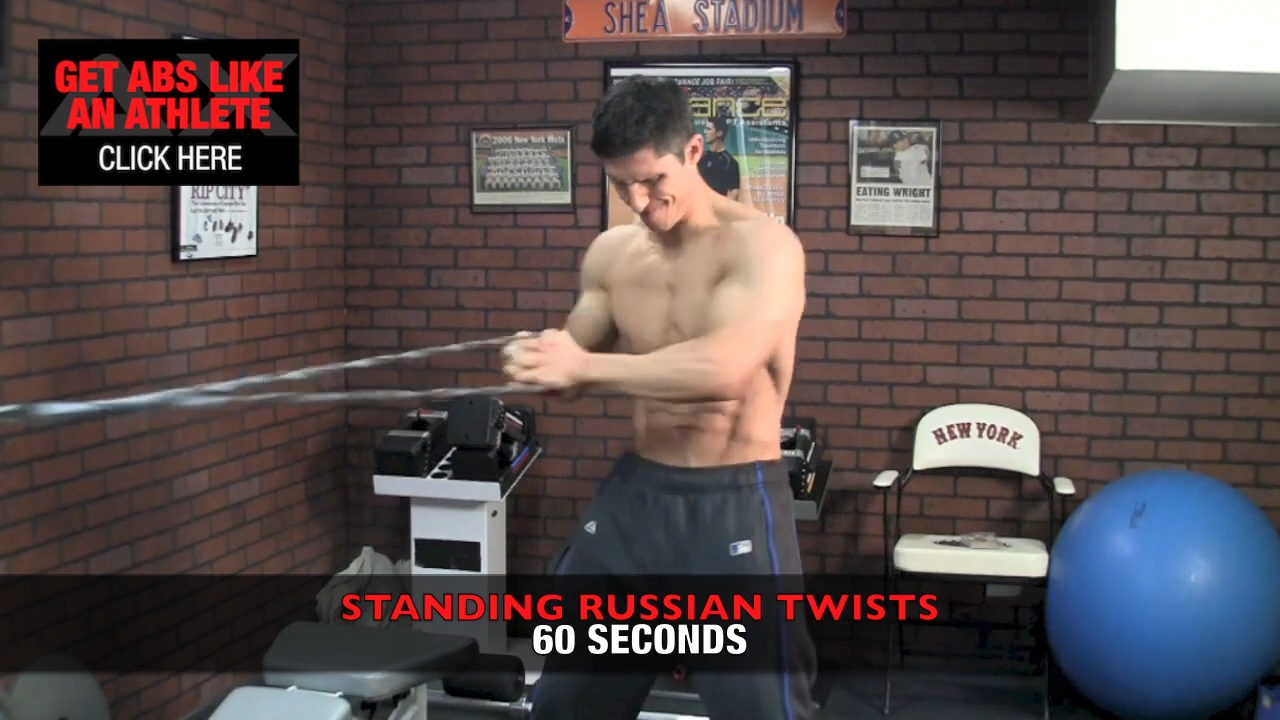
HOW TO DO STANDING RUSSIAN TWISTS:
- Set up a cable machine or anchor a resistance band to a stable point at about lower chest height and stand far enough away to create tension before you move.
- Face forward with a shoulder-width stance and a slight bend in the knees.
- Hold the handle with both hands extended in front of you at about the level of your stomach.
- Begin the movement by turning the shoulders and arms together to one side, allowing the hips to follow just enough to keep the motion smooth.
- Reverse the direction and turn to the opposite side along the same path.
- Keep the handle moving in a controlled arc from side to side. The pace should be focused without relying on momentum.
WHAT MAKES IT EFFECTIVE: This variation treats rotation as a shared task rather than a single-joint action. The band maintains tension from start to finish, requiring the shoulders, torso, and hips to work together while the movement is guided side to side. This one helps to improve rotational timing and carryover strength.
REVERSE WOODCHOPPERS
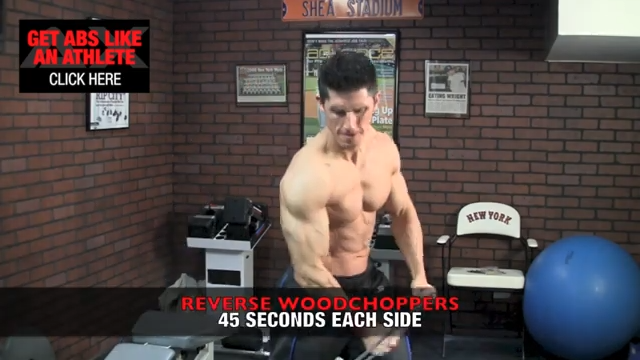
HOW TO DO REVERSE WOODCHOPPERS:
- Set a cable or resistance band low and stand sideways to the anchor with a staggered stance.
- Start with your hands near the outside of your lead hip, arms straight but not rigid.
- Initiate the movement by guiding the handle upward and across your body toward the opposite shoulder.
- Allow the shoulders to turn first, with the hips following just enough to keep the path smooth and balanced.
- Finish the rep with the hands just above chest level, then return along the same diagonal line.
- After completing the set, turn around and repeat on the other side.
WHAT MAKES IT EFFECTIVE: Reverse Woodchoppers train rotation through a long diagonal path that links the lower body, torso, and shoulders into one continuous movement. The changing line of pull encourages smooth sequencing rather than abrupt turning, which helps distribute the motion across the entire trunk.
STANDING TUBING TWISTS
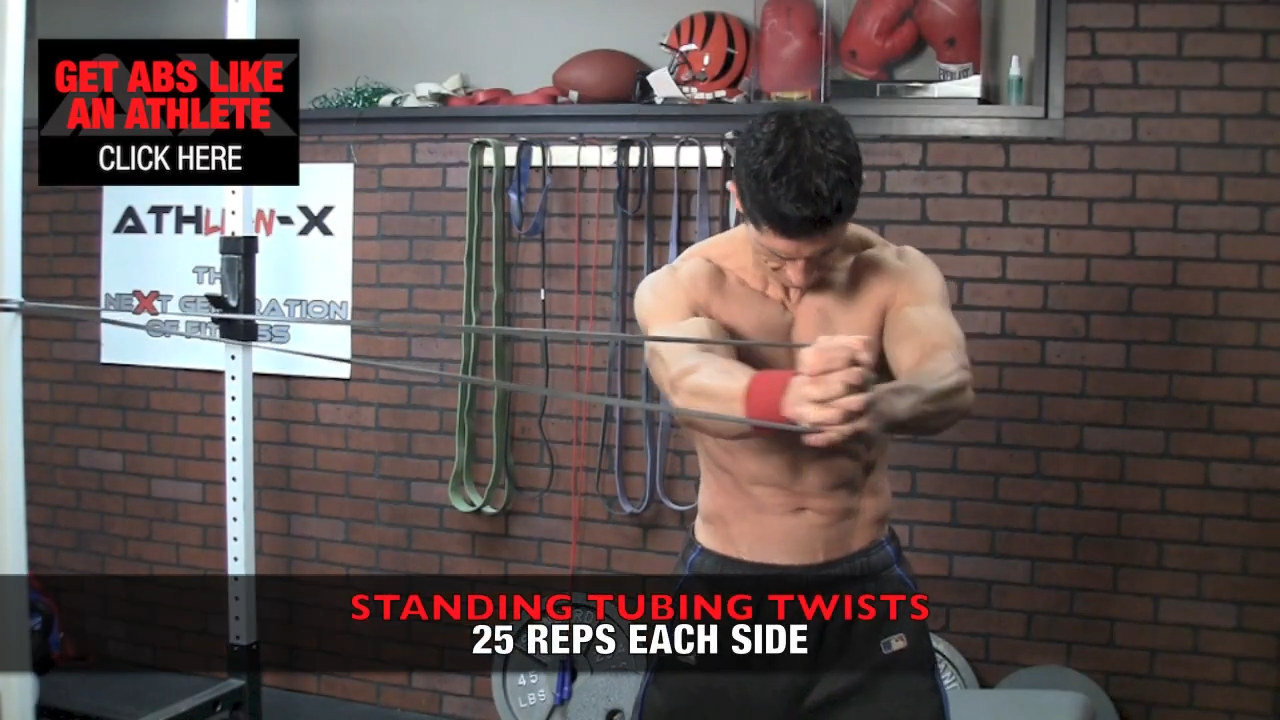
HOW TO DO STANDING TUBING TWISTS:
- Anchor a resistance band or tubing at chest height and stand sideways to the attachment point.
- Step far enough away to create tension before you move. Take a stable stance with soft knees and hold the handle with both hands at chest level, arms relaxed but steady.
- Rotate the shoulders and arms together away from the anchor, letting the torso turn as a unit. The hips can follow naturally, but the motion stays compact and deliberate.
- Reverse direction and rotate back through the center to the opposite side.
- Keep the hands at chest height throughout the set and guide each rep smoothly from side to side without accelerating through the middle.
- After completing your reps, turn around and repeat facing the other direction.
WHAT MAKES IT EFFECTIVE: Holding the band at chest height shifts more of the work into the upper and middle part of the torso while still letting the hips assist the turn. Because the band is tight the whole time, the movement is smooth and even, making this a good option for learning how to rotate without rushing or snapping through the motion.
LANDMINE ROTATION
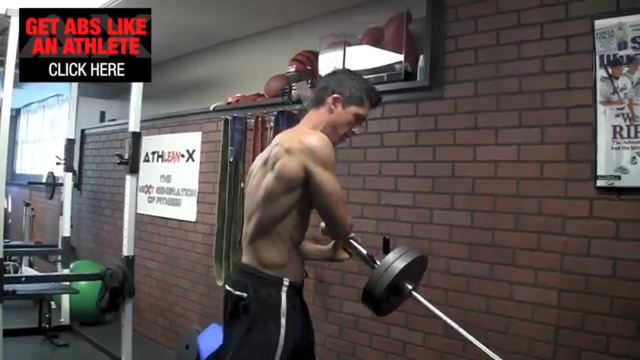
HOW TO DO THE LANDMINE ROTATION:
- Set one end of a barbell in a landmine attachment or stable corner. Stand facing the bar with your feet slightly wider than hip width and a soft bend in the knees.
- Grip the free end of the bar with both hands and hold it just in front of your chest.
- Your elbows are bent and close to your sides throughout the movement since this keeps the bar connected to your body and prevents it from turning into a swinging arm exercise.
- From this position, rotate the bar down toward one hip. Let your shoulders and torso turn together while your lower body is planted. The elbows move with the bar, but their position relative to your body doesn’t change.
- Guide the bar back through the center and continue the rotation to the opposite side. Move smoothly side to side, keeping the bar close and the path consistent.
WHAT MAKES IT EFFECTIVE: Keeping the elbows bent and close to the body shortens the lever, shifting the turning work to the torso while the lower body is steady. The landmine’s arcing path guides the movement smoothly from side to side, making it easier to build rotational strength without losing balance or letting the motion get sloppy.
LANDMINE WIPERS
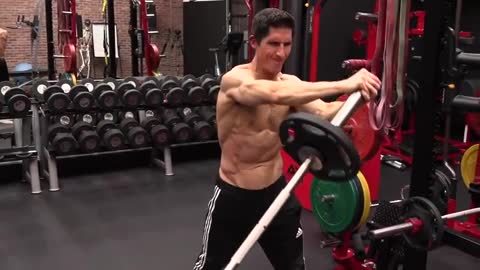
HOW TO DO LANDMINE WIPERS:
- Set one end of a barbell in a landmine attachment or sturdy corner. Start light with this one. Honestly, the empty bar is more than enough for most people.
- Stand facing the bar and press the free end up so your arms are fully extended, and the bar sits slightly in front of you, not drifting behind your head. From here on out, your arms stay long.
- Guide the bar down toward one side in a controlled arc. Keep the top arm straight as the bar lowers and let your shoulders and torso rotate together. Avoid letting the bar crash or pull you offlline.
- Reverse the motion and bring the bar back through the center, then continue down to the other side. Move deliberately from side to side, keeping the bar path consistent and clear of your thighs.
WHAT MAKES IT EFFECTIVE: With the arms extended, the long lever shifts the turning work to the torso and exposes even small breakdowns right away. As the bar moves side to side, the obliques have to guide the rotation smoothly without help from momentum. This is why this variation feels much harder than bent-arm landmine movements.
STANDING CORE EXERCISES: ANTI-LATERAL FLEXION
Anti-lateral flexion is about keeping the torso upright when load tries to pull you to one side.
It’s what stops the ribcage from drifting over the hips when weight is uneven or when your base of support changes. This role doesn’t get much attention, but it’s very important.
Any time you carry weight in one hand, step onto one leg, or shift direction, the core has to keep the torso from tipping. If that ability is missing, posture collapses sideways, and everything above and below the waist has to compensate.
Standing anti-lateral flexion exercises train that directly. Instead of lying on the floor and bending side to side, you’re upright and dealing with uneven loading the way it appears during lifting and movement.
The anti-lateral flexion exercises focus on building that side-to-side stability in positions that transfer to training, sport, and everyday movement.
FARMER’S CARRY
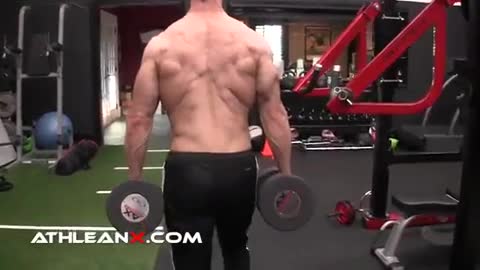
HOW TO DO THE FARMER’S CARRY:
- Grab two dumbbells or kettlebells that are challenging but manageable. Let them hang at your sides and take a moment to set your stance before you start moving.
- Stand with your feet about shoulder width apart and keep your arms long with the weights hanging naturally. Establish a tall, stable position through your torso before taking your first step.
- Walk forward in a straight line with consistent, controlled steps. Prevent the weights from pulling you side to side and keep your stride even from start to finish.
- Carry the load for the prescribed distance or time, then lower the weights back to the floor with intention.
WHAT MAKES IT EFFECTIVE: With weight hanging at both sides, each step challenges the body to remain upright without drifting. Because nothing is fixed, even small breakdowns are obvious, making the Farmer’s Carry a simple but effective way to train side-to-side stability while moving.
ISOMETRIC KETTLEBELL HOLD
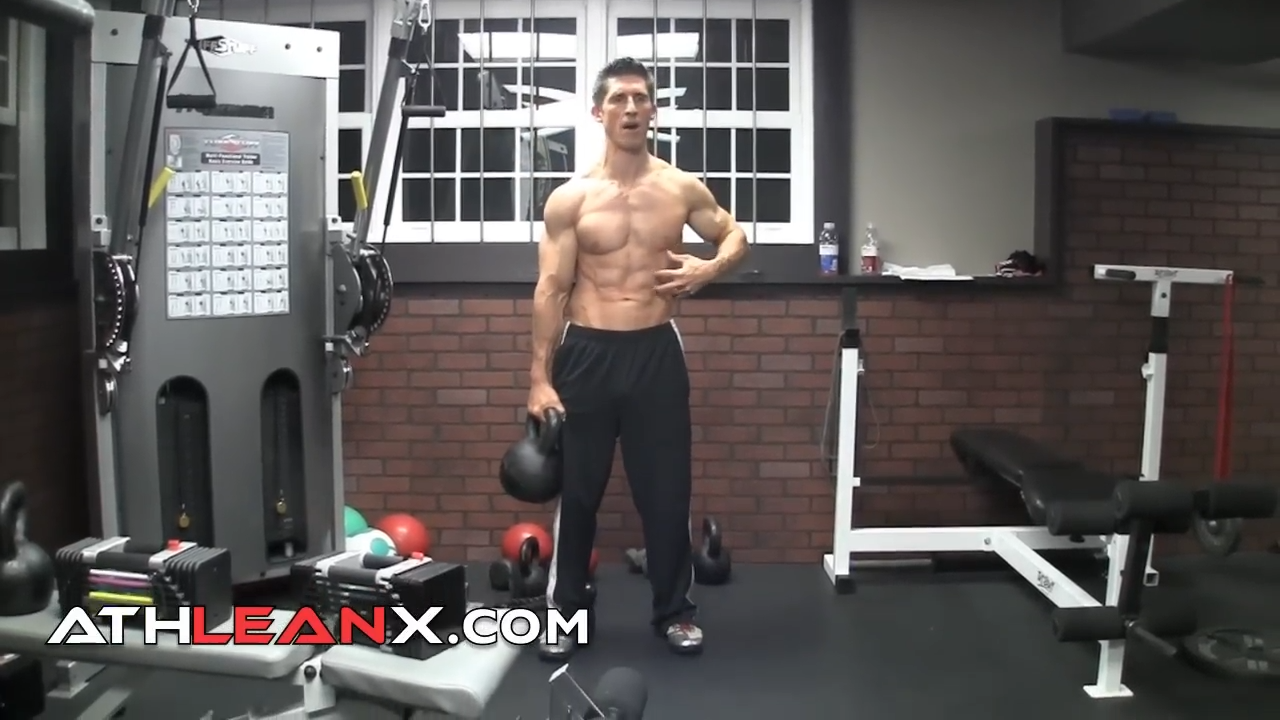
HOW TO DO THE ISOMETRIC KETTLEBELL HOLD:
- Grab a heavy kettlebell in one hand and let it hang naturally at your side.
- Stand tall with your feet about shoulder width apart and take a moment to settle into position before the hold begins.
- Your working arm is long, the weight is still, and your shoulders remain level. From the start, the goal is simple: don’t let the kettlebell pull you into a side bend.
- Hold this position for the prescribed time, breathing steadily and keeping your posture unchanged.
- Once the set is complete, switch hands and repeat on the opposite side.
WHAT MAKES IT EFFECTIVE: With the load on one side, the torso has to resist a sideways pull for the entire hold. This makes the exercise an efficient way to train side-to-side stability in a standing position, preparing the core to keep the body level during functional and athletic movement patterns.
OAK TREE STEP-OUTS
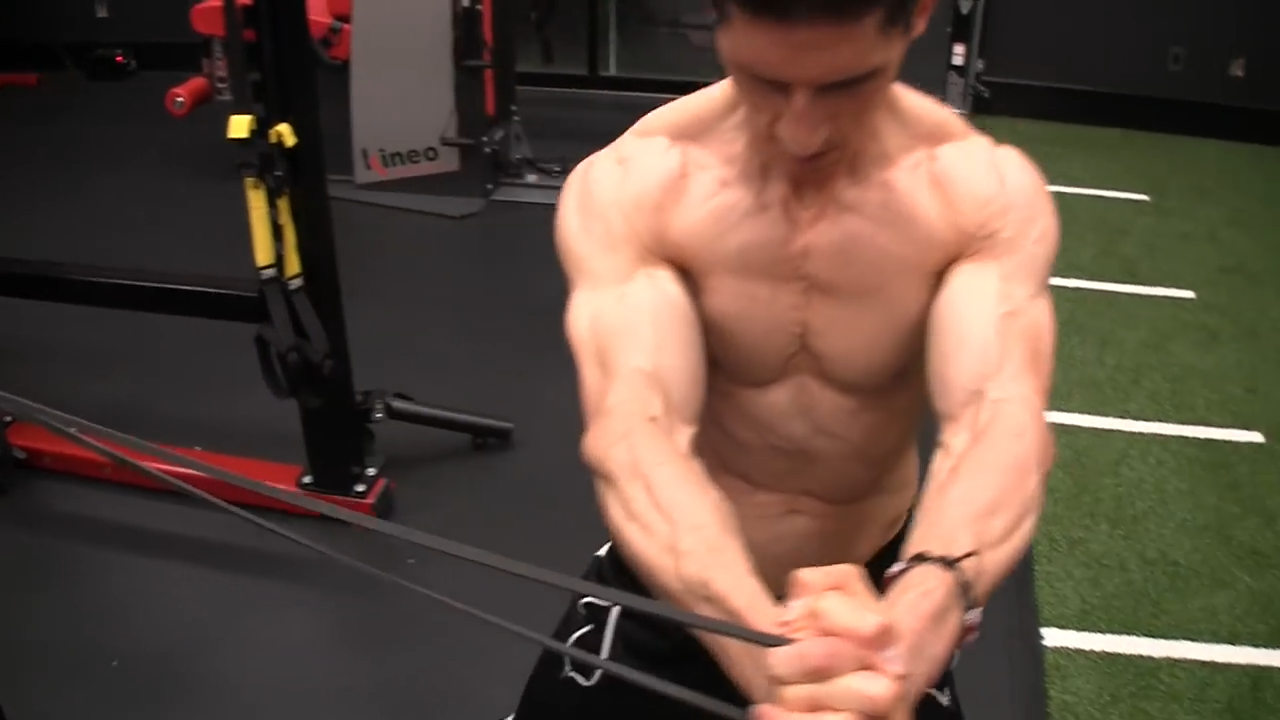
HOW TO DO OAK TREE STEPOUTS:
- Anchor a resistance band or cable at chest height and stand perpendicular to the attachment point.
- Hold the handle with both hands and press your arms straight out in front of you. This is where your arms will stay for the entire set.
- From this position, step out laterally away from the anchor while keeping your arms extended and your torso facing forward.
- Pause briefly in the stepped-out position, then bring your feet back together.
- Repeat the step-out and return for the prescribed reps, then turn around and perform the same sequence facing the opposite direction.
WHAT MAKES IT EFFECTIVE: By keeping the arms extended, the lever is long for the entire set, increasing the rotational challenge without adding load. Stepping laterally changes the tension with each rep, forcing the torso to remain square while the lower body moves independently.
LEANING TOWERS (STANDING SIDE PLANKS)
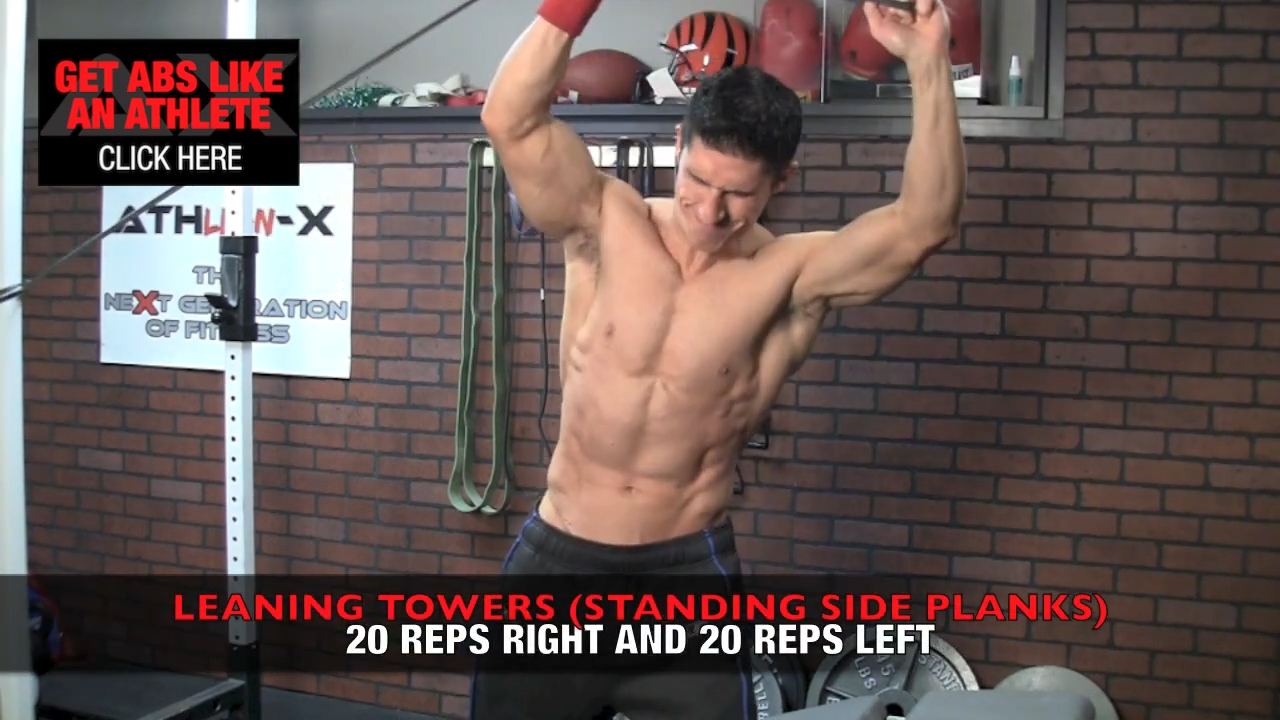
HOW TO DO LEANING TOWERS:
- Anchor a resistance band or cable at about lower chest height and stand sideways to the attachment point.
- Grip the handle with both hands at shoulder width and bring it overhead so your arms are long and slightly in front of your head.
- From here, lean your body away from the anchor, creating a small and controlled side bend through the torso. Keep the arms extended and the handle fixed in space as your body moves underneath it.
- Return smoothly to center without allowing yourself to lean toward the anchor at any point. Each rep moves away from tension and back to neutral, never into it.
- Complete the set on one side, then turn around and repeat facing the opposite direction.
WHAT MAKES IT EFFECTIVE: Leaning Towers load the core from the side while the arms are overhead, increasing the leverage on the torso without requiring heavy resistance. As you lean away from the anchor, the obliques have to manage the side-bending while keeping the movement smooth and deliberate.
SINGLE LEG ISOMETRIC KETTLEBELL HOLD
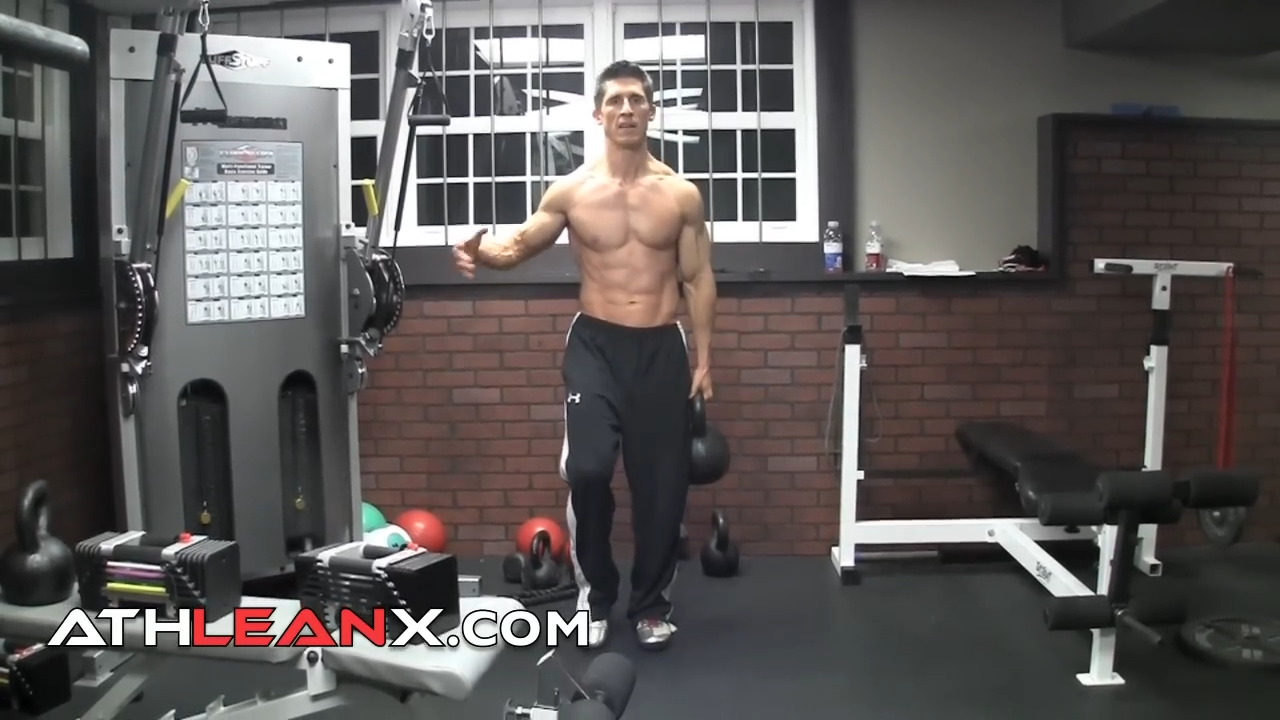
HOW TO DO THE SINGLE LEG ISOMETRIC KETTLEBELL HOLD:
- Hold a kettlebell in one hand and let it hang naturally at your side.
- Shift your weight onto the opposite leg and lift the free leg slightly off the floor, bending the knee just enough to keep balance without leaning. The raised leg is opposite the loaded arm for the entire set.
- Hold this position for the prescribed time, breathing steadily and keeping your body aligned from top to bottom.
- Once the set is complete, switch hands and legs and repeat on the other side.
WHAT MAKES IT EFFECTIVE: Placing the weight on one side while standing on the opposite leg creates a strong side-to-side challenge that the torso has to resist continuously. At the same time, the single-leg stance introduces a balance challenge that prevents the body from relying on stiffness alone.
STANDING CORE EXERCISES: BRACING UNDER DYNAMIC LOAD
This is where core strength has to hold up while everything else is moving.
Bracing under dynamic load is all about keeping the torso ready as speed, direction changes, and limb movement stack on top of each other.
When the legs are driving, the arms are moving, and rhythm starts to matter, the core’s job is to prevent the torso from losing position. If that brace fades, the movement gets sloppy fast. You see it in knee drives, loaded transitions, and any drill where momentum builds rep after rep.
Standing exercises in this category ask the core to stay responsive while the body moves dynamically, rather than locking into a static hold.
This is the type of core work that fits naturally into conditioning, athletic prep, and hybrid strength sessions because it reflects how functional movement unfolds.
LUNGE TO SINGLE-ARM LANDMINE PRESS
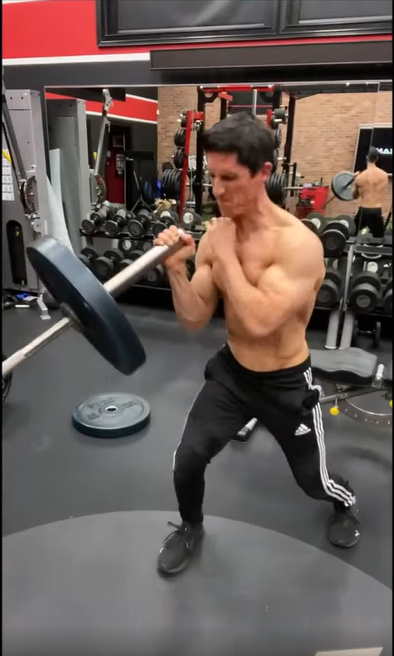
HOW TO DO THE LUNGE TO SINGLE ARM LANDMINE PRESS:
- Stand at the free end of the bar with your feet about hip to shoulder width apart. Hinge down, grab the bar with one hand, and brace your core.
- Drive through your legs to bring the bar up, letting the lower body initiate the lift rather than pulling it up with the arm.
- As the bar goes up, step back into a lunge and guide the bar in toward your chest, keeping the elbow close to your side.
- Once you’re settled in the lunge, press the bar up and slightly forward along the landmine’s natural arc.
- Move smoothly from the lift into the press, then lower the bar and reset before the next rep.
WHAT MAKES IT EFFECTIVE: This movement forces the body to remain steady while the load is changing position and direction. You’re transitioning from a lower-body-driven lift into a single-arm press without resetting your stance, which challenges the torso to be steady as the limbs do the work.
BACK SQUAT TO SINGLE-ARM LANDMINE PRESS
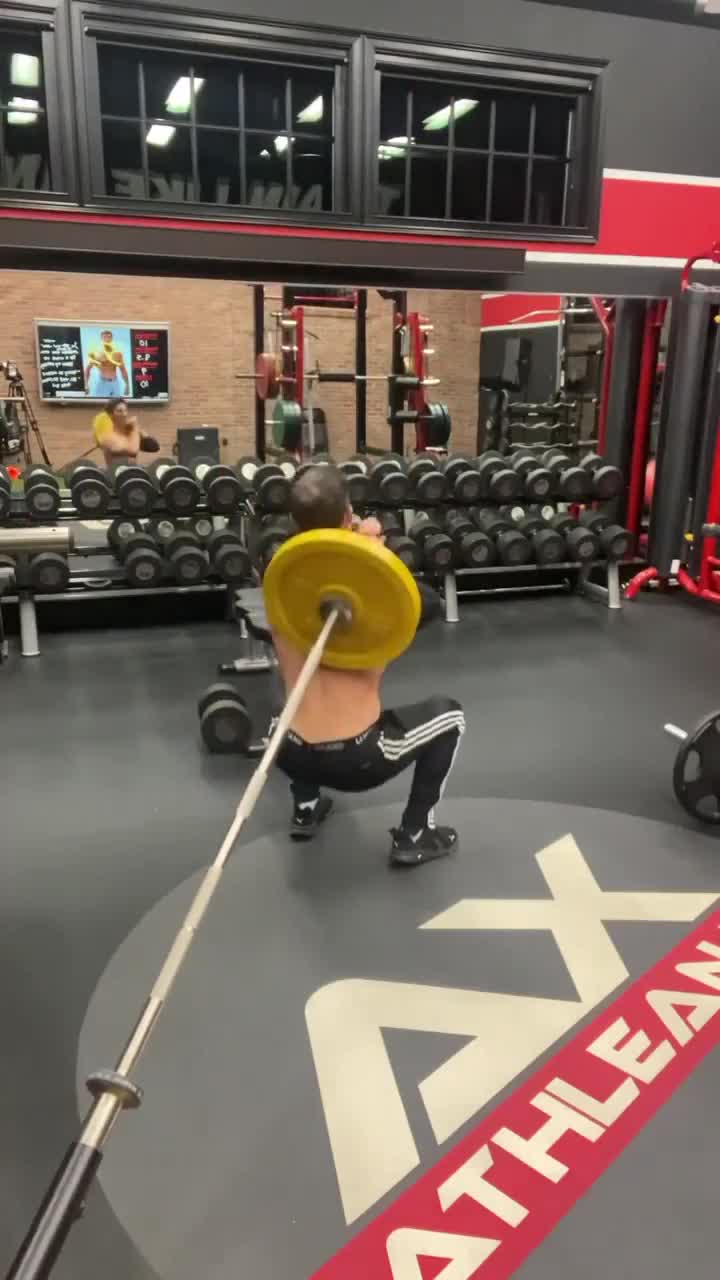
HOW TO DO THE BACK SQUAT TO SINGLE ARM LANDMINE PRESS:
- Stand with your back to the landmine and bring the bar up so it rests against one shoulder. Hold it close and take a shoulder-width stance before you move.
- Lower into a controlled squat, keeping the bar tight to your shoulder as you descend. Avoid letting the bar drift or bounce.
- Drive up through your legs and, as you rise, rotate your body into a lunge position. Guide the bar into a single-arm position as you step back and settle into the lunge.
- From there, press the bar up and slightly forward along the landmine’s path. Pause briefly at the top to stabilize and then lower the bar.
WHAT MAKES IT EFFECTIVE: This exercise links a lower-body drive to an upper-body press without giving you time to reset in between. The shift from squat to lunge to press requires continuous torso control as the load moves and the base changes.
ALTERNATING LANDMINE PRESS
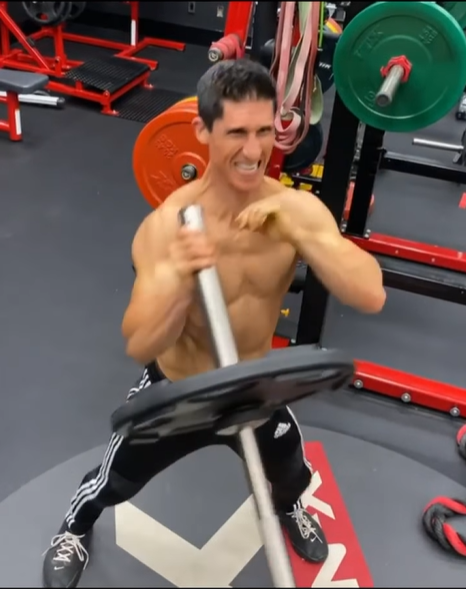
HOW TO DO THE ALTERNATING LANDMINE PRESS:
- Start with a light load that allows you to move cleanly. Stand with your feet about shoulder width apart and a slight bend in the knees.
- Hold the bar in one hand at shoulder height with the elbow close to your side. From there, press the bar up and slightly forward along the landmine’s path.
- As the bar approaches the top, release it and switch hands, guiding the catch rather than tossing it.
- Absorb the change by softening the knees and resetting the bar back to shoulder height with the opposite hand.
- Continue pressing and switching hands in a smooth, continuous rhythm. The movement should be quick and controlled without pauses between reps.
WHAT MAKES IT EFFECTIVE: As the bar changes hands, the body has to absorb and redirect the load without resetting. That transition challenges the torso while the arms move rapidly from one side to the other. And because the press and catch happen in sequence, this drill develops the ability to be composed during rapid load changes.
LANDMINE TWIST AND PRESS
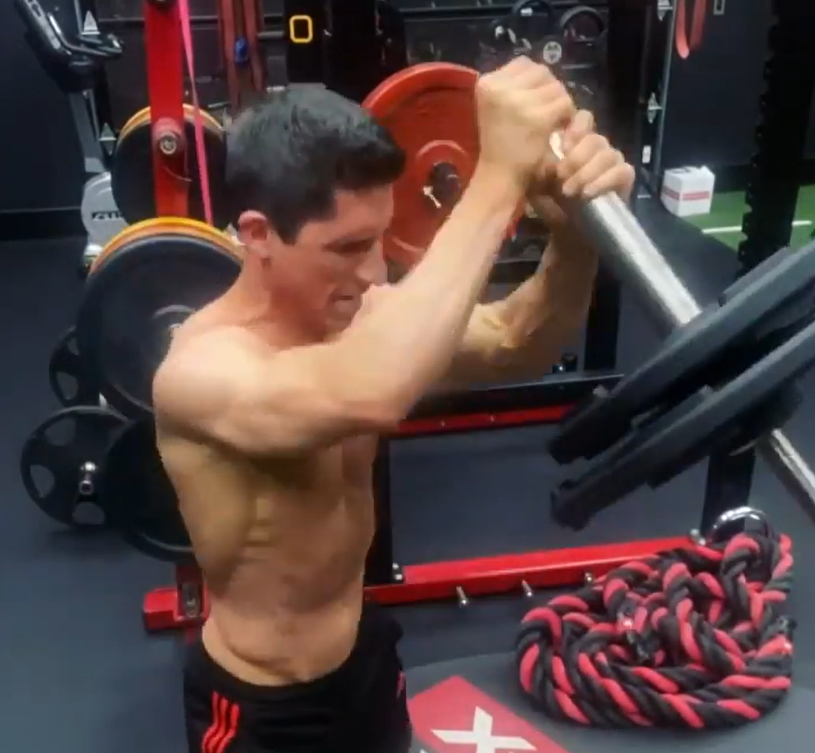
HOW TO DO THE LANDMINE TWIST AND PRESS:
- Set one end of the barbell in a landmine attachment and stand facing the bar with a slightly wider-than-shoulder stance.
- Hold the free end of the bar with both hands at chest height, elbows bent and close to the body.
- Rotate the bar down toward one hip, letting the shoulders and torso turn together while the lower body is grounded.
- As the bar comes back through center, transition immediately into a press, driving the bar up and slightly forward along the landmine’s arc.
- Lower the bar back to chest height, continue the rotation to the opposite side, and repeat the same sequence.
WHAT MAKES IT EFFECTIVE: This exercise blends rotation and pressing into one continuous sequence, requiring the torso to be steady as the task changes mid-rep. That transition builds coordination and strength for movements where one action flows directly into the next, closer to how strength is applied in athletic settings.
BATTLE ROPE SLAMS
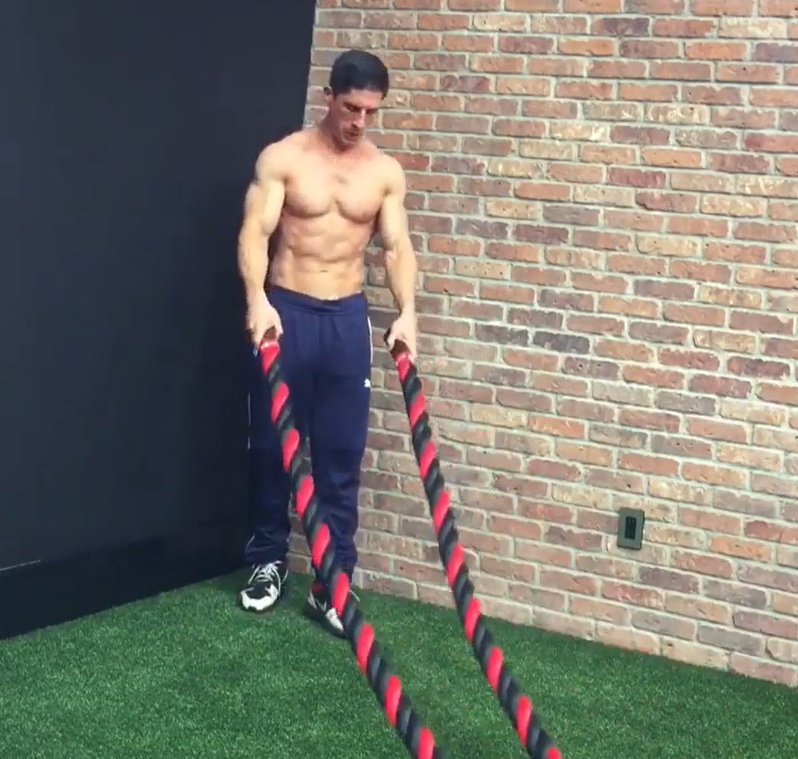
HOW TO DO BATTLE ROPE SLAMS:
- Set the battle ropes so they’re anchored securely and stand facing the attachment point with your feet about shoulder width apart.
- Hold one rope in each hand and sink slightly into your stance so you’re ready to move.
- Raise both arms together to about chest or shoulder height. From there, drive the ropes straight down toward the floor, letting the arms move while the rest of the body is steady.
- As the ropes hit, immediately bring your hands back up and repeat.
- Keep the rhythm consistent and the slams vertical.
WHAT MAKES IT EFFECTIVE: Each slam creates a rapid change in tension that the body has to absorb and redirect. The arms are moving aggressively, but the torso has to stay composed as the ropes snap back toward the anchor.
STANDING AB WORKOUTS: COMMON MISTAKES
Standing ab exercises are simple on paper, but they’re easy to get wrong in practice.
The moment you take core work off the floor and into an upright position, small errors like load shifts and balance changes start to matter more.
Most issues don’t come from choosing the wrong exercises. They come from how those exercises are performed, progressed, and placed inside a workout.
Before adding more weight, speed, or complexity, make sure you aren’t making these common mistakes:
MOVING TOO FAST
Speed hides problems. When standing ab exercises turn into rapid-fire reps, the body finds shortcuts, usually by borrowing motion from the legs or arms.
What might look intense is rarely doing anything helpful.
Standing core work is about handling changing demands, not racing through them. If you can’t repeat the same quality rep over and over, the pace is too aggressive.
LOWER BACK OR HIPS TAKE OVER
One of the fastest ways to ruin standing ab training is allowing movement to creep into places that weren’t invited.
Excessive arching, hinging, or side bending often shows up when the torso stops contributing and the hips or lower back try to rescue the rep.
When that happens, the exercise no longer matches its goal, even if it still feels challenging.
LOADING BEFORE EARNING IT
Standing ab exercises don’t scale the same way traditional lifts do. More resistance doesn’t automatically mean better results.
When weight causes compensation like leaning, rushing, or cutting range of motion, the core stimulus drops instead of increasing.
If the drill looks different as load rises, the progression is outpacing skill.
USING THE ARMS TO CHEAT
Many standing core drills involve holding, pressing, or guiding resistance. The mistake is turning them into upper-body exercises with a core tax on the side.
When the shoulders dominate the movement, the torso becomes reactive instead of active. The arms should carry the load, but they shouldn’t be the reason the rep happens.
DRIFTING DURING THE SET
A lot of standing ab exercises start well and fall apart as the set goes on and fatigue increases.
Feet inch closer together. Hands move farther from where they started. The load drifts forward or out to the side. It accumulates and, by the end of the set, you’re no longer doing the same movement you started with.
Each rep nudges you offline, and unless you reset deliberately, the exercise gradually turns into something else.
HOW TO PROGRAM AND PROGRESS
Standing ab exercises don’t exist in a vacuum. They affect posture, coordination, and how efficiently you move load through the body.
Because of that, programming them isn’t about squeezing in more core work. It’s about applying the right challenges at the right time.
Here’s how to program standing core exercises into your workouts and how to progress them as your strength improves.
TOTAL-BODY DAY
In full-body sessions, standing ab work should support your main lifts, not steal from them.
The most effective placement is after the first compound lift or between sets of a major movement. At that point, the nervous system is awake, the torso is warm, and fatigue hasn’t blurred execution yet.
Placing standing ab exercises late in a total-body workout usually backfires. By then, coordination has already taken a hit, and the drills turn into low-quality movement rather than useful training.
UPPER / LOWER SPLITS
On upper-body days, standing ab exercises pair well with unilateral presses, rows, and overhead work. They fit naturally between working sets or immediately after the primary lift, reinforcing trunk contribution without limiting upper-body output.
On lower-body days, these drills work best either as preparation before heavy leg work or as follow-up work once the main lifts are finished. What you want to avoid is fatiguing the torso before maximal squatting or lunging.
CONDITIONING AND ATHLETIC SESSIONS
In conditioning or hybrid sessions, standing ab exercises stop being accessories and become part of the movement flow.
They’re most effective when:
- Paired with locomotion or loaded transitions
- Used inside circuits with carries, sleds, or rope work
- Executed with repeatable mechanics despite rising heart rate
Here, success isn’t measured by burn or sweat. It’s measured by how well the movement holds together under fatigue.
VOLUME GUIDELINES
Here are the acute variables for your standing ab workouts:
Isometric Holds and Carries: Perform 2 to 4 sets of short distances or between 20 to 45 seconds.
Controlled Movement Drills: Do 2 to 3 sets of 6 to 10 reps per side.
Dynamic or Transition-Based Drills: Complete 2 to 4 sets with lower reps or short bursts.
HOW TO PROGRESS
Naturally, as you get better at these exercises, you’ll want them to change as your strength improves. Progression focuses on increasing the challenge without changing the movement.
Be sure to use this order as you progress your exercises:
- Increase movement complexity before adding resistance
- Lengthen levers or move load farther from the body
- Narrow or offset the base of support
- Add speed or rhythm changes
- Increase load last
Standing ab workouts build core strength that holds up when you’re upright, loaded, and moving, and that’s exactly where most real training happens.
Blending standing and floor-based exercises gives you the full picture: floor work builds local strength and awareness, while standing drills teach the body to manage load and movement as conditions change.
Used together, they create a core that performs consistently across lifts, conditioning, and functional movement patterns.
Check out our complete line of ATHLEAN-RX Supplements and find the best training program for you based on your fitness level and goals.

- Most lifting, sprinting, carrying, and conditioning happens on your feet. Training your abs upright prepares them for the same environment they’re asked to handle under load and fatigue.
- Here are the five types of standing core exercises:
- Anti-Extension: Teaches the core to prevent excessive arching when load moves overhead or forward. This is the backbone of pressing, carrying, and running mechanics.
- Anti-Rotation: Trains the torso to be square when load shifts side to side. Essential for unilateral presses, rows, offset carries, and uneven loading.
- Controlled Rotation: Builds the ability to rotate smoothly through the shoulders, torso, and hips without dumping motion into the lower back. This is where coordination and transfer come from.
- Anti-Lateral Flexion: Strengthens the core’s ability to keep the body upright under uneven loading. Carries, single-leg work, and lateral movement live here.
- Bracing Under Dynamic Load: Prepares the core to hold up when tasks change mid-rep. Transitions, athletic patterns, and conditioning drills demand this kind of responsiveness.
- Place standing core work early or between big lifts when quality is highest and make sure to blend standing and floor-based exercises instead of choosing one over the other.
STANDING AB WORKOUTS FAQ
They do! Especially if your goal is strength that carries over to different lifting and movement patterns.
Standing exercises like the Farmer’s Carry, Single-Arm Landmine Press, Pallof Press, and Oak Tree Step-Outs train the core to manage uneven loading, shifting bases, and moving limbs all at once.
That’s the same job your abs have during squats, lunges, presses, carries, sprinting, and conditioning.
If your core can remain organized in those positions, it’s doing real work, whether or not you feel a burn like you would on the floor.
Start by organizing standing ab work around what the core is resisting, not how tired it gets.
For anti-extension, use drills like Slingshot Knee Drives or Landmine Presses where the torso has to stay composed as the arms or legs move.
For anti-rotation, include Pallof Presses, Anti-Rotation Pressouts, or Banded Cauldrons, where the load is constantly trying to twist you.
For anti-lateral flexion, lean on Farmer’s Carries, Isometric Kettlebell Holds, or Leaning Towers to train side-to-side stability.
For dynamic bracing, use transitions like the Lunge to Single-Arm Landmine Press or Battle Rope Slams, where rhythm and changing conditions challenge your brace.
Keep the reps controlled, place these movements after your first compound lift or inside conditioning circuits, and progress by increasing complexity before adding load.
Standing ab exercises can absolutely build the muscles that make up a six-pack, but they don’t replace nutrition or overall training volume.
Movements like Landmine Rotations, Wipers, Carries, and Press Variations add thickness and strength to the rectus abdominis and obliques because they load the core in upright, athletic positions.
And when body fat levels come down, that added density can finally be seen.
The best approach is blending standing core work with floor-based exercises, total-body lifting, and consistent nutrition so your abs aren’t just visible, but useful.
REFERENCES
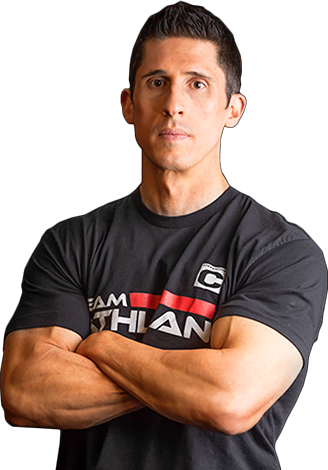
Jeff Cavaliere M.S.P.T, CSCS
Jeff Cavaliere is a Physical Therapist, Strength Coach and creator of the ATHLEAN-X Training Programs and ATHLEAN-Rx Supplements. He has a Masters in Physical Therapy (MSPT) and has worked as Head Physical Therapist for the New York Mets, as well as training many elite professional athletes in Major League Baseball, NFL, MMA and professional wrestling. His programs produce “next level” achievements in muscle size, strength and performance for professional athletes and anyone looking to build a muscular athletic physique.