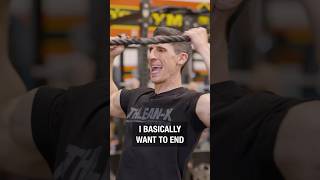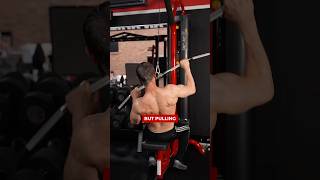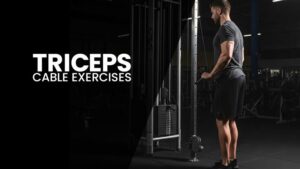








WHY do the cable triceps extension?
Sure, the bent-over version looks like a solid way to do the exercise, but it’s completely missing the point.
That forward lean in the Cable Triceps Extension shifts tension off the long head of the triceps brachii, shortens the range of motion, and your arms never develop that full, horseshoe shape you’ve been chasing.
Does that mean you should throw out Cable Tricep Extensions from your workouts? Not at all. But if you’re one of the people leaning forward during the exercise, it’s time to correct your form.
Today, I’m breaking down exactly which muscle groups the Cable Tricep Extension targets, why most lifters get it wrong, and how to perform it for maximum growth and joint-friendly strength.
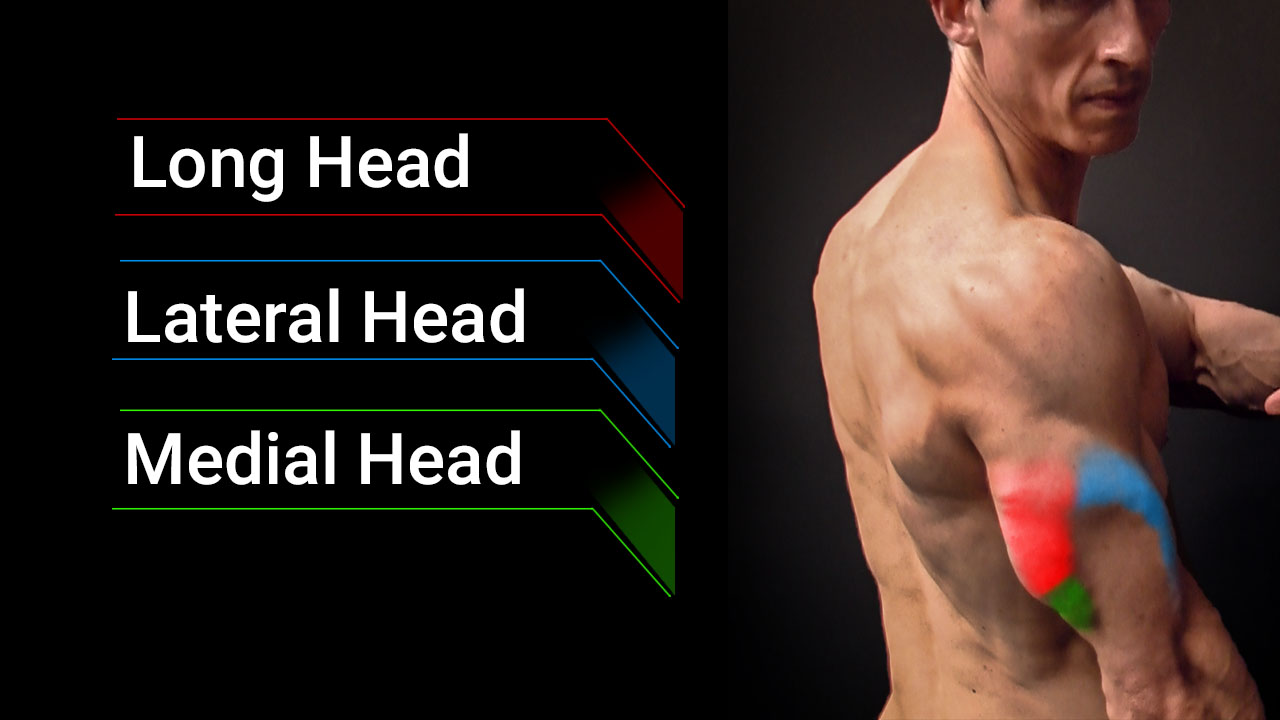
CABLE TRICEP EXTENSIONS: MUSCLES WORKED
Before you can train the triceps the right way, you need to understand what you’re training.
The tricep brachii isn’t just one muscle. It’s three distinct heads that share a common goal of elbow extension.
The long head, lateral head, and medial head each play a unique role depending on your arm position, angle of pull, and overall range of motion.
Let’s take a closer look at how they function and, more importantly, how they contribute to Cable Tricep Extensions.
LONG HEAD
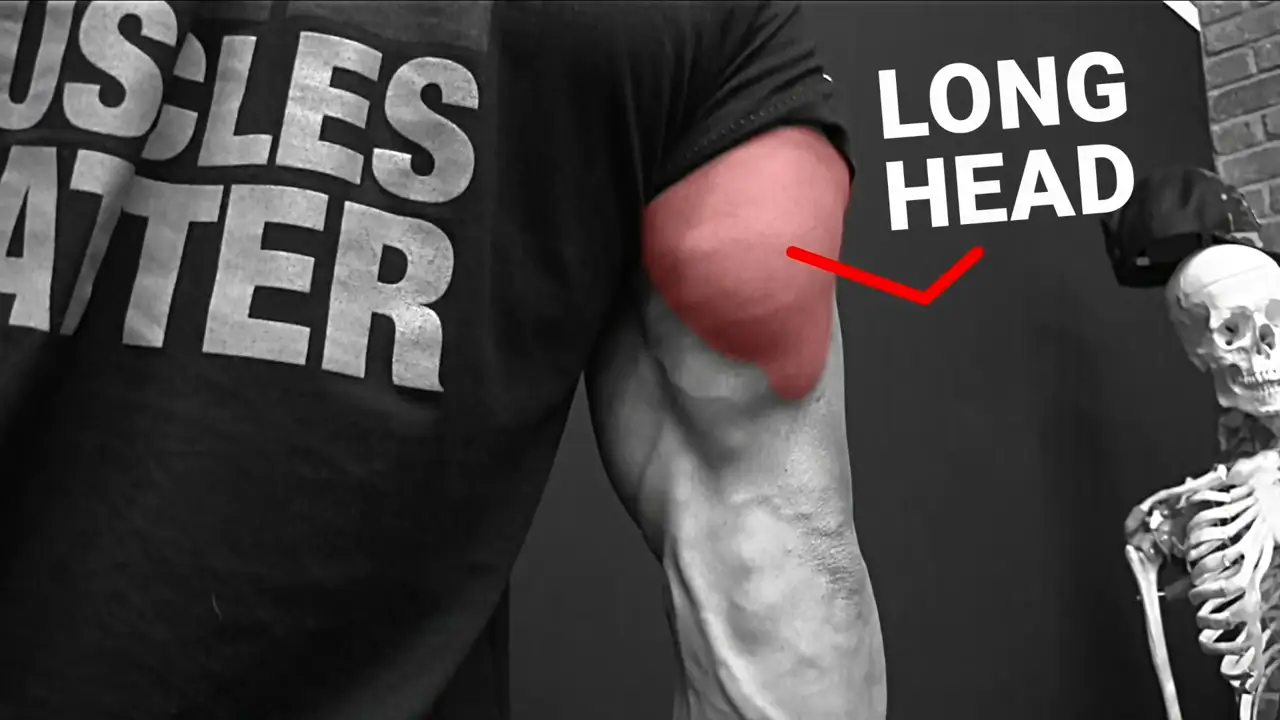
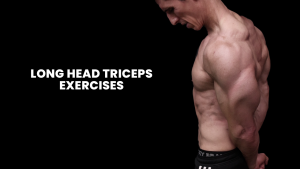
The long head is one of the three heads of the triceps and is a major contributor to the overall size and shape of the upper arm.
It originates from the scapula, meaning it crosses both the shoulder and elbow joints. Because of this dual-joint role, shoulder positioning becomes critical.
When your arms are pushed forward or when you lean over, you shorten the effective range of motion for the long head and reduce its activation.
To truly ask the triceps long head to grow, you need movements that place the arm overhead or behind the body. This is where the shoulder is flexed or extended, setting the long head under stretch and tension.
Overhead Tricep Extensions, Dumbbell Overhead Tricep Extensions, or even Tricep Dips on a parallel bar do exactly that.
Many lifters see a lagging long head of the tricep muscles because they do plenty of Standard Tricep Pushdowns, but not enough variations that involve the shoulder joint along with elbow extension.
When it comes to the Cable Triceps Extension, this exercise can train the long head, but only if you adjust your body position so the arm is overhead (I’ll show you how to do this properly below).
LATERAL HEAD
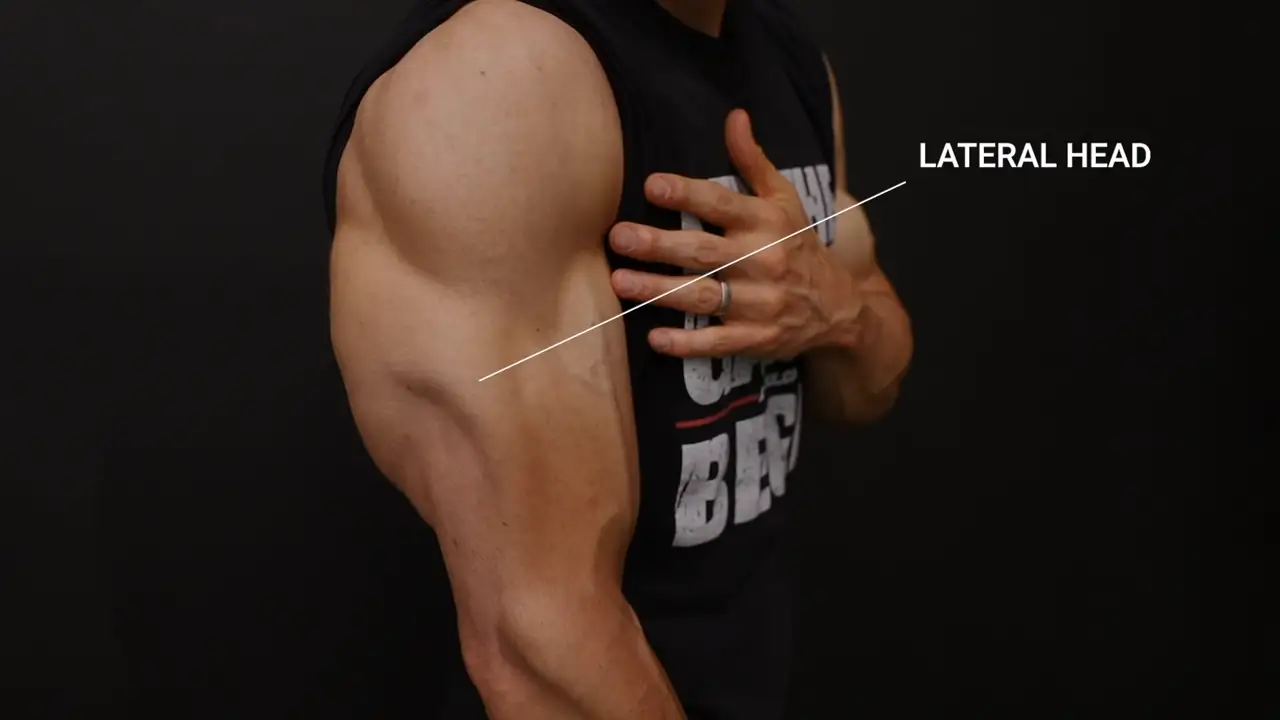
If the long head builds mass, the lateral head gives definition. It’s the portion that carves the outer edge of the arm and gives you that visible “horseshoe” shape in the triceps.
In the Standing Overhead Cable Triceps Extension, the lateral head isn’t the prime mover, but it plays a key supporting role during the top half of the rep.
As the arms extend and the long head finishes its contraction, the lateral head stabilizes the elbow and reinforces lockout strength.
Keeping the range of motion complete and squeezing hard at the finish helps the lateral head fully engage.
For lifters chasing sharper arm detail, this head responds best to steady tension and control. Pair your Cable Tricep Overhead Extensions with neutral-arm movements such as V Bar Pushdowns, EZ-Bar Extensions, or work on a functional trainer machine for extra shape without unnecessary joint strain.
MEDIAL HEAD
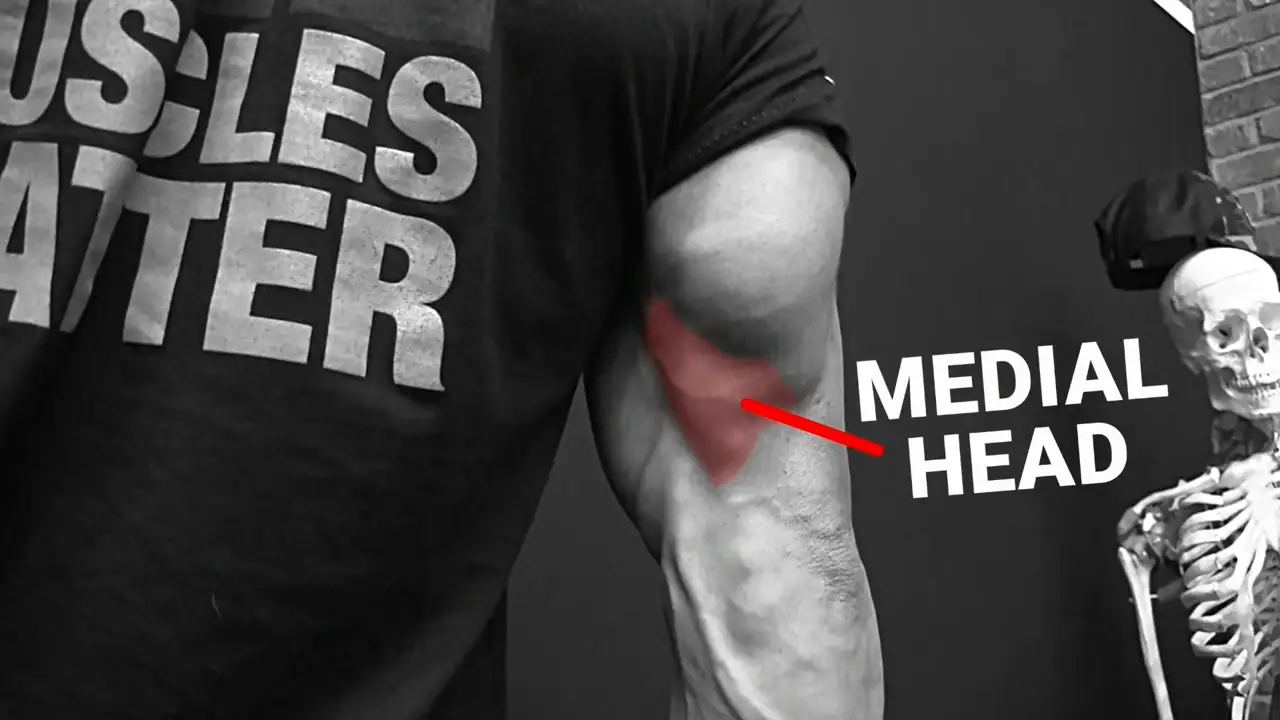
The medial head is small, deep, and endurance driven. It fires throughout every triceps movement to stabilize the elbow joint, ensuring each rep stays clean and consistent.
During the Standing Overhead Cable Triceps Extension, the medial head acts like a built-in stabilizer, keeping the elbow tucked and the arm path smooth while the long head stretches and contracts.
It’s constantly active, especially near full lockout, maintaining muscle engagement through the entire range of motion.
You don’t need heavy loads to train it effectively. Controlled tempo, higher reps & weight balance, and exercises that emphasize consistent resistance, like Overhead Rope Extensions or Dumbbell Kickbacks, help strengthen the medial head’s role in overall arm stability.
WHY YOU’RE DOING THIS EXERCISE WRONG
Can we talk about this exercise for a second? Yes, I’m going to tell you how to do it right, but first, I want you to understand how you’ve been doing it wrong this whole time.
The truth is that most lifters (probably including you) are doing the Cable Triceps Extension in a way that doesn’t match biomechanical efficiency and it’s costing them size where it matters most.
The second you lean forward, you take a long-head movement and turn it into a glorified Cable Triceps Pushdown.
Now, the leaning-forward version of the Cable Triceps Extension isn’t inherently bad. It’s just mislabeled.
It’s not a long-head exercise. It’s a lateral and medial head overload move dressed up as one.
If that’s what you want, great, but if you’re after size, symmetry, and complete triceps development, it’s time to stand up straight.
Let’s take a closer look at what’s going on here.
STOP LEANING FORWARD
Here’s where most lifters mess up. They set up for a Rope Tricep Extension, take a step forward, and lean into the cable, thinking it increases stretch or “locks in tension.”
What it actually does is shift the force line in front of the body.
Now the cable is pulling forward instead of upward, which drags the shoulders into a shoulder-elevated position and shortens the long head before the rep even starts.
This means the lateral and medial heads end up doing the majority of the work, while the long head, the part that’s supposed to be targeted, never reaches its full length.
It’s like doing half a French Press and calling it a Skull Crusher. You’re still moving your elbows, but you’re not training the muscle you think you are.
The leaning version might feel strong, but that’s because you’ve turned it into a partial press. You’re using body angle, not muscle leverage.
WHAT THIS EXERCISE IS ACTUALLY DOING
When you look at it from a biomechanical standpoint, the traditional leaning-forward setup is essentially a Pressdown with bad posture.
Now, don’t misunderstand me. That doesn’t make the exercise useless. It just means it serves a different purpose.
This variation heavily recruits the lateral and medial heads, which are responsible for elbow extension and pressing power.
It’s why you’ll see carryover to your Close-Grip Bench Press and even movements like JM Presses or Board Presses.
If your goal is raw strength or lockout performance, I say fine, but be sure to load it up. It’s a great way to overload the outer heads of the triceps and challenge elbow extension under heavy tension.
But if your goal is muscle hypertrophy, especially to build that thick, rounded arm from top to bottom, this version isn’t giving the long head enough mechanical tension or stretch stimulus to grow.
THE BIOMECHANICAL FIX
To properly train the long head, you have to position your arm opposite its line of pull. That means getting it overhead, not in front of your body.
Standing tall with the rope attachment behind your head puts your shoulder in flexion, which stretches the long head across both joints and lets you train it through its full range.
The goal isn’t to lean or swing the weight. It’s to keep your torso locked in place and drive the elbows through controlled extension.
The cable machine gives you consistent resistance through the entire arc, which is something free weights can’t match.
HOW TO DO CABLE TRICEP EXTENSIONS
Most people think they’re doing Cable Tricep Extensions correctly… until you watch them lean forward, shorten the range, and turn it into a half-press that barely hits the triceps.
The problem isn’t the exercise. It’s the setup.
If you want to build real size in the long head, you’ve got to line up your body so the muscle stays under tension where it’s supposed to.
Let’s fix it once and for all. Here’s exactly how to do the standing Overhead Cable Tricep Extension the right way.
CABLE TRICEP EXTENSIONS


HOW TO DO THE CABLE TRICEPS EXTENSION:
- Attach a rope to the low pulley of a cable machine, then face away from the stack. You can also use a single handle if you plan on doing the single-arm version of the movement.
- Step forward until there’s tension on the line even before you start. The cable should travel upward and behind you, not downward in front of you.
- Bring the rope overhead so your hands are just behind your head. Your elbows should stay close to your ears, not flared out to the sides.
- Brace your core and stand up straight. If you find yourself pitching forward, you’re drifting into a shoulder elevated position, which cuts tension off the triceps and shifts the training load into the delts. The goal is to stay tall and let your elbows do the moving.
- Drive the rope up and slightly forward until your arms are straight overhead. Don’t rush the movement.
- At the top, pause and contract the triceps. Then, let the cable pull your hands back down slowly behind your head.
- Keep your form tight, elbows steady, and shoulders quiet. When you start to fatigue, don’t cheat the form.
WHAT MAKES IT EFFECTIVE: By taking the arms overhead instead of keeping them at your sides, you shift the shoulder into flexion. That’s something the long head of the triceps needs to be fully stretched and engaged. That simple adjustment changes the entire line of pull. Instead of just extending the elbow like in a Triceps Pushdown, you’re now training the triceps across both the shoulder and elbow joints. It’s a more complete contraction and a deeper stretch, which means greater tension where it counts.
CABLE TRICEP EXTENSIONS: COMMON MISTAKES
Even simple exercises become ineffective when your setup or posture is off, and the Standing Overhead Cable Tricep Extension is a perfect example.
The movement looks straightforward, but small errors in body position can completely change which muscles are working.
The difference between “feeling it” in your triceps and loading your shoulders comes down to inches.
Here are the mistakes that cost you growth and how to fix them before your next set.
LEANING FORWARD
Most people think leaning forward helps them “get more range,” but it’s actually doing the opposite.
When you hinge or let your chest drift toward the floor, your arms move in front of your body.
That shortens the long head of the triceps before you even start the rep, meaning the muscle never reaches a full stretch. Instead, the load shifts to your front delts and core.
Stand tall and stack your ribs over your hips. Your elbows should be beside your head, not in front of it.
The rope should move up and behind you, not down in front. If you feel your shoulders working more than your triceps, you’re leaning too far.
ELBOWS DRIFTING OUTWARD
When fatigue hits, most lifters let their elbows flare wide to “find” more strength, but that strength isn’t coming from your triceps.
It’s coming from your shoulders and chest. This flaring also reduces the cable’s line of tension, making each rep less effective and harder on the elbow joint.
Keep your elbows pointed straight ahead and close to your ears.
Imagine you’re doing the movement inside a narrow cylinder. If your elbows hit the walls, you’re out of position. The upper arms stay locked and only the forearms move.
CUTTING THE RANGE SHORT
Half reps equal half results. When you only extend partway or stop before reaching a deep stretch, you’re missing the point of this exercise entirely.
The long head needs both extremes to grow, and that requires an overhead stretch and a complete lockout. Most lifters cheat themselves out of both.
Let the rope travel behind your head until you feel a true stretch through the triceps, then extend completely overhead.
Don’t rush the bottom position since that stretch under tension is what drives growth. Every rep should feel like a full arc, not a quick flick of the elbows.
USING MOMENTUM INSTEAD OF MUSCLE
Swinging the rope or arching the back to move the stack might feel powerful, but it’s your torso doing the work, not your triceps.
When momentum takes over, the long head never stays under constant tension. You’ll also end up overloading your spine and shoulders, not your arms.
Treat each rep like a controlled extension, not a heave. Engage your core and lock your body in place before moving the cable.
The only thing that you should move is your forearms. If the weight is pulling you off balance, it’s too heavy.
CHOOSING THE WRONG ATTACHMENT
The overhead position changes the game for your wrists and elbows. Using a straight bar forces your hands into an unnatural path and can lead to strain or discomfort.
Use a rope here. The split grip allows your wrists to rotate naturally through the movement and gives you a stronger contraction at the top.
If you prefer more stability, an angled EZ-bar attachment can also work. Just avoid anything that locks your wrists into a straight, fixed position.
RUSHING THE STRETCH
The importance of the lowering phase of this movement cannot be overstated.
If you just drop your hands back behind your head and immediately fire them back up, you’re skipping the part of the rep that creates real hypertrophy.
The eccentric is what lengthens the long head under tension and it’s the key driver for growth and strength.
Control the descent and pause briefly when the rope reaches the back of your neck or upper spine. Feel that deep stretch, keep the tension alive, then drive upward again under control.
CHASING WEIGHT OVER FORM
The biggest ego trap of this exercise is trying to load the stack like it’s a Bench Press. The triceps might be strong, but the shoulder position in this movement limits leverage and that’s a good thing.
When you start leaning or shortening the range to move more weight, the long head stops working altogether.
Drop the weight and focus on precision and tension instead of load.
This movement rewards perfect alignment, not brute force. If you want to push heavier weight, save that energy for your compound presses.
CABLE TRICEP EXTENSIONS: VARIATIONS
You don’t need to reinvent the wheel to train the long head effectively. You just need to keep the same mechanics.
The secret isn’t the attachment or the cable. It’s the position of your arm.
Any movement that gets your elbow overhead or behind your body will challenge the triceps through its full stretch and contraction.
Whether you’re using a rope, dumbbells, or an EZ bar, the principle stays the same: maintain the shoulder angle, control the range, and keep the long head under constant tension.
Here are a few variations that follow those same rules and deliver the same payoff.
LYING TRICEPS EXTENSION
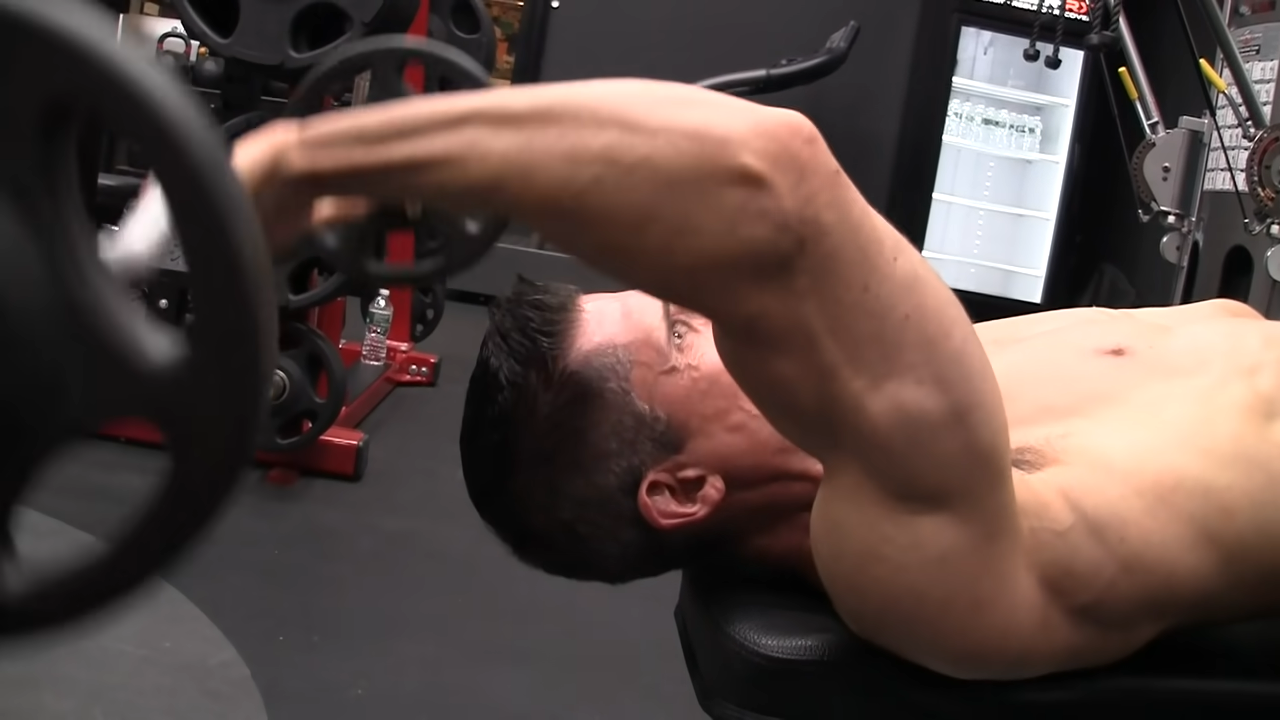
HOW TO DO THE LYING TRICEPS EXTENSION:
- This one’s a classic and honestly, one of my favorite triceps builders of all time. Lie back on a flat bench holding an EZ-bar or dumbbells directly above your chest.
- Instead of keeping your arms perfectly vertical, tilt them back slightly so the bar sits just behind your head. That small angle keeps constant tension on the triceps and takes your shoulders out of the equation.
- Now, lower the bar slowly behind your head, bending only at the elbows.
- Let your upper arms drift a few degrees toward the bench as you go down. That added motion increases the stretch on the long head without putting extra mechanical stress on your elbows.
- From there, press the weight back up along the same path, stopping just short of vertical to keep the muscle working.
WHAT MAKES IT EFFECTIVE: That backward arm angle changes everything. Most people bring the bar straight over their face, which gives the triceps a rest at the top. By keeping your arms slightly angled back, you maintain tension throughout the entire rep. That’s why this variation has always been one of my favorites: it builds real triceps strength and size while teaching perfect elbow discipline.
BANDED LYING TRICEPS EXTENSION
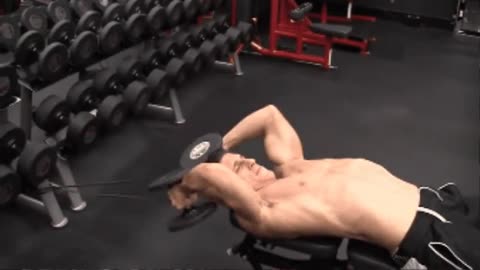
HOW TO DO THE BANDED LYING TRICEPS EXTENSION:
- Lie flat on a bench holding a pair of dumbbells, each looped with a resistance band.
- Anchor the bands behind you to something solid like a heavy machine base, squat rack, or any sturdy fixture that won’t move.
- Start with your arms extended above your chest and your palms facing each other.
- Don’t hold the dumbbells directly above your shoulders. Angle them slightly back so the resistance is always pulling behind you, not straight down. This keeps the triceps loaded even at the top.
- Lower the weights toward the sides of your head under control, bending only at the elbows. Your upper arms should stay fixed in place like hinges.
- When you press the dumbbells back up, the bands stretch and increase the tension, forcing the triceps to fire harder through lockout.
WHAT MAKES IT EFFECTIVE: Bands change the resistance curve. They make the movement easier at the bottom, where the joint is most vulnerable, and progressively harder as you extend, which is right where the triceps are built to take it. That means constant increasing tension through the full range without overloading the elbows. It’s a smarter, joint-friendly way to make a proven mass builder like the lying triceps extension even more effective.
DUMBBELL OVERHEAD EXTENSION TO KICKBACKS
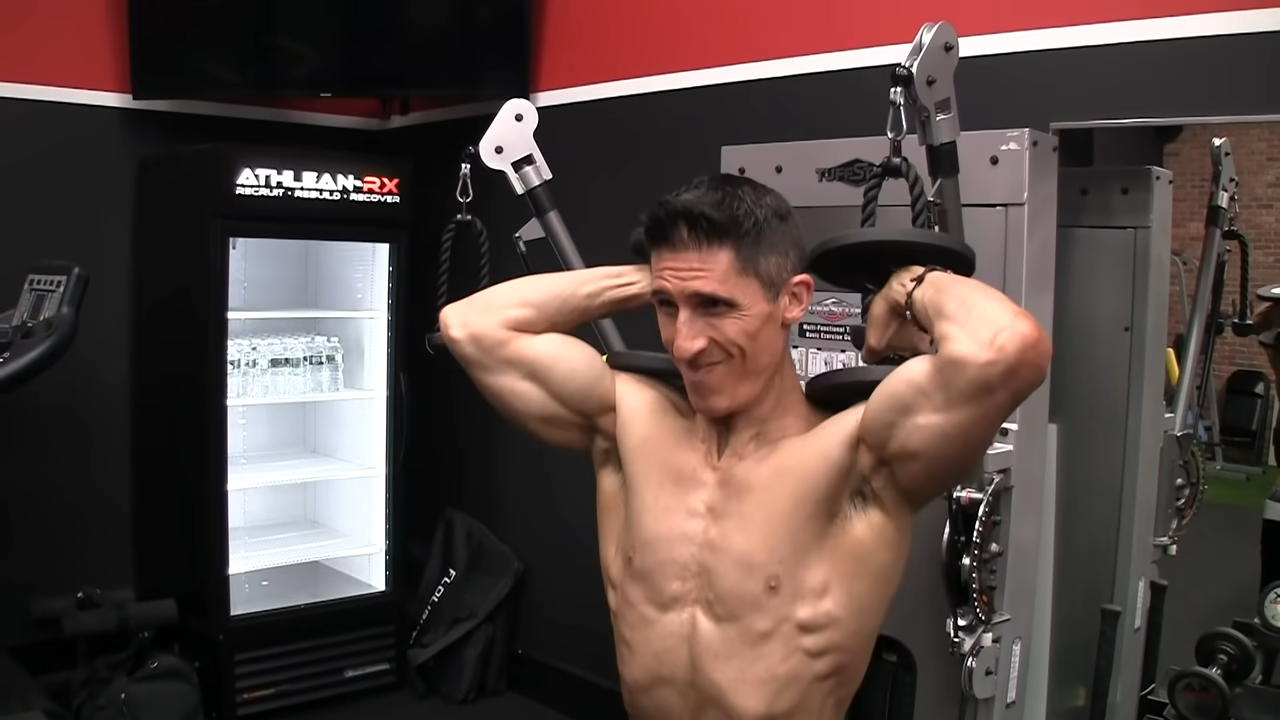
HOW TO DO DUMBBELL OVERHEAD EXTENSION TO KICKBACKS:
- Stand tall with a dumbbell in each hand and press them overhead. Keep your elbows close to your temples, not flared out to the sides.
- Lower the dumbbells slowly behind your head until your forearms hit about ninety degrees.
- Only your forearms move here. Your upper arms stay locked in place.
- Once you feel that deep stretch, drive the weights straight back up and squeeze hard at the top.
- Now hinge forward at the hips with your back flat and core tight. Let your arms drop so your elbows are pinned to your sides.
- From here, extend the arms straight back, locking out the elbows at the top. Control every rep and don’t swing. You should feel the triceps fire from start to finish.
WHAT MAKES IT EFFECTIVE: This combination takes the triceps from a fully lengthened position to a fully shortened one in a single flow. The Overhead Extension stretches the long head under load, and the Triceps Kickback finishes it off with a peak contraction. It’s an efficient, time-saving way to build both strength and definition without ever setting the weights down.
PJR EXTENSIONS (PJR PULLOVERS)
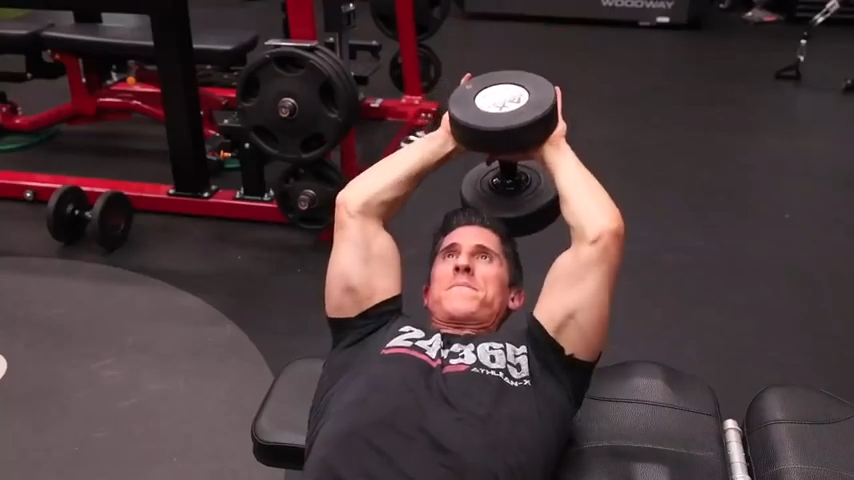
HOW TO DO PJR PULLOVERS:
- Lie flat on a bench holding a single dumbbell with both hands above your chest.
- Start with your arms fully extended, then lower the dumbbell back and over your head in a controlled arc.
- As it moves behind you, you’ll feel a deep stretch in your triceps.
- Once you reach the bottom, drive the dumbbell back to the starting position by extending your elbows and engaging your triceps, with a little help from your lats to guide the weight.
- Keep your upper arms angled back throughout the movement so the triceps stay loaded.
- Don’t let the dumbbell drift directly over your chest because that would turn it into a press and unload the muscle you’re trying to train.
WHAT MAKES IT EFFECTIVE: The PJR Extension lets you safely handle heavier weight than a standard Lying Triceps Extension because your lats assist during the eccentric. That extra load creates a massive stretch on the long head of the triceps, which is where most lifters are weakest. It’s the perfect blend of strength and hypertrophy.
WEIGHT PLATE OVERHEAD EXTENSIONS
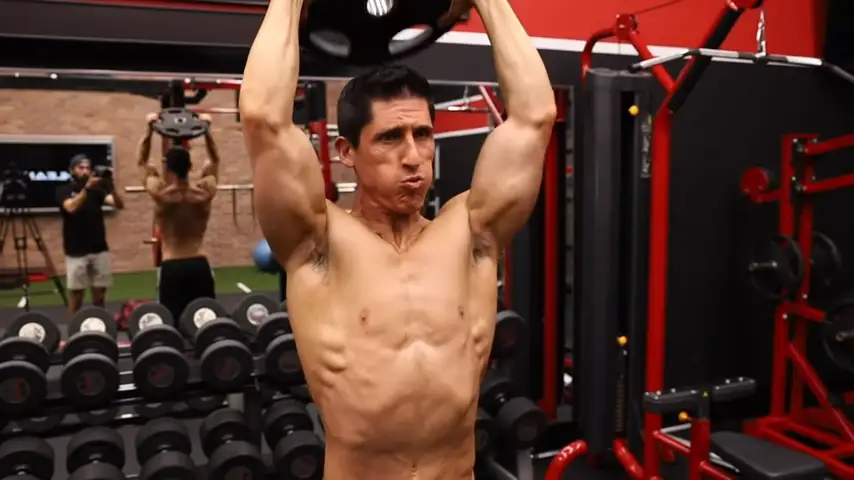
HOW TO DO WEIGHT PLATE OVERHEAD EXTENSIONS:
- Grab a weight plate and hold it by the sides with both hands.
- Bring it overhead, keeping your elbows pointed forward at about a forty-five-degree angle. That angle matters because it keeps the shoulders out of the movement and locks tension in the triceps.
- Lower the plate slowly behind your head, allowing your elbows to bend naturally as you feel a deep stretch through the back of your arms.
- Don’t rush this part. It’s where the muscle gets loaded the most. After pausing, drive the plate back up by extending at the elbows, not by swinging your shoulders or arching your back.
WHAT MAKES IT EFFECTIVE: Using a plate gives you a longer range of motion because it can move comfortably past your head without hitting anything. That extra few inches of travel means a bigger stretch, more time under tension, and better muscle activation through the full motion.
CABLE TRICEP EXTENSIONS: PROGRAMMING AND PROGRESSION
A good exercise only works if it’s programmed right. The Standing Overhead Cable Tricep Extension is no exception.
Where you place it in your routine and how you progress it determines whether it becomes a growth driver or just another filler set.
Here’s how to program and progress your arm day routine with this exercise:
PLACEMENT
Where you put this movement in your program depends on what kind of day you’re training.
If you’re running a push day or chest-focused session, the Standing Overhead Cable Tricep Extension should come after your main compound presses.
By that point, your triceps have already done their share of pressing, which means they’re primed for targeted isolation.
The goal here is to finish what your compounds started by locking in on the long head and driving it to full fatigue without adding extra joint stress.
On a dedicated arm or isolation day, the placement shifts.
In that context, this exercise can either kick things off or serve as the mid-point bridge between heavy triceps work and lighter finishing drills.
Starting with it early emphasizes strength and control when you’re fresh. Placing it later turns it into a high-tension finisher that burns out the long head after other isolation moves.
In both cases, the principle stays the same: use it where precision matters most.
After you’ve built power with the big lifts, or before you close out your arm resistance training, the Overhead Cable Extension is the move that refines your mechanics and brings definition to the strength you’ve already built.
SETS AND REPS
Programming this exercise depends on your intent and fitness goals.
For pure strength development, keep the reps lower and the execution tighter. Focus on controlled tempo (about two seconds down, one second up) and maintain your posture throughout the movement. Heavy weight here should challenge your triceps, not your spine or shoulders.
If hypertrophy is the goal, lean on moderate weight with sustained tension. Aim for a rep range that allows full control but still forces fatigue by the final few reps. You want the muscle burning, not the joints. Use a deliberate pace and avoid locking out completely at the top to keep the triceps under constant strain.
For endurance and definition, slow everything down. Linger in the stretch, hold the contraction, and extend the set duration instead of the load. This version is less about moving weight and more about teaching the muscle to maintain output under fatigue and that’s something that translates directly to better control in your heavier lifts.
PROGRESSION
True progression in this exercise isn’t about stacking more plates every week. It’s about maintaining perfect form as the resistance gradually increases.
The goal is to keep your elbows fixed, posture solid, and range consistent while the load rises over time. That kind of controlled overload builds both muscle and joint resilience.
A simple progression model is to start each mesocycle focusing on perfect form and moderate weight.
As the weeks go on, increase the resistance slightly while preserving the same movement quality. Once form starts to degrade, reduce the load or switch attachment angles to reintroduce a new challenge without overtaxing the joints.
You can also use intensity techniques sparingly to drive adaptation. Drop sets work well here. Reduce the weight by twenty to thirty percent and continue immediately after failure to extend time under tension. This approach burns out the long head without sacrificing alignment.
Ultimately, your best progress measure is your ability to reproduce clean, consistent reps week after week while the muscle, not momentum, moves the load.
The Cable Tricep Extension demands control from start to finish.
When you stay tall and let the line of pull do its job, every rep builds strength that transfers to your pressing power.
It’s a small movement with a big payoff when you respect the details.
Check out our complete line of ATHLEAN-RX Supplements and find the best training program for you based on your fitness level and goals.

- The Standing Overhead Cable Tricep Extension keeps constant tension on the triceps through a full range of motion, especially in the stretched overhead position where the long head does the most work.
- Also, the cable’s line of pull forces control and stability, making every rep a direct hit to strength and size.
- Here’s how to perform Cable Tricep Extensions:
- Set up a rope attachment on the low pulley of a cable machine and turn so you’re facing away from the stack. If you’re working one arm at a time, clip on a single handle.
- Take a few steps forward until there’s already tension on the line before you move. The cable should run up and behind you (not down in front), so the resistance stays aligned with your arms the whole time.
- Bring the rope overhead until your hands sit just behind your head. Keep your elbows tucked near your ears and locked in place.
- That upright posture is key. If you start leaning forward, you’re turning this into a shoulder exercise.
- Brace your core and stand tall. From here, extend the rope straight up and slightly forward until your arms are fully locked out.
- At the top, squeeze hard and hold for a beat before lowering the rope slowly back behind your head. Fight the pull on the way down.
TRICEP CABLE EXTENSIONS FAQ
Start by attaching a rope to the low pulley machine, then face away from the stack.
Step forward until you feel tension on the cable before you even begin. That setup ensures the triceps stay under load through the entire movement.
Bring the rope up and behind your head, keeping your elbows in line with your ears. Your torso should stay tall and braced.
Extend your arms straight overhead while keeping your upper arms fixed in place, then lower the rope slowly until you feel a deep stretch behind the arms.
The key is to move only at the elbows and everything else stays locked in. Each rep should feel smooth and deliberate, with the tension never dropping off at the top or bottom.
They’re one of the most efficient isolation movements you can do for the triceps because the cable keeps tension consistent from start to finish.
Unlike free-weight options, where gravity limits load direction, the cable lets you maintain resistance even in the stretched position. This constant line of pull helps develop strength through the full range without unnecessary stress on the joints.
It’s especially effective after compound lifts like the Floor Press or Chest Dips on the nautilus dip machine, where the triceps are already warm and partially fatigued.
At that stage of the workout, the Cable Extension isolates the long head and reinforces stability at the elbow, which are two things pressing movements don’t fully cover.
The most effective form keeps your body still and your elbows fixed. Stand upright with the cable traveling behind you, not above or in front, so the line of resistance aligns directly with your arms.
Keep your ribs down, core tight, and elbows pointed forward near your head. Avoid the common habit of leaning into the movement because once your torso pitches forward, the shoulders start helping, and the triceps lose tension.
The goal is to let the elbows act as the only hinge. Press the rope up until your arms are straight, hold the contraction briefly, and then return to the stretched position with control.
When performed this way, the exercise isolates the triceps completely and builds strength that transfers directly to your heavier pushing movements.
REFERENCES
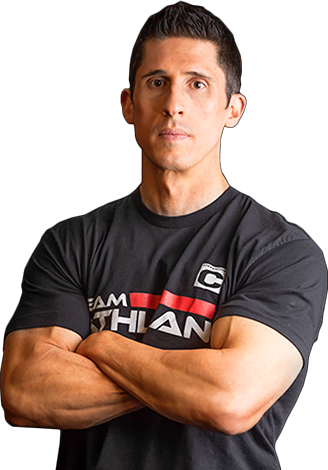
Jeff Cavaliere M.S.P.T, CSCS
Jeff Cavaliere is a Physical Therapist, Strength Coach and creator of the ATHLEAN-X Training Programs and ATHLEAN-Rx Supplements. He has a Masters in Physical Therapy (MSPT) and has worked as Head Physical Therapist for the New York Mets, as well as training many elite professional athletes in Major League Baseball, NFL, MMA and professional wrestling. His programs produce “next level” achievements in muscle size, strength and performance for professional athletes and anyone looking to build a muscular athletic physique.