

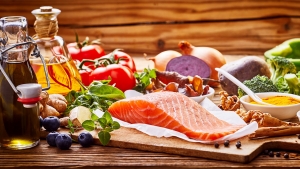


IS PLANT-BASED PROTEIN GOOD FOR BUILDING MUSCLE?
On one hand, you’ve got guys who think any protein from plants will do more harm than good. They are content with their steak and eggs. That approach can cover protein well, but if that’s most of your diet, you’re going to miss out on fiber and some important micronutrients.
On the other, there are guys who believe in the benefits of plant proteins, but they’ve skipped the real research. And their meal prep consists mostly of beans, rice, and some processed plant protein from the freezer. Good way to go if you want certain vitamins and minerals, but not so much if you want to maximize protein intake.
Both camps are closer than they think.
The steak and eggs guy is two plant foods away from filling in the fiber and the micronutrients he’s missing, without giving up a gram of protein. The beans and rice guy is a few swaps away from a plate that finally hits his number.
Either way, it starts with knowing which plants put real protein in front of you and how much of each one it takes.
In this ultimate guide to plant-based protein, I’ll rank every plant protein, then take each group in turn so you know what belongs on the plate and how much of it to put there.
I’ll also answer the questions that come up most, including which plant-based protein sources are the best, whether plant-based foods are healthy, and how to reach 100 grams of protein a day without meat.
Here are some of the topics I’ll talk about in this guide:
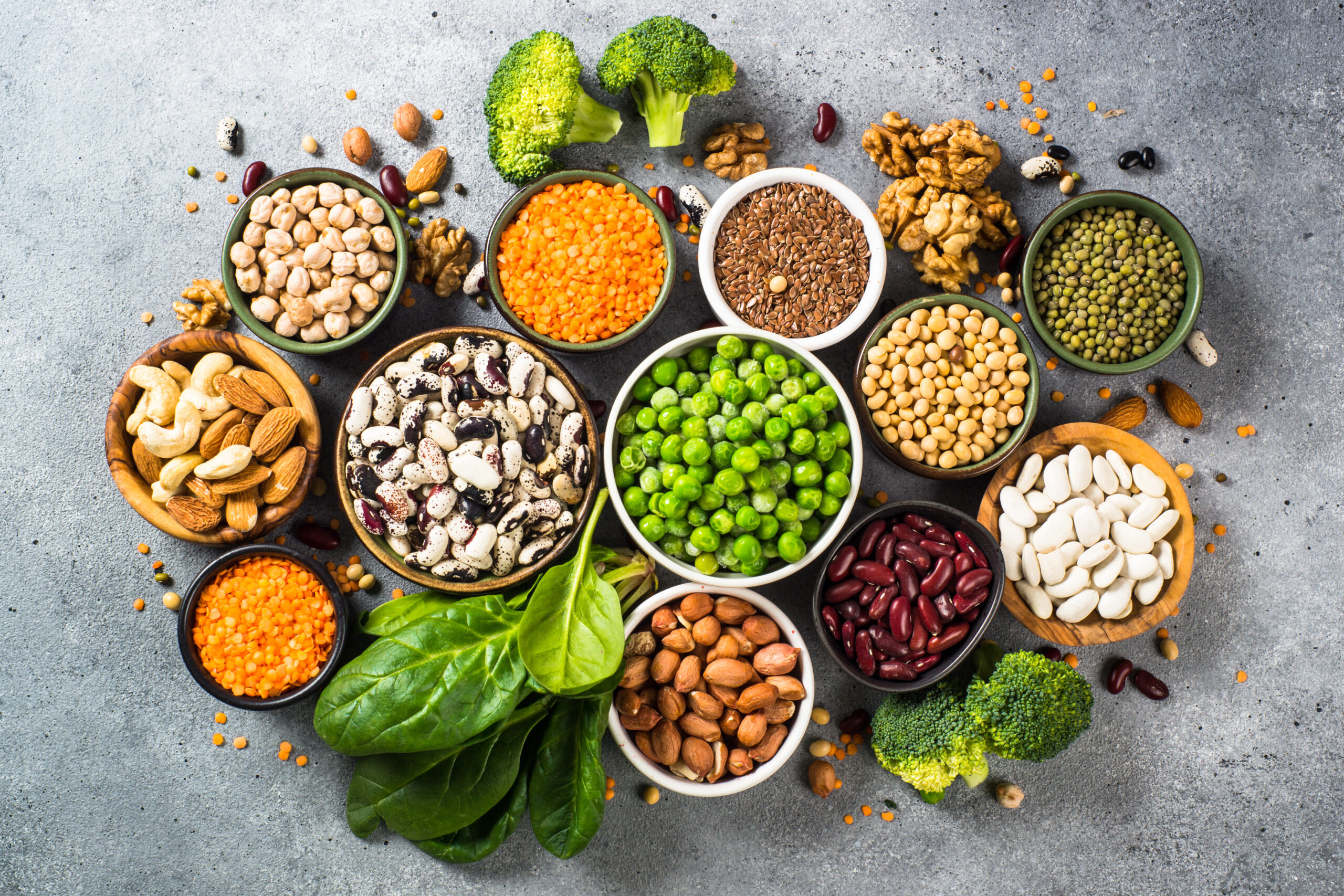
1) YOUR DAILY PROTEIN TARGET
Have you noticed that protein is suddenly… everywhere?
It started with protein cereal then protein chips. Now, you can head to your local store and find a protein Pop-Tart, protein soda, and even protein Doritos.
None of that happens without demand behind it.
The 2025 International Food Information Council Food and Health Survey found 71% of Americans trying to eat more protein, up from 59% in 2022.
People figured out that more protein in their diet is a good thing. But the problem is that most people don’t know how much they should be eating each day.
And if you have serious fitness goals of muscle growth and fat burning, that’s a number you need to know.
AIM FOR 0.8 TO 1.2 GRAMS PER POUND
I recommend 0.8 to 1.2 grams of protein per pound of bodyweight a day.
The federal recommendation for daily protein intake is 0.54 to 0.73 grams per pound (1.2 to 1.6 grams per kilogram). Even the older Recommended Dietary Allowance from the National Academy of Medicine, which is lower still, was never meant for people who train.
The UK sets the bar lower still. The British Nutrition Foundation puts the Reference Nutrient Intake at 0.34 grams per pound (0.75 grams per kilogram), a figure set back in 1991.
Why do I recommend eating more protein than the “official” number?
Simple. The federal recommendation is for the overall general population. It doesn’t consider people who are actively training for a specific fitness goal.
My number is aimed at people like you. If you are training hard enough to break muscle down, you need enough protein coming in to rebuild it.
Now, where you fall inside the range comes down to how hard you train and what you are chasing.
- Lifting two or three times a week and holding what you have puts you at 0.8.
- Four or five sessions with your numbers climbing puts you at 1.0.
- Five or six hard days, or eating in a deficit and protecting your muscle while you lose fat, puts you at 1.2.
Think about how much you train and where you fall in that range. Then take your body weight in pounds and multiply it by the grams per pound. This is your daily protein target in grams. A few examples:
You weigh 160 pounds and lift three days a week. You like where your physique is at and you want to keep it there. That puts you at 0.8 grams per pound.
- 160 × 0.8 = 128 grams of protein a day
You weigh 175 pounds and train four or five days a week. Your lifts are climbing and you want more size on your frame. That puts you at 1.0 gram per pound.
- 175 × 1.0 = 175 grams of protein a day
You weigh 220 pounds and train five or six days a week. You are eating in a deficit to lose fat, and you want to hold onto the muscle underneath it. That puts you at 1.2 grams per pound.
- 220 × 1.2 = 264 grams of protein a day
Run your own numbers and you have your daily protein target. Here’s an idea of what that comes to at a few common weights.
| Bodyweight | 0.8 g/lb Maintaining | 1.0 g/lb Adding muscle | 1.2 g/lb Hard training or a deficit |
| 160 lbs | 128 g | 160 g | 192 g |
| 175 lbs | 140 g | 175 g | 210 g |
| 190 lbs | 152 g | 190 g | 228 g |
| 205 lbs | 164 g | 205 g | 246 g |
| 220 lbs | 176 g | 220 g | 264 g |
2) NOT ALL PROTEIN IS EQUAL
Where you get your protein changes what kind of nutrients you get.
Protein is not a single ingredient. Every protein you eat is a chain of amino acids, and there are 20 of them in total. What separates chicken from rice from lentils is the ratio those 20 amino acids come in.
And that ratio decides how much of the protein your body can put to use.
Take 40 grams of protein from a chicken breast and 40 grams from a bowl of rice. Same number on paper. The chicken arrives with every amino acid in roughly the proportions your body is looking for. The rice is short on one of them, lysine.
That matters because your body needs all nine essential amino acids on hand at the same time to build muscle. If one essential amino acid is present in too small an amount, it can limit how efficiently the body uses the rest of that protein for muscle protein synthesis.
A protein like the rice gets called “incomplete” while the chicken is “complete.”
Here is what those two terms mean, which plant foods are short on which amino acids, and how to put them together so it stops being a problem.
COMPLETE PROTEIN VS. INCOMPLETE PROTEIN
Remember that there are 20 amino acids and each one gets placed into one or two categories: non-essential and essential.
Here’s a cheat sheet for which is which:
| Essential Amino Acids | Non-Essential Amino Acids |
| Histidine | Alanine |
| Isoleucine | Arginine |
| Leucine | Asparagine |
| Lysine | Aspartic acid |
| Methionine | Cysteine |
| Phenylalanine | Glutamic acid |
| Threonine | Glutamine |
| Tryptophan | Glycine |
| Valine | Proline |
| Serine | |
| Tyrosine |
The split is about where they come from, not how important they are. Non-essential does not mean optional. Your body needs every one of the 20, whether you are building muscle or not.
Non-Essential Amino Acids: Your body can make these amino acids on its own. Run low on alanine or glutamine and your body puts more together from what it already has on hand. You never have to think about it.
Essential Amino Acids: On the flip side, these are the aminos that your body cannot make. You must get these from food or supplements, preferably the former. There is no backup for these. If you miss out on lysine, for example, your body has no way to make up for it.
And this brings us back to the idea of complete vs. incomplete proteins.
A protein gets called complete or incomplete based on the nine essential amino acids. The other eleven aminos never come into it, because your body can make them whether or not the food supplies them.
ARE PLANT PROTEINS “INCOMPLETE?”
Some are. But not in the way that word makes it sound.
Meat, eggs, dairy, and fish are all complete. Every one of the nine essential amino acids, in the amounts your body is looking for.
Most plant foods get labeled incomplete, and here is where people get the wrong idea.
The World Health Organization publishes a reference for how much of each amino acid a good protein should carry, and incomplete does not mean an amino acid is missing. Nearly every plant food contains all nine. What changes is how much of each one, and most plant foods come up short on a single amino acid.
Which one depends on the food, and it splits along one line: legumes on one side, grains, and seeds on the other.
Beans, Lentils and Peas: These foods are short on methionine, but they have plenty of lysine.
Grains, Nuts and Seeds: These foods have the reverse issue. They are short on lysine but no issues with methionine.
Thankfully, the solution is simple. What the beans are short on, the rice has. What the rice is short on, the beans have.
Here is how that works across the plant foods you are most likely to eat:
| Plant Food | Short On | Pair It With |
| Beans, lentils, peas | Methionine | Rice, oats, bread, nuts, seeds |
| Grains, nuts, seeds | Lysine | Beans, lentils, peas |
| Corn and almonds | Both | Beans or lentils |
| Soy, quinoa, chickpeas | Nothing | Complete on their own |
Corn and almonds are the outliers. They come up short on both, which puts them below the rice example from earlier, and at the bottom of the group on their own.
The bottom row is the one to remember.
Soy, quinoa, and chickpeas have all nine essential amino acids in the amounts you need, no pairing required. Tofu, tempeh, and edamame all count here, which is a large part of why soy gets treated differently from the rest of the plant world.
Overall, the answer to the question is yes, most plant proteins are incomplete on their own. But this sounds worse than it is. You can easily solve this issue by pairing different plant protein sources together to get that “complete” protein you want.
DO YOU HAVE TO PAIR THEM AT EVERY MEAL?
No. The old advice got it wrong.
For years, the rule was that your beans and your rice had to hit the plate together or the protein would not count. Engineer every meal or waste the food.
That is not what the evidence supports. The Academy of Nutrition and Dietetics states in its current position paper that a varied diet supplies all the essential amino acids you need over the course of a day.
Not the meal. The day.
Your body keeps a working supply of amino acids circulating and pulls from it as needed. Lentils at lunch and rice at dinner fill in for each other.
Which takes most of the planning out of it. Eat legumes most days, eat grains most days, throw in some nuts and seeds, and the pairing sorts itself out without you tracking a thing.
There is one thing pairing will not do for you, though.
Putting two incomplete proteins together fixes the ratio of amino acids. It does not give you more protein.
If your rice and beans come to 12 grams of protein, pairing them does not turn that into 30. You still have to eat enough food to get there.
Pairing solves the quality problem. Hitting your number is still on you.
3) CAN YOU BUILD MUSCLE ON PLANTS?
When you think of muscle building foods, what’s the first thing that comes to mind?
Ask around a gym and you’ll usually hear the same two words: chicken and rice. For me, it’s that classic image of a bodybuilder throwing an oversized steak on the grill.
Probably safe to say that nobody’s first answer is lentils.
But you might be surprised at how well those plant-based sources can support your hypertrophy goals.
Here’s what the research has to say.
VEGANS VS. MEAT EATERS: WHO GAINS MORE MUSCLE?
Vegan diets have been tested against this head-on. In 2021, a team at the University of São Paulo did exactly that.
They recruited 19 lifelong vegans and 19 omnivores, all young men, and ran them through the same 12-week program: twice a week, every session supervised. Both groups ate the same amount of protein, around 1.6 grams per kilogram of bodyweight a day. Vegan protein came from plants and soy protein. The omnivores got theirs from mixed sources and whey powder.
Twelve weeks later, both groups had gained the same muscle. Leg lean mass went up 1.2 kilograms, about 2.6 pounds, in each group. Both got stronger on the leg press, with no meaningful difference between them.
Same program, same protein, same results.
The researchers’ conclusion was that protein type doesn’t affect training results in people eating enough protein.
One study is just one study. But what happens when you pool a bunch of them together and compare the results?
That brings us to a 2018 review in the International Journal of Sports Nutrition and Exercise Metabolism that pulled together nine separate trials involving 266 people. Every trial in it ran at least six weeks, paired resistance training with a protein supplement, and put soy up against an animal protein: whey in five of them, and beef, milk or dairy in the rest.
The researchers looked at three outcomes:
- Bench press strength
- Squat strength
- Lean body mass
Every group gained on all three, which is what you would expect from people who spent six weeks or more in a gym. The interesting part is what happened when the researchers compared the soy groups against the animal protein groups.
Nothing separated them on any of the three measures.
That is 266 people across nine studies, and the protein source made no difference to what any of them built.
One caveat on that one. The lead author runs a soy industry organization, which he discloses in the paper.
The São Paulo study had the opposite problem: a co-author with dairy industry funding, and the supplements donated by a manufacturer. One study with reasons to favor soy, one with reasons to favor dairy, same answer from both.
I have one more study that I want to point out because it addresses the most common objection against plant-based protein.
The usual argument against plant protein is that it carries less leucine, the amino acid that switches on muscle growth.
In 2020, researchers took that variable off the table.
They gave one group 19 grams of whey and the other 26 grams of soy, doses set so both delivered exactly the same 2 grams of leucine, then put men and women through 12 weeks of supervised training.
Note the difference in those two numbers. It took seven more grams of soy to match the whey on leucine. That difference is why plant portions have to be bigger.
After 12 weeks, both groups had gained the same lean mass and the same leg strength. No significant difference anywhere.
Now, let me be straight with you. These are all medically peer-reviewed studies, but the research is not unanimous.
On strength, it is settled. Not one review has found an advantage for either side on how much weight you can move.
On muscle size, there is an argument that you should know about: A 2021 review of 18 trials found a small edge for animal protein on lean mass, showing up mainly in adults under 50.
Three things keep it from changing the picture. The authors themselves said the practical importance was unclear. The effect vanished when any one of four studies was removed from the analysis, which means it was resting on very little. And it came mostly from trials that swapped one supplement for another, rather than studies where people ate full diets for weeks.
Feed people actual diets with enough protein in them, the way São Paulo did, and the difference keeps disappearing.
WHAT THIS MEANS FOR YOUR PLATE
Plant protein works. It just has two disadvantages against animal protein, and both come down to portion size.
Harder to Digest: Some of the protein you eat never gets absorbed. That happens with animal protein too, just less of it. Fiber and plant cell walls mean a portion of what you chew passes straight through. The 20 grams on the label is not 20 grams your body gets to use, and the shortfall is bigger with plants than with chicken.
Lower in Leucine: Leucine is the amino acid that switches muscle protein synthesis on, and plants have less of it per gram of protein. You saw the size of that gap in the last study: 26 grams of soy to match 19 grams of whey. Seven extra grams of food for the same result.
Leucine also works on a threshold.
A meal needs roughly 2.5 to 3 grams of it before muscle protein synthesis runs at full speed. Come in under that and the response is weaker, no matter how much total protein was on the plate. The leucine gap is not only about the day’s total. That means leucine content can influence how strongly an individual meal stimulates muscle protein synthesis..
Neither of those makes plant protein a bad choice. They’re the reason the portion has to be bigger.
Which brings us back to your daily protein intake number.
The Academy of Nutrition and Dietetics says that once plant protein intake passes 0.68 grams per pound of bodyweight a day, there’s no downside to muscle size or strength. The bottom of the range I gave you earlier, 0.8 grams per pound, already clears that.
If you’re eating mostly plants, take the higher number in your range rather than the lower one, and lean toward five meals rather than three. Both adjustments do the same thing: they put more protein in front of you per sitting, which is the entire fix for a food that digests a little slower and carries a little less leucine.
You can absolutely do this with whole foods alone. A quality plant-based protein powder can also make hitting those targets considerably easier.

4) EVERY PLANT PROTEIN, RANKED
Here is every plant protein that is reasonable to include in your meal prep, lined up by how much you get from a normal serving.
Not per 100 grams, the way most charts do it. Nobody portions almonds by the scale. These are practical servings: a cup of lentils, three ounces of tofu, an ounce of almonds, two tablespoons of peanut butter.
Two columns to pay attention to.
Protein per serving is the one that decides your day. Hold it against the 30 to 40 grams you need per meal. A food that gives you 15 grams in one serving is doing half a meal on its own.
Protein per 100 calories tells you how many calories come along with it. Firm tofu gives you 12 grams for every 100 calories. Brown rice gives you 2.2. Same 100 calories, wildly different return.
| Food | Serving | Protein | Calories | Protein Per 100 Cal |
| Seitan | 3 oz | 21 to 27 g | 110 to 135 | ~19 |
| Edamame, shelled | 1 cup | 18.5 g | 188 | 9.8 |
| Lentils | 1 cup | 17.9 g | 230 | 7.8 |
| Tempeh | 3 oz | 16.9 g | 166 | 10.2 |
| Split peas | 1 cup | 16.3 g | 231 | 7.1 |
| Pinto beans | 1 cup | 15.4 g | 245 | 6.3 |
| Kidney beans | 1 cup | 15.3 g | 225 | 6.8 |
| Black beans | 1 cup | 15.2 g | 227 | 6.7 |
| Tofu, firm | 3 oz | 14.7 g | 122 | 12.0 |
| Chickpeas | 1 cup | 14.5 g | 269 | 5.4 |
| Lima beans | 1 cup | 12.8 g | 231 | 5.5 |
| Hemp seeds | 3 tbsp | 9.5 g | 166 | 5.7 |
| Amaranth | 1 cup | 9.3 g | 251 | 3.7 |
| Tofu, extra firm | 3 oz | 8.5 g | 71 | 12.0 |
| Pumpkin seeds | 1 oz | 8.5 g | 163 | 5.2 |
| Whole wheat pasta | 1 cup | 8.4 g | 209 | 4.0 |
| Green peas | 1 cup | 8.2 g | 125 | 6.6 |
| Quinoa | 1 cup | 8.1 g | 222 | 3.7 |
| Soy milk | 1 cup | 7.9 g | 131 | 6.1 |
| Peanut butter | 2 tbsp | 7.1 g | 191 | 3.7 |
| Whole wheat bread | 2 slices | 7.0 g | 141 | 4.9 |
| Wild rice | 1 cup | 6.5 g | 166 | 4.0 |
| Almonds | 1 oz | 6.0 g | 164 | 3.7 |
| Tofu, silken | 3 oz | 5.9 g | 53 | 11.1 |
| Oatmeal | 1 cup | 5.9 g | 166 | 3.6 |
| Buckwheat | 1 cup | 5.7 g | 155 | 3.7 |
| Sweet corn | 1 cup | 5.6 g | 157 | 3.6 |
| Brown rice | 1 cup | 5.5 g | 248 | 2.2 |
| Sunflower seeds | 1 oz | 5.5 g | 165 | 3.3 |
| Spinach | 1 cup | 5.3 g | 41 | 12.9 |
| Cashews | 1 oz | 5.2 g | 157 | 3.3 |
| Potato | 1 medium | 4.3 g | 161 | 2.7 |
| Asparagus | 1 cup | 4.3 g | 40 | 10.9 |
| Chia seeds | 2 tbsp | 4.0 g | 117 | 3.4 |
| Brussels sprouts | 1 cup | 4.0 g | 56 | 7.1 |
| Broccoli | 1 cup | 3.7 g | 55 | 6.8 |
| Mushrooms | 1 cup | 3.4 g | 44 | 7.8 |
| Avocado | 1 medium | 3.0 g | 240 | 1.2 |
That is 38 foods, and they fall into six groups. Every section that follows uses these same names.
Soy Foods: Tofu, tempeh, edamame and soy milk are the soy-based foods on this list. Soy is technically a legume, but it gets its own group here for two reasons: it takes the top spots on the ranking, and it is one of the few plant proteins that needs no pairing.
Seitan: Wheat protein, and a category of one.
Legumes: Beans, lentils, peas, chickpeas and split peas. The largest group on the list and the one doing the most work below the top three.
Grains: Rice, quinoa, oats, corn, amaranth, buckwheat, bread and pasta. Moderate protein, and you eat enough of them that it adds up.
Nuts and Seeds: Almonds, cashews, peanut butter, pumpkin seeds, hemp seeds, sunflower seeds and chia. Peanuts are botanically a legume, but they belong here because their numbers look like a nut, not a bean.
Vegetables: Spinach, broccoli, asparagus, potatoes, mushrooms and Brussels sprouts. Every one of them is at the bottom of this table, and there is a reason for that.
Avocado belongs to none of the six, which is the whole story of avocado and protein.
With the groups sorted, here are the three things on this list that change how you shop.
SEITAN, SOY, AND LEGUMES TAKE THE TOP TEN
Ten foods on this list clear 14 grams in a single serving. Seitan is the odd one out in more ways than one.
It is wheat protein rather than a bean, and it is the only row here without a fixed number next to it. The USDA has no entry for seitan, so those figures come off the labels of three brands you would find at the store. Seitan gets its own section later, where I get into why that range is so wide.
The other nine are all soy foods or legumes: edamame, lentils, tempeh, split peas, pinto beans, kidney beans, black beans, firm tofu, and chickpeas.
Those ten are the foods to put meals together around. One serving of any of them puts you halfway to a 30-gram meal. Two servings and you are there.
For a reference point, three ounces of chicken breast is 26 grams of protein at 140 calories. A cup of lentils gets you about 70% of the way to that, and three ounces of seitan can match it outright.
Nothing else on the list comes close, and the gap is not small. Eleventh place drops to 12.8 grams, and by twentieth place you are down to 7 grams.
NUTS AND SEEDS ARE A FAT SOURCE
Nuts have a reputation as a high-protein snack, but the numbers do not back it up.
An ounce of almonds is 6 grams of protein and 164 calories. That is a third of what a cup of lentils gives you, for two thirds of the calories.
Nuts are a fat source that happens to contain some protein, which is a different thing from a protein source. Reaching 30 grams of protein from almonds alone would take five ounces and over 800 calories.
Pumpkin seed protein and hemp seeds are the two exceptions, and the numbers show why.
An ounce of pumpkin seeds gives you 8.5 grams of protein. Three tablespoons of hemp seeds give you 9.5. Both beat an ounce of almonds by about 50%, on roughly the same calories.
They are still fattier than a legume, and neither one is going to be a meal by itself. But a couple of tablespoons on a salad or in oatmeal adds protein rather than a rounding error, which is more than most nuts manage.
DON’T LET THAT LAST COLUMN FOOL YOU
Protein per 100 calories measures efficiency. It does not measure how much protein you get.
Spinach is the clearest example. At 12.9 grams of protein per 100 calories, it outranks firm tofu, and it outranks every bean on this list. A cup of cooked spinach still only gives you 5.3 grams of protein, because there are barely any calories in spinach to begin with. You would need over two pounds of it to reach 30 grams.
Asparagus, mushrooms and Brussels sprouts all do the same thing near the bottom of the table.
Use that column as a tiebreaker, not a ranking.
When two foods give you about the same protein per serving, that column tells you which one uses fewer calories to do it.
Three ounces of firm tofu gives you 14.7 grams of protein. A cup of chickpeas gives you 14.5 grams of protein. Nearly identical. But the tofu delivers it in 122 calories, and the chickpeas take 269 calories, a difference of 147 calories for the same protein.
If you are eating in a deficit, that is helpful information.
5) SOY FOODS: TOFU, EDAMAME AND TEMPEH
Soy is at the top of the plant protein world for one reason. It is the only common plant food that gives you plenty of protein per serving and has all nine essential amino acids at the same time.
Look back at the ranking and three of the top ten foods came from soybeans. Edamame at 18.5 grams of protein per cup. Tempeh at 16.9 grams per three ounces. Firm tofu at 14.7 grams per three ounces.
That is the same bean, processed three different ways, and those three soy products take three of the top ten spots on the ranking.
THE THREE SOY FOODS, SIDE BY SIDE
Edamame is the soybean picked young, before it hardens. You buy it frozen, in the pod or already shelled, and it cooks in about five minutes. Of the three, it takes the least work, and it tops the list at 18.5 grams of protein per cup.
Tempeh is whole soybeans that have been fermented and pressed into a firm cake. Because the whole bean is still in there, tempeh brings more fiber than tofu does, and the fermentation gives it a nutty, dense texture. It slices, crumbles and holds up on a grill.
Tofu is soy milk curdled and pressed into a block, which is the same process that turns milk into cheese. Pressing is what separates one tofu from another, and it matters more than most people know.
All three are complete proteins, so none of them needs pairing with a grain. Soy allergies are the one thing that rules this group out, and if that’s you, seitan and the legumes cover the same ground.
For anyone avoiding dairy, all three belong in the rotation.
SOY MILK VS. THE OTHER PLANT MILKS
There’s a fourth soy food most guys never think about as a protein source, and it’s sitting in your fridge door.
A cup of soy milk gives you 7.9 grams of protein. That’s about the same as a cup of cow’s milk.
Now look at what else is in that aisle.
| Per Cup | Protein |
| Soy milk | 7.9 g |
| Oat milk | 1 to 3 g |
| Almond milk | 1.0 g |
| Rice milk | 0.7 g |
| Coconut beverage | 0.5 g |
Among dairy alternatives, soy is the only one that replaces what the dairy was giving you. The rest replace the liquid.
If you’re lactose intolerant or you’ve just moved off dairy, and your coffee and your cereal both switched to oat or almond, that’s around 5 grams of protein a day gone without you changing anything else. Switching to soy gets them back for the same pour.
DOES SOY LOWER YOUR TESTOSTERONE?
Now for the reputation problem that will not go away.
You know the claim. Soy contains plant estrogens, plant estrogens feminize men, and a guy who eats tofu is trading away his testosterone one block at a time.
The claim is not made up out of nothing. Soy does contain isoflavones, and isoflavones are classified as phytoestrogens, meaning they can bind to estrogen receptors in your body.
Whether that does anything measurable to a man eating normal amounts of soy has been studied hard.
Three separate meta-analyses have run it down, in 2010, 2021 and 2025.
The 2021 analysis is the largest, pooling 38 clinical studies that measured total testosterone, free testosterone, estradiol, estrone and sex hormone binding globulin in men eating soy foods, soy protein or isoflavone supplements.
No effect on any of them. The 2025 analysis reached the same conclusion on testosterone.
Three reviews, 15 years apart, pointing the same direction. If soy lowered testosterone in men eating it, this much research would have turned it up by now.
Now, with that said, the 2025 paper did find one thing the earlier ones did not, and you should know about it.
When researchers looked at dose, isoflavone intakes around 72 milligrams a day above baseline raised estradiol by about 6.5 picograms per milliliter. That effect showed up in men who were not exercising, and it did not appear in the trials where people were training. The authors also flagged that the number of studies was small enough to limit how far the finding can be pushed.
Seventy-two milligrams a day of isoflavones is more than most people eating soy get. You would be looking at several servings every day to approach it.
There are also case reports of men developing breast tissue, and those are documented medical cases. They are also single patients at intakes nobody would call normal. A case at the far edge tells you where the far edge is. It does not tell you what happens with three ounces of tofu at dinner.
Eat the soy. Two or three servings a day is inside the range every one of these studies treats as normal, and if you train, the one estrogen finding on record came from men who were not.
WHY TWO BLOCKS OF FIRM TOFU ARE NOT THE SAME
Here is something that looks like a mistake in the ranking table until you understand it.
Firm tofu came in at 14.7 grams of protein per three ounces. Extra firm came in at 8.5 grams per three ounces.
Extra firm has less protein than firm. That is not a typo.
The reason is water. Tofu is mostly water, and how much got pressed out decides everything else about the block. The firm tofu in that table is 69.8% water. The extra firm is 82.3% water. Less water in the block means more soybean in the block, which means more protein per ounce.
The labels do not track this. Firm and extra firm are not standardized terms, and one brand’s extra firm can hold more water than another brand’s firm.
The USDA lists two different tofus, both labeled firm, and one carries 17.3 grams of protein per 100 grams while the other carries 9.0 grams. Nearly double, same word on the front of the package.
HOW TO TELL WHAT YOU ARE BUYING
Look at the nutrition facts and check out the grams of protein per serving between two blocks and you have your answer. This beats any word on the front of the package.
There is a second thing on the ingredient list you should look at, and it has nothing to do with protein.
Tofu set with calcium sulfate carries far more calcium than tofu set with nigari, 683 milligrams per 100 grams against 282 milligrams per 100 grams. On a plant-based diet, where calcium can run low, that is a free win from a choice you were making anyway.
PRESS IT YOURSELF
You can raise the protein per ounce of any block of tofu before you cook it.
Wrap the block in a clean towel, put a plate on top and something heavy on the plate, and leave it 20 to 30 minutes. Water comes out. What is left is denser, higher in protein per ounce, and it browns properly in a pan instead of steaming.
Pressed tofu also takes marinade better, because you have made room for it.
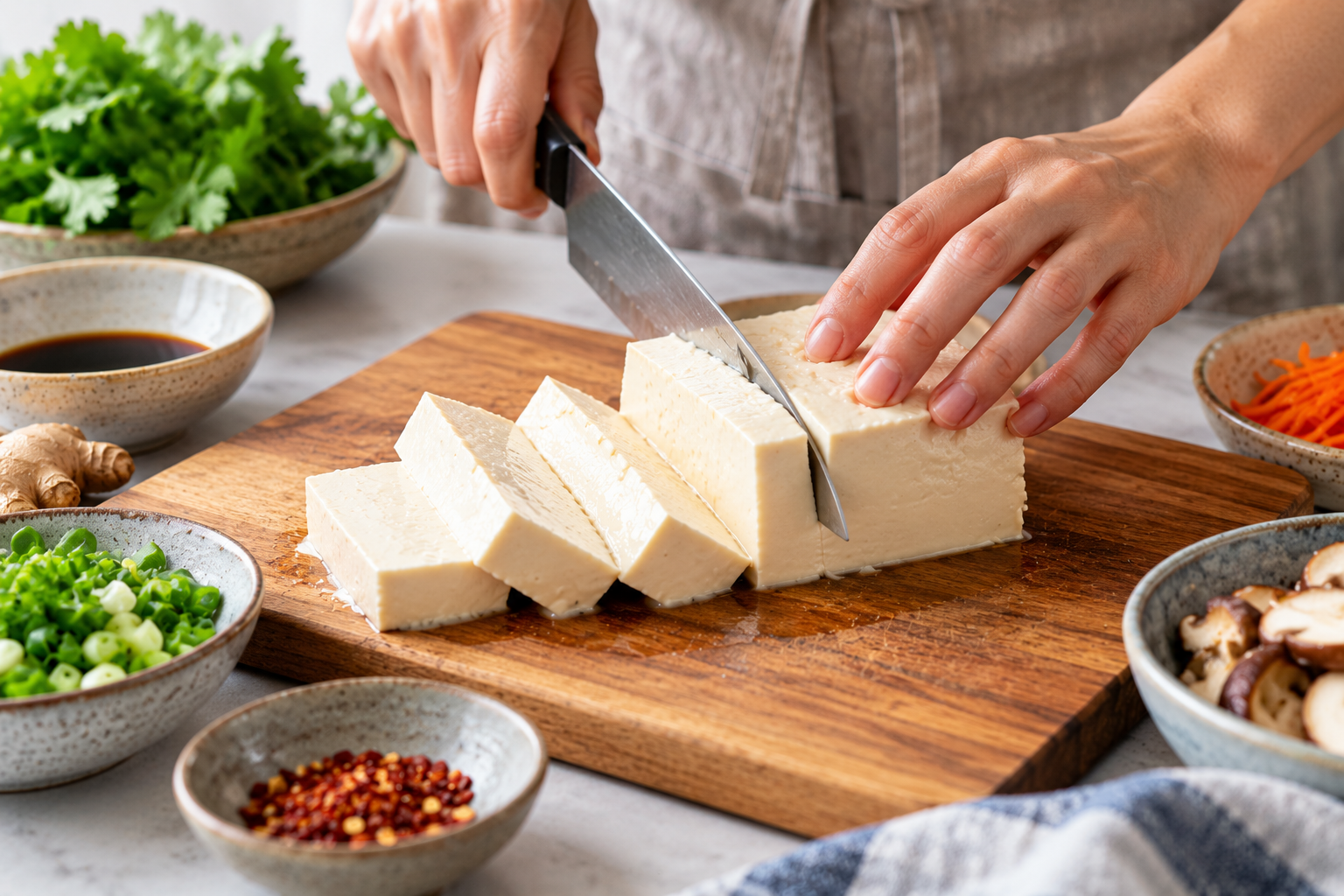
6) SEITAN AND WHEAT PROTEIN
Everyone knows about tofu. But not as many people know about seitan.
Three ounces gives you 21 to 27 grams of protein depending on the brand, on 110 to 135 calories. At the top of that range, it matches a chicken breast outright. Nothing else on the plant side gets there.
It also comes with a hard exclusion, so let me get that out of the way first.
SEITAN IS PURE GLUTEN
Seitan is what is left when you wash the starch out of wheat flour. What remains is the gluten, which is the protein, and that gets kneaded and cooked into a dense, chewy slab.
Some people call it wheat meat, and once you have cooked it you understand why. It shreds and slices the way meat does, which is why it has long been a staple in Chinese Buddhist cooking.
Which also means seitan is off the table, permanently, for anyone with celiac disease or a gluten sensitivity. This is not a food to be careful with or eat occasionally. Seitan is concentrated gluten, and it is the one plant protein a gluten free diet rules out completely.
If that is you, the top of the ranking still has plenty on it. Every soy food and every legume above 14 grams of protein per serving is naturally gluten free.
IT IS SHORT ON LYSINE
Lysine is the first limiting amino acid in wheat. Academic research institutions have confirmed it across wheat varieties in study after study.
Seitan is wheat protein in concentrated form, so it carries the same shortage.
Seitan contains all nine essential amino acids. It is just low enough in lysine that it will not do the whole job by itself.
You can easily fix this problem. Beans, lentils, peas, and soy are all loaded with lysine, and any of them somewhere in your day fixes it. Plenty of seitan recipes handle it in the mix itself, with chickpea flour or nutritional yeast worked into the dough.
BUYING IT
Seitan is the only food on the ranking that doesn’t have a set amount of protein per serving, and the spread between brands can be wide.
For example, three ounces of one seitan brand gave 21 grams of protein. Another gave nearly 27 grams of protein.
Check the nutrition panel and compare grams of protein per serving before you buy. That is the only way to know what is in the package you are holding.
Label claims on the front tell you nothing here. Pay closer attention with flavored or pre-marinated versions. Those have added starches and sugars that push the protein per ounce down, along with a lot more sodium.
COOKING IT
Seitan arrives already cooked, so you are only heating and browning it.
It takes high heat well. Sear it hard in a hot pan, grill it, or roast it. What it does not do is absorb much liquid once it is made, so marinate it before it hits the pan rather than expecting a sauce to soak in at the end.
Among plant-based meats and other meat substitutes, seitan is the one that comes closest to the thing it is replacing, which is why it turns up in vegan options like sandwiches and stir fries more than any other plant protein.
7) LEGUMES: BEANS, LENTILS, AND PEAS
Six of the top ten foods on the ranking are legumes.
Lentils at 17.9 grams of protein per cup. Split peas at 16.3. Pinto beans at 15.4. Kidney beans at 15.3. Black beans at 15.2. Chickpeas at 14.5.
They keep for years in a bag, they cook in batches, and they are among the least expensive protein in the store. If you want one group to lean on, this is it.
There is also a difference between the bag and the can that changes what you get.
CANNED BEANS VS. DRIED BEANS
Open a can of pinto beans, drain it, and you get 12 grams of protein per cup. Cook the same beans from a bag and that cup gives you 15.4 grams.
Same bean, 3.4 grams apart.
| Per Cup | Cooked From Dry | Canned and Drained |
| Chickpeas | 14.5 g | 11.6 g |
| Pinto beans | 15.4 g | 12.0 g |
| Kidney beans | 15.3 g | 14.1 g |
The reason is water. Beans get canned in liquid and sit in it for months, so they come out holding more water and less bean per cup. Nothing has been removed. There is just less food in the same space.
The numbers in the ranking table are cooked-from-dried, which is the honest way to compare foods against each other. If you cook from cans, take up to 20% off the legume rows.
THE SODIUM IS THE BIGGER PROBLEM
Protein is not the main reason to cook from dried. Sodium is.
A cup of beans you cooked yourself has 2 milligrams of sodium in it. A cup of canned beans has around 400 milligrams.
And rinsing them barely helps. Draining and rinsing canned chickpeas takes the sodium from 403 milligrams per cup down to 348 milligrams. That is 14% gone, when the whole point of rinsing is supposed to be washing the salt off.
Buy the no-salt-added version instead. That does more than rinsing ever will, and it is sitting on the same shelf.
COOKING FROM DRIED
One cup of dried beans makes about two and a half cups cooked, so a single bag goes a long way.
Lentils and split peas are the easy entry point. Neither needs soaking, and lentils are done in 20 to 25 minutes, which is faster than a lot of what you already cook.
A pot of veggie chili is the easiest way to do that. One batch on Sunday gives you four lunches, it freezes well, and it puts beans and rice on the same plate without you thinking about amino acids.
Most beans want an overnight soak and an hour or more on the stove, which is why a Sunday batch and a container in the fridge beats cooking them the night you want them.
GREEN PEAS, SPLIT PEAS, AND PEA PROTEIN
Three different things get called peas, and they are not interchangeable.
Green Peas: These are the fresh or frozen ones. A cup gives you 8.2 grams of protein, respectable for something you think of as a side vegetable, but half what lentils give you.
Split Peas: These are the mature pea, dried and split. A cup cooked gives you 16.3 grams, which puts them fourth on the entire ranking, ahead of every bean on the list.
Pea Protein: This is the isolate, pulled out of yellow peas and sold as a vegan protein powder. Different product, different use, and our guide to pea protein covers it properly.
Grab a bag of split peas expecting green peas and you have a problem at the stove. Grab green peas expecting the protein in split peas and you have one on your plate.
WHAT TO DO WITH THIS
Cook from dried when you can. You get more protein content per cup, almost no sodium, and it costs less.
When you use cans, and everybody uses cans sometimes, buy no-salt-added and count on a little less protein than the table says.
And put split peas in the cupboard. Fourth place on a 38-food ranking, 25 minutes on the stove, no soaking, and hardly anyone reaching for plant protein thinks to buy them.
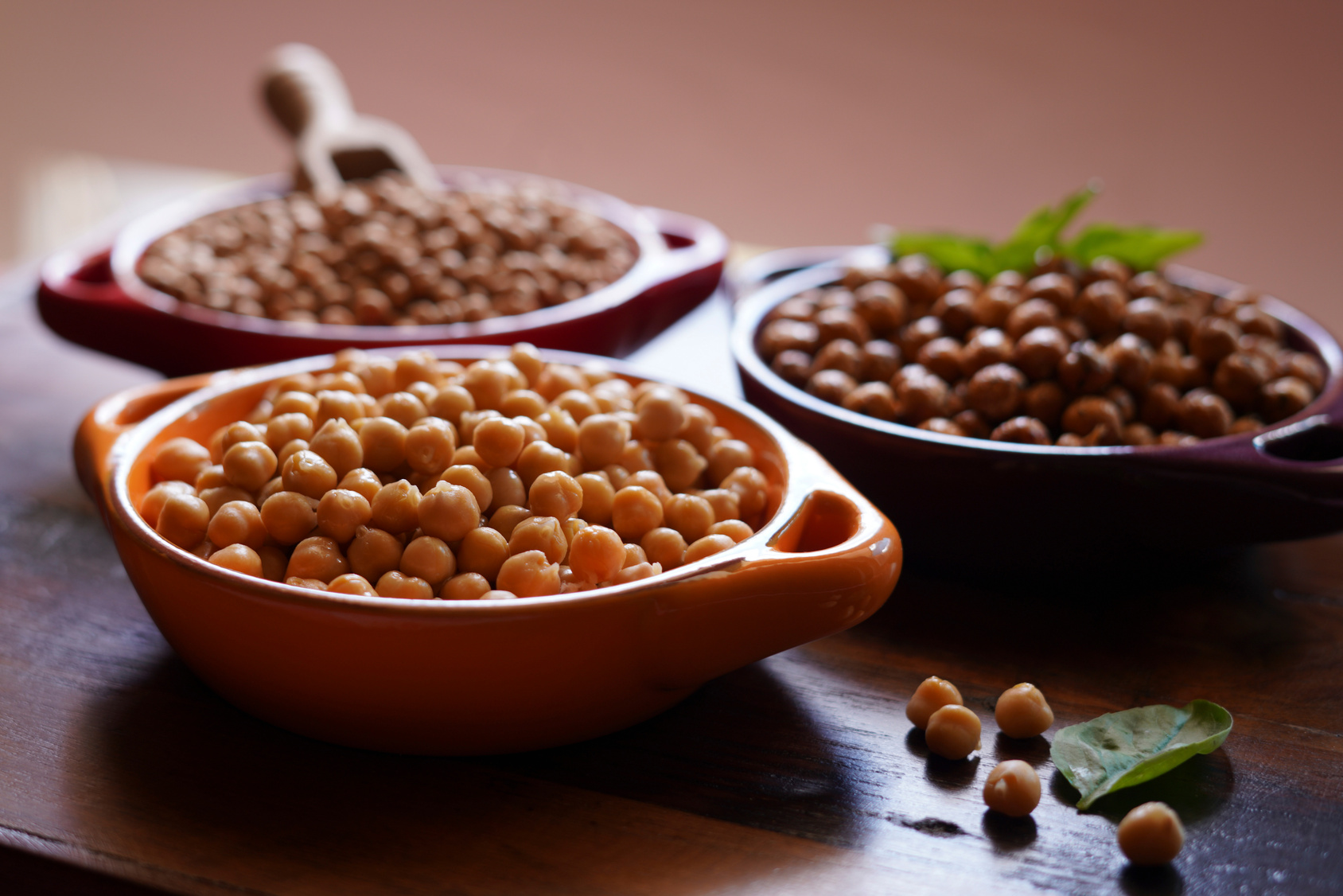
8) GRAINS, NUTS, AND SEEDS
No grain on this list will get you to 30 grams of protein on its own.
Amaranth grains top the list at 9.3 grams of protein per cup, and it drops from there. Most land between 5 and 8 grams. You would need four cups of brown rice to reach a single meal’s worth of protein.
That does not make them pointless. It makes them a different kind of contributor.
You eat grains in volume, every day, usually more than one serving. Two slices of whole grain bread at breakfast, a cup of pasta at dinner, oatmeal in between, and you have picked up 20 grams of protein without a single one of those foods being a protein source. Across a week that adds up.
Here is how they compare.
| Grain, 1 Cup Cooked | Protein | Calories | Fiber |
| Amaranth | 9.3 g | 251 | 5.2 g |
| Whole wheat pasta | 8.4 g | 209 | 5.5 g |
| Quinoa | 8.1 g | 222 | 5.2 g |
| Wild rice | 6.5 g | 166 | 3.0 g |
| Oatmeal | 5.9 g | 166 | 4.0 g |
| Buckwheat | 5.7 g | 155 | 4.5 g |
| Sweet corn | 5.6 g | 157 | 3.9 g |
| Brown rice | 5.5 g | 248 | 3.2 g |
| White rice | 4.3 g | 205 | 0.6 g |
Nine grains, and the spread between best and worst is only 5 grams of protein per cup.
But quinoa, brown rice, and oatmeal each come with a catch.
QUINOA IS COMPLETE, NOT HIGH IN PROTEIN
Quinoa has a reputation as the protein grain, and it is half deserved.
The complete part is true. Quinoa carries all nine essential amino acids in the amounts you need, which puts it in a small club alongside soy and chickpeas.
The protein part is where it gets oversold. A cup of quinoa gives you 8.1 grams, which is 18th on a list of 38 foods. Whole wheat pasta beats it at 8.4 grams. So does amaranth at 9.3 grams.
Complete and high in protein are two different claims, and quinoa only makes one of them. Eat it for the amino acid profile and the fiber. Do not count on it to hit your number.
BROWN RICE VERSUS WHITE RICE
On protein, there is barely anything between them. Brown rice gives you 5.5 grams per cup against white rice at 4.3 grams. Just over one gram apart.
Brown rice is also near the bottom of the ranking on protein per calorie, at 2.2 grams per 100 calories. Only avocado returns less.
The reason to eat brown rice is fiber. A cup carries 3.2 grams against white rice at 0.6 grams, more than five times as much. That is a good enough reason on its own. It is not a protein reason, and switching to brown rice will not move your daily total.
MEASURE YOUR OATS DRY
A cup of cooked oatmeal gives you 5.9 grams of protein.
That number is not really about oats. It is about how much water you added. A cup of cooked oatmeal works out to roughly 1.2 ounces of dry oats, which is a modest amount of actual food swimming in a lot of liquid.
Start with 3 ounces of dry oats instead and the same bowl gives you 14.4 grams of protein. More than twice as much, out of one bowl.
Measure oats before they go in the pot, not after. Everything else about a bowl of oatmeal is water.
NUTS AND SEEDS ARE MOSTLY FAT
The ranking section made this case, so I will keep it short.
Nuts are a fat source that contains some protein, and reaching 30 grams from almonds alone would take five ounces and over 800 calories. Pumpkin seeds and hemp seeds are the two exceptions, and both beat any nut on the list.
Nut butters follow the same rule as the nuts they came from. Two tablespoons of peanut butter is 7.1 grams of protein and 191 calories. Fine on toast. Not how you reach 30 grams.
9) DO VEGETABLES AND AVOCADO HAVE PROTEIN?
Both of these turn up on lists of plant proteins, and both come in at the bottom of the ranking.
The answer is different for each. Vegetables have a little protein, and it adds up across a day. Avocado has almost none, and no amount of eating it changes that.
VEGETABLES: SMALL AMOUNTS, EATEN OFTEN
Here is the whole vegetable group, including nine that didn’t make the main ranking.
| Per Cup Cooked | Protein | Calories |
| Spinach | 5.3 g | 41 |
| Collard greens | 5.1 g | 63 |
| Artichokes | 4.9 g | 89 |
| Potato (1 medium) | 4.3 g | 161 |
| Asparagus | 4.3 g | 40 |
| Brussels sprouts | 4.0 g | 56 |
| Sweet potato | 4.0 g | 180 |
| Kale | 3.8 g | 47 |
| Beet greens | 3.7 g | 39 |
| Broccoli | 3.7 g | 55 |
| Mushrooms | 3.4 g | 44 |
| Bok choy | 2.7 g | 20 |
| Green beans | 2.4 g | 44 |
| Cauliflower | 2.3 g | 29 |
| Carrots | 1.2 g | 55 |
Spinach tops that list at 5.3 grams of protein per cup, and carrots come in at the bottom with 1.2 grams. About 4 grams separates the best vegetable from the worst.
No vegetable is getting you near 30 grams, and the ranking section explained why spinach looks better than it is on a per-calorie basis.
What vegetables do is add small amounts to meals you were eating anyway. A cup of broccoli with dinner and a cup of Brussels sprouts at lunch is 7.7 grams of protein on 111 calories. Do that every day and it comes to 54 grams across a week.
Two of those rows need a second look.
Kale is not the protein green. It has the reputation, but a cup gives you 3.8 grams against spinach at 5.3 and collard greens at 5.1. If you are choosing a green for protein, kale is the weaker pick. Eat it for everything else it does.
Potatoes are complete. A medium potato only gives you 4.3 grams, but that protein carries all nine essential amino acids in the amounts you need. Not many plant foods manage that, and a potato is the last place most people would look for it. The regular potato also beats the sweet potato on protein, 4.3 grams against 4.0 grams, on fewer calories.
The reason to eat vegetables was never protein. It is fiber, potassium, folate, and the rest of it, which the next section gets into. Treat the protein as a bonus rather than part of your plan, and our guide to high protein vegetables has the full ranking if you want to go deeper.
AVOCADO IS NOT A PROTEIN SOURCE
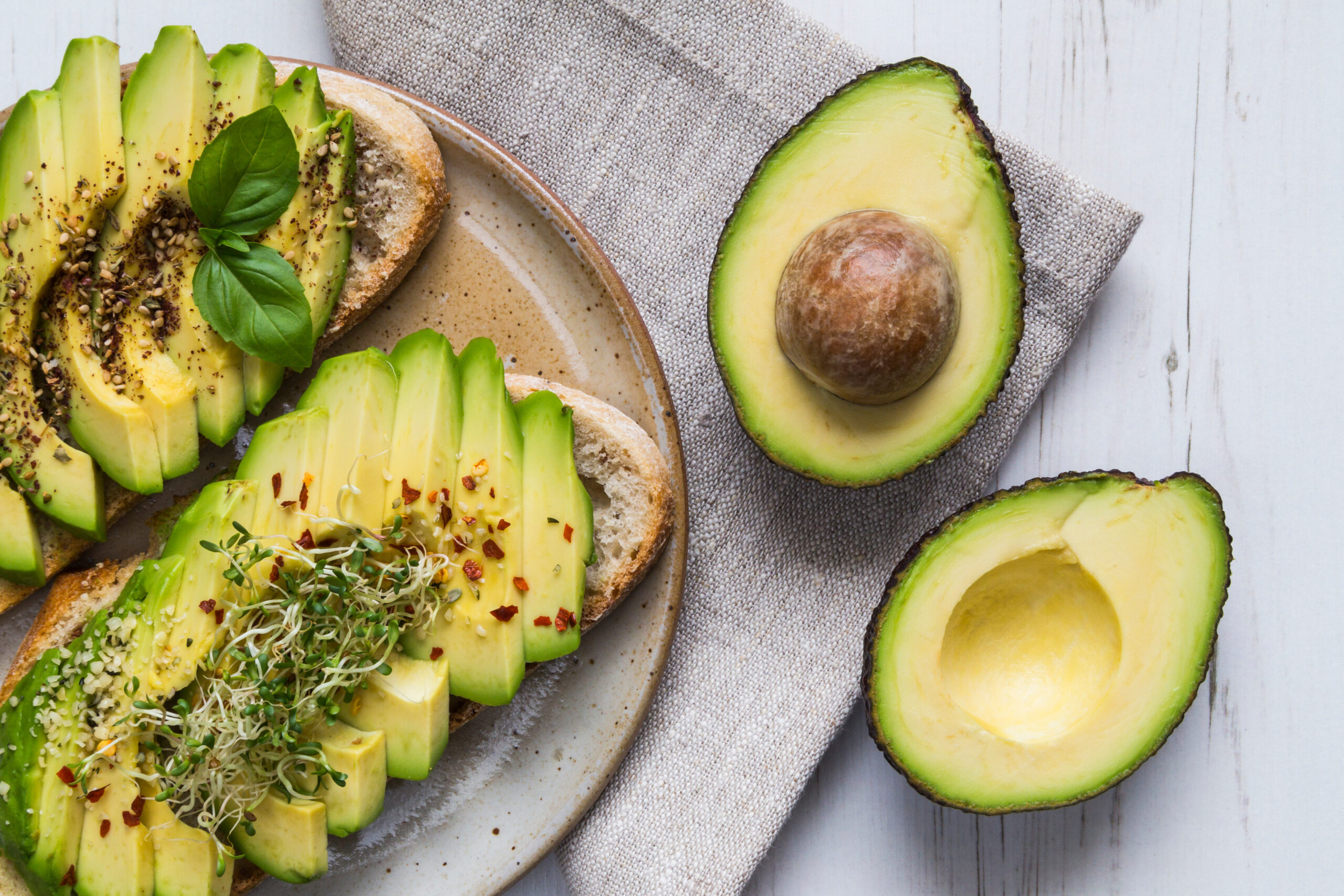
A whole medium avocado has 3 grams of protein in it, on 240 calories.
That is dead last on a list of 38 foods, and it is not a close race. Protein makes up exactly 5% of an avocado’s calories. The rest is mostly fat, 22 grams of it.
Run the math on hitting one meal’s protein from avocado and it stops being a question. Thirty grams would take ten avocados, 2,400 calories, and 220 grams of fat.
It keeps showing up on plant protein lists because it is a plant, it is green, and it is good for you. None of those three things makes it a protein source.
What avocado is good for is the fat and the fiber.
The fat is mostly monounsaturated, and controlled trials pooled in a 2025 meta-analysis found avocado intake lowered LDL cholesterol by about 6 milligrams per deciliter compared with control diets. A separate review found larger drops, 9 to 17 milligrams per deciliter, in people who already had high cholesterol.
One avocado also carries 10 grams of fiber, which is more than most people get from anything else on their plate that day.
Eat avocado. Put it on the toast, put it in the salad. Just log it as a fat, not a protein, and read our full breakdown of avocado protein if you want the rest of the numbers.
10) OTHER BENEFITS OF PLANT PROTEIN
Up to this point, every food in this guide has been judged on one number: how much protein it puts on your plate.
That was the right way to sort them because protein is what you came here for. But it leaves out most of what makes these foods worth eating.
Plant proteins and their animal protein–based counterparts differ in more than grams. A chicken breast is 26 grams of protein and almost nothing else. That’s definitely not a criticism. It is what a chicken breast is. Lean, efficient, and that is the whole point of it.
Beans and lentils and edamame are less efficient at it. What they do instead is arrive with everything else attached, and the gap between the two is larger than most people realize.
Here is what that looks like side by side.
THE FULL NUTRITION PICTURE
Protein is one line on a nutrition label. Here are four.
Same foods you have seen ranked all the way through this guide, with the two animal proteins everyone measures against at the bottom for comparison.
| Per Serving | Protein | Fiber | Folate | Potassium |
| Edamame, 1 cup | 18.5 g | 8.1 g | 482 mcg | 676 mg |
| Lentils, 1 cup | 17.9 g | 15.6 g | 358 mcg | 731 mg |
| Black beans, 1 cup | 15.2 g | 15.0 g | 256 mcg | 611 mg |
| Chickpeas, 1 cup | 14.5 g | 12.5 g | 282 mcg | 477 mg |
| Chicken breast, 3 oz | 26.4 g | 0 g | 3 mcg | 218 mg |
| Egg | 10.7 g | 0 g | 37 mcg | 107 mg |
Start with folate. A cup of edamame carries 482 micrograms, more than a full day’s requirement. Three ounces of chicken breast carries 3 micrograms.
Fiber tells the same story from the other direction. Split peas give you 16.3 grams of protein and 16.3 grams of fiber, the same number twice. Chicken and eggs give you zero.
That is the actual trade. Animal protein wins on grams per serving, whether that’s chicken, red meat, or eggs, and processed red meat brings its own baggage on top. Whole-plant sources bring a load of other things along with them, and the amounts are not close.
Fiber is also where the gut health case comes from. It reaches your large intestine undigested, and your gut bacteria live on it. Nothing in a chicken breast feeds them.
The Lancet published a series of reviews pooling 185 prospective studies and 58 clinical trials on this. People eating the most fiber had 15% to 30% lower all-cause and cardiovascular mortality than people eating the least. Across the range of outcomes the researchers looked at, including cardiovascular disease, the greatest risk reduction appeared between 25 and 29 grams of fiber a day.
One cup of lentils gets you more than half of that.
WHAT PLANT-BASED EATING DOES FOR YOUR HEART
There’s one more finding here, and it comes with a catch.
Researhers at Harvard tracked more than 200,000 people for two decades and sorted them by how plant-based their diets were. Published in the Journal of American College of Cardiology, the results split three ways.
People eating a healthful plant-based diet, heavy on whole grains, vegetables, nuts and legumes, had 25% lower risk of coronary heart disease.
People eating an unhealthful plant-based diet, heavy on refined grains, fries and sweets, had 32% higher risk.
Same label, opposite outcomes. Cutting animal products does nothing on its own if what replaces them is white bread and soda.
The researchers pointed at two things:
The healthful group ate more fiber and fewer saturated fats, and both of those move cholesterol markers in the direction you want. Plant-based eaters who get the health benefits are the ones eating the foods in this guide, not the ones eating around them.
IRON AND ANTI-NUTRIENTS
There is one number I left off that table on purpose, and it is the one people get wrong most often.
A cup of lentils carries 6.6 milligrams of iron, over 80% of what a man needs in a day. Three ounces of chicken carries 0.9 milligrams.
You do not absorb those at the same rate.
Iron in plants is non-heme iron, and your body takes up less of it than the heme iron in meat. Legumes and whole grains also contain phytate, which binds to iron and zinc in your gut and reduces absorption further.
That is the grounded version of a claim you may have heard: beans block your minerals. The effect is genuine. How much of the gap between 6.6 milligrams and 0.9 milligrams survives depends on the rest of the meal, and the next section deals with what to do about it.
Three things keep it in proportion.
You can cut phytate substantially. Soaking, sprouting, and fermenting all break it down. Fermentation alone cuts it by around half. Soaking, germinating, and fermenting in combination has been measured at up to 85%. Cook beans from dried with an overnight soak and you are already doing most of this.
Lentils start from a much higher number. Phytate takes a percentage off whatever iron is there. Taking a bite out of 6.6 milligrams still leaves you more than taking the same bite out of the 0.9 milligrams in a chicken breast.
It matters most where diets are narrow.
The phytate research comes from populations where one phytate-rich grain is the staple food and mineral intake is already marginal. That is not the same as eating a varied diet with enough calories in it.
11) PLANT PROTEIN AND YOUR TRAINING GOALS
When it comes to your fitness goals, plant proteins are just like animal proteins, right?
You don’t question whether a chicken breast is better for muscle growth or fat loss. You just eat it and know you’re getting a great protein source.
It doesn’t work quite the same with plant-based proteins.
Sure, eating good protein is better than no protein. But the best plant protein for adding size is not the best one for losing fat.
And if your goal is to keep those carbs low, that’s a different protein choice again.
Let’s go through a few popular training goals and what belongs at the top of your grocery list for each one.
IF YOU’RE ADDING MUSCLE
This is the goal most guys reading this guide are chasing, and it’s the one where plant protein gets questioned the most.
Here’s what I’d recommend to ensure you’re choosing the right plant proteins to gain size:
Your Number: 1.0 to 1.2 grams per pound, split across four or five meals.
What Limits You: It’s not calories. You’ve got those to spend. What limits you is getting 30 to 40 grams onto a single plate, four or five times a day, without a chicken breast to do the heavy work. That’s the part nobody warns you about. With animal protein, one food handles a meal. With plants, it takes two or three.
Your Shortlist:
| Food | Protein | Why It’s Here |
| Seitan (3 oz) | 21 to 27 g | The only plant food that does a meal nearly alone |
| Edamame (1 cup) | 18.5 g | The highest-protein food you can microwave |
| Lentils (1 cup) | 17.9 g | Cheap, batch-cooks, freezes |
| Tempeh (3 oz) | 16.9 g | Dense, and it grills |
| Black beans (1 cup) | 15.2 g | Pairs with everything |
And here’s an example of how to reach 40 grams of protein with a plant-based meal:
| Plant Based Foods | Grams of Protein |
| 3 oz tempeh | 16.9 g |
| 1 cup lentils | 17.9 g |
| 2 slices whole grain bread | 7.0 g |
| Total | 41.8 g protein, 537 calories |
One meal is easy enough to picture. Doing it five times before bed is where people come unstuck.
Here’s a full day for that 190-pound guy at 1.0 gram per pound, so 190 grams of protein.
| Meal | What’s In It | Protein | Calories |
| Breakfast | 3.5 oz dry oats, 1.5 cups soy milk, 3 tbsp hemp seeds | 38.3 g | 752 |
| Lunch | 1.5 cups lentils, 1 cup whole wheat pasta, 1 oz pumpkin seeds | 43.6 g | 716 |
| Post-training | 1 cup edamame, 2 slices whole grain bread, 2 tbsp peanut butter | 32.5 g | 520 |
| Dinner | 3 oz seitan, 1 cup black beans, 1 cup quinoa | 47.4 g | 571 |
| Evening | 6 oz firm tofu, scrambled | 29.4 g | 245 |
| Day total | 191.2 g | 2,804 |
A few things about that day.
Every meal takes two or three foods. Breakfast is oats, soy milk, and hemp seeds, because oats alone would have given you 17 grams of protein and left you 20 grams short. That’s the pattern all day, and it’s the single biggest difference between eating this way and eating chicken.
Dinner is the biggest plate at 47 grams, and that’s on purpose. Most guys eat their largest meal at night anyway, so put your seitan there.
The evening tofu isn’t a snack, it’s a small fifth meal. Six ounces scrambled in a pan with whatever’s in the fridge takes about eight minutes. Drop it and you finish the day at 162 grams, which is below your number.
That day comes to 2,804 calories to reach 190 grams of protein. If you’re adding muscle, that’s about right. In a deficit it’s too many, which is why the fat loss list looks different.
IF YOU’RE LOSING FAT
Everything flips here. The foods that worked fine when you had calories to spend start working against you, and two plates with the same protein can be 700 calories apart.
Your Number: 1.2 grams per pound, the top of the range. You’re asking your body to drop fat and avoid muscle mass loss at the same time, and that’s the situation that demands the most protein.
What Limits You: Calories are your limiting factor. Same protein target as before but fewer calories to reach it with.
Your Shortlist:
| Food | Protein | Calories | Protein Per 100 Cal |
| Tofu, firm (3 oz) | 14.7 g | 122 | 12.0 |
| Tempeh (3 oz) | 16.9 g | 166 | 10.2 |
| Edamame (1 cup) | 18.5 g | 188 | 9.8 |
| Lentils (1 cup) | 17.9 g | 230 | 7.8 |
| Chickpeas (1 cup) | 14.5 g | 269 | 5.4 |
Now look at what that difference does across a whole meal.
Here are two ways to reach 40 grams of protein:
| Meal | Protein | Calories |
| 5 oz firm tofu + 1 cup edamame | 43.0 g | 392 |
| Chickpeas, brown rice, quinoa, peanut butter, and almonds | 41.3 g | 1,095 |
Same protein. 703 calories apart.
That second meal isn’t a strawman. It’s what a plant plate looks like when you’re grabbing whatever’s in the cupboard: a grain, a legume, a nut butter, a handful of almonds. Every one of those foods is good for you. Put them together in a deficit and you’ve spent your entire afternoon’s calories on one plate.
The fix is boring. Lead with tofu, tempeh, or edamame, then add the grains and nuts around what’s left.
IF YOU’RE KEEPING CARBS LOW
This one takes the biggest bite out of your options. Most of that 38-food ranking is beans and grains, and both of those are carb-heavy by nature.
Your Number: You’ll want to aim for 1.0 to 1.2 grams per pound, same as adding muscle.
What Limits You: The list itself. For example, let’s take a look at the seven most popular plant foods from the ranking:
| Food | Protein | Total Carbs | Net Carbs |
| Tofu, firm (3 oz) | 14.7 g | 2.4 g | 0.4 g |
| Hemp seeds (3 tbsp) | 9.5 g | 2.6 g | 1.4 g |
| Edamame (1 cup) | 18.5 g | 13.8 g | 5.8 g |
| Tempeh (3 oz) | 16.9 g | 6.5 g | 6.5 g |
| Lentils (1 cup) | 17.9 g | 39.9 g | 24.2 g |
| Chickpeas (1 cup) | 14.5 g | 45.0 g | 32.5 g |
| Brown rice (1 cup) | 5.5 g | 51.7 g | 48.4 g |
Net carbs is total carbohydrate minus the fiber, which is how most low-carb plans count it. Both columns are there so you can do it either way.
Draw a line after tempeh and you’ve got your list.
Soy is a low-carb protein. Legumes are not. Firm tofu gives you 14.7 grams of protein on 0.4 grams of net carbs. Lentils give you slightly more protein and drag 24.2 grams of net carbs along. Chickpeas bring 32.5 grams.
Seitan belongs on the short list too, because washing the starch out of wheat flour is exactly the step that strips out the carbohydrate.
What a low-carb day looks like:
| Food | Grams of Protein |
| 6 oz firm tofu | 29.4 g |
| 4 oz tempeh | 22.5 g |
| 1.5 cups edamame | 27.8 g |
| 3 tbsp hemp seeds | 9.5 g |
| Total | 89.1 g protein, 913 calories, 19.5 g net carbs |
That’s four foods, a decent amount of eating, and it gets you to 89 grams. A 190-pound guy at 1.0 gram per pound needs 190 grams, so he’s doubling those portions or adding seitan on top.
Keeping carbs low on plants works. It just means eating a lot of tofu and not much variety.
12) PLANT PROTEIN MISTAKES TO AVOID
You can follow everything in this guide and still get a few things wrong.
Hit your protein number, buy the right foods, cook from dried. Then three months later you’re flat in the gym and wondering what the point of all this was.
These are the five plant protein mistakes that come up most often.
ASSUMING YOU’LL GET B12 FROM FOOD
This is the one thing in this guide you can’t work around.
Vitamin B12 isn’t made by plants. Not by any of them. Every reliable source is either an animal food, a fortified food, or a supplement, and that’s the complete list.
You’ll see spirulina, nori, tempeh, and mushrooms listed as plant sources. They don’t hold up. Several contain inactive B12 analogs, which look like B12 on a lab test but do nothing in your body, and no plant food has been shown to improve B12 status in a human being.
If you still eat meat, eggs, or dairy a few times a week, you’re getting B12 and you can move on.
If you’ve gone fully plant-based, you need a fortified food daily or a B12 supplement.
Fortified plant milks, nutritional yeast, and some breakfast cereals all carry added B12, and the label will tell you how much. The adult RDA is 2.4 micrograms a day.
Don’t put this one off. B12 deficiency builds slowly, it can show up as fatigue, memory problems, or mood changes before it ever affects your blood count, and some of the nerve damage doesn’t reverse.
This is also the one part of this guide where I’d point you to a doctor rather than an article. A blood test tells you where you stand, and it takes five minutes. Anything you read about B12 online, including this, should be medically reviewed before you act on it.
TREATING PLANT IRON LIKE MEAT IRON
Earlier I showed you that a cup of lentils carries 6.6 milligrams of iron against 0.9 milligrams in a chicken breast and said the two don’t absorb the same. Here’s what to do about it.
Non-heme iron from plants absorbs at somewhere between 2% and 20%. Heme iron from meat runs 15% to 35%. On top of that, phytate in the legume binds some of what’s there.
Two things move that number, and both are easy.
Eat vitamin C at the same meal. Around 50 milligrams is the useful dose, which is an orange, a handful of strawberries, or half a bell pepper. Vitamin C converts the iron into a form you absorb more easily, and it directly counteracts the phytate. Lentil soup with tomatoes and a squeeze of lemon is a completely different iron meal than the same soup without them.
Move the coffee. The tannins in tea and coffee bind iron in your gut, and it only happens when you drink them with the meal. Have your coffee an hour either side and the problem disappears.
DOUBLING YOUR FIBER OVERNIGHT
Go from chicken and rice to beans and lentils in one week and you’ll spend that week in a lot of discomfort. Gas, bloating, the works.
Then you’ll blame the beans and go back to what you were doing.
The beans aren’t the problem. The jump is. Add one serving of legumes a day for a week, then add a second. Your gut bacteria adapt to what you feed them, and that takes a couple of weeks, not willpower. Drink more water while you do it.
NOT EATING ENOUGH TOTAL CALORIES
This one’s sneaky, and it’s the reason some guys think plant protein doesn’t work.
Plant foods are bulky. A cup of lentils gives you about the same protein as three ounces of chicken and weighs more than twice as much. That’s usually a good thing because it keeps you full. It works against you when you’re trying to eat 190 grams of protein a day.
You fill up before you get there and finish the day short of your calories without meaning to.
And here’s what that does: protein eaten in a calorie deficit gets burned for energy instead of used to build muscle. You bought the protein and then spent it on something else. This isn’t protein deficiency in the clinical sense, but you won’t see what you paid for.
That full day earlier came to 2,804 calories. Getting 190 grams of protein from plants means eating that much. If you’re adding size on plants, you’re eating more food than you’re used to, and some of it will feel like a chore.
LOGGING COOKED WHEN YOU MEASURED DRY
A cup of dried lentils is not a cup of cooked lentils. Dried is two and a half times denser, so if you log a cup of dry and eat a cup of cooked, your tracker is off by more than half.
Oats do the same thing in reverse. A cup of cooked oatmeal is 5.9 grams of protein. Weigh 3 ounces of dry oats and you’re at 14.4 grams.
Pick one and stay with it. I’d measure everything dry, because dry weight doesn’t change based on how much water went in the pot or how long it sat there.
The thing that stuck with me pulling these numbers wasn’t how much protein was in the beans. It was how little was in everything people assume is loaded with it.
Almonds. Quinoa. Kale. Avocado. All good food, none of it a protein source, and every one of them sold as one.
That’s the part to take with you, whether you go fully plant-based or just move toward plant-forward diets. The foods that do the work are boring, cheap, and probably already in your cupboard.
And if you’ve gone fully plant-based, sort out your B12 this week. That one isn’t optional.
Check out our complete line of ATHLEAN-RX Supplements and find the best training program for you based on your fitness level and goals.

- Your target is 0.8 to 1.2 grams of protein per pound a day. Multiply your bodyweight, split it across four or five meals, and aim for 30 to 40 grams on each plate.
- Five foods get you there. Seitan at 21 to 27 grams per 3 ounces. Edamame at 18.5 grams per cup. Lentils at 17.9 per cup. Tempeh at 16.9 per 3 ounces. Firm tofu at 14.7 per 3 ounces. Everything else is support.
- Expect two or three foods per plate. One chicken breast handles a meal on its own. No plant food does, and that’s the adjustment that matters.
- Plants build the same muscle as meat. Eat enough protein and where it came from stops mattering. That’s what the research shows, and it’s the part most gym advice gets wrong.
- Judge a food by the portion, not the percentage. Spinach beats every bean on protein per calorie and still takes two pounds to reach 30 grams.
- Check the nutrition label on tofu, not the word on the front. Two blocks both labeled firm can differ by nearly double on protein, because what matters is how much water got pressed out.
- Canned beans give you less protein and a lot more sodium. A cup of canned beans runs up to 20% lighter on protein than the same beans cooked from a bag and carries around 400 milligrams of sodium against 2 milligrams.
- Nuts are a fat source that happens to contain protein. Five ounces of almonds and 800 calories to reach 30 grams. Pumpkin and hemp seeds are the two exceptions.
- Fiber and folate arrive in the same spoonful. A cup of edamame carries 482 micrograms of folate. Three ounces of chicken carries 3 micrograms.
- B12 is the one thing you can’t get from plants. Not from spirulina, not from tempeh, not from mushrooms. Fortified foods or a supplement, and no third option.
PLANT BASED PROTEIN FAQ
It depends what you're asking it to do.
For sheer grams, it's seitan. Three ounces gets you 21 to 27 grams, which is chicken breast territory. Nothing else on the plant side is close.
For protein without the calories, it's firm tofu. You get 12 grams for every 100 calories, which beats an egg. If you're trying to lose body fat, this is the one to reach for.
For the money, it's lentils. A bag keeps for years, and a cup gives you 17.9 grams of protein plus 15.6 grams of fiber. Nothing else on the list does that much for that little.
For zero effort, it's edamame. Frozen, five minutes, 18.5 grams a cup. No soaking, no pressing, no recipe.
If you'd rather not think about it, keeping tofu and lentils in the house handles most situations.
The protein itself, yes. Beans, lentils, tofu, tempeh, and edamame are good food by any measure, and they bring fiber and micronutrients that meat doesn't.
But plant-based describes where a food came from, not how good it is for you. Oreos are plant-based. So are potato chips.
That distinction matters most in the freezer aisle. Plant-based burgers, nuggets, and similar protein-based products often carry a lot of sodium, and the protein per serving swings wildly from one brand to the next. They're fine occasionally. They aren't the same thing as a bowl of lentils, and the front of the box won't tell you that.
Stick to foods that still look like what they came from and the question answers itself.
REFERENCES
- International Food Information Council. 2025 Food & Health Survey.
- U.S. Departments of Agriculture and Health and Human Services. Dietary Guidelines for Americans, 2025–2030.
- Academy of Nutrition and Dietetics. Vegetarian Dietary Patterns for Adults: Position Paper, 2025.
- Hevia-Larraín V, et al. High-Protein Plant-Based Diet Versus a Protein-Matched Omnivorous Diet to Support Resistance Training Adaptations. Sports Medicine, 2021.
- Messina M, et al. No Difference Between the Effects of Supplementing With Soy Protein Versus Animal Protein on Gains in Muscle Mass and Strength. International Journal of Sport Nutrition and Exercise Metabolism, 2018.
- Lynch HM, et al. No Significant Differences in Muscle Growth and Strength Development When Consuming Soy and Whey Protein Supplements Matched for Leucine. IJERPH, 2020.
- Lim MT, et al. Animal Protein Versus Plant Protein in Supporting Lean Mass and Muscle Strength. Nutrients, 2021.
- Protein and Leucine Requirements for Maximal Muscular Development Are Achieved With Completely Plant-Based Diets. 2024.
- Reed KE, et al. Neither Soy nor Isoflavone Intake Affects Male Reproductive Hormones. Reproductive Toxicology, 2021.
- Rajaie S, et al. Soy and Male Reproductive Hormones: A Dose-Response Meta-Analysis. Food Frontiers, 2025.
- Amino Acid Composition and Lysine Limitation in Wheat Varieties.
- Avocado Intake and Lipid Profile: Dose-Response Meta-Analysis. 2025.
- Avocado Consumption and Cardiovascular Risk Factors: Systematic Review.
- Reynolds A, et al. Carbohydrate Quality and Human Health: A Series of Systematic Reviews and Meta-Analyses. The Lancet, 2019.
- Enhancing Iron and Zinc Bioavailability in Maize Through Phytate Reduction. Frontiers in Nutrition, 2024.
- Niklewicz A, et al. The Importance of Vitamin B12 for Individuals Choosing Plant-Based Diets. European Journal of Nutrition, 2023.
- Dietary Iron. StatPearls, National Institutes of Health.
- Hallberg L, et al. Effect of Ascorbic Acid on Iron Absorption From Different Types of Meals. Human Nutrition: Applied Nutrition, 1986.
- U.S. Department of Agriculture, Agricultural Research Service. FoodData Central, SR Legacy. Source for all protein, calorie, fiber, amino acid and micronutrient figures in this guide.
Jeff Cavaliere M.S.P.T, CSCS
Jeff Cavaliere is a Physical Therapist, Strength Coach and creator of the ATHLEAN-X Training Programs and ATHLEAN-Rx Supplements. He has a Masters in Physical Therapy (MSPT) and has worked as Head Physical Therapist for the New York Mets, as well as training many elite professional athletes in Major League Baseball, NFL, MMA and professional wrestling. His programs produce “next level” achievements in muscle size, strength and performance for professional athletes and anyone looking to build a muscular athletic physique.